
Reviewed · WALKING TOURS
Alberobello: History Walking Tour
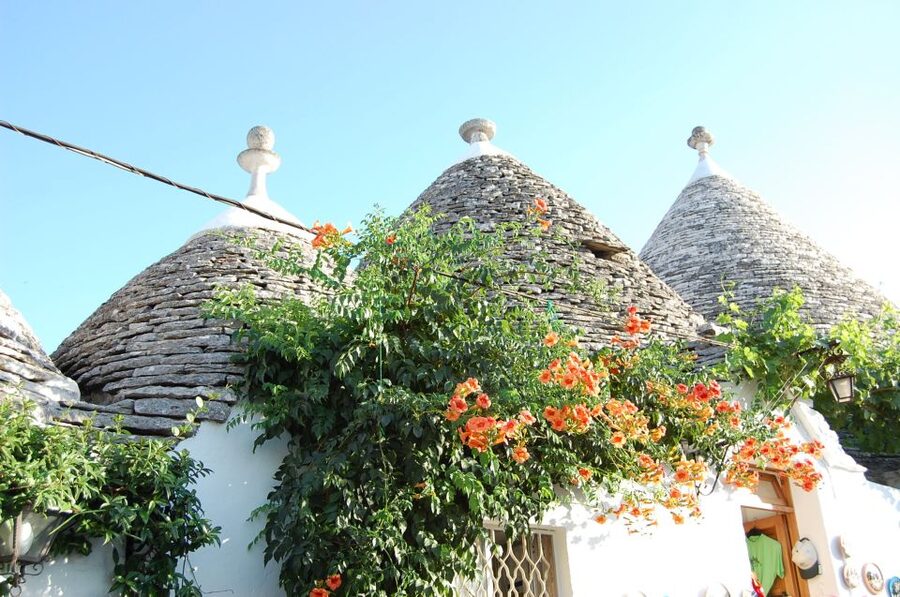
Trulli in Alberobello feel like make-believe. This guided walk takes you through the town’s UNESCO core, starting with a viewpoint and ending with a closer look at how these cone-roofed homes work in real life. I especially liked the mix of big-picture orientation and small details you can actually see up close. You’ll get a licensed local guide plus time in two classic trulli districts.
What I love most is the chance to see a trullo from the inside, not just from street corners, and then to visit a local home to understand how a trullo is put together. I also like that the route pairs architecture with storytelling, so walking Rione Monti and Aia Piccola feels purposeful instead of aimless wandering. You’ll also end up at the trullo-shaped Church of San Antonio, which is exactly the kind of visual payoff you came for.
One consideration: this is a walking tour with no transfers included, and the meeting point can vary by option. Also, the tour needs a minimum of 2 participants, so check dates and start times if you want a specific slot.
In This Review
- Key Highlights Worth Showing Up For
- A Quick Reality Check on Alberobello and the Trulli
- Belvedere Terrace: Your Launch Point and First Big View
- Rione Monti and Aia Piccola: Two Districts, One Signature Look
- The Church of San Antonio: The Trullo Style Goes Public
- Stepping Inside a Traditional Trullo (Not Just Looking)
- A Local’s Home Visit: Seeing How a Trullo Is Composed
- Learning From the Right Kind of Guide
- What 40 Dollars Gets You: Value in Time and Access
- Timing, Pace, and Practical Walking Tips
- Who Should Book This Tour, and Who Might Not
- How to Make Your Experience Feel More Personal
- Should You Book the Alberobello History Walking Tour?
- FAQ
- How long is the Alberobello History Walking Tour?
- What does the tour include?
- Where does the tour start?
- Where do you go during the walk?
- What languages are available for the guide?
- How much does it cost?
- Are transfers included?
- Is the tour free for kids?
Key Highlights Worth Showing Up For
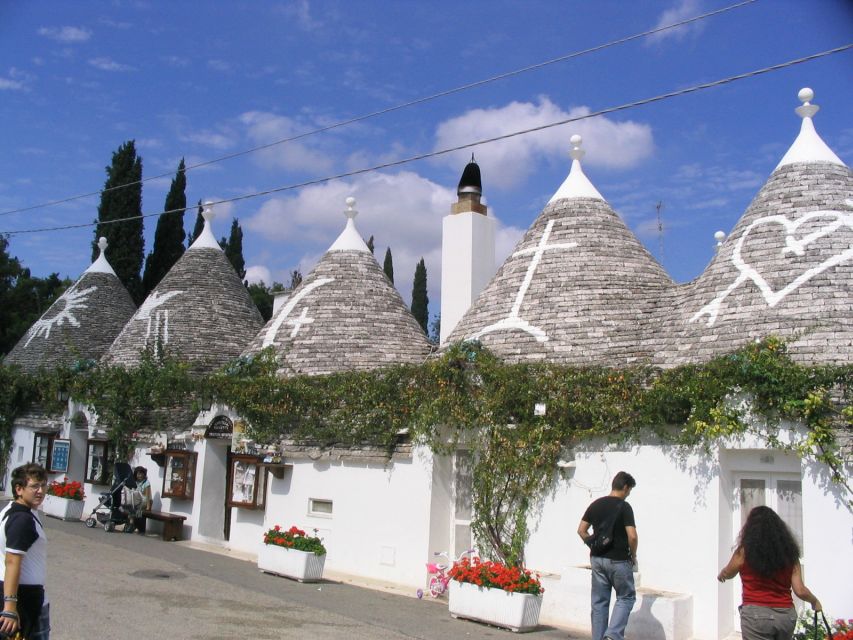
- Belvedere terrace start with a fast, scenic orientation over Alberobello
- Rione Monti and Aia Piccola on one coherent route through trulli neighborhoods
- Inside a traditional trullo so you understand the shape and space
- Church of San Antonio built in the same trullo style, right in your walking path
- A local home visit that explains how these homes are composed
A Quick Reality Check on Alberobello and the Trulli
Alberobello is one of those places where photos can trick you. From afar, the town can look like a movie set. Up close, you start noticing details like patterns in stonework, the logic of doorways and openings, and how the cone roof shapes the whole streetscape.
This tour focuses on the part that matters most: the UNESCO-listed area. You are not just roaming. You are walking the neighborhoods where the trulli are the point, then stepping inside to see why they look the way they do.
And yes, it can feel touristy if you show up expecting nothing but postcards. The value here is that a good guide turns the walk into something you remember, not just something you scroll past.
More cone-roofed Alberobello visits:



Belvedere Terrace: Your Launch Point and First Big View
The tour begins with a viewpoint from the Belvedere terrace. That first stop matters because Alberobello is easy to get turned around in once you start moving through narrow lanes. From above, you can spot how the trulli cluster, how the neighborhoods connect, and why certain streets feel like corridors rather than open plazas.
Think of it as your map, but scenic. If you like history tours that help you orient fast, you’ll appreciate this start. It also sets up the rest of the walk, because you immediately see what Rione Monti and Aia Piccola look like before you reach the conical houses at street level.
Rione Monti and Aia Piccola: Two Districts, One Signature Look
The core of the walk is time in both Rione Monti and Aia Piccola. These are two of the districts that define Alberobello’s trulli identity, and the tour uses them like chapters. You start with one, then switch to the other, so you get variety without losing the thread.
In Rione Monti, you are surrounded by the typical trulli architecture as you move along small alleys. Expect lots of stopping for explanation, not just quick glances. In Aia Piccola, you get another angle on the same building tradition, which helps you notice what changes and what stays constant.
I like this structure because it prevents the common problem with architecture tours. You don’t just see one block and feel like you’ve “done” the town. You walk enough to build a mental model.
The Church of San Antonio: The Trullo Style Goes Public
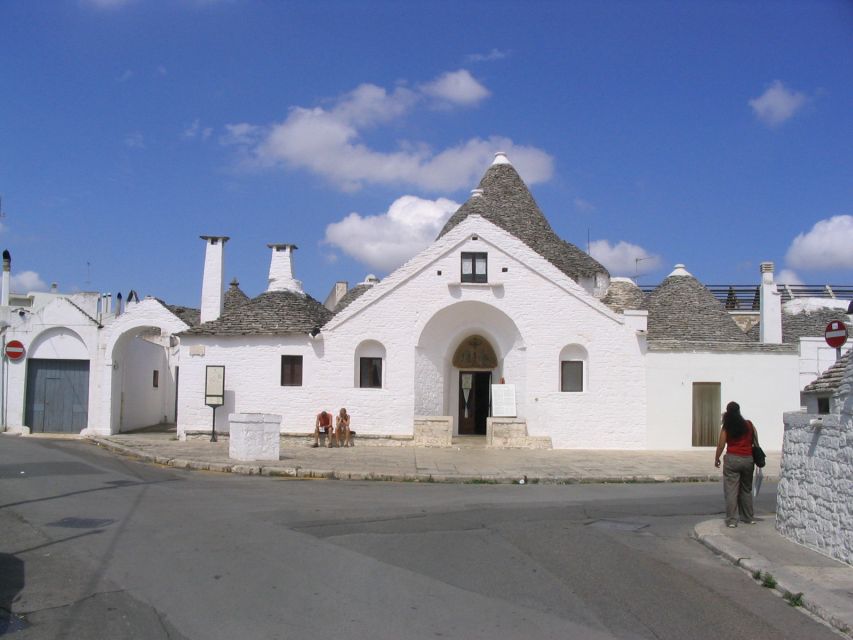
A key moment on the route is reaching the trullo-shaped Church of San Antonio. It’s one of those places where the idea clicks. A trullo is a home shape, but watching the same form applied to a church makes the architecture feel bigger than its parts.
As you reach the church, you are still walking among trulli and narrow lanes. That continuity helps. You don’t feel like you’ve been bused to a single photo spot. You feel like you are moving through the town’s fabric, with the church acting like a visual landmark at the end of a section of the walk.
More Italy at street level:
- Lecce: Baroque Architecture and Underground Walking Tour
★ 4.7 · 842 reviews - Bari: Guided Walking Tour
★ 4.7 · 744 reviews - Bari: Pasta Experience Walking Tour
★ 4.7 · 660 reviews - Bari Walking City Tour
★ 4.5 · 511 reviews
Stepping Inside a Traditional Trullo (Not Just Looking)
One of the best parts of this tour is stepping inside a traditional trullo. That single detail turns the entire experience from exterior sightseeing into understanding. From the street, you see the cone roof and the stone walls. Inside, you can start imagining how people lived with that shape, how space is organized, and why certain design choices make sense.
This is also where a good guide earns their fee. The tour is led by a licensed guide, and the point is to connect architectural features to the local story. You’ll be shown and explained, not left to guess.
A lot of people think they already know what a trullo looks like because they’ve seen images. Inside, the scale and practical design remind you that this is real housing, not a fantasy prop.
A Local’s Home Visit: Seeing How a Trullo Is Composed
After you’ve walked through the districts and visited the church, the tour finishes with a visit to a local’s home where you can see how a trullo is composed. This is a powerful moment, because it shifts the focus from monuments to everyday structure.
You get a chance to understand the logic behind how the pieces come together. And because it happens in someone’s home context, the experience feels less like a museum stop and more like a lived tradition explained by real people.
One thing I appreciate is that the tour does not treat this as pure spectacle. It treats the trullo as architecture with reasons. That is the difference between simply taking photos and leaving with understanding.
Learning From the Right Kind of Guide
This tour runs with a live guide, available in English, French, Spanish, and Italian. You also have the option for a private group, which is useful if you want a slower pace or more questions without juggling a larger crowd.
The guides associated with the tour are often praised for two things that matter on walking tours: clear storytelling and practical explanations you can visualize. Names that come up include Francesco, Dominicio, Floriana, Sylvia, Mario, Alessandro, and Roberta. If you get a guide like one of these, expect a friendly, detailed approach and lots of time for questions.
There is also a hint of an extra perk in how some tours end. One guide-led experience included tasting local food products at the end. That isn’t guaranteed from the basic tour description, but it suggests the tour style can include local touches beyond just the architecture.
What 40 Dollars Gets You: Value in Time and Access
At $40 per person for 1.5 to 2 hours, this is not a bargain bus tour. It also isn’t overpriced for what you get, if you care about the trulli details.
Here’s the value math:
- You’re paying for a licensed guide, which is what turns a UNESCO area into an explanation you can follow.
- You get access to interior moments, including stepping inside a traditional trullo and seeing composition at a local home.
- You cover multiple parts of Alberobello in a tight time window, including two districts and the Church of San Antonio.
If your only plan is to wander and take pictures on your own, you might spend less money. But you’ll likely miss the “why,” and you may not find the same interior access points. For many people, that interior time is the difference between a quick hit and a real experience.
If you want to squeeze the best return on a short stay in Apulia, this kind of guided walk is a smart use of an afternoon or morning.
Timing, Pace, and Practical Walking Tips
The duration is 1.5 to 2 hours, and you’ll want to check availability for starting times. Since it’s a walking route with narrow lanes and small alleys, comfortable shoes are essential. You don’t need hiking gear, but you should be ready to walk steadily and stop often.
No transfers are included. That means you should plan to reach the meeting point under your own steam. Also, the meeting point may vary depending on the option booked, so confirm the exact location when you reserve.
The tour is free for children under 18. That’s a good sign if you’re traveling with teens and want a structured activity that doesn’t feel like a museum lecture.
Who Should Book This Tour, and Who Might Not
This tour is a great fit if you want:
- Hands-on trullo understanding, including interior access
- A clear route through Rione Monti and Aia Piccola
- A guide who connects architecture to how people lived there
It may be less ideal if you prefer long, unstructured wandering with no stops. You will be walking with a plan, and there are set moments like the church and the local home visit.
Also, if your group is small, remember there’s a minimum of 2 participants required for the tour to run. If you are traveling solo, you might need to line up your schedule carefully.
How to Make Your Experience Feel More Personal
Even though it is a guided group walk, you can make it feel more like a conversation. Bring a few questions about what you see, like why the roof shape matters, how the stonework is explained, or what makes one district feel different from the other.
If you have a private group option, it’s worth considering for families or small friend groups who want flexibility. You can ask more, linger on details, and tailor the pace to your interests.
And when the tour guide points out construction details, don’t just look once. Look twice. The trulli can look similar until you start noticing the differences.
Should You Book the Alberobello History Walking Tour?
I’d book it if you want trulli you can understand, not just trulli you can photograph. The combination of Belvedere terrace orientation, two key districts, the Church of San Antonio, plus stepping inside a traditional trullo and a local home visit gives this walk real substance.
Skip it only if you dislike guided walking tours, don’t want any interior access, or you cannot handle the logistics of getting yourself to the meeting point. Otherwise, $40 for a guided, structured experience in a UNESCO area is a solid deal.
If you’re in Apulia and Alberobello is on your list, this is one of the best ways to do it in a couple of hours, without turning it into a rush.
FAQ
How long is the Alberobello History Walking Tour?
The tour lasts about 1.5 to 2 hours. Starting times vary, so you’ll want to check availability.
What does the tour include?
It includes a walking tour and a licensed guide. You will step inside a traditional trullo and you will also visit a local home to see how a trullo is composed.
Where does the tour start?
The start is at a meeting point that may vary depending on the option booked. The tour begins with a viewpoint from the Belvedere terrace.
Where do you go during the walk?
You visit the two districts Rione Monti and Aia Piccola, and you walk among trulli to reach the trullo-shaped Church of San Antonio. The tour also includes an interior visit to a traditional trullo and a local home.
What languages are available for the guide?
The live guide is available in English, French, Spanish, and Italian.
How much does it cost?
The price is $40 per person.
Are transfers included?
No. Transfers are not included.
Is the tour free for kids?
Yes. The tour is free for children under 18.
Ruins & Republics
- Lecce History and Street Food Tasting Small Group Tour
★ 5.0 · 288 reviews - Venice: St. Mark Basilica Ticket, Audioguide+History Gallery
★ 3.9 · 4,780 reviews - Venice’s Best: Basilica, Doge’s Palace, Gondola & History Gallery
★ 4.5 · 2,478 reviews - Historic Milan Tour with Skip-the-Line Last Supper Ticket
★ 4.5 · 1,976 reviews
Just introduced: the newest Puglia write-ups
- EXCURSION VISIT TO THE SANTA MARIA DI LEUCA CAVES★ 4.8 · 192 reviews
- Brindisi: Alberobello, Locorotondo & Ostuni Tour with Brunch★ 4.8 · 195 reviews
- Ostuni, Alberobello and Polignano a Mare. Departing from Lecce★ 5.0 · 195 reviews
- Lecce: Street Food Tasting and Sightseeing Tour★ 4.8 · 197 reviews
- Orecchiette Cooking Class and Wine Pairing in Lecce★ 4.5 · 205 reviews
- Bari: Street Food Walking Tour with Wine Tasting★ 5.0 · 211 reviews
- Santa Maria di Leuca: Caves Boat Tour★ 4.6 · 211 reviews
Walking Tours, compared.
Guided Walking Tour & Last Supper Visit with Ticket
Read our review →

Rialto Bridge & Offbeat Unusual Venice Walking Tour
Read our review →
Private 3 hrs Venice Tour: St Mark’s, Walking tour & Boat tour
Read our review →
Skip the line: Uffizi and Accademia Small Group Walking Tour
Read our review →Browse the lists this tour appears in