
Reviewed · WALKING TOURS
Discover Lucca’s Secrets on a Guided Walking Tour
Lucca can feel like a maze at first, but this walk gives you order fast. You’ll trace the town from Roman street lines to medieval churches, then land at the Duomo of San Martino with a clear sense of where everything sits. It is an easy way to spot what makes Lucca different, from the famous Torre Guinigi oak trees to the elliptical Piazza Anfiteatro.
I love how well the route connects landmarks instead of just hopping from one stop to the next. You’ll walk along Via San Paolino, a line that follows the old Roman decumanus, and then you’ll move into the forum area at Piazza San Michele. I also like the way the guide points out what to look for at each place, like the Byzantine-style mosaic at San Frediano and the Pisa-Lucca Romanesque facade at the cathedral.
One thing to keep in mind is that not every entrance is included. The Duomo interior is optional and costs extra, and depending on the group size you may want to stand where you can hear clearly.
In This Review
- Key things you’ll notice on this Lucca walking tour
- Lucca in Two Hours: Why This Walk Works
- Finding the Tour Start at Piazzale Giuseppe Verdi (Not the Wrong Corner)
- Porta San Donato and Lucca’s Renaissance Walls
- Via San Paolino to Piazza San Michele: Roman Street Lines to Puccini
- San Frediano and the Torre Views: Mosaics and Medieval Power
- Piazza Anfiteatro: The Roman Amphitheatre You Can Still Feel
- San Martino Duomo Exterior Plus the Optional Inside Trip
- How the Guide Improves the Value
- Who This Tour Is Best For (And Who Might Want a Different Option)
- Price and Value: What $18.14 Really Buys You
- Should You Book Discover Lucca’s Secrets on a Guided Walking Tour?
Key things you’ll notice on this Lucca walking tour
- A tight 2-hour route that covers the big sights without tiring you out
- Roman-to-medieval connections like the Decumanus Maximus alignment on Via San Paolino
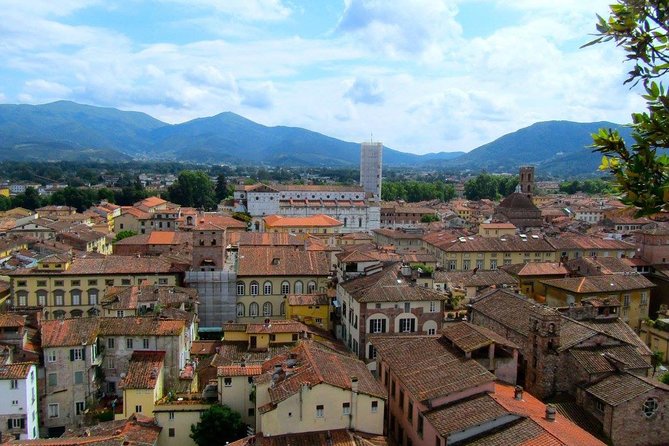
- Landmarks with signature visuals: Torre Guinigi’s seven holm oaks, and Piazza Anfiteatro’s ellipse
- Puccini-related stops via the San Michele area and his birthplace exterior
- Good first-visit orientation that helps you navigate the center afterward
- Clear optional add-on for Duomo di San Martino interior details
Lucca in Two Hours: Why This Walk Works
This is the kind of tour that helps you read a city like a map. In about two hours, you cover the major anchors that shape Lucca’s look, and you learn what to notice when you wander later.
The itinerary also makes practical sense. You start near the historic walls and work your way inward through the center, so the walking feels logical rather than random. It ends at the Duomo area, which is where many people naturally want to spend more time.
If you’re short on time, or you want a confident first afternoon, this walk does the job.
More Italy at street level:
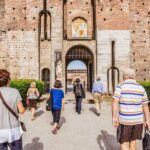

Finding the Tour Start at Piazzale Giuseppe Verdi (Not the Wrong Corner)
The meeting point is Piazzale Giuseppe Verdi in Lucca, near the tourist information area. The tour starts at 2:00 pm, and it ends at the Duomo di San Martino area at Piazza Antelminelli.
Here is the real-life tip I’d follow: don’t trust every map pin blindly. Aim for the tourist information office area so you are not scanning random corners when you have limited time and sometimes changing weather.
Once you’re there, the rest is straightforward. You’ll be in the old city center, and the route stays walkable and easy to follow for most people.
Porta San Donato and Lucca’s Renaissance Walls
The walk begins at the old Porta San Donato, right by the tourist information center and the historic Renaissance walls. This is a smart opener because it gives you a sense of Lucca as a walled city, not just a collection of churches and squares.
You also get a quick orientation at the start. The gate and wall area explain why so much of the center feels enclosed, walkable, and compact.
Good news: this first stop is free of admission, and it’s only about 10 minutes. It sets the tone without dragging.
Via San Paolino to Piazza San Michele: Roman Street Lines to Puccini
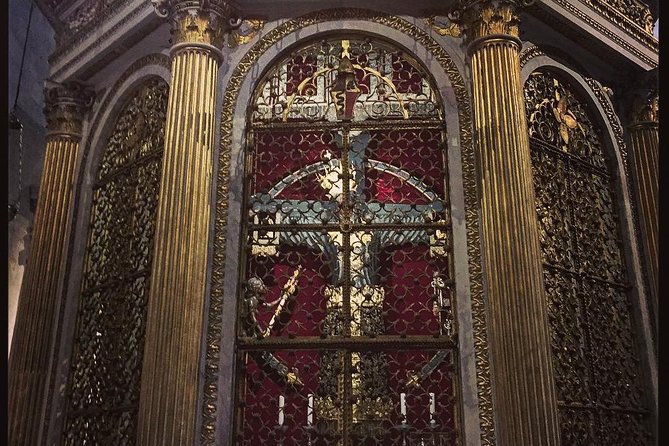
From Piazzale Verdi, you walk along Via San Paolino, which traces the ancient Roman street known as the Decumanus Maximus. That detail matters. When a guide connects a modern street to a Roman road, you start seeing the city as layers, not isolated buildings.
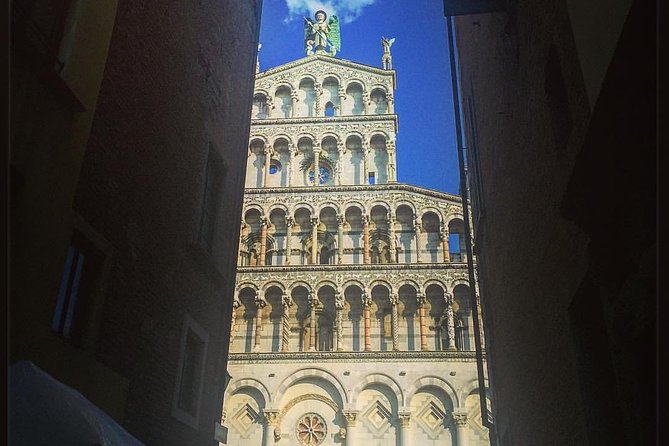
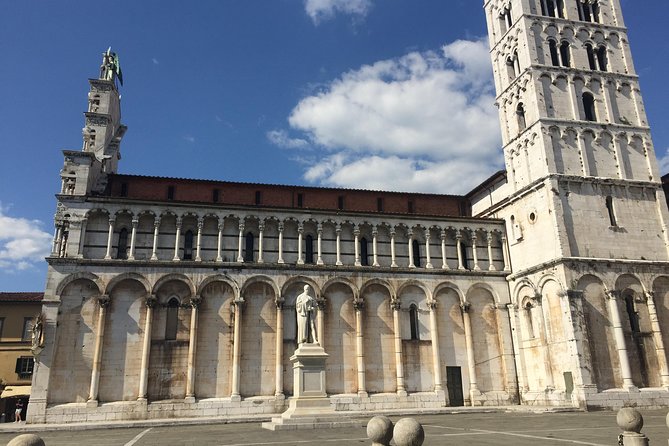
On the way, you pass the church dedicated to Saint Paolino, and then you reach Piazza San Michele, the forum area where public life once gathered. This is a strong stop for photos because you get a broad view of the square and the standout facade of the 12th-century church.
One of the most fun moments here is the Puccini connection. The route passes the area where you can see the exterior of Giacomo Puccini’s birthplace. Even if you are not a hardcore opera person, you’ll enjoy the way the guide ties a real address to the composer’s story.
Time-wise, this section is about 20 minutes, and the admission is not included for the stop itself, so you focus on the walk and exterior sights.
Introductions we still owe you around Lucca
- Lucca: Puccini Festival Opera Recitals and Concerts
★ 4.7 · 1,278 reviews
San Frediano and the Torre Views: Mosaics and Medieval Power
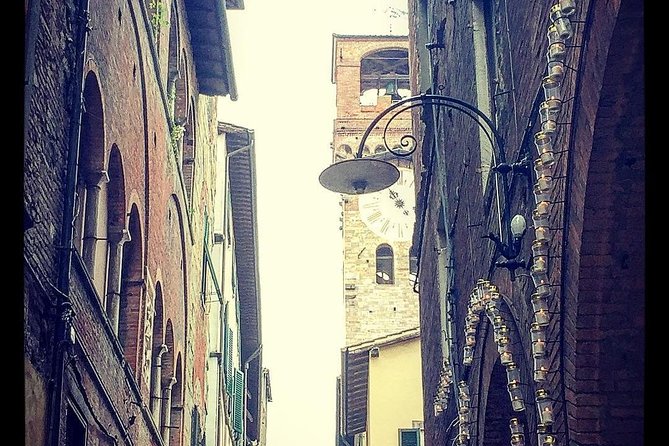
Next you head to San Frediano, but you’ll experience it through movement. The route leads you onto Via Fillungo, Lucca’s main shopping street, where traditional shops and medieval tower houses sit side by side.
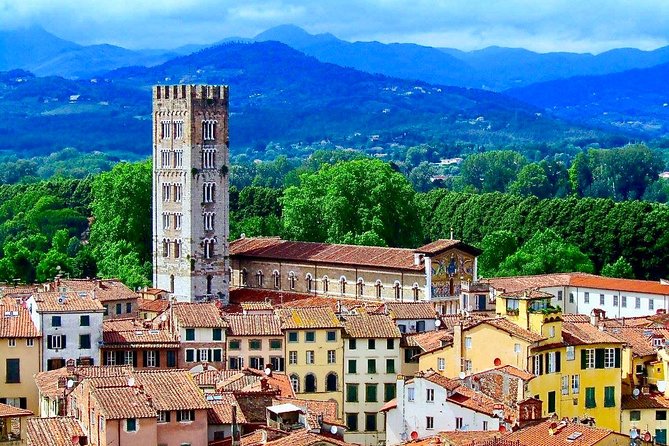
This is where the tour gives you that Lucca “wow, why is this place different” feeling. You see the two main civic towers, Torre delle Ore (the clock tower) and Torre Guinigi (the one crowned by seven holm oak trees). Those towers aren’t just pretty. They explain how Lucca balanced defense, status, and daily life.
At San Frediano itself, the guide focuses on the Byzantine-style mosaic on the facade. That’s the kind of detail you would often miss if you walked past quickly.
This stop runs about 30 minutes. Admission is not included, so it’s best approached as an exterior-and-stories stop unless your guide plans more inside time.
Piazza Anfiteatro: The Roman Amphitheatre You Can Still Feel
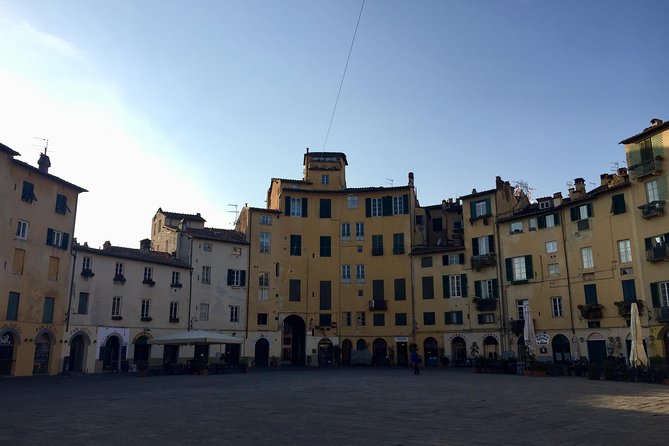
From San Frediano, you step into Piazza Anfiteatro, one of Lucca’s most photogenic spaces. The big reason it looks the way it does is Roman engineering gone clever: the piazza is elliptical because later buildings went up over the foundations of the ancient amphitheatre.
This is a great place to slow down. Even without going into anything, you can feel how the shape of the ground guided how people built and lived here. The guide’s explanation turns the ellipse from a random design quirk into a visible clue to the city’s ancient footprint.
Admission here is free, and you get about 30 minutes. It’s also a good moment to check your bearings for the rest of the day.
San Martino Duomo Exterior Plus the Optional Inside Trip
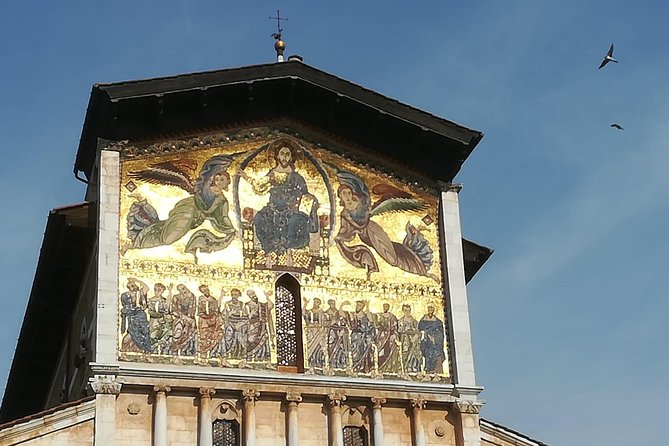
The walk finishes at the Cathedral of San Martino. The facade is the standout, with a Pisa-Lucca Romanesque style that looks distinct from the more famous Tuscan cathedral styles you might have seen elsewhere.
When the tour ends, you have an optional inside add-on if you are not tired. The inside visit has an entry fee of €3.00, so it’s worth deciding in the moment based on your energy and interest in church art.
If you do go in, you’ll be pointing at specific treasures. The highlights include the Volto Santo, a venerated wooden crucifix and a symbol of Lucca. You can also see a Last Supper by Tintoretto, plus, in the sacristy, the marble sarcophagus of Ilaria del Carretto, sculpted by Jacopo della Quercia of Siena.
This stop wraps the core story the tour started. You began with Roman street lines, moved through civic towers and church facades, and then end at a cathedral that anchors Lucca’s identity.
How the Guide Improves the Value
This tour is short, so the guide matters. The best versions of this walk are the ones where the guide doesn’t just list facts, they guide your eyes.
I like that the tour is designed for an easy pace, with time to photograph and absorb. In several guide-led experiences, people praised guides such as Nadia, Marta, Roberta, Vittoria, Gabrielle, and Sylvia for being engaging, funny, and good at answering questions. You might end up with one of those names, and either way, the goal is the same: get you comfortable with what you are seeing.
Two practical pointers if you want the most out of it:
- Pick a spot where you can hear without craning your neck, especially in larger groups.
- Ask a question when the guide mentions something specific like Torre Guinigi’s oaks or the Decumanus Maximus. You’ll remember it later when you notice it on your own.
Who This Tour Is Best For (And Who Might Want a Different Option)
This guided walk is ideal if you are:
- In Lucca for the first time and want a strong orientation
- Staying in the center and want a route that makes exploring after the tour easier
- Interested in Roman traces, medieval churches, and the visual identity of Lucca’s towers
It also works well if your day includes other sightseeing nearby. The total time is about two hours, and the stops are spaced so you are not trapped in one long lecture.
Who might consider a different option? If you are very sensitive to group noise or you prefer smaller, more tailored tours, you’ll want to manage your expectations for hearing in a group setting. With a maximum of 50 travelers, it can still be a fun walk, but your vantage point will matter.
Price and Value: What $18.14 Really Buys You
At $18.14 per person for a roughly 2-hour guided experience, you are paying for three things: time, local storytelling, and a structured route. The included professional guide is the core value, especially if you want to understand why the city looks the way it does.
Most stops are exterior-focused and help you build context quickly, and you won’t feel like you paid just for a museum ticket. Also, the tour includes a mobile ticket, which keeps things simple once you are on-site.
Just remember what is not included. The Duomo interior is optional and costs extra (€3.00). Also, some stops are listed as free, and others have admission not included, so budget lightly if you decide to go inside.
Compared to spending time wandering without direction, this price often feels fair. You are buying a map made of explanations, not just footsteps.
Should You Book Discover Lucca’s Secrets on a Guided Walking Tour?
Book it if you want a smart first look at Lucca that connects Roman layouts, medieval power, and standout church art in a compact walk. You’ll leave with a stronger sense of where Piazza San Michele, San Frediano, Piazza Anfiteatro, and the Cathedral of San Martino fit into the city story.
Skip or consider a different format if you hate group logistics or you know you struggle to hear in larger groups. In that case, you might still enjoy the landmarks, but you may want a smaller-group alternative or plan extra quiet time afterward.
My advice: if you are starting your Lucca visit, this is a practical “get your bearings and then roam” choice. Go early in your stay, pick a good spot to hear, and plan to use the tour to guide your next walk on your own.
Just introduced: the newest Lucca write-ups
- Lucca: Wine Tasting Experience – Tenuta Adamo Winery★ 5.0 · 400 reviews
- Lucca: 2-Hour City Center Walking Tour★ 4.7 · 1,314 reviews
- Lucca: Puccini Festival Opera Recitals and Concerts★ 4.7 · 1,278 reviews
- Lucca: Guided Winery Tour with Wine Tasting★ 4.7 · 611 reviews
Walking Tours, compared.
Guided Walking Tour & Last Supper Visit with Ticket
Read our review →
Rialto Bridge & Offbeat Unusual Venice Walking Tour
Read our review →
Private 3 hrs Venice Tour: St Mark’s, Walking tour & Boat tour
Read our review →
Skip the line: Uffizi and Accademia Small Group Walking Tour
Read our review →Browse the lists this tour appears in