
Reviewed · ACCADEMIA GALLERY TICKETS
Florence: Accademia Gallery David Entry & Audio Guide App
Michelangelo’s David, minus the ticket headache. This Accademia Gallery timed entry is built for smooth access, so you get straight to the sculpture that anchors Florence’s Renaissance reputation. I especially like pairing Michelangelo’s David with the lesser-seen stops like the unfinished works and the Gipsoteca. One real consideration: the included audio guide runs through your phone, so you need a charged smartphone and you may still face some entry delays when security or crowd control kicks in.
The way you check in matters. You meet at the front of Carrefour Express on Via Ricasoli 115 (red number), find a staff member holding a white flag that says ENJOY ROME, then exchange your voucher for a physical ticket. You’ll also need to download the POP GUIDE app before you arrive, since the museum experience is designed around that phone setup rather than a live guide.
At $38 per person, the value comes from the practical stuff: pre-reserved timing, a separate entrance, and admission to a world-class collection without gambling on the onsite ticket line. If you’re the type who wants a hands-on, licensed narration, this version is more self-guided, with a phone app doing the talking.
In This Review
- Key points at a glance
- Timed entry at the Accademia, and how the skip line really works
- Meeting point in Florence: Via Ricasoli check-in without stress
- POP Guide audio app on your phone: what you need before you go
- Michelangelo’s David and the main hall: how to see it with real impact
- Gipsoteca plaster models and the Medici instrument hall
- Painting galleries: Giotto, Botticelli, and the evolution of styles
- Top-floor altarpieces: finishing strong instead of feeling rushed
- Price and value: is $38 worth it for Accademia entry?
- Who this works best for (and who might want a different option)
- Should you book this Accademia Gallery timed entry?
- FAQ
- Where is the meeting point for the Accademia Gallery ticket exchange?
- What’s included with the ticket?
- Do I need headphones?
- Do I need to download the audio guide app before arriving?
- Are pets or luggage allowed?
- Is the experience wheelchair accessible?
Key points at a glance
- Skip-the-line entry using a timed ticket and a separate entrance
- Michelangelo’s David plus unfinished works in the main hall
- Gipsoteca with original plaster models by 19th-century Florentine sculptors
- Medici musical instruments, including three by Stradivarius
- Medieval and Renaissance painting galleries, with artists like Giotto and Botticelli
- POP GUIDE audio app included, but headphones are not
Timed entry at the Accademia, and how the skip line really works
This experience is all about avoiding the onsite ticket chaos. The ticket is pre-reserved with a specific entry time, and you’re directed through a separate entrance instead of relying on the general ticket line. In a city where museum lines can get slow and hot, that alone is a big deal.
That said, skip-the-line does not always mean instant. The museum has security checks and crowd control, so entry can be slightly postponed if there are many visitors inside or waiting. In other words, the process is designed to be faster, but you should still plan a little buffer time.
Also, expect a wait outside if the timing shifts. Some people describe entry as smooth once they reach the correct check-in spot, but they also note it can be warm and a bit tiring before you get inside. If you’re visiting in summer or during busy weeks, bring water and dress for a lot of standing.
Seeing David without the queue, more options:


Meeting point in Florence: Via Ricasoli check-in without stress
Your first win is finding the meeting point fast. The exchange happens in front of Carrefour Express on Via Ricasoli 115, at the red number. Look for the staff member holding a white flag that says ENJOY ROME.
The host or greeter is English-speaking. In the check-in process, having a clear person to point you the right way reduces the usual “Where do we go?” scramble. One greeter mentioned by name in feedback is Awesome Sakila, and the overall theme is that staff help you get from voucher exchange to the right line for timed entry.
My practical tip: arrive a bit early, not right on the minute. If you’re downloading an app, locating the red-number spot, or trying to get stable internet, arriving ahead gives you room to fix issues before the entry time tightens.
POP Guide audio app on your phone: what you need before you go
This ticket includes access to the POP GUIDE audio guide app, but the setup is phone-dependent. You’ll need to download the app before arriving, then at the meeting point the staff provides your login credentials. Bring a charged smartphone and have internet access available.
Headphones are not included. The tour notes explicitly say you should bring your own headset, and that’s good advice because you do not want to lose audio time while hunting for cheap earbuds in Florence.
One more practical caution: the audio guide can be stressful if you show up with weak data connection or no way to download. Some issues reported include the audio not working as expected offline, and the app map feeling confusing against the museum layout. None of that stops the visit, since you can still see the art at your own pace, but it does affect how smoothly the audio portion works.
My best approach if you’re tech-inclined but not obsessed:
- Download the app at home or on hotel Wi-Fi if possible
- Bring fully charged phone power
- Use your own headphones
- Give yourself a little time at the meeting point so setup does not collide with entry strictness
Michelangelo’s David and the main hall: how to see it with real impact
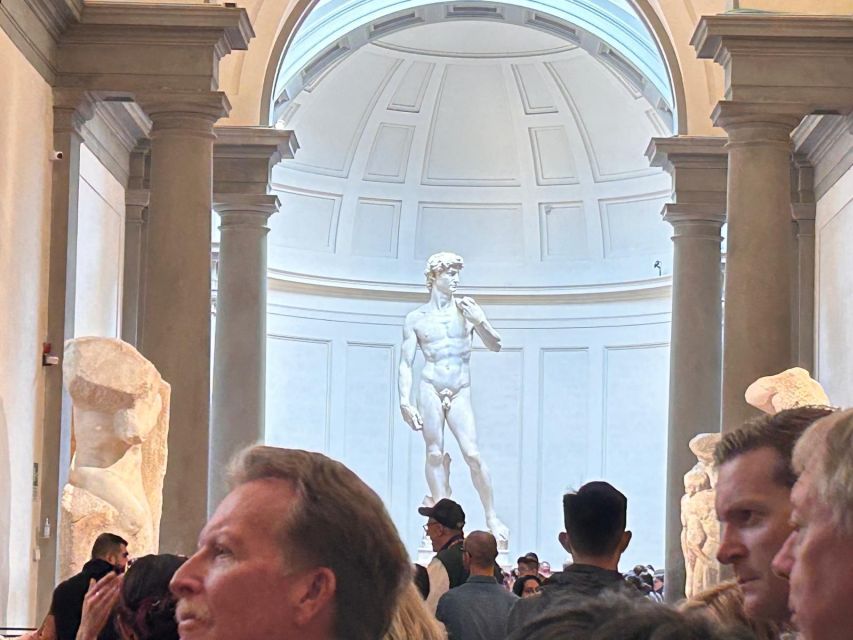
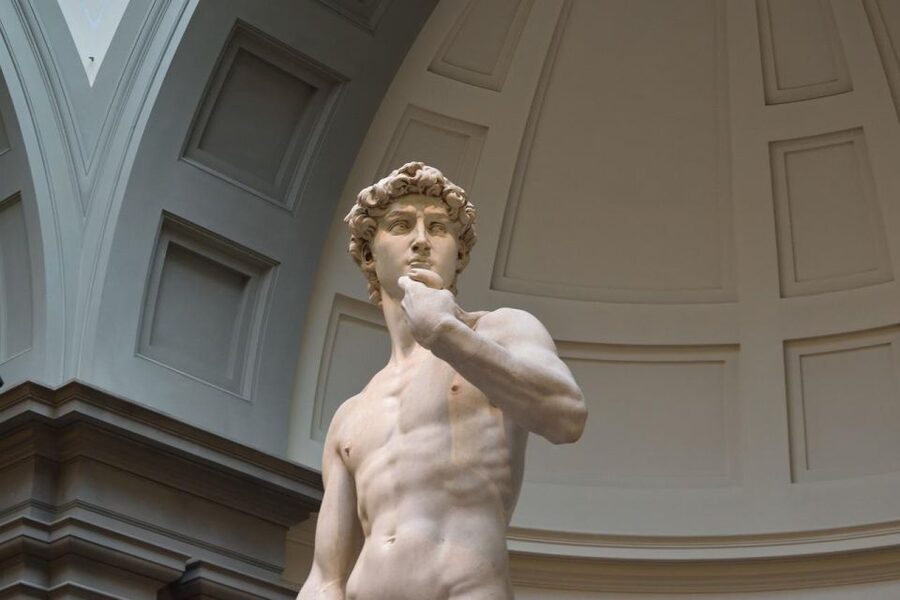
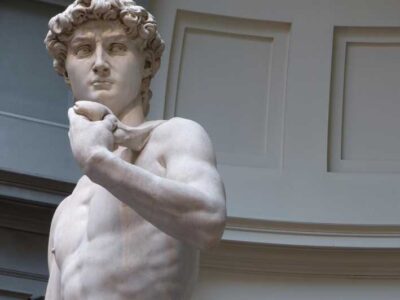
The headline is Michelangelo’s David. Even if you’ve seen photos before, the real sculpture hits differently because of scale and presence. The main hall is where you’ll want to orient yourself quickly, since this is the most time-sensitive moment of your visit.
Along with David, you’ll also be able to see some of Michelangelo’s unfinished works in the main hall area. That pairing is one of the smartest reasons to visit the Accademia rather than just ticking a single famous statue. You get the finished icon and the workshop reality side by side, which helps you understand how art was made during that era.
How to enjoy this section:
- Go early in your timed window so you can slow down for David without shoulder-to-shoulder crowd pressure
- Use the audio during the first major sight, then switch to selective audio so the rest of the museum feels calmer
If you like art stories with context, the audio guide is designed to walk you through the collection as you move. If you prefer hands-on interpretation, this version won’t replace a licensed live guide, but you can still build a solid understanding with the app and your own looking.
More museum halls from Turin to Palermo:
- Florence: Skip-The-Line Uffizi Gallery Timed Entry Ticket
★ 4.5 · 27,832 reviews - Florence: Leonardo Interactive Museum Entry Ticket
★ 4.5 · 11,763 reviews - Uffizi Gallery Small Group Tour with Guide
★ 4.5 · 4,923 reviews - Florence: Accademia Gallery Guided Tour with Entry Ticket
★ 4.6 · 2,253 reviews
Gipsoteca plaster models and the Medici instrument hall
After David, you’ll be in the part of the museum that many visitors rush through. That’s a mistake. The Accademia has a rare kind of behind-the-scenes material.
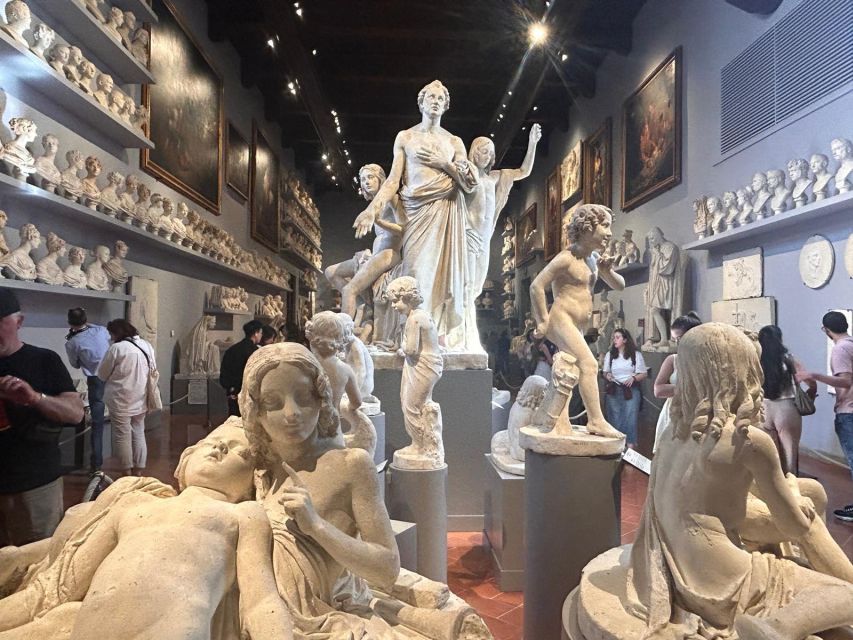
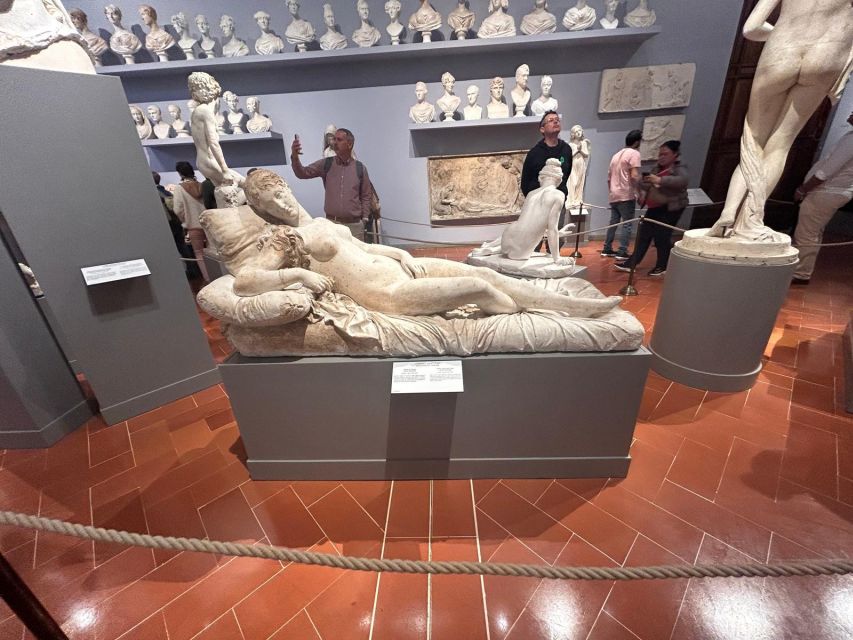
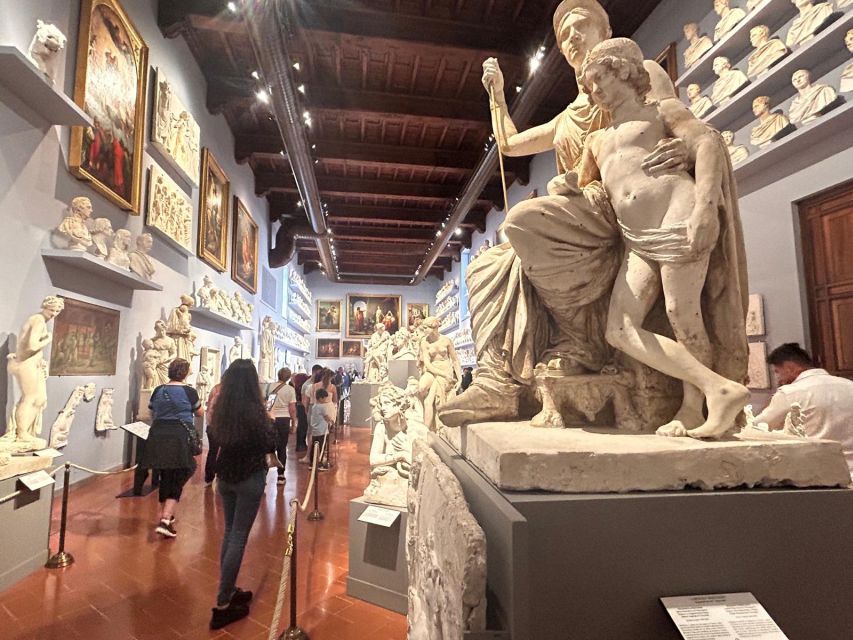
First, there’s the Gipsoteca, where you can see original plaster models by 19th-century Florentine sculptors. These aren’t just decorative. They show how sculptors studied form and proportion, and they connect the museum’s famous works to the broader sculpture tradition that grew around them.
Next, head toward the Medici collection musical instruments. You’ll find original instruments, including three by Stradivarius. It’s an unexpected detour from statue-only museum thinking, and it works because it reminds you that Renaissance power was not only about art on walls. Court culture included music, craftsmanship, and collections built to impress.
If you’re the kind of visitor who enjoys texture and craft, this section is a standout. Even if you’re not a musician, seeing instruments tied to a historic collection adds a different kind of depth.
Practical note: this museum involves walking between floors and galleries, and it can be tiring in warm weather. The best mindset is to pace yourself, not to sprint from “must-see” to “must-see.”
Painting galleries: Giotto, Botticelli, and the evolution of styles
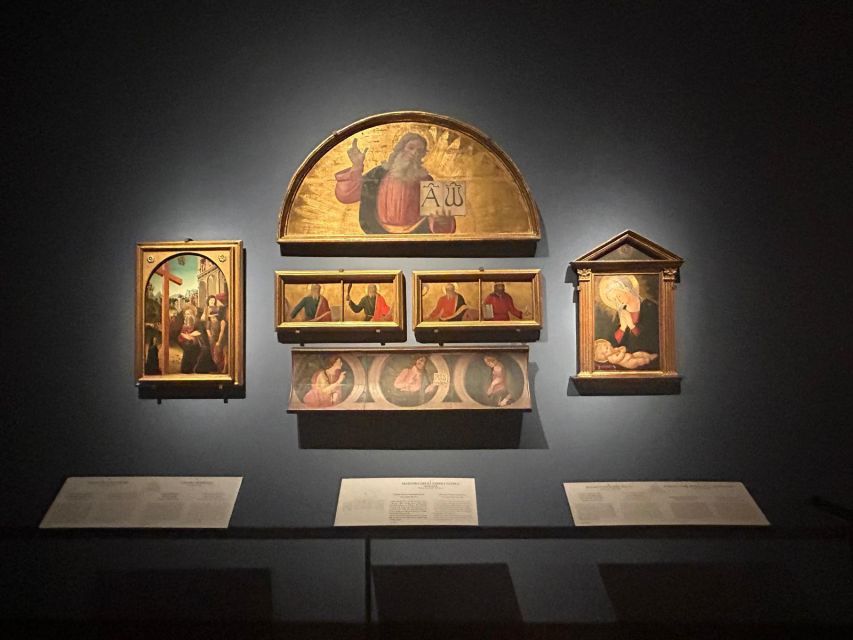
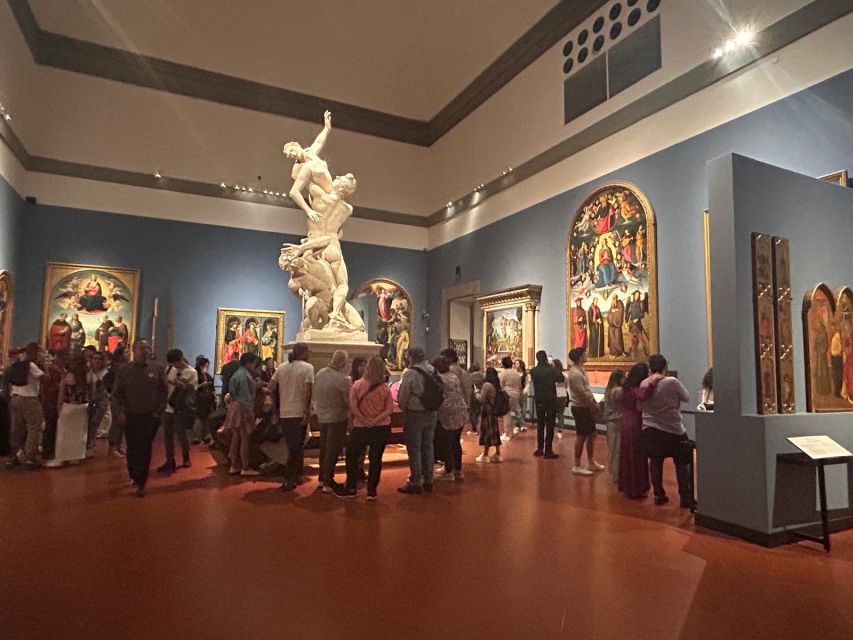
The museum’s painting galleries are where the Accademia expands beyond one sculpture and into a broader picture of European art. You’ll move through Medieval and Renaissance-era masterpieces, and the experience includes examples tied to painters like Giotto and Botticelli.
What I like about this setup is that it lets you compare how styles shift over time. You’re not stuck with one art form or one decade. As you progress through the galleries, you’ll likely notice changes in composition, mood, and how figures are represented.
Some people report that the app doesn’t always match the museum layout perfectly, so I recommend a simple approach:
- Look up, not just at eye level
- Pause on the paintings that catch your attention, even if you don’t hear every audio segment
- Treat the audio as a guide, not a requirement
If you want to truly understand what you’re seeing, this is one of the best Florence museum choices because it gives you more than famous names. It gives you the artistic “why” through the organization of galleries and the story-style audio narration.
Top-floor altarpieces: finishing strong instead of feeling rushed
On the way toward the end of your visit, plan for the top floor. You’ll find magnificent altarpieces there, which tend to feel especially powerful because they’re designed for a specific kind of viewing distance and reverence.
This last section is also where timing matters. Entry times are enforced, and security and crowd control can influence how quickly you move through the museum. If your slot is delayed, you may feel pressure later. If that happens, don’t try to see everything. Pick the altarpieces that draw you in, then let the rest go.
A good strategy is to use your audio guide earlier for orientation, then rely more on your own attention later. That way, if the app becomes confusing or you lose signal, you still have a fulfilling experience.
Price and value: is $38 worth it for Accademia entry?
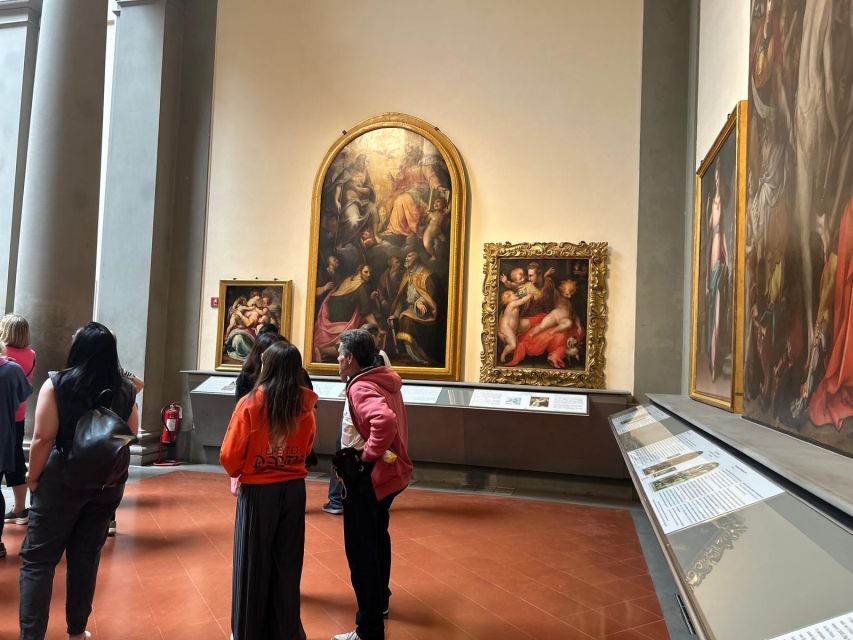
At $38 per person, you’re paying for three things:
- Admission to the Accademia Gallery
- Skip-the-line access through a timed ticket and separate entrance
- An included POP GUIDE audio app (though headphones are on you)
If you’re visiting during peak season, the ability to avoid the worst parts of the onsite ticket line can make this feel like a bargain rather than an added cost. Even when people report some residual waiting, the overall theme is that pre-booking saves time and uncertainty.
The main “value tax” is that headphones are not included, and your smartphone needs to handle setup and playback. If you forget either, the experience becomes less smooth. The other point is that this is not a live guided tour. If you want a licensed guide talking directly at you with deeper art history, this might feel less satisfying than a full guided option.
Who gets the best value from this ticket?
- Art lovers who enjoy self-paced museum time
- Visitors who want David first, then expand into related sculptures and paintings
- People comfortable with a phone-based audio experience
Who this works best for (and who might want a different option)
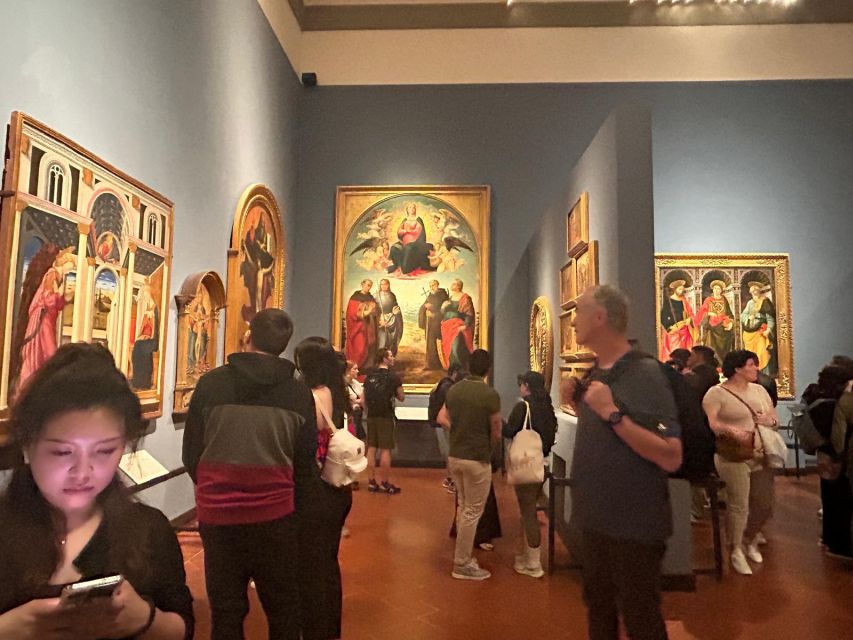
This is ideal if you like the idea of arriving at a clear meeting point, exchanging a voucher for a physical ticket, and then walking the museum at your own rhythm.
It’s also a strong choice for first-timers because the museum’s major attractions are concentrated: you get David, unfinished works, Gipsoteca plaster models, Medici instruments, and a structured route through painting galleries. The audio guide helps you connect what you’re seeing into a bigger art timeline.
If you hate phone-based audio or you don’t have reliable data or battery, you’ll likely feel annoyed by the setup requirements. Also, if you want a live, exhibit-level explanation from a licensed guide, the app format may feel less effective than human interpretation.
Based on how people describe their experiences, the best match is someone who is:
- Okay with downloading and using an app
- Willing to bring headphones
- Happy to spend time walking between galleries without a group pacing you
Should you book this Accademia Gallery timed entry?
Book it if you want an efficient, self-guided Accademia visit centered on Michelangelo’s David, with smart bonus stops like the Gipsoteca and Medici instruments. The price makes sense when you factor in the practical benefit of a reserved timed ticket and the separate entrance.
Skip this version if you know you want a live guided lecture style experience, or if you’re worried about app reliability and you don’t want to troubleshoot your phone on arrival. In that case, you might be happier with an option that includes a human guide.
My final rule of thumb: if you can handle a pre-downloaded audio app and you’ll arrive a little early for setup, this ticket is a solid way to enjoy one of Florence’s most famous museums without adding unnecessary stress.
FAQ
Where is the meeting point for the Accademia Gallery ticket exchange?
Meet your host and exchange your GetYourGuide voucher for a physical ticket in front of the Carrefour express supermarket, Via Ricasoli 115 (red number). Look for a staff member holding a white flag with ENJOY ROME written on it.
What’s included with the ticket?
You get an Accademia Gallery entrance ticket and the POP Guide audio guide app.
Do I need headphones?
Yes. Headphones are not included, and you’re advised to bring your own for the best experience.
Do I need to download the audio guide app before arriving?
Yes. Download the POP GUIDE app from the App Store or Google Play before you arrive. At the meeting point, staff will provide you with your login credentials.
Are pets or luggage allowed?
Pets are not allowed. Luggage or large bags and bags are not allowed.
Is the experience wheelchair accessible?
Yes, the activity is wheelchair accessible.
More Self-Guided Tours in Florence
- Florence: Uffizi & Accademia Priority Tickets with Audio App
★ 4.4 · 1,253 reviews - Florence: Eco-Friendly Golf Cart City Tour with Audio Guide
★ 4.6 · 1,094 reviews - Florence: Uffizi Skip-the-Line Ticket & Digital Audio Guide
★ 4.2 · 1,044 reviews - Private Self-Guided E-Bike Ride in Tuscany with Vineyard Visit
★ 5.0 · 775 reviews
More Audio Tours in Florence
- Florence: Cathedral & Brunelleschi’s Dome Ticket & Audio App
★ 4.4 · 6,973 reviews - Florence: Michelangelo’s David Priority Ticket & Audio App
★ 4.4 · 6,812 reviews - Florence: Uffizi Priority Ticket & Masterpieces Audio App
★ 4.2 · 6,402 reviews - Florence: Michelangelo’s David Entrance Ticket and Audio App
★ 4.3 · 1,901 reviews
Just introduced: the newest Florence write-ups
- Florence: Duomo Cathedral Fast Track Entry Ticket★ 3.5 · 340 reviews
- Florence: Uffizi Entry Ticket & Audio Guided Tour with Host★ 3.9 · 342 reviews
- Uffizi Gallery: Entry tickets + audio guide★ 4.0 · 347 reviews
- Florence: Palazzo Vecchio Skip-the-Line Entry Ticket★ 4.2 · 349 reviews
- From Florence: Tuscany Hills Wine Tour★ 4.3 · 349 reviews
- Cooking Art Brunelleschi★ 5.0 · 356 reviews
- Florence: Statue of David & Duomo Guided Tour with Tickets★ 4.5 · 357 reviews
Accademia Gallery Tickets, compared.

Florence Accademia Gallery Tour with Entrance Ticket Included
Read our review →

Skip the line: Uffizi and Accademia Small Group Walking Tour
Read our review →
Accademia Gallery Guided Tour with Entry Ticket
Read our review →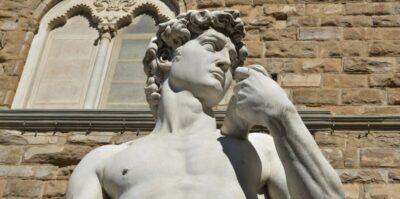
Uffizi Gallery and Accademia Gallery Guided Tour
Read our review →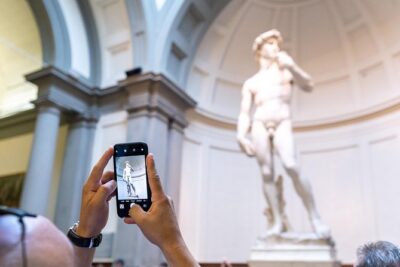
Michelangelo’s David, Accademia & Uffizi Small Group Tour
Read our review →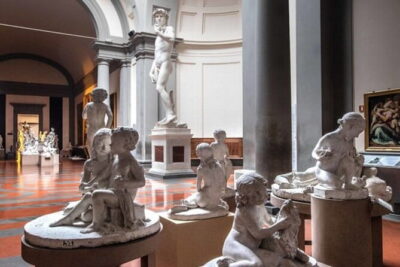
Accademia & Uffizi Museums: Small Group Tour with Optional Lunch
Read our review →Browse the lists this tour appears in