
Reviewed · ITALY
Interactive Educational Course on Birds of Prey
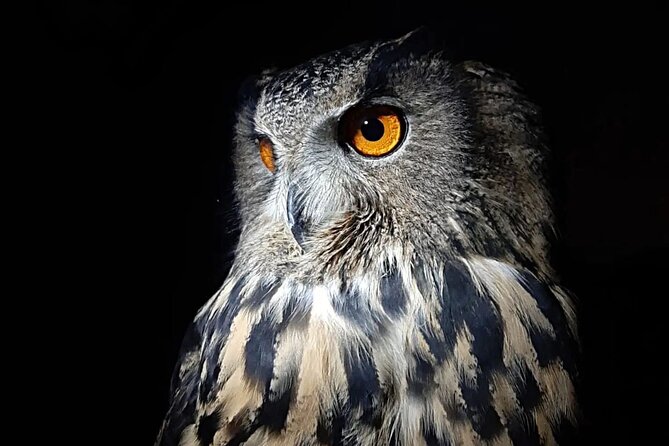
A raptor course in the Pollino Mountains is oddly calming. This interactive, English-language program at Setteventi del Pollino mixes short steps in the grounds with real explanations of birds of prey, including how falconry is practiced with care.
I love the way the session feels like an actual lesson, not a performance. I also love that you get that rare chance for close interaction while the guide keeps everything safe and steady.
One thing to consider is that finding the site can be a little tricky, since signage is minimal by the road.
This 3-hour experience runs through three easy steps, so you should be able to do it even if you are not a “hiker.” You’ll also walk about 300 to 400 meters, which is short but still involves uneven outdoor ground.
In This Review
- Key highlights you will care about
- A 3:00 pm raptor lesson in the Pollino Mountains
- Getting to Setteventi del Pollino (and actually finding it)
- The three easy stages of the interactive course
- How the course teaches respect, not circus tricks
- Meet raptors up close, including the eagle Abel
- Price and value: $42.34 for real learning time
- Who this fits best (and who should ask questions first)
- Tips to make your raptor course smoother
- Should you book this birds of prey course?
- FAQ
- Where does the birds of prey interactive course take place?
- What time does the experience start?
- How long is the experience?
- Is this activity private?
- What language is the course offered in?
- Do you walk during the course?
- Do I need a mobile ticket?
- What is the cancellation policy?
Key highlights you will care about
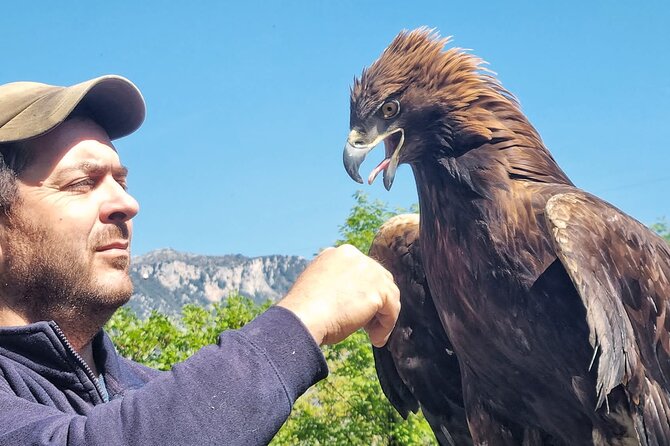
- Meet raptors up close during a calm, supervised interactive experience
- Learn falconry history and modern practice with respect for the animals
- Guide-led course by Roberto, a presenter known for keeping the birds settled
- Short walk only, about 300 to 400 meters, with no demanding segments
- Includes a close encounter opportunity connected to Abel, an eagle
- Private group format, so your group stays together for the full session
A 3:00 pm raptor lesson in the Pollino Mountains
This tour is scheduled for 3:00 pm, which is a smart time to plan around if you want daylight and cooler air than midday. The whole experience clocks in at roughly 3 hours, so it feels like a focused activity rather than a half-day commitment.
You’ll be in Calabria, Italy, in the Pollino area, where the bird center sits close to the natural setting that makes these species easier to understand. The setting matters here, because you are not just learning facts in a room. You’re learning while you move through the same kind of outdoor environment raptors depend on.
Calabria would like you to meet a few others:
Getting to Setteventi del Pollino (and actually finding it)
The experience starts at the Setteventi del Pollino headquarters. You can arrive by your own means, which is convenient if you are already driving around Calabria or building a flexible day plan.
Cars have reserved, guarded parking. That little detail is more useful than it sounds, especially in rural areas where you do not want to waste time hunting for safe parking at late afternoon.
Now, the realistic heads-up: the place can be a bit hard to find because there is only a small sign by the road. The good news is that the shared maps point you to the correct spot. If you rely on navigation, use it early, not at the last minute.
You’ll need a mobile ticket, so have it ready on your phone before you arrive. It’s also helpful to keep an eye on your exact meeting point, since the experience ends back where it starts.
The three easy stages of the interactive course
The course runs in three different steps, and the key detail is that none of them are demanding. That makes it a solid option if you are traveling with mixed ages or energy levels, because you are not signing up for a long trek.
You’ll also do a short walk of about 300 to 400 meters. For most people, that is comfortably manageable. Still, I suggest wearing shoes with grip, because outdoor paths can be uneven even when distances are short.
What really changes your experience is the way the stages are paced. Instead of throwing you straight into the action, the session builds, step by step, toward closer interaction and deeper learning. That pacing is part of why the whole thing stays calm.
Roberto leads the program and is known for his steady, friendly approach. In practical terms, that matters because you are meeting powerful animals, so the rhythm of the session and how the birds are managed affects everything: your comfort, their comfort, and your ability to learn.
How the course teaches respect, not circus tricks
One of the most praised aspects is that this is not a circus-style show. The tone is educational, and the focus is on how falconry works when it is done responsibly.
You’ll get a lesson that spans both ancient and current falconry. That blend helps you understand why raptors have been tied to human life for centuries, while also showing how today’s practice aims for welfare and conservation.
There is a big difference between watching birds react from a distance and learning what you should notice up close. The “what” matters here, because you start paying attention to behavior, calm handling, and the kind of patience falconry requires. In other words, this is the kind of activity that turns your brain on, not just your camera roll.
I also like that the program emphasizes respect. That shows up in the way the birds are kept calm, and in how the guide helps you interact in the right way.
Meet raptors up close, including the eagle Abel
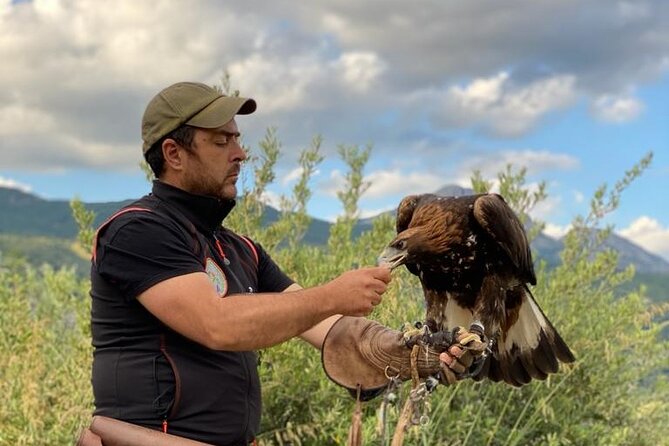
The interactive part is the headline. You have an opportunity for close contact with birds of prey, and the whole presentation is designed so the raptors stay settled during the experience.
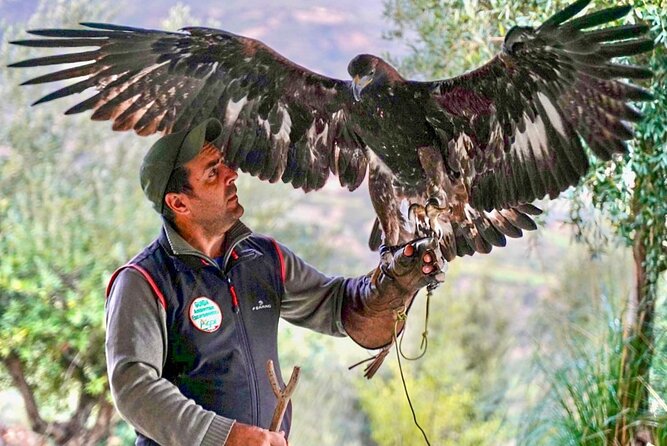
One review specifically highlights close interaction with five birds of prey being repopulated into the area. Even if your exact group of birds varies by day, the conservation angle is consistent: these are not just “display” animals. The center’s mission ties the birds to repopulation efforts and the broader ecosystem of the Pollino region.
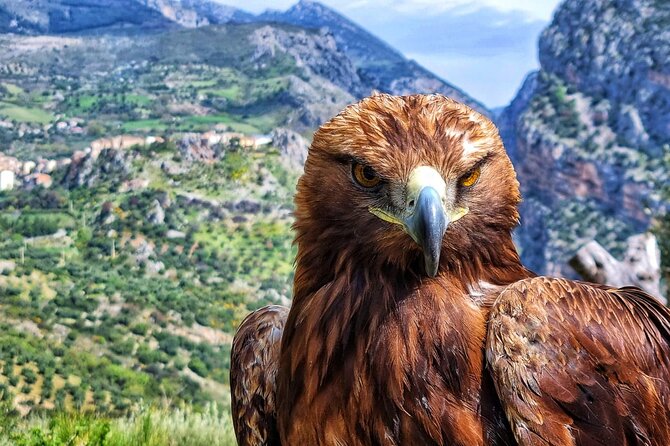
A special moment is the end of the route, which includes a close encounter opportunity with Abel, an eagle. That kind of name recognition makes the experience feel personal and memorable, and it also helps you connect the lesson to a specific bird rather than a vague concept of raptors.
The practical takeaway for you is this: come ready to slow down. If you rush, you will miss the point. If you pay attention, the birds and the explanations start to make sense fast.
Price and value: $42.34 for real learning time
At $42.34 per person, this experience sits in the “small ticket, big payoff” category. You are paying for a guided, interactive education that lasts around three hours, not just a quick look around a facility.
Here is what makes the value feel strong:
- Private group format, so your group stays together for the whole session
- A guide who explains what you are seeing and how raptors are handled
- Multiple opportunities to interact, learn, and ask questions in context
- A short walk and a structure made for general participation, not intense trekking
The other value lever is the quality of the teaching. Roberto is praised for being an expert and a lively presenter who keeps the raptors calm. When a guide can maintain calm with powerful animals, you get both safety and a better learning environment. That is worth real money, even if the price is modest.
Who this fits best (and who should ask questions first)
This is one of those activities that fits a wide range of travel styles. Most travelers can participate, and the course is described as suitable for everyone because the steps are not demanding.
It is especially good if you:
- Want an animal experience that is more educational than performative
- Are traveling in a group and like the comfort of a private format
- Enjoy learning about how practices like falconry are done today, not just myths and legends
It may be less ideal if you are looking for a fast, purely scenic stop with no interaction. This is about birds and learning, so you should be comfortable spending time listening and observing.
Accessibility note: for disabled people, you should ask for specific info first. The general guidance says most people can take part, and service animals are allowed, but individual needs vary.
Tips to make your raptor course smoother
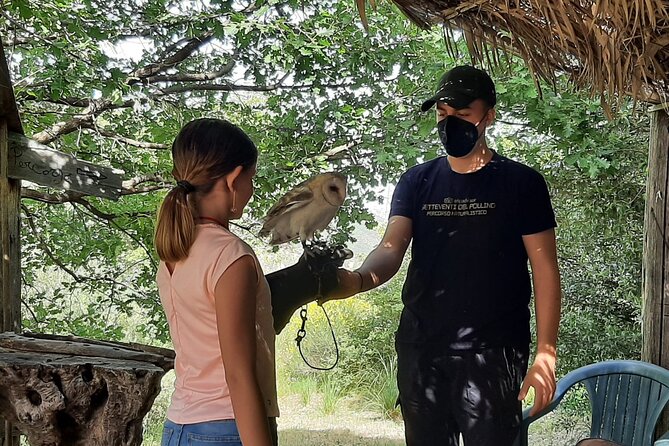
A few practical moves will help you enjoy this more and stress less.
First, plan your timing. Starting at 3:00 pm means you should give yourself a cushion to find the site and settle in before the session begins. If signage is limited, that extra buffer prevents the late-arrival scramble.
Second, bring the right footwear. You’ll cover only 300 to 400 meters, but you’re still walking outdoors. Choose shoes you can trust on uneven ground.
Third, keep your phone handy for the mobile ticket and avoid last-minute charging anxiety. It’s also smart to keep your attention on the guide and the birds during the interaction, because that’s when you get the clearest learning.
Finally, treat the moment like a class, not a photo shoot. When you follow the guide’s instructions, you help the experience stay calm and you’ll actually understand what you’re seeing.
Should you book this birds of prey course?
If your trip includes time in Calabria’s Pollino region, I think this is a strong booking. It combines close-up raptor interaction, a structured lesson led by Roberto, and a conservation-minded approach that stays respectful rather than showy.
Book it if you want a guided experience that feels safe and thoughtful, with enough time to learn and absorb what you are seeing. Skip it only if you want something purely scenic, or if you need very specific accessibility accommodations and you have not yet confirmed the details.
If you’re on the fence, here’s your simplest decision rule: if you care about learning how birds of prey are handled and why falconry matters, this course is a great fit for your afternoon.
FAQ
Where does the birds of prey interactive course take place?
It takes place at the Setteventi del Pollino headquarters in Calabria, Italy.
What time does the experience start?
The start time is 3:00 pm.
How long is the experience?
It lasts about 3 hours (approximately).
Is this activity private?
Yes. It is a private tour or activity, and only your group participates.
What language is the course offered in?
The experience is offered in English.
Do you walk during the course?
Yes, there is a walk of about 300 to 400 meters.
Do I need a mobile ticket?
Yes, the experience uses a mobile ticket.
What is the cancellation policy?
You can cancel for a full refund if you cancel up to 24 hours in advance of the experience’s start time.
Just introduced: the newest Calabria write-ups
- “Soft” rafting★ 5.0 · 266 reviews
- Rafting “Canyon”★ 5.0 · 328 reviews
- Rafting: Grand Canyon of Lao★ 5.0 · 406 reviews