
Reviewed · WORKSHOPS
Levanto: Pesto-Making Class
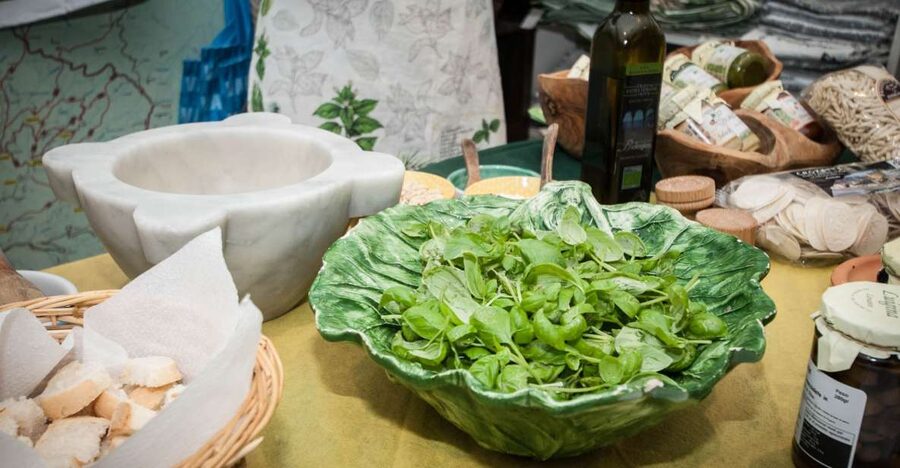
Mortar, basil, and wine in Levanto. At Il laboratorio del Pesto, you’ll learn the Ligurian way to make pesto right in the historical center, then taste the results like a local.
I love the small-group feel and the hands-on comparison between modern pesto and the traditional mortar method. One practical consideration: the experience does not include lunch or dinner, so you’ll want a plan for food afterward.
In This Review
- Key highlights at a glance
- Finding Il laboratorio del Pesto in Levanto’s historical center
- The warm-up: sparkling wine, olive oil, and local bites
- Modern pesto vs traditional mortar pesto, and why you should care
- Making pesto the Ligurian way: step-by-step in your 90 minutes
- What you eat with your pesto, plus the pairing logic
- Price and value: is $52 a fair deal?
- Who this Levanto pesto class suits best (and who should rethink it)
- Tips to get the most out of the class
- Should you book this Levanto pesto class?
- FAQ
- How long is the pesto-making class in Levanto?
- What is included in the $52 per person price?
- Where do I meet the instructor?
- What languages is the class taught in?
- Is it suitable for children?
- Is the experience wheelchair accessible?
Key highlights at a glance
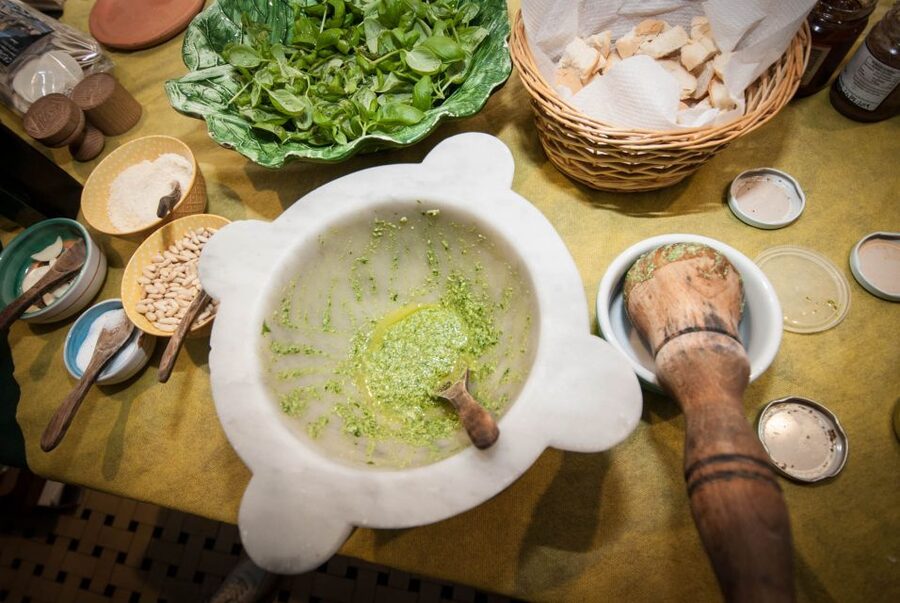
- Hands-on traditional method: mortar and pestle with basil, salt, pine nuts, garlic, then cheese and olive oil
- Taste-before-you-make: you sample pesto variations, including a modern approach, so you can taste the difference
- Tasting table included: olive oil tasting plus wine with local bites and your finished pesto
- Levanto roots since 1976: the shop has been teaching pesto for decades, right in the historical center
- Small group of up to 8: more direct instruction and more chances to ask questions
- Italian and English instruction: your instructor explains the steps and the logic behind them
Finding Il laboratorio del Pesto in Levanto’s historical center
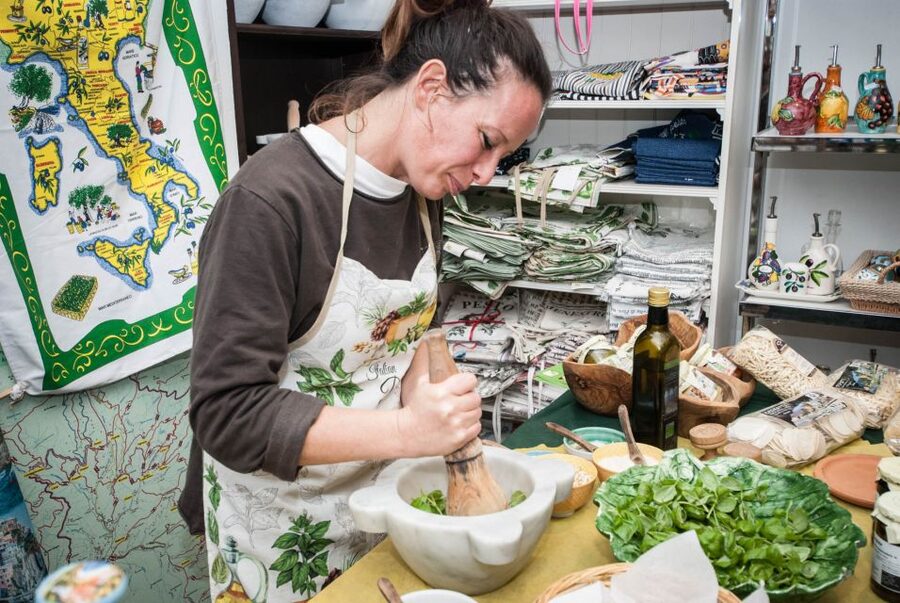
Levanto’s historic center is compact, and that is a big reason this class feels easy to slot into a travel day. You meet your instructor at Il laboratorio del Pesto, and from there the experience stays focused on food, technique, and taste rather than a long tour of sights.
What makes this setting worth it is the atmosphere. You are not doing a cooking class in a random kitchen room. You’re in a shop that’s been known for pesto for a long time, which means the whole flow feels like a real trade, not a demo. If you like food experiences that feel local, this helps.
I also like that the group stays small, capped at 8 participants. In a class like this, you want eyes on your technique. The mortar method is physical, and small-group instruction makes it easier to get the texture right without guessing.
Introductions we still owe you around Liguria
The warm-up: sparkling wine, olive oil, and local bites
Before you start pounding basil, you ease into the flavors. The class begins with a glass of sparkling wine, and you also get extra virgin olive oil on bruschetta as an intro to the ingredients that matter.
Then comes an important step: you taste pesto made with a more modern method. This isn’t just “try pesto.” It sets up the whole lesson. When you later make it the traditional way, you’ll understand why the texture, aroma, and bite change when you grind and emulsify by hand.
Another plus is the olive oil tasting. Olive oil is not interchangeable here. Liguria’s pesto lives or dies by good oil, and learning how it tastes on its own helps you notice what’s working when it’s folded into the sauce.
Food-wise, you’ll also have local products with your tasting. One review noted lemon cake and limoncino at the end, and that kind of finish fits the coastal rhythm of Liguria. Even if your exact menu varies slightly by day, you can expect local bites that pair with what you’re learning.
Modern pesto vs traditional mortar pesto, and why you should care
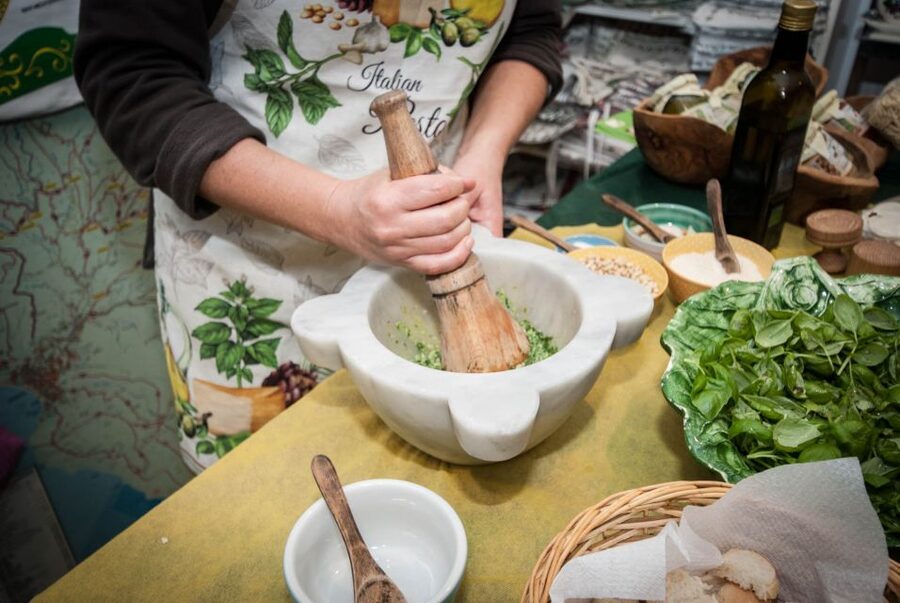
This is the part I think most people appreciate once they taste side by side.
Modern pesto, depending on how it’s made, tends to feel smoother and can taste more uniform. Traditional pesto, made with a mortar, tends to be more fragrant and slightly rustic. The basil flavor comes through differently, and the pine nuts and garlic don’t just disappear into a blended paste. You can actually sense the grinding process in the final sauce.
You’ll learn this difference in a practical way, not by theory. You taste the modern version first, then you make the traditional one with a mortar. That order matters because your palate is already calibrated. When you finally pound basil yourself, you’re not just following steps. You’re making a sauce that matches your own senses of what “right” tastes like.
Making pesto the Ligurian way: step-by-step in your 90 minutes
The core of the class is hands-on. You’ll wash and dry basil leaves, then pound them together with salt, pine nuts, and garlic. That mortar work is where the lesson lives.
Here’s what you’re really training your palate and technique for:
- Basil texture: smashing releases aromatic oils, and dryness matters for how the paste forms
- Pine nuts and garlic: grinding makes them mellow and aromatic instead of sharp
- Emulsification: olive oil is added to bring everything together into a thick, fragrant pesto
After you pound the basil base, you add Parmigiano cheese and extra virgin olive oil. The goal is a thick pesto that smells bold and tastes intense, not watery or bland.
It helps that the instructor walks you through the stages. Many participants noted the class was clear, interactive, and step-by-step. Some also mentioned apron time and that everyone was guided through the process. That matters, because pesto is forgiving in taste but specific in texture. You’ll get better results when someone can spot small issues in real time.
And yes, the mortar method can be messy and requires a little elbow grease. If you like cooking activities where you actually do the work, this is a fun workout with a delicious reward.
What you eat with your pesto, plus the pairing logic
The class doesn’t end when you finish making pesto. You taste your homemade pesto with a glass of white wine and more local products.
That pairing is a smart teaching tool. White wine helps lift the aroma of basil and the salty richness of Parmigiano. It also makes it easier to notice how pine nuts and garlic shift as the pesto texture changes.
The local bites you get alongside your tasting reinforce the theme: pesto is part sauce, part culture, part ingredient. You’re not just tasting pesto alone. You’re tasting it in the context where it actually gets eaten, like over bruschetta or alongside olives.
A few reviews also mention lemon-oriented finishing items and that the instructor offered extra touches like taking photos. I’d treat those as nice add-ons rather than guaranteed extras, but they fit the overall vibe: friendly, welcoming, and very food-centered.
Price and value: is $52 a fair deal?
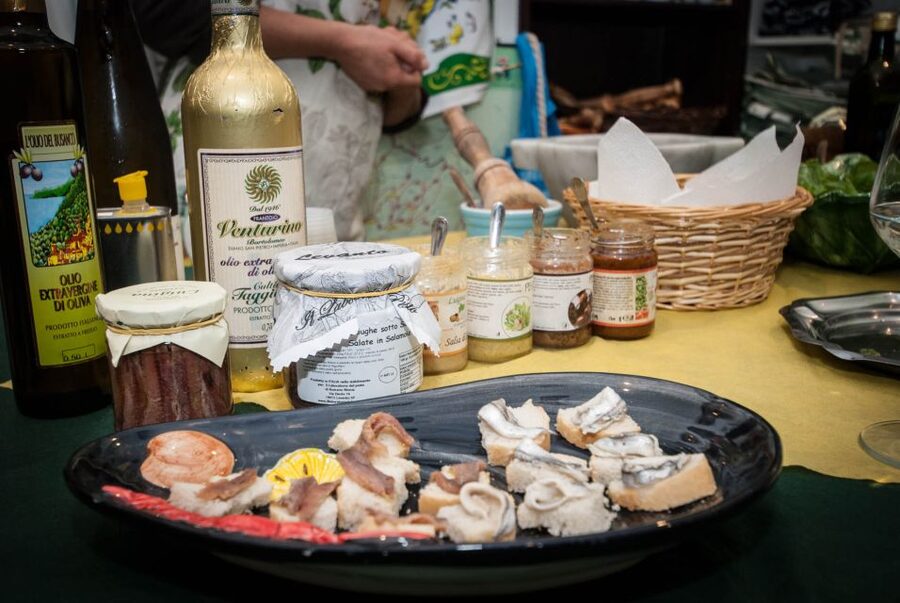
At $52 per person for about 1.5 hours, this class is priced like a proper food workshop, not a quick tasting. The value comes from what’s included:
- Pesto-making instruction
- Wine and local appetizers
- Olive oil tasting
If you break it down, you’re paying for guided technique, ingredient handling, and guided tasting. You’re also getting something you can reproduce later, assuming you buy quality ingredients. When people come home after this kind of class, they stop thinking pesto is a jarred grocery product. They start making it and adjusting it, like salt level, garlic intensity, and how thick they want the sauce.
One more value point: the class size is capped at 8. That keeps the experience from feeling like a large group show. If you’ve ever been stuck behind someone in a cooking demo, you’ll appreciate the smaller setup here.
Who this Levanto pesto class suits best (and who should rethink it)
This activity is a great fit if you want a hands-on food lesson in a real local shop. It’s especially good for:
- Food lovers who like making things, not just watching
- Travelers who want an authentic Ligurian skill, not a generic cooking class
- People who enjoy wine and pairing with bites
It’s less ideal if:
- You need a full meal included, because lunch or dinner is not part of the package
- You’re bringing kids under 10, since the class is not suitable for children under 10
Language-wise, it runs in Italian and English, so you should be covered no matter what you speak. And it is wheelchair accessible, which is a helpful detail for planning.
Tips to get the most out of the class
A little prep makes the session more enjoyable and the pesto better:
- Arrive on time: the class is short, so you don’t want to miss early tastings and the first instructions
- Pay attention to texture: pesto isn’t just flavor, it’s thickness and how it looks when it’s ready
- Ask about variations: some participants mentioned the instructor shared recipe variations and differences, which is exactly the kind of information that helps you recreate pesto later
- Take notes on taste: garlic and salt levels matter. If you like it less intense, you’ll want to remember that preference
If you have dietary needs, you should plan to ask in advance. One participant mentioned getting gluten-free bread and gluten-free chocolates for dessert, so it appears possible to accommodate certain needs when asked.
Should you book this Levanto pesto class?
I’d book it if you want a focused, high-satisfaction food experience in a small group, and if you care about doing pesto the traditional Ligurian way. The modern vs traditional tasting, the olive oil component, and the hands-on mortar method are what make this more than a casual sampler.
You might skip it if you’re primarily hunting for big sightseeing time, since this is a food-first class that lasts about 1.5 hours and does not include a full meal. But if you’re even moderately into cooking and Italian flavors, it’s a very practical way to spend part of a day in Levanto.
FAQ
How long is the pesto-making class in Levanto?
The class lasts 1.5 hours.
What is included in the $52 per person price?
You get the pesto-making class, a glass of wine with local appetizers, and an olive oil tasting.
Where do I meet the instructor?
Meet your instructor at Il laboratorio del Pesto.
What languages is the class taught in?
The instructor speaks Italian and English.
Is it suitable for children?
The class is not suitable for children under 10 years old.
Is the experience wheelchair accessible?
Yes, the activity is wheelchair accessible.
Just introduced: the newest Liguria write-ups
- Genoa: Full-Day Tour to Camogli, San Fruttuoso & Portofino★ 4.4 · 3,295 reviews
Workshops, compared.

3 in 1 Cooking Class near Navona: Fettuccine, Ravioli & Tiramisu
Read our review →
Florence Pizza or Pasta Class with Gelato Making at a Tuscan Farm
Read our review →
Pasta & Tiramisu Cooking Class with Unlimited Wine
Read our review →
Pizza-Making Workshop with Drink and Appetizer
Read our review →
Pasta & Tiramisu Class with Fine Wine by the Vatican
Read our review →
Cooking Class and Lunch at a Tuscan Farmhouse with Local Market Tour from Florence
Read our review →Browse the lists this tour appears in