
Reviewed · FOOD & DRINK
Parma: Parmigiano Production and Parma Ham Tour & Tasting
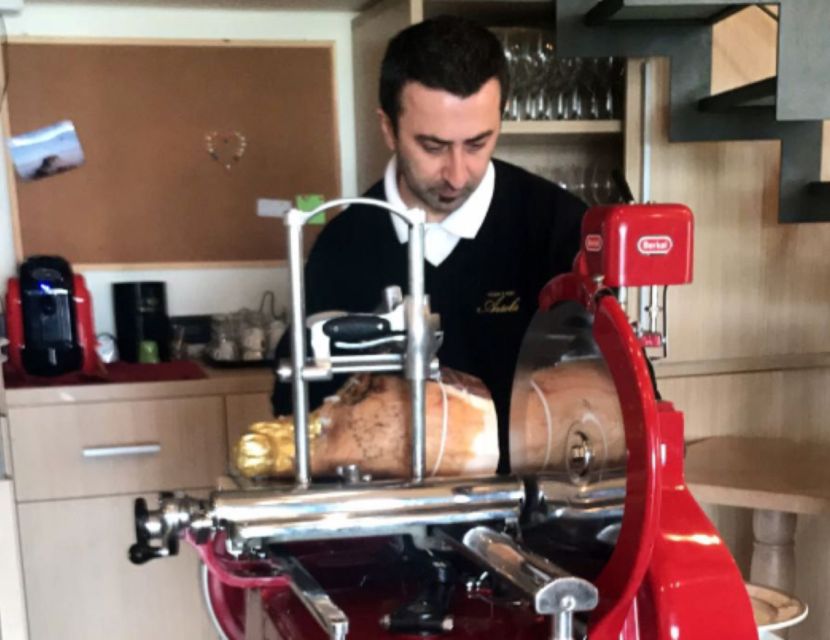
Cheese and ham, made up close. This half-day tour takes you through Parmigiano Reggiano production and then into Prosciutto di Parma territory, with a guide who explains what you are seeing and why it matters, in English or Italian. I especially like that you get hands-on factory context, then tasting time so the lessons stick fast. The guides also get big love in real feedback, with names like George, Loris, Mattia, and Sergio often called out for clear explanations and a friendly pace.
My second favorite part is the way the tour ties the Prosciutto di Parma process to a real outcome, from cold-stage handling and salting to seasoning chambers and the branding system that earns the Crown. You finish with a guided tasting of Parma ham plus a glass of local wine. One drawback to plan for: it is not suitable if you need wheelchair access or have mobility impairments, and the van ride also comes with restrictions like no large bags and no open-toed shoes.
In This Review
- Quick hits
- Why Parma is the perfect base for Parmigiano and Prosciutto
- The 4-hour flow, from NH Parma pickup to factory tastings
- Stop 1: Entering the Parmigiano Reggiano factory, from history to aging rooms
- Stop 2: The Parmigiano to Prosciutto shift, why the transition works
- Stop 3: Prosciutto di Parma production, cold stage to seasoning chambers
- The spillatura lesson and the Crown of Parma branding test
- Degustazione time: tasting Parma ham with local wine
- What the best guides seem to do right (and how that affects your experience)
- Group size and transport value, what you get for your money
- Who should book this ParmaLook Food Tours experience
- Who should skip it or adjust expectations
- Price and logistics, what you should plan before you go
- Should you book this Parma Parmigiano and Prosciutto tour
- FAQ
- How long is the Parma Parmigiano and Prosciutto tour?
- What is included in the tour price?
- Where do I meet for pickup in Parma?
- What languages are the guides?
- Is the tour suitable for wheelchair users or people with mobility impairments?
- Are there any rules about what I can bring or wear?
Quick hits
- Factory time, not just photos: see production areas plus final storage and seasoning steps for both products
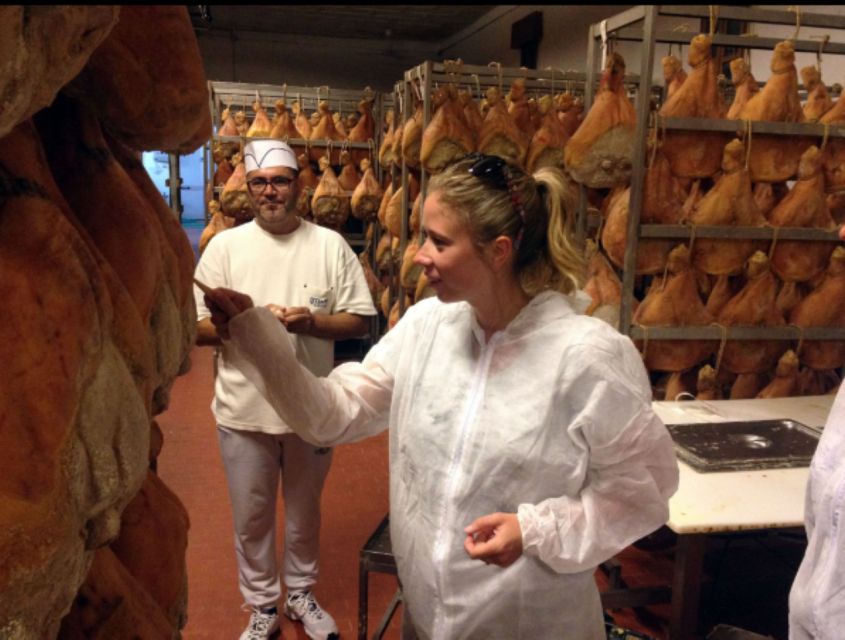
- A real ham process lesson: you learn about selection, salting machinery, resting, seasoning chambers, and spillatura
- Tastings that match the work: compare different aged Parmigiano Reggiano and sample Parma ham, finished with wine
- Small group feel: small group available, guided in English or Italian
- Round-trip van from Parma: pickup and drop-off from a convenient point in central Parma
Why Parma is the perfect base for Parmigiano and Prosciutto
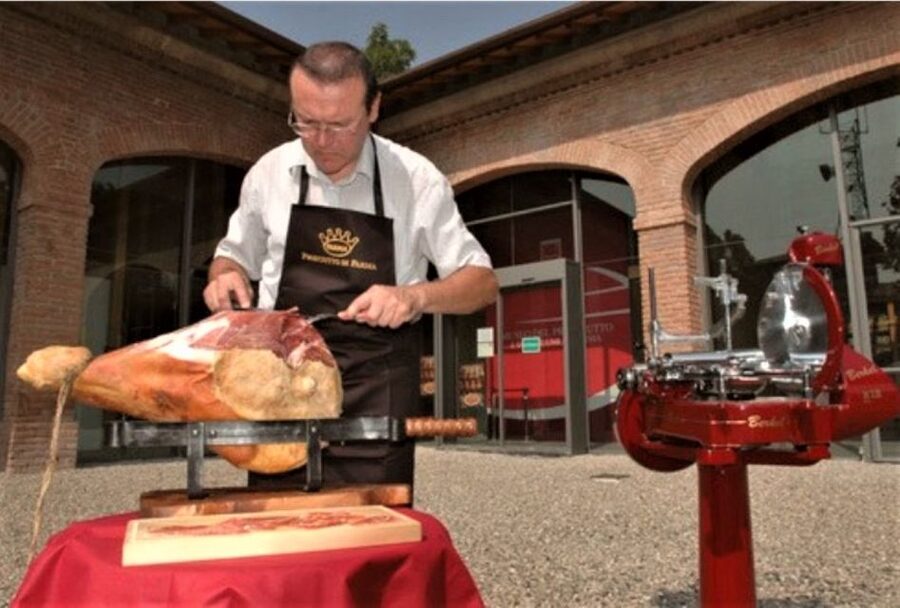
Parma is not just a pretty name on a food label. It is a working food region where two famous Italian staples come from specific methods, specific places, and long aging timelines. That is what makes this tour click for you if you like your souvenirs edible and your learning practical.
You are also getting more than a single “look and leave” stop. You move from Parmigiano Reggiano production into the Prosciutto di Parma world, so the day becomes a side-by-side lesson in how cheese and cured ham are built, protected, and judged.
More of Italy you can eat:
The 4-hour flow, from NH Parma pickup to factory tastings
The tour runs about 4 hours, with multiple short van transfers between stops. You start at NH Parma, Viale Paolo Borsellino, 31 (43122 Parma PR, Italy), where the van picks up from the hotel parking area. If you are arriving by train, the guidance is to head to the north exit Falcone/Borsellino, then find the NH HOTEL on the right, with the van waiting in front.
Once you are loaded, the rhythm is simple: cheese factory first (about 1.5 hours), then a longer ride to the ham area (with a 1 hour guided visit), then you return to the pickup point. This matters because you avoid the usual hassle of figuring out rural transit on your own, especially if you only have a half day in Parma.
Two practical notes. First, the tour takes place rain or shine, so plan on moving in outdoor stretches too. Second, there are clear limits on what you can bring: no large luggage or bags on the van, and you need closed footwear like you would for a walking tour, not sandals.
Stop 1: Entering the Parmigiano Reggiano factory, from history to aging rooms
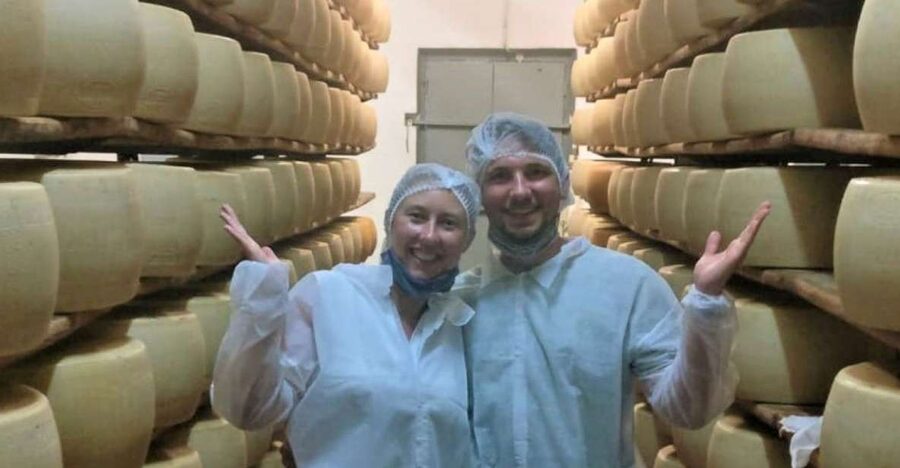
Your cheese visit is guided and includes entry tickets, plus time to shop at the end. The big win here is that you are not only watching a process, you are getting an overview of Parmigiano Reggiano history first, then walking through where the cheese moves for its final stage.
Inside, you will see the masters at work as your guide explains how the cheese is produced and how it is handled when it reaches the last phase. The stop is built around the end of the journey: the seasoning and storage rooms, where you can understand how aging becomes part science and part patience.
One especially useful payoff is the tasting of different aged Parmigiano Reggiano. That comparison is the moment when the tour stops being educational and starts being personal. I like doing this right in the flow, because you remember what you just saw when you taste.
You also get time to browse an on-site shop afterward. That is not fluff. It is your chance to pick up local products while they are still fresh in your mind, and with labels you can actually relate to from the factory explanations.
Stop 2: The Parmigiano to Prosciutto shift, why the transition works
Between the two factories, you get a van ride, around 40 minutes each way for the segments listed in the schedule. That break is not wasted time. It gives you a breather between two very different food worlds, and it helps you avoid the common problem where one visit blurs into the next.
Also, by moving from cheese aging rooms to ham production steps, you start spotting a theme: quality control is not a single moment. It is built into how the products are handled, stored, and checked as they develop.
Stop 3: Prosciutto di Parma production, cold stage to seasoning chambers
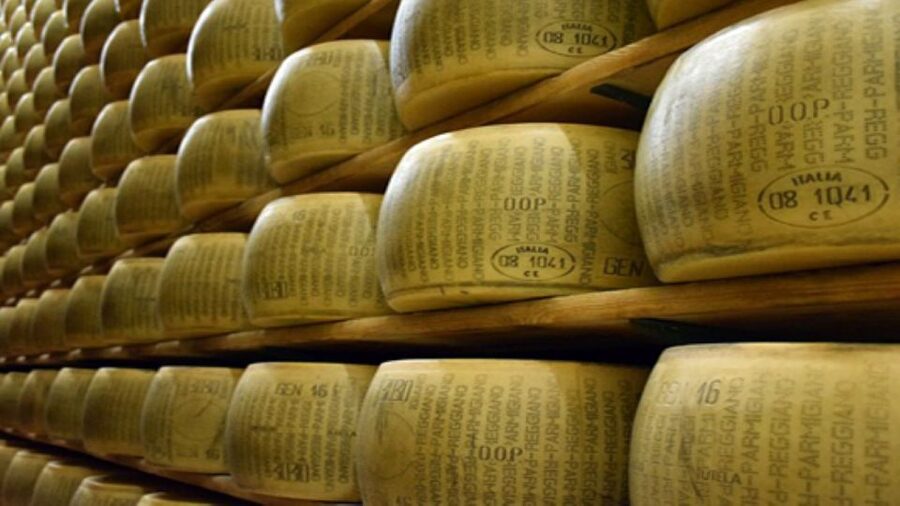
Your ham stop begins with a brief history of Prosciutto di Parma production, then you go straight into the “cold stage,” where fresh meats are processed. This is the part that helps you understand that cured ham is not just seasoning and waiting. There is an early phase that keeps everything in the right working conditions before the curing flavor work begins.
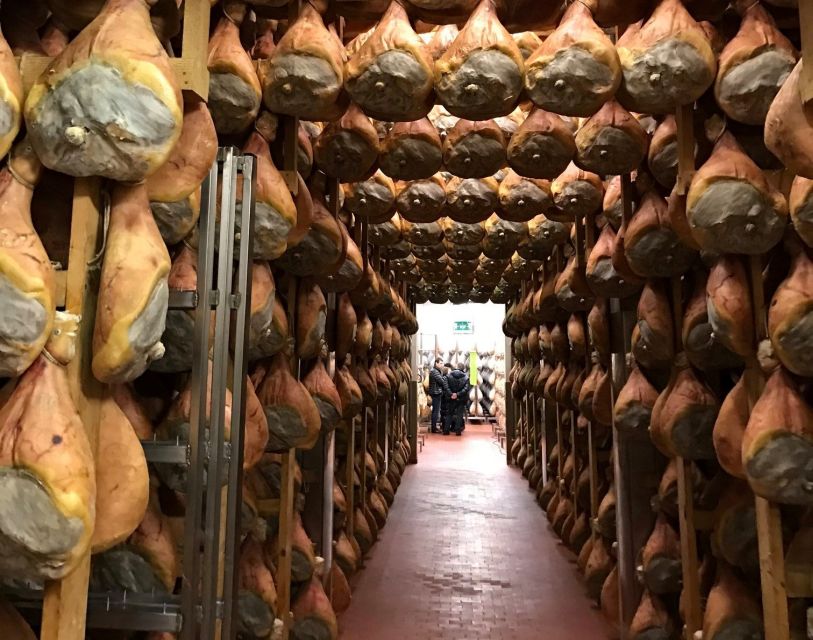
Then comes the quality workflow. You learn how the best meat is chosen, and you get to see salting machinery plus refrigeration or resting cells. That transition from selecting to processing is one of the more practical parts of the tour, because it shows where the quality bottleneck lives.
Next you move into seasoning chambers, where the traditional ham aromas fill the air. Even if you do not speak Italian, the sensory cues do half the explaining here, and your guide fills in the details about how the process is managed.
The spillatura lesson and the Crown of Parma branding test
This tour includes a very specific, very important segment: spillatura and how only the best hams pass the test and earn the Crown of Parma branding.
I like that the tour does not treat branding as marketing trivia. It frames branding as a result of evaluation, which makes the whole idea feel real instead of abstract. When you understand the logic behind the check, the ham you taste later feels like it comes from a system, not luck.
If you love hearing production stories, this is also where guides tend to add extra color. In feedback, people often mention meeting or hearing from the families running the producers, which can make the “why” behind the methods feel more personal.
Degustazione time: tasting Parma ham with local wine
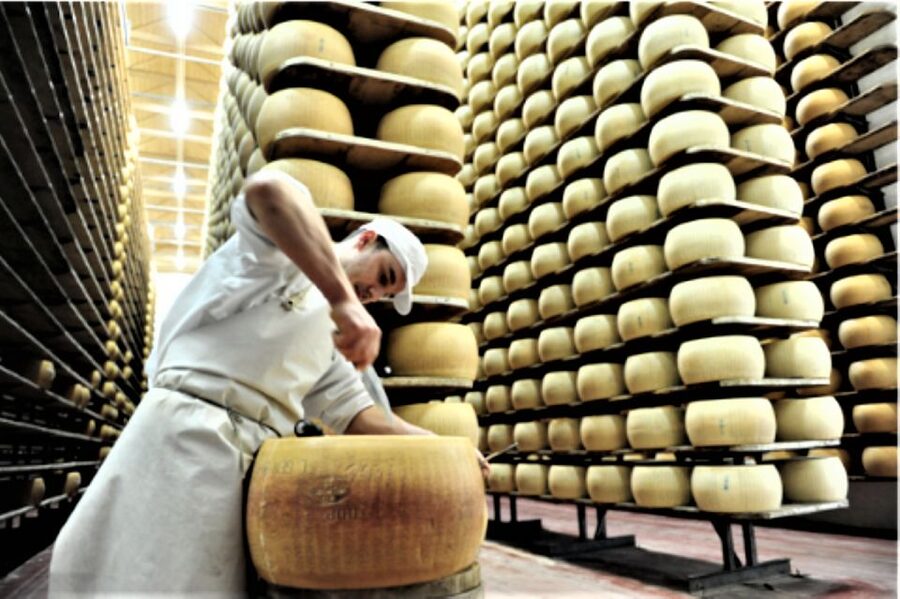
After the factory walk-through, you finish with a degustation of Parma ham accompanied by a glass of local wine. The timing is good: you taste after you learn the system, so you can connect aroma, salt notes, and cured texture to the steps you just saw.
A glass of wine is included, so plan your pace accordingly. If you are the sort who wants to take tastings seriously, I suggest you slow down and let the wine reset your palate between bites, instead of treating it like a quick finish.
What the best guides seem to do right (and how that affects your experience)
This tour stands or falls on the guide, because factory tours are only half watching. The other half is translating what you see into something you understand.
In the feedback pattern, guides like George, Loris, Mattia, Pietro, Roberto, and Sergio show up repeatedly, with people praising their friendliness, clear English, and the way they explain production without rushing the group. That shows up in a simple way for you: you are more likely to ask better questions, and you will understand what the factory staff are doing instead of just seeing steps.
Also, a good guide manages real-time problems. For example, one report mentioned a guide calling to help find someone who got lost en route to the first stop. That kind of practical attention is part of why the tour works smoothly even if you are not 100 percent sure where you are going.
Group size and transport value, what you get for your money
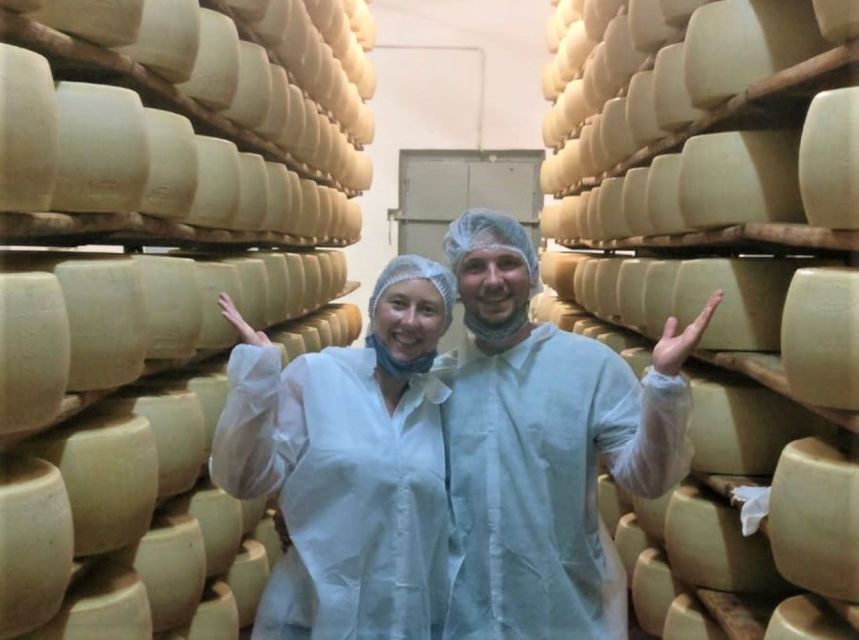
The tour is listed as a small group option, and transport is included as round-trip pickup and drop-off. That combination is where the value lives for most people, because food factories are not in the middle of the main sights. You pay for access and for the logistics that keep the day from turning into a DIY headache.
At $126.88 per person for about 4 hours, you are paying for several bundled items: a guided visit, entry tickets, tastings, and the van rides that connect two different production locations. If you were to do this on your own, you would still spend time and money getting there, and you would miss the guided context that makes the tasting meaningful.
The price also helps you avoid the common “I will read about it later” problem. Here, you do the seeing first, tasting second, and learning sticks because your senses are involved.
Who should book this ParmaLook Food Tours experience
I think this tour is a strong fit if you:
- Want a food-focused Parma day without the hassle of figuring out rural transit
- Care about how iconic Italian products are made, not just where they are sold
- Like guided tastings with wine included and enough sampling to compare
It is also a good choice if you are the type who enjoys meeting the people behind the food. Several accounts highlight family-run producer stops and a sense of personal pride in the work.
Who should skip it or adjust expectations
You should reconsider if you:
- Need wheelchair access or have mobility impairments, since the tour is not suitable for wheelchair users
- Rely on sandals or flip-flops, since open-toed shoes are not allowed
- Travel with large bags or luggage, since luggage and large bags are not allowed on the van
Also, it is rain or shine. If wet weather makes you miserable, bring a plan for layers and shoes that can handle real pavement.
Price and logistics, what you should plan before you go
Before you book, check the starting times available for your day, since the tour begins at the scheduled time. One important detail: if you arrive late after the scheduled meeting time due to train or other transportation delays, it is treated as a no-show, and the booking is non-refundable and non-reschedulable. It is worth building in extra buffer time, especially if you are juggling train connections.
Then pack smart. Closed shoes, no large bags, and nothing that violates the vehicle rules will keep the start stress-free. Also, remember the tour is only half-day length, so you will not want to tack on a long meal beforehand unless you have a clear plan.
Should you book this Parma Parmigiano and Prosciutto tour
Yes, I think you should book it if your Parma trip includes food and you want a guided, tastings-centered day that explains how the products are made. The combination of Parmigiano Reggiano aging-room context, then the full Prosciutto di Parma process from cold stage to seasoning and the Crown test, is a strong pairing for your brain and your palate.
Skip it if you cannot do the walking or factory conditions comfortably, or if the no-bag and no-open-toe rules do not fit your travel style. But if you are flexible on timing, enjoy hands-on food culture, and want to bring home more than postcards, this is one of the most efficient ways to understand Parma.
FAQ
How long is the Parma Parmigiano and Prosciutto tour?
The tour duration is about 4 hours.
What is included in the tour price?
It includes pickup and drop-off, a guide, entry tickets, tastings, and a glass of local wine with the Parma ham tasting.
Where do I meet for pickup in Parma?
The meeting point is NH Parma, Viale Paolo Borsellino, 31, 43122 Parma PR, Italy.
What languages are the guides?
The live tour guide is available in English and Italian.
Is the tour suitable for wheelchair users or people with mobility impairments?
No. The tour is not suitable for people with mobility impairments and it is not suitable for wheelchair users.
Are there any rules about what I can bring or wear?
Yes. Sandals or flip flops, pets, baby strollers, and slippers are not allowed. Luggage or large bags are also not allowed on the vans, and open-toed shoes are restricted.
Just introduced: the newest Parma write-ups
- Guided group tour TastyBus: Parmesan Cheese and Parma Ham★ 5.0 · 241 reviews
- Tour Parmigiano Reggiano dairy and Parma ham★ 5.0 · 601 reviews
- Private Half Day Parma Food Walking Tour★ 5.0 · 561 reviews
Food & Drink, compared.
Small-Group Wine Tasting Experience in the Tuscan Countryside
Read our review →
Tuscany & Montepulciano Day Trip with Lunch & Wine Tasting
Read our review →
Winner 2025 Rome Twilight Trastevere Food Tour by Eating Europe
Read our review →
SMALL-GROUP Wine Safaris: Tuscan Wine Tasting Tours from Florence
Read our review →
Winner 2025 Florence Sunset Food & Wine Tour by Eating Europe
Read our review →
San Gimignano, Siena, Monteriggioni, Chianti Day Trip with Lunch & Wine Tasting
Read our review →
Browse the lists this tour appears in