
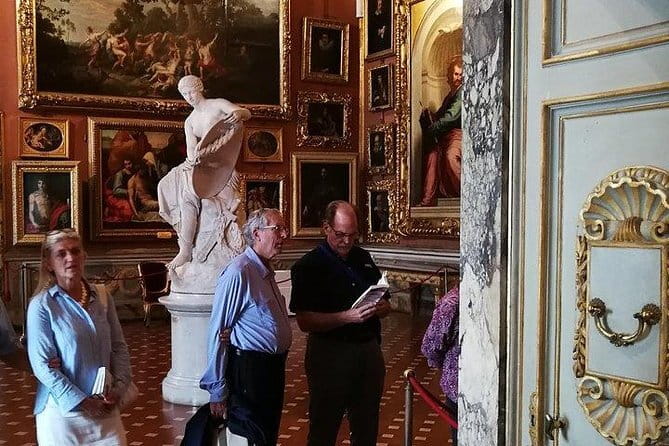
Reviewed · MUSEUMS
Pitti Palace, Palatina Gallery and the Medici: Arts and Power in Florence.
Medici power meets masterful paintings in one palace. I love the timed entry setup and the small-group size (max 14) because it keeps the focus on the art, not the crowd. You also get an expert guide who connects works by Raphael, Caravaggio, Rubens, and others to the Medici story. One possible drawback: this tour leans toward art and the collection, so if you expect lots of original Medici furnishings and everyday-life details, you may come away wishing for more.
The Palatine Gallery’s rooms are arranged for impact, not strict chronology, so you feel the drama of Renaissance collecting as you move through spaces. I also like that the route includes palace context at the Piazza and Palazzo Pitti stages, plus quick sightlines to Brunelleschi’s Santo Spirito Basilica and the Boboli Gardens from the windows. Guides such as Camilla (an art restoration artist) and Cristiano (with decades of experience) are mentioned in past groups, and that technical eye is a big part of why this works so well.
In This Review
- Key things you will notice on this Pitti and Medici tour
- Why Pitti Palace hits different in Florence
- Getting in fast: Piazza Pitti and timed entry that saves your energy
- Palazzo Pitti: the setting for Medici power, 16th century through 18th
- Palatine Gallery rooms: arranged for aesthetic impact, not a history lecture
- Masterpieces you’ll spot up close: Raphael, Caravaggio, Rubens and more
- What your guide does best: small-group attention and the Camilla and Cristiano style
- Windows to Santo Spirito and the Boboli Gardens
- Tour flow and timing: what the 2 hours feels like in practice
- What to do after the guide ends
- Who this tour is for, and who might feel underwhelmed
- Price and value: is $82.27 fair for this 2-hour format?
- The quick decision: should you book it?
- FAQ
- What is included in the Pitti Palace, Palatina Gallery and the Medici tour?
- How long is the tour?
- Where does the tour start and end?
- Is the tour offered in English?
- Can children join this tour?
- What documents do I need for entry?
- Does this include Boboli Gardens access?
Key things you will notice on this Pitti and Medici tour
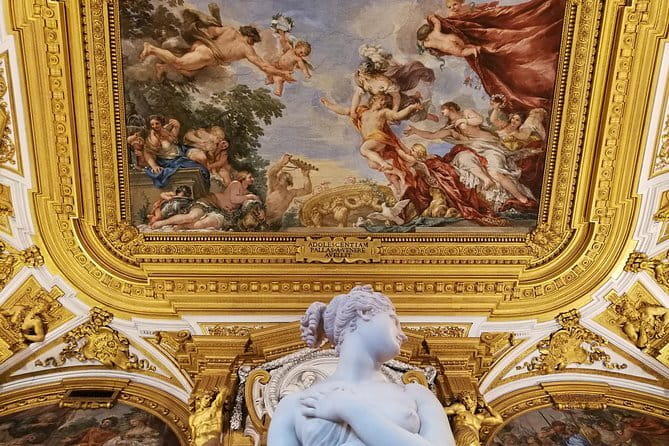
- Small-group focus (max 14) that makes it easier to hear and actually see painting details up close
- Timed entry that helps you bypass the long main entrance lines
- Palatine Gallery rooms arranged for aesthetic impact, not chronological order
- Big-name artists in one route: Raphael, Caravaggio, Rubens, Titian, Pietro da Cortona, and more
- Santo Spirito and Boboli views from the palace windows during the walk-through
- Art-first storytelling, with guidance that often includes technique and restoration insights
Why Pitti Palace hits different in Florence
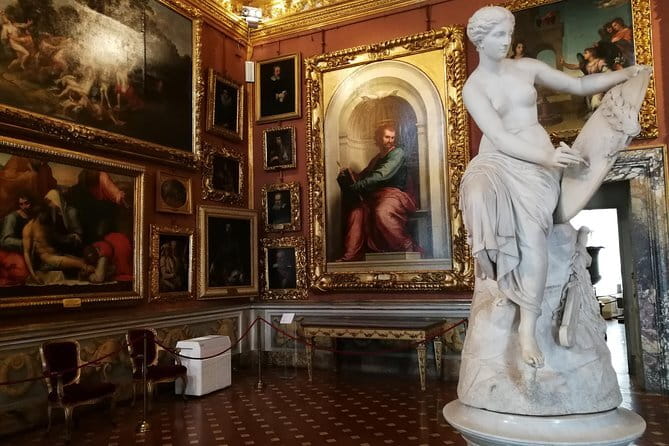
Florence is famous for its art hits, but Pitti Palace has a different vibe. The building itself was the setting for power, money, and taste, and the collection feels like a statement, not just a museum display.
This tour is built for people who want to slow down and look carefully. In about two hours, you get guided context without spending your whole day waiting in lines or bouncing around rooms with no sense of what matters.
If you are comparing it to other major Florence museums, I think Pitti’s advantage is breathing room. The small group format and the guide-led route make it easier to follow themes from room to room and to return to the paintings you care about most.
More museum halls from Turin to Palermo:

Getting in fast: Piazza Pitti and timed entry that saves your energy
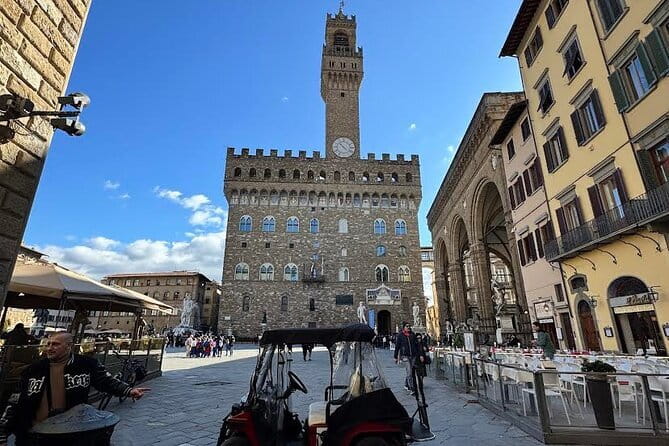
You start at Piazza de’ Pitti, 1, right by the palace. Before you enter, there is a short orientation of the piazza itself, which helps you get your bearings fast in a part of Florence that can feel like a maze once you are inside.
Then comes one of the smart parts of this experience: you use a timed entry ticket and bypass the main entrance lines. That matters here because once you are inside Palazzo Pitti, your time gets consumed quickly by rooms, ceilings, and painting after painting. Starting efficiently means you do not feel rushed or forced into a scan-and-run strategy.
For best results, show up a little early and bring the right ID. The tour requires that each traveler’s name matches the ticket, and you need to present a valid passport or ID document at entry. If your documents and booking names do not line up, you can get denied entry.
Palazzo Pitti: the setting for Medici power, 16th century through 18th
Palazzo Pitti is described as the biggest palace ever built in Florence, and that scale changes how the art feels once you step inside. It is not just a pretty backdrop. The architecture and layout are part of how the Medici projected status.
Your guide explains the palace history and the Medici rise and fall. The Medici took over the palace in the 16th century and held it until their fall from power in the 18th century. That timeline gives you a simple frame to hold onto while you walk, so the collection feels connected to a real political story, not floating on its own.
A practical tip: when your guide explains the building context, pay attention to the “why this room, why this collection” logic. It will help you understand why the Palatine Gallery is not arranged like a textbook, and why some works feel grouped by taste and effect.
Palatine Gallery rooms: arranged for aesthetic impact, not a history lecture
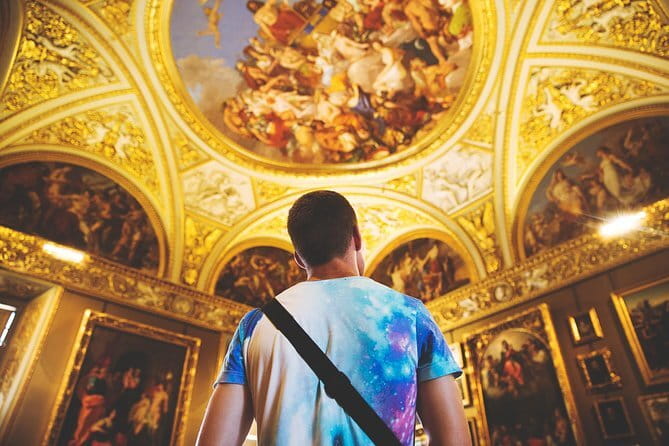
The core of the tour happens in the Palatine Gallery, where you spend about 1 hour 30 minutes. This is not a chronological museum walk. The rooms are organized for visual and sensory value, so the experience is more about how the collection moves and how it lands with you than about neat dates in order.
This design choice is a big deal for visitors. In many art museums, chronology can help you feel oriented but can also push you into “checklist mode.” Here, the arrangement nudges you into noticing relationships between styles, subjects, and artists.
As you move through the apartments, you hear stories about the Medicis and the way they amassed major works. The guide also points out what you should look for in each room, including technique and storytelling choices behind famous paintings.
If you want an easy takeaway, think of the Palatine Gallery as a set of themed stages. You are stepping through rooms that were meant to impress, and the guide helps you read that intention while you look.
Introductions we still owe you around Florence
- Tuscany Day Trip from Florence: Siena, San Gimignano, Pisa and Lunch at a Winery
★ 5.0 · 21,634 reviews - Florence: Timed Entrance Ticket to Michelangelo’s David
★ 4.6 · 16,983 reviews - Florence: Michelangelo’s David Skip-the-Line Entry Ticket
★ 4.5 · 12,764 reviews - The Best tour in Florence: Renaissance & Medici Tales – guided by a STORYTELLER
★ 5.0 · 12,316 reviews
Masterpieces you’ll spot up close: Raphael, Caravaggio, Rubens and more
This tour includes a lineup of artists that can be hard to experience in one coherent visit. You are guided past major works attributed to or associated with Raphael, Caravaggio, Titian, Pietro da Cortona, and Rubens.
Here is what I like about this approach: it is not only name-dropping. The guide explains the stories and techniques behind the masterpieces, so you are not just staring at a famous face and moving on. When the guide talks about color choices, lighting, and composition, it turns a painting from an image into a solved puzzle.
A practical mindset helps too. When you pause at a painting, try to identify three things quickly:
- What is the focal point the painter wants you to look at?
- How is light or color used to guide your eye?
- What details suggest status, drama, or power?
If you enjoy that kind of close looking, this is one of those tours where it feels worth slowing down, because you learn what to notice.
What your guide does best: small-group attention and the Camilla and Cristiano style
A lot of museum tours fail because the guide cannot really connect. This one tries to fix that by capping the group at 14 participants and providing earsets when the group is larger than four. That means you can hear explanations clearly even in busy rooms.
In past departures, guides mentioned include Camilla, described as an art restoration artist, and Cristiano, noted for decades of experience. There are also mentions of Sarah as another guide who can explain the palace and its contents. The consistent theme is that the guide’s background shows in how they talk about technique and in how they answer questions.
You can also expect a more interactive pace. Guides are reported to encourage you to share what art you like and to point you toward relevant works in different rooms. Even if you are not a deep art scholar, that kind of “follow your interests” guidance makes the visit feel personal.
Windows to Santo Spirito and the Boboli Gardens
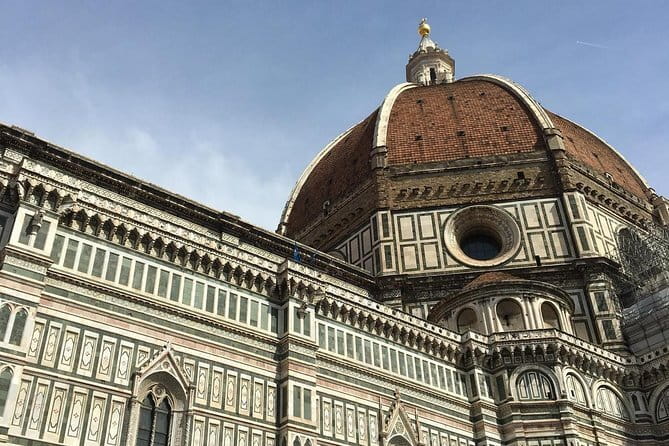
You do not stay trapped inside the painting world the whole time. From the palace windows, you catch views of Brunelleschi’s Santo Spirito Basilica and the Boboli Gardens.
This matters because Florence can feel like one long visual marathon. A quick outside view helps you reset your eyes and your sense of place. It also links the palace to the city’s wider Renaissance landscape, so you do not feel like you are in a bubble.
Also, note what this does and does not include. The tour gives you the views. It does not list access to the gardens themselves as part of this exact experience. If Boboli Gardens are a must-do for you, plan that as a separate add-on.
Tour flow and timing: what the 2 hours feels like in practice
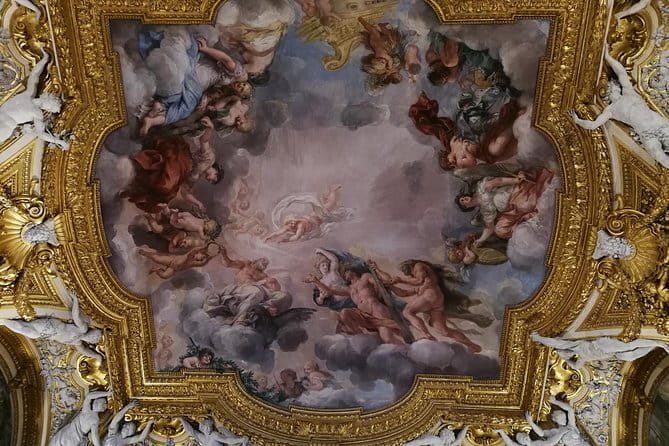
The tour is about two hours total. The itinerary is light in number of stops, but heavy in content while you are inside.
- You start outside at Piazza de’ Pitti, with a short orientation.
- You then move into Palazzo Pitti for palace history and context.
- The Palatine Gallery segment takes roughly 1 hour 30 minutes, and that is where the art concentration is highest.
Because the walking time is reasonable and the guide leads the room-to-room order, you can usually keep up without sprinting. This is especially helpful in Palazzo Pitti, where the collection can feel overwhelming if you wander alone and do not know what you are aiming for.
At the end, the tour concludes back in the gallery. You are then free to keep exploring on your own if you want.
What to do after the guide ends
When the tour wraps, you have a golden opportunity: follow up with your own mini itinerary inside the palace. Since you now understand the palace story and how the gallery is arranged for effect, you are better equipped to choose what to linger on.
If you loved a particular artist mentioned by your guide, spend extra time searching for related works in nearby rooms. If you enjoy technique, return to paintings where you remember the guide discussing lighting or composition.
If you still have energy and you are near the Boboli area, use those palace window views as your cue for what to aim at next. It is a handy way to connect what you saw inside with what you will see outside.
Who this tour is for, and who might feel underwhelmed
This tour is a great fit if you:
- Want a focused, guided art route inside a major palace
- Like learning about both subject matter and technique
- Prefer a small-group experience over a large crowded museum scramble
- Care about the Medici story, but can accept that the emphasis is on the art they collected and displayed
It may feel less perfect if you:
- Want lots of original Medici living spaces and furnishings preserved as they were
- Prefer a strict chronological overview of history and art movements
- Get impatient with detailed painting explanation
One way to decide quickly is to ask yourself what you want most: the art itself, or the full life story of the Medici household. This experience leans toward the art and the collection, with Medici history used as the thread.
Price and value: is $82.27 fair for this 2-hour format?
At $82.27 per person, you are paying for three things that are hard to replace on your own: a guided route, timed entry, and a small-group experience.
You do get:
- An experienced licensed English speaking guide
- A timed entry ticket for Palazzo Pitti and the Palatine Gallery
- Small-group size with earsets for groups of four or more
The palace itself has an admission fee listed at €19 for Palazzo Pitti. Since your timed entry ticket is included, part of what you are paying for is convenience plus guided interpretation, not only access.
So the value question comes down to your preferences. If you love art and want help spotting what matters, the guide time turns your visit into something you will remember. If you would rather wander and read on your own, the price may feel steep for a two-hour run.
One more value angle: the tour is often booked about 37 days in advance on average. That is a sign to plan ahead if you want a specific departure window, especially during peak Florence days.
The quick decision: should you book it?
I would book this tour if your goal is to see elite Renaissance and Baroque painting in a dramatic setting, with a guide who can explain technique and story. The combination of timed entry, max 14-person pacing, and a route through the Palatine Gallery is a strong match for people who want depth without turning a museum visit into a half-day project.
If you are more interested in Medici domestic life than in the collection, you might still enjoy it, but go in with the right expectations. This is an art-first tour, and the Medici story is told through what they displayed.
If you are on the fence, the risk is low because free cancellation is offered up to 24 hours before the experience. Use that buffer to lock in a slot and keep your options open.
FAQ
What is included in the Pitti Palace, Palatina Gallery and the Medici tour?
It includes an experienced licensed English speaking guide, a timed entry ticket for Palazzo Pitti and the Palatine Gallery, a small group experience with a maximum of 14 participants, and earsets with 4+ participants.
How long is the tour?
The tour is approximately 2 hours in total, including about 1 hour 30 minutes in the Palatine Gallery.
Where does the tour start and end?
The tour starts at Palazzo Pitti, Piazza de’ Pitti, 1, 50125 Firenze FI, Italy. It ends back at the same meeting point.
Is the tour offered in English?
Yes, the tour is offered in English.
Can children join this tour?
Children must be accompanied by an adult, with a minimum age of 6 years.
What documents do I need for entry?
You must present a valid passport or ID document that matches the name provided at booking for successful entry. You also need to present a voucher with all travelers’ full names at the ticket office prior to entry.
Does this include Boboli Gardens access?
The tour includes views toward the Boboli Gardens from the palace windows, but access to the gardens is not listed as included in this experience.
Just introduced: the newest Florence write-ups
- Uffizi Masterclass with Art Expert in Florence★ 4.5 · 183 reviews
- Florence: Duomo Complex with Tickets & City Walk Guided Tour★ 4.5 · 183 reviews
- From Florence: Tuscany, Siena, San Gimignano & Winery Lunch★ 4.7 · 184 reviews
- Florence: Dan Brown’s Inferno 2-Hour Walking Tour★ 4.5 · 187 reviews
- Florence Food Tour: Home-Made Pasta, Truffle, Cantucci, Olive Oil, Gelato★ 4.5 · 187 reviews
- Florence: Handmade Ravioli & Pasta Class with Unlimited Wine★ 4.9 · 188 reviews
- Florence: Medici Family Guided Walking Tour★ 4.6 · 189 reviews
Museums, compared.
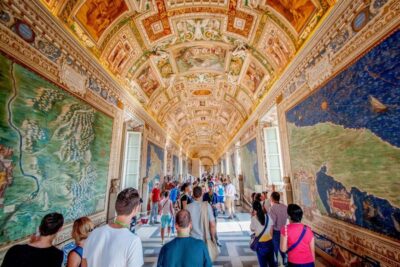
Vatican: Museums & Sistine Chapel Entrance Ticket
Read our review →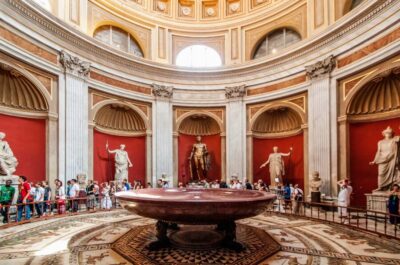
Vatican Museums & Sistine Chapel Tour with Optional Basilica
Read our review →
Vatican Museums, Sistine Chapel & St Peter’s Basilica Guided Tour
Read our review →
Skip-The-Line Uffizi Gallery Timed Entry Ticket
Read our review →
Vatican Museums, Sistine Chapel & Basilica Tour
Read our review →
Vatican Museums & Sistine Chapel Skip-the-Line Entry Ticket
Read our review →Vatican Museums, Sistine Chapel & Basilica Tour
Read our review →
Vatican Museums & Sistine Chapel Guided Tour
Read our review →Browse the lists this tour appears in