
Reviewed · FLORENCE TOURS
The Best Tour in Florence: Renaissance and Medici Tales
Florence changes fast when a guide tells why. This walk is budget-friendly and packed with Medici tales that explain what you are looking at, not just where it is. I also like that it is short enough to keep energy up, yet broad enough to touch the big-name sights and a few calmer corners. One possible drawback: you will be moving on foot for about two hours, so comfy shoes matter.
You start in the center of the market district, meeting your guide outside San Lorenzo, and you finish at Piazza della Signoria, close to the Uffizi. The tour is in English, capped at 30 people, and it is designed for most travelers, including service animals. The guide’s focus on stories is the part that consistently wins people over, including on rainy days when you still want Florence without losing the plot.
In This Review
- Key things I would plan around
- Start at San Lorenzo, where the Medici story begins
- Palazzo Medici Riccardi shows Renaissance ambition in brick and stone
- Baptistery, Duomo, Campanile, and the dome mystery
- Dante’s birthplace stop adds a literary layer
- Piazza della Signoria and Palazzo Vecchio, where politics meets statues
- Why the storytelling keeps this tour feeling worth it
- Price, value, and the donation model you should understand
- Who this tour fits best, and who might want a different option
- Should you book The Best Tour in Florence: Renaissance and Medici Tales?
- FAQ
- How long is the Florence walking tour?
- Where does the tour start and where does it end?
- Is the tour offered in English?
- What is included in the tour price?
- Do I need to buy admission tickets during the tour?
- How big is the group?
- Is the tour suitable for most people?
- What if the weather is bad?
- What is the cancellation window for a full refund?
Key things I would plan around
- Medici backstory from San Lorenzo onward, including their role and burial traditions tied to the basilica
- A concentrated walk through the Duomo complex, plus Baptistery and Giotto’s Campanile area views
- Renaissance art seen in context, with stops like Palazzo Medici Riccardi and the Medici-linked Dante stop
- Piazza della Signoria as the pivot point, where the Michelangelo David copy and politics-meets-art vibe clicks
- An easy next step toward the Uffizi, since the tour ends right by it
- Short, manageable timing, with the whole loop paced to fit an introduction to Florence
Start at San Lorenzo, where the Medici story begins
The tour begins in front of San Lorenzo Church, right in the main market area of Florence. That matters, because San Lorenzo is not just another impressive church stop. It is one of Florence’s largest churches, and it is tied closely to Medici power. The big idea you are getting right away is this: in Renaissance Florence, art, banking, and politics were all part of the same machine.
Your guide meets you next to a statue of Giovanni de’ Medici sitting on a throne, which is a fun visual anchor for the day. From there, you look toward Basilica di San Lorenzo, the Medici burial place for principal family members from Cosimo il Vecchio through Cosimo III. If you have ever wondered why the Medici were more than wealthy patrons, this is where the explanation starts.
Practical note: the basilica admission is not included in the tour time at this stop, so if you want to go inside, plan for a separate ticket. Even without entering, the guide’s framing helps you notice details you might otherwise pass by.
Why I like this start for your first day: it gives you a cause-and-effect story. Later, when you see the Duomo area, Palazzo Vecchio, and Dante’s connection, you understand the links instead of just collecting photos.
Introductions we still owe you around Florence
- Tuscany Day Trip from Florence: Siena, San Gimignano, Pisa and Lunch at a Winery
★ 5.0 · 21,634 reviews
Palazzo Medici Riccardi shows Renaissance ambition in brick and stone
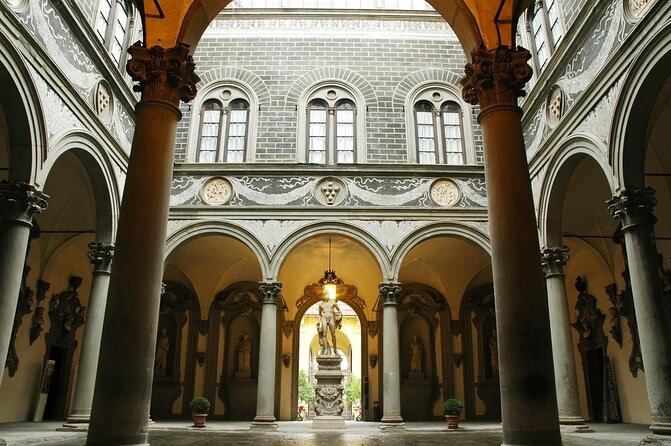
After San Lorenzo, you head to Palazzo Medici Riccardi, designed for Cosimo de’ Medici and built between 1444 and 1484. This stop is a strong example of how Florence worked: powerful families didn’t hide in palaces. They built statements, right in the city’s everyday flow.
The guide usually turns this into a “why this place looks like this” moment. Even if you are just viewing from the outside, you learn how architecture signaled status, and how the Medici used culture and institutions to legitimize their leadership. It is the kind of context that makes later art stops feel smarter, not just louder.
Admission is not included here, so your time is mainly for orientation and storytelling. Still, because it is placed early in the tour, it sets you up to understand why Florence’s landmarks are connected to specific people and specific ambitions.
If you care about Renaissance power structures, you’ll probably find this one of the more satisfying stops, because it is about intent. Not just beauty.
Baptistery, Duomo, Campanile, and the dome mystery
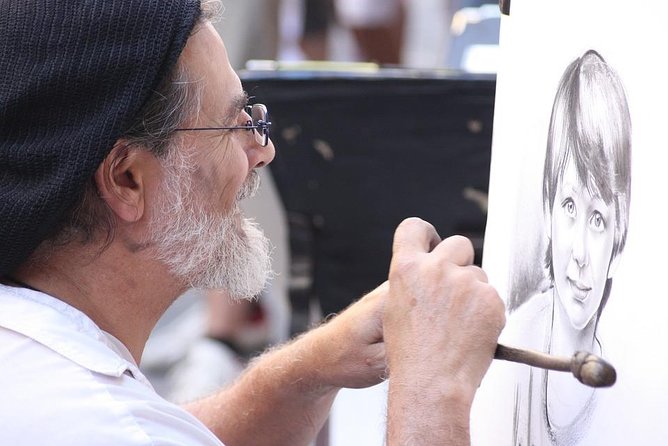
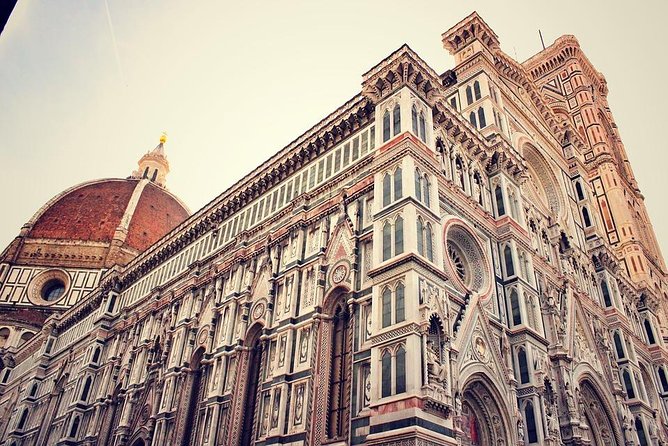
Next comes the Duomo complex area, where Florence stacks its religious and civic pride in one concentrated zone. You visit the Baptistery of St. John first. It is one of the oldest buildings in the city, built between 1059 and 1128 in Romanesque Florentine style. Across from the Cathedral and the Campanile of Giotto, it is one of those places that helps you feel time travel: older layers, then Renaissance-era interpretation nearby.
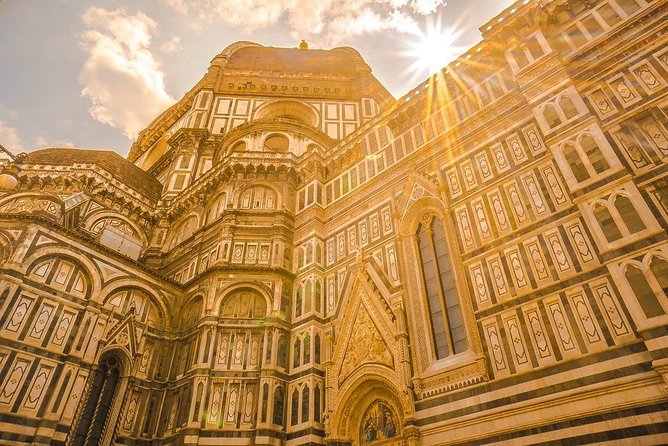
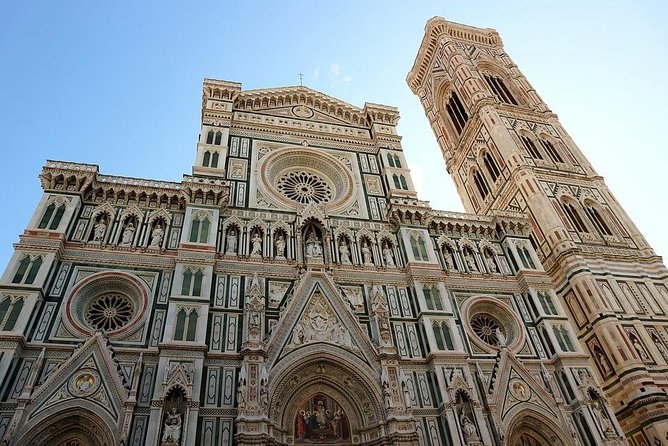
Then you move to the Duomo, officially Cattedrale di Santa Maria del Fiore. Construction began in 1296 in the Gothic style, and it is part of a UNESCO World Heritage site that also includes the Baptistery and Giotto’s Campanile. The cathedral stop lists free admission, but remember: whether you can access interiors depends on on-the-day conditions, and the tour mainly uses this part for seeing and learning rather than treating it like a long museum session.
Campanile di Giotto is the adjacent tower stop. This is a showpiece of Florentine Gothic architecture, with sculptural decorations and polychrome marble encrustations. Even without getting inside, the guide’s commentary helps you see the tower as more than scenery, it becomes a lesson in how style communicated meaning.
Finally, you reach Cupola del Brunelleschi, the dome on top of the Cathedral. This is where the “Renaissance engineering plus art brain” switch flips. It is described as the largest brick dome ever constructed, and it is often treated as a mystery of architecture and art. If you like the idea that Florence didn’t just create paintings, it also solved massive technical problems, you will likely enjoy this stop.
A fair drawback to consider: this cluster is famous and can feel crowded. The walking tour keeps the pacing moving, but you might still need patience while you stop for photos and look closely.
For your planning, treat these as “see it with a guide now, then decide later.” If you want deep interior time, you will probably want a separate ticket and more time than this two-hour introduction allows.
Dante’s birthplace stop adds a literary layer
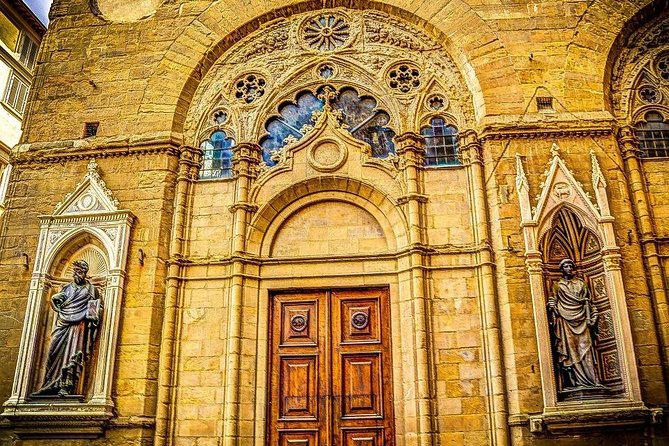
After the big architectural icons, the tour shifts tone with a stop at Museo Casa di Dante. This is tied to Dante Alighieri, author of the Divine Comedy, described as one of the most important poems of the Middle Ages and a major literary work in Italian.
What makes this stop work on a walking tour is the way it connects art and ideas. Florence was not only painting and building. It was also language, literature, and public identity. When the guide links Dante’s presence to what you just saw, the city starts to feel like one connected story instead of separate landmarks.
Admission is listed as free at this stop, which is a nice bonus for your wallet. Even if you do not go far inside, the context typically makes it worth the brief time.
Also on the Florence guest list:
- Florence: Michelangelo’s David Skip-the-Line Entry Ticket
★ 4.5 · 12,764 reviews - The Best tour in Florence: Renaissance & Medici Tales – guided by a STORYTELLER
★ 5.0 · 12,316 reviews - Florence: Leonardo Interactive Museum Entry Ticket
★ 4.5 · 11,763 reviews - Florence: Pasta Cooking Class with Unlimited Wine
★ 4.9 · 10,285 reviews
Piazza della Signoria and Palazzo Vecchio, where politics meets statues
The tour ends the landmark sprint at Piazza della Signoria, an L-shaped square in front of Palazzo Vecchio. This is a real meeting place for Florentines and tourists alike, and it also serves as a gateway area to the Uffizi. Here, the guide usually helps you understand why this square feels like a stage.
One of the most memorable details in this part of the tour is the copy of Michelangelo’s David. The actual David is in a museum setting, but the copy here functions as a powerful visual reminder of how Florentines used art to project civic strength. The tour’s commentary around this moment tends to get extra praise in the reviews, especially for explanations that make the statue feel meaningful instead of just famous.
Palazzo Vecchio, the Old Palace, is the next stop. It is Florence’s town hall, a fortress-palace with an unmistakable massing. From here, you understand the city’s self-image. This is where public power lived, where festivals and speeches happened, and where art and authority were displayed side by side.
The tour notes that the endpoint ends in this convenient area near the Uffizi Gallery, which is a smart final move. It means you can keep the momentum going without a long commute.
Admission is not included for Palazzo Vecchio in the tour time, so treat it as a “learn what you are seeing” stop unless you plan to add separate museum time.
Why the storytelling keeps this tour feeling worth it
A pattern shows up again and again in feedback: guides do not just list facts, they turn Florence into a narrative you can follow. People call it an essential start, and that is exactly how I’d think about it if you are trying to avoid the museum-only approach.
You will hear names like Aurora, Manuel, Alberto, Camilla, Simona, Deborah, and Elizabeth come up as standouts. What seems to matter most is pacing and clarity, especially for first-timers or people who do not consider themselves art history fans. One guide was even praised for handling a rainy day, which tells you something practical: the tour is built to work when plans do not.
If you want to get the most from the guide, ask follow-up questions as you walk. This tour is designed for quick answers between stops, so you can turn a brief comment into something you understand and remember later.
Also, arrive a few minutes early. Your meeting point is Piazza di San Lorenzo, 35R, 50123 Firenze FI, and the tour ends near Piazza della Signoria. In central Florence, that gap in location can matter if streets are busy.
Price, value, and the donation model you should understand
This tour shows a price of $3.62 per person, which looks unbelievably low for a licensed guide and a curated two-hour route. Here is the important thing to grasp: it is presented as a donation-supported model. At the end, you decide what to compensate based on the guide’s professionalism.
So the value is not only the ticket price. It is the fact that you get a licensed guide, a structured walk, and a focused Renaissance and Medici introduction in about two hours. With a small group size up to 30 people, you are less likely to feel lost in the crowd.
In practical terms, if you normally spend more on a single museum ticket, this route can help you make those later museum visits smarter. You also get a sense of which sights you actually want to return to, instead of guessing blindly.
As for language, the tour is offered in English. If English is your comfort zone, you should feel fine here.
Who this tour fits best, and who might want a different option
This is a strong match if you want:
- A fast orientation to Florence’s Renaissance core
- Medici context that makes architecture and art feel connected
- A guided walk that ends in a perfect location for your next stop
It is also a good option when you want to keep costs controlled. Some stops have free admission, others do not include entry tickets, but the guide’s commentary still gives you something valuable either way. And since the tour is near public transportation, it is easier to slot into a day without complicated planning.
Consider a different format if:
- You want a long, slow cathedral interior experience with lots of time to stand quietly
- You hate walking and stop-and-go pacing
- You want a deep Uffizi focus, since this tour ends near it rather than turning into a museum program
Should you book The Best Tour in Florence: Renaissance and Medici Tales?
Yes, you should book it if this is your first time in Florence or if you want a smart start before you pick which monuments to return to. The combo of Medici backstory, Duomo complex context, and the Dante-to-Signoria rhythm gives you a clear mental map. It is also short, which helps on travel days.
If you already know Florence well and you are chasing one specific ticketed attraction, this may feel like an overview. But for most visitors, it is a cost-effective way to understand what you are seeing while the city is still new.
FAQ
How long is the Florence walking tour?
It runs for about 2 hours.
Where does the tour start and where does it end?
You meet at Piazza di San Lorenzo, 35R, 50123 Firenze FI. The tour ends near Piazza della Signoria, 50122 Firenze FI, with the exact endpoint possibly varying slightly.
Is the tour offered in English?
Yes, it is offered in English.
What is included in the tour price?
The tour includes a licensed guide. A mobile ticket is used. Admission tickets for some stops are not included, while some stops are listed as free.
Do I need to buy admission tickets during the tour?
Some stops list admission tickets as not included, while others are listed as free. If you want to go inside at locations with separate entry, you should plan for tickets on your own.
How big is the group?
The maximum group size is 30 travelers.
Is the tour suitable for most people?
The tour notes that most travelers can participate.
What if the weather is bad?
The experience requires good weather. If it is canceled due to poor weather, you will be offered a different date or a full refund.
What is the cancellation window for a full refund?
You can cancel up to 24 hours in advance for a full refund. If you cancel less than 24 hours before the start, the amount paid is not refunded.
Just introduced: the newest Florence write-ups
- Florence: Duomo Cathedral Fast Track Entry Ticket★ 3.5 · 340 reviews
- Florence: Uffizi Entry Ticket & Audio Guided Tour with Host★ 3.9 · 342 reviews
- Uffizi Gallery: Entry tickets + audio guide★ 4.0 · 347 reviews
- Florence: Palazzo Vecchio Skip-the-Line Entry Ticket★ 4.2 · 349 reviews
- From Florence: Tuscany Hills Wine Tour★ 4.3 · 349 reviews
- Cooking Art Brunelleschi★ 5.0 · 356 reviews
- Florence: Statue of David & Duomo Guided Tour with Tickets★ 4.5 · 357 reviews
Florence Tours, compared.
Skip-The-Line Uffizi Gallery Timed Entry Ticket
Read our review →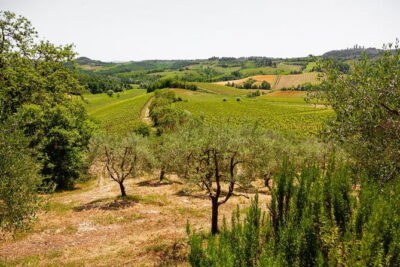
Tuscany Day Trip from Florence: Siena, San Gimignano, Pisa and Lunch at a Winery
Read our review →
Timed Entrance Ticket to Michelangelo’s David
Read our review →
Michelangelo’s David Skip-the-Line Entry Ticket
Read our review →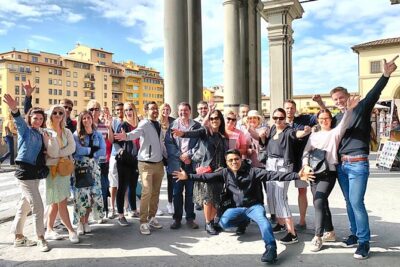
The Best tour in Florence: Renaissance & Medici Tales – guided by a STORYTELLER
Read our review →
Pisa, Siena and San Gimignano Day Trip with Lunch
Read our review →Browse the lists this tour appears in