
Reviewed · WALKING TOURS
Verona: History and Hidden Gems Guided Walking Tour
Verona hits different when you walk it with a local. I love how this small-group tour keeps the focus on what matters, not crowds. You start in Piazza Bra, then step into a clear, two-hour route through the city’s layers.
My second favorite part is the storytelling. Fabio Massimo Rapanà is a lifelong Veronese guide who ties buildings, street alignments, and power shifts together as you move, including Roman and medieval Verona. You also get headsets, so you can actually catch the details without craning your neck.
One thing to consider: it is a 2-hour walking experience, rain or shine, and entries are not included. If you were hoping to go inside places, you will still enjoy the sights from the route, but you may want to plan paid entry time separately.
In This Review
- Key highlights worth planning around
- Meeting at Piazza Bra, then turning the city into a story
- Piazza Bra and the Verona Arena, where architecture explains power
- Roman clues: Porta Borsari and the gateway to older Verona
- Corso and Porta Jovia, small stops with big context
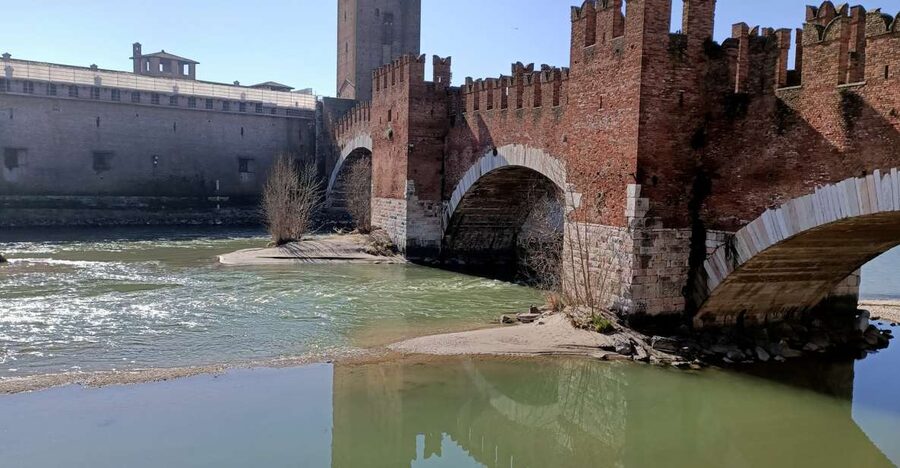
- Adige River views and the Ponte Scaligero angle you can’t fake
- Piazza delle Erbe: the market square that still feels alive
- Piazza dei Signori: palaces, civic life, and the city’s height
- Santa Anastasia and the Scaliger world, up close to legend
- Casa di Romeo and Juliet’s House area, plus a route that avoids staring only at crowds
- Beyond the famous center: courtyards, the Jewish quarter area, and lesser-known religious sites
- Why headsets and a small group change everything
- Price and value: what $41 really buys you in Verona
- Timing, walking pace, and what to bring
- Who this walking tour suits best
- Should you book this Verona Arena to Juliet walking tour?
- FAQ
- Where is the meeting point in Verona?
- How long is the Verona history and hidden corners walking tour?
- What is the price per person?
- Is the tour rain or shine?
- What languages are available for the live guide?
- Is the group size small?
- Are headsets provided?
- Are entrance tickets included for attractions?
- Is the tour wheelchair accessible?
- What should I bring?
Key highlights worth planning around
- Start in Piazza Bra by the Town Hall so you get oriented fast, right where the city’s “main stage” begins
- Arena di Verona photo stop with context for gladiator-era Verona and the building’s architecture
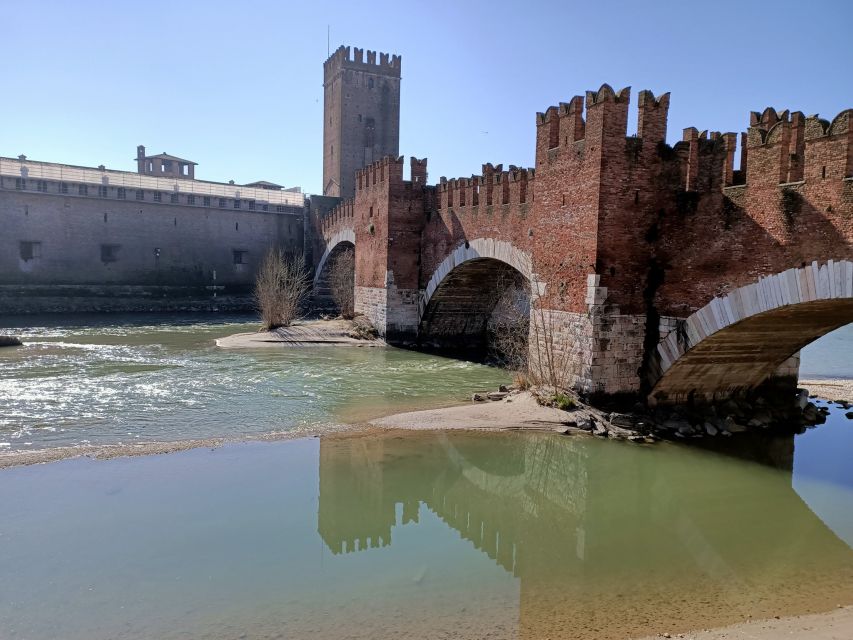
- Adige River views from the Ponte Scaligero area plus quick stops that show how the city hugs the water
- Piazza delle Erbe market square with the oldest fountain in Verona and tips for reading historic facades
- Piazza dei Signori and the Scaliger world linking palaces, towers, and civic life
- A Shakespeare route that still stays local with Romeo’s house area and Juliet’s balcony, plus detours beyond the obvious
Meeting at Piazza Bra, then turning the city into a story
You meet at Palazzo Barbieri, the Town Hall area, in Piazza Bra, with your guide standing below the Italian flag. This matters more than you think. Piazza Bra is broad, busy, and easy to lose track of your meeting point, so starting right there lets you relax and fall into the rhythm quickly.
Once you gather, the tour moves with purpose. You are not just bouncing between famous plaques. The route is designed so the city makes sense as one connected place, from ancient streets to medieval power to the Verona that shows up in art and literature.
And because the group is up to 10 people, the walk has an intimate feel. You can ask questions without the whole tour pausing for a big microphone shuffle.
More Italy at street level:


Piazza Bra and the Verona Arena, where architecture explains power
The first big stop is right at the Verona Arena. You start with a photo stop, but the point is not just snapping a picture. The guide uses the arena as a reference point for how Roman Verona organized public life, including the gladiator-era idea that people still associate with the site.
Even if you have seen the Arena before on photos, you will likely notice new things once someone explains the structure and purpose. It is one of those landmarks where the stonework becomes a clue. The arena is also a good “time machine” anchor for everything you see later in the walk.
Practical note: this is an outdoor, standing-and-walking experience. Bring comfortable shoes, and expect some street noise and open-sky moments early on.
Roman clues: Porta Borsari and the gateway to older Verona
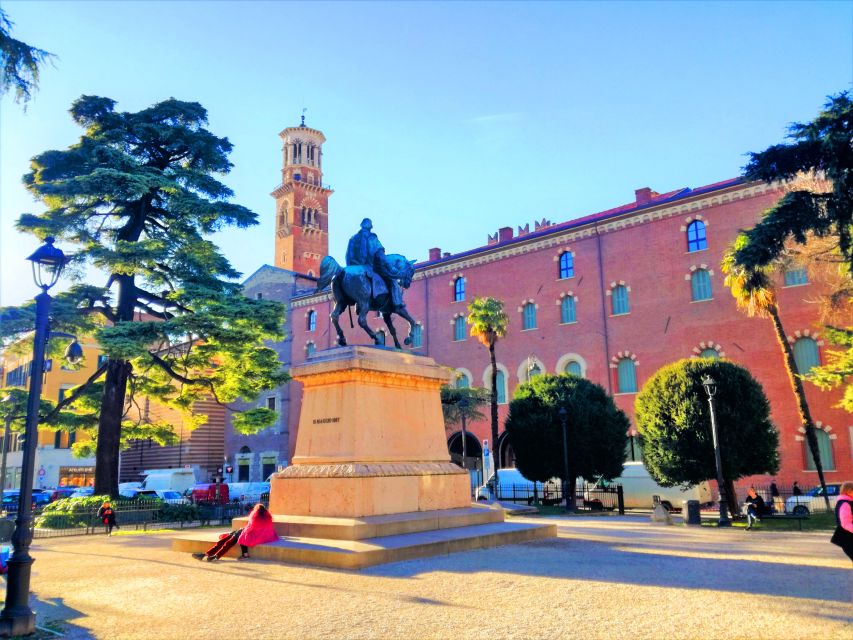
After the Arena area, you move toward quieter streets that reveal Roman-era Verona’s edges. One of the first true “wow, I would have missed that” moments is Porta Borsari, where the route includes both a photo stop and a brief look.
What makes these gateway moments valuable is how they connect your walking path to the city’s original layout. A gate is not just a gate. It is proof of where the walls were, how people moved, and how power shaped movement.
You also follow earlier medieval city wall foundations to reach Corso, described as one of the oldest streets in the city. That’s a subtle detail that changes how you experience the center. Instead of seeing a street, you see the timeline hiding under your feet.
Corso and Porta Jovia, small stops with big context
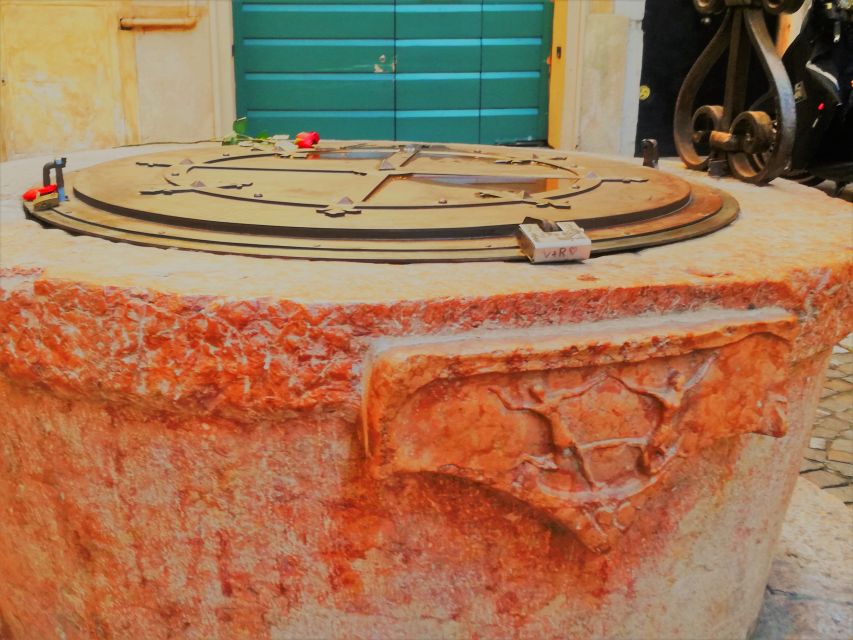
The walk includes Porta Jovia, a Roman-era monument, along the way. It is not the kind of place most first-time visitors stop for, but it gives the tour its backbone. The guide uses these less-famous pieces to explain how Verona’s identity shifted across eras.
This part of the route is especially good if you like architecture and city planning, not just famous monuments. When you understand why streets curve or where walls once ran, you start reading Verona like a map, not a checklist.
It also keeps momentum. The tour design includes quick pauses, not long lectures. That pacing is one reason it works well as a first orientation walk.
More ruins and republics, guided:
- Venice: St. Mark Basilica Ticket, Audioguide+History Gallery
★ 3.9 · 4,780 reviews - Venice’s Best: Basilica, Doge’s Palace, Gondola & History Gallery
★ 4.5 · 2,478 reviews - Historic Milan Tour with Skip-the-Line Last Supper Ticket
★ 4.5 · 1,976 reviews - Venice: City Center Historical Guided Walking Tour
★ 4.2 · 1,873 reviews
Adige River views and the Ponte Scaligero angle you can’t fake
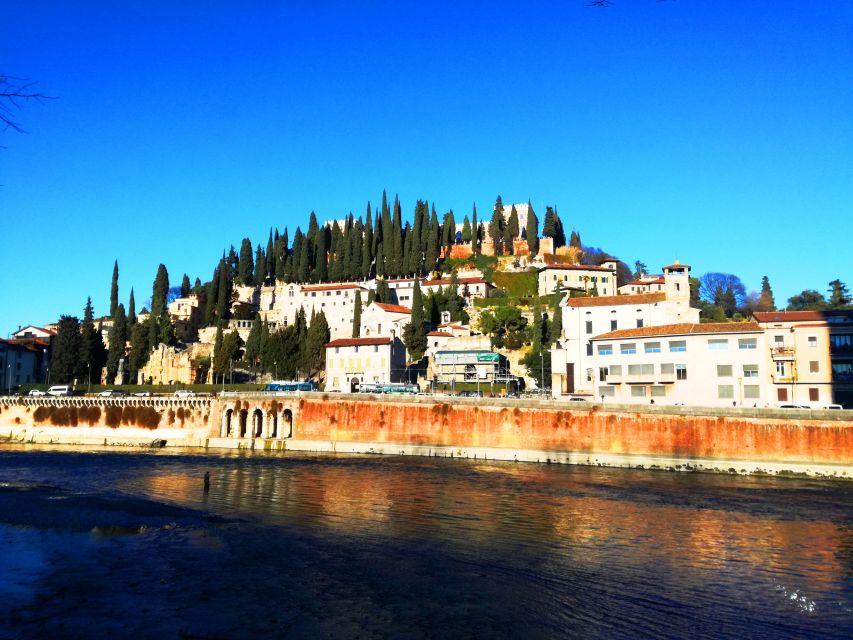
Then you turn toward the Adige River. Along the way you get a scenic pass near Riva San Lorenzo, with views that help you understand why Verona developed where it did.
The best payoff here is the look at the Castelvecchio area and the Ponte Scaligero. Even a short viewpoint changes your sense of the city’s scale. Verona is compact, but the river makes it feel larger and more strategic. You get that “oh, the city grew around this” feeling.
If you are a photo person, this is your kind of stretch. If you are not, it still helps you understand the city’s geography, because the river and bridge shape the surrounding neighborhoods.
Piazza delle Erbe: the market square that still feels alive
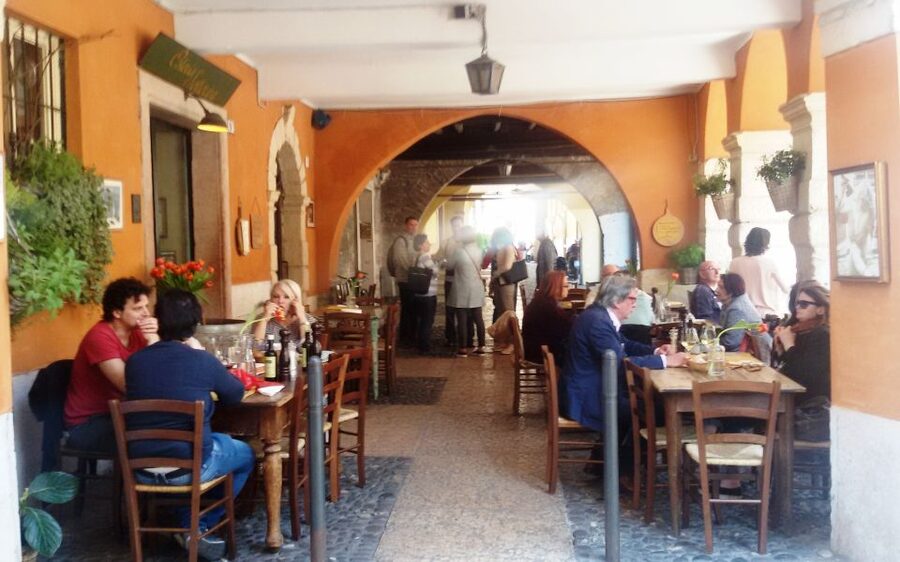
Piazza delle Erbe is one of those stops where the tour earns its title. You get a photo stop and time to wander within the square, and the guide explains what you are looking at beyond the obvious facades.
A standout detail here is the oldest fountain in Verona. It is easy to stroll past fountains in a big tourist city. Here, you get the context that makes it feel like part of Verona’s daily life, not just an ornament.
You also learn about the history of the local market. That matters because it changes how you read the square. Instead of thinking of it as a pretty place to people-watch, you start thinking of it as a long-running economic center.
And because the route includes historic townhouses around the square, the guide helps you “see” the buildings as records of the city’s changing tastes and wealth.
Piazza dei Signori: palaces, civic life, and the city’s height
Next comes Piazza dei Signori. The tour includes photo stops and a visit, plus explanations of multiple public buildings you would otherwise barely notice.
The guide points out Palazzo della Ragione, Palazzo Della Scala, and Palazzo del Capitano. You are not expected to memorize them, but you should walk away with the bigger idea: Verona’s leaders shaped the city’s look, rules, and prestige.
There is also mention of the city’s highest tower. Whether you track the tower name or simply remember the idea, this moment helps you understand why medieval Verona felt vertical and power-driven. High spaces meant visibility and status.
If you like history but hate dry facts, this stop is a good match. You get enough context to connect the architecture to real civic life.
Santa Anastasia and the Scaliger world, up close to legend
The walk continues toward Basilica di Santa Anastasia. You get a photo stop, and the guide uses the timing and location to keep the story moving from medieval civic power into religious and cultural life.
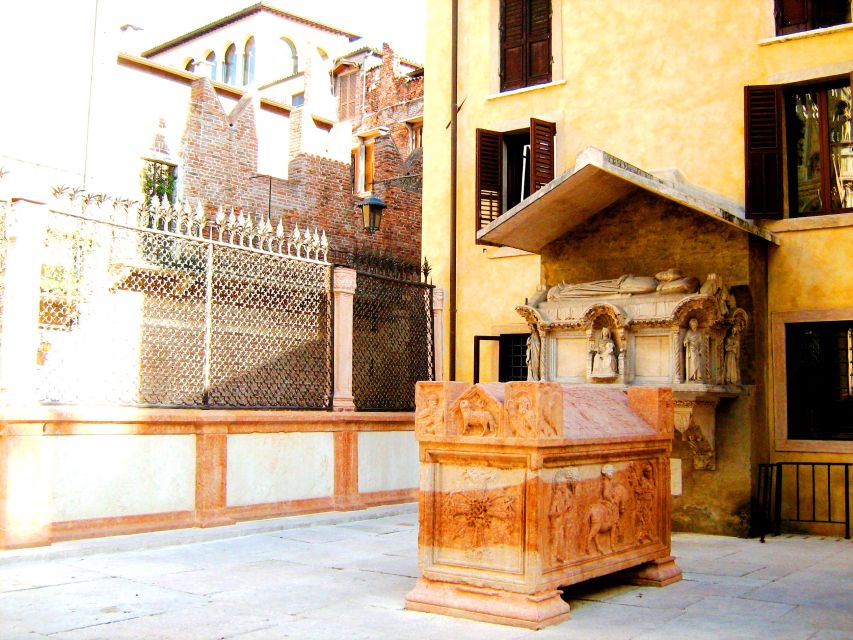
After that, the tour heads into the Romeo and Juliet storyline zone, but with a key twist. You do not only get the Shakespeare headline. You also pass important elements tied to the Scaligeri era, like the Arche Scaligere mausoleums.
This is where Verona’s romance starts feeling grounded. The mausoleums and surrounding monuments give the story weight. They are not just background for a balcony visit. They connect the city to rulers and eras that long predate modern pop culture.
Casa di Romeo and Juliet’s House area, plus a route that avoids staring only at crowds
Yes, the tour includes Casa di Romeo and Juliet’s House area. You get photo stops for both. But the route works because it does not treat these as the only moments worth your time.
The guide frames the Shakespeare inspiration while you are moving through the spaces that shaped how people lived. That means you come away with a better sense of why Verona became part of the legend, rather than just remembering the famous photos.
If your schedule is tight, this is a good way to avoid wasting time guessing which corners are worth lingering in. You see the iconic spots, then you get out and back into the quieter streets that make Verona feel like Verona.
Beyond the famous center: courtyards, the Jewish quarter area, and lesser-known religious sites
The tour keeps going into parts of Verona that most visitors do not naturally prioritize. You pass Sinagoga di Verona and see Convent of Saint Mary ‘della Scala’ of the Servants of Mary.
The walk also includes time near the Courtyard Of The Old Market and additional short picture stops in small corners. These pauses matter because they break the pattern of only visiting “main things.” Verona rewards slow attention, and these short stops are built for that.
One practical perk: on a hot day, your guide may steer the group toward shade and suggest spots to refill water. That kind of local care shows up in real tours, not brochures.
Why headsets and a small group change everything
This tour includes headsets, and that is a big deal in a city like Verona. Streets can be loud, and guides often end up shouting over others when groups get bigger. Here, you hear the guide clearly as you walk.
It also helps if you have hearing challenges. Even if you do not, it reduces that annoying “guessing what they said” problem that can happen on crowded tours.
The maximum group size of 10 people is another value driver. It keeps the pace humane. You are less likely to get separated from the group, and you can actually ask a question without feeling like you are interrupting a train.
Price and value: what $41 really buys you in Verona
At $41 per person for 2 hours, this is not just paying for a walk. You are paying for a licensed, local guide, plus headsets, plus a route that is optimized for storytelling.
Entries are not included, so you should treat this as orientation and context, not as a ticketed attraction package. You will see major landmarks and photo stop areas, but if you want full museum access, plan that separately.
Still, the value is strong for first-time visitors. You cover the Arena area, Piazza delle Erbe, Piazza dei Signori, the Shakespeare landmarks zone, plus detours into other parts of the center. For many people, that alone is worth the price because it makes the rest of your day easier.
Timing, walking pace, and what to bring
The tour lasts 2 hours. That is short enough to fit into most Verona plans, but long enough for the city to feel connected, not just sampled.
Wear comfortable shoes. Verona’s historic center has uneven pavement in places, and you will be doing a real walk, not a slow rolling sightseeing ride.
Bring water. Even on a schedule this compact, you can get thirsty in the open sections.
Finally, it runs rain or shine. So plan for wet pavement and bring a layer, even if the forecast looks optimistic.
Who this walking tour suits best
This tour is a strong match if you want Verona explained, not just displayed. I think it is especially good for you if you care about architecture, city history from Roman through medieval periods, and how legends like Romeo and Juliet attach to real places.
It also works well if you want an efficient first day plan. You see the major anchors like Arena and Piazza Erbe, then you learn how to notice the details when you wander later on your own.
If you hate walking, or you only want indoor, ticketed attractions, you might prefer a different style of tour. This one is built for the streets and the views, with story stops along the way.
Should you book this Verona Arena to Juliet walking tour?
I would book it if you want a two-hour overview that turns Verona from a list into a connected place. The combination of a licensed local guide, small-group format, and headsets makes it feel practical and not rushed.
Skip it only if you plan to spend your time mainly on paid entries and indoor museums, or if you cannot do a steady walk in rain or heat. Otherwise, this is one of the best ways to start your Verona days with context and confidence.
FAQ
Where is the meeting point in Verona?
Meet your guide below the Italian flag at the Town Hall in Piazza Bra, at Palazzo Barbieri – Comune di Verona.
How long is the Verona history and hidden corners walking tour?
The tour lasts 2 hours.
What is the price per person?
The price is $41 per person.
Is the tour rain or shine?
Yes, the tour takes place rain or shine.
What languages are available for the live guide?
The guide is available in English, German, Italian, and Spanish.
Is the group size small?
Yes. The tour is a small group with up to 10 participants.
Are headsets provided?
Yes. Headsets are included, which help you hear the guide while walking.
Are entrance tickets included for attractions?
No. Entries are not included.
Is the tour wheelchair accessible?
Yes, the tour is wheelchair accessible.
What should I bring?
Bring comfortable shoes and water.
Just introduced: the newest Verona write-ups
- Discover Valpolicella Vineyards and Wine Tasting Experience★ 4.5 · 341 reviews
- Verona All in one: Food Walking Tour, Lunch & Wine★ 5.0 · 342 reviews
- Verona: Gelato Making Class★ 4.8 · 348 reviews
- Verona walking tour:food, wine, legends, lunch/dinner & cable car★ 5.0 · 386 reviews
- Highlights and hidden gems Verona Bike Tour★ 5.0 · 393 reviews
- Verona Highlights Walking Tour in Small-group★ 5.0 · 493 reviews
- Verona: Wine Tasting with Snacks and Panoramic Views★ 4.8 · 494 reviews
Walking Tours, compared.
Guided Walking Tour & Last Supper Visit with Ticket
Read our review →
Rialto Bridge & Offbeat Unusual Venice Walking Tour
Read our review →
Private 3 hrs Venice Tour: St Mark’s, Walking tour & Boat tour
Read our review →
Skip the line: Uffizi and Accademia Small Group Walking Tour
Read our review →Browse the lists this tour appears in