
Reviewed · WALKING TOURS
Alternative Walking Tour of Rome’s City Center & Hidden Gems
Rome gets better when you stop post-card hopping. This story-led city-center walk connects major sights like Trevi Fountain, the Pantheon, and Piazza Navona to the people who built, financed, fought over, and politicked their way through Rome’s centuries.
I like how it’s organized around power, not just monuments. You’ll get family-and-dynasty storytelling (emperors, popes, artists, invaders) plus the darker side of the city, with scandals, corruption, and betrayal woven into what you’re actually looking at.
One thing to consider: it’s a tip-based pay-what-you-want model with edgy, dark-humor energy. If you prefer a strictly gentle, PG history lesson, this may not match your vibe.
In This Review
- Key Highlights Worth Your Time
- Starting at Trajan’s Forum, Getting Your Bearings Fast
- Trajan’s Column to Piazza Venezia, Where Politics Lives in Plain Sight
- A Secret Stop and a Monastery Pause That Adds Real Depth
- Trevi Fountain With Free Time, Plus a Church Stop for Baroque Real Talk
- The Pantheon and Piazza Navona, Ending Where Rome Performs
- The Real Value: Storytelling About Power, Not Just Facts
- Price and Tips: What $3.77 Really Means Here
- Guides, Style, and Why the Tour Feels More Personal
- Who Should Book This, and Who Might Skip It
- Quick Practical Tips for a Smooth Walk
- Should You Book This Rome City-Center Walk?
- FAQ
- Where do I meet the guide?
- How long is the tour?
- What languages are offered?
- Is this a tip-based tour?
- What is included in the experience?
- Can I reserve without paying now, and cancel later?
Key Highlights Worth Your Time
- Off-limits access plus a secret stop and guided interior moments you can’t easily DIY.
- Papal Private Gardens admission included, tied to the monastery stop.
- Trajan to Baroque to modern Rome connections that make the street layout start to make sense.
- Tip-based pay-what-you-want pricing, with typical tips in the 10€ to 50$ range.
- Face-to-face guiding in English or Spanish, with room for real questions (not headset chatter).
Starting at Trajan’s Forum, Getting Your Bearings Fast
The tour kicks off at the steps of Chiesa del Santissimo Nome di Maria al Foro Traiano, right by Trajan Column and Trajan Forum. This is a smart start point because it places you at the edge of Rome’s big story theme: how power gets built in public.
You’ll do an initial photo stop and short guided walk around Trajan’s Column. The value here is orientation. Even if you’ve seen images of the column before, hearing what it represents, and how Roman emperors used monuments to project authority, changes the way you look at the stone.
Practical note: you’re starting in a very central, very old zone. Bring comfortable shoes and be ready for short chunks of standing and looking up.
More Italy at street level:

Trajan’s Column to Piazza Venezia, Where Politics Lives in Plain Sight
Next comes Piazza Venezia, a quick stop that still matters. It’s short on purpose, because the guide is using the flow of the city to connect eras, not just to run through a checklist.
At this stage, you start noticing how Rome reuses space. Ancient decisions shape Renaissance viewpoints, and baroque planning borrows ancient theater. That’s why the tour isn’t only about seeing famous spots, it’s about understanding how the city’s layers keep talking to each other.
If you’ve returned to Rome after a first trip, this section is especially useful. You’re not just re-walking the famous areas, you’re learning what to watch for.
A Secret Stop and a Monastery Pause That Adds Real Depth
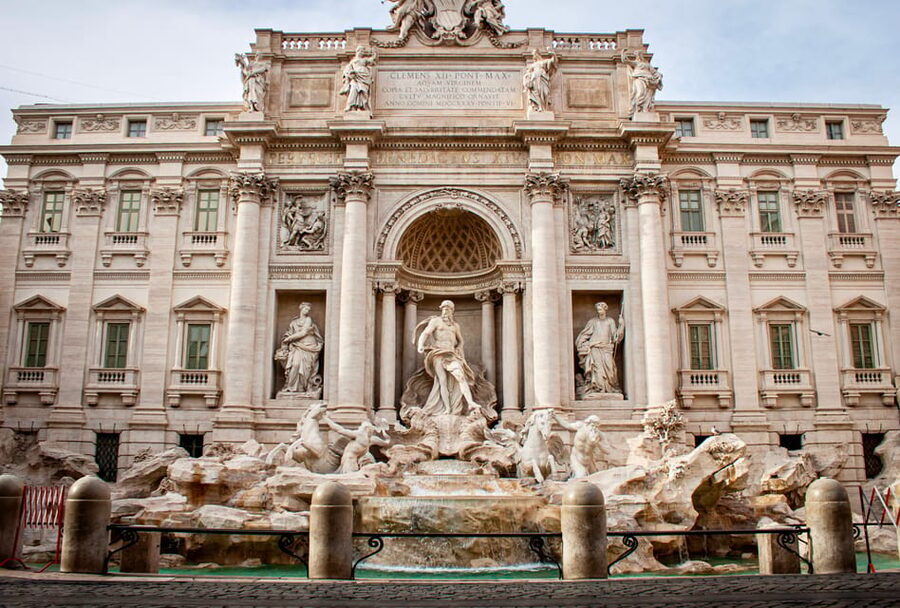
Then you hit a secret stop, marked for a brief photo stop plus guided visit. The whole point of a stop like this is that it shifts your experience from tourist city to lived-in city. You’ll get a different camera angle of the same Rome, plus context that makes those streets feel less random.
After that, the tour shifts to the monastery stop. This part is one of the biggest “value moments” because it’s long enough to count, about 25 minutes, with a guided visit. Here’s where the tour includes Papal Private Gardens admission.
What I like about adding garden and monastery context is that it balances the street-level monument energy with something quieter. Rome isn’t only marble and fountains. It’s also controlled spaces, religious influence, private power, and carefully designed beauty that served agendas long before tourism.
Trevi Fountain With Free Time, Plus a Church Stop for Baroque Real Talk
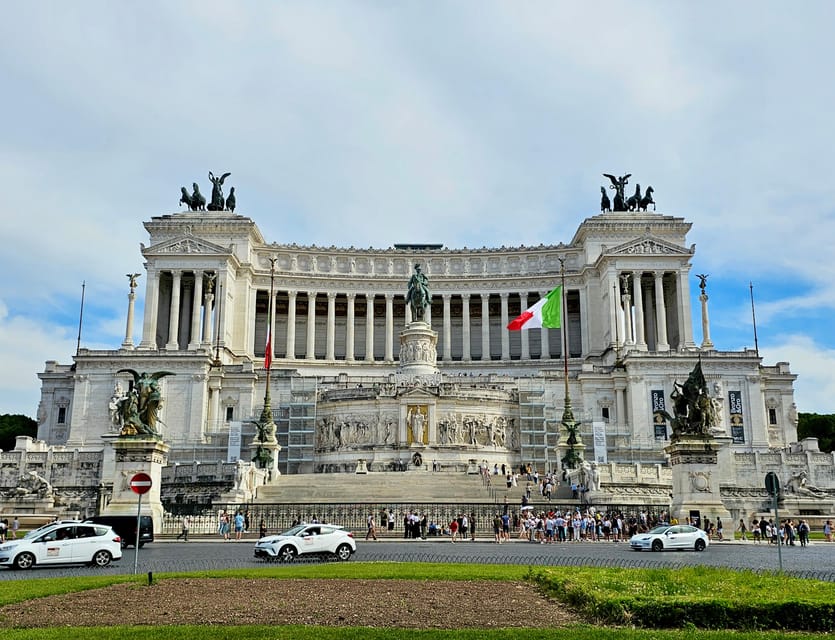
Next up is Trevi Fountain with break time and guided viewing plus free time. The guide frames Trevi in a way that goes beyond the surface: fountains weren’t only decoration. They were messaging. Symbols were placed to signal who had the authority, who funded it, and what image the city wanted to project.
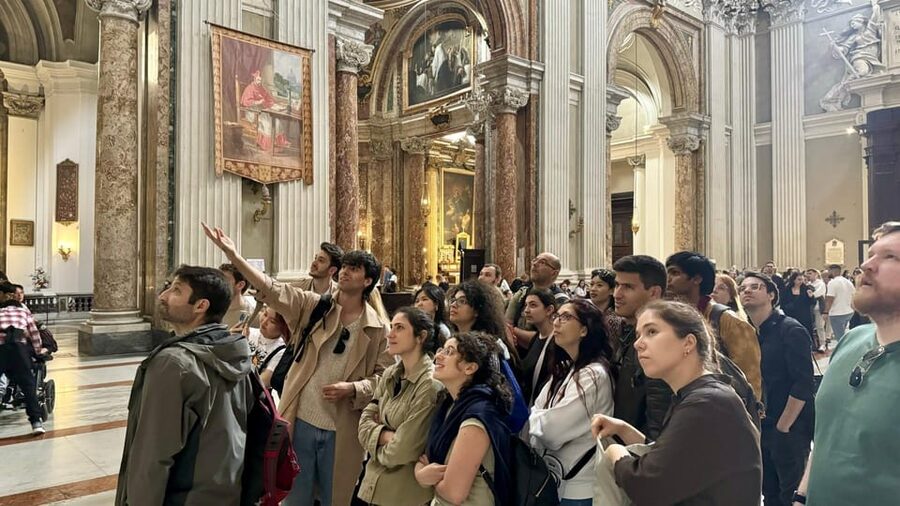
Then you continue to Chiesa di Sant’Ignazio di Loyola. The tour gives you a photo stop and guided visit for about 10 minutes. This church often surprises people because it feels like a “visual wall” of Baroque impact, but it’s also a lesson in how church architecture communicated belief, power, and taste.
For me, the best part of pairing Trevi with a church stop is pacing. Your eyes need a reset. Trevi pulls you in with spectacle, while a Baroque church stop redirects your attention to detail, structure, and design choices that explain why Rome looks the way it does.
Introductions we still owe you around Rome
- Vatican: Museums & Sistine Chapel Entrance Ticket
★ 4.5 · 144,003 reviews - Vatican Museums & Sistine Chapel Tour with Optional Basilica
★ 4.3 · 67,413 reviews - Colosseum, Roman Forum & Palatine Guided Tour
★ 4.7 · 63,148 reviews - Vatican Museums, Sistine Chapel & St Peter’s Basilica Guided Tour
★ 4.5 · 39,149 reviews
The Pantheon and Piazza Navona, Ending Where Rome Performs
The Pantheon is next, with a brief photo stop, guided visit, and walk-through. It’s only about 5 minutes in the schedule, but don’t underestimate it. The tour uses this moment to connect Roman religion and civic life, and to show why this building still feels like a centerpiece even when everything around it has changed.
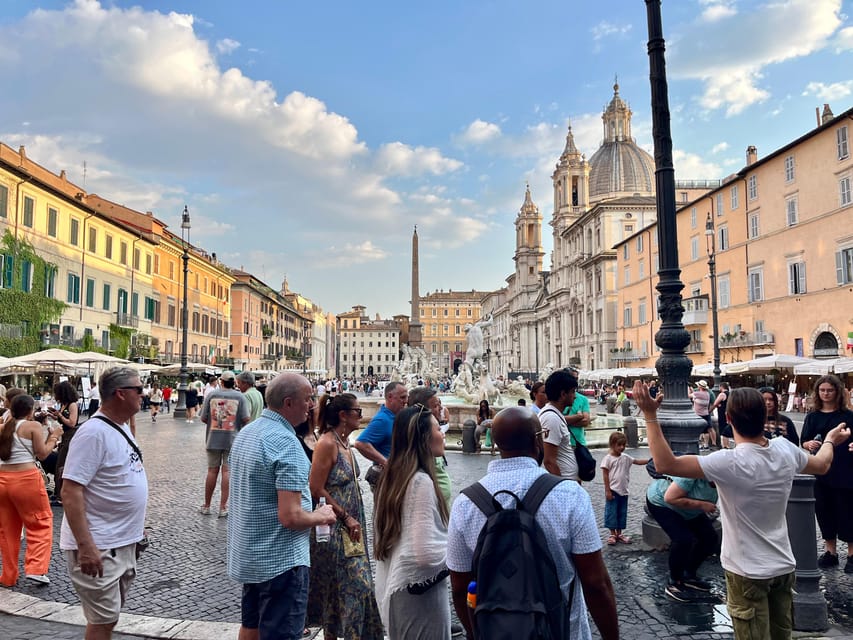
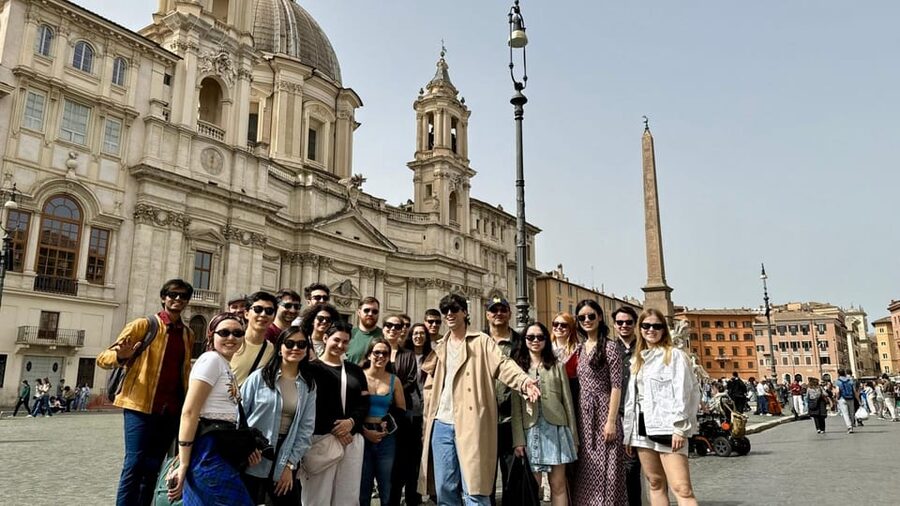
Then you finish at Piazza Navona, with photo stop, guided viewing, and about 15 minutes there. Piazza Navona is Roman “stage life” made stone: fountains, palaces, and the sense that public space is meant for drama.
Finishing here also makes practical sense. You end in an area with easy options for continuing on foot or switching to a bite to eat and a slow wander without getting stuck at the edge of nowhere.
The Real Value: Storytelling About Power, Not Just Facts
Plenty of Rome walks give you dates and descriptions. This one works better if you want something you can actually use while walking around later.
The big theme is who shaped the city and why their choices still echo. The guide connects ruins to Renaissance basilicas, Baroque fountains to political symbolism, and even explains why Rome has so many churches. That’s useful because it helps you stop seeing churches as random. You start seeing patterns: power, devotion, neighborhood identity, and propaganda.
And yes, the tour leans into dark corners. The tour style includes scandal, corruption, crime, murder, war, and betrayal, with dark humor and politically incorrect jokes. That can be genuinely fun when the tone stays in control. It’s also a reason to think twice if you want a strictly neutral vibe.
Price and Tips: What $3.77 Really Means Here
You’ll see a base price around $3.77 per person, but this experience is tip-based. Guides work on a pay-what-you-want model where tips are the main way they earn.
Typical tipping guidance is usually 10€ to 50$. So the real “value math” is this: you’re paying a small fee to reserve a spot, then you decide what the tour was worth based on how you felt during it. If you get clear explanations, strong storytelling, and access to places you’d struggle to find on your own, your tip tends to land higher.
One more practical thought: this model rewards good behavior on your end. Ask questions, engage during the stops, and listen for the connections. The best tours like this feel like a conversation with a walking guide, not a lecture with a microphone.
Guides, Style, and Why the Tour Feels More Personal
The guide experience is a major part of why people rate this so highly. Names that show up include Iris, Jacopo, Jacob, Jacobi, Simone, and Simona, and the pattern is consistent: clear, energetic storytelling plus humor that keeps things moving.
You’re also told live guiding is in Spanish and English, so you can pick based on comfort. And since it’s face to face rather than headset-led, you’re more likely to get answers that match your interests, like art angles, family connections, or the political meaning behind a monument.
Who Should Book This, and Who Might Skip It
I think this tour is a great fit if you:
- Want Rome context that makes the city easier to navigate after the walk.
- Have already seen the biggest attractions and want a new angle on them.
- Enjoy history told like a story, including the ugly and human parts.
I’d consider skipping if you:
- Want a strictly family-friendly, light-touch tone with no dark humor.
- Only want slow, museum-style explanations with lots of time inside major sites.
- Don’t want to participate in the tip-based, pay-what-you-want expectation.
Quick Practical Tips for a Smooth Walk
- Wear shoes you can stand in, because several stops involve standing and looking up.
- Bring a small bottle of water. Even a 2.5-hour walk adds up when you stop often for photos and guided looks.
- If you’re a question person, go for it. The flow is designed for interaction, especially when the guide ties stories to what you ask.
Should You Book This Rome City-Center Walk?
Yes, if you want Rome explained through people, power, and why buildings ended up exactly where they did. The combination of iconic stops (Trevi Fountain, Pantheon, Piazza Navona) with off-limits access and Papal Private Gardens admission makes it feel like more than a quick sightseeing stroll.
It’s not the tour for you if you hate edgy humor or if you refuse the tip-based model. But if you’re flexible and like your history with plot, this is an excellent way to get a smarter, more fun first pass through central Rome.
FAQ
Where do I meet the guide?
Meet on the steps of Chiesa del Santissimo Nome di Maria al Foro Traiano, right by the Trajan Column and Trajan Forum. The guide holds a tour sign with the tour name.
How long is the tour?
The tour lasts 2.5 hours.
What languages are offered?
The live tour guide is available in Spanish and English.
Is this a tip-based tour?
Yes. It follows a pay-what-you-want model, where guides work for tips alone. A typical tip is 10€ to 50$, and you give what you think it was worth at the end.
What is included in the experience?
You get a local guide and walking tour, city highlights, hidden gems, and Papal Private Gardens admission.
Can I reserve without paying now, and cancel later?
Yes. You can reserve now and pay later (pay nothing today). You can also cancel up to 24 hours in advance for a full refund.
Just introduced: the newest Rome write-ups
- Excavation Tour to the Tomb of St. Peter’s & St. Peter’s Basilica★ 4.0 · 183 reviews
- Imperial Rome and External Colosseum Tour★ 5.0 · 183 reviews
- Rome: Rooftop Cooking Class with Wine Tasting near Vatican★ 5.0 · 184 reviews
- Rome to Civitavecchia Cruise Port Transfer★ 5.0 · 184 reviews
- Ancient Rome and Colosseum Private Tour with Underground Chambers and Arena★ 4.5 · 184 reviews
- Rome: Vatican Museums & Sistine Chapel Skip-the-Line Ticket★ 4.1 · 185 reviews
- Borghese Gallery Max 6 People Tour: Baroque & Renaissance in Rome★ 5.0 · 185 reviews
Walking Tours, compared.
Guided Walking Tour & Last Supper Visit with Ticket
Read our review →
Rialto Bridge & Offbeat Unusual Venice Walking Tour
Read our review →
Private 3 hrs Venice Tour: St Mark’s, Walking tour & Boat tour
Read our review →
Skip the line: Uffizi and Accademia Small Group Walking Tour
Read our review →Browse the lists this tour appears in