
Reviewed · PASTA COOKING CLASSES
Bari Walking Tour with Pasta Experience
Bari tells its story by foot and pasta. This is a tight Bari Vecchia walk where you hear why the basilica and cathedral matter, then you roll up your sleeves for an orecchiette pasta lesson. I love the way the history feels human, and I love the fact you actually cook with a local. One possible drawback, the pace is efficient, so if you want tons of photos, you will need to grab them quickly.
You get a small group (max 15) and a real local guide, with the route built to hit key spots without long transfers. The tour runs in English, and sometimes the guide can be multilingual if you need extra help.
If you go in the hottest month, expect the walking to feel harder. Also, not everything inside every stop is included, since museum and ticketed entries can be extra.
In This Review
- Key things you’ll get on this Bari walk and pasta experience
- Getting your bearings in Bari Vecchia, without losing an afternoon
- Basilica San Nicola: a pilgrimage stop with a crossroad vibe
- Cattedrale di San Sabino and the Succorpo: where Bari hides its past
- Castello Normanno Svevo: castle walls, plaster casts, and art bursts
- Piazza del Ferrarese: the old town access point and a Roman road reveal
- Piazza Mercantile: the city’s meeting point, with an administrative pulse
- The orecchiette pasta experience: hands-on, not just watching
- Food and wine tasting: small, local, and part of the lesson
- Pace, comfort, and what to wear
- Price and value: why $52.12 can make sense here
- Who should book this Bari walk and pasta
- Should you book this Bari walking tour with pasta?
- FAQ
- How long is the Bari Walking Tour with a pasta experience?
- What is included in the price besides the walking tour?
- Is the tour offered in English?
- Where does the tour start and where does it end?
- Is admission to museums included?
- Can I get a full refund if I cancel?
Key things you’ll get on this Bari walk and pasta experience
- Saint Nicholas meets two faiths, with Basilica San Nicola as a major pilgrimage stop for both Roman Catholic and Orthodox visitors
- Cathedral layers underground, including the Succorpo and its Roman walls concept
- Old town navigation that actually makes sense, from Piazza del Ferrarese through narrow lanes toward the castle area
- A Roman road clue in the square, with restoration revealing a short stretch of Via Appia-Traiana
- A hands-on orecchiette session, guided with patience and hands-on technique
- Food and wine tasting, built into the experience so you do not just watch, you eat
Getting your bearings in Bari Vecchia, without losing an afternoon
Bari can feel like a maze at first, which is exactly why I like routes like this one. You walk through the old town in a way that links places together, so it is not just a list of buildings. In about two hours, you get the main story threads: where people prayed, where Romans left their mark, and where the city traded and gathered.
The group size matters. With a maximum of 15, you get enough attention to follow along, but the walk still keeps moving. Expect a brisk rhythm: short stops, quick context, then onward.
If you are the type who likes to start your trip with orientation, this is a strong first-day move. It also works if you only have a morning or early afternoon free.
More pasta made by your own hands:
Basilica San Nicola: a pilgrimage stop with a crossroad vibe
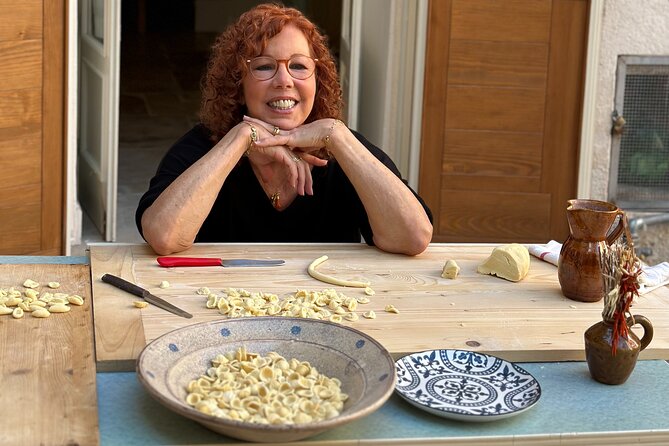
Your walk begins at Basilica San Nicola, and it is a fitting opener. This is described as an important pilgrimage destination for both Roman Catholics and Orthodox Christians, and it is one of Bari’s biggest attractions.
What I like about starting here is how it sets the tone for the rest of the tour. You are not just looking at a church facade. You are learning how Bari fits into a wider religious map, with people traveling there specifically for significance tied to Saint Nicholas.
Because admission here is free, it is also an easy stop to absorb on the spot. You can spend a few extra minutes afterward if the timing works out, and you do not feel like you missed a paid entry by arriving early.
Practical note: churches often have rules for what is worn. If you have a light scarf or something to cover shoulders, bring it. It saves stress.
Cattedrale di San Sabino and the Succorpo: where Bari hides its past
Next is Cattedrale di San Sabino, the seat of the Archbishop of Bari-Bitonto. It is dedicated to Saint Sabinus, with relics brought here in the 9th century. That alone gives the stop weight, but the standout detail is what is underfoot.
You get to appreciate the Succorpo, described as underground Roman walls connected to this cathedral complex. The point is not to pretend Bari is one single era. It is layered. This is the kind of place where you start understanding the city as something built over time, with older structures staying part of the story.
One important consideration: the admission ticket is not included at this stop. That means you might see and learn a lot during the guided visit, but if there is a specific ticketed portion you want to go deeper into, you may have to plan on extra time or separate entry.
If you love architecture and “how did they build this” questions, you will enjoy this stop. If you just want quick highlights, it still works, but go in expecting some parts may require extra entry.
Castello Normanno Svevo: castle walls, plaster casts, and art bursts
From the cathedral area, the walk moves toward Castello Normanno Svevo. This Norman-Swebian castle setting is associated with a collection of plaster casts and temporary art exhibitions.
Even when museum or exhibition entries are not included, castles are useful on a walking tour because they anchor the route. The exterior and the general layout give you a sense of how the old town was guarded and organized. It also frames the geography, so later squares feel less random.
Admission is noted as not included for this stop. So do not count on getting full access to all internal exhibits during the guided time. Still, the cultural context can be worth it, especially if you like your history with a side of art.
If you are curious about visiting the castle museum later, take note during the walk. You will know where to go and what you actually want to see.
More Italy at street level:
- Bari: Guided Walking Tour
★ 4.7 · 744 reviews - Bari Walking City Tour
★ 4.5 · 511 reviews - Bari: Walking Street Food Tour
★ 4.7 · 458 reviews - The Original Street Food Walking Tour in Bari
★ 4.5 · 226 reviews
Piazza del Ferrarese: the old town access point and a Roman road reveal
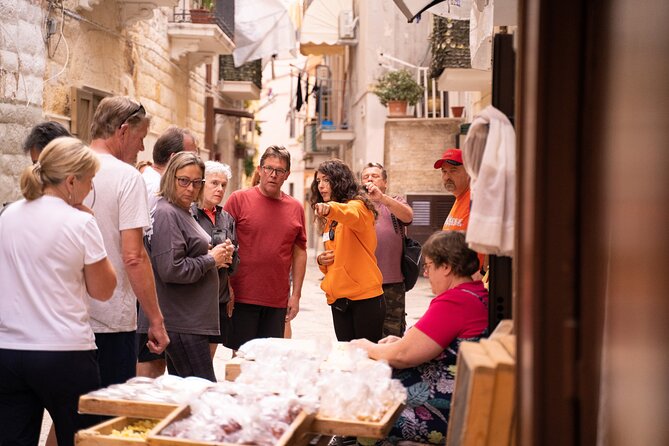
Piazza del Ferrarese is a short stop, but it includes a big wow moment. This square is described as one of the access points to the old town, leading into narrow streets, alleys, and small openings stretching from Piazza Ferrarese toward the castle area.
Here is the detail that makes this stop memorable: during recent restoration, a short stretch of ancient Via Appia-Traiana came to light, built by the Romans in the early second century A.D.
That is the kind of fact that changes how you walk the next block. Suddenly, you are not just passing buildings. You are moving through an area where Roman-era infrastructure was uncovered right in the middle of daily life.
Admission is free here, so you can pause, look around, and connect the dots between the old town layout and what the Romans built. If you enjoy urban archaeology, this is one of the highest value “small stop” moments.
Piazza Mercantile: the city’s meeting point, with an administrative pulse
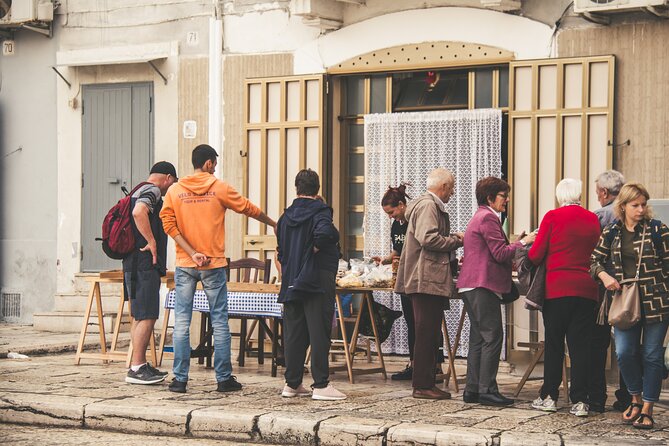
Next you stop at Piazza Mercantile, described as the heart of Bari’s commercial and administrative activities. Historically, it connects to the city market (not currently in that exact area) and to palazzo Sedile, a reference point for Bari city hall.
Even now, it remains an irreplaceable meeting point for citizens. That matters because it reminds you that Bari is not a museum. People still use these places in the rhythm of everyday life.
This stop is short, but it helps you understand why the old town feels the way it does. Squares are where decisions got made, goods got sold, and conversations started. When you recognize that pattern, the narrow lanes around you start to feel purposeful, not confusing.
Admission is free, so you can take your time with the square if you have energy left in your legs.
The orecchiette pasta experience: hands-on, not just watching
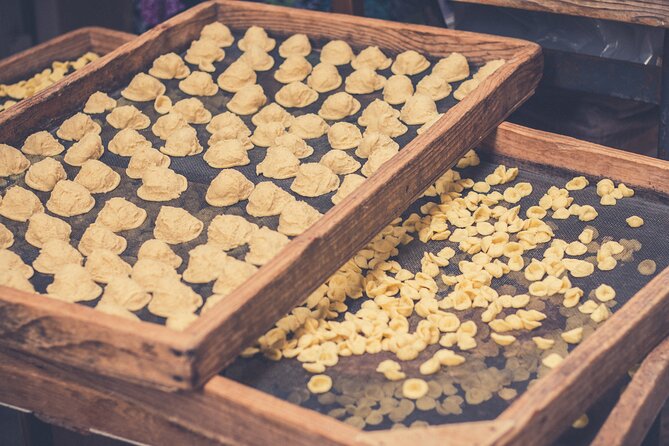
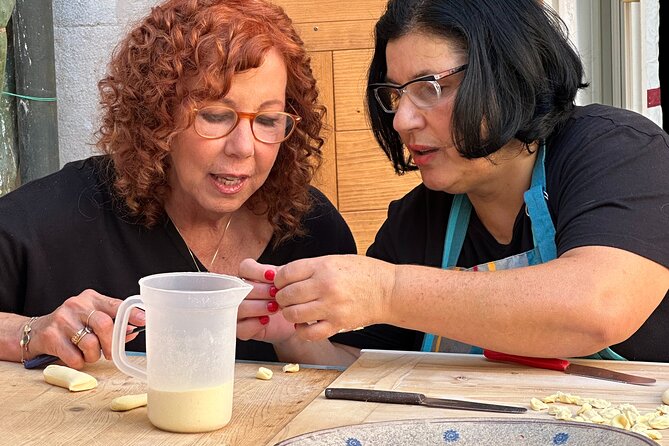
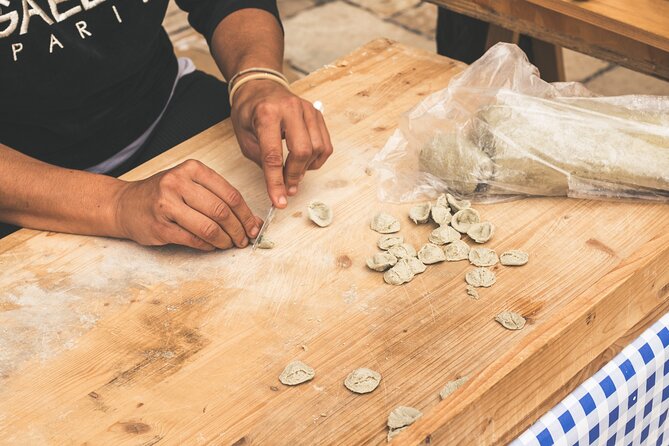
This tour’s biggest hook is the pasta experience. You help cook a fresh pasta dish, and the technique centers on orecchiette, the iconic Apulian shape.
What I like about this part is that it is interactive. You are not passively “told about food.” You learn the motion, you see how dough behaves, and you get a chance to understand what makes this style of pasta distinct.
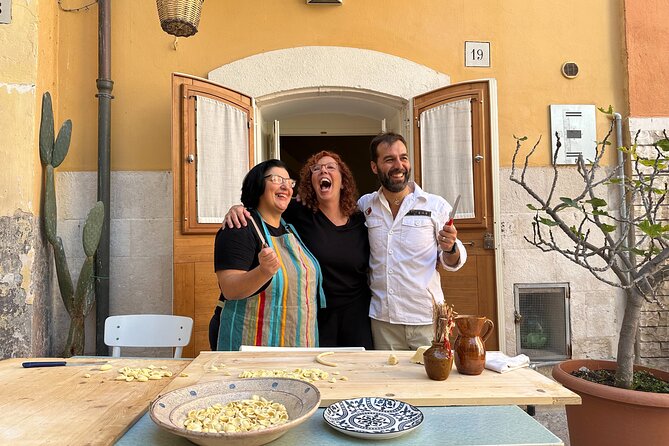
In the way it is described, you cook with a local and then eat what you make. Some guides are paired with specific pasta hosts, and names that come up include Erica and Portia or Nonna Portia, along with tour guides like Barbara, Anna, and Anna Rita. Different combinations, same idea: practical instruction with real personality.
Expect a short lesson and then a meal built from your work. The best results come when you relax and treat it like a craft class, not a test.
If you want a tip that helps on the day: wear clothes that let you roll your sleeves up without fuss. Dough is messy, even when people are careful.
Food and wine tasting: small, local, and part of the lesson

In addition to the pasta experience, the package includes food and wine tasting. That means you should plan your expectations around a tasting-size meal rather than a full restaurant dinner.
One practical takeaway: if you are strict about wine preferences, keep in mind that tastes can vary. Still, the point is not to judge a wine like a sommelier. The point is to pair local flavors with the food you just learned to make.
Some people also mention an added treat at the end, like gelato. That is not something I would treat as guaranteed every time, but it fits the overall structure: you finish with something sweet and local after you have spent the afternoon learning and eating.
Pace, comfort, and what to wear
This is an efficient two-hour experience, with multiple short stops and a pasta segment that fills in the rest of the time. That schedule is great when you want a lot of Bari in a short window.
But it does mean you will not linger for long at every spot. If you like slow travel, pair this with extra self-guided time afterward.
Wear comfortable shoes. The old town streets are not built for flip-flops. Also, if you are visiting in summer, heat can make the walking uncomfortable, so plan to hydrate and try to avoid the mid-afternoon hottest hours when possible.
Price and value: why $52.12 can make sense here
At $52.12 per person for about two hours, this is not a bargain if all you want is a quick walk past monuments. But it becomes good value because you are paying for three things at once:
- A guided walking route that links major sites in Bari Vecchia
- A hands-on pasta lesson with local instruction
- Food and wine tasting included in the experience
Add those together, and the price starts to look more realistic. A cooking class plus food can cost a lot on its own, so the fact that you also get the guided old town context is what makes the deal feel fair.
One more value factor: you get a small-group experience (max 15). For many people, that means less waiting around and more time learning what matters.
Do keep in mind what is not included. Museum and entrance fees are not included. So if you want to fully enter ticketed spaces at the cathedral’s underground area or the castle exhibits, budget extra for that.
Who should book this Bari walk and pasta
I think this fits best if you want:
- A fast way to get oriented in Bari Vecchia
- A history walk that includes real local food culture
- A fun activity for couples, friends, and families
- A hands-on cooking moment, especially if you like orecchiette
It is also a smart pick when you are short on time. You can cover the key monuments in one outing and still have the kind of memory that comes from making something, not just reading about it.
If your only goal is deep museum time, you may feel the schedule is too tight. In that case, treat this as an introduction, then follow up on your favorite site later.
Should you book this Bari walking tour with pasta?
Yes, if you want a compact, high-impact first taste of Bari that blends church storytelling, old town navigation, and a real orecchiette cooking lesson with food and wine tasting. The small group size and the hands-on format are the two big wins.
Skip it or adjust expectations if you hate walking at a brisk pace, or if you plan to spend a lot of time inside ticketed areas since museum entrances are not included. Also, if you are picky about how much pasta you will get, remember the tasting style is part of the format.
For most people, it is a solid way to spend a couple hours in Bari, then keep wandering on your own with a clearer sense of what you are looking at.
FAQ
How long is the Bari Walking Tour with a pasta experience?
The tour runs for about 2 hours.
What is included in the price besides the walking tour?
You get a 2-hour walking tour with a local guide, plus a food and wine tasting and a pasta experience.
Is the tour offered in English?
Yes, it is offered in English. A multilingual guide may also operate.
Where does the tour start and where does it end?
It starts at Strada Vallisa, 81, 70122 Bari BA, Italy. The activity ends back at the same meeting point.
Is admission to museums included?
No. Entrance to museums is not included, and some stops note that admission tickets are not included.
Can I get a full refund if I cancel?
Yes, you can cancel up to 24 hours in advance for a full refund.
Just introduced: the newest Bari write-ups
- Bari: Street Food Walking Tour with Wine Tasting★ 5.0 · 211 reviews
- The Original Street Food Walking Tour in Bari★ 4.5 · 226 reviews
- Bari Rickshaw Tour★ 5.0 · 233 reviews
- Bari Vecchia Group Tour in Italian★ 5.0 · 241 reviews
- Guided tour and tasting at La Cantina Frrud – Wine Museum★ 5.0 · 249 reviews
- Alberobello and Matera Bus Tour, from Bari★ 4.5 · 250 reviews
- Bari by boat: admire the city from the sea with Aperitivo★ 4.6 · 256 reviews
Pasta Cooking Classes, compared.

Florence Pizza or Pasta Class with Gelato Making at a Tuscan Farm
Read our review →
Pasta & Tiramisu Cooking Class with Unlimited Wine
Read our review →
Pasta & Tiramisu Class with Fine Wine by the Vatican
Read our review →
Pasta Making Class with Wine, Limoncello, and Dessert
Read our review →
Fettuccine Pasta Cooking Class in Rome’s City Center
Read our review →Browse the lists this tour appears in