
Reviewed · PASTA COOKING CLASSES
Bologna: Pasta and Tiramisu Cooking Class with Wine
One good reason to book Bologna is how fast you learn to cook. In this 3-hour pasta and tiramisu class, you start with a Prosecco welcome, then switch to hands-on fresh pasta dough guidance inside a popular local restaurant. The big win is that you finish by sitting down together for lunch or dinner, with your food and wine pairing done for you.
The main thing to watch is dietary fit. The traditional recipes focus on gluten, dairy, and eggs, and while substitutes may be offered, they cannot guarantee cross contamination free handling.
In This Review
- Key Things I’d Put on Your Bologna Shortlist
- Bologna Pasta and Tiramisu Cooking Class, What You Actually Do
- Prosecco Welcome, Aprons On, and the Right Mental Shift
- Making Tiramisu, The Steps Plus the Why
- Fresh Pasta Dough in a Real Bologna Kitchen
- Lunch or Dinner, Your Food Meets the Wine
- Instructors in English, With the Right Kind of Confidence
- Price and Value: Is $57 Worth It?
- Dietary Reality Check, Especially for Allergies and Intolerances
- What to Bring, What to Expect, and How to Get the Most Out of It
- Who This Bologna Class Suits Best (and Who Might Skip It)
- Should You Book It?
- FAQ
- How long is the pasta and tiramisu cooking class in Bologna?
- What drinks and meals are included?
- Is the class taught in English?
- Are dietary options available?
- Is this class suitable for kids?
- What is the cancellation policy?
Key Things I’d Put on Your Bologna Shortlist
- A working restaurant feel in central Bologna: you cook, then eat in the same real setting, not a demo hall.
- English-speaking instruction: the teaching is repeatedly described as clear and relaxed.
- Tiramisu first, then fresh pasta: you get two classic Emilia-Romagna staples in one go.
- Prosecco and wine with your meal: the class turns into a proper shared lunch or dinner.
- Traditional recipe is the focus: substitutions exist, but it is not an allergy-proof or gluten-free experience.
Bologna Pasta and Tiramisu Cooking Class, What You Actually Do
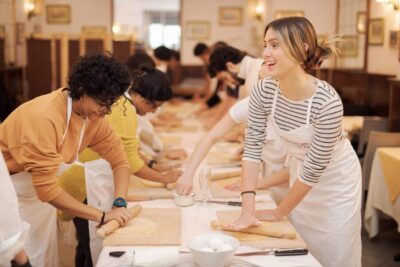
This class is built for people who want something hands-on, without the stress of a private chef or a complicated class schedule. You spend three hours learning the steps for two crowd-pleasers: fresh pasta and tiramisu. Then you sit down and eat what you made, with wine included.
The atmosphere is intentionally social. Everyone cooks side by side, then gathers to lunch or dinner together. If you get energized by conversation, you will probably enjoy the group format as much as the cooking.
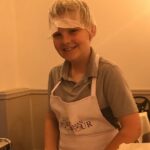
A nice detail: your session begins with practical basics. You wash your hands, put on an apron, and get to work in a kitchen setup meant for real food service. That matters because it keeps the class feeling grounded, not staged.
Tiramisu, assembled a few more ways:
Prosecco Welcome, Aprons On, and the Right Mental Shift
You arrive in central Bologna and get greeted with a welcome glass of Prosecco. It is a small touch, but it changes the tone fast. You go from busy-streets mode to cook-and-laugh mode.
From there, the class moves with a clear rhythm. First comes tiramisu prep, then you transition to pasta making. You are not just watching. You are rolling up sleeves and getting step-by-step direction while you work.
One thing I like about the pacing is how it fits different comfort levels. Even if you have never made fresh pasta, you are guided through the mechanics of dough, rolling, cutting, and shaping. If you are more confident in the kitchen, you can focus on technique and texture instead of guessing.
Making Tiramisu, The Steps Plus the Why
You start with tiramisu, and you learn it as a process, not just a recipe. The goal is to understand what makes it work, and why the techniques matter when the layers come together.
You also get context around origins and what makes a classic tiramisu taste like tiramisu. That background helps you stop thinking of it as a single dessert step and start thinking of it as structure: creamy filling, coffee flavor, and the right balance between soft and set.
In practice, the class setting means you can stay present. You follow instructions, you see how consistency should look and feel, and you taste what you are building toward. Since the class includes sampling what you prepare, you also learn from the result, not just the method.
Fresh Pasta Dough in a Real Bologna Kitchen
After tiramisu, you move to pasta dough. This is where the class earns its keep, because it teaches the actual fundamentals behind fresh pasta.
You get guidance on ingredients and flour choice. You also learn the difference between pasta fresca and pasta secca, which is more useful than it sounds. It explains why freshness changes texture, how sauces behave with each type, and what kind of handling the dough needs.
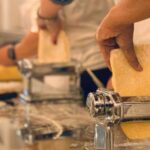
Then it is hands-on. You roll, cut, and shape pasta, with an instructor monitoring what you are doing. In this kind of class, the biggest help is getting your timing right and avoiding dough that is too dry, too sticky, or rolled too thick.
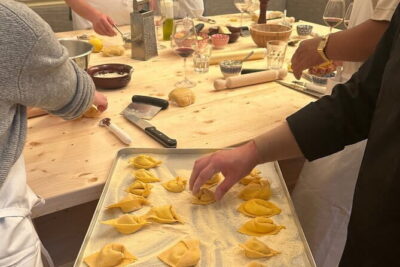
Some sessions may include more than one pasta shape. Based on what hosts have taught in past runs, you might make formats like tagliatelle-style ribbons or filled pasta such as spinach and ricotta varieties. The key idea for you is the same either way: you learn the dough and shaping steps, then you apply them to the specific form your group makes.
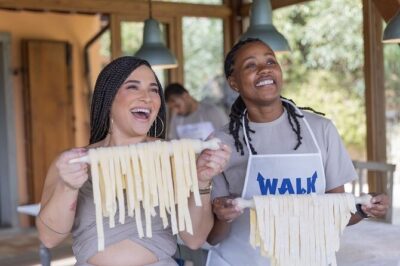
More pasta made by your own hands:
- Bologna Food & Market Tour with 6 Tastings, Pasta, Wines & More
★ 5.0 · 1,328 reviews - Bologna Local Pasta Cooking Class, Ragu, Spritz, Wine & Gelato
★ 5.0 · 527 reviews - Bologna: Pasta Tagliatelle Ragu Cooking Class with Spritz
★ 4.9 · 407 reviews - Florence: Pasta Cooking Class with Unlimited Wine
★ 4.9 · 10,285 reviews
Lunch or Dinner, Your Food Meets the Wine
Once the cooking is done, you all sit down together for lunch or dinner. This is not a quick bite and run. It is a full meal built from the dishes you prepared during the class.
Included is a glass of wine with your meal. In the real world, that is part of the value. You are not paying extra for drinks at a separate table after class. The wine stays part of the experience, and it also helps the whole thing feel like a Bologna evening, not a timed workshop.
Food comes out as sauces too, not just plain pasta. Depending on the class flow, you may enjoy combinations like tomato sauce or sage and butter-style flavors. The big practical takeaway for you: once you taste your own pasta with sauce, it becomes easier to reproduce at home, because you understand what pairs well with your shape and texture.
Instructors in English, With the Right Kind of Confidence
A major reason this class scores so well is the teaching style. Multiple hosts are mentioned by name in the course history around this activity, including Luca, Al (also spelled Aladin in some cases), Peter, and Steven. The repeated theme is that English instruction is clear, and the pace stays relaxed.
What you want from a cooking class is exactly that. Clear instructions. Enough time to catch up. Corrections that feel friendly, not scolding. If your group is mixed, with some first-timers and some confident cooks, a good host keeps everyone moving.
There is also a bonus layer beyond cooking. Some hosts share helpful Bologna advice, like where to eat or where to grab a coffee after. If you are new to the city, that kind of local direction makes the class feel like part of your trip, not a standalone activity.
Price and Value: Is $57 Worth It?
At $57 per person for a 3-hour experience, this is priced like more than a typical restaurant meal, but less than you might expect for a structured cooking workshop. Here is why it can still feel like good value:
- You get a welcome glass of Prosecco plus a glass of wine with lunch or dinner.
- You eat what you make, which means the class ends with a full meal included.
- You get guided instruction on two classics: fresh pasta and tiramisu.
Also, the class saves you from the biggest cooking-class pitfall, which is paying for entertainment and leaving with nothing you can reproduce. Here, you do the work, then you taste the results. That turns the experience into a skill you can use later.
Still, it is not the cheapest option in Bologna. If you only want a one-time dessert or you are strict about dietary needs, you might prefer a different activity or a restaurant dinner plus a separate gelato walk. But if you want to learn and eat, the package makes sense.
Dietary Reality Check, Especially for Allergies and Intolerances
This is where you should read carefully and plan honestly.
The class focuses on the traditional recipes, which include gluten, dairy, and eggs. They say substitutes may be offered for allergies or food preferences, but they also state they cannot guarantee 100% freedom from cross contamination.
And the experience is not listed as suitable for several categories, including people with food allergies, gluten intolerance, lactose intolerance, and vegan dietary needs. Even if the provider says dietary options are available, the strict exclusions are important. If you have a medical allergy or need strict avoidance, do not assume the kitchen can fully separate ingredients.
If you are vegetarian, the data indicates support may exist, and some past classes have been described as vegetarian. If you have lactose intolerance or gluten intolerance, your safest move is to ask for specifics before booking and confirm what can be guaranteed.
What to Bring, What to Expect, and How to Get the Most Out of It
The practical advice is simple. Wear comfortable clothes so you can move easily while rolling and shaping dough.
Go in hungry. You cook first, but the meal at the end is part of the point. With wine included, pacing matters too. If you want to enjoy Bologna after, sip steadily and plan a relaxed evening, not a sprint back to the tram.
If you are nervous about cooking, you can relax. Many mentions of the instruction style focus on patience and clear repeat explanations. You do not need to be a chef to succeed. Your goal is to learn what good dough feels like and how to handle it without fighting it.
And if you like taking something home with you, this class gives that. You leave knowing the steps for dough and dessert technique, so you can try again later with confidence, even if your first attempt at home is not identical to what you made in the restaurant.
Who This Bologna Class Suits Best (and Who Might Skip It)
This experience fits best if you:
- Want a hands-on Bologna cooking class that ends with lunch or dinner
- Enjoy learning classic recipes like fresh pasta and tiramisu
- Like the social side of a shared meal with wine
- Prefer an English-speaking instructor
You might skip or rethink it if:
- You need strict gluten-free, lactose-free, or allergy-safe handling
- You are vegan, since it is not listed as suitable for vegan dietary needs
- You want a sightseeing-heavy day with minimal time in one place
Should You Book It?
If you want a memorable Bologna food moment that teaches real technique and includes your meal and drinks, this is an excellent pick. The best version of this class for you is the one where you show up ready to cook, taste, and ask questions, then treat the dinner as part of the experience.
If dietary restrictions are your main concern, treat this as a conversation with the provider before you commit. The traditional recipe focus and the cross contamination note can matter a lot.
Otherwise, for value, comfort, and that end-of-class satisfaction of eating what you made, I would book it.
FAQ
How long is the pasta and tiramisu cooking class in Bologna?
The class runs for 3 hours.
What drinks and meals are included?
You get a welcome glass of Prosecco, a glass of wine with your meal, and lunch or dinner. You also sample the dishes you prepare.
Is the class taught in English?
Yes, the instructor teaches in English.
Are dietary options available?
Dietary options may be supported, but the traditional recipe includes gluten, dairy, and eggs. Substitutes may be offered for allergies or food preferences, but cross contamination cannot be guaranteed.
Is this class suitable for kids?
It is not suitable for children under 3 years old.
What is the cancellation policy?
You can cancel up to 24 hours in advance for a full refund.
Cellar Doors of Italy
- Tuscany Day Trip from Florence: Siena, San Gimignano, Pisa and Lunch at a Winery
★ 5.0 · 21,634 reviews - Florence: Chianti Wineries Tour with Wine Tasting
★ 4.5 · 8,301 reviews - Small-Group Wine Tasting Experience in the Tuscan Countryside
★ 5.0 · 7,392 reviews - Pisa, Siena and San Gimignano Day Trip with Lunch & Wine Pairing
★ 4.5 · 6,006 reviews
Italian Kitchens Taking Students
- Pastamama, Home Cooking Classes at Grace’s Home
★ 5.0 · 521 reviews - Florence: Pasta Cooking Class with Unlimited Wine
★ 5.0 · 6,413 reviews - Cooking Class and Lunch at a Tuscan Farmhouse with Local Market Tour from Florence
★ 5.0 · 4,831 reviews - Rome: Pasta Making Class with Wine, Limoncello, and Dessert
★ 4.9 · 3,177 reviews
Just introduced: the newest Bologna write-ups
- Bologna Private Food Tour with 6 or 10 Tastings★ 4.5 · 344 reviews
- Maranello: Test Drive Ferrari 458★ 4.9 · 344 reviews
- Bologna Private Highlights & Hidden Gems Tour with a Local★ 5.0 · 359 reviews
- Modena: Balsamic Lunch with Vinegar Cellar Tour and Tasting★ 5.0 · 395 reviews
- Bologna: Pasta Tagliatelle Ragu Cooking Class with Spritz★ 4.9 · 407 reviews
- Bologna: Pasta and Tiramisu Small Group Cooking Class with Wine★ 5.0 · 409 reviews
- Bologna Food Tour by Taste Bologna: Intimate Group (Max 10)★ 5.0 · 424 reviews
Pasta Cooking Classes, compared.
Florence Pizza or Pasta Class with Gelato Making at a Tuscan Farm
Read our review →
Pasta & Tiramisu Cooking Class with Unlimited Wine
Read our review →
Pasta & Tiramisu Class with Fine Wine by the Vatican
Read our review →
Pasta Making Class with Wine, Limoncello, and Dessert
Read our review →
Fettuccine Pasta Cooking Class in Rome’s City Center
Read our review →Browse the lists this tour appears in