
Reviewed · GALLERIA BORGHESE TOURS
Borghese Gallery Skip-the-Line Entry Ticket with Audioguide
Rome runs on lines, and this one saves you. With skip-the-line timed entry to the Borghese Gallery, you get a calm two-hour window for Bernini and Caravaggio, plus an English audioguide.
I love how this visit keeps you focused on the museum’s real stars without wasting time. I also like that you can choose a morning or afternoon entry and still make room to stroll the Villa Borghese gardens afterward.
One catch is the clock: you have up to two hours inside, so you have to plan your must-sees. Arrive early for the meet-up so you don’t lose time hunting across the grounds.
In This Review
- Key things I’d bank on before you go
- Borghese Gallery timed entry, and why it feels different
- Getting oriented fast at the meet-up point
- The two-hour rhythm inside: how to see more with less stress
- Stop 1: Galleria Borghese, the rooms that matter most
- What you’ll actually want to aim for
- Bernini sculptures: why this gallery earns its reputation
- Caravaggio and the power of dark, dramatic rooms
- Raphael and Canova: the best contrast to the Baroque punches
- Where the gardens fit: Villa Borghese Pinciana and views
- Audioguide in English: how to use it without getting tangled
- Price and value: what $60.07 buys you in real time
- Who this fits best (and who should think twice)
- Quick FAQ
- FAQ
- How long is the Borghese Gallery visit?
- Is the audioguide available in English?
- How do I find the coordinator on the day of my visit?
- Are tickets free for children under 18?
- What is the cancellation policy for a full refund?
- Does weather affect the experience?
- Should you book this Borghese Gallery ticket with audioguide?
Key things I’d bank on before you go
Timed entry saves your energy in a museum that limits how long and how many people can enter.
Bernini’s sculptures are the headline and the best way to see them is with a smart plan of what to hit first.
The Caravaggio room is a must for anyone who wants Baroque drama on canvas.
You still get personal pace to move room to room after the orientation.
The gardens are part of the payoff with views over Piazza del Popolo.
English audio helps you go deeper even if you prefer a self-led rhythm.
Borghese Gallery timed entry, and why it feels different
The Borghese Gallery is one of those Rome stops where timing really matters. The museum runs on tight access, and that limits the chaos you’d normally expect in big-city attractions.
This ticket is built around guaranteed entry with a chosen time slot. That means you are not standing around hoping something opens up, and you can aim for a visit length of about 2 to 3 hours total with time inside the galleries up to two hours.
The Borghese by timed slot, other ways:

Getting oriented fast at the meet-up point
Your best first move is being on time. You meet your coordinator in front of the Borghese Gallery, at the base of the steps, on the right-hand side in front of the building. The coordinator is wearing a blue and white uniform and is waiting there.
A practical tip: the Villa Borghese site has plenty of walking space around it, so factor in a few extra minutes. One traveler had trouble finding the exact meeting spot due to the size of the grounds, then got into the museum after a bit of sorting with their group.
Once you link up, you receive your entry tickets and you start the visit. From there, the galleries are set up for a timed experience, so you can focus on art instead of logistics.
The two-hour rhythm inside: how to see more with less stress
Here’s the reality at Borghese: the museum is not huge, but it is packed with masterpieces. You are allowed to linger for up to two hours inside, which is long enough to enjoy, but short enough that you cannot wander blindly.
That’s where a planned route helps. You’ll get a structured look at key rooms and standout pieces, then you can move through at your own pace while staying within the time limit.
If your style is fast and picky, pick a handful of works and commit to them. If you like slow viewing, use the orientation route to pick your favorites, then spend your second half of the two hours on details like faces, hands, light, and gesture in the sculptures.
Stop 1: Galleria Borghese, the rooms that matter most
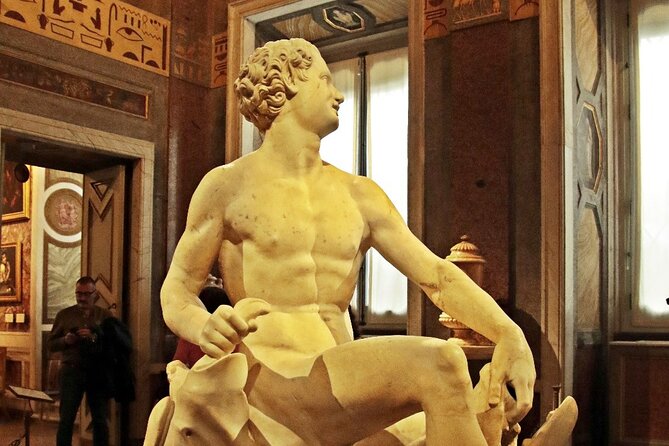
Your visit centers on the Galleria Borghese collection, a mix of sculpture and painting that mostly hits Baroque highlights. The key names you’ll see repeatedly are Bernini and Caravaggio, but you’ll also spot major works by artists like Canova, Raphael, Titian, and more.
More museum halls from Turin to Palermo:
- Vatican: Museums & Sistine Chapel Entrance Ticket
★ 4.5 · 144,003 reviews - Vatican Museums & Sistine Chapel Tour with Optional Basilica
★ 4.3 · 67,413 reviews - Vatican Museums, Sistine Chapel & St Peter’s Basilica Guided Tour
★ 4.5 · 39,149 reviews - Rome: Vatican Museums, Sistine Chapel & Basilica Tour
★ 4.3 · 13,872 reviews
What you’ll actually want to aim for
The visit is designed to help you hit the best rooms without wasting your whole time. The works called out as must-sees include:
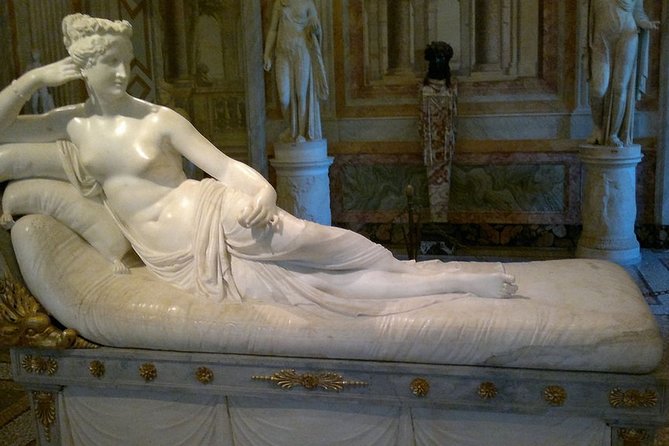
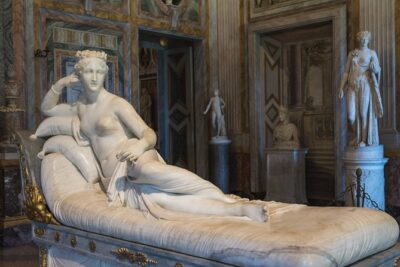
- Canova’s Pauline Bonaparte
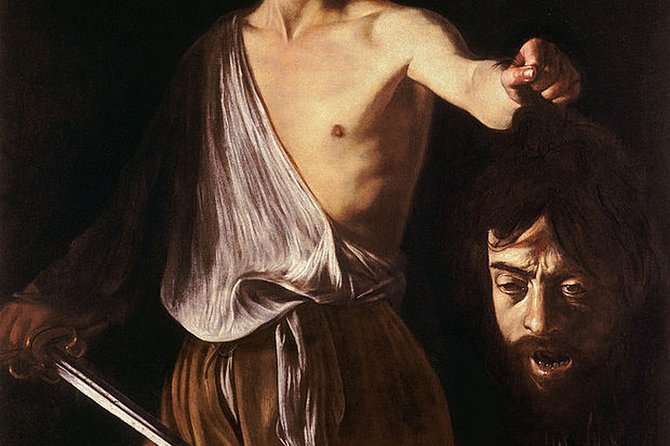
- Caravaggio’s David with the Head of Goliath and Boy with a Basket of Fruit
- Raphael’s The Deposition and Lady with a Unicorn
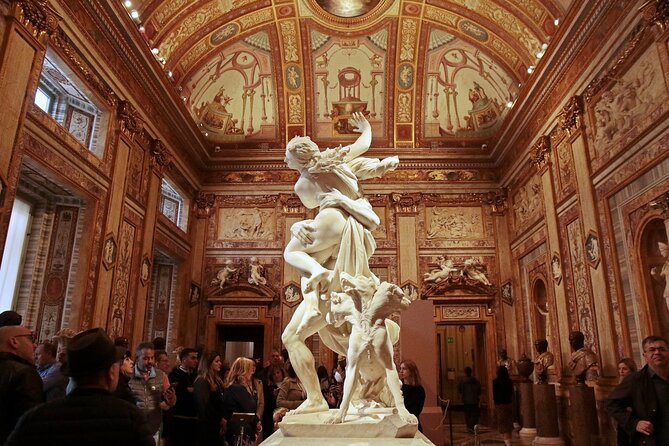
- Bernini sculptures such as Apollo and Daphne and David
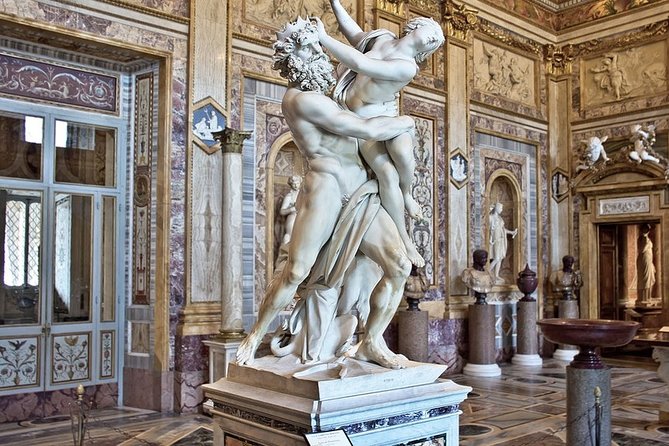
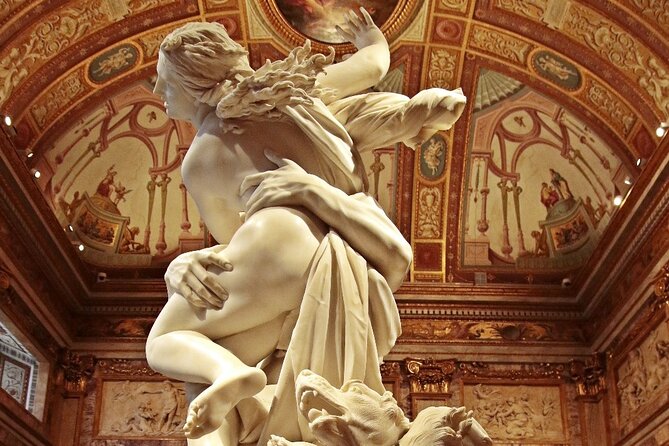
- (And in the wider Bernini set people often rave about works like The Rape of Proserpina)
It’s also worth stepping into the sculpture rooms with a plan. Bernini’s figures are not just pretty statues. They’re emotional, theatrical, and built for close looking.
Bernini sculptures: why this gallery earns its reputation
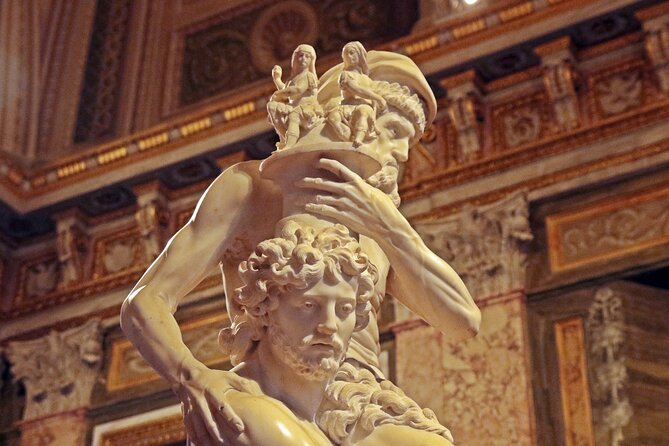
If you only have time for one category here, make it Bernini. The gallery is famous for these sculptures, and the best viewing strategy is to slow down and look at one thing at a time: pose, expression, and the way the artist uses the illusion of motion.
You’ll see major works like Apollo and Daphne and David, which are ideal for close attention. You can keep moving, but let your eyes rest long enough to notice how the carving and composition guide your attention.
In the guided portion of the experience, specific works were highlighted by guides such as Dimitri and Irene in reviews, with lots of focus on meaning and symbolism. That kind of context matters here because Baroque sculpture is packed with stories, not just anatomy.
If you prefer audio over people, still do not skip the first pass through key rooms. The orientation tends to point you toward details you might otherwise miss when you are trying to read a gallery on your own.
Caravaggio and the power of dark, dramatic rooms
The Caravaggio room is a big reason to book this rather than just arriving cold. The museum features paintings like David with the Head of Goliath and Boy with a Basket of Fruit, and Caravaggio’s style hits hard when you see it in person.
What makes these paintings special is how they use light and emotion. In a quick two-hour window, Caravaggio can easily get short-changed if you are rushing through. I’d treat that room like a “main course,” not a snack.
If you love dramatic art, the pairing of Bernini sculpture plus Caravaggio painting gives you that full Baroque mood in one stop. You go from theatrical bodies in stone to emotional faces on canvas, and the experience clicks.
Raphael and Canova: the best contrast to the Baroque punches
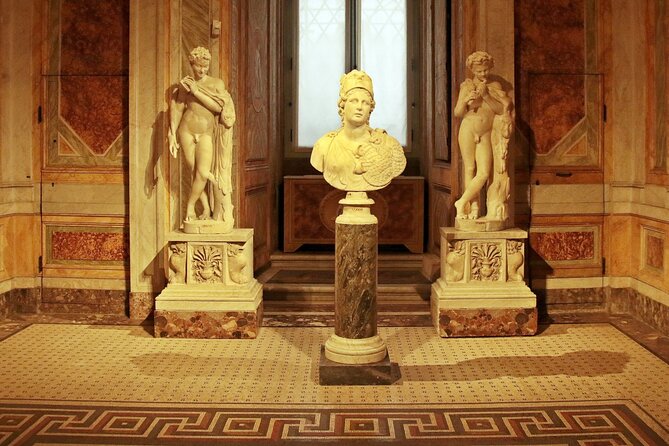
Once you’ve soaked up the drama, Borghese gives you contrast. Raphael’s works like The Deposition and Lady with a Unicorn shift you toward more Renaissance storytelling and composition. Even if you are not a lifelong Raphael fan, seeing him in this context is a good mental reset.
Then you get Canova’s Pauline Bonaparte, which brings a very different feeling. Canova is a reminder that the story of art in this place is not frozen in one century. The museum collection reflects a long fascination with beauty, power, and taste.
This mix is one of the best reasons the two-hour limit works. You can see multiple art “moods” without burning a whole day.
Where the gardens fit: Villa Borghese Pinciana and views
Do not stop at the galleries if you have the legs. The experience includes time for the gardens walk and even a viewpoint that’s mentioned as a look over Piazza del Popolo.
These gardens are where the museum visit becomes a Rome afternoon, not just an indoor appointment. The art is intense, and the greenery is a real counterweight.
Even a short stroll helps you cool down after sculpture rooms that can be eye-strainingly detailed. It also gives you a chance to breathe before you tackle the next stop in your Rome day.
Audioguide in English: how to use it without getting tangled
The ticket includes an English audio guide. In practice, you get the best results when you treat the audio guide as a supplement, not a replacement for paying attention.
If you rely on audio, keep this simple rule: press play only when you pause in front of a specific work. If you try to listen while walking fast, you will miss both art and audio.
Some reviews mention using a QR to access the audio guide on a phone, and that can be a little confusing if your device is low on battery or you have spotty signal. So come prepared: fully charge your phone and keep volume at a comfortable level before you enter the galleries.
Also, if your experience includes a human guide or orientation through the rooms, use that time to learn the “why.” Then let the audio help you with “what to notice” while you look.
Price and value: what $60.07 buys you in real time
At about $60.07 per person, this is not a budget ticket. But the value is tied to two things Rome does best: scarce access and time-saving.
First, the Borghese Gallery limits visitors, and that makes tickets harder to get. Second, you are paying to avoid the hassle of timing the right day and time slot and to walk in with a planned entry.
For many visitors, the biggest win is the feeling of control. You choose a morning or afternoon time, you get in on schedule, and you have a set amount of time to enjoy the collection. Reviews repeatedly call out that there was no waiting in line and that the experience stayed relaxed because entry is limited.
Think of the cost less as paying for art and more as paying for “access you would otherwise struggle to secure,” plus the structure to make your two hours count.
Who this fits best (and who should think twice)
This is a great fit if you:
- Want Bernini and Caravaggio without scrambling for tickets on the day
- Prefer a short, high-impact museum experience
- Like having context as you look, even if you still want freedom to wander
- Want a calmer alternative to Rome’s biggest crowd magnets
It might be less ideal if you:
- Want a long, slow museum day. Two hours inside can feel short once you get interested.
- Get stressed by strict meeting times and timed entry. You will do best if you’re prompt.
- Hate relying on phone-based audio. In that case, plan on following along with the guide orientation and reading the labels you can.
Quick FAQ
FAQ
How long is the Borghese Gallery visit?
The experience runs about 2 to 3 hours total, and you can generally stay in the galleries for up to two hours.
Is the audioguide available in English?
Yes, the audioguide is offered in English.
How do I find the coordinator on the day of my visit?
Meet your coordinator in front of the Borghese Gallery, at the base of the steps on the right-hand side in front of the building. The coordinator is wearing a blue and white uniform.
Are tickets free for children under 18?
Tickets for under 18 are free, but they still require a reservation. The information provided notes there is no availability for this ticket category.
What is the cancellation policy for a full refund?
You can cancel for free up to 24 hours in advance for a full refund. If you cancel less than 24 hours before the start time, the amount paid is not refunded.
Does weather affect the experience?
Yes. If it’s canceled due to poor weather, you’ll be offered a different date or a full refund.
Should you book this Borghese Gallery ticket with audioguide?
Yes, if you care about getting in smoothly and using your limited time well. The Borghese Gallery is one of Rome’s hardest places to manage without a ticket plan, and timed entry keeps the visit calm rather than chaotic.
Book it especially if Bernini and Caravaggio are at the top of your list. The format is short on purpose, and that helps you focus on the standout works and actually enjoy looking rather than sprinting.
If you are the type who needs hours and hours to drift room to room, consider whether two hours inside will feel satisfying. For most people, it lands in the sweet spot: enough time to see the big names, plus time to step into the Villa Borghese gardens and cool down after all that Baroque intensity.
Just introduced: the newest Rome write-ups
- Rome Fiumicino Airport Transfer in Luxury Private Transportation★ 4.5 · 339 reviews
- Vatican: Pope Francis Tomb and Papal Basilicas Tour★ 4.7 · 340 reviews
- From Rome: Sorrento, Positano & Amalfi Coast Day Trip★ 4.5 · 340 reviews
- Rome: Guided Colosseum Underground Tour★ 4.8 · 342 reviews
- Colosseum Arena Floor, Roman Forum & Palatine Hill Guided Group Tour★ 5.0 · 343 reviews
- Rome: Small Group Rome’s Dark Side – Ghosts & Legends Tour★ 4.9 · 343 reviews
- Rome: City Highlights Electric Bike Tour★ 4.9 · 343 reviews
Galleria Borghese Tours, compared.

Borghese Gallery and Gardens Guided Small-Group Tour
Read our review →
Borghese Gallery Guided Tour with Skip-the-Line Entry
Read our review →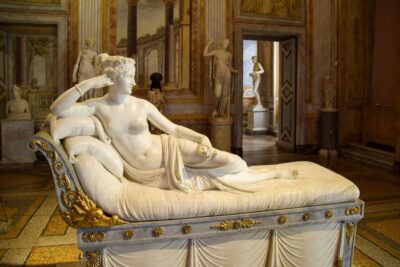
Borghese Gallery Skip-the-Line Tickets with Audioguide
Read our review →
Borghese Gallery Entry Ticket & Optional Guided Tour
Read our review →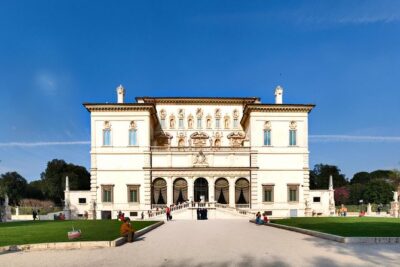
Borghese Gallery & Gardens Small Group Guided Tour
Read our review →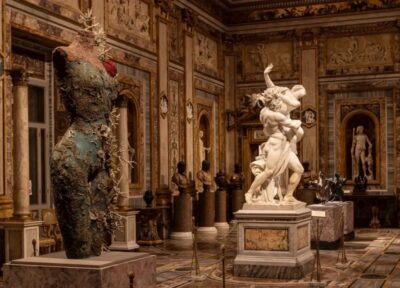
Borghese Gallery, Canova’s Masterpieces Skip-the-Line Guided Tour
Read our review →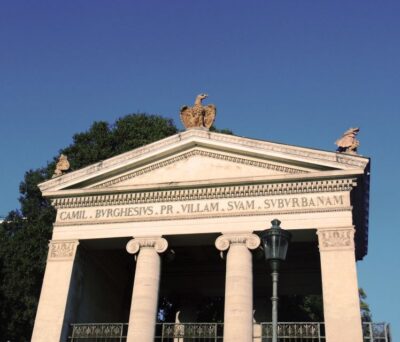
Browse the lists this tour appears in