
Reviewed · MUSEUMS
Da Vinci Museum: Discover a World of Genius in the Heart of Rome
Leonardo in Rome is quick, clever, and surprisingly hands-on. The museum is tucked inside Basilica Santa Maria del Popolo, and the exhibits focus on how Leonardo thought, not just what he drew. You get a time-saving pre-booked ticket, plus life-size machines built from ideas in his codices and studies.
What I like most is how the museum turns big concepts into something you can actually follow, from anatomy sketches to famous works like the Vitruvian Man and the Last Supper story. My one real consideration is that this is a small museum with about 1 to 2 hours to see it, and there are no restroom facilities in or around the museum, so plan your timing.
In This Review
- Key Points at a Glance
- Where Leonardo Lives in Rome: Santa Maria del Popolo and Piazza del Popolo
- Price and Value: Is $14.38 a Fair Deal?
- Entering the Museo Leonardo da Vinci: What You’ll See First
- The Interactive Heart: Leonardo’s Machines and Codex-Based Recreates
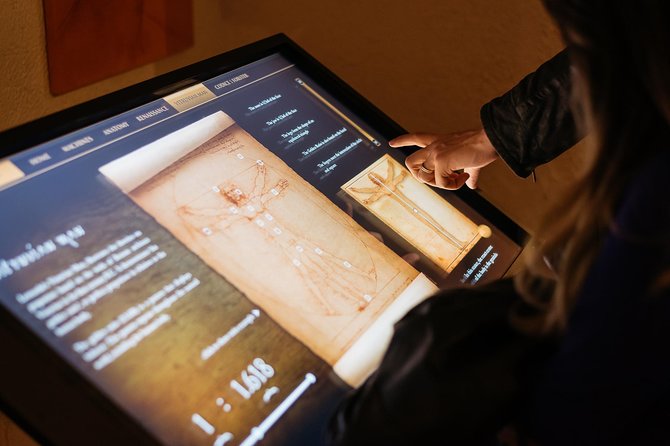
- Art, Anatomy, and the Stories Behind Vitruvian Man and The Last Supper
- How Much Time You Need: A Realistic 1 to 2 Hour Plan
- Audio Guide Tips: When It Helps and When It Might Annoy
- VR Flight and Other Add-Ons: Worth Your Time?
- Bathrooms, Comfort, and Practical Stuff Before You Go
- Pairing It With the Neighborhood: What to Do After Piazza del Popolo
- Who This Museum Is Best For (and Who Should Think Twice)
- Should You Book the Da Vinci Museum Ticket?
- FAQ
- How long does the Da Vinci Museum visit take?
- Is the ticket to the Museo Leonardo da Vinci included in the price?
- Is the museum offered in English?
- Do I need to buy an audio guide?
- Where is the museum located?
- Is it a good stop if I am already near the Spanish Steps or Villa Borghese?
- Are there restrooms at the museum?
- Is there a maximum group size?
- Are service animals allowed?
- What is the cancellation window?
Key Points at a Glance
- Pre-booked entry helps you skip the fuss and get inside faster
- Life-size Leonardo machines are built from his codices and studies
- Inside Santa Maria del Popolo, you can pair it with the Piazza del Popolo area right afterward
- English is available, and you can buy an audio guide if you want extra detail
- Expect a short visit (often around 1 to 2 hours), not a half-day museum marathon
- No restrooms nearby, so go before you arrive
Where Leonardo Lives in Rome: Santa Maria del Popolo and Piazza del Popolo
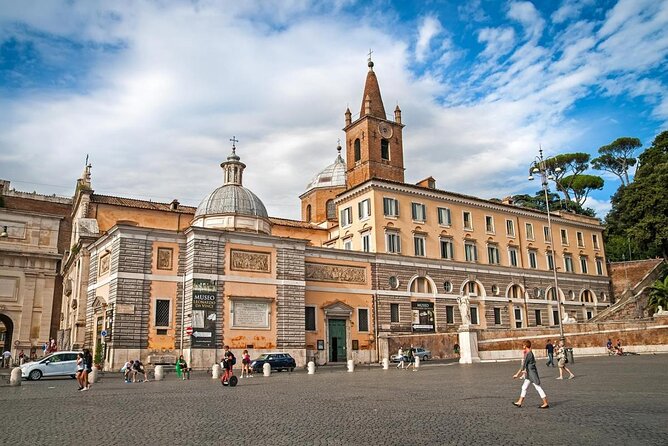
This is not one of those far-flung museum days. The Museo Leonardo da Vinci sits inside Basilica Santa Maria del Popolo, right in the action around Piazza del Popolo. If you are already seeing the Spanish Steps or spending time near Villa Borghese, this feels like an efficient add-on rather than a full relocation.
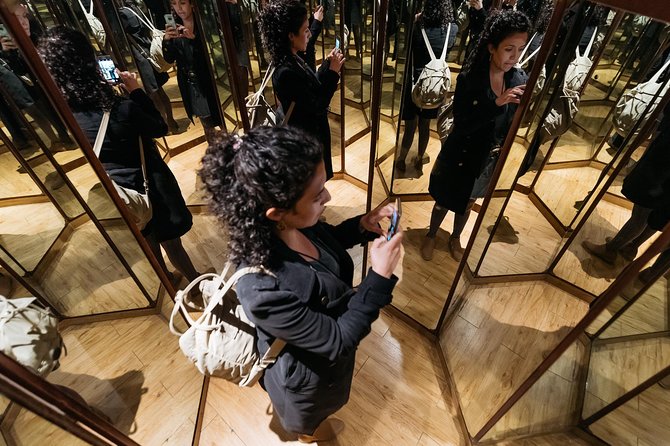
And because the museum is in a church complex, you get that Rome rhythm: steady, historic, and calm compared to some bigger, more crowded attractions. Several visitors also describe it as quiet and not rushed, which matters in a hands-on museum. You can actually stop, read, and try things without the constant pressure to keep moving.
More museum halls from Turin to Palermo:



Price and Value: Is $14.38 a Fair Deal?
At about $14.38 per person for admission, this is priced like a practical Rome stop. The big value piece is that your admission ticket is included with the booking, so you are not paying extra just to get through the door.
The audio guide is not included (it is available to purchase for roughly €3), and that is worth factoring in if you like audio layers. Some visitors said the audio experience can help tie exhibits together, while others felt the experience was still manageable without it. Either way, the base ticket is enough to enjoy the core displays.
So who is it best for? People who want a focused, educational museum without spending half a day. If you are the type who likes museums that are short, interactive, and easy to fit into a day plan, this price makes sense.
Entering the Museo Leonardo da Vinci: What You’ll See First
Once inside, the museum sets a clear theme fast: Leonardo as inventor, artist, scientist, and engineer. You do not just get a timeline. You get categories that match how Leonardo worked, mixing art, mechanics, and human body study into one picture.
You will also get a blend of exhibit types:
- Recreations and machines that bring his ideas to life
- Studies of his famous Renaissance art
- Anatomical sketches
- Multimedia animations that explain key works and inventions
A lot of the appeal is pacing. You move from one topic to the next in a way that keeps the brain engaged, especially if you are visiting with kids or teens. It is also in English, so you can stay comfortable without needing to hunt for translations.
The Interactive Heart: Leonardo’s Machines and Codex-Based Recreates
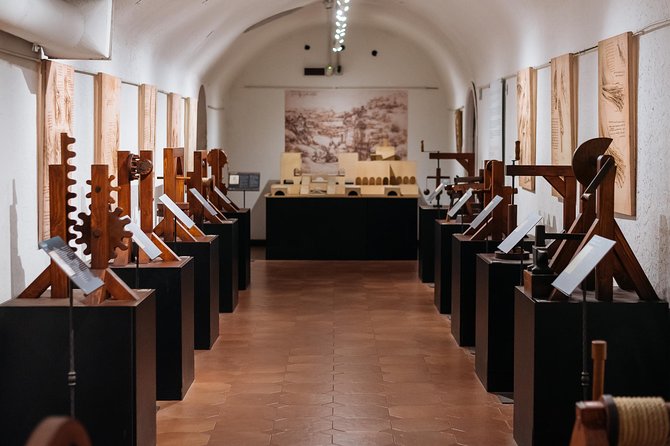
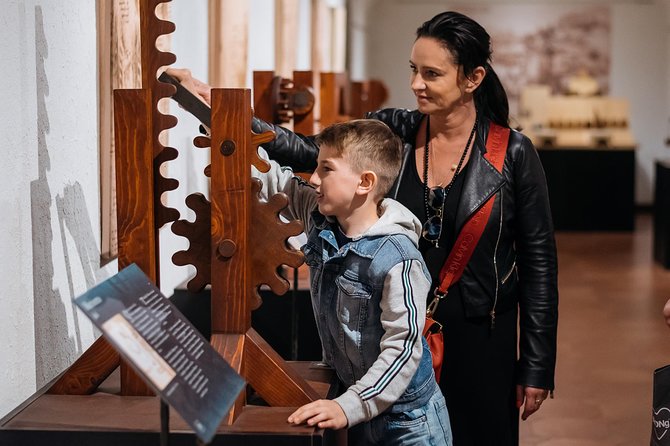
The museum’s star power is the machines crafted from Leonardo’s codices and studies. This is where the place feels different from a typical art museum. You are not just looking at drawings. You are seeing how those drawings turn into mechanisms.
Many of the exhibits are presented as practical reconstructions, built to show how the concepts might work. Several visitors mention that some displays let you manipulate elements of the inventions, which is a huge deal. Touch makes the ideas stick, especially if you are the kind of traveler who learns better by doing.
You can expect:
- Models that help explain engineering logic
- Visual links between Leonardo’s sketches and what the machine aims to accomplish
- Interactive moments that keep the museum from feeling like a lecture
One more plus: the museum uses explanations and short story framing around Leonardo’s thinking. That turns the machines into a narrative, not just a collection of parts.
Introductions we still owe you around Rome
- Colosseum, Roman Forum & Palatine Guided Tour
★ 4.7 · 63,148 reviews - Rome: Colosseum, Palatine Hill and Roman Forum Guided Tour
★ 4.8 · 32,814 reviews - Rome: Guided Tour of Colosseum, Roman Forum & Palatine Hill
★ 4.7 · 27,897 reviews - Rome: Colosseum & Forum with Audio Guide App -Optional Arena
★ 4.2 · 24,770 reviews
Art, Anatomy, and the Stories Behind Vitruvian Man and The Last Supper
Leonardo is famous for so many things that it is easy to remember only the highlights. This museum tries to connect the dots. You will see displays tied to major works and themes, with multimedia help that explains the story context.
Two elements that come up again and again in the exhibit descriptions:
- Vitruvian Man
- The Last Supper story
There are also references to other major works, including the Sforza equestrian sculpture. Even if you already know the names, the way the museum ties them to Leonardo’s wider interests makes them feel less like random facts and more like a map of his mind.
The anatomy portion is also a standout. Visitors often highlight how the museum makes the human body feel like one of Leonardo’s engineering projects. You see the kind of careful observation that sits behind his artistic realism, and you get a sense of how science and art fed each other for him.
How Much Time You Need: A Realistic 1 to 2 Hour Plan
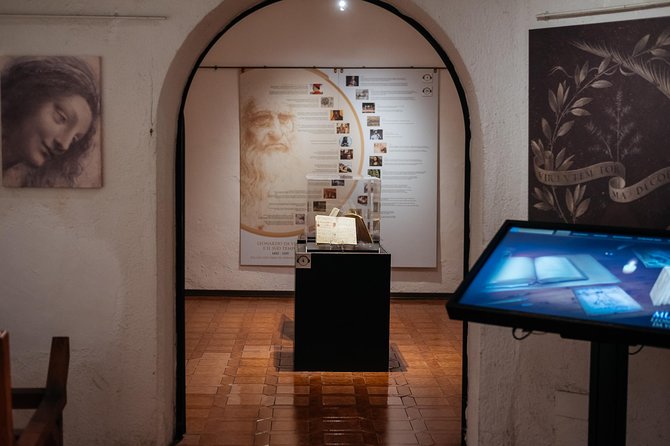
Plan on 1 to 2 hours total. This museum is small enough that you can finish without racing. People who want something quick and meaningful tend to love that.
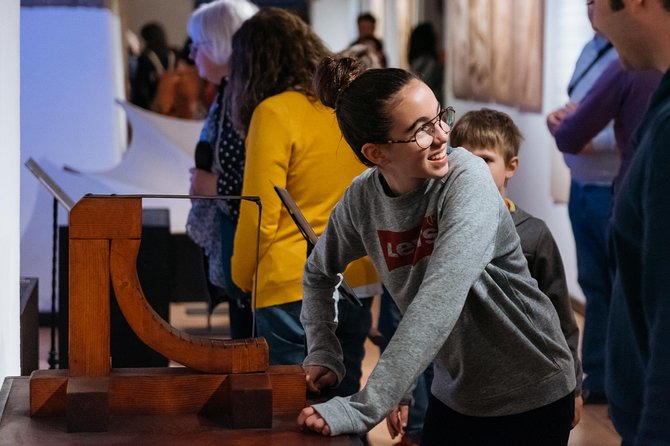
If you are traveling with children, you will probably find it an easier sell than longer museums. There are touch or play elements, plus screens and animations that can hold attention better than stand-and-stare exhibits.
If you are an ultra-museum person who loves big collections, you might find it shorter than you expected. Some visitors describe it as informative but not a major time sink. So treat it like a “reset and learn” stop, not a replacement for major art museums.
Audio Guide Tips: When It Helps and When It Might Annoy
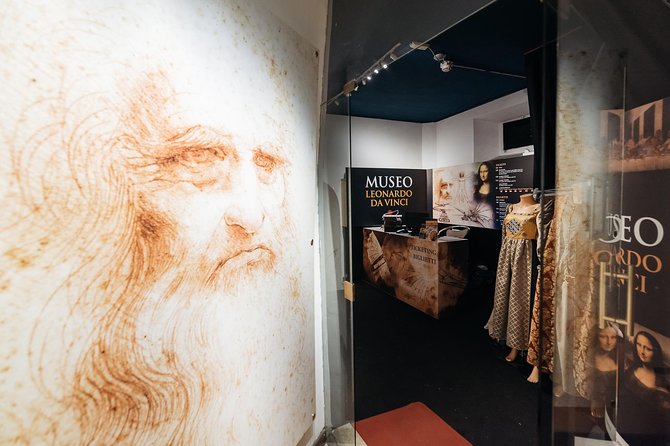
An audio guide is optional and costs about €3. The audio tour can add extra context, especially if you like deeper explanations while you walk.
That said, do not assume the audio setup will magically fix everything. Some visitors noted a mismatch between the audio and exhibit order, and a few found the handheld handset a bit annoying. The practical approach is simple:
- If you like structured storytelling, consider buying the audio guide.
- If you prefer reading captions and moving at your own pace, you can likely enjoy the main exhibits without it.
- If you get tired of holding devices, switch to reading and rely on the signage and visuals.
If you do buy the audio guide, give yourself permission to skip parts. The museum is short, so you do not need to listen cover to cover to get value.
VR Flight and Other Add-Ons: Worth Your Time?
There is a virtual reality flight option mentioned by visitors, and it seems to be one of those “only one at a time” experiences. If you hit a busy moment, you could end up waiting for your turn.
Some people felt the VR experience was overpriced, while others liked it as an extra layer. My suggestion: only do it if you genuinely want the VR angle. Otherwise, you can spend that time focusing on the machines, anatomy displays, and the interactive parts that are the museum’s strongest draw.
If you are short on time, VR is a flexible choice, not a must.
Bathrooms, Comfort, and Practical Stuff Before You Go
Here is the unglamorous item you should not skip: there are no restroom facilities in or around the museum (as noted by visitors). So go before you enter.
Also consider comfort. One visitor notes the museum can feel warm, and it is a smart move to carry water if you are visiting during hot Rome weather.
On location logistics are easy. The museum is near public transportation, and it is tucked into a major central area where you can keep walking afterward.
Pairing It With the Neighborhood: What to Do After Piazza del Popolo
One of the best travel hacks here is how convenient this stop is. After the museum, you are basically stepping out into a lively Roman square zone.
Piazza del Popolo is a great place to:
- browse shops and linger in the streets
- grab a meal or coffee nearby
- take a relaxed walk before your next major sight
Some visitors even recommend planning a nice stroll in the piazza area right after, especially if you want a calmer, self-paced afternoon. The museum works well as a mental break between bigger, louder attractions.
Who This Museum Is Best For (and Who Should Think Twice)
This museum fits well with:
- families with older kids who like art and science
- couples who want an educational stop without a long commitment
- travelers who enjoy interactive displays and hands-on learning
- anyone interested in Leonardo’s inventions, human anatomy studies, and iconic works
It may not be ideal if:
- you expect a large museum with lots of original masterpieces
- you only have 20 to 30 minutes and need something bigger
- you need restroom facilities on site
One more note for expectations: at least some exhibits are recreations or replicas rather than a room full of originals. That does not automatically make it worse. It just means you should come for the engineering ideas and the way Leonardo’s notes become machines and explanations.
Should You Book the Da Vinci Museum Ticket?
I would book it if you want a short, focused, interactive Leonardo stop in central Rome. The pre-booked admission helps you avoid hassle, and the machine recreations plus anatomy and art storytelling make it a smart use of time.
I would skip or reconsider if you are chasing the biggest museum experience in Rome or you cannot handle a visit without nearby restrooms. Also, if you hate holding audio devices, you may prefer to read captions instead of buying the audio guide.
If you are building a day around Piazza del Popolo, this museum is the kind of ticket that pays you back quickly. You learn, you see, and you get to keep the rest of your afternoon free.
FAQ
How long does the Da Vinci Museum visit take?
Most visits run about 1 to 2 hours.
Is the ticket to the Museo Leonardo da Vinci included in the price?
Yes. Admission ticket to Museo Leonardo da Vinci is included.
Is the museum offered in English?
Yes, the experience is offered in English.
Do I need to buy an audio guide?
The audio guide is not included. You can purchase one on site for about €3 per person.
Where is the museum located?
It is located inside Basilica Santa Maria del Popolo near Piazza del Popolo.
Is it a good stop if I am already near the Spanish Steps or Villa Borghese?
Yes. The museum is described as about a five-minute walk from the Spanish Steps and Villa Borghese area.
Are there restrooms at the museum?
No. There are no restroom facilities in or around the museum.
Is there a maximum group size?
Yes. This experience lists a maximum of 1 traveler.
Are service animals allowed?
Yes, service animals are allowed.
What is the cancellation window?
Free cancellation is available up to 24 hours in advance for a full refund. If you cancel less than 24 hours before, the amount paid is not refunded.
Just introduced: the newest Rome write-ups
- Excavation Tour to the Tomb of St. Peter’s & St. Peter’s Basilica★ 4.0 · 183 reviews
- Imperial Rome and External Colosseum Tour★ 5.0 · 183 reviews
- Rome: Rooftop Cooking Class with Wine Tasting near Vatican★ 5.0 · 184 reviews
- Rome to Civitavecchia Cruise Port Transfer★ 5.0 · 184 reviews
- Ancient Rome and Colosseum Private Tour with Underground Chambers and Arena★ 4.5 · 184 reviews
- Rome: Vatican Museums & Sistine Chapel Skip-the-Line Ticket★ 4.1 · 185 reviews
- Borghese Gallery Max 6 People Tour: Baroque & Renaissance in Rome★ 5.0 · 185 reviews
Museums, compared.
Vatican: Museums & Sistine Chapel Entrance Ticket
Read our review →
Vatican Museums & Sistine Chapel Tour with Optional Basilica
Read our review →
Vatican Museums, Sistine Chapel & St Peter’s Basilica Guided Tour
Read our review →
Skip-The-Line Uffizi Gallery Timed Entry Ticket
Read our review →
Vatican Museums, Sistine Chapel & Basilica Tour
Read our review →
Vatican Museums & Sistine Chapel Skip-the-Line Entry Ticket
Read our review →Vatican Museums, Sistine Chapel & Basilica Tour
Read our review →
Vatican Museums & Sistine Chapel Guided Tour
Read our review →Browse the lists this tour appears in