
Reviewed · TICKETS
Florence: Museo Galileo Entry Ticket
Science gear, but in a work of art.
With this Museo Galileo entry ticket, you get a smooth way into one of Florence’s most unusual museums, packed into 18 thematic rooms across two floors of Renaissance and post-Renaissance invention. I like how the ticket is simple, show-up-and-go, and how the collection connects big names like the Medici and Lorraine families to the tools that changed astronomy, navigation, and everyday measurement.
What really makes the visit satisfying is the mix of original instruments and the wider instrument story behind them. You’ll spend time with the Medici and Lorraine holdings, including devices tied to astronomy and measurement, plus Galileo-era pieces such as thermometers, microscopes, and meteorological instruments. The main drawback to plan for is that the museum’s focus is more about scientific instruments and their evolution than a deep, Galileo-only biography, so if you want one straight life story, you may feel there is less emphasis on Galileo himself.
In This Review
- Key things I’d note before you go
- A simple entry ticket to Florence’s science time capsule
- Two floors, 18 rooms, and what you’ll actually see
- First floor: Medici collections, tools of astronomy and measurement
- Second floor: Lorraine instruments and applied science
- How to move through the rooms without getting lost
- Galileo originals, plus copies that teach how instruments think
- Audio guide, pacing, and small on-site realities
- Plan on at least a couple hours
- Audio on your phone, bring earphones
- Seating and bathroom notes
- Accessibility
- Best time to go in Florence: when crowds are calmer
- Where it fits next to other Florence plans
- Price and value: is $20 a smart Florence buy?
- Who should book Museo Galileo entry, and who might want something else
- Should you book this Museo Galileo entry ticket?
- FAQ
- How do I use my Museo Galileo entry voucher?
- Is a guided tour included with this ticket?
- How long is the ticket valid?
- What should I know about opening hours on Tuesdays?
- Is the museum wheelchair accessible?
- What is included in the price?
- Do I need earphones for the exhibit information?
Key things I’d note before you go
- 18 themed rooms, 2 floors: first-floor Medici collections, then second-floor Lorraine collections and special instrument categories
- Galileo originals plus explanation-by-design: you can see original instruments, and you may also get chances to interact with copies
- A Florence “off the main drag” stop: many people find it calmer than the usual headline museums nearby
- Audio on your phone, earphones handy: an audio guide can be part of the experience, and earphones may be needed
- Hours vary, especially Tuesdays: on Tuesdays, Museo Galileo is only open until 1:00 PM
A simple entry ticket to Florence’s science time capsule
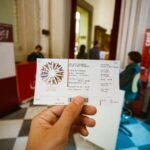
This is an entry ticket, not a guided tour. That matters because Museo Galileo is the kind of place where you can choose your own pace. You walk in, scan your confirmation, and then start working through rooms organized around themes: astronomy tools, measurement tools, practical devices, and the science behind how people pushed instruments forward.
I like that it is designed to be straightforward. You do not need to hunt for a meeting point or keep track of a group. If your Florence day is already packed with churches, galleries, and long walks, a self-guided museum works well. It is also a smart “in-between” stop because the theme is so different from the art-centric rhythm of the city.
The museum’s story connects science to patronage. The Medici and Lorraine Grand Dukes are part of the reason these collections exist and were taken seriously, not as side projects, but as research and cultural prestige. You’ll also hear echoes of where parts of the collection originally showed up, including the Mathematics Room at the Uffizi. It helps you see that the Renaissance linked art, math, and practical measurement in a very real way.
At 1-day validity and a price of $20 per person (with the booking fee included), it’s not budget-busting. For science fans, you’re paying for time with rare instruments and a well-structured path through them. For casual visitors, it’s still worth considering if you enjoy seeing how the tools of discovery worked before computers.
Introductions we still owe you around Florence
- Tuscany Day Trip from Florence: Siena, San Gimignano, Pisa and Lunch at a Winery
★ 5.0 · 21,634 reviews


Two floors, 18 rooms, and what you’ll actually see
Museo Galileo is laid out so you can feel the evolution of instruments room by room. The layout is one of its strengths, because the museum is not just a pile of objects. It groups instruments into themed spaces, which makes the collection easier to read.
First floor: Medici collections, tools of astronomy and measurement
On the first floor you’ll find 11 rooms dedicated to the Medici collections. This is where you get a concentrated view of the “everyday tech” of early astronomy and careful measurement.
Expect to see instruments such as:
- quadrants and astrolabes
- meridians and dials
- compasses and armillary spheres
There are also examples where “science” and “art” share space, including real works of art made by famous Tuscan and European artists. That blend is important. These instruments were not only for data, they were often built to be precise and beautiful, sometimes with decorative craftsmanship that looks like it belongs in a gallery.
Second floor: Lorraine instruments and applied science
On the second floor there are 10 rooms focused mostly on the Lorraine family. This is a different flavor. You still get impressive instruments, but the themes lean more toward applications in the physical world.
You’ll encounter devices used for mechanical, electrostatic, and pneumatic applications. The museum also has themed groupings for categories like:
- mechanical clocks
- sextants and octans
- pharmaceutical and chemical apparatus
- weights and measures
If you like the practical side of science, this floor tends to feel especially fun. It is where measurement becomes daily reality: timekeeping, navigation, and the equipment needed to work carefully with substances and quantities.
Also on the Florence guest list:
- Florence: Michelangelo’s David Skip-the-Line Entry Ticket
★ 4.5 · 12,764 reviews - The Best tour in Florence: Renaissance & Medici Tales – guided by a STORYTELLER
★ 5.0 · 12,316 reviews - Florence: Leonardo Interactive Museum Entry Ticket
★ 4.5 · 11,763 reviews - The Best Tour in Florence: Renaissance and Medici Tales
★ 5.0 · 10,810 reviews
How to move through the rooms without getting lost
Because you are self-guided, you’ll want a simple approach. I suggest you choose a first “lane” on the first floor, then finish with a “second lane” on the second floor. That keeps you from zig-zagging too much and helps you keep the themes straight. If you love astronomy instruments, start strong on the first floor. If you like clocks, navigation, and physical-world devices, give extra time on the second floor.
Galileo originals, plus copies that teach how instruments think
Yes, this museum is named after Galileo Galilei, and yes, you’ll see real Galileo-era instruments. But what stands out is how the museum treats instruments as logic machines.
You can look for original examples including thermometers, microscopes, and meteorological instruments. Seeing those in person changes the scale of what those inventions meant. They are not just history props, they are evidence of how people measured nature when measurement was hard.
A few exhibits also help you connect the dots between how instruments work and what they revealed. One review notes copies of Galileo instruments that let you try concepts related to the relationship of motion and mass. That kind of interaction is more than entertainment. It can make the science feel graspable, even if your school physics class was a long time ago.
You’ll also run into the kinds of astronomical measurement devices that fascinated people for centuries: big measurement globes, sun clocks, and tools built to track positions, angles, and time. Even if you do not memorize names, the visual experience helps you understand why navigation and astronomy mattered so much to trade, exploration, and knowledge.
There’s also a human touch. People sometimes mention Galileo’s missing-finger story as part of the way the museum frames his legacy. It’s a small moment, but it adds personality to a space that could otherwise feel like a tidy lab.
Audio guide, pacing, and small on-site realities
This is one of those museums where the experience gets better when you slow down. The museum is organized across themed rooms and categories, so you can easily spend more time than you expected. Some visitors budget around 1 to 2 hours, while others take 2 to 3 hours or longer if they really enjoy the details.
Plan on at least a couple hours
Since you will be reading and looking, I’d plan for 2 hours as a baseline. If you are the kind of person who likes to stand and actually look at each instrument, go longer. Reviews mention the museum is manageable in size, which helps, but the information load is still real. You are not just looking at a few star pieces.
Audio on your phone, bring earphones
An audio guide is part of the experience for many people. More than one account points out that you may need to download an app and use earphones to hear the exhibit information. If you arrive without earphones, you might be able to buy them at the front desk, but it’s smarter to bring your own.
Also note a practical detail. One review says the app guide was not easy to follow and would have benefited from more explanation at the front desk or better labeling. So even if you plan to use the audio, do not be shy about pausing early and asking staff where to start or what to focus on first.
Seating and bathroom notes
I’m not going to pretend every museum is comfortable. One review mentions wishing there were more seating inside, and another flags bathroom cleanliness as a weak point. If you know you need a rest, plan to take breaks between floors rather than expecting lots of comfortable pauses in every room.
Accessibility
This museum is wheelchair accessible, and at least one review mentions an elevator for mobility-challenged visitors. If you rely on elevators, that’s a comfort factor in a multi-floor experience.
Best time to go in Florence: when crowds are calmer
Florence has crowds that can feel like weather. Museo Galileo is a great counter-programming choice.
Many people describe it as nicely empty compared to other Florence museums, especially if they go early. If you can, start your museum time earlier in the day, and you’ll likely enjoy a quieter walk through the rooms. It also makes the instrument details feel more personal, since you can actually focus instead of rushing through.
One important timing note: on Tuesdays, Museo Galileo is only open until 1:00 PM. If your schedule includes a Tuesday, you’ll want to arrive early or be ready to adjust your day plan.
Where it fits next to other Florence plans
This is a good “change of pace” stop between big art hits. If you are already doing Uffizi or other mainstream museum visits, this can give your brain a new kind of attention: how measurement and discovery shaped the Renaissance world you see everywhere outside.
People also mention it as a helpful break during a long Florence itinerary. It’s self-guided, it’s not outdoors, and the subject matter is different enough that you don’t feel like you are doing the same kind of looking again.
Price and value: is $20 a smart Florence buy?
At $20 per person for entry, you are paying a modest amount for a museum that can easily take you a large chunk of your day. The ticket includes the entry and a booking fee. A guided tour is not included, so you are getting access to the collection, not a separate expert-led narrative.
So the value depends on what you like:
- If you enjoy STEM history, navigation tools, clocks, astronomy, and how devices work, this is a strong use of your time for the money. The collection is built around 18 themed rooms, so you are not paying to see a handful of objects.
- If you only want a quick famous-figure stop, you might be disappointed because the museum leans into instruments and families like Medici and Lorraine, not just Galileo the person.
That said, the museum’s reputation among science-minded visitors is steady, and the experience is often described as thought-provoking. Even if you are not a science expert, the museum can still give you a new way to look at the Renaissance: not just art and politics, but tools, accuracy, and the drive to measure the world.
Who should book Museo Galileo entry, and who might want something else
This ticket is best for people who like seeing how ideas become machines. If you are curious about astronomy, engineering, and the development of instruments, you’ll feel at home.
It also works well for families and kids who have a STEM spark. One review says they spent hours with a 10-year-old grandson and the child stayed fascinated. Another note suggests the museum is educational without being preachy, and that the exhibits can keep adults and kids interested at the same time.
Where you might hesitate:
- If your dream Florence day is only about famous paintings and sculpture, a science instrument museum may feel less emotional.
- If you want a biography-heavy Galileo experience, the museum’s instrument focus might feel broad.
In practice, you can decide in 30 seconds. If you read about instruments like astrolabes and quadrants and you get excited, book this. If those names sound like homework, you might prefer a different museum with a more straightforward narrative.
Should you book this Museo Galileo entry ticket?
I’d book it if you want a calm, focused museum day that’s different from the usual Florence circuit. The combination of 18 thematic rooms, Galileo-named originals, and the Medici and Lorraine collections makes this a genuinely useful stop for anyone who enjoys the science behind the Renaissance.
I’d think twice only if you are expecting a guided, story-driven tour of Galileo himself, because this is an entry ticket and the museum’s emphasis is on instruments and their evolution. If you come prepared with earphones for the audio experience and you plan at least a couple hours, you’ll get far more out of it than a quick walk-through.
FAQ
How do I use my Museo Galileo entry voucher?
On the day of your visit, show your confirmation voucher at the museum to enter.
Is a guided tour included with this ticket?
No. This ticket is for entry only, and a guided tour is not included.
How long is the ticket valid?
It is valid for 1 day. Check availability to see starting times.
What should I know about opening hours on Tuesdays?
On Tuesdays, Museo Galileo is only open until 1:00 PM.
Is the museum wheelchair accessible?
Yes, Museo Galileo is wheelchair accessible.
What is included in the price?
The entry ticket for Museo Galileo and the booking fee are included in the price.
Do I need earphones for the exhibit information?
Some exhibit information is provided through an audio guide, and at least one review notes the need to download an app and have earphones. You may be able to buy earphones at the front desk if you do not have them.
Just introduced: the newest Florence write-ups
- Florence: Duomo Cathedral Fast Track Entry Ticket★ 3.5 · 340 reviews
- Florence: Uffizi Entry Ticket & Audio Guided Tour with Host★ 3.9 · 342 reviews
- Uffizi Gallery: Entry tickets + audio guide★ 4.0 · 347 reviews
- Florence: Palazzo Vecchio Skip-the-Line Entry Ticket★ 4.2 · 349 reviews
- From Florence: Tuscany Hills Wine Tour★ 4.3 · 349 reviews
- Cooking Art Brunelleschi★ 5.0 · 356 reviews
- Florence: Statue of David & Duomo Guided Tour with Tickets★ 4.5 · 357 reviews
Tickets, compared.

Vatican: Museums & Sistine Chapel Entrance Ticket
Read our review →
Cathedral and Duomo’s Terraces Entrance Ticket
Read our review →

Skip-The-Line Uffizi Gallery Timed Entry Ticket
Read our review →
Naples Underground Entry Ticket and Guided Tour
Read our review →
Pantheon Fast-Track Ticket and Official Audio Guide
Read our review →
Entry Ticket and Guided Tour with an Archaeologist
Read our review →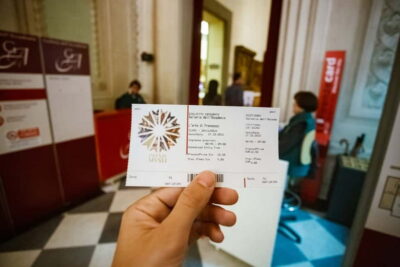
Timed Entrance Ticket to Michelangelo’s David
Read our review →Browse the lists this tour appears in