

Reviewed · MUSEUMS
Guided tour of the Trapani Salt Pans and Salt Museum
Salt is literally in the air. This guided stop links the Saline Culcasi of Trapani salt pans with the Salt Museum, and it gives you a hands-on way to understand how seawater becomes table salt and fleur de sel. You also get that rare mix of nature, work, and family history in one 75-minute visit.
What I love is the balance of WWF reserve walk and real salt-production moments. You get to see the pools in soft colors, follow the perimeter route, and learn how salt forms in the tanks, including a chance to touch the salt during the process. I also like the museum portion inside an ancient farmhouse, plus the ancient mill dating back to the 1400s, where the story shifts from water and evaporation to generations of salt workers.
One consideration: the tour includes a 1-hour hike on mostly outdoor paths, so wear solid, comfortable shoes and plan around basic fitness needs. If you are dealing with an illness or mobility limits, it is smart to think ahead before booking.
In This Review
- Key highlights to pay attention to
- Walking the Trapani salt pans: what the colors teach you
- Touching the salt tanks and tasting fleur de sel
- The family-run element: why the story feels real
- Inside the ancient Salt Museum and 1400s mill
- What the pace feels like in real life (and who it suits)
- Price and value: is $21 worth it?
- Practical tips to help you enjoy it more
- After the tour: view aperitif and possible dinner
- Should you book the Culcasi salt pans and Salt Museum tour?
- FAQ
- How long is the guided tour of the Trapani salt pans and Salt Museum?
- Where do I meet for the tour?
- What languages are the guides?
- Is there walking involved?
- What is included in the ticket price?
- Do I get to touch the salt during the tour?
- What will I see in the museum?
- Can I have food after the tour?
- Is the tour good value for the price?
Key highlights to pay attention to
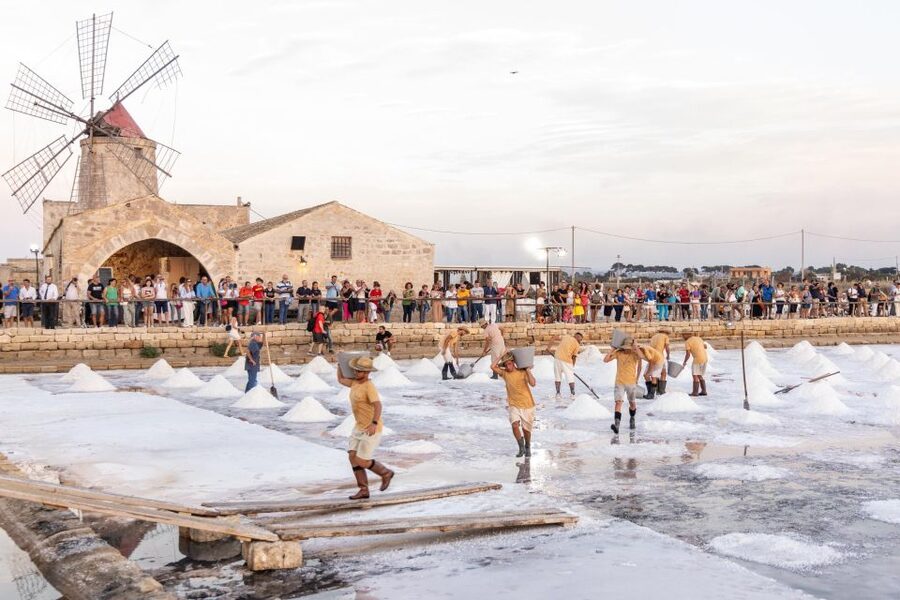
- Only Culcasi-family tour focused on their working salt pans plus museum
- Four generations of salt workers, so you are not just seeing machinery, you are learning a life
- Taste whole salt and fleur de sel in different aromas linked to their production
- Hands-on salt moment, including touching salt inside the production tanks
- WWF reserve setting with protected plants and birds along the perimeter walk
- Ancient salt museum in a farmhouse, including a mill from the 1400s
Walking the Trapani salt pans: what the colors teach you
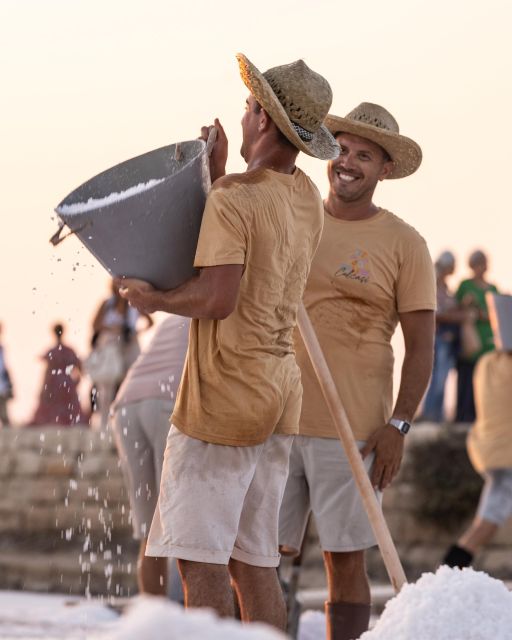
Trapani’s salt pans look like a quiet landscape, but they are actually a working system. The guided walk starts by taking you out to the Saline Culcasi area, where you follow the perimeter route and watch the salt environment change with the light and the angle. Expect a visual rhythm: the white salt in different shades, the blue of the sea, gray clay around the tanks, and pink tones in the pools.
That color palette matters because it helps you understand what you are seeing. Salt making here is not just a single “salt pile” moment. It is a gradual transformation that depends on seawater, evaporation, and time. Even before you reach the museum, the walk makes the process feel physical. You are surrounded by the materials and conditions that produce the salt, so when the guide explains how seawater turns into salt, it makes more sense than it does from a poster.
The route is designed to be doable for a wide range of ages, and it stays connected to the WWF reserve area, where you may spot protected plants and birds. In practice, that means you are not just trudging through salt. You are moving through a protected coastal habitat where the working tanks sit side-by-side with living nature.
More museum halls from Turin to Palermo:


Touching the salt tanks and tasting fleur de sel
The hands-on parts are the reason this tour feels different from a typical “look and listen” stop. As you move through the salt pan areas, the guide shows you the stages of salt formation, and you even get the chance to collect salt with your hands. That is a small action, but it changes your understanding immediately. Dry salt and crystallized salt have a texture and behavior that you cannot fully grasp from a photo.
The other standout is the tasting. Included in your ticket is a tasting of whole salt and fleur de sel in different aromas connected to the Culcasi production. If you have ever wondered why fleur de sel tastes “finer” or why flavored salts can be subtle instead of just gimmicky, this is the setting where it clicks. You taste, you compare, and you connect the flavor to what the production area is doing.
You also get to experience more than one salt style. Whole salt is not the same product as fleur de sel in terms of texture and how it behaves on food. Having both in one tasting gives you a practical sense of how and why you might use them differently in cooking.
The family-run element: why the story feels real

One thing I appreciate about this experience is the human scale. This is the only tour proposed by the Culcasi family, and that matters because the guide is not presenting salt as a museum exhibit only. It is presented as a living craft connected to people who still work with it.
The tour specifically highlights four generations of salt workers, and the museum later expands that into the family story behind the pans. That kind of continuity is rare on vacation. Most attractions show you a period in time. Here, you are seeing something still tied to daily labor, and that makes the history feel less like a lecture and more like an ongoing tradition.
Inside the ancient Salt Museum and 1400s mill
Part two shifts gears from the outdoors to an indoor experience with heavier historical weight. The guided tour leads you to the salt museum located inside an ancient farmhouse. You are not just looking at artifacts in generic rooms. The setting itself helps tell the story, because it is physically tied to the farm and work life that supported the salt business.
The museum experience includes the ancient mill from the 1400s. That is an important detail because it connects the salt industry to broader working systems and older ways of processing and moving materials. Even if you do not read every label, you can feel the theme: salt was never a side hobby. It required infrastructure, equipment, and long-term planning.
The museum is also identified as being included in the official guide of the European Union. You should take that as a sign the site is formally recognized for cultural and historical value, not just local interest. For you, it means the visit is worth structuring as more than a quick photo stop.
Introductions we still owe you around Sicily
- Catania: Mount Etna Morning or Sunset Day Trip with Tasting
★ 4.8 · 4,028 reviews - Mount Etna: Guided Volcano Summit Hiking Tour with Cable Car
★ 4.7 · 3,784 reviews - Palermo: NO Mafia Walking Tour
★ 4.8 · 2,431 reviews - Palermo: Hop-on Hop-off Bus Tour 24-hour Ticket
★ 3.9 · 2,410 reviews
What the pace feels like in real life (and who it suits)

The tour lasts about 75 minutes. In that time, you cover two distinct sections: a walking segment around the salt pans and then a guided museum visit. The walking portion is described as a 1-hour hike, and that is the key word. This is not a stroll you can do in sandals.
Comfort matters. Bring comfortable clothes and comfortable shoes, plus a hat. Even if the salt pans are flat, you still have sun exposure, uneven ground, and a coastal setting where weather can shift quickly. If you show up prepared, you will enjoy the route far more, because you can focus on the process and the views rather than your feet.
In terms of fitness, the guidance calls for a basic level of fitness. That is especially relevant if you have knee issues or you tire quickly. The tour is listed as wheelchair accessible, but you should still plan for the outdoor route. If mobility is a concern, consider asking before you book, so you know what movement support is realistically available for your specific needs.
Who gets the most out of it?
- Food lovers who want to understand salt, not just buy it
- Nature-minded visitors who like seeing protected coastal areas
- Curious travelers who enjoy crafts and family-run industries
- Families, since the experience is presented as suitable for all ages on the walk side
Price and value: is $21 worth it?
At about $21 per person, this tour can be a strong value for the amount you get. You are paying for a guided visit through two connected settings, a guided look at the production process, tastings of whole salt and fleur de sel with different aromas, and a chance to touch salt inside the production tanks.
A lot of salt-related outings in Italy are either just a tasting or just a look around production. Here, you get both, plus the museum and an ancient mill setting. You also get the “work chain” feeling, from seawater to salt formation, rather than only the final product on a shelf.
If you are visiting the Trapani area and you want one organized activity that gives you multiple payoffs, this fits well. It is short enough to mix into a day, but structured enough to feel complete. And if you enjoy cooking, the tasting alone can make the purchase you might consider later feel more intentional.
Practical tips to help you enjoy it more
You will enjoy this tour more if you treat it like a real outdoor walk, not a quick stop.
Wear the right shoes. Comfortable shoes are not optional here, because the route involves walking along the perimeter of the salt pan areas.
Bring a hat. The salt pans sit near the coast, and sun exposure is real. A hat helps you stay comfortable through the outdoor portion.
Expect a hands-on experience. Your guide will lead you to the salt production moments and tasting. Keep your hands free for the salt touch collection part, and be ready for the tasting sequence.
Go with curiosity. The best part of this tour is that it turns “salt” into a process you can picture. When the guide explains how seawater becomes salt, connect it to what you see in the tanks.
Plan your day around the timing. The tour is about 75 minutes, but you may want buffer time afterward, especially if you want to eat.
After the tour: view aperitif and possible dinner
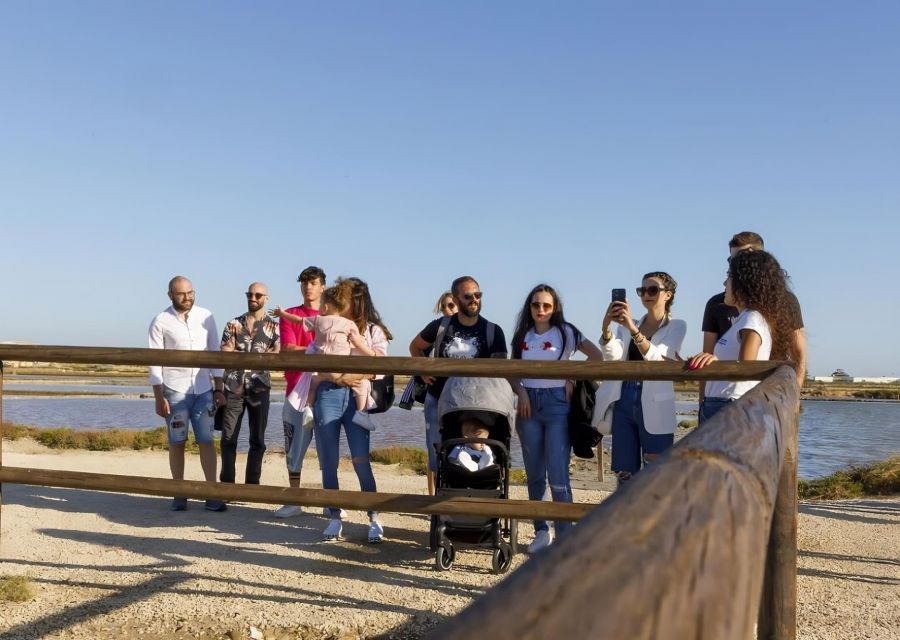
One reason people like building this into a day in Trapani is what comes after. At the end of the tour, you can have an aperitif with a breathtaking view and/or have dinner at the restaurant. That matters because you get to shift from learning and tasting salt to relaxing and enjoying it with food and scenery.
If you are the kind of visitor who likes to end an experience while you are still thinking about it, this is a smart option. You will already have flavors and textures fresh from the tasting, so tasting salt again in a meal context feels like part of the learning arc rather than a separate activity.
Should you book the Culcasi salt pans and Salt Museum tour?
Book it if you want an organized, short experience that combines salt production, family history, and a museum in a real old building, plus tastings of whole salt and fleur de sel aromas. It is also ideal if you like outdoor walks where you can connect nature (a WWF reserve setting and protected birds) with a traditional craft.
Skip or think carefully if you cannot handle outdoor walking, because the tour includes a 1-hour hike component and you will be on your feet for much of the experience. If you are sensitive to heat or have mobility issues, plan for it. And if you prefer purely indoor attractions, the walk side might feel like too much.
If your goal is to understand what makes Trapani salt special, and you want a guided experience that goes beyond selling products, this tour is a very solid bet.
FAQ
How long is the guided tour of the Trapani salt pans and Salt Museum?
The tour duration is 75 minutes.
Where do I meet for the tour?
The meeting point is at the ticket office in the forecourt below the windmill. Find the guide behind the salt sales counter. The starting location is Via Salina Chiusa, 1.
What languages are the guides?
The live tour guide is available in English and Italian.
Is there walking involved?
Yes. The tour includes a 1-hour hike, and a basic level of fitness is required.
What is included in the ticket price?
Your ticket includes the entrance ticket with a guided tour of the Culcasi salt pan and salt museum, plus a tasting of whole salt and fleur de sel in different aromas from the production.
Do I get to touch the salt during the tour?
Yes. You can touch the salt inside the salt production tanks.
What will I see in the museum?
The second part includes a guided tour of the salt museum and the ancient mill from the 1400s, located inside an ancient farmhouse.
Can I have food after the tour?
At the end of the tour, you can have an aperitif with a view and/or have dinner at the restaurant.
Is the tour good value for the price?
At about $21 per person, you are getting a guided visit to both the salt pans and the salt museum, plus included tastings and hands-on salt moments, all in a single 75-minute experience.
Just introduced: the newest Sicily write-ups
- The Original Catania Street Food and Market Tour by Streaty★ 5.0 · 345 reviews
- Catania: Valley of the Temples and Turkish Steps with Snack★ 4.5 · 346 reviews
- Syracuse: Pillirina, Ortigia, and Sea Caves Tour by Boat★ 4.6 · 348 reviews
- Syracuse: Neapolis Archaeological Park Small Group Tour★ 4.7 · 350 reviews
- Discover Palermo in 3 hours. Art, history, markets and street food★ 5.0 · 352 reviews
- Taormina: Half-Day Pizza Making Class★ 4.8 · 353 reviews
- From Catania: Taormina, Savoca, & Castelmola Tour w/ Lunch★ 4.8 · 355 reviews
Museums, compared.

Vatican: Museums & Sistine Chapel Entrance Ticket
Read our review →
Vatican Museums & Sistine Chapel Tour with Optional Basilica
Read our review →
Vatican Museums, Sistine Chapel & St Peter’s Basilica Guided Tour
Read our review →
Skip-The-Line Uffizi Gallery Timed Entry Ticket
Read our review →
Vatican Museums, Sistine Chapel & Basilica Tour
Read our review →
Vatican Museums & Sistine Chapel Skip-the-Line Entry Ticket
Read our review →Vatican Museums, Sistine Chapel & Basilica Tour
Read our review →
Vatican Museums & Sistine Chapel Guided Tour
Read our review →Browse the lists this tour appears in