
Reviewed · WALKING TOURS
Haunted Rome Ghost Night Walking Tour
Rome gets spookier after dark. I like the way this cooler evening timing helps you avoid the worst heat and daytime crowds, and I love that the stories lean history-first instead of cheesy. In about two hours, you cover a strong chunk of central Rome while hearing why these streets became symbols of fear, punishment, and scandal.
The main consideration is sound. It’s a group walk (up to 20), and road noise can make the guide harder to hear for some people. If that worries you, plan on staying close to the guide and be ready for a more conversational pace.
In This Review
- Key reasons this Haunted Rome night walk works
- Night walking in Rome, without the daytime grind
- Campo de’ Fiori to Piazza Farnese, where the legends start
- What I’d watch for on these first stops
- Madonelles, warnings, and the small corners most visitors skip
- Bridges and churches built around death
- A reality check, so your expectations stay right
- Monserrato and the Spanish church, where rumor becomes story
- Why this section is valuable
- Via Giulia: cosmetics, danger, and the art of looking closer
- Castel Sant’Angelo, the final stop that makes the walk feel complete
- The guides make the difference, from Antonio to Youssef to Ana
- Price and value: $35.07 for a 2-hour Rome evening
- Who this Haunted Rome Ghost Night Walking Tour suits best
- Should you book it or pass?
- FAQ
- How long is the Haunted Rome Ghost Night Walking Tour?
- How much does the tour cost?
- What language is the tour offered in?
- Where do you meet and where does the tour end?
- Is there a mobile ticket?
- How big is the group?
- Are the stops ticketed?
- Can I cancel for a full refund?
- Is this tour offered in a way that works for most people?
Key reasons this Haunted Rome night walk works
- Smart night timing: cooler walking hours and a calmer street feel than midday.
- History with teeth: executions, prisons, warnings, and legends behind famous spots.
- A tight route in walking range: from Campo de’ Fiori to Castel Sant’Angelo.
- Street-level detail: madonelles, small chapels, and odd markers you would miss on your own.
- Guides with stage energy: the best ones tell darker stories with humor, not camp.
Night walking in Rome, without the daytime grind
If your Rome schedule is tight, this kind of night tour is a practical move. Daytime can feel like an endurance test, especially around the major sights. At night, the city slows down just enough for you to actually notice details as you walk.
This tour is built around that idea. You start in the lively area of Campo de’ Fiori and finish at Castel Sant’Angelo, so you end in a place where you can keep your evening going. You also get multiple stops that are close enough to enjoy on foot, instead of wasting time hopping between far-flung locations.
And the tone matters. This is not a haunted house experience. It’s more like a guided walk through Rome’s darker side, where the scariest parts are rooted in real locations and real stories. That’s why it works for history fans and for people who want spooky without ridiculous theatrics.
More Italy at street level:

Campo de’ Fiori to Piazza Farnese, where the legends start
You meet at Piazza Campo de’ Fiori, a central square that still feels like a nightlife hub today. The guide kicks things off with what the space used to represent, which instantly gives the tour its spine. In other words, you’re standing in a place you can find on a map, but you’re hearing a past that most visitors never connect to the modern scene.
From there, you head to Piazza Farnese. This is one of those elegant Rome squares where the buildings look calm, but the stories are anything but. Expect a legend involving scandal and a secret passageway, tied to two popes. It’s exactly the kind of contrast that makes a night ghost tour fun: quiet architecture, messy human behavior.
What I’d watch for on these first stops
- Pay attention to how your guide connects the story to the visible details. The best guides do this well.
- Use the early time to get your bearings. Once you understand the area, the rest of the walk feels easier.
Madonelles, warnings, and the small corners most visitors skip
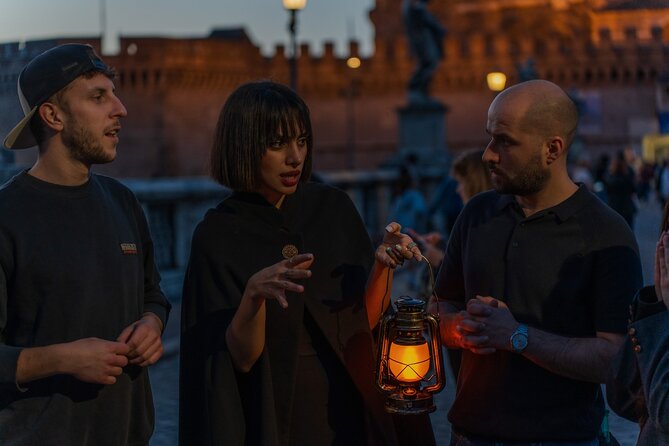
One of the smartest parts of this tour is that it doesn’t only hit the big, famous landmarks. You also move through lanes like Via del Mascherone and Vicolo dei Venti, where the charm is in the overlooked details.
Here you’ll hear about madonelles, often called little madonnas. These small religious images and street shrines were used in everyday life, including as a kind of protection against crime. It’s not just folklore for the sake of being spooky. It tells you how people actually lived, prayed, and tried to stay safe.
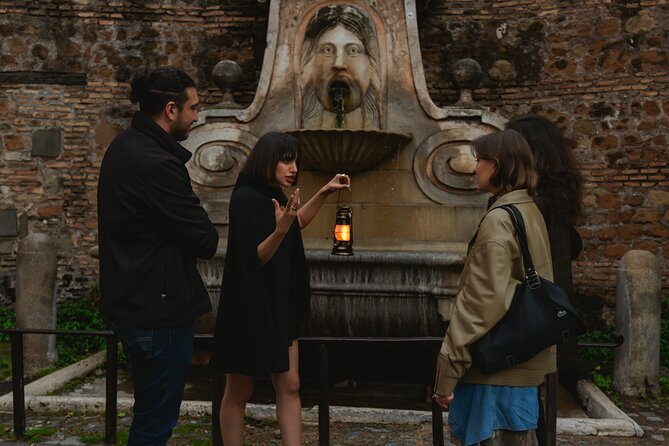
From the street shrines, the tour shifts to the idea of punishment and warning. You visit Fontana del Mascherone, a fountain with a reputation that comes with a clear message: it carries a warning for anyone who dares to drink from it. It sounds odd, but that’s Rome for you. Many of the city’s most memorable rules are hidden inside normal-looking public spots.
More Italian evenings spoken for:
- Rome: City Highlights Open-Top Bus Night Tour
★ 4.1 · 2,038 reviews - Vespa Sidecar Tour By Night with Pickup
★ 5.0 · 1,803 reviews - Rome by Night – Ebike Small Group Tour – Food and Wine (Option)
★ 5.0 · 1,275 reviews - Colosseum Sunset Tour with Entry
★ 4.5 · 1,230 reviews
Bridges and churches built around death
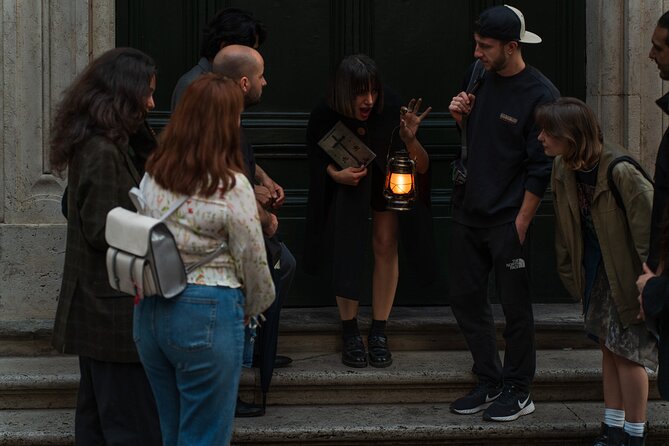
Rome loves stone. It also loves symbolism. This tour uses both.
You stop at Ponte Sisto, described as the oldest bridge in Rome. Bridges are naturally dramatic at night, and this one has a grim reputation tied to tragic accidents, power struggles, theft, and suspicious deaths. The story makes you look at a simple crossing like it’s a crime scene from the past.
Then comes Chiesa di Santa Maria dell’Orazione e morte. This 17th-century church is decorated using human remains from long ago. That is the kind of detail that can make the mood feel heavy, even if your guide is keeping the tone lively. It’s a reminder that in older Rome, death was not a private subject. It was part of public space and public meaning.
A reality check, so your expectations stay right
If you’re looking for friendly ghosts and cartoon scares, this might not match. If you want atmosphere and darker storytelling with real places, you’ll probably enjoy it a lot more.
Monserrato and the Spanish church, where rumor becomes story
Next you’ll walk down Via di Monserrato, now described as a haunted apartment block but historically tied to one of Rome’s worst prisons. This is where the tour starts to feel less like a set of random scary stops and more like a single thread about control, punishment, and fear.
Then you reach Chiesa di Santa Maria in Monserrato degli Spagnoli. The tone shifts again, because this Spanish church carries a saucy story that feels like drama from another age. You get the sense that Rome’s sacred spaces often held complicated human stories, not just prayers.
Why this section is valuable
On your own, it’s hard to connect a church or building to the life that happened inside it. A good guide makes those connections in a way that feels like you’re reading the city like a book.
Via Giulia: cosmetics, danger, and the art of looking closer
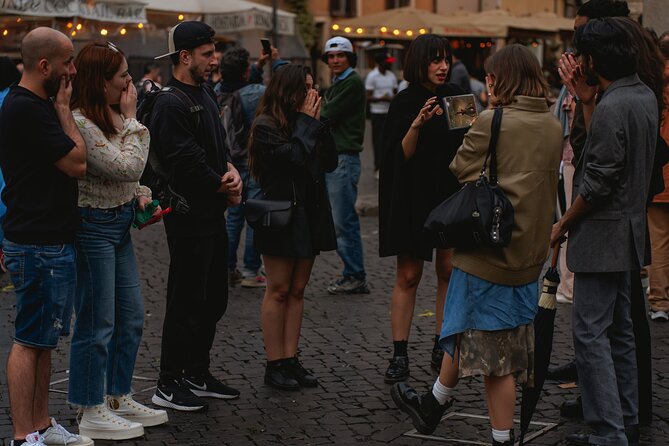
Via Giulia is where the tour slows your brain down in a useful way. This street is famous for beauty and design today, but you’ll hear it has earlier roots tied to selling cosmetics. The story you get here focuses on how cosmetics could be deadly, which is a very Rome kind of twist: everyday glamour, dangerous consequences.
This stop is also a good chance to notice how the streets themselves create flow. As you walk, think about the path people might have taken in the past, from a shop, to a church, to a public space where fear and punishment were put on display.
Then you move to Via dell’Arco dei Banchi, where you’ll hear about a house once owned by Mastro Titta, Rome’s most famous executioner. That name alone pulls you toward the darker end of the city’s story. It’s the kind of stop that makes you realize your guide isn’t just throwing ghost tropes at you. They’re connecting names, roles, and locations.
Castel Sant’Angelo, the final stop that makes the walk feel complete
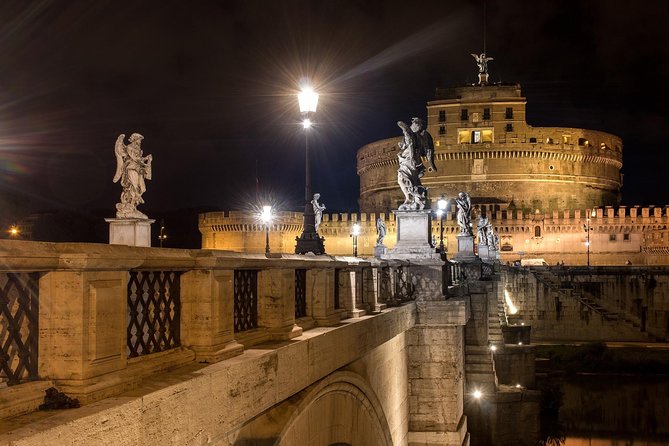
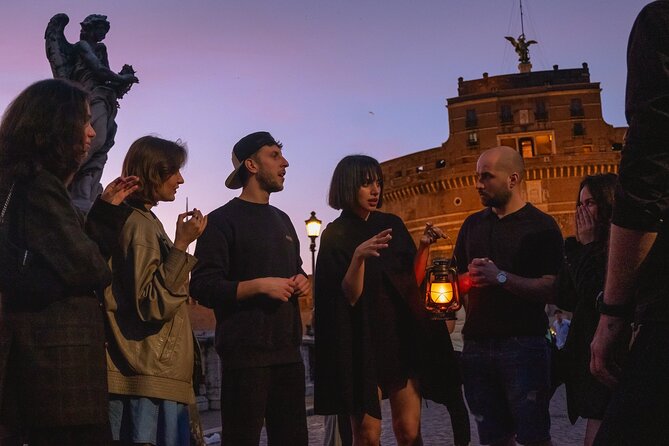
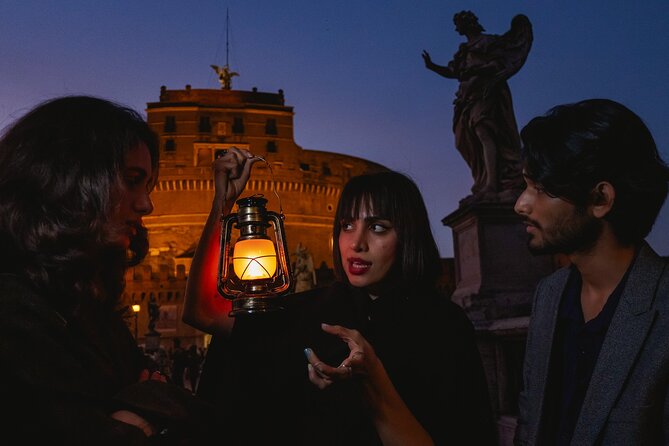
The tour ends at Castel Sant’Angelo, at Lungotevere Castello, 50. This finishing point is smart. It’s not just a landmark. It’s a story machine.
You’ll hear how this place and its surroundings were used to expose bodies of the executed as a warning to sinners. The setting now has statues of angels, which creates a visual contrast with the brutality of the past. Then the story centers on the Cenci family and how their fatal end became part of Rome’s long memory.
When you finish here, you’re in a spot where you can keep wandering without feeling trapped in a tour loop. If you want another drink, a stroll, or a last look over the river, the location supports it.
The guides make the difference, from Antonio to Youssef to Ana
One of the strongest themes across the tour’s reputation is the guiding style. People consistently respond to guides who keep the pace lively and the storytelling clear, with humor that doesn’t turn the subject into a joke.
You may get different guides depending on the date, but names you’ll hear associated with this tour include Youssef, Antonio, Ana, Dominica, Dinara, Simon, Anna, Maham, Dina, Domenica, and Sarah. Each one brings their own voice, but the best ones share the same trick: they point out what you’re looking at, then explain why it mattered.
There’s also a practical note from real-world experience. One person flagged that the guide can be hard to hear if the group and street noise get loud, and that a headset would help. You can’t control the group, but you can control your position. Try to stay nearer the front, and don’t drift back for photos until you’re closer to the next stop.
Price and value: $35.07 for a 2-hour Rome evening
At $35.07 per person for about 2 hours, this is priced like a classic city walking tour. What makes it feel fair is the stop count and the fact that the key places are tied to the walking route. You’re not paying just to be told stories from a bench. You’re paying to move through the neighborhoods where the stories took place.
Also, the experience lists that each stop has free admission ticket in the structure. That matters because it reduces the chance your time gets eaten by paid entries. Instead, you’re using your money for guidance and context, not gate fees.
One more small value signal: the tour is offered in English, uses a mobile ticket, and keeps group size at a maximum of 20. Smaller groups usually mean you can ask questions and feel less invisible.
Who this Haunted Rome Ghost Night Walking Tour suits best
This works well if you want:
- A night activity that helps you avoid daytime crowds
- A spooky walk that’s more history-driven than paranormal fantasy
- A route connecting central Rome stops, ending at Castel Sant’Angelo
- A guide who points out details you’d otherwise miss
It may not suit you as much if you:
- Want a purely ghost-hunting style tour with lots of supernatural effects
- Get frustrated when you struggle to hear in a busy street environment
Kids can handle it too. Several families mentioned taking teenagers and even younger kids, and the tone often lands as spooky historical storytelling rather than scary jump-scare theater.
Should you book it or pass?
Book this if you’re the type of traveler who likes stories tied to real corners of the city, especially when the timing makes your day easier. The combination of Campo de’ Fiori energy at the start and Castel Sant’Angelo as a dramatic finale makes the evening feel like a complete arc.
Pass if you want heavy supernatural action, or if you know you’ll need clear audio at all times and you hate group dynamics. For most people, though, this hits the sweet spot: you walk, you learn, and Rome’s darker side turns into something you actually remember.
FAQ
How long is the Haunted Rome Ghost Night Walking Tour?
It lasts about 2 hours.
How much does the tour cost?
The price is $35.07 per person.
What language is the tour offered in?
The tour is offered in English.
Where do you meet and where does the tour end?
You start at Piazza Campo de’ Fiori, 00186 Roma, and you end at Castel Sant’Angelo, Lungotevere Castello, 50, 00193 Roma.
Is there a mobile ticket?
Yes, the tour includes a mobile ticket.
How big is the group?
The maximum group size is 20 travelers.
Are the stops ticketed?
The tour structure lists admission ticket free for the stops.
Can I cancel for a full refund?
Yes. Free cancellation is available up to 24 hours in advance for a full refund.
Is this tour offered in a way that works for most people?
The information says most travelers can participate, and it is near public transportation.
Just introduced: the newest Rome write-ups
- Rome Fiumicino Airport Transfer in Luxury Private Transportation★ 4.5 · 339 reviews
- Vatican: Pope Francis Tomb and Papal Basilicas Tour★ 4.7 · 340 reviews
- From Rome: Sorrento, Positano & Amalfi Coast Day Trip★ 4.5 · 340 reviews
- Rome: Guided Colosseum Underground Tour★ 4.8 · 342 reviews
- Colosseum Arena Floor, Roman Forum & Palatine Hill Guided Group Tour★ 5.0 · 343 reviews
- Rome: Small Group Rome’s Dark Side – Ghosts & Legends Tour★ 4.9 · 343 reviews
- Rome: City Highlights Electric Bike Tour★ 4.9 · 343 reviews
Walking Tours, compared.
Guided Walking Tour & Last Supper Visit with Ticket
Read our review →
Rialto Bridge & Offbeat Unusual Venice Walking Tour
Read our review →
Private 3 hrs Venice Tour: St Mark’s, Walking tour & Boat tour
Read our review →
Skip the line: Uffizi and Accademia Small Group Walking Tour
Read our review →Browse the lists this tour appears in