
Reviewed · PASTA COOKING CLASSES
Lecce: Pasta Making Class in 1400s-Era Courtyard with Wine
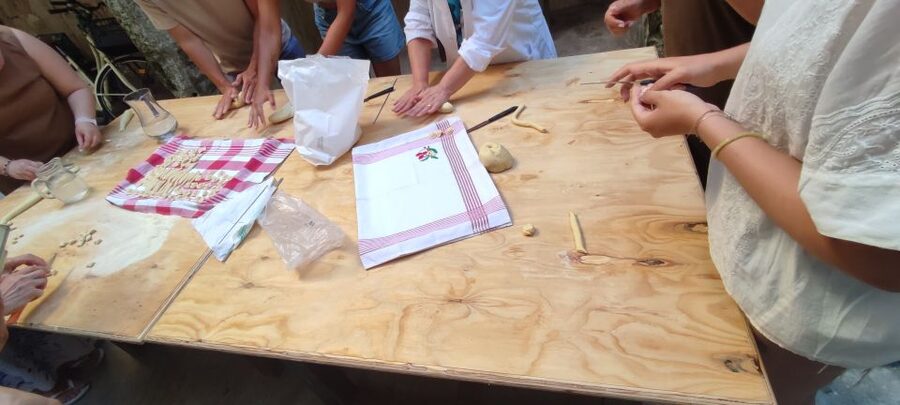
1400s courtyard pasta beats a food tour. In the center of Lecce, you get to work the dough for Orecchiette and Sagne inside a courtyard setting connected to the Faggiano Archaeological Museum.
I really like how the teaching focuses on hands-on technique, with guides such as Luciana and Nonna Teresa helping you get from messy dough to real pasta. I also love the finish, because you eat what you made right after the class, with a glass of wine to slow the night down.
The main drawback to consider is that the class can run with a full crowd, so the experience is social and busy, not quiet and one-on-one.
In This Review
- Key things you’ll notice right away
- A 1400s courtyard lesson in central Lecce
- Where to go: Via Ascanio Grandi and the Faggiano Archaeological Museum
- What you actually learn: mixing dough and shaping Apulian favorites
- The equipment and why it’s included
- Dinner after class: wine, conversation, and eating what you made
- Price at $68: what you’re paying for and why it adds up
- Group size and teaching style: fun, but plan for a lively room
- Language support and who this works best for
- Making the most of the class, step by step
- Should you book LecceGo’s orecchiette and sagne class?
- FAQ
- Where is the meeting point?
- How long is the pasta making class?
- What does the class cost?
- What pasta types will I learn to make?
- Is wine included?
- What languages are available for the instructor?
- Does the class run in bad weather?
- What do I need to bring?
- Is transport included?
- What if the course is canceled due to minimum participants?
- Is there free cancellation?
Key things you’ll notice right away
- A courtyard feel that makes pasta-making feel like a special evening, not a quick demo
- Orecchiette and sagne instruction, focused on Apulian pasta craft
- Hands-on coaching from the nonnas and their team, including multilingual support
- You eat your own pasta with wine, so the cooking actually turns into dinner
- A lively group atmosphere, with plenty of conversation while you work
A 1400s courtyard lesson in central Lecce
This is one of those experiences where the setting does half the work for you. The class happens in a historic courtyard atmosphere tied to the Faggiano Archaeological Museum, right in the middle of old Lecce. That matters, because pasta-making is a craft activity, and a real courtyard space makes the whole evening feel grounded in place.
You’re not just learning “how to make pasta.” You’re doing it in Apulia’s comfort zone, where food is social and practical. Expect a night that moves like this: start learning, get your hands involved, then sit down and enjoy what you produced. The museum-adjacent location also means you’re already in the thick of the town. If you’re planning your evenings around walks between sights, this gives you a strong anchor.
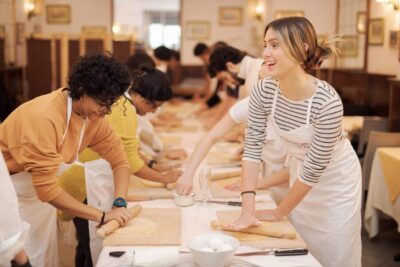
More pasta made by your own hands:
Where to go: Via Ascanio Grandi and the Faggiano Archaeological Museum
Meeting point is directly at Via Ascanio Grandi n 58, at the Faggiano Archaeological Museum. Since transport is not included, I’d plan to arrive on foot or by local transit you arrange yourself.
Practical tip: bring your passport or ID card. That’s specifically listed as required. And since the course runs rain or shine, wear shoes you don’t mind using in wet cobblestones or courtyard conditions.
It’s also multilingual. The instructor team works in Italian, English, and French, which is great if your travel group mixes languages. In a hands-on class, clear guidance matters, and this setup is built for it.
What you actually learn: mixing dough and shaping Apulian favorites
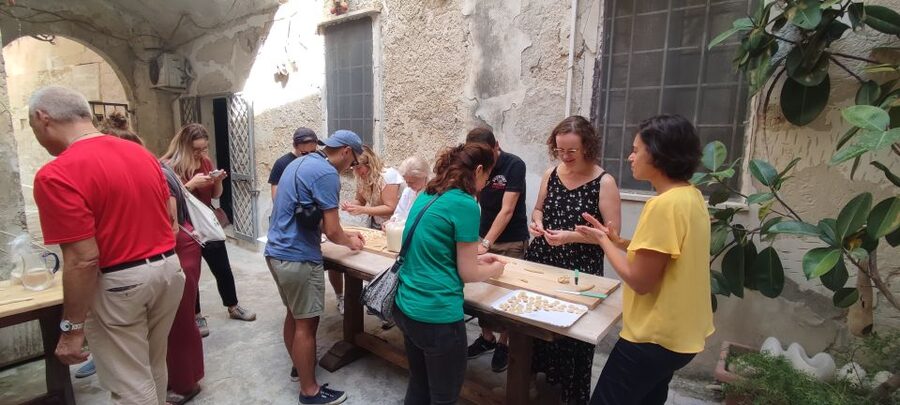
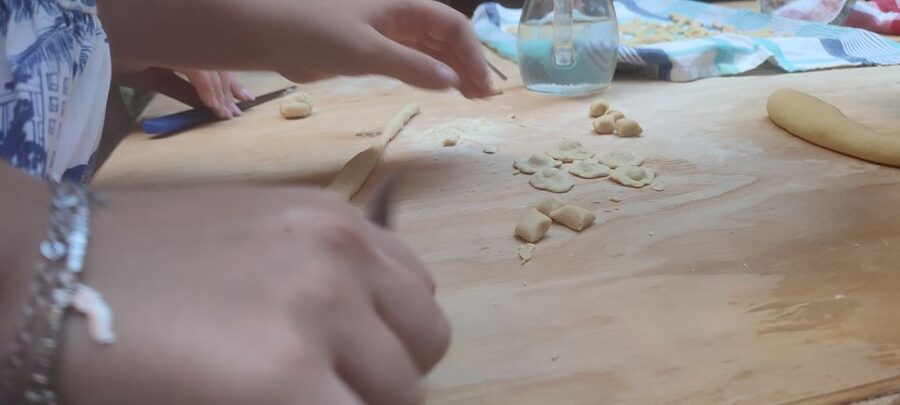
The heart of the experience is the pasta lesson with a local professional cook. The course focuses on typical Apulian pasta, especially Orecchiette and Sagne. You’ll learn how to mix water and flour, then use the tools of the trade with guidance from the cooking team.
Here’s why that matters for your results back home. Most cooking classes teach recipes. This one teaches technique: the feel of dough, the rhythm of working it, and the practical steps that turn flour and water into pasta you can eat proudly. One of the most repeated themes in the class feedback is that the nonnas and their crew stay patient while you catch on, even when you’re still figuring out how to handle the dough.
Two pasta types also give you a useful comparison. Orecchiette and sagne come from Apulia, and learning both helps you understand that Southern Italian pasta is not one single style. It’s a whole set of shapes and textures that match how people cook and eat in this region.
A helpful detail: instruction isn’t just one person talking. You’re guided by a cook plus support from an instructor/guide team. People mention very clear explanations in English, and also a “keep an eye on quality” approach from team members such as Therese. So if you like structure, this class gives it.
The equipment and why it’s included
You’re provided with cooking equipment as part of the experience. That’s a real value point. Fresh pasta needs the right setup, and you don’t want to spend your time hunting for a rolling setup or improvised tools in a museum courtyard.
Because equipment is included, you can focus on two things:
1) Getting your hands working with the dough
2) Learning the steps while someone can correct you quickly
This is also why the class is only 2.5 hours. There’s not a lot of time for wandering or delays. You’re in, you learn, you make, then you eat.
More Italian kitchens taking students:
- Cooking class, dinner and wine tasting near Lecce
★ 5.0 · 350 reviews - 3 in 1 Cooking Class near Navona: Fettuccine, Ravioli & Tiramisu
★ 5.0 · 7,376 reviews - Florence: Pasta & Tiramisu Cooking Class with Unlimited Wine
★ 4.9 · 6,708 reviews - Florence: Pasta Cooking Class with Unlimited Wine
★ 5.0 · 6,413 reviews
Dinner after class: wine, conversation, and eating what you made
The payoff is not just theoretical. After the pasta-making part, you sit down to eat your pasta with a glass of wine.
That meal piece changes the entire value of the class. In many cooking classes, you taste a bit, then you’re out. Here, the structure pushes you to enjoy the results fully, and it turns your work into a shared dinner. Several people highlight the warm social atmosphere around the meal, with conversation happening naturally as the group shares plates.
Expect the wine to be part of the experience, not an add-on. You’ll be served a glass alongside the pasta meal, which makes the class feel like an evening plan, not an activity you squeeze in between errands.
If you like a relaxed finish, this is a good match. You’ll have that “we made this together” moment, and then you can keep the pace slow while you enjoy the courtyard atmosphere.
Price at $68: what you’re paying for and why it adds up
At $68 per person for a 2.5-hour class, you’re not buying a cheap demo. You’re paying for several specific things that actually matter:
- A professional cook guiding the process
- A historic, central Lecce setting tied to the museum area
- Equipment included, so you can focus on learning
- Two Apulian pasta types: Orecchiette and Sagne
- The meal part, where you eat your pasta and get a glass of wine
If you compare this to a ticketed culinary experience that’s mostly observation, this is more hands-on. And if you compare it to a normal dinner, you’re getting a structured activity first. You’re essentially buying an evening with instruction plus dinner, in a location you’ll otherwise spend time just walking past.
So the value depends on your travel style. If you’re the type who likes to learn by doing, this cost feels fair. If you only want a quick taste of regional flavor, you might prefer something lower cost and more self-paced. But for a working class with wine and two pasta types, the price makes sense.
Group size and teaching style: fun, but plan for a lively room
One thing to know: this can be a busy class. Some feedback describes a group of about 20 people, and that matters in a kitchen setting where tools and counter space are finite.
The good news is that multiple people say the class is well organized even with a full crowd. The less ideal part is that you won’t get a silent private workshop. You’ll share space, coordinate with others, and learn alongside a social mix of people from different places.
Teaching style also tends to be firm but caring. Some instructors are described as stern in a funny, no-nonsense way. That usually works well because pasta-making needs focus. Dough won’t cooperate if you’re distracted.
If you’re worried about feeling judged, don’t be. People consistently describe patience from the nonnas and team members, including re-explanations when needed. Just show up ready to try, and you’ll do fine.
Language support and who this works best for
Instruction is available in Italian, English, and French. That’s a practical benefit if you don’t want to rely on visual-only learning. Pasta shaping is hands-on, but you still need clear steps, especially at the beginning when you’re mixing dough.
Who it suits best:
- Couples and friends who want a shared evening with a real skill at the end
- Solo travelers who enjoy meeting people while learning something practical
- People who like Apulia flavors and want to leave with more than photos
It can also work for families with older kids. One review mentions a family with children aged 14 and 10 who enjoyed it. Since it’s hands-on, younger kids might need more comfort in busy activity settings, but older teens are usually the sweet spot for attention and stamina.
And yes, it’s wheelchair accessible, which is specifically listed. If mobility access matters for your planning, that’s a strong point.
Making the most of the class, step by step
Even with great instructors, fresh pasta is tricky at first. Expect a learning curve. The dough has a feel you only get by doing it, and Orecchiette and sagne have their own learning moments.
Here’s how I’d set yourself up for success:
- Arrive with confidence, not perfection. You’re learning, not auditioning.
- Pay attention during early guidance on mixing water and flour, because that base stage affects everything.
- Don’t overthink the pace. The structure is meant to get you making real pasta within 2.5 hours.
- If you need help, ask quickly. The team is set up to guide you through quality and technique.
Also, bring ID as required. That sounds minor, but it avoids last-minute stress and lets you get started on time.
Should you book LecceGo’s orecchiette and sagne class?
I’d book this if you want an evening that feels local, not staged. The combination of a historic courtyard setting, hands-on instruction, and a full meal with wine makes it a strong value for an active traveler.
I would hesitate if you prefer quiet, private cooking instruction or you’re not interested in eating what you make. This class is social by design, and the energy is part of the experience.
Overall, if your goal is to learn Apulian pasta craft, leave with skills you can repeat, and finish with a real dinner in the center of Lecce, this one is a solid yes.
FAQ
Where is the meeting point?
The meeting point is directly in Via Ascanio Grandi n 58, at the Faggiano Archaeological Museum.
How long is the pasta making class?
The duration is 2.5 hours.
What does the class cost?
The price is $68 per person.
What pasta types will I learn to make?
You will learn to make Orecchiette and Sagne.
Is wine included?
Yes. After the course, you eat your pasta and drink a glass of wine.
What languages are available for the instructor?
The instructor is available in Italian, English, and French.
Does the class run in bad weather?
Yes, the tour takes place rain or shine.
What do I need to bring?
You should bring your passport or ID card.
Is transport included?
No, transport is not included.
What if the course is canceled due to minimum participants?
If the minimum number of people is not reached, the course will be canceled and you will be notified and refunded.
Is there free cancellation?
Yes. You can cancel up to 24 hours in advance for a full refund.
More Workshops in Puglia
- Florence Pizza or Pasta Class with Gelato Making at a Tuscan Farm
★ 5.0 · 6,801 reviews - Naples: Pizza-Making Workshop with Drink and Appetizer
★ 4.9 · 5,411 reviews - Rome: Pasta & Tiramisu Class with Fine Wine by the Vatican
★ 4.9 · 4,852 reviews - Cooking Class and Lunch at a Tuscan Farmhouse with Local Market Tour from Florence
★ 5.0 · 4,831 reviews
Cellar Doors of Italy
- Tuscany Day Trip from Florence: Siena, San Gimignano, Pisa and Lunch at a Winery
★ 5.0 · 21,634 reviews - Florence: Chianti Wineries Tour with Wine Tasting
★ 4.5 · 8,301 reviews - Small-Group Wine Tasting Experience in the Tuscan Countryside
★ 5.0 · 7,392 reviews - Pisa, Siena and San Gimignano Day Trip with Lunch & Wine Pairing
★ 4.5 · 6,006 reviews
Just introduced: the newest Puglia write-ups
- Cooking class, dinner and wine tasting near Lecce★ 5.0 · 350 reviews
- Bari: Old Town Guided Eco-Friendly Rickshaw Tour★ 4.9 · 355 reviews
- Tour to 4 Towns of Salento: Otranto, Leuca, Gallipoli, Galatina★ 5.0 · 360 reviews
- Lecce: City Highlights Guided Tour by Bike★ 4.8 · 362 reviews
- Bari: Pasta and Tiramisu Cooking Class with Wine★ 4.8 · 389 reviews
- Tour 3h and half visit of all the caves, bathroom stop and aperitif★ 5.0 · 393 reviews
- Boat trip to the Polignano a Mare caves★ 5.0 · 395 reviews
Pasta Cooking Classes, compared.
Florence Pizza or Pasta Class with Gelato Making at a Tuscan Farm
Read our review →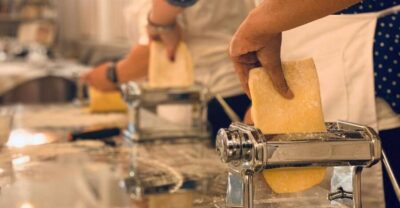
Pasta & Tiramisu Cooking Class with Unlimited Wine
Read our review →
Pasta & Tiramisu Class with Fine Wine by the Vatican
Read our review →
Pasta Making Class with Wine, Limoncello, and Dessert
Read our review →
Fettuccine Pasta Cooking Class in Rome’s City Center
Read our review →Browse the lists this tour appears in