Reviewed · FLORENCE TOURS
Medici Legends & Renaissance Wonders: Florence Small Group Tour
Florence gets a Medici makeover. This compact walking tour strings together the city’s biggest landmarks and the family connections that shaped them, in about 1 hour 45 minutes with a small group cap. You also get a whisper system, so your guide’s narration is usually clearer than the street noise chaos you expect in central Florence.
I especially like how the stops feel like a guided story, not a checklist. You start at the Medici’s church roots in San Lorenzo, then move through the library and chapels tied to Medici power, and finish with the Duomo complex, civic squares, and a museum stop. One thing to consider: the walk includes major non-Medici headline sights too, so if you want a pure Medici palace museum experience, you may still want to pair this with an extra ticket somewhere focused.
In This Review
- Key Things to Know Before You Go
- Why This 1 Hour 45 Minute Medici Tour Works for First-Timers
- Meeting Point, Pace, and What Small Group Means in Florence
- San Lorenzo: Where Medici Power Begins to Feel Personal
- The Laurentian Library: From Merchants to Intellectual Status
- Cappelle Medicee: Michelangelo’s Presence in the Medici Afterlife
- Palazzo Medici Riccardi and the Banking-to-Art Transition
- The Duomo Complex: Santa Maria del Fiore, Baptistery, and Campanile
- Palazzo Vecchio and Piazza della Signoria: Florence Gets Political
- Ponte Vecchio and Palazzo Pitti: From Sights to Ongoing Life
- Uffizi Galleries: The Big Museum Question (So You Can Plan)
- What You’ll Take Away From the Medici Lens
- Should You Book This Medici Legends & Renaissance Wonders Tour?
- FAQ
- How long is the Florence Medici Legends and Renaissance Wonders tour?
- How much does the tour cost per person?
- What group size should I expect?
- What language is the tour offered in?
- Where does the tour start and end?
- What is included in the tour?
- Are admission tickets included?
- Is tips included in the price?
- Does the tour require good weather?
- Is there free cancellation?
Key Things to Know Before You Go
- Max 15 people keeps the vibe calmer and questions easier
- Whisper system helps you catch the explanations while moving
- Medici lens across famous stops connects buildings you might otherwise see as separate sights
- Michelangelo-linked highlights show up at multiple moments, not just one
- Admission tickets not included for several big stops, so confirm what you actually enter
- Route ends near Ponte Vecchio, a convenient place to keep exploring after the tour
Why This 1 Hour 45 Minute Medici Tour Works for First-Timers
This is the kind of Florence tour that helps you stop guessing. In a short window, you get a guided path through the places most visitors clump together, but with a theme that makes it stick: the Medici, their ambitions, and how they used art, religion, and civic life to gain status.
If it’s your first day or your first taste of Florence, the timing is smart. You start at 12:15 pm, so you can sleep in a bit, and you still have enough daylight after to wander on your own. The pace is designed for an intro, with lots of quick “look here, notice that” moments rather than one long sit-down lecture.
The tour also saves you from a common first-trip mistake: you see beautiful buildings but miss the why. By connecting each stop to the Medici world, you’ll recognize details later when you’re not with a guide, like the way Medici influence shows up in religious spaces and public architecture.
Introductions we still owe you around Florence
- Tuscany Day Trip from Florence: Siena, San Gimignano, Pisa and Lunch at a Winery
★ 5.0 · 21,634 reviews
Meeting Point, Pace, and What Small Group Means in Florence
You meet at Caffè Scudieri Firenze, Piazza di San Giovanni 19R, and the walk typically ends near Ponte Vecchio. From that start area, you’re already near a cluster of major sights, so you waste less time crossing the city than you would on your own.
The group size matters here. With a maximum of 15 people, it doesn’t feel like you’re herding. That also helps if you want to ask a question about something you notice on the façade, a crest, or a sculptural detail. Several guide names come up repeatedly in the experience context, including Manuel, Martina, Amanda, and Giacomo, and the common thread is strong narration and a friendly, interactive style.
One practical note: even with a whisper system, Florence streets are loud. A guest who uses hearing aids appreciated periodic check-ins, but another guest mentioned losing portions of the guide’s words because of street noise. If hearing is a priority for you, plan to stand closer when the group stops, and consider bringing any personal listening support you already use.
San Lorenzo: Where Medici Power Begins to Feel Personal
Basilica di San Lorenzo is where this story gains weight. It’s one of Florence’s largest churches and sits in the city’s main market district, which means it’s not floating in tourist-land. This is the Medici world at ground level: the church served as the burial place for principal Medici family members, from Cosimo il Vecchio to Cosimo III.
Even if you are not an expert on Florentine church art, you’ll understand the emotional logic quickly. Rulers and elites don’t just want to be seen, they want to be remembered. By choosing a major church and securing burial there, the Medici tied their legacy to faith and permanence.
What you might not expect is how these religious sites also function like public messaging. Your guide’s job is to connect the dots between power, patronage, and what you see around you.
The Laurentian Library: From Merchants to Intellectual Status
Next comes the Biblioteca Medicea Laurenziana, funded through the patronage of Pope Clement VII. This is a key message stop in the tour because it reframes the Medici identity. The idea is that the family was no longer presenting themselves like merchants who made money, but instead like people of intellect and ecclesiastical standing.
The library is also famous for its architecture linked to Michelangelo. That matters because the building isn’t only about books. It’s about how space signals authority. A grand commission says, we are part of the cultural and religious leadership, not just the economy.
If you’re the type who enjoys spotting design cues, you’ll likely enjoy hearing what to watch for before you rush past it. And if you’re not an architecture fan, this is still worth it because the explanation gives you a human reason for why the Medici cared so much about cultural prestige.
Also on the Florence guest list:
- Florence: Michelangelo’s David Skip-the-Line Entry Ticket
★ 4.5 · 12,764 reviews - The Best tour in Florence: Renaissance & Medici Tales – guided by a STORYTELLER
★ 5.0 · 12,316 reviews - Florence: Leonardo Interactive Museum Entry Ticket
★ 4.5 · 11,763 reviews - The Best Tour in Florence: Renaissance and Medici Tales
★ 5.0 · 10,810 reviews
Cappelle Medicee: Michelangelo’s Presence in the Medici Afterlife
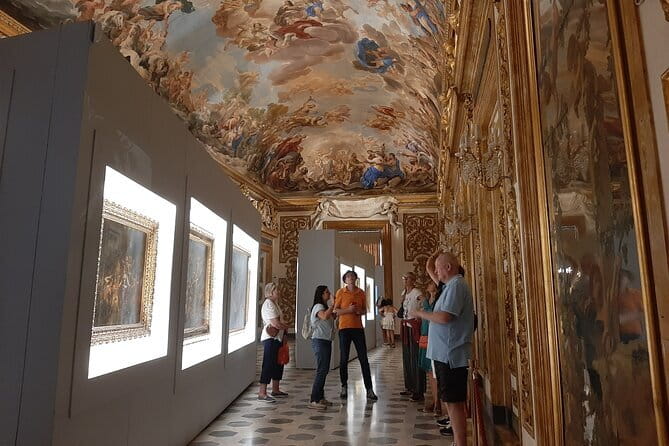
The Cappelle Medicee are built between the 16th and 17th centuries as extensions connected to Brunelleschi’s 15th-century church. That timeline alone hints at continuity: the Medici didn’t treat their legacy as a one-time splash. They kept investing, updating, and expanding.
A highlight here is the Sagrestia Nuova, also called the New Sacristy, designed by Michelangelo. This is the sort of stop that can change how you think about Renaissance art. It’s not only paintings and domes. It’s also tomb design, sculpture, and the entire environment meant to shape how visitors, worshippers, and future generations perceive the family.
Even if you only get a quick look, you’ll likely leave with a clearer mental map of why these chapels matter. They are a bridge between religion and reputation, and the tour makes that connection feel straightforward.
Palazzo Medici Riccardi and the Banking-to-Art Transition
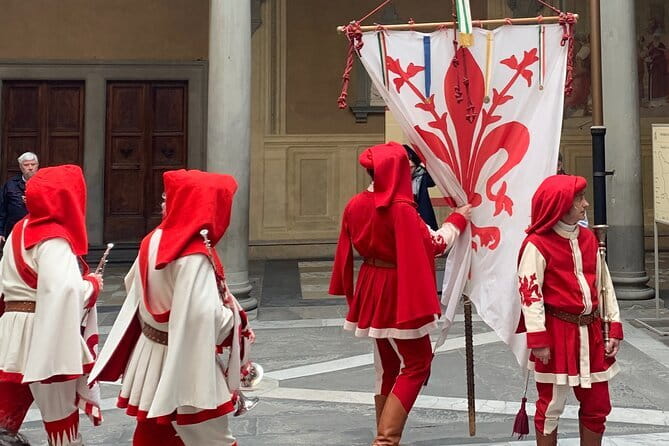
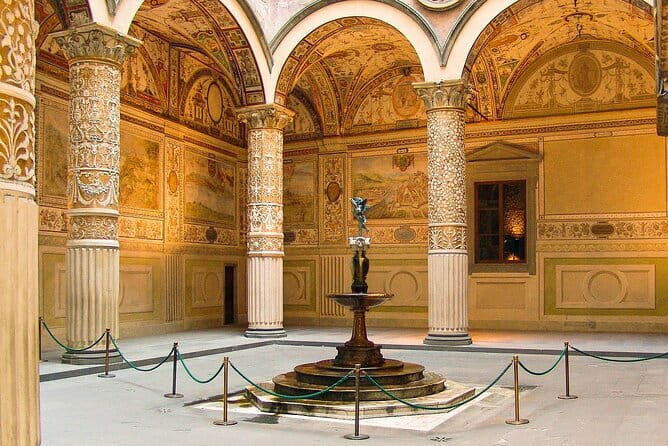
Palazzo Medici Riccardi is associated with Cosimo de’ Medici, head of the Medici banking family, and construction spans from 1444 to 1484. This is where the tour’s theme becomes visible in the simplest way: money becomes building.
A palace like this is not just a home. It is a physical argument about status. By seeing it in the tour sequence, you can connect the earlier church and library ideas to the civic reality of wealth and influence in Florence.
One reason I like this stop in particular is its role as a bridge. If you come from the modern mindset of careers and companies, you’ll still grasp what’s going on. The Medici were building systems of influence, and their architecture shows up as a public signal of that power.
The Duomo Complex: Santa Maria del Fiore, Baptistery, and Campanile
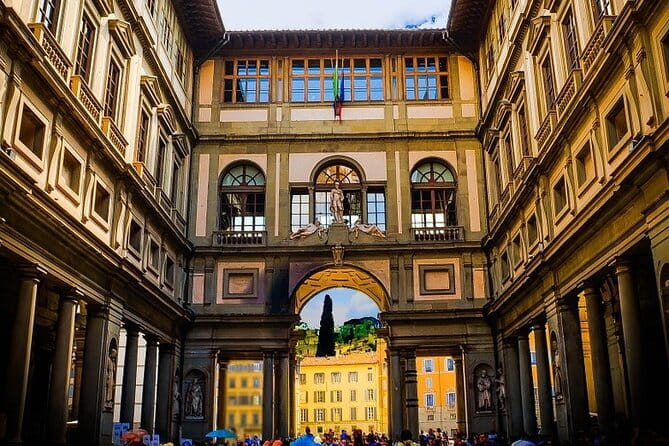
Then the route shifts to the famous heart of Florence: the cathedral complex in Piazza del Duomo. You’ll see Santa Maria del Fiore, the Baptistery, Giotto’s Campanile, and the dome associated with Brunelleschi’s work.
A few details to watch for while your guide ties the story together:
- Santa Maria del Fiore began in 1296 in the Gothic style, designed by Arnolfo di Cambio.
- The Baptistery of Saint John was constructed between 1059 and 1128 in the Florentine Romanesque style.
- Giotto’s Campanile is a showpiece of Florentine Gothic, with rich sculptural decoration and polychrome marble encrustations.
- The dome, Cupola del Brunelleschi, is known as the largest brick dome ever constructed and was once the largest of its kind in the world.
This cluster can feel overwhelming on your own because you’re bouncing between structures with different styles. With the tour, you get a clearer sense of what each building represents: civic pride, religious devotion, and the engineering confidence of the Renaissance era.
Practical consideration: this area is a magnet for crowds. Your guide’s job is to keep the group moving and focused, and the whisper system helps so you’re not forced into silence.
Palazzo Vecchio and Piazza della Signoria: Florence Gets Political
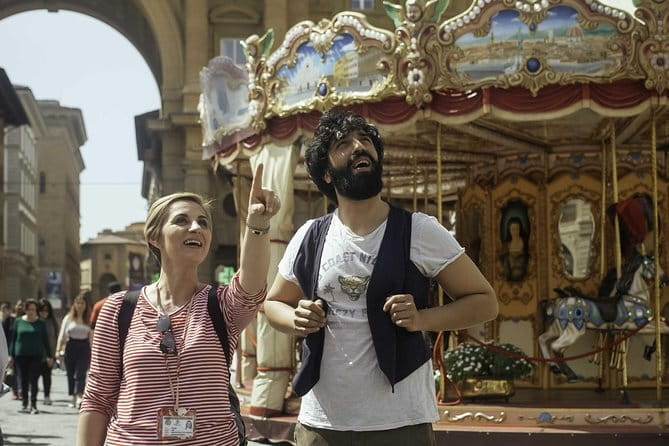
Palazzo Vecchio is the town hall of Florence, described as a massive fortress-palace. It’s one of Tuscany’s most impressive civic buildings, and it anchors Piazza della Signoria, the L-shaped square in front.
Two useful things you’ll hear here:
1) The building reflects how political power looked and felt in public space.
2) Florence’s art and politics were mixed in daily life.
You might notice the square’s copy of Michelangelo’s David positioned in the area, plus the nearby Loggia dei Lanzi with its statues. Even if you don’t enter museums during this segment, these visuals help you understand why Renaissance Florence was not just about private patronage. It was also about public identity.
If you’re the kind of traveler who likes to connect street-level scenes to big ideas, this is a strong moment. It’s harder to forget a palace that looks like a stronghold once you hear how central government was to the city’s story.
Ponte Vecchio and Palazzo Pitti: From Sights to Ongoing Life
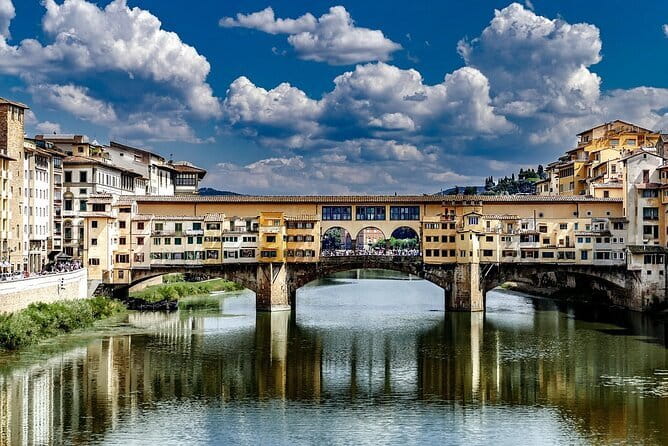
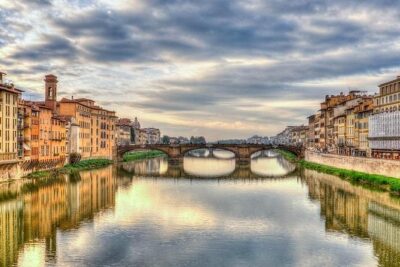
Then you hit Ponte Vecchio, the Old Bridge and one of Florence’s oldest bridges over the Arno. The bridge is famous for the shops along it. It’s also free to visit, which makes it a natural end-of-tour decompression zone.
The tour frames Ponte Vecchio with a story of how the original shop types like butchers and tanners gave way to jewelers and art dealers over time. That change is more than trivia. It shows how a place evolves from practical commerce into prestige commerce.
After the bridge, you move toward Palazzo Pitti, which the Medici bought in 1549 and which became the chief residence of the ruling families of the Grand Duchy of Tuscany. The palazzo grew into a treasure house as later generations collected major art and luxury items.
This is one of those “look up, look around” segments. Even if the Medici chapels and library are the intellectual and spiritual anchors, Palazzo Pitti gives you the power-house visual: wealth turned into rule.
Uffizi Galleries: The Big Museum Question (So You Can Plan)
The tour includes a stop at Gallerie degli Uffizi, one of Italy’s most important art museums and the most visited. The description notes works by Michelangelo, Leonardo da Vinci, Raphael, Botticelli, and others, and it references a journey through 80 halls of masterpieces from the 12th to the 16th century.
Here is the practical part you should not skip: admission is marked as not included. That means you may need to purchase entry separately, and you should confirm how your tour experience handles museum access. Some tours handle timing and entry logistics. Others focus on the museum exterior and the surrounding story.
Either way, the Uffizi stop is valuable because it ties the Medici theme to the collection-building era. If you leave Florence with a clearer idea of why these artworks mattered to Medici patronage, the museum visit later feels less like a chore and more like a payoff.
If your schedule is tight, I recommend thinking about this as a teaser. You’ll probably want at least one additional time in the Uffizi to see your top artists without racing.
What You’ll Take Away From the Medici Lens
The best compliment I can give this tour style is that it makes Florence feel connected. You stop treating the Duomo dome, the chapels, and the palaces as random stops and start seeing a chain of influence.
You’ll likely remember:
- How church spaces were used to secure family legacy, not just religious meaning.
- How the Medici pushed the idea that they belonged in intellectual and ecclesiastical leadership.
- How Michelangelo links show up in multiple places, including designs tied to the Medici environment.
- How civic power and public art show up in squares and government buildings like Palazzo Vecchio.
And you’ll see how Renaissance power worked. It wasn’t only swords and politics. It was commissions, buildings, and curated memory.
Should You Book This Medici Legends & Renaissance Wonders Tour?
Book it if you want a fast, story-driven Florence introduction with a small group and whisper system support, and you like connecting landmarks to a single theme. It’s a great first-day choice because it gives you context before you wander on your own.
Skip or supplement it if you’re craving a strict Medici deep-dive focused only on Medici-owned museums and fully guided indoor access. One issue that comes up is that the Medici focus can blend with broad Florence highlights, so you may want to add a separate Medici palace museum visit if that’s your top priority.
My practical advice: check what you’ll actually enter versus only view at each stop, especially around Uffizi and the Duomo complex, since admission is listed as not included for many moments. If you line that up, this tour is a very efficient way to get Florence’s main ideas onto your mental map, without spending your whole day inside ticket lines.
FAQ
How long is the Florence Medici Legends and Renaissance Wonders tour?
It runs for about 1 hour 45 minutes.
How much does the tour cost per person?
The price listed is $119.77 per person.
What group size should I expect?
The maximum group size is 15 travelers.
What language is the tour offered in?
The tour is offered in English.
Where does the tour start and end?
It starts at Caffè Scudieri Firenze, Piazza di San Giovanni 19R, 50123 Firenze FI, Italy, and it ends near Ponte Vecchio in 50125 Firenze FI, Italy (the exact end point can vary slightly).
What is included in the tour?
A licensed tour guide, small group format, and a whisper system are included.
Are admission tickets included?
Admission tickets are not included for the stops that list Admission Ticket Not Included. Ponte Vecchio is listed as free.
Is tips included in the price?
Tips and gratuities are not included.
Does the tour require good weather?
Yes. It requires good weather, and if it is canceled due to poor weather, you will be offered a different date or a full refund.
Is there free cancellation?
Yes, free cancellation is available, and you can cancel up to 24 hours in advance for a full refund.
Just introduced: the newest Florence write-ups
- Uffizi Masterclass with Art Expert in Florence★ 4.5 · 183 reviews
- Florence: Duomo Complex with Tickets & City Walk Guided Tour★ 4.5 · 183 reviews
- From Florence: Tuscany, Siena, San Gimignano & Winery Lunch★ 4.7 · 184 reviews
- Florence: Dan Brown’s Inferno 2-Hour Walking Tour★ 4.5 · 187 reviews
- Florence Food Tour: Home-Made Pasta, Truffle, Cantucci, Olive Oil, Gelato★ 4.5 · 187 reviews
- Florence: Handmade Ravioli & Pasta Class with Unlimited Wine★ 4.9 · 188 reviews
- Florence: Medici Family Guided Walking Tour★ 4.6 · 189 reviews
Florence Tours, compared.
Skip-The-Line Uffizi Gallery Timed Entry Ticket
Read our review →
Tuscany Day Trip from Florence: Siena, San Gimignano, Pisa and Lunch at a Winery
Read our review →
Timed Entrance Ticket to Michelangelo’s David
Read our review →
Michelangelo’s David Skip-the-Line Entry Ticket
Read our review →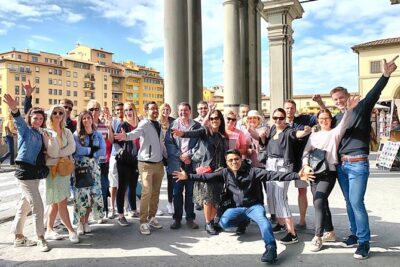
The Best tour in Florence: Renaissance & Medici Tales – guided by a STORYTELLER
Read our review →
The Best Tour in Florence: Renaissance and Medici Tales
Read our review →