
Reviewed · LAST SUPPER TICKETS & TOURS
Milan: Last Supper Guided Visit
Seeing the Last Supper is one thing. Understanding it is another.
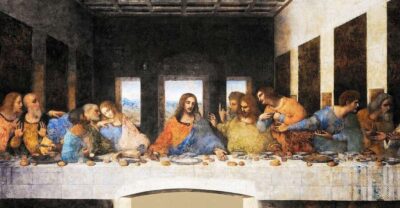
This guided, skip-the-line visit to Leonardo da Vinci’s The Last Supper at Santa Maria delle Grazie gives you a tight, well-timed look at one of the most studied images in Western art. I especially like that you get the story from an art historian guide, not just a route and a photo stop, and I like the use of headsets so your guide stays clear even when the refectory is crowded. One thing to plan around: the actual viewing time in the room is limited to 15 minutes, so you need to listen closely and move quickly.
If you’re the type who wants to see the mural, then actually understand why it looks the way it does, this tour format works. You’ll also get a quick chance to appreciate the church setting, Santa Maria delle Grazie, from the outside. The main drawback is simple, the price: at $75 per person, it feels steep unless you know you want expert interpretation during that short viewing window.
In This Review
- Key things that make this visit work
- Where the Last Supper is, and why the room time is so tight
- Meeting point at Santa Maria delle Grazie, and how not to lose time
- Skip-the-line entry: what you gain, and what it does not solve
- Your guide’s focus: the gestures, expressions, and the big idea
- Leonardo’s technique: why the painting looks the way it does
- Santa Maria delle Grazie, from the outside, and why it matters
- Preservation and drama: the WWII connection and why it affects how you look
- The “15-minute viewing” reality check, and how to make it count
- Price and value: is $75 worth it?
- Who should book this, and who might prefer a different approach
- Practical tips that matter on the day
- Should you book this guided Last Supper visit?
- FAQ
- How long is the tour, and how long do I see the mural?
- Is the guide in English?
- What’s included in the ticket?
- Where do I meet the guide?
- What do I need to bring or avoid bringing?
- Do I need to enter all travelers’ names in advance?
Key things that make this visit work
- Skip-the-line entry keeps your morning from turning into queue time
- Art historian storytelling in English helps you read gestures, expressions, and staging
- Headsets included mean less strain trying to hear in a busy room
- Only 15 minutes inside the room forces you to focus on what matters
- Perspective and technique explanations change how you see the figures
- Basilica exterior time gives you context for where the mural lives
Where the Last Supper is, and why the room time is so tight
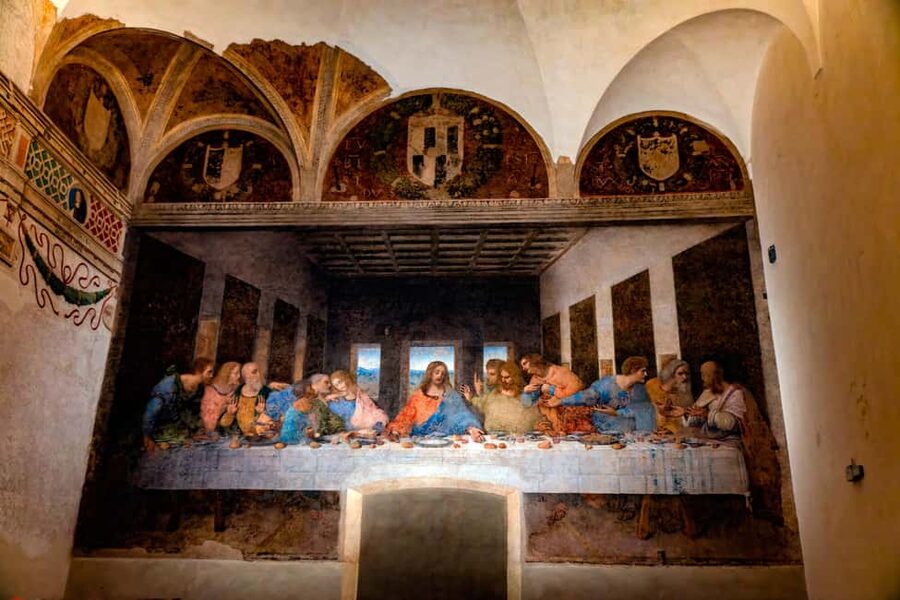
The Last Supper is housed in Santa Maria delle Grazie in Milan, in an old refectory space. Leonardo painted the mural between 1494 and 1498, and the building setting matters because this is not a gallery wall, it is part of the historic architecture.
Here’s the real constraint: you can only stay inside the room for 15 minutes. That limit is strict, and it affects everything about the experience. Your guide’s job is to help you get the most meaning out of those minutes instead of just staring at a famous image.
More seatings for the Last Supper wall:
Meeting point at Santa Maria delle Grazie, and how not to lose time
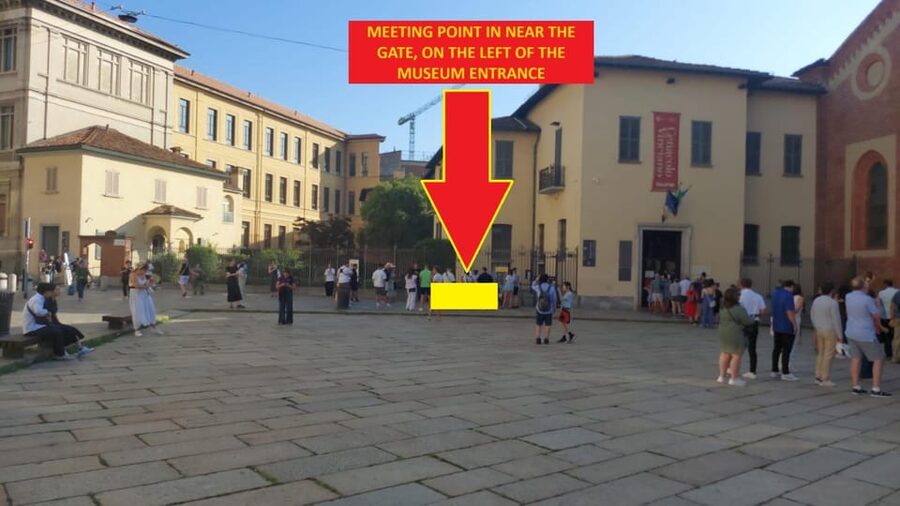
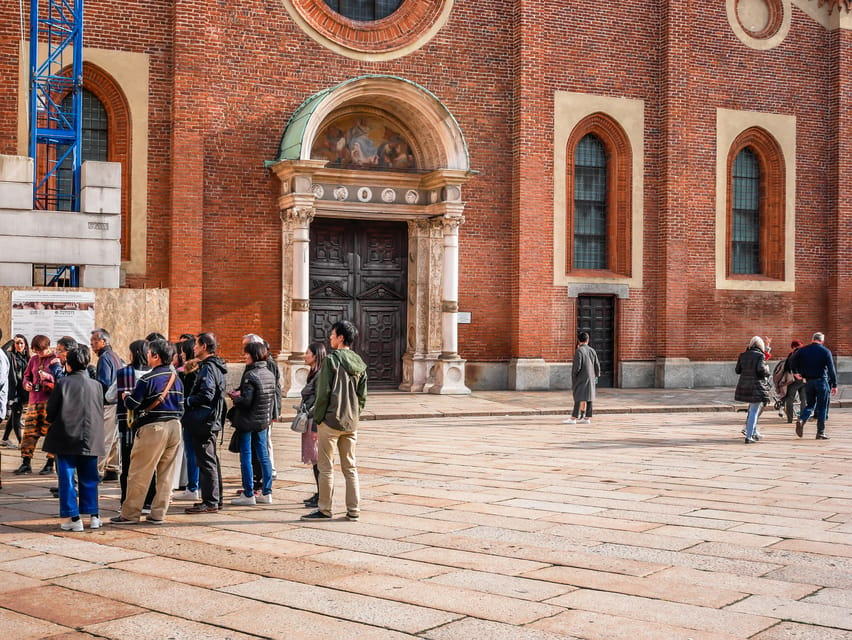
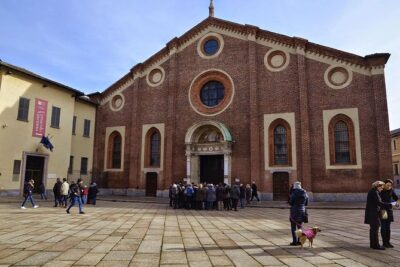
Plan to meet your guide outside the museum entrance door at Santa Maria delle Grazie. The instructions are very specific for a reason: it is the only door in the square with flags on the top.
Look for the orange GetYourGuide sign held by your guide. If you show up late or confused, you can end up spending your valuable 15 minutes trying to catch up, not watching the mural.
If you want an easy start, arrive a bit early with your ID ready. You’ll be asked for a passport or ID card, and there is no storage service mentioned for bag issues, so keep your setup simple.
Skip-the-line entry: what you gain, and what it does not solve
This tour includes a Last Supper skip-the-line entry ticket, and that’s a big deal in Milan because timed access is the rule here. The skip-the-line part helps you arrive at the right moment without burning time in the queue.
But it does not change the core structure. You still have the same limited viewing window inside the room. Think of skip-the-line as time you protect for looking, listening, and getting your bearings fast, not as a way to see more of the mural.
Also, plan your group logistics in advance. There’s a strict rule that modifications to the scheduled visit time are not allowed by the museum authorities. In practical terms, pick your timeslot carefully and treat it as firm.
Your guide’s focus: the gestures, expressions, and the big idea
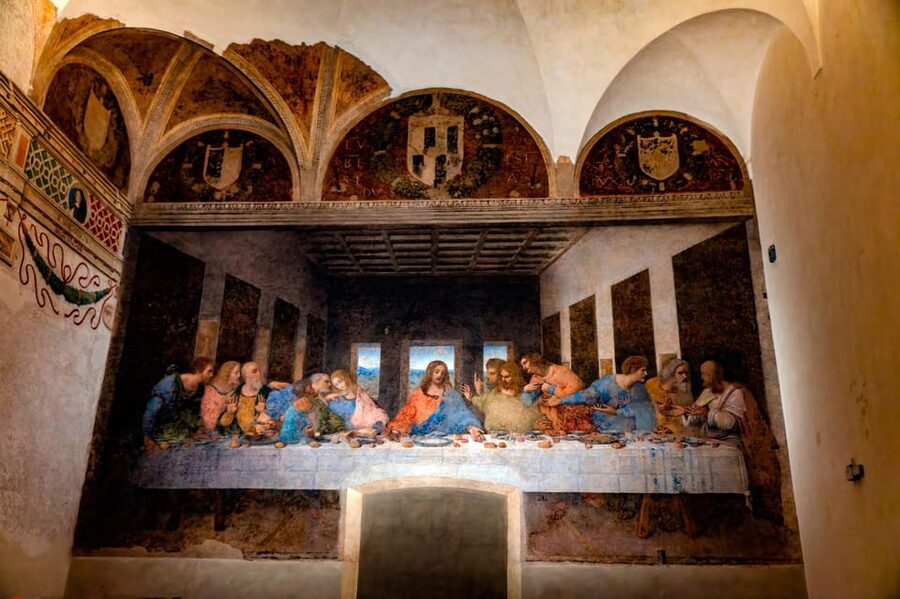
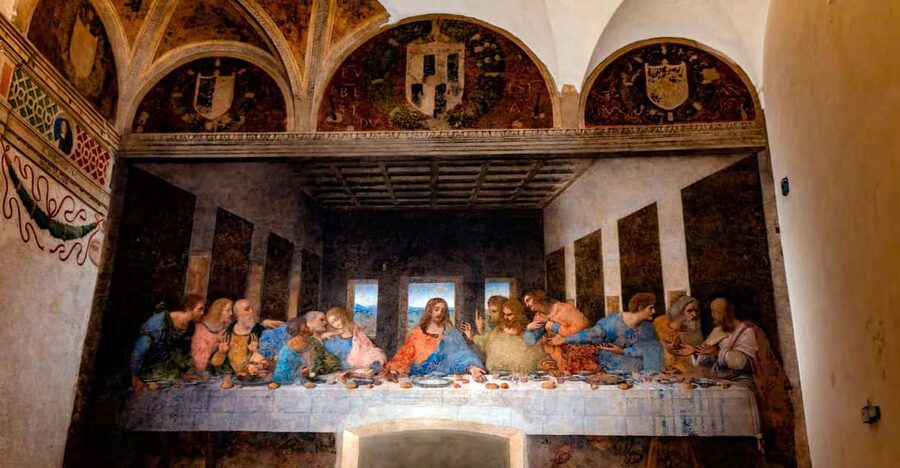
Once you get inside the refectory, the experience becomes all about reading the scene. This tour is designed around what you can see in front of you: the gestures and expressions of Christ and his twelve apostles.
What I like about an art historian guide approach is that it turns scattered details into a story with cause and effect. Your guide points out things like posture, hand movements, and facial expressions, and then connects them to what those reactions might mean within the scene.
You also get help with the mural’s staging. The guide highlights details regarding perspective, and this matters because Leonardo’s choices make the figures feel arranged for a viewer, not painted like a flat picture.
Introductions we still owe you around Milan
- Milan: Cathedral and Duomo’s Terraces Entrance Ticket
★ 4.6 · 61,054 reviews - Milan: Science and Technology Leonardo da Vinci Museum Entry
★ 4.5 · 7,169 reviews - Milan: City Sightseeing Hop-On Hop-Off Bus with Audio Guide
★ 4.0 · 6,256 reviews - Milan Cathedral: Duomo Terraces Ticket (No Church Access)
★ 4.6 · 6,111 reviews
Leonardo’s technique: why the painting looks the way it does
Leonardo’s The Last Supper is famous partly because of technique and experimentation for its time. In this guided visit, you do not just admire the image, you learn how the work’s construction shapes what you see.
Your guide is expected to explain the innovative methods of the period, including how composition and viewpoint guide your eye. That’s where the headsets earn their keep: you can stand where you are, keep your eyes on the mural, and still follow the explanation clearly.
This is also where a good guide can convert a first-time visit into a second level of seeing. Even if you have seen photos before, the real expressions and the way the figures are grouped can feel different once you know what to look for.
Santa Maria delle Grazie, from the outside, and why it matters
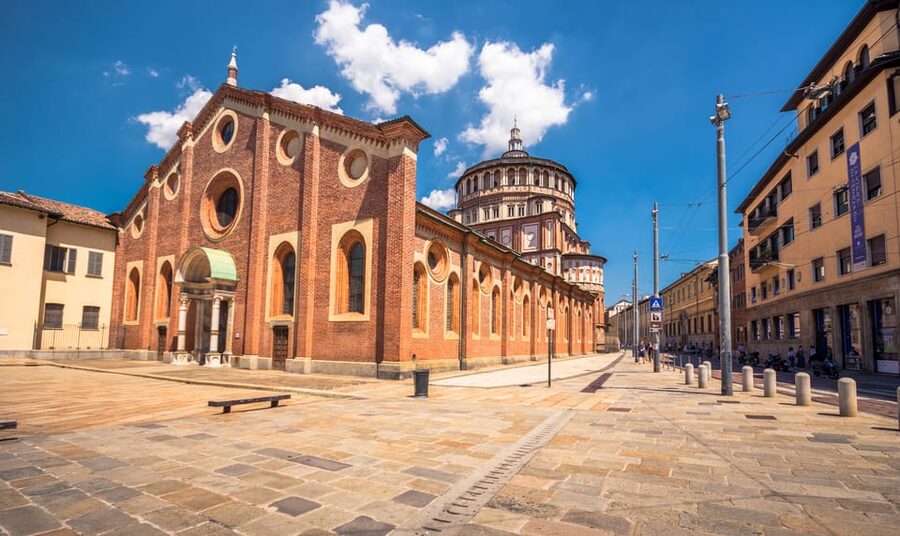
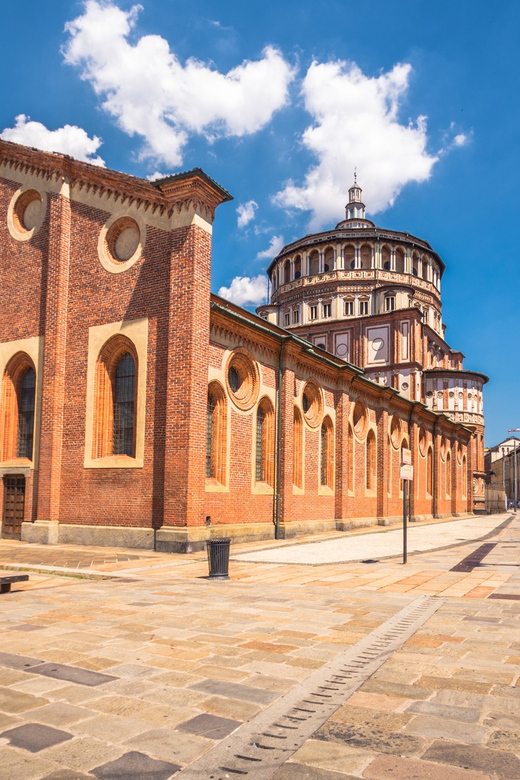
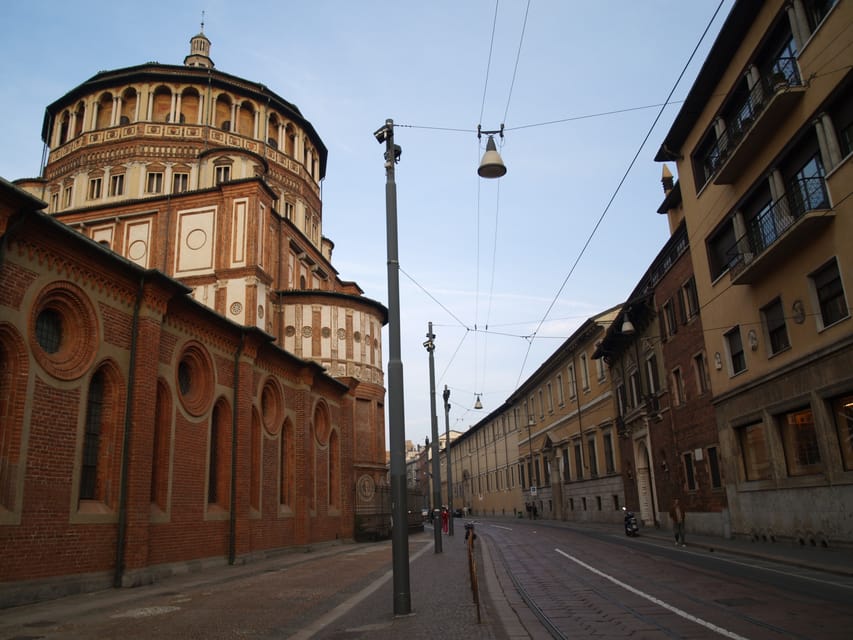
The highlights call out the elegance of Santa Maria delle Grazie from outside. That sounds like a small add-on, but it helps you frame the mural instead of treating it like an isolated artifact.
The church is part of the experience because the mural belongs to a place with history and function. When you understand the setting, the mural feels less like a museum object and more like a worked-in part of the building.
You may also have time to notice nearby areas such as the bookstore and the church in the vicinity, since that gets mentioned as something people enjoy right after their viewing time. If you plan to stop there, do it after the main visit so you don’t scramble during your tight schedule.
Preservation and drama: the WWII connection and why it affects how you look
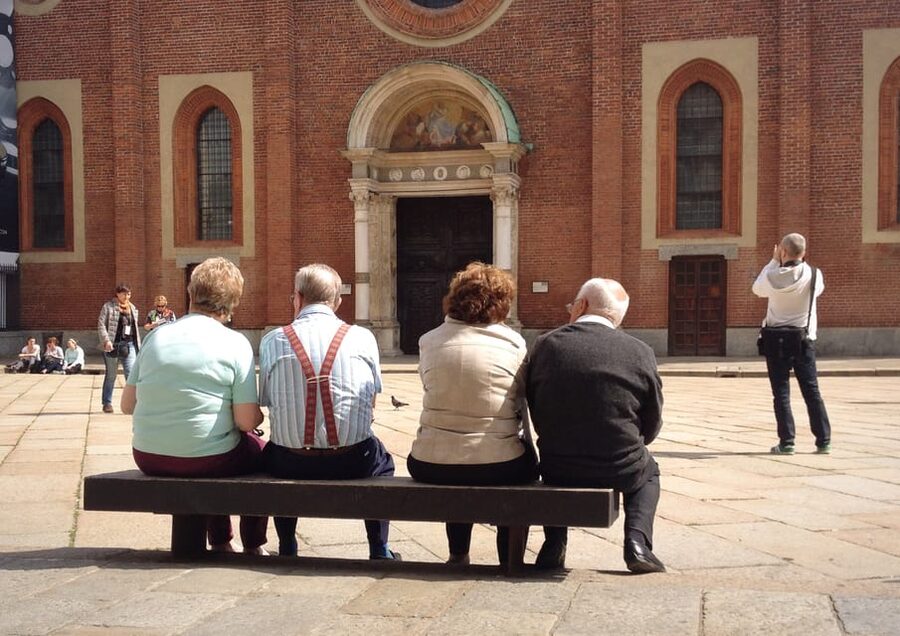
One of the most memorable context points that comes up in this experience is how the building and mural survived major damage during World War II. Visitors mention being struck by the fact that the mural walls remained, while much else was lost.
Why does this matter for you? Because it changes how you feel about the surface you are seeing. When you know the mural has been through recovery and protection efforts, you tend to look more carefully, especially at how fragile and historically important the surviving paint layers are.
Also, you might notice practical visual gaps due to the room setup. Some people point out that Christ’s feet are not fully visible, since there is a door in the wall setup for this space. I’d treat that as a heads-up, not a deal breaker. It’s part of why the experience is timed and guided, to keep you focused on the faces, hands, and composition that are still fully readable.
The “15-minute viewing” reality check, and how to make it count
Fifteen minutes is short, and in some cities that’s the kind of time you spend just getting oriented. Here, it is enough, but only if you cooperate with the pace.
Your best move is mental, not physical. Spend those minutes watching what the guide calls out, not trying to memorize everything on your own. If you want photos, be ready to take them quickly during the viewing window, since time is limited and the group needs to move.
This format also helps when the group is larger than you’d like. Even if the room has more people around you, the refectory space is described as large enough to make the experience manageable, and the guide tends to keep the visit controlled.
Price and value: is $75 worth it?
At $75 per person for a 1-hour tour, the price can feel high at first glance. You are not paying just for entry, though. You are paying for three concrete things tied to the most valuable part of your visit: an art historian guide, headsets for clarity, and the skip-the-line ticket so you reach the mural without wasted time.
The value equation changes if you are the kind of visitor who likes context. If you want to understand why the composition works, what gestures signal, and how perspective plays into the effect, the guide turns a brief viewing limit into a fuller experience.
If you just want a quick famous photo, you could probably feel disappointed by how short the room time is. But if you want interpretation and you plan to commit your eyes to the details, this tour style is a practical way to make a famous artwork actually teach you something.
Who should book this, and who might prefer a different approach
I think this guided visit fits best if you:
- want expert interpretation in English during the limited viewing window
- enjoy art history when it is tied to specific visual details, not big general lectures
- like structured timing so you do not lose time in lines or uncertainty
I think you might reconsider if you:
- only care about sightseeing and photos, and you hate being guided
- expect to linger in the room longer than 15 minutes
- are sensitive to headset comfort or prefer silent self-paced visits
Practical tips that matter on the day
Here are the small things that keep your visit smooth, based on what the experience rules actually say:
- Bring a passport or ID card.
- Don’t bring food and drinks, and avoid liquids. There are restrictions, and they also mention no bulky backpacks or bags.
- Remember there is no storage service provided, so travel light.
- Enter the names of each traveler exactly as required, or entry can be denied. This is not a detail to guess at later.
- Stick to your timeslot. Changes to the scheduled time are not allowed by the museum authorities.
- If you’re wearing outer layers or carrying items, plan for a quick pass. The more you have, the more likely you are to hit friction.
Should you book this guided Last Supper visit?
Yes, book it if you want a guided, art-historian-led experience that respects the museum’s strict limits and helps you read the mural in a meaningful way. The combination of skip-the-line access, headsets, and specific guidance on expressions, gestures, perspective, and technique is what justifies the price.
Hold off or choose a different option if you’re mainly in it for a quick look, because the museum still caps your room time at 15 minutes. This is not a slow stroll. It is a focused, timed viewing where your attention matters more than your watch time.
FAQ
How long is the tour, and how long do I see the mural?
The tour duration is 1 hour, but all visitors are allowed only 15 minutes inside the room where the Last Supper is.
Is the guide in English?
Yes. The tour is an English guided visit, and headsets are included to hear the guide clearly.
What’s included in the ticket?
You get a Last Supper skip-the-line entry ticket, an art historian guide, and headsets. Hotel pickup and drop-off, as well as food and drinks, are not included.
Where do I meet the guide?
Meet your guide outside the entrance door of the museum, the only door in the square with flags on the top. The guide will show an orange GetYourGuide sign.
What do I need to bring or avoid bringing?
Bring your passport or ID card. Food and drinks are not allowed, and bulky backpacks or bags are not allowed inside the museum.
Do I need to enter all travelers’ names in advance?
Yes. It is mandatory to enter the names of each traveler, otherwise entry to the Last Supper Museum will be denied.
Just introduced: the newest Milan write-ups
- Milan Super Saver: Skip-the-line Duomo and Rooftop Tour★ 4.5 · 347 reviews
- Milan: Best of City Walking Tour with Last Supper Tickets★ 4.7 · 359 reviews
- Milan: Cathedral and Terraces Guided Tour with Tickets★ 4.8 · 362 reviews
- Milan: San Siro Stadium and Museum Self-Guided Tour★ 4.3 · 362 reviews
- Express Tour of the Last Supper in Milan I Small Group of Max 6★ 5.0 · 371 reviews
- La Scala Theatre and Museum Tour in Milan With Private Guide★ 3.5 · 384 reviews
- Venice Day Trip from Milan with Guided City Tour★ 4.0 · 383 reviews
Last Supper Tickets & Tours, compared.
Guided Walking Tour & Last Supper Visit with Ticket
Read our review →
Milan’s Must See: Half-Day Tour of Last Supper, Duomo & La Scala
Read our review →
Milan Duomo & The Last Supper Skip-the-Line Small Group Tour
Read our review →
Da Vinci’s Last Supper & Milan Sightseeing Tour
Read our review →
Historic Milan Tour with Skip-the-Line Last Supper Ticket
Read our review →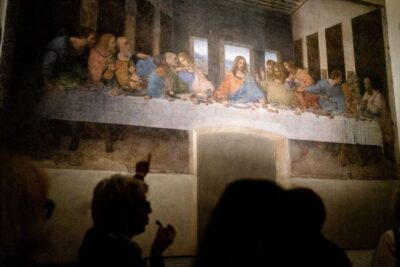
Best of Milan Experience Including Da Vinci’s The Last Supper and Milan Duomo
Read our review →Browse the lists this tour appears in