
Reviewed · WALKING TOURS
Palermo No Mafia walking tour: discover the Anti-mafia culture in Sicily
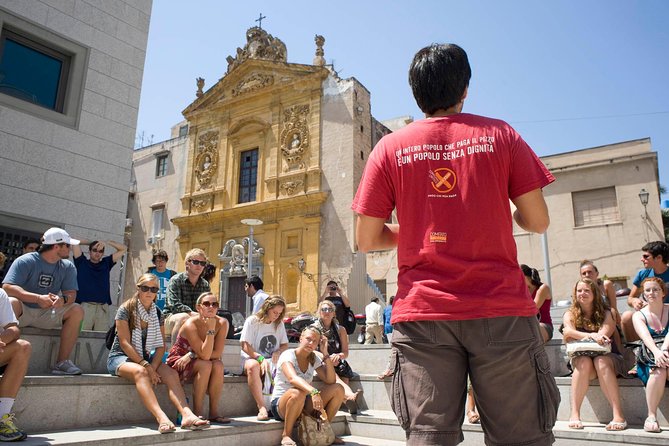
Palermo has a second story, and this tour tells it. You’ll connect famous landmarks with the anti-mafia people who pushed back for years, long after the gunshots stopped. It’s not a crime-horror walk, it’s a resistance walk, and it moves through the city in a way that feels practical and real.
I love that the focus stays on civil change, not mafia movie myths. Two strong wins for me are the Wall of Legality stop, where you see victims’ names in public space, and the way the guide links old institutions like the church and courts to what’s happening now.
One thing to think about first: you may spend quite a bit of time stopped and listening. If you prefer constant walking with minimal standing, plan to keep your legs flexible.
In This Review
- Key highlights you should care about
- Palermo No Mafia: why this anti-mafia walk feels different
- Price, length, and who the 3-hour plan fits best
- Where you meet and how the route finishes in old town
- Teatro Massimo: opera glamour with a post-violence meaning
- Wall of Legality: 70 meters of names you can read
- Piazza della Memoria and the Palazzo di Giustizia memorial
- Palermo Cathedral: church influence and anti-mafia consequences
- Open-air market stop: shopkeepers, extortion, and everyday life
- Cappadonia Gelati and the “no pizzo” sticker culture
- Palazzo Pretorio and Palermo City Hall politics
- The guide factor: what the best tours depend on
- What makes it worth your money (and what to expect)
- How to plan your day around the walk
- Should you book the Palermo No Mafia walking tour?
- FAQ
- How long is the Palermo No Mafia walking tour?
- How much does the tour cost?
- What language is the tour offered in?
- How many people are in the group?
- What is included in the ticket price?
- Where do I start and end the tour?
Key highlights you should care about
- Small group size (max 15), so you’re not lost in a crowd.
- English-speaking guide with a clear anti-mafia angle.
- Wall of Legality, a 70-meter-long mural that centers on victims.
- Memorial sites tied to judges and prosecutors killed by the mafia.
- A hands-on stop with Addiopizzo-style anti-extortion choice at Cappadonia Gelati.
- A short stop at Fontana Pretoria area to wrap up in the old-town core.
Palermo No Mafia: why this anti-mafia walk feels different
If you want to understand Palermo beyond what films show, this tour gives you a map for the city’s moral battles. You’ll connect buildings you already recognize with the people who refused to accept the mafia’s rules.
I like that the tone is steady and human. This isn’t about sensational violence, it’s about how the city fought back, from judges and prosecutors to shopkeepers and community groups.
And it’s good value. For $39.30, you get a local guide, a small support contribution to Addiopizzo, and a route that hits major sights without turning the afternoon into a scavenger hunt.
More Walking Tours in Sicily
Price, length, and who the 3-hour plan fits best
The walk runs about 3 hours, which is long enough to learn without burning your whole day. It’s a great fit if you want a first pass at Palermo’s historic core, then keep exploring on your own afterward.
The group is capped at 15 people, which matters in a tour like this. It’s easier to hear explanations, and you’re more likely to ask questions and get direct answers.
This is also a solid choice if you’re traveling with kids. The reviews include families, even with a 4-year-old, and the overall approach is about context and courage, not gore.
Where you meet and how the route finishes in old town
You start at Piazza Giuseppe Verdi, 455 (near public transport). Expect an organized start, then a slow, readable pace that lets you process what the guide is saying.
The walk ends in the old town area near Fontana Pretoria (Piazza Pretoria). You’ll finish close to more streets you can wander, and the tour includes tips to keep going and taste Sicilian specialties afterward.
If you hate backtracking, this ending point is helpful. It drops you right where you can link up with other sightseeing plans.
Teatro Massimo: opera glamour with a post-violence meaning
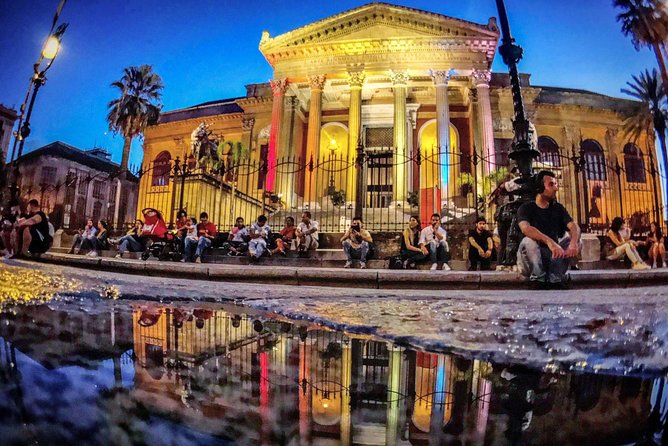
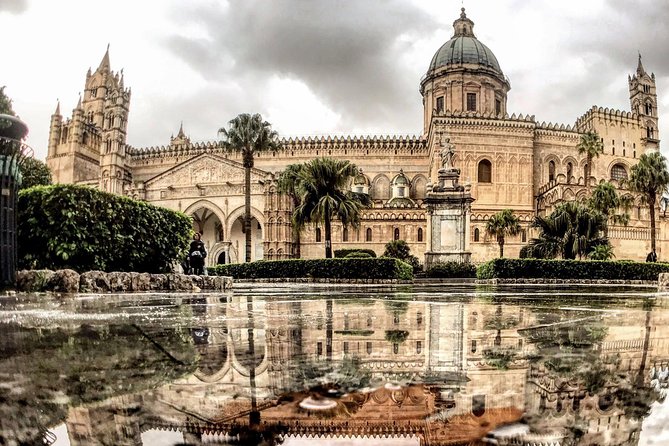
Your first stop is Teatro Massimo, Palermo’s grand opera house. It’s famous for dramatic movie scenes, but your guide frames it as a symbol of Palermo’s rebirth after decades of mafia violence.
This stop works because it puts conflict and recovery in the same breath. You’re standing in a landmark that looks like celebration, yet the story beneath it is about rebuilding a civic life the mafia tried to control.
You also get a quick win for photos, even if you’re not an opera fan. The building’s scale makes the city feel bigger the moment you arrive.
Practical tip: comfortable shoes matter here. Even with “walking tour” in the name, you’ll be on your feet for long enough that you’ll want support.
More Italy at street level:
- Palermo: Private Custom Walking Tour with Local Guide
★ 4.7 · 661 reviews - Palermo: Street Food Walking Tour with Local Guide & Tasting
★ 4.9 · 632 reviews - Palermo Walking Tour and Street Food
★ 5.0 · 617 reviews - Palermo: UNESCO World Heritage Sites Guided Walking Tour
★ 4.8 · 548 reviews
Wall of Legality: 70 meters of names you can read
Next comes one of the most powerful sights on the route: the Wall of Legality, a 70-meter-long mural painting. It’s designed to bring victims’ faces and names into public view, tied to the urban renovation of the area.
What I like about this stop is that it doesn’t hide behind abstraction. You’re not reading a distant plaque, you’re standing next to a long, visible statement in a real neighborhood.
It’s also a photo-friendly moment, because the wall is literally long enough for many angles. The guide will explain who is represented and why the mural matters, so you don’t just end up with random snapshots.
If you’re the type who gets emotional at memorials, bring a little patience for yourself. This stop is a gut-check, in a respectful way.
Piazza della Memoria and the Palazzo di Giustizia memorial
From there, you move toward Palazzo di Giustizia, the courthouse area. You’ll stop at Piazza della Memoria, a memorial dedicated to judges and prosecutors killed by the mafia.
This is where the anti-mafia story becomes political and legal, not just street-level. The mafia didn’t only threaten individuals, it targeted the people trying to enforce justice, and that’s what the memorial emphasizes.
I also appreciate how the guide likely ties the memorial to the bigger theme: when institutions hold firm, the mafia’s grip weakens. You’re seeing a place where the city remembers the cost of that firmness.
Expect another pause for explanations. If you prefer nonstop movement, pace yourself before this part.
Palermo Cathedral: church influence and anti-mafia consequences
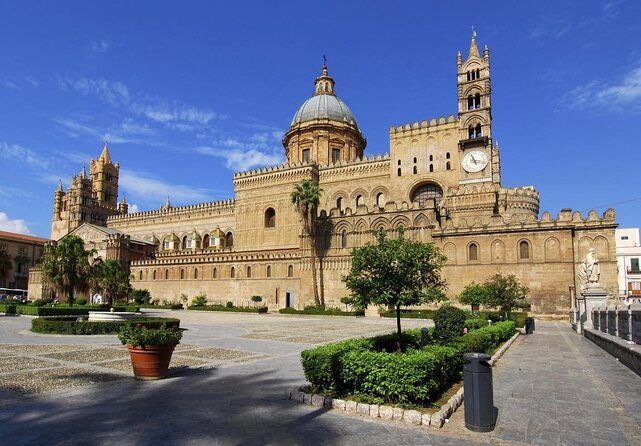
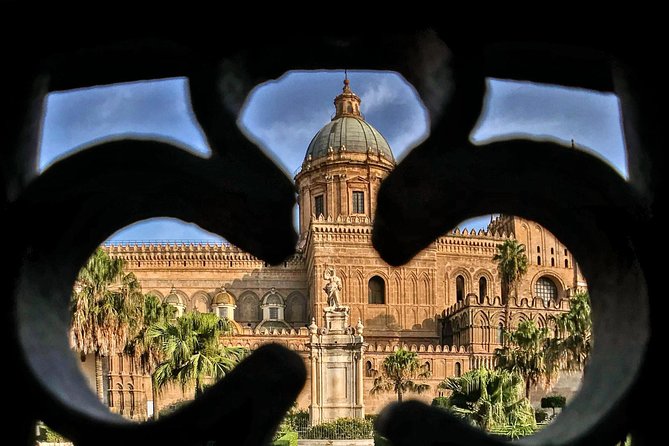
At Cattedrale di Palermo, the focus shifts to the relationship between the Catholic Church and the mafia. The guide connects religious authority, social life, and power structures, and why that relationship could either enable corruption or support resistance.
This stop is valuable because it challenges a simple story. The mafia isn’t only a separate criminal world, it interacted with the systems people relied on, and the tour makes that interaction clear.
It’s also a great moment to slow down and look closely at the cathedral area. Even if you’ve seen impressive churches elsewhere, this one sits at a crossroads where history and modern consequences meet.
Open-air market stop: shopkeepers, extortion, and everyday life
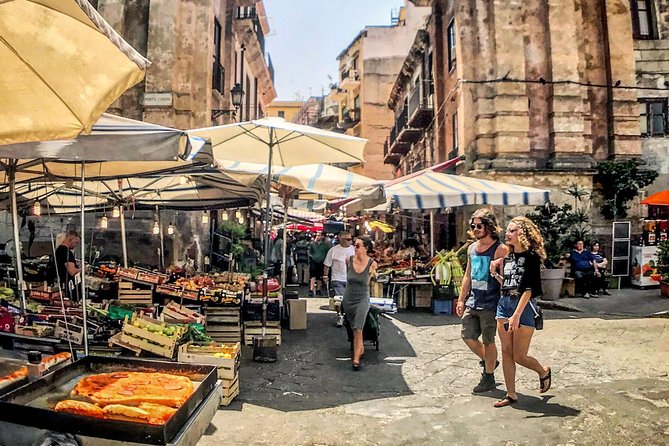
Mid-tour, you’ll reach a colorful old open-air market area. This is one of the most “Palermo everyday” parts of the walk, and it’s used to explain the relationship between the mafia and shopkeepers.
This is where the concept of pizzo becomes concrete. Instead of hearing abstract terms, you understand what extortion means in daily routines, pricing, and fear.
If you like markets, you’ll probably enjoy the energy here. If you don’t, you still get a key lesson: the mafia’s influence worked through economic pressure, not just intimidation.
Shop and street scenes like this are also good for learning how neighborhoods operate. You’ll see how public life continues alongside the memory of pressure.
Cappadonia Gelati and the “no pizzo” sticker culture
Along the Cassaro, you’ll make a sweet but meaningful stop at Cappadonia Gelati. The windows carry an orange sticker connected to refusing the extortion racket, pizzo, linked to the grassroots movement Addiopizzo.
This is one of the best “values in action” moments on the tour. You’re standing in front of a local business that openly aligned with an anti-mafia campaign, and you get a chance to support that kind of critical consumer choice.
It’s not only about buying gelato. It’s about seeing how resistance can look like courage in something ordinary, like a storefront decision.
Practical tip: bring cash or a payment method you’re comfortable using. This stop is one you may actually want to purchase something from.
Palazzo Pretorio and Palermo City Hall politics
In the final stretch, you’ll arrive at Palazzo Pretorio, part of the Municipio di Palermo area, which includes Palermo City Hall. Here the guide discusses how the seat of government could be tied to corrupted politicians, and also how others fought against mafia influence.
This stop matters because it completes the chain: from institutions like the courts and church, to daily commerce in markets, to civic leadership in city hall. The tour shows that anti-mafia work wasn’t a single heroic chapter, it was repeated pressure from many angles.
It also gives you a clearer way to read the city when you’re walking after the tour ends. You start noticing what kinds of buildings signal authority, and what kinds of stories people tell around them.
The guide factor: what the best tours depend on
This tour is run by Addiopizzo Travel, and a big reason it earns such strong marks is the guide experience. Multiple guides are singled out in the feedback, including Sylvia, Sylvia the guide spelling appears in different ways, Salvador, Ermes, Frederico, Francesco, and Valeria, plus Mariela and Marienella.
What I’d take from that pattern is simple: you’ll want a guide who can explain connections without turning it into a lecture. The praised guides use story to make the mechanics of influence understandable, including links to the church and the anti-mafia movement today.
You’ll also get enough time to ask questions, which is huge for topics that can feel heavy. If you leave with more clarity than you arrived with, that’s the whole point.
What makes it worth your money (and what to expect)
At $39.30, you’re paying for more than sightseeing. You’re paying for a route with meaning, plus a small contribution to Addiopizzo via the solidarity component.
You also get logistics that keep things easy. It includes a mobile ticket, runs in English, and works for most travelers with no specific health restrictions listed.
The pacing is the tradeoff. There are several key stops where you stand and absorb a lot of context, and one critic flagged the repetition and standing time. So if you prefer a fast-moving “photo and go” style tour, this might feel slower.
For me, the stops are spaced in a way that still feels doable. You get major landmarks, then you get the civic and community meanings behind them.
How to plan your day around the walk
I recommend booking this early in your Palermo stay if you want it to act like a backbone. It helps you interpret the city as you move through later neighborhoods and museums.
If you want to pair it with other sights, plan light afterward. The tour ends near Fontana Pretoria, then you can wander on foot while your understanding is fresh. The tour also promises tips to keep going and taste Sicilian specialties, which is a nice way to finish on something enjoyable.
Weather matters. Bring a small umbrella and a dry jacket if rain is likely, since the walk includes outdoor stops.
And do wear shoes that can handle cobblestones and uneven sidewalks. The itinerary is short enough, but the ground can be unforgiving.
Should you book the Palermo No Mafia walking tour?
Book it if you want a Palermo tour that explains how the mafia’s power worked in society, then shows you how people resisted. This is ideal if you care about civic courage, want to understand pizzo refusal culture, and appreciate memorial sites as part of modern identity.
Skip it if you want a mostly architectural or art-focused walk. The emphasis is anti-mafia culture and how the city, the government, and the church pushed back, not a purely historical lecture about old rulers and battles.
For most visitors, especially first-timers who want context fast, this is a strong choice. You’ll leave with clearer questions and better instincts for what you’re looking at, and you’ll be in the right spot to keep exploring afterward.
FAQ
How long is the Palermo No Mafia walking tour?
It runs for about 3 hours.
How much does the tour cost?
The price is $39.30 per person.
What language is the tour offered in?
The tour is offered in English.
How many people are in the group?
The tour has a maximum of 15 travelers.
What is included in the ticket price?
You get a local guide and a small solidarity contribution to Addiopizzo local NGO.
Where do I start and end the tour?
You start at P.za Giuseppe Verdi, 455, 90133 Palermo PA, Italy and end at Fontana Pretoria, Piazza Pretoria, 90133 Palermo PA, Italy.
Just introduced: the newest Palermo write-ups
- Discover Palermo in 3 hours. Art, history, markets and street food★ 5.0 · 352 reviews
- Palermo: Guided City Walking Tour w/Customizable Itinerary★ 4.6 · 390 reviews
- Mondello,CapoGallo Reserve Boat Tour with Snacks and Drinks★ 4.9 · 439 reviews
- Palermo: Guided Bar Crawl with Shots and Discounts on Drinks★ 5.0 · 465 reviews
- Palermo: Walking Tour of Historic Markets and Monuments★ 4.9 · 478 reviews
- Palermo: Guided Bike Tour with Street Food Tasting★ 4.8 · 479 reviews
- Night Street Food Tour of Palermo with a Local -For real foodies!★ 5.0 · 486 reviews
Walking Tours, compared.
Guided Walking Tour & Last Supper Visit with Ticket
Read our review →
Rialto Bridge & Offbeat Unusual Venice Walking Tour
Read our review →
Private 3 hrs Venice Tour: St Mark’s, Walking tour & Boat tour
Read our review →
Skip the line: Uffizi and Accademia Small Group Walking Tour
Read our review →Browse the lists this tour appears in