
Reviewed · WALKING TOURS
Palermo: NO Mafia Walking Tour
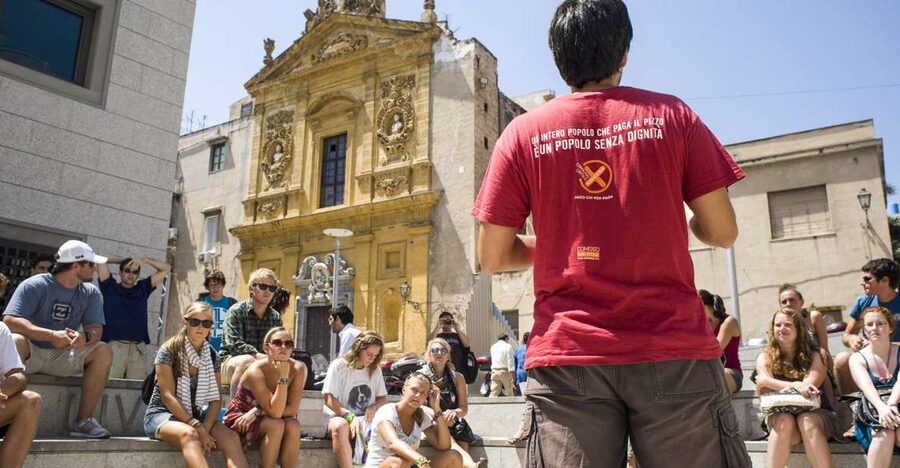
Palermo has two stories running at once, power and resistance. This 3-hour walking tour guides you through the historic center while explaining the real mechanics of the Mafia, and the civil anti-Mafia movement pushing back in everyday life. It is part city sightseeing, part current-events lesson, and the tone stays grounded in how Palermo actually works.
Two things I really love: you get a clear, human-scale explanation of how intimidation affects daily choices, not just movies and myths, and you also see landmarks that connect directly to civic courage, like Piazza Della Memoria. One possible drawback: the topic is serious, so if you want only light sightseeing, this is not that kind of tour.
In This Review
- Key Points You’ll Care About
- Why This Palermo No Mafia Walk Changes What You See
- Start Smart: Teatro Massimo and Il Capo in One Route
- Piazza Della Memoria: Where Justice Is Remembered in Stone and Space
- Along the Cassaro: Orange Stickers and pago chi non paga
- More Landmarks That Reframe Palermo: Beati Paoli, Cathedral, City Hall
- How Addiopizzo Fits In: This Isn’t Just Information
- Price and Value: Why $40 Can Make Sense Here
- Language, Pace, and What to Expect on the Ground
- Who This Palermo Tour Is Best For
- Should You Book the Palermo No Mafia Walking Tour?
- FAQ
- How long is the Palermo NO Mafia Walking Tour?
- What is the price per person?
- What is included in the tour ticket?
- Are museum entrances included?
- Where does the tour start?
- What languages are available?
- Is it a small group tour?
- What should I bring?
- What is the cancellation policy?
- Can I pay later?
Key Points You’ll Care About
- Small-group feel with guides who keep the pace lively for the full 3 hours, like Linda, Valeria, Attilio, and Giuseppe.
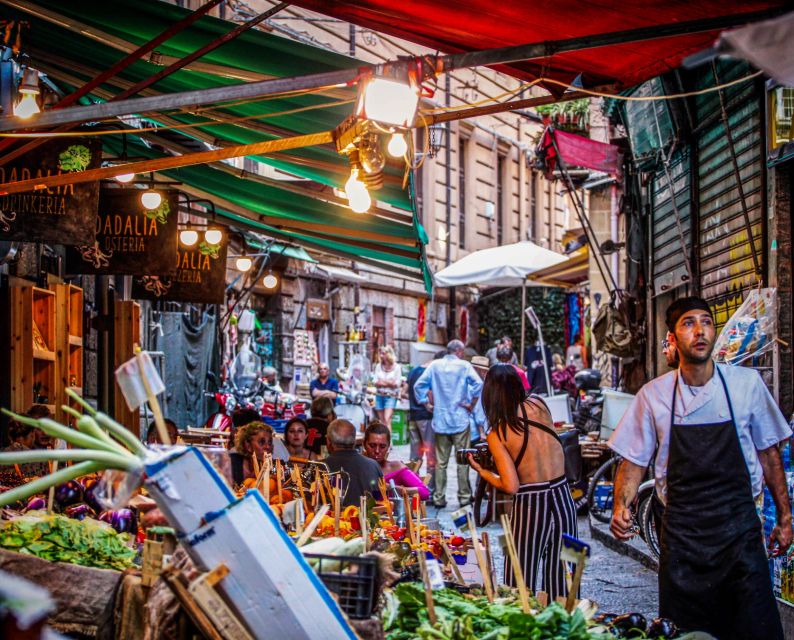
- Big landmark hits without museum lines, including Teatro Massimo, Palermo Cathedral, and the open-air market at Il Capo.
- You notice the campaign in the streets, with orange stickers tied to pago chi non paga, the ethical-consumer message of refusing extortion.
- The tour focuses on reality, not glamor, with everyday impact and the anti-Mafia work explained through people and institutions.
- Addiopizzo is part of the deal, since your ticket includes a contribution to the charitable organization behind the effort.
Why This Palermo No Mafia Walk Changes What You See
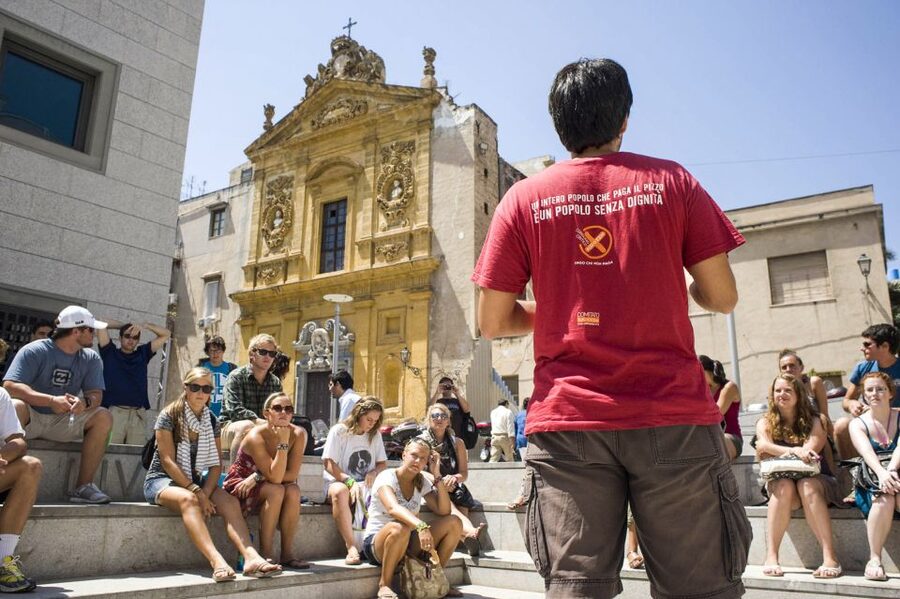
If you think you already know the Mafia from TV, this tour is designed to correct that. The best part is that it treats the Mafia as a system that shaped housing, commerce, fear, and politics, then shows how ordinary citizens fought back.
I like that you are not just handed scary stories. You are also given tools to interpret what you are seeing in Palermo today, from civic memorials to business choices marked right on storefronts. Guides such as Linda, Valeria, and Attilio come across as genuinely proud of the work, and you feel it in how clearly they connect the dots.
One more plus: you get context for why the anti-Mafia movement is not a single hero moment. It is persistent, grassroots, and it keeps changing the social rules over time.
More Walking Tours in Sicily
Start Smart: Teatro Massimo and Il Capo in One Route
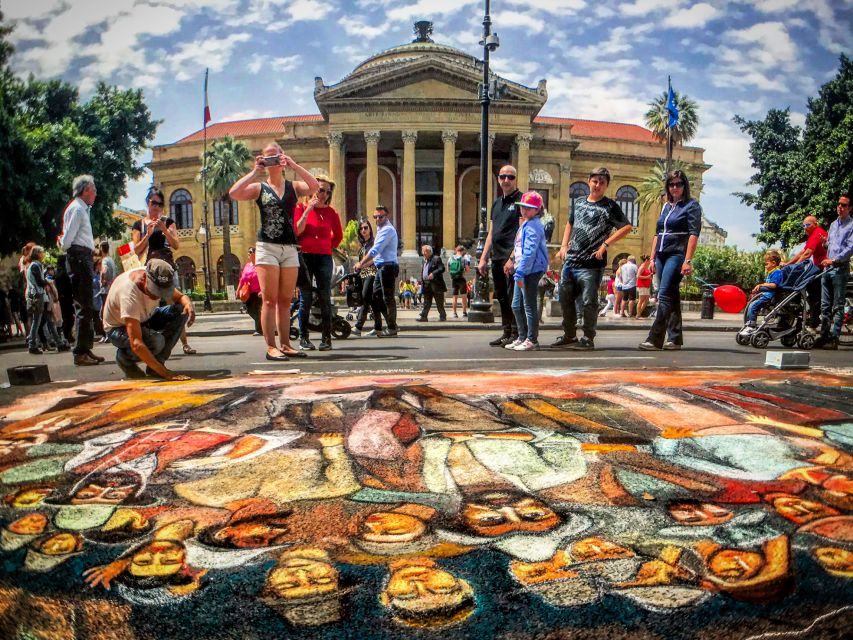
The walk begins in Palermo’s historic center, with a route built around landmarks you can easily connect to the story. You start with major sights like Teatro Massimo, the huge opera house that anchors the city’s public life. From there, the tour threads through street-level spaces where business and daily habits live side by side with complicated history.
Next up is Il Capo, the open-air market area. Markets matter here because they are not just a place to buy snacks. They are where reputation, customer choice, and local power dynamics show up in plain sight. If you like travel that includes both architecture and human behavior, this stop earns its time.
You’ll also walk along the Cassaro, Palermo’s main artery. It is a practical choice for a walking tour because it lets the guide cover lots of ground without feeling like you are shuttling around. Plus, it is exactly the kind of street where you can look at storefronts and understand what courage or compliance might cost.
Practical tip: wear comfortable shoes. Three hours of uneven sidewalks adds up faster than you expect.
Piazza Della Memoria: Where Justice Is Remembered in Stone and Space
One of the most meaningful stops is Piazza Della Memoria. This square is dedicated to prosecutors and judges killed by the Mafia, so the atmosphere shifts immediately from tourism mode to reflection mode. You learn why justice in Sicily became a target, and how that threat shaped public life.
I appreciate how the tour keeps the focus on civic stakes rather than sensational violence. You are not just learning dates. You are learning what those deaths meant to the idea that law should matter, and what it means when intimidation tries to erase that belief.
This is also where the tour helps you spot the difference between myth and reality. In popular culture, the Mafia is often treated like a separate world. Here, it is framed as something that pressed into regular routines, then met organized refusal.
If you have a short attention span, pace yourself for this part. It is not long, but it is heavy.
Along the Cassaro: Orange Stickers and pago chi non paga
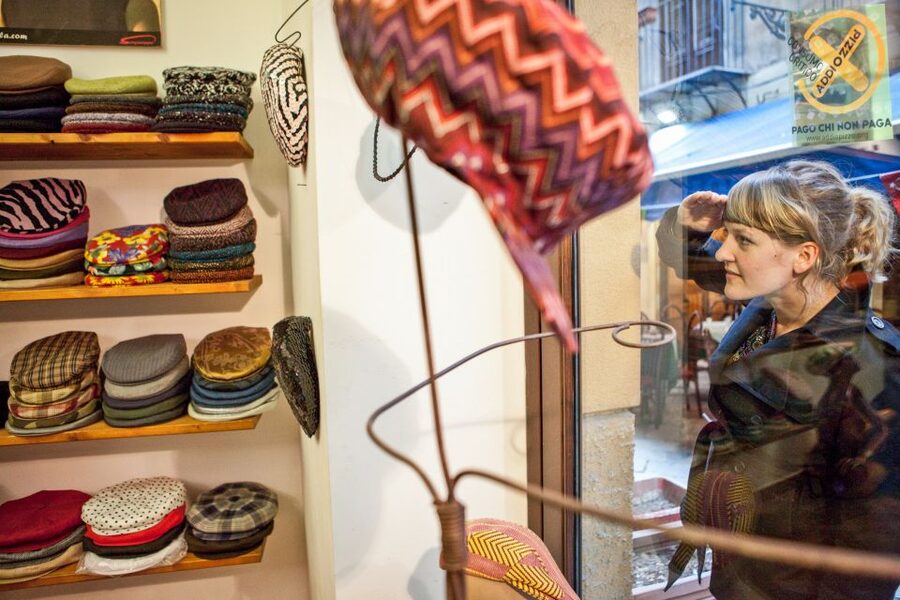
This tour gets especially real when you walk the Cassaro and see the campaign in action. Many shops display orange stickers that signal owners who refused to pay extortion demands. The message is tied to pago chi non paga, an ethical consumer campaign centered on a simple idea: if the money trail keeps running, the system keeps breathing.
What I find useful as a visitor is how the guide explains the logic from both angles. You learn why extortion is not only about threats, it is also about control, predictability, and forcing people into a single choice. Then you learn why the refusal matters, even when it does not make the news.
You will likely hear how citizens and local groups worked to make that refusal possible, including public messaging and support networks. And you will understand why a sticker on a window is never just a marketing decision. It is a public commitment with real consequences.
This is also where I think the guides shine. In the way they talk, you can tell they see the street as a living classroom, not a set of photo backdrops.
More Italy at street level:
- Palermo: Private Custom Walking Tour with Local Guide
★ 4.7 · 661 reviews - Palermo: Street Food Walking Tour with Local Guide & Tasting
★ 4.9 · 632 reviews - Palermo Walking Tour and Street Food
★ 5.0 · 617 reviews - Palermo: UNESCO World Heritage Sites Guided Walking Tour
★ 4.8 · 548 reviews
More Landmarks That Reframe Palermo: Beati Paoli, Cathedral, City Hall
After the Cassaro stretch, you move through other historic points that connect to the story beyond the Mafia stereotypes. You will pass sites such as Piazza Beati Paoli, where the tour uses place names and local legends as a doorway into how rumor, reputation, and fear can spread. The guide explains how myth gets used, and how that differs from actual power on the ground.
You also visit Palermo Cathedral. A cathedral is usually where tours talk about art and architecture, and you still get that general sense. But here, the guide adds a layer: the city’s spiritual and civic identity exists alongside corruption pressure, and the story is about how communities kept holding their values.
Then there is the city hall area. That part is important because it ties local governance to the broader anti-Mafia movement. When you learn what prosecutors and judges faced, civic institutions start to make more sense. You understand why reform has to be social, not only legal.
From the route, you end up back in the heart of Palermo’s old center. The finish matters because it gives you time to continue on your own, not just march to a final photo stop.
Bonus detail from the experience style: one guide approach you might notice in how tours run is that you can get chances to pause in shade during the long talk portion, depending on conditions and the group.
How Addiopizzo Fits In: This Isn’t Just Information
Your ticket includes a contribution to Addiopizzo, and that gives the tour a different feel than a standard history walk. The anti-Mafia movement is presented not as a distant past, but as an ongoing civic effort with programs and support behind it.
In the way the guides explain things, you can feel the intention. They connect the story to the present, then frame what comes next as something communities keep working on. That is why reviews repeatedly point to the anti-Mafia work as inspiring, not just educational.
Guides like Marinella, Salvatore, and Ermes are praised for connecting the “hard events” with the people who built resistance. The emotional effect is real. You leave thinking about how change often starts with grassroots decisions, not only top-down announcements.
If you care about travel with impact, this is where the value shows. You get a clearer view of why local organizations matter, and you are not asked to feel helpless. You get a sense of direction.
Price and Value: Why $40 Can Make Sense Here
At about $40 per person for roughly 3 hours, this is not a bargain tour, but it is also not priced like a luxury experience. The value comes from a few specific factors that add up.
First, you get a guided walk through major historic sites, with explanations tailored to the anti-Mafia theme rather than generic sightseeing. Second, your guide carries the heavy lifting, including the societal context that takes books to unpack. Third, your ticket includes the Addiopizzo contribution, which turns the tour from pure consumption into partial support for the cause.
Also, the tour is built for a small-group feel. A larger group can turn even a good guide into a lecture. Here, reviews highlight that the pace stays engaging and question time tends to work.
This is also a good length for Palermo. Three hours is long enough to connect story points, but short enough that you can still do the rest of your day, with food stops and slower wandering afterward.
Language, Pace, and What to Expect on the Ground
Tours run with live guides in Spanish, French, English, and Italian. That matters because the subject is complex, and clarity is part of the experience. One review noted the lack of Polish in the available language options, so if that matters to you, plan accordingly.
In terms of pace, expect mostly walking plus continuous guided storytelling. The stops are spread across the historic center, so you are not waiting on transport. It is a good match for travelers who like learning while moving through real streets.
What to bring is simple: comfortable shoes. If you get heat easily, plan for shade breaks where possible, and consider carrying water.
Who This Palermo Tour Is Best For
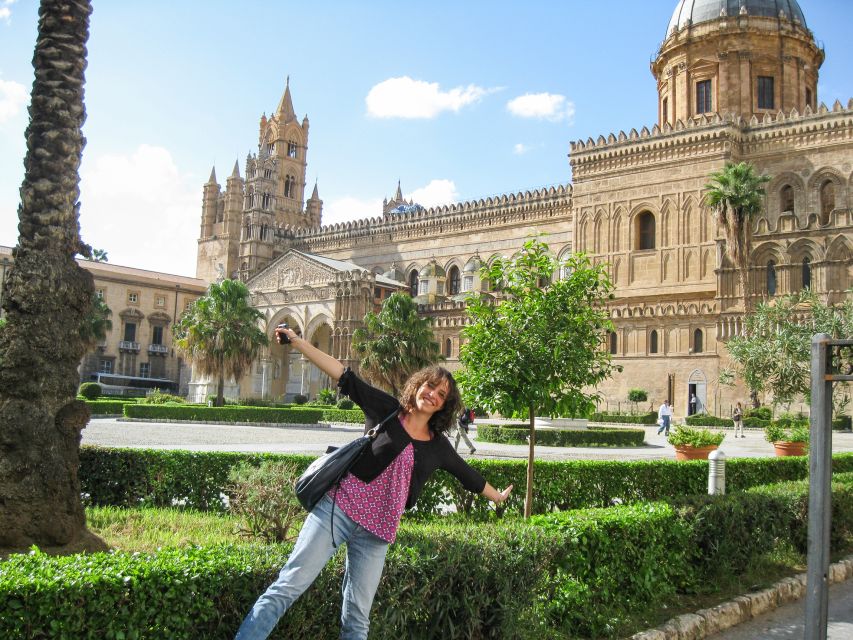
This is ideal for you if you want Palermo beyond the “postcard layer.” If you like to understand how a place works socially, politically, and economically, the Mafia and anti-Mafia framing is a smart way to do it.
It is also a strong fit if you enjoy serious guided storytelling. Many guides mentioned in reviews, including Linda, Valeria, Attilio, Giuseppe, and Marinella, are praised for holding attention and answering questions with real depth.
You might skip this tour if you prefer light, purely visual attractions, with minimal discussion of violence, intimidation, and civic conflict.
Should You Book the Palermo No Mafia Walking Tour?
Yes, if your goal is to understand Palermo in a way that actually sticks. I think it is one of the better uses of a few hours because it connects landmark sightseeing to civic reality, and it gives you a framework for what you will notice as you keep walking on your own.
Book it early if you can, so the rest of your trip makes more sense. And come with the right mindset: it is informative, but it is also about human harm and resistance. If that is your kind of travel, this tour is worth the time.
FAQ
How long is the Palermo NO Mafia Walking Tour?
It lasts about 3 hours.
What is the price per person?
The price is $40 per person.
What is included in the tour ticket?
The ticket includes a guide, the walking tour itself, and a contribution to Addiopizzo.
Are museum entrances included?
No. Entrance to museums and monuments is not included.
Where does the tour start?
The meeting point may vary depending on the option booked.
What languages are available?
The live tour guide is available in Spanish, French, English, and Italian.
Is it a small group tour?
Yes, small group is available.
What should I bring?
Wear comfortable shoes for walking.
What is the cancellation policy?
Free cancellation is offered up to 24 hours in advance for a full refund.
Can I pay later?
Yes. You can reserve now and pay later, keeping your travel plans flexible.
Just introduced: the newest Palermo write-ups
- Discover Palermo in 3 hours. Art, history, markets and street food★ 5.0 · 352 reviews
- Palermo: Guided City Walking Tour w/Customizable Itinerary★ 4.6 · 390 reviews
- Mondello,CapoGallo Reserve Boat Tour with Snacks and Drinks★ 4.9 · 439 reviews
- Palermo: Guided Bar Crawl with Shots and Discounts on Drinks★ 5.0 · 465 reviews
- Palermo: Walking Tour of Historic Markets and Monuments★ 4.9 · 478 reviews
- Palermo: Guided Bike Tour with Street Food Tasting★ 4.8 · 479 reviews
- Night Street Food Tour of Palermo with a Local -For real foodies!★ 5.0 · 486 reviews
Walking Tours, compared.
Guided Walking Tour & Last Supper Visit with Ticket
Read our review →
Rialto Bridge & Offbeat Unusual Venice Walking Tour
Read our review →
Private 3 hrs Venice Tour: St Mark’s, Walking tour & Boat tour
Read our review →
Skip the line: Uffizi and Accademia Small Group Walking Tour
Read our review →Browse the lists this tour appears in