Reviewed · GUIDED
Ravenna: UNESCO Monuments and Mosaics Guided Tour
Ravenna’s mosaics feel like coded messages. I love how the guide helps you read the imagery, symbols, and layout so the scenes actually make sense. I also love the moment the starry dome of Galla Placidia opens up, because it turns Byzantine art into something personal, not just decorative. One heads-up: you’ll stand part of the time, and not every stop has seating, plus some paths are cobblestoned and uneven.
There are two ways to do this, and picking the right one is the difference between a relaxed highlight loop and an all-in art sprint. I liked the Essential Experience for a tight hit of the big sites, and the Complete Experience if you want the full spread of UNESCO monuments. Your ticket value is strong because entrance fees are included, and you also get help with timing so you are not stuck in lines all day.
You’ll meet at Piazza San Francesco, right at the Tourist Information Office. The guide leads a walking route at a relaxed pace between monuments, and you’ll use radio guidance, so bring your own earphones with a jack connection.
In This Review
- Key Highlights You Will Feel Fast
- Why Ravenna Mosaics Work Better With a Guide
- Essential vs Complete: Choosing the Right 2 to 3 Hours
- Essential Experience (about 2 hours)
- Complete Experience (about 3 hours)
- Piazza San Francesco Start: Get Set Before the Art
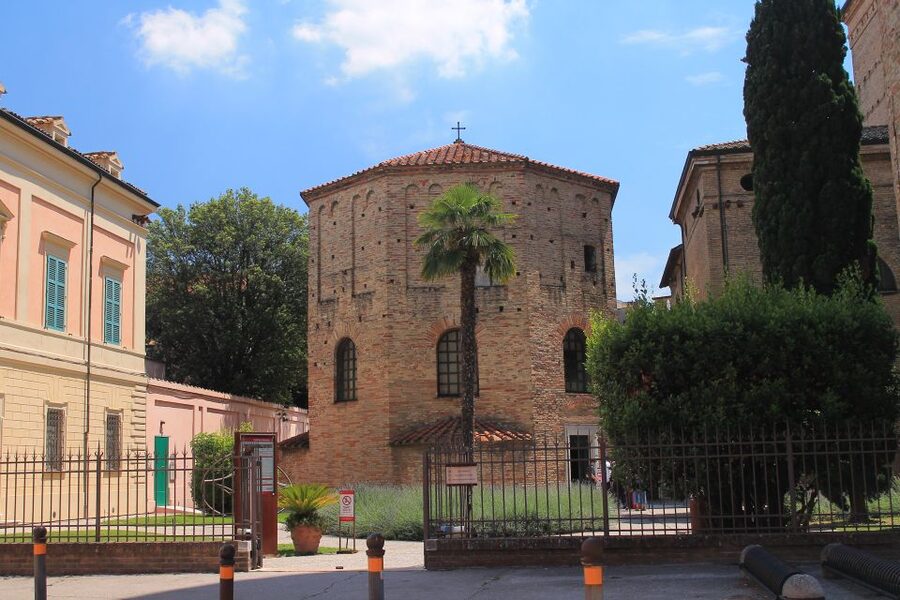
- Neonian Baptistery: Ancient Mosaics With an Early Style
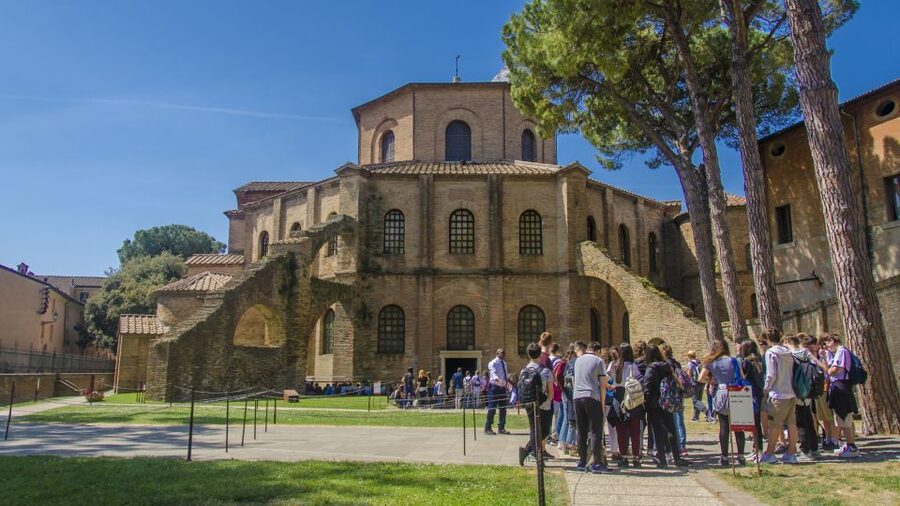
- Basilica of San Vitale: Justinian, Theodora, and Golden Lighting
- Galla Placidia’s Starry Dome: A Sky You Can Stand Under
- Sant’Apollinare Nuovo: The Long Mosaic Story of Christ
- Chapel of Saint Andrew in the Archbishop’s Museum (Complete Only)
- How the Walking Route Actually Feels in Real Life
- Value and Price: Why Around $33 Makes Sense
- Who This Tour Is Perfect For
- Final Call: Should You Book This Ravenna Mosaics Tour?
Key Highlights You Will Feel Fast
- A guide who teaches you to read mosaics instead of pointing and moving on
- The “East meets West” story told through Ravenna’s art choices and themes
- Galla Placidia’s starry dome that makes Byzantine style look strangely intimate
- San Vitale’s mosaics in golden light and a soaring early Christian setting
- A long Christ cycle at Sant’Apollinare Nuovo that rewards slow looking
- Complete Experience adds Chapel of Saint Andrew inside the Archbishop’s Museum
Why Ravenna Mosaics Work Better With a Guide
Ravenna is famous for mosaics, but the real magic is how the art works on your eyes when you understand what you are looking at. Without context, you can end up treating each panel like a pretty postcard. With a guide, you start noticing how figures are posed, how light is handled, and how religious messages are built through symbolism and scene order.
This tour does that practical teaching in real places. You are not just hearing general background, you are hearing it while standing in the same space where the mosaics were designed to be seen. That matters because early Christian and Byzantine art is meant for a specific viewpoint, specific distance, and often a specific mood.
Introductions we still owe you around Ravenna
Essential vs Complete: Choosing the Right 2 to 3 Hours
This is not a one-size-fits-all tour. You choose between a shorter loop that hits the strongest emotional stops, or a fuller version that covers all five UNESCO monuments in the combined ticket.
Essential Experience (about 2 hours)
You’ll see three main sites with a fully planned itinerary:
- Neonian Baptistery
- Basilica of San Vitale
- Mausoleum of Galla Placidia
When you finish with your guide, you can continue independently to visit Basilica of Sant’Apollinare Nuovo on your own. If you are visiting Ravenna briefly and you want the “must-see” feeling without a long day, this is the smartest pick.
Complete Experience (about 3 hours)
This option is longer, and it covers all five UNESCO monuments included in the combined ticket, plus one extra preserved chapel experience:
- Chapel of Saint Andrew (inside the Archbishop’s Museum)
- Neonian Baptistery
- Basilica of San Vitale
- Mausoleum of Galla Placidia
- Basilica of Sant’Apollinare Nuovo
If you love symbolism, architecture, and how all the sites relate as one story, the extra hour can feel completely worth it.
Piazza San Francesco Start: Get Set Before the Art
The meeting point is the Tourist Information Office in Piazza San Francesco 7. Check in at the front desk, and staff will register your booking and direct you to your guide.
A small but important detail: you’ll need your own earphones with a jack connection. The tour uses radio guides, so do not assume you can borrow something on site. Also, the route includes walking between monuments at a relaxed pace, but it is still a walking tour. Cobblestones and uneven surfaces can slow you down if you are in stiff shoes, so bring footwear you trust.
Neonian Baptistery: Ancient Mosaics With an Early Style
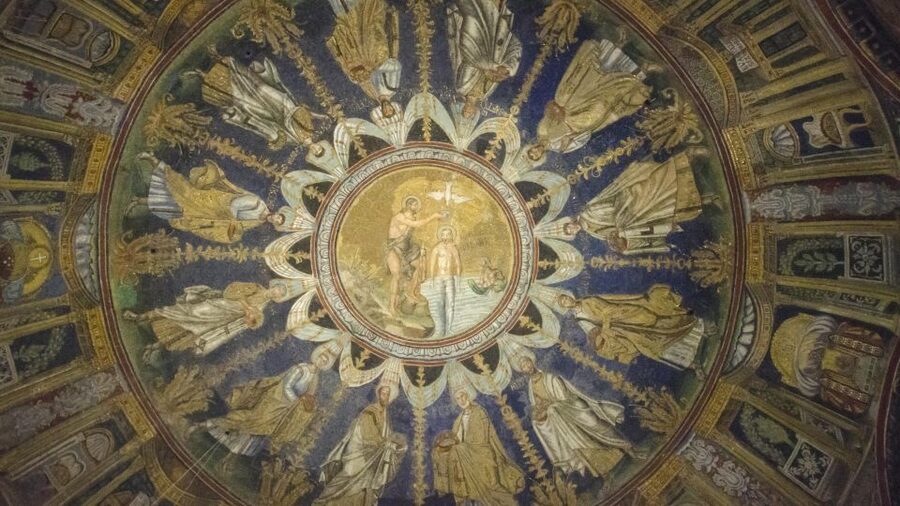
The Neonian Baptistery is one of the oldest buildings in Ravenna, and the mosaics show a clear Hellenistic-Roman influence. That blend is one reason Ravenna works as a “between worlds” city. This is not just later Byzantine decoration, you can see how earlier artistic traditions feed into what becomes the Byzantine look.
What I like about starting here is the pacing. You get your first “mosaic reading lesson” early, so when you move to the more famous domes and basilicas, you understand what the guide is pointing at. It also helps you get your eye trained for how mosaics create effects using tiny tesserae, not paintbrush strokes.
You should also expect that you may spend time looking up and tilting your head. No one wants a sore neck halfway through a cultural highlight day, so take a breath, shift your stance, and enjoy the patterns while you can still stand comfortably.
Basilica of San Vitale: Justinian, Theodora, and Golden Lighting
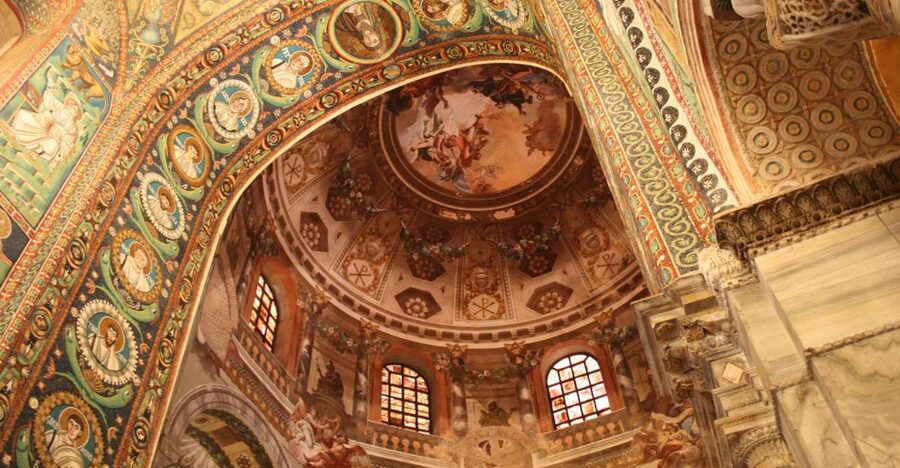
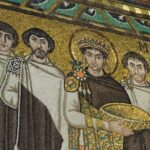
San Vitale is where Ravenna’s mosaic artistry often hits hardest. This basilica is famous for its soaring architecture, and the mosaics of Emperor Justinian and Empress Theodora are a major reason art lovers circle Ravenna on their maps.
When the guide talks about what you are seeing, you start noticing how power and faith are braided together. The figures are not just portraits. They are part of a larger visual system, where setting, symbolism, and placement tell you who matters, what is being celebrated, and what the message is meant to feel like.
The “golden light” aspect is real in your experience because the mosaic surfaces catch illumination in a way that changes as you shift your position. You can get lucky and see them at a particularly flattering time, but even without perfect light, the guide will help you look for the right details instead of just staring at overall brightness.
Galla Placidia’s Starry Dome: A Sky You Can Stand Under
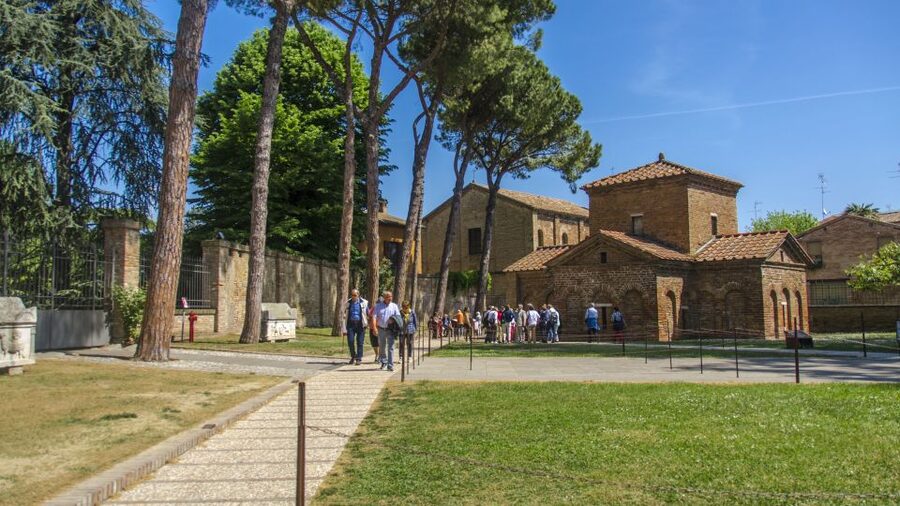
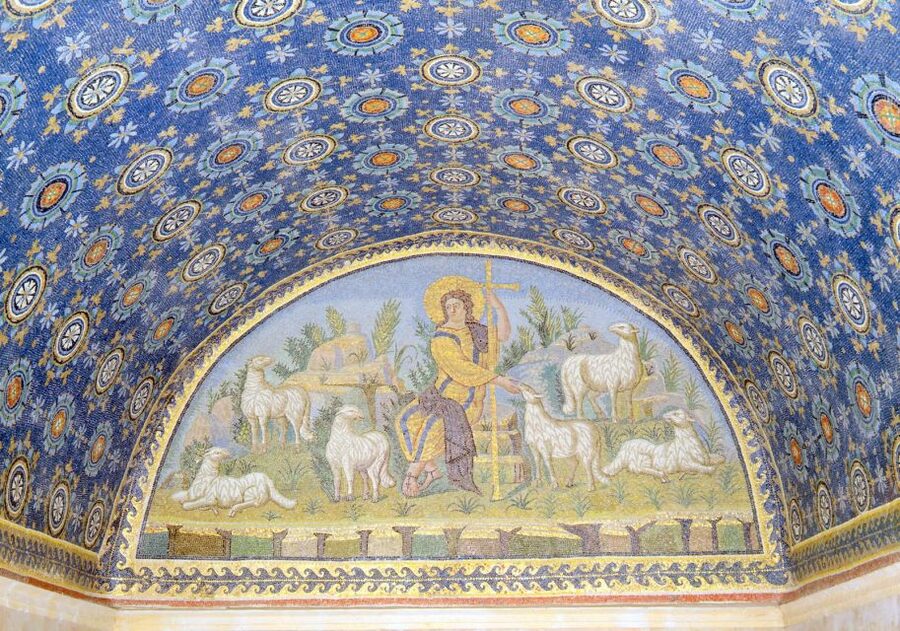
If you only have time for one emotional stop, it is hard to beat the Mausoleum of Galla Placidia. The standout is the starry dome, an image that has inspired visitors for centuries, including Dante Alighieri.
This chapel has a different vibe than the bigger basilicas. It feels more intimate and more hushed, which helps the mosaics land as atmosphere instead of spectacle. The stars are not a background. They act like a message about the heavens, the afterlife, and the spiritual world being made visible inside a small space.
Here is the practical tip: because this is a dome experience, you will likely spend time craning your head upward. Take a second to plant your feet, then let the guide point out how the composition guides your gaze from stars and patterns to the surrounding imagery.
Sant’Apollinare Nuovo: The Long Mosaic Story of Christ
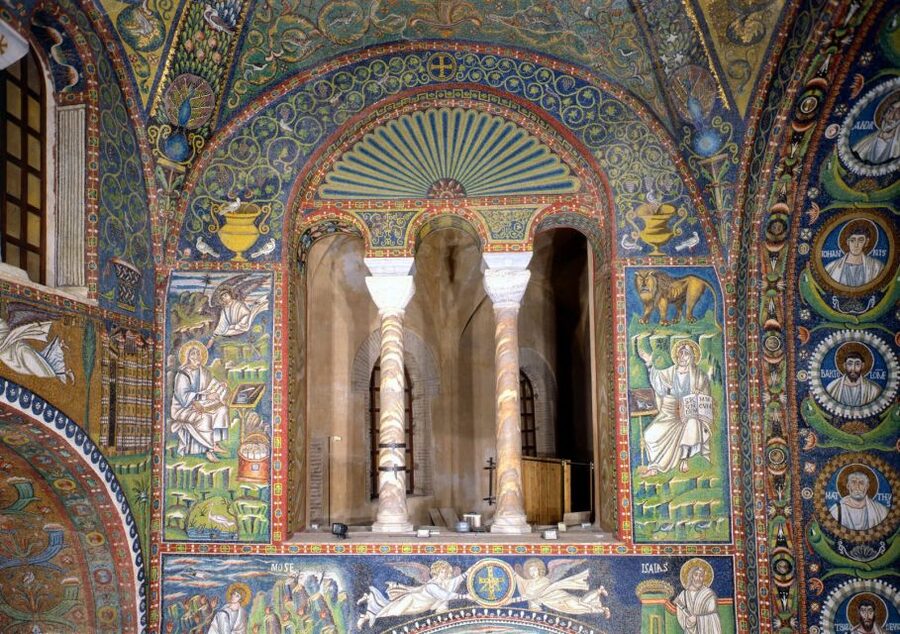
Sant’Apollinare Nuovo is where you can feel the scope of Ravenna. This basilica is home to one of the longest cycles of mosaics in the world, illustrating scenes from the life of Christ.
For me, the value here is the storytelling through repetition and sequence. Instead of one iconic image, you get a structured narrative. That means it can slow you down in the best way. After San Vitale and Galla Placidia, your eyes start “reading” more confidently, and suddenly the scenes connect.
If you do the Essential Experience, you only get Sant’Apollinare Nuovo on your own after the guided portion. That can still work well if you like independence. If you prefer a guide translating the symbolism while you are there, choose the Complete Experience so your time at Sant’Apollinare Nuovo is guided too.
Chapel of Saint Andrew in the Archbishop’s Museum (Complete Only)
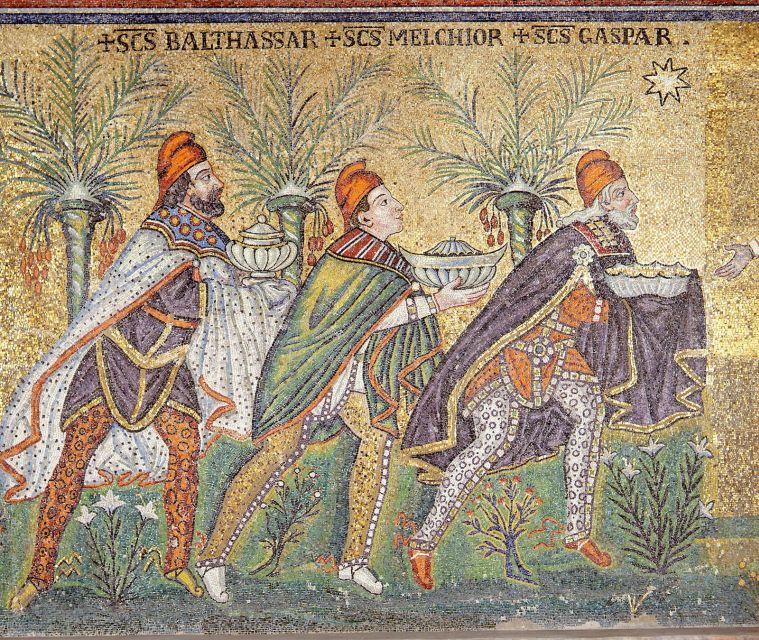
In the Complete Experience, you add the Chapel of Saint Andrew, preserved inside the Archbishop’s Museum. This stop matters because it adds another layer of how the religious world was organized and displayed.
It can also change your pace. Instead of only moving between large church interiors, you get a preserved chapel experience that helps you understand how the mosaics and sacred spaces were protected and presented over time. If you enjoy the “how it was kept” aspect of heritage, this is a meaningful extra.
The trade-off is simple: you add time, and you add another place where standing and looking matter. Plan your day so you are not rushing to this tour after a long travel day.
How the Walking Route Actually Feels in Real Life
This is designed as a walking tour between monuments at a relaxed pace. Still, it is not a bus tour, and not all sites offer seating. Cobblestones and uneven surfaces can show up on your route between stops.
One practical reason a good guide matters: crowd control and timing. In one instance, Marco handled a tough day because Ravenna was dealing with a city marathon, and he maneuvered the group through crowds smoothly. That is not something you can plan yourself, so having the guide coordinate the flow is part of what you are paying for.
If you get sore feet easily, wear supportive shoes. If you get impatient, remind yourself the pace is built for looking. The best photos are usually the ones you take after you understand the scene, not before.
Value and Price: Why Around $33 Makes Sense
At $33 per person for a guided tour lasting about 2 to 3 hours, the value is driven by three things.
First, you get an expert local guide. The guide is the difference between seeing mosaics and understanding them. Your time in the domes and basilicas is where that value shows up.
Second, entrance tickets are included for the sites covered in your chosen option. That matters because these UNESCO interiors can add up fast if you price them separately.
Third, you skip the ticket line. Even if you are not someone who hates lines, skipping queues often protects the mood of the visit. You spend more time in the art spaces and less time waiting outside them.
If you are short on time in Ravenna, this also prevents the classic mistake of picking only one site and missing the full mosaic story. You end up with the strongest overview plus the symbolism you need to keep appreciating the city after the tour ends.
Who This Tour Is Perfect For
This tour is ideal if you want Ravenna’s UNESCO mosaics without turning your day into an endless self-guided guessing game. It also suits you if you love art that comes with structure, symbolism, and religious meaning you can actually learn in place.
Pick Essential Experience if:
- You are on a quick stop and want the highest-impact sites
- You like to add your own time afterward at Sant’Apollinare Nuovo
- You prefer a shorter walking window
Pick Complete Experience if:
- You want all five UNESCO monuments included in the combined ticket
- You care about how the Chapel of Saint Andrew adds context
- You want your full Sant’Apollinare Nuovo time to be guided, not self-paced
If you are the kind of traveler who is happy reading big plaques on your own and you already know the iconography, you might still enjoy a self-guided plan. But if you want the mosaics to click, the guide role is the core of the experience.
Final Call: Should You Book This Ravenna Mosaics Tour?
Yes, I think you should book it if Ravenna is on your list for a reason, not just because it is convenient. This tour gives you what most independent travelers struggle to assemble on their own: meaning while you stand in the art.
I would skip it only if you strongly dislike standing and walking on cobblestones, or if you already feel totally confident reading Byzantine imagery without help. Otherwise, go for the option that matches your time, bring your own jack earphones, and plan on looking up, a lot.
Just introduced: the newest Ravenna write-ups
- Guided Tour of Mosaic Tiles in Ravenna★ 5.0 · 1,693 reviews
Guided, compared.
Colosseum, Roman Forum & Palatine Guided Tour
Read our review →
Vatican Museums, Sistine Chapel & St Peter’s Basilica Guided Tour
Read our review →
Colosseum, Palatine Hill and Roman Forum Guided Tour
Read our review →
Guided Tour of Colosseum, Roman Forum & Palatine Hill
Read our review →
Colosseum & Forum with Audio Guide App -Optional Arena
Read our review →
Colosseum, Roman Forum and Palatine Hill Guided Tour
Read our review →
Naples Underground Entry Ticket and Guided Tour
Read our review →