Reviewed · PRIVATE
Rome: Caracalla Baths & Circus Maximus — Private or Shared
Rome gets quieter with ancient steam. This guided stop pairs Caracalla Baths with Circus Maximus, so you leave with a sense of how Romans relaxed and celebrated. I love how the guide recreates a typical day at the baths, using what still remains of the complex.
Second, I like the practical setup: you get sterilized headsets so you can actually hear the archaeologist guide, even in open ruins. With a maximum of 10 participants, the pacing stays human, and you can ask questions without shouting.
One drawback to plan for: Circus Maximus is mostly foundations and open space, not towering stands of stone. If you want a lot of dramatic “walls you can walk through,” you may find this half feels more conceptual than monumental.
In This Review
- Key points to know before you go
- Caracalla and Circus Maximus: why this combo feels different
- Where you meet, and what to wear
- Caracalla Baths: how the guide turns ruins into a routine
- Roman comfort tech: underfloor heating and mosaic patterns
- Circus Maximus in 30 minutes: the Ludi and the power of scale
- Guides matter here: hearing the story and moving at the right pace
- Price and value: what $77 buys you (and what it doesn’t)
- Who should book this tour, and who might not love it
- Should you book Caracalla Baths and Circus Maximus?
- FAQ
- How long is the Rome Caracalla Baths and Circus Maximus tour?
- What’s included in the price?
- Where do I meet the guide?
- Is this tour private or group-based?
- Can I cancel, and what if weather changes?
- Is it wheelchair accessible, and what should I bring?
Key points to know before you go
- A live archaeologist guide explains what you see, not just dates on a poster.
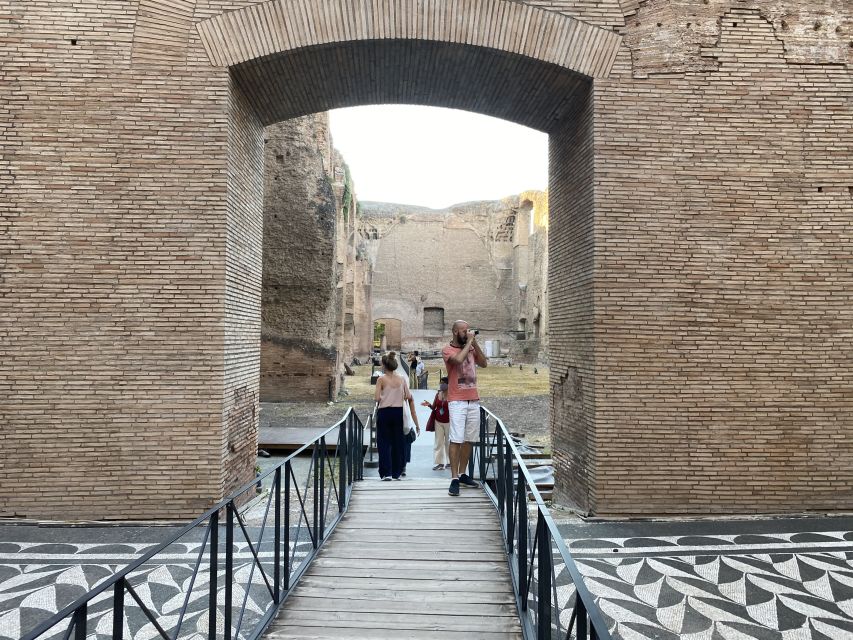
- Caracalla’s best-preserved scale means you spend real time inside an imperial thermal complex.
- Skip-the-ticket-line setup saves time for a tight 1.5-hour experience.
- Small groups (up to 10) can feel calmer than the Colosseum area.
- Underfloor heating and mosaics help you understand how Romans controlled comfort.
- Circus Maximus is a “stand where it stood” moment, where imagination does a lot of the work.
Caracalla and Circus Maximus: why this combo feels different
The Romans built leisure like it mattered, and this tour shows you two sides of that idea. Caracalla Baths was about daily body care and social time, while Circus Maximus was public spectacle on a scale most modern venues can’t match.
I like that the day’s logic is clear. You start with walls, rooms, and routes you can follow through the bath complex, then you shift to the wide-open footprint where the Ludi happened. It gives you a mental picture of Roman life beyond emperors and politics.
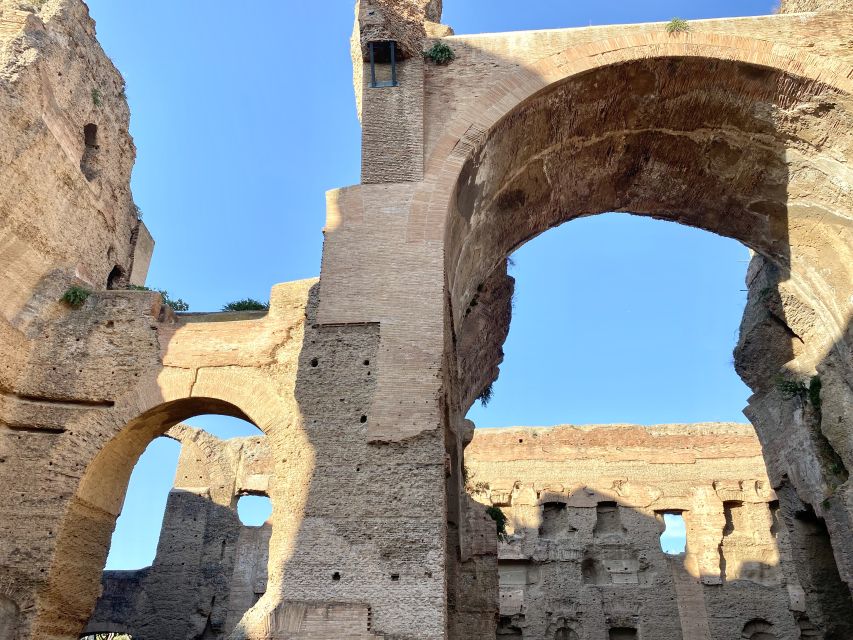
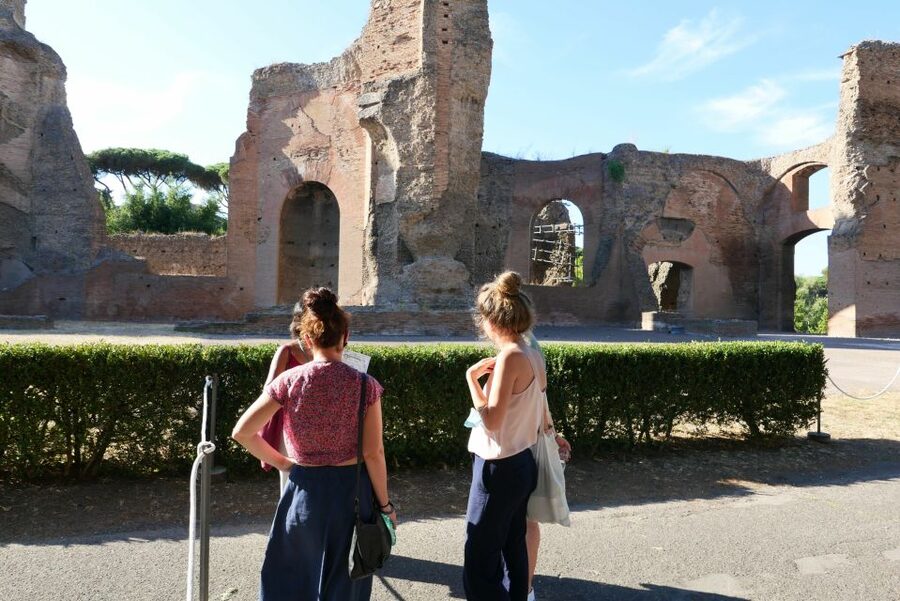
Caracalla also has a real “still here” feeling. Even when parts are missing, the structure holds up visually, so your guide can point to how the place functioned. And because it’s in a green archaeological area near the Colosseum, it can feel like a break from the loudest Rome crowds.
Introductions we still owe you around Rome



Where you meet, and what to wear
You meet your guide at the exit of the Metro Station Circo Massimo, in the direction of Laurentina, in front of the FAO building. Look for a yellow label with the local partner’s name. The plan is simple, but be there about 5 minutes early so you can finish sign-up.
This tour runs about 1.5 hours total. You’ll be on your feet for both stops, with the most time spent at Caracalla (about an hour) and then a shorter 30-minute walk through Circus Maximus.
Wear comfortable walking shoes. The ruins involve uneven ground, plus you’ll spend time looking down at details like flooring and mosaic patterns. Bring nothing bulky, because large bags and luggage are not allowed inside the monuments.
Caracalla Baths: how the guide turns ruins into a routine
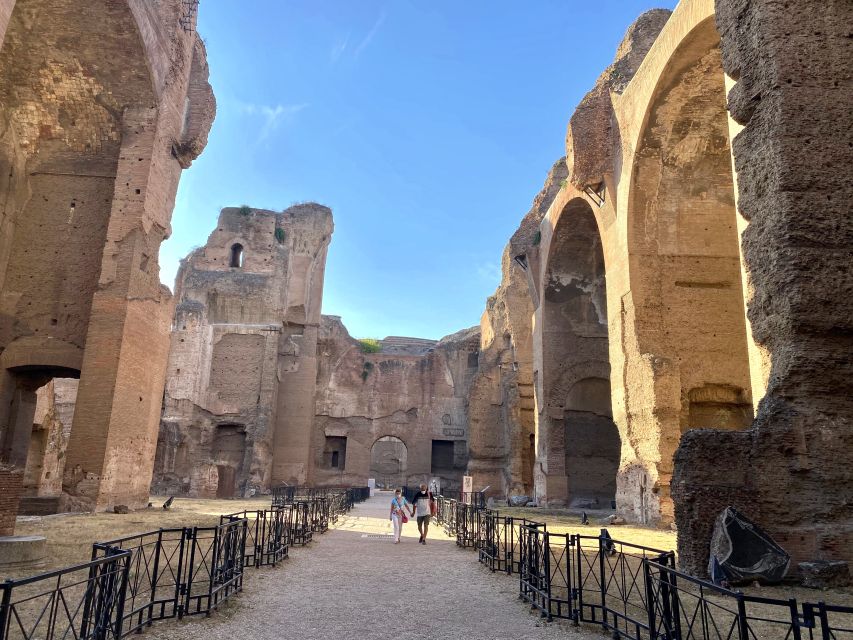
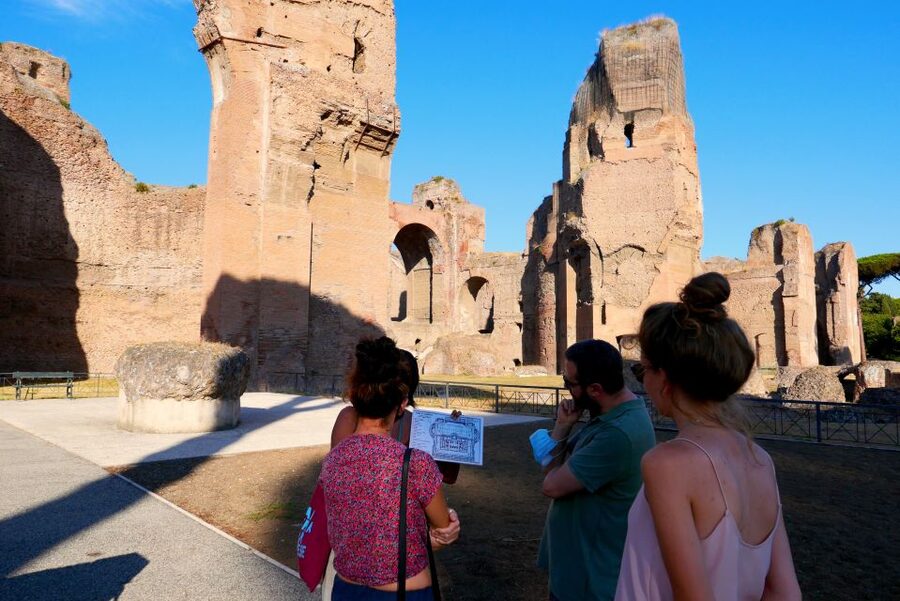
You’ll spend about an hour at the Baths of Caracalla, and that hour is the heart of the experience. The guide leads you through the monumental rooms and walls of the thermal complex, helping you picture the steps of a typical day in the 3rd century AD.
What I like most is the sequence. You’re not just shown random highlights. You move through the space in a way that makes sense, so the baths feel like a system: spaces connect, circulation matters, and the building’s size starts to click.
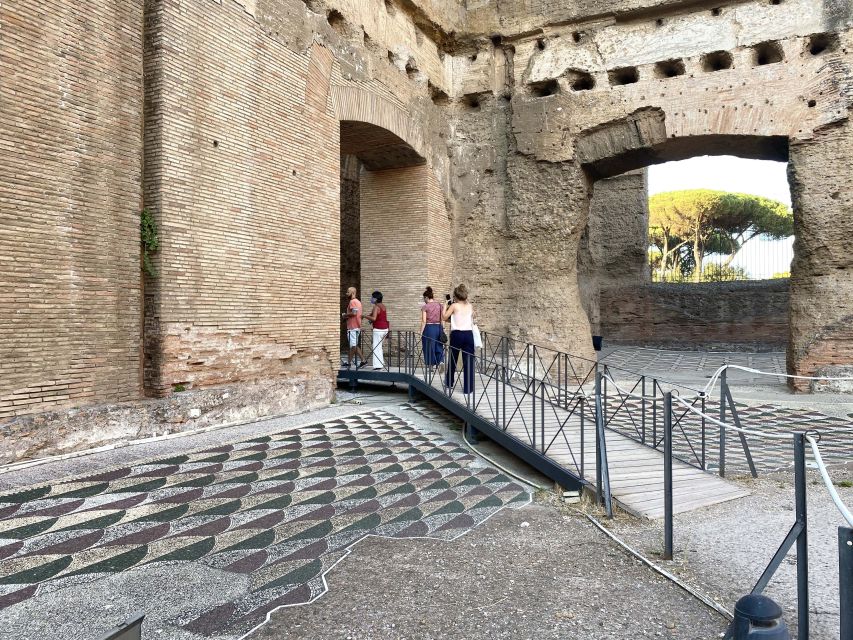
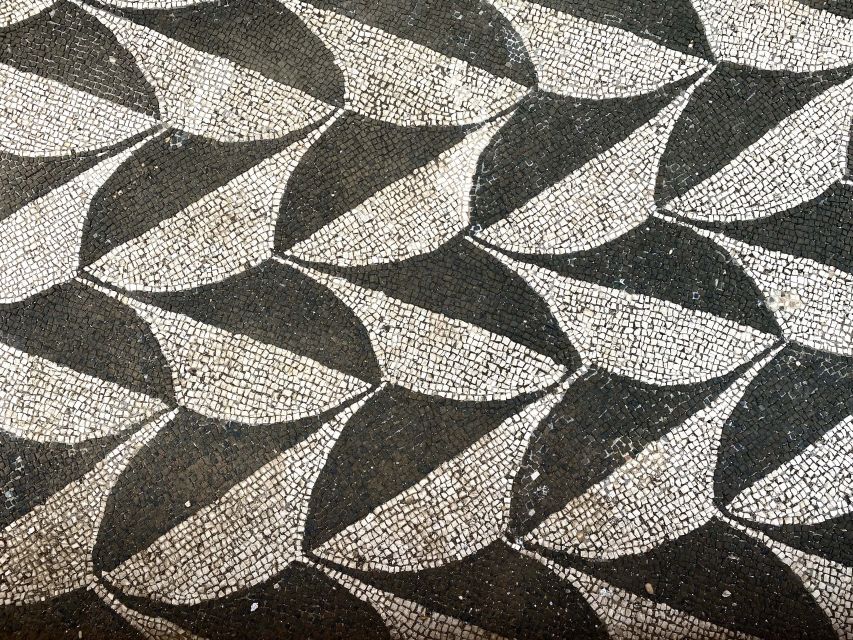
The Caracalla complex is also described as one of the best-preserved baths in Rome, and you can see why. The sheer height of the surviving walls gives you scale fast. Then you notice floors, geometric motifs, and mosaics that help you understand the “day-to-day” feel of the place.
Another practical plus: this is an express and complete guided visit, so you’re not stuck wandering with uncertainty. The live archaeologist guide keeps the pace, explains what you’re looking at, and uses insider tips to speed up understanding.
Roman comfort tech: underfloor heating and mosaic patterns
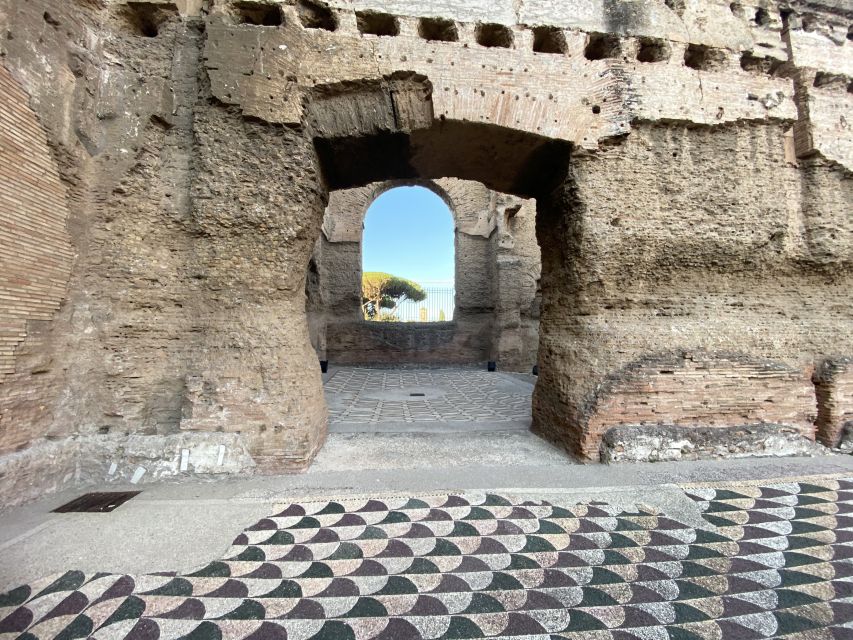
Caracalla wasn’t just a pretty building. It was an engineering machine designed for comfort, and that’s where the tour gets especially fun.
You’ll learn about the labor-intensive underfloor heating system. This is the kind of detail that’s hard to imagine when you only see ruins, but your guide ties it to what you can still observe in the structure. You also hear how temperature control worked across different rooms, with specific techniques used to maintain the right conditions.
Then the visuals lock in your memory. You’ll spot geometric motifs on mosaics around the site. It’s one of those moments where history stops being abstract and becomes design, pattern, and daily aesthetics.
If you’re the kind of person who enjoys how buildings work, this section is a win. You come away with a better sense of why Romans invested so much in leisure infrastructure. It wasn’t an afterthought. It was a major public priority.
Also on the Rome guest list:
- Vatican Museums, Sistine Chapel & St Peter’s Basilica Guided Tour
★ 4.5 · 39,149 reviews - Rome: Colosseum, Palatine Hill and Roman Forum Guided Tour
★ 4.8 · 32,814 reviews - Rome: Guided Tour of Colosseum, Roman Forum & Palatine Hill
★ 4.7 · 27,897 reviews - Rome: Colosseum & Forum with Audio Guide App -Optional Arena
★ 4.2 · 24,770 reviews
Circus Maximus in 30 minutes: the Ludi and the power of scale
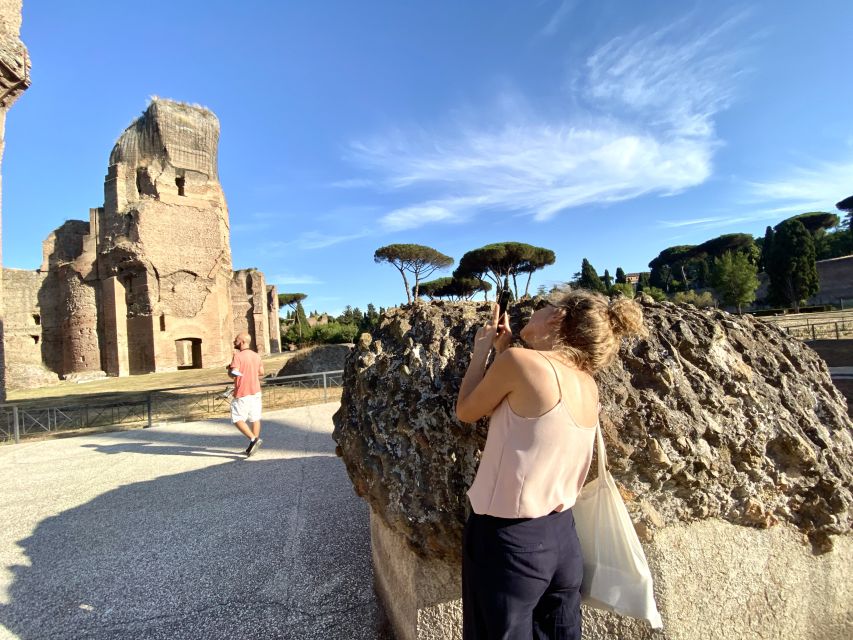
After Caracalla, you shift to Circus Maximus for about 30 minutes. You’re essentially standing in the place where one of the world’s biggest public games once operated, and the guide does a lot of work with imagination and context.
Here’s the key idea: Circus Maximus was tied to the Ludi, multi-venue celebrations that could last for several days. Your guide connects the site to stories of chariot races and the clamor of crowds, including references to gladiator fights in the broader world of Roman public spectacle.
What you can realistically expect to see is mostly about foundations and the footprint. Many people assume Circus Maximus will look like a “big arena” you can walk through like the Colosseum. Instead, the experience is more about scale, atmosphere, and the sense of where events took place.
You also get a quasi-legendary angle, going back to early myths and gods and learning about the circus’s foundations before Rome itself. It’s a good contrast to the baths, because the baths are physical, architectural, and tactile, while Circus Maximus is more about cultural meaning.
Guides matter here: hearing the story and moving at the right pace
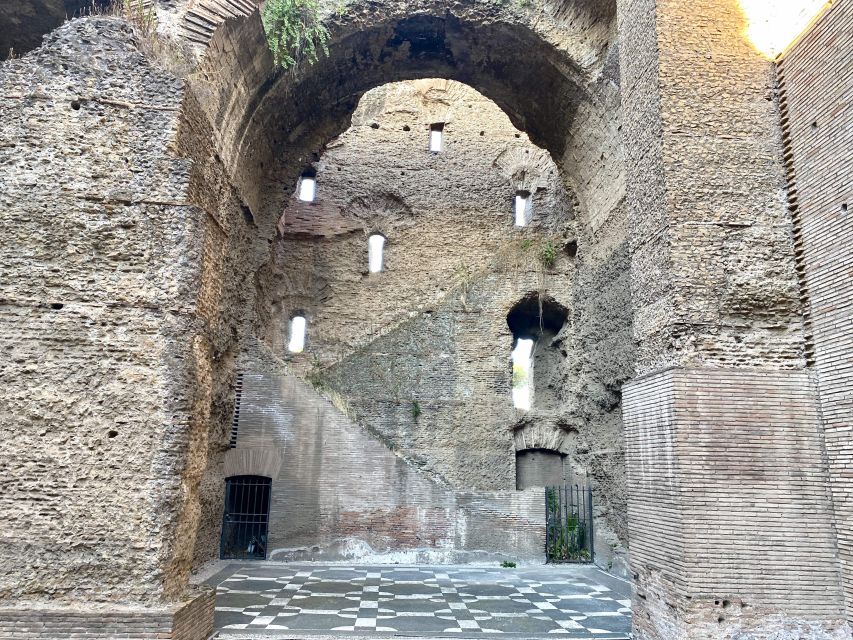
This is one of those tours where the guide style can make or break the experience. The good news is that you’re equipped for it: sterilized headsets help you hear clearly as you walk between ruins and open areas.
From what I’ve seen reflected in guides who lead these tours, many focus on clear storytelling, humor, and patience with questions. Names you might encounter include Ciara, Chiara, Lars, Cynthia, Anestis, Alicia, Samuele, and Mario. Several of them are noted for bringing the baths to life, with explanations that help you picture what’s missing.
Also, the group size helps. With a maximum of 10 participants, it’s easier to keep the tour conversational. I like that this isn’t designed as a rush-job where everyone just stares forward and moves on.
On some dates, if the group is tiny, it can feel even more personalized, with extra time for questions. Don’t count on a specific extension, but the structure is flexible enough to allow it.
Price and value: what $77 buys you (and what it doesn’t)
The price is $77 per person for 1.5 hours, which includes a few things that matter in Rome.
You get:
- Entrance fees to the Caracalla Baths
- Sterilized headsets
- A live archaeologist guide
- Full on-site assistance
- Skip-the-ticket-line access
What you do not get:
- Hotel pick-up and drop-off
- Food and drinks
So is it good value? I think it is, if your goal is to understand what you’re seeing at a higher level than a self-guided stroll. Caracalla is the longer stop, and the included guided explanation is where the money becomes worth it. The Circus Maximus portion is shorter and more interpretive, so the value comes from context and storytelling rather than “more ruins per minute.”
Also, because it’s a smaller group format, you’re paying for guidance rather than just transportation. If you’re the type who likes to ask why things were built a certain way, this tour fits that mode.
Who should book this tour, and who might not love it
I’d book this if you want a break from the most crowded Roman sights and you like practical archaeology. Caracalla rewards attention to detail, especially the mosaics and the heating system story. The pacing also works well as a morning or afternoon anchor when you want something calmer.
It also suits couples and small groups because the 10-person limit helps keep the experience controlled. If you’re traveling with someone who enjoys engineering facts or how everyday Roman life worked, you’ll both get a lot from the tour.
You might want to look for a different option if you expect Circus Maximus to be a place of intact monuments and photo-friendly structures. This stop is about the ground it stood on and the role it played in Roman public events. It’s still worthwhile, just different.
Should you book Caracalla Baths and Circus Maximus?
Yes, with one smart condition: pair this with the right expectations. If you come wanting to understand Roman leisure through engineering, architecture, and storytelling, you’ll get your money’s worth fast.
Here’s my quick decision checklist:
- Book it if you enjoy how buildings worked, and you like mosaics, heat systems, and room-to-room layouts.
- Book it if you want a smaller-group alternative near the Colosseum zone.
- Pass or adjust expectations if Circus Maximus is your main target and you’re hoping for a lot of surviving stone spectacle.
If you want a Roman day that feels lived-in, start here. Caracalla gives you the “how it functioned” part, and Circus Maximus gives you the “why the crowds cared” part.
FAQ
How long is the Rome Caracalla Baths and Circus Maximus tour?
The total duration is 1.5 hours, with about 1 hour at the Baths of Caracalla and about 30 minutes at Circus Maximus.
What’s included in the price?
The tour includes entrance fees to the Caracalla Baths, sterilized headsets to hear your guide clearly, a live archaeologist guide, and full on-site assistance. Food and drinks are not included.
Where do I meet the guide?
Meet at the exit of the Metro Station Circo Massimo, in the direction of Laurentina, in front of the FAO building. Look for a yellow label with the local partner’s name written on it.
Is this tour private or group-based?
It’s offered as private or small groups. The maximum group size is 10 participants.
Can I cancel, and what if weather changes?
You can cancel up to 24 hours in advance for a full refund. The activity might be canceled due to unfavorable weather, and if that happens you’ll be offered an alternative date or a full refund.
Is it wheelchair accessible, and what should I bring?
The tour is wheelchair accessible. Wear comfortable shoes, and note that pets, weapons or sharp objects, baby strollers, luggage or large bags, and drones are not allowed inside the monuments.
Just introduced: the newest Rome write-ups
- Rome Fiumicino Airport Transfer in Luxury Private Transportation★ 4.5 · 339 reviews
- Vatican: Pope Francis Tomb and Papal Basilicas Tour★ 4.7 · 340 reviews
- From Rome: Sorrento, Positano & Amalfi Coast Day Trip★ 4.5 · 340 reviews
- Rome: Guided Colosseum Underground Tour★ 4.8 · 342 reviews
- Colosseum Arena Floor, Roman Forum & Palatine Hill Guided Group Tour★ 5.0 · 343 reviews
- Rome: Small Group Rome’s Dark Side – Ghosts & Legends Tour★ 4.9 · 343 reviews
- Rome: City Highlights Electric Bike Tour★ 4.9 · 343 reviews
Private, compared.

Como & Bellagio with Private Lake Como Cruise
Read our review →
Murano & Burano Islands Guided Small-Group Tour by Private Boat
Read our review →
Rome by Golf Cart Private Tour: Beyond the Landmarks
Read our review →
Murano & Burano Guided Tour by Private Boat
Read our review →
Early Morning Vatican, Sistine, St. Peter’s Semi or Private Tour
Read our review →
Private 3 hrs Venice Tour: St Mark’s, Walking tour & Boat tour
Read our review →
Private Gondola Cruise for up to 5 Passengers
Read our review →