
Reviewed · COLOSSEUM ENTRY TICKETS
Rome: Colosseum Underground and Arena Tour
The Colosseum feels bigger when you see it from below. This small-group VIP tour gives you access to the Hypogeum and the arena floor, areas most visitors never reach, then ties it all together with the Roman Forum and Palatine Hill.
I especially love how the underground part turns ruins into a working machine, with narrow corridors, travertine blocks, drainage details, animal cages, and even a reconstructed elevator mechanism. Second, I like the pacing that mixes atmosphere with viewpoint time, so you stand on the sand platform and then get to the upper tiers for photos with a privileged angle.
One thing to consider: this tour is not suitable for wheelchair users, and access can shift if the Colosseum changes entry times due to events or closures.
In This Review
- Key highlights you should care about
- Entering the Colosseum Underground: what makes it special
- The Hypogeum tour walk: corridors, cages, drainage, and the elevator
- Standing on the arena floor: sand, scale, and that once-in-a-lifetime feeling
- Forum and Palatine Hill: using history to make the Colosseum make sense
- What the small group and headsets do for your experience
- Logistics that matter: meeting point, timing, and what to bring
- Price and value: why $94 can feel fair for the right kind of traveler
- Who this tour is best for (and who should rethink it)
- Should you book the Colosseum Underground and Arena Tour?
- FAQ
- How long is the Colosseum Underground and Arena Tour?
- What does the tour include at the Colosseum?
- Does the tour visit the Roman Forum and Palatine Hill?
- Is there a small group size?
- What language is the tour guide?
- Where do I meet the group?
- What do I need to bring for security?
- Is the tour wheelchair accessible?
- Can the Colosseum access time change?
- Is free cancellation offered?
Key highlights you should care about
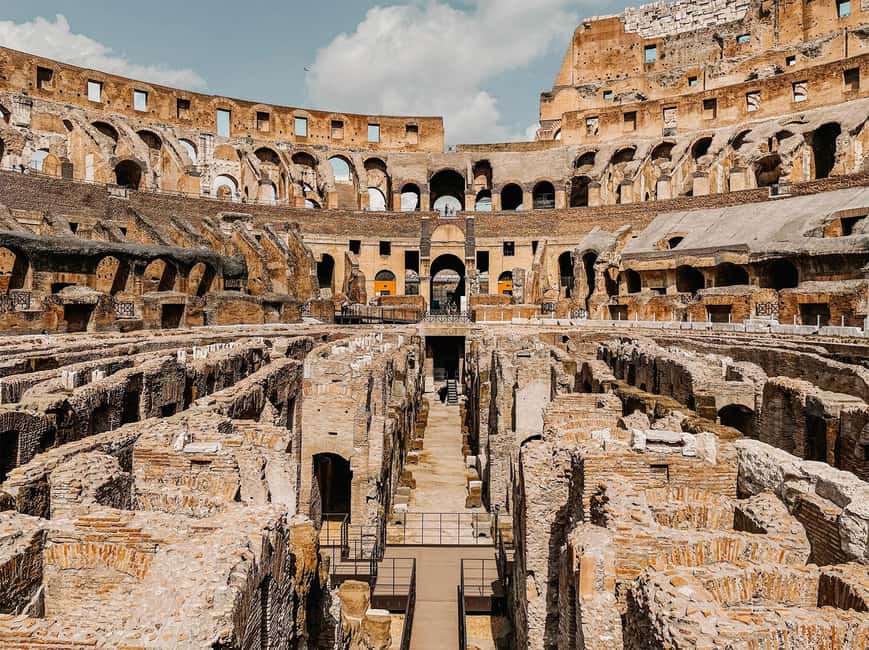
- Hypogeum access to the gladiator waiting areas, cages, and drainage system details
- Arena floor entry to stand where the crowd would have seen the action
- Small group size (up to 8) for a more human, less crowded experience
- Headsets included so you actually hear the guide in noisy areas
- Roman Forum and Palatine Hill stop so the Colosseum stories land in the right context
- Upper-tier panoramic terraces for photo angles most standard tours skip
Entering the Colosseum Underground: what makes it special
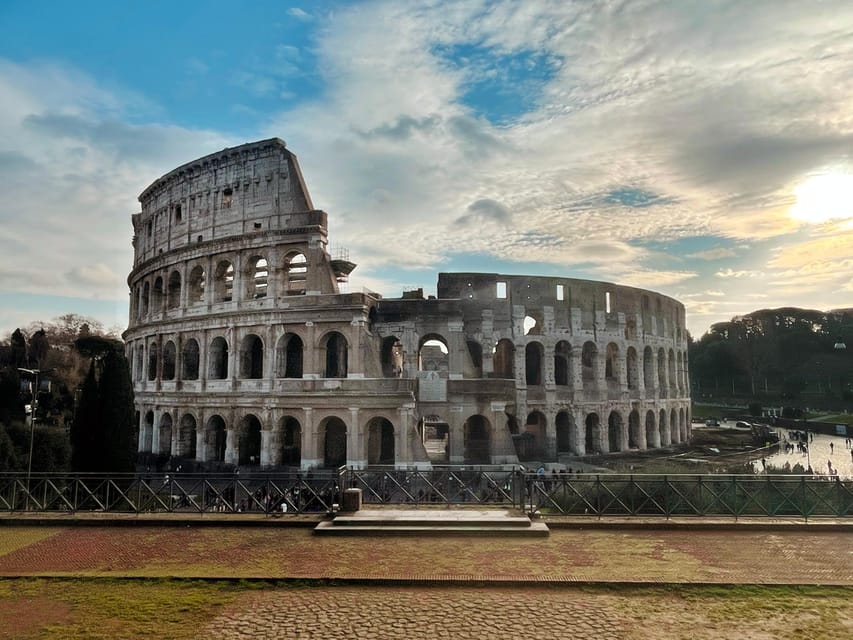
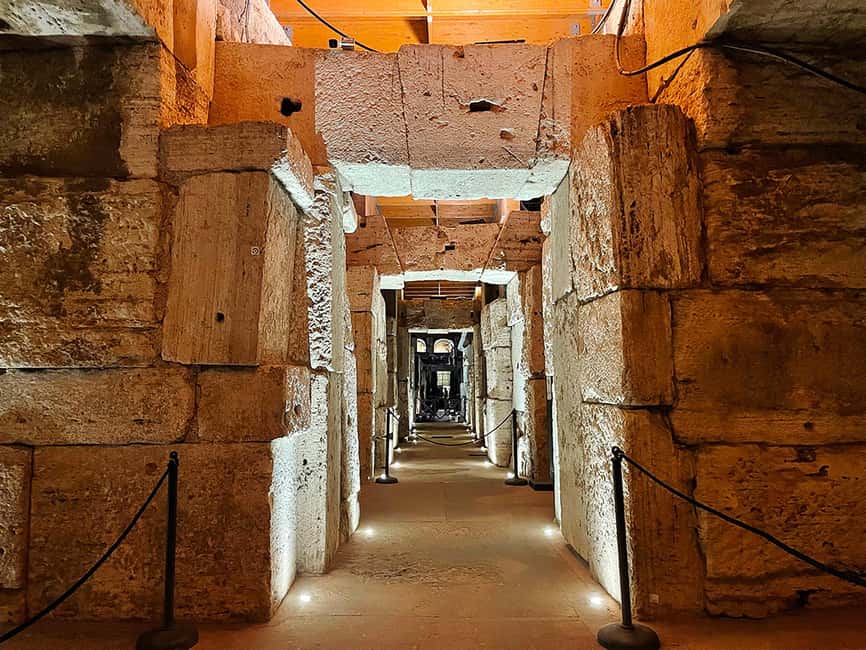
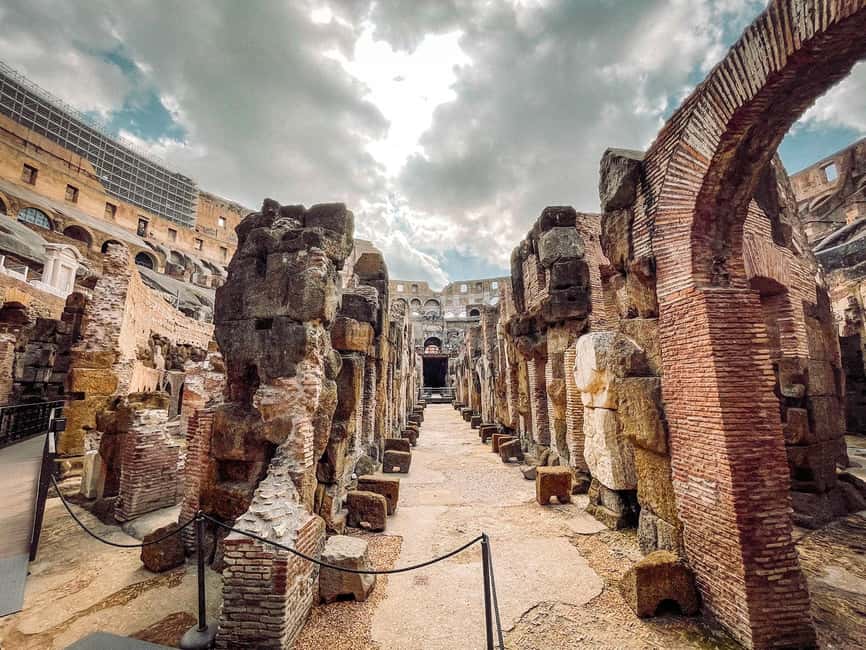
If the Colosseum is Rome’s big “wow” from the outside, the Hypogeum is the moment it turns real. You go underground into a space built for movement, timing, and tension. The atmosphere is tight and dim, with narrow corridors and heavy travertine blocks that help you picture the waiting pressure gladiators faced before they were called out.
This is also where you start seeing the Colosseum as infrastructure, not just a monument. You’re shown fragments of the original floor, the ancient drainage system, and the rooms where gladiators waited. These details matter because they explain how things worked day by day, not just who fought.
And yes, it’s dramatic. You’re standing in an old “backstage” world where animals were kept and where the stage was prepared. One of the best parts is that your guide connects what you’re seeing to what it meant for people in the seats, so the underground becomes a story with consequences.
More ways through the Colosseum gates:

The Hypogeum tour walk: corridors, cages, drainage, and the elevator
Expect an experience that feels hands-on, because the underground areas are physically specific. You’ll move through passages designed for function, then stop to look closely at what survival and spectacle required behind the scenes.
Here are the main pieces you should look for:
- Gladiator waiting spaces in narrow, cell-like rooms, the kind of places where time stretches while you wait to be called
- Animal cages that help you understand how shows involved more than human fighters
- Ancient drainage system details, which makes it easier to imagine how the arena could be managed during events
- Fragments of the original floor that give you an honest sense of the ancient build, not a generic reconstruction
One of the coolest items is the reconstructed elevator concept, described as being anchored to trapdoors above that connected underground staging with the arena floor. Even if you already know the Colosseum was technologically clever, seeing the mechanism idea on-site helps it click in your brain.
When the underground tour ends, you’re not just “done with ruins.” You’ll feel like you walked through the production process of Roman entertainment.
Standing on the arena floor: sand, scale, and that once-in-a-lifetime feeling
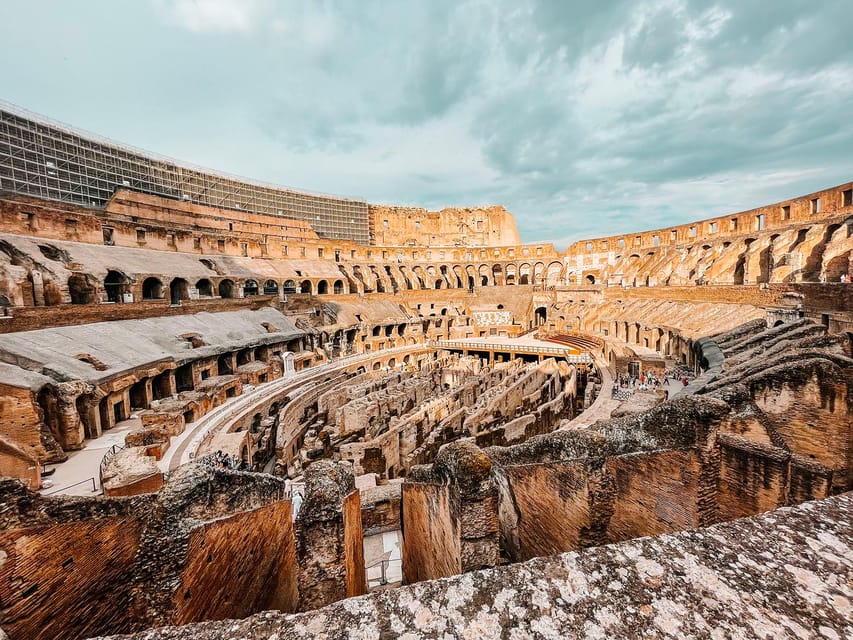
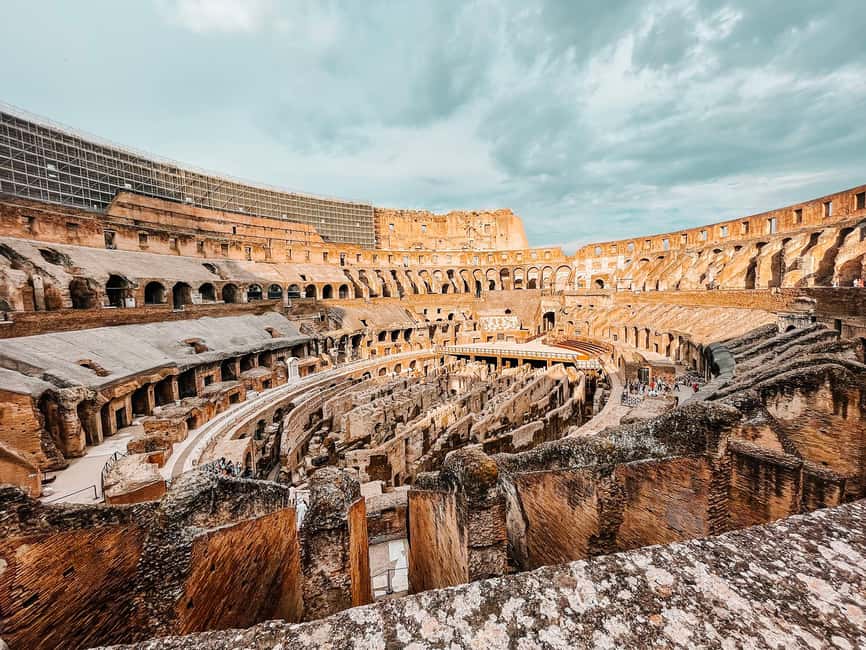
After the underground, you step out onto the arena floor, and the Colosseum instantly changes size. From here, the structure looks massive in a way the exterior view cannot match. Your guide points out the relationships between tiers, sightlines, and the idea of a circular stage built to hold noise.
The tour focuses on the fighting platform, including the central area described as the sand-covered wooden platform. The word arena is tied to sand, and that detail is worth paying attention to because it turns a vague “stage” into something physical: footing, mess, and movement.
This part of the experience is powerful for two reasons. First, you’re physically positioned where the action happened, not just where it was observed. Second, you get the guide’s explanation of how the show was staged and managed, so your photos have context instead of being only snapshots.
Then you’ll move toward the first and second tiers. If you care about photos, this is where the angle improves and the monument’s geometry makes more sense. It’s also a good moment to slow down a bit, since upper-tier panoramic terraces give you breathing room to take in the whole arena bowl.
Forum and Palatine Hill: using history to make the Colosseum make sense
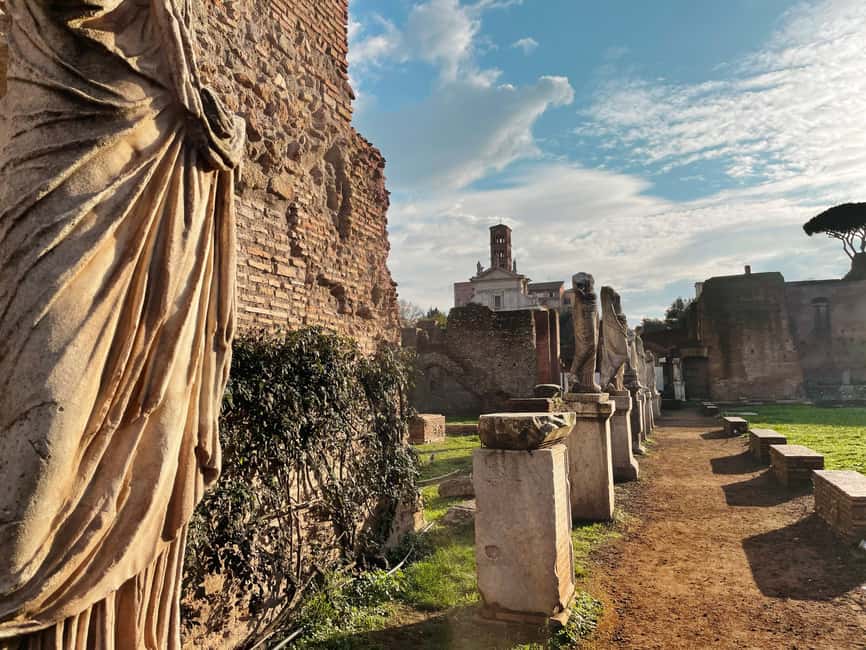
This tour doesn’t end at the Colosseum gates. It also includes guided time at the Roman Forum and on Palatine Hill, which is the key to understanding why this spectacle belonged here.
The Roman Forum stop is a guided orientation. You get context for how Rome’s public life worked, so the Colosseum stops feeling like an isolated site. It connects to civic space, power, and daily drama in the city center.
Palatine Hill adds the “why here” layer. It’s not just another viewpoint. You learn how this area was tied to authority and the image of Rome itself. Even when the ruins are uneven and fragmented, a good guide helps you read the site by explaining the function of spaces and the logic behind Roman city planning.
There’s also a photo stop on Palatine Hill. That matters more than you might think, because quick stops with instructions tend to produce better shots than wandering in a rush while trying to figure out angles on your own.
Further under Rome’s streets:
- Colosseum: Underground and Ancient Rome Tour
★ 4.7 · 12,691 reviews - Rome: Crypts and Catacombs Underground Tour with Transfers
★ 4.6 · 5,341 reviews - Expert Guided Tour of Colosseum Arena OR Underground, and Forum
★ 4.5 · 5,041 reviews - The Original Roman Crypts and Catacombs Tour with Transfers
★ 4.5 · 4,896 reviews
What the small group and headsets do for your experience
A VIP tour can still feel chaotic if the group is large or the sound is bad. Here, the format is built around control and clarity.
You’ll be in a small group limited to 8 participants, which helps you:
- keep your place during security and transfers
- hear the guide’s explanations without losing the thread
- ask questions and get direct answers instead of hoping someone repeats them
The tour includes headsets, and that’s a big deal inside the Colosseum complex where noise and echo can swallow normal conversation. Multiple people on these tours have praised the headsets and the way guides use them to keep the story clear.
Guide quality is also a standout theme. If you end up with someone like Paola, Italo, Sara, Virginia, Claudia, or Giorgio, you can expect a lively presentation style, strong answers to questions, and real enthusiasm for how the Colosseum functioned. Names pop up often for a reason, and the most consistent praise is that the guide made the site feel understandable, not just dramatic.
Logistics that matter: meeting point, timing, and what to bring
Meet up at Largo della Salara Vecchia, at the entrance area for the Roman Forum. The meeting point is described as near the ticket counters on the left side, under the tree. The guide will have a GET YOUR GUIDE logo, which helps you match the right person quickly.
Plan for security. You should bring a passport or ID card because names on the booking must match what’s on your document, and IDs are required during security checks.
Also, build some slack. The Colosseum can change access time or even close unexpectedly due to public or political events. That’s not a small footnote. It can affect when and where you enter parts of the site, so don’t schedule tight, nonrefundable plans right after.
Finally, this tour has a 2.5 hour duration. That’s enough time to cover the major parts, but it also means you will move with purpose. If you like slow museum-style wandering, you’ll likely want a separate unstructured block later in your day.
Price and value: why $94 can feel fair for the right kind of traveler
At $94 per person for about 2.5 hours, this isn’t a budget add-on. The value comes from what you get access to, not from the length.
You’re paying for:
- VIP underground entry to the Hypogeum chambers
- VIP arena floor entry to stand where fights were staged
- Guided time across Roman Forum and Palatine Hill
- Headsets and a small group experience
The underground and arena floor access are the big-ticket items. Standard Colosseum visits usually stop at the public viewpoints. Here, you get the “backstage” and the stage itself. If you’re the type who hates feeling like you only saw the outside of history, this tour is likely to feel worth it.
One more practical reason it can feel like good value: underground access can be hard to secure through normal channels, especially around popular dates. Having an organized group entry can reduce the stress of chasing sold-out timed tickets.
Who this tour is best for (and who should rethink it)
This experience is ideal if you want a Colosseum visit with structure and payoff.
It fits well if you:
- want the underground Hypogeum experience and an arena floor view
- appreciate guides who explain mechanics and stories, not just dates
- like small-group travel (up to 8) with headsets
- want Roman Forum and Palatine Hill included so your day feels connected
Consider skipping or switching tours if you:
- use a wheelchair or need wheelchair-friendly access, since the tour is not suitable for wheelchair users
- hate moving quickly through multiple sites in one block
- plan extremely tight timing afterward, because Colosseum access can change
Should you book the Colosseum Underground and Arena Tour?
I’d book it if you want the Colosseum experience that goes past the classic photos. The Hypogeum changes how you understand the arena, and the arena floor stop is the kind of moment you remember when the rest of the day blurs together.
If you’re on the fence because of the price, look at what you’re actually buying: restricted areas, arena access, guided context for the Forum and Palatine Hill, and a small group format with headsets. For the traveler who wants the full story and not just the surface view, this is a strong use of your Rome time.
FAQ
How long is the Colosseum Underground and Arena Tour?
The tour duration is listed as 2.5 hours.
What does the tour include at the Colosseum?
You’ll get VIP entry for both the underground area (Hypogeum) and the arena floor, plus guided access through key parts of the Colosseum experience.
Does the tour visit the Roman Forum and Palatine Hill?
Yes. The tour includes guided time at the Roman Forum and Palatine Hill, with a photo stop on Palatine Hill.
Is there a small group size?
Yes. The group is limited to 8 participants.
What language is the tour guide?
The live tour guide is in English.
Where do I meet the group?
You meet at Largo della Salara Vecchia, near the ticket counters on the left side, under the tree. The guide will have the GET YOUR GUIDE logo.
What do I need to bring for security?
Bring your passport or ID card. The names in your booking must match the names on your document.
Is the tour wheelchair accessible?
No. It is not suitable for wheelchair users.
Can the Colosseum access time change?
Yes. The Colosseum can change access time or decide extraordinary closure due to public events, political events, or other unexpected situations.
Is free cancellation offered?
Yes, free cancellation is available up to 3 days in advance for a full refund.
Just introduced: the newest Rome write-ups
- Rome Fiumicino Airport Transfer in Luxury Private Transportation★ 4.5 · 339 reviews
- Vatican: Pope Francis Tomb and Papal Basilicas Tour★ 4.7 · 340 reviews
- From Rome: Sorrento, Positano & Amalfi Coast Day Trip★ 4.5 · 340 reviews
- Rome: Guided Colosseum Underground Tour★ 4.8 · 342 reviews
- Colosseum Arena Floor, Roman Forum & Palatine Hill Guided Group Tour★ 5.0 · 343 reviews
- Rome: Small Group Rome’s Dark Side – Ghosts & Legends Tour★ 4.9 · 343 reviews
- Rome: City Highlights Electric Bike Tour★ 4.9 · 343 reviews
Colosseum Entry Tickets, compared.

Colosseum, Roman Forum & Palatine Guided Tour
Read our review →
Colosseum, Palatine Hill and Roman Forum Guided Tour
Read our review →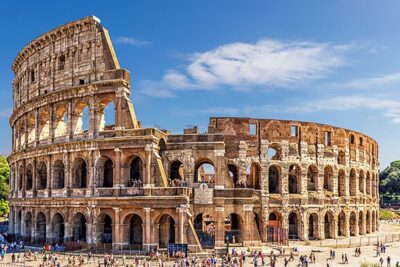
Guided Tour of Colosseum, Roman Forum & Palatine Hill
Read our review →
Colosseum & Forum with Audio Guide App -Optional Arena
Read our review →
Colosseum, Roman Forum and Palatine Hill Guided Tour
Read our review →
Colosseum, Forum & Palatine Hill Tour & Optional Arena
Read our review →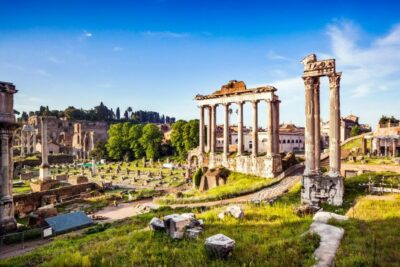
Colosseum, Roman Forum, Palatine with Multimedia Video
Read our review →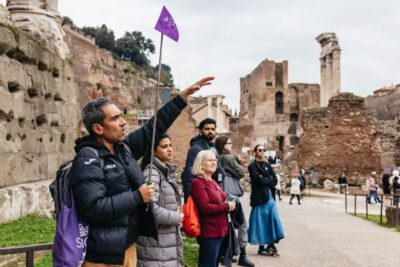
Colosseum, Palatine Hill & Roman Forum Guided Tour
Read our review →Browse the lists this tour appears in