Reviewed · GUIDED
Rome: Domus Aurea Guided Group Tour
Nero built a palace under Rome. The Domus Aurea (Nero’s Golden House) is one of the most unusual stops in the city, because you walk through excavated rooms underground and get the full story of how one emperor tried to outshine everyone else. Add the virtual reality component, and the place stops feeling like “ruins” and starts feeling like a living palace plan.
Two things I really like about this tour are the archaeologist-led storytelling and the chance to see real, excavated architecture up close. You get a guide who can connect what you’re seeing to big moments in Rome, from Nero’s reign to later rediscoveries and interpretations. And because the site is active and handled with care, the visit tends to feel focused, not like a rushed conveyor belt.
One consideration before you book: this is a walking tour with stairs and uneven surfaces, and it is not suitable for wheelchair users. It’s also underground, so bring warm layers and comfortable shoes, and plan to travel light since luggage and large bags are not allowed.
In This Review
- Key points to know before you go
- Domus Aurea and Nero’s Golden House: why this tour feels different
- Meeting at Oppio Caffè and getting inside without losing time
- What a 2-hour Domus Aurea walk feels like on the ground
- The itinerary at a glance, and what each part is really doing for you
- 1) From Oppio Caffè to the start of the underground rooms
- 2) Domus Aurea guided visit (2 hours total tour time)
- 3) VR experience, used as a visual translation tool
- 4) End at Domus Aurea
- The VR experience: how it makes Nero’s palace snap into focus
- Architecture and frescoes: what you’ll notice if you look like a detective
- Price and value: is $55 for Domus Aurea worth it?
- Who should book this Nero’s Golden House tour
- Should you book the Domus Aurea guided group tour?
- FAQ
- FAQ
- Where is the meeting point for the Domus Aurea tour?
- How long is the guided tour?
- What is included in the $55 price?
- Do I need to pay extra for the VR experience?
- Is line skipping included?
- What should I bring with me?
- Is luggage allowed?
- Is this tour suitable for wheelchair users?
- Can the guide accommodate mobility concerns?
- Is the ticket refundable if I cancel?
Key points to know before you go
- Underground access with exclusive entry: You’re granted special access to the Domus Aurea rooms, not just a casual glance from the outside.
- Archaeologist guide in English: You’ll get an English-speaking guide with an archaeological background, and you can ask questions.
- VR that reconstructs Nero’s world: The virtual reality experience helps you picture spaces that are now fragmentary and buried.
- A true active excavation site: You’re visiting a place where preservation and research are ongoing, which changes the pace and feel.
- Practical meeting point at Oppio Caffè: Look for your guide at the street corner by Oppio Caffè, with a Through Eternity sign or flag.
- Walk smart in cool, uneven terrain: Comfortable shoes, water, and warm clothing make the biggest difference here.
Domus Aurea and Nero’s Golden House: why this tour feels different
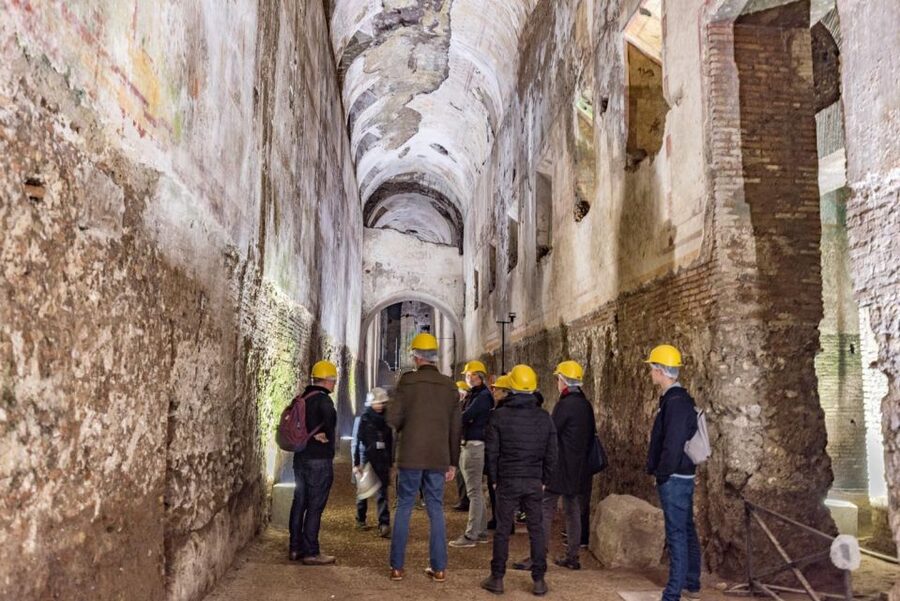
Most Rome highlights are above ground, loud with marble, and easy to picture. Domus Aurea is the opposite. You’re visiting a palace that was deliberately buried, then slowly uncovered, so your brain keeps trying to answer one question: how could this possibly be here, under the city?
That’s where the tour’s approach pays off. You don’t just get facts. You get the emotional shape of Nero’s project: after a devastating fire in 64 A.D., Nero had architects create an enormous dwelling over the smoldering remains. The result was shocking in its ambition, including features designed to make everyday meals and entertainment feel like a spectacle.
Then the story turns, fast. In 68 A.D., Nero dies by suicide, and his successors move to erase the memory of the “despised despot” by bulldozing much of the palace. Later, the area changes again: the artificial lake gets filled in and, soon after, the Flavian Amphitheatre rises in its place. Standing in what survives today, you get a direct lesson in how power rewrites the city.
If you like history with a bit of edge, this is your kind of stop. It also helps that the tour connects the palace to how people later understood it, including interpretations that run forward to the Renaissance.
Introductions we still owe you around Rome



Meeting at Oppio Caffè and getting inside without losing time
This tour starts at Oppio Caffè, right on the corner of Via Nicola Salvi and Via delle Terme di Tito. If you use Google Maps, the nearby reference address is Via delle Terme di Tito 72. Your guide should be holding a Through Eternity sign or flag.
That matters more than it sounds. Domus Aurea is close to major sights, so it’s easy to underestimate how easy it is to get turned around, especially when you’re trying to match a specific start time. Showing up a few minutes early gives you breathing room to locate your guide, get your bearings, and get organized before the group heads underground.
You also get one time-saver included with the experience: skip-the-line access through an express security check. The tour provider builds in that friction-reducer, which is a real value in Rome, where waiting can quietly eat half your plans.
One more logistics note: the tour price does not include transportation to and from the meeting point and the end point. You’ll want to map your route from your hotel or from whichever attraction you’re pairing it with.
What a 2-hour Domus Aurea walk feels like on the ground
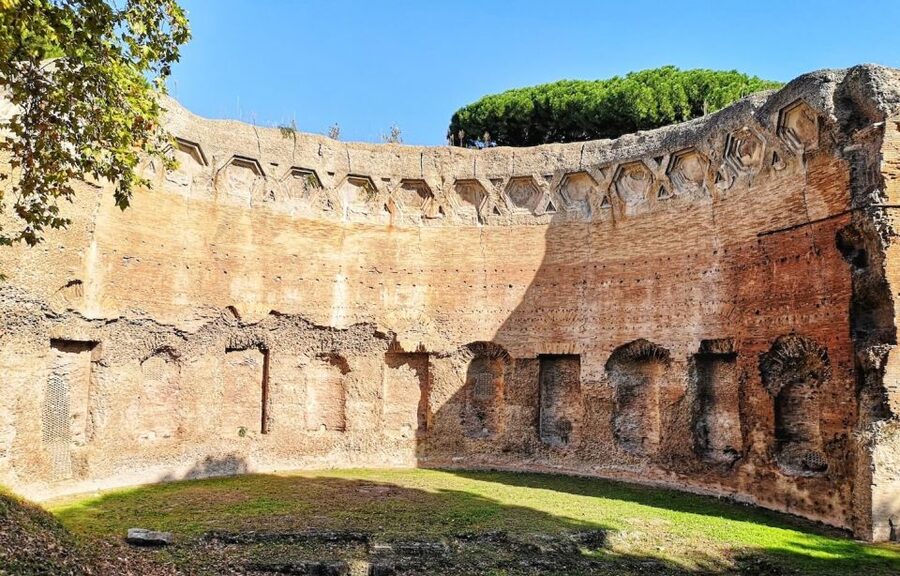
This is scheduled as a 2-hour guided visit, and it’s very much a walking experience. Even though the main attraction is underground rooms, you’re still moving between areas, and the surfaces can be uneven, with stairs and staircases along the way.
Think of it as a “slow down and pay attention” kind of tour. You’re not looking at everything from one platform. You’re walking through spaces where conservation matters, and the guide’s explanations work with what you can physically see in front of you.
The other reality check: it can be cool underground. Bring warm clothing even in warmer months. It’s also smart to carry water, since you’re walking and you’ll want to stay comfortable through the whole two hours.
Also plan to travel light. Luggage and large bags are not allowed, so pack like you’re going to a museum visit, not like you’re moving apartments.
Finally, take the comfort-and-consideration part seriously. If you have mobility concerns, let the provider know during booking so they can attempt to accommodate you. This tour is also stated as not suitable for wheelchair users, so if that applies, look for an alternative format.
The itinerary at a glance, and what each part is really doing for you
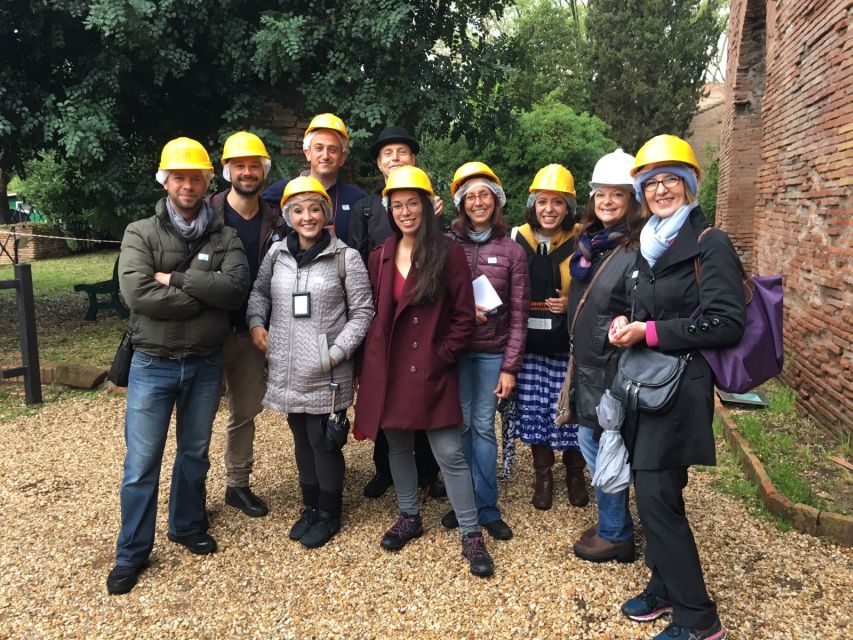
The tour is centered on Domus Aurea, but it unfolds in stages that each serve a purpose.
Also on the Rome guest list:
- Vatican Museums, Sistine Chapel & St Peter’s Basilica Guided Tour
★ 4.5 · 39,149 reviews - Rome: Colosseum, Palatine Hill and Roman Forum Guided Tour
★ 4.8 · 32,814 reviews - Rome: Guided Tour of Colosseum, Roman Forum & Palatine Hill
★ 4.7 · 27,897 reviews - Rome: Colosseum & Forum with Audio Guide App -Optional Arena
★ 4.2 · 24,770 reviews
1) From Oppio Caffè to the start of the underground rooms
You meet at street level, confirm you have your group, then head toward the entrance where the underground visit begins. This first segment is short, but it sets the tone. You’re moving from bright Rome into a darker environment where the scale of the palace becomes harder to “fake” in your imagination. That helps the guide’s reconstructions land better later.
2) Domus Aurea guided visit (2 hours total tour time)
Once you’re inside, the tour focuses on the excavated ruins at Nero’s Golden House. You’ll learn what you’re looking at, why parts were buried, and how the surviving spaces were restored enough to reopen to visitors.
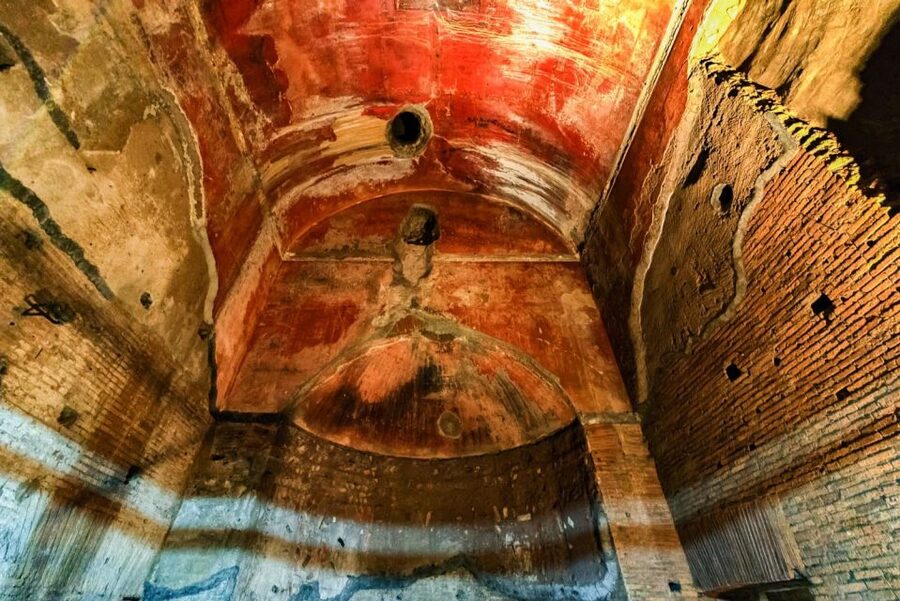
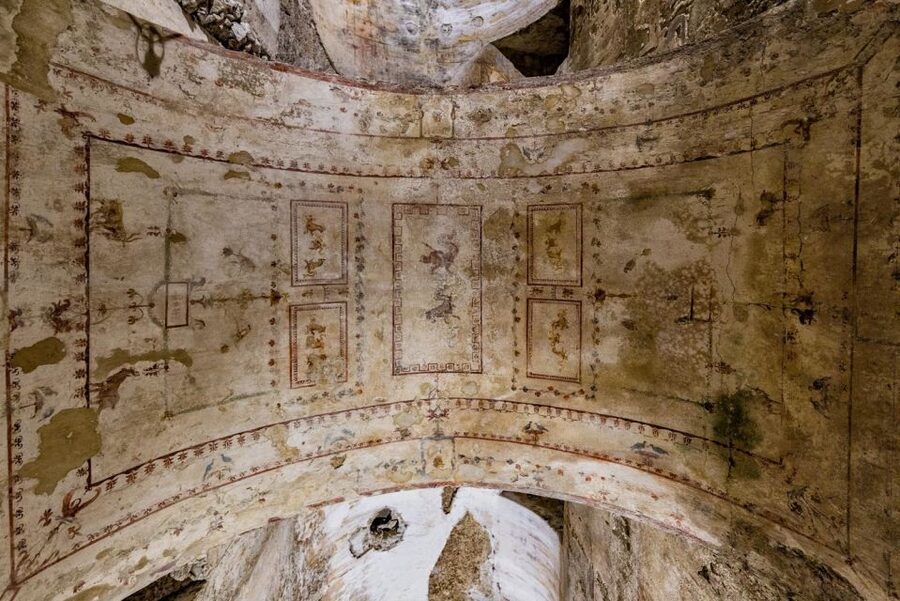
Expect jaw-dropping architecture details: soaring vaults, large rooms, and frescoes and painted surfaces that still survive. The guide also places those details into context, including what the palace meant for Nero’s public image and personal lifestyle.
A practical upside of the format is that the pacing usually matches a human’s attention span. You’re in an active site where the movement and viewpoints are guided carefully, so you’re not just being marched past points of interest.
3) VR experience, used as a visual translation tool
VR is included, and it’s not there as a gimmick. It’s used to help you understand what’s missing and what has been transformed by centuries of destruction and rebuilding.
This is one of the most repeated “yes, do this” elements in guides’ feedback. People mention that VR and multimedia effects make it much easier to see the buildings and terrain as they might have appeared in Nero’s time.
4) End at Domus Aurea
You finish at the site after the guided portion and the VR component. So plan your next stop nearby or build in time to get back to where you want to be after the tour ends.
The VR experience: how it makes Nero’s palace snap into focus
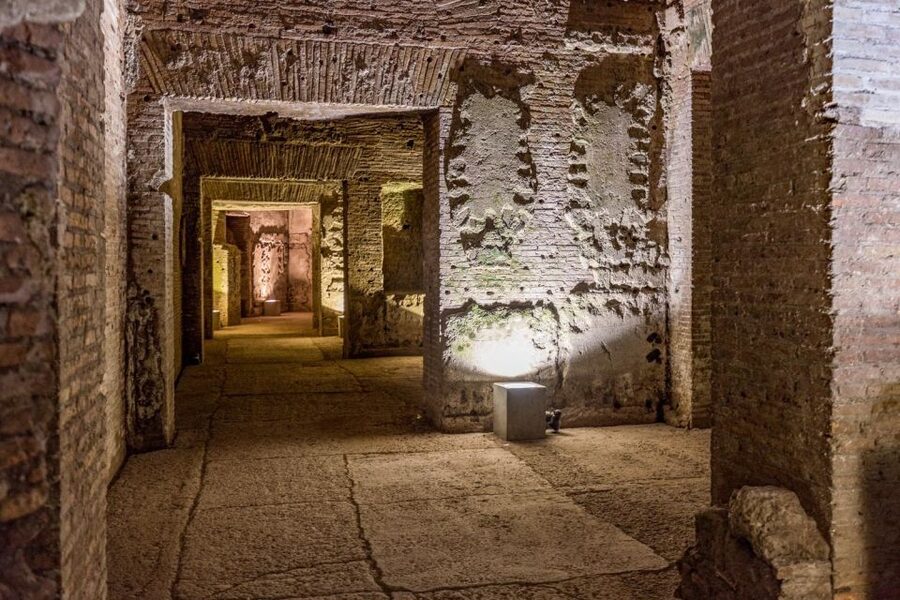
VR is often hit or miss on tours. Here, it seems to do one key job well: it helps your eyes and brain connect fragments to a full palace plan.
When you’re standing in a room where the floor, walls, or ceiling are partially preserved, it’s easy to guess wrong. VR gives you a plausible reconstruction, and it also helps you understand scale. A palace like this wasn’t just “fancy rooms.” It was a total environment designed for performance.
And the historical imagination is the point. Nero’s palace was built after the Great Fire of 64 A.D., and the surviving story includes mind-blowing concepts like a rotating dining space open toward the night sky, plus the artificial lake feature that once changed the landscape. VR helps you stop treating those details as trivia and start treating them as part of the design logic.
If you’re traveling with kids, or anyone in your group who learns visually, VR is a big win. One of the best pieces of advice I can give is simple: don’t rush through the VR moments. Let it run long enough that you can mentally “map” what you later see in real space.
Architecture and frescoes: what you’ll notice if you look like a detective
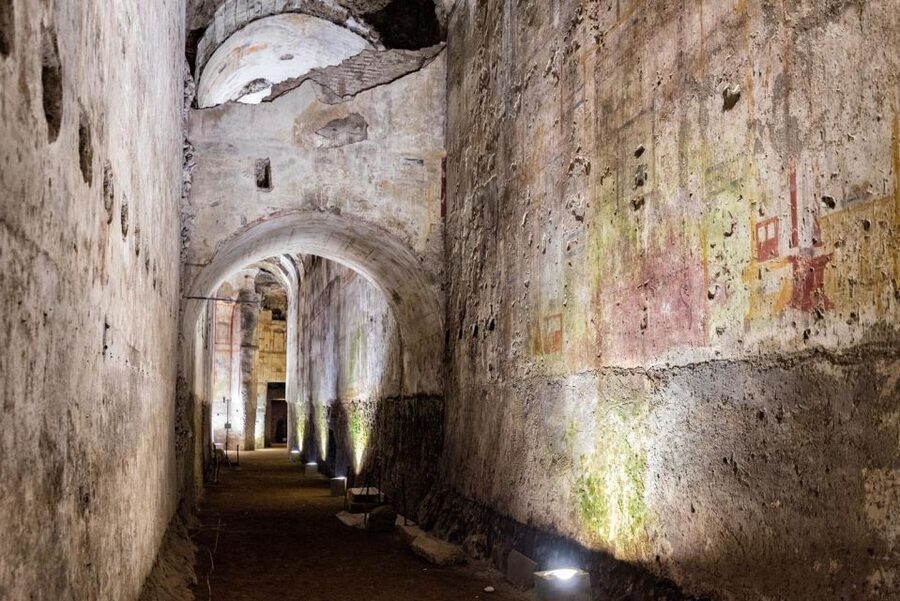
The Domus Aurea experience works best when you treat your visit like close reading. The palace is full of surfaces and forms, and the guide’s job is to translate those shapes into meaning.
Here are the highlights you should actively look for:
- Soaring vaults and spacious rooms: Even when partially restored, the sense of height and volume is striking.
- Frescoes and painted elements: Some surviving wall paintings and decorative areas can be genuinely moving, especially because they’re not “copies.” They’re remnants.
- Spatial design meant for spectacle: Think about how a rotating dining room would change guest experience, and how that kind of design relates to Nero’s ego and image.
- The contrast between what remains and what was erased: The palace was bulldozed and later replaced in parts of the area. That makes the surviving rooms feel even more special.
Also, pay attention when your guide connects the Domus Aurea to later eras. Some guides bring in the bigger story of how Renaissance thinkers and artists understood the ancient world. If you want to better interpret Rome beyond one era, this tour can help you do that.
On some tours, the guides have included experts like Elena and Monica, and other names you might see include Valentina and Renata. The common thread is that the guide isn’t just reciting dates. They’re explaining why the spaces mattered, and how you can read the architecture as evidence.
Price and value: is $55 for Domus Aurea worth it?
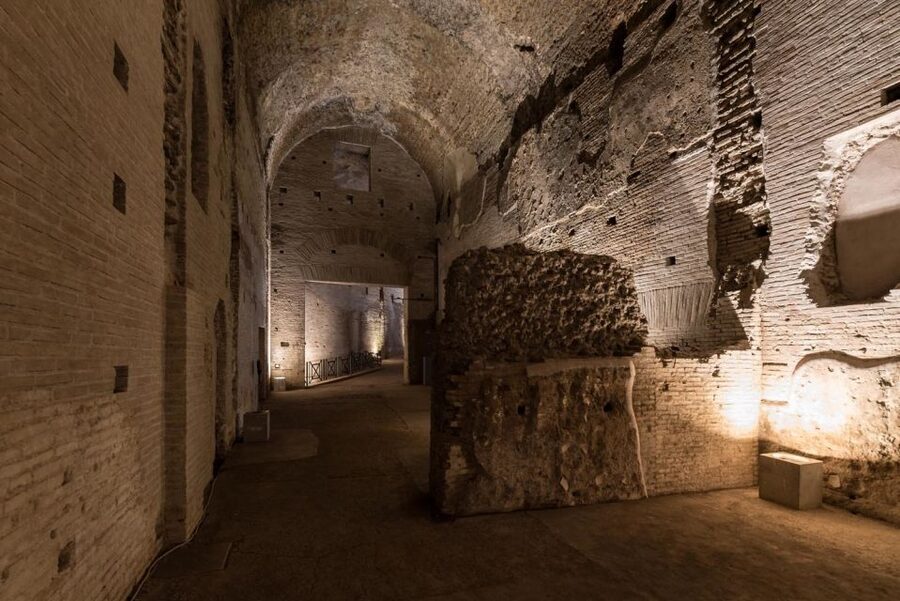
At $55 per person for a 2-hour guided underground visit, the value comes from what’s bundled in.
You’re not only paying for entry. You’re paying for:
- Exclusive access to the Domus Aurea rooms
- An English-speaking archaeologist guide
- A virtual reality experience
- Tickets and reservation fees
- Express security check so you lose less time to delays
So the real question is whether this package fits your style. If you like “show me what’s happening” learning, VR and a strong guide are a big plus. If you prefer self-guided strolling, Domus Aurea may feel like less of a fit because the experience is set up around guided interpretation.
I also like the tradeoff here. For many big-name Rome attractions, you can get overwhelmed by crowds and lines. This site is famous enough to matter but not crowded in the same way. That usually means your guide can keep a steadier pace and your group can hear the explanations.
For couples, this tour is a great contrast to brighter, more social areas of Rome. For solo travelers, it’s one of those experiences where you come out with stories and context that improve the rest of your day.
Who should book this Nero’s Golden House tour
You’ll likely love this if:
- You want a high-impact Rome experience that is different from the standard ruins circuit.
- You enjoy history told with strong visuals, not just dates on a screen.
- Your group likes architecture, art, and the “how did they build this” side of ancient Rome.
It may not be the best match if:
- You have trouble with stairs, uneven surfaces, or mobility limitations that can’t be accommodated.
- Your pace is “quick photo stops only,” since this is designed for guided interpretation.
The best pairing is with other major sights nearby, but don’t stack too much walking the same day. Your legs will already feel it once you’re underground and moving between rooms.
Should you book the Domus Aurea guided group tour?
If you’re choosing between this and yet another standard ticket, I’d lean toward booking. The combination of exclusive underground access, an archaeologist-led explanation in English, and included VR makes it feel like more than a basic entry ticket.
Book it if your goal is to understand Nero’s palace as a place with design choices, not just a famous name. And book it soon enough to match your schedule, since the tour is scheduled with specific starting times.
Skip it only if mobility limits or your preference for self-guided wandering means you won’t enjoy a guided, step-based underground walk.
FAQ
FAQ
Where is the meeting point for the Domus Aurea tour?
The meeting point is at the corner of Via Nicola Salvi and Via delle Terme di Tito, in front of Oppio Caffè. If you are using GPS or Google Maps, the reference address is Via delle Terme di Tito 72.
How long is the guided tour?
The tour duration is 2 hours.
What is included in the $55 price?
The price includes exclusive access to the Domus Aurea, a virtual reality experience, an English-speaking archaeologist guide, and tickets and reservation fees.
Do I need to pay extra for the VR experience?
No. The virtual reality experience is included in the tour.
Is line skipping included?
Yes. You get skip the line through an express security check.
What should I bring with me?
Bring comfortable shoes, warm clothing, and water.
Is luggage allowed?
No. Luggage or large bags are not allowed.
Is this tour suitable for wheelchair users?
No. It is not suitable for wheelchair users.
Can the guide accommodate mobility concerns?
You should let the activity provider know during the booking process if any travelers have mobility concerns so they can make accommodations.
Is the ticket refundable if I cancel?
The activity is non-refundable.
Just introduced: the newest Rome write-ups
- Rome Fiumicino Airport Transfer in Luxury Private Transportation★ 4.5 · 339 reviews
- Vatican: Pope Francis Tomb and Papal Basilicas Tour★ 4.7 · 340 reviews
- From Rome: Sorrento, Positano & Amalfi Coast Day Trip★ 4.5 · 340 reviews
- Rome: Guided Colosseum Underground Tour★ 4.8 · 342 reviews
- Colosseum Arena Floor, Roman Forum & Palatine Hill Guided Group Tour★ 5.0 · 343 reviews
- Rome: Small Group Rome’s Dark Side – Ghosts & Legends Tour★ 4.9 · 343 reviews
- Rome: City Highlights Electric Bike Tour★ 4.9 · 343 reviews
Guided, compared.

Colosseum, Roman Forum & Palatine Guided Tour
Read our review →
Vatican Museums, Sistine Chapel & St Peter’s Basilica Guided Tour
Read our review →
Colosseum, Palatine Hill and Roman Forum Guided Tour
Read our review →
Guided Tour of Colosseum, Roman Forum & Palatine Hill
Read our review →
Colosseum & Forum with Audio Guide App -Optional Arena
Read our review →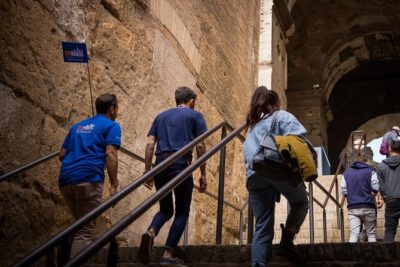
Colosseum, Roman Forum and Palatine Hill Guided Tour
Read our review →
Naples Underground Entry Ticket and Guided Tour
Read our review →