Reviewed · GUIDED
Rome: Domus Aurea Guided Tour and Virtual Reality Experience
Nero’s Golden House turns into a time machine. This guided Domus Aurea visit pairs a live walk through standout rooms with a short Oculus virtual reality experience, so you can picture what Emperor Nero’s palace may have looked like.
I especially like the VR reconstruction alongside the real archaeology, because it helps the spaces click in your mind. I also like the way the tour spotlights showpiece areas like the Octagonal Hall and the Hall of Birds, then connects them to why Nero built this complex at all.
One consideration: the site is chilly, around 10 degrees inside, and parts of the experience can feel tight. If you deal with claustrophobia or mobility limitations, this tour is not a good match.
In This Review
- Key things to know before you go
- From Colosseo to Domus Aurea: the start that sets the pace
- What you actually see: Octagonal Hall, Cryptoporticus, Hall of Birds
- The guided tour portion: what the guide is doing for you
- The Oculus VR experience: seeing Nero’s Golden Vault in your head
- Roman concrete and why engineering changes the story
- Decorative painting: why restoration and color affect what you feel
- Practicalities that make or break your comfort
- Who should book this Domus Aurea VR tour
- Price and value: is $67 worth it in Rome?
- Should you book the Domus Aurea guided tour with VR?
- FAQ
- Where is the meeting point for this tour?
- What time should I arrive?
- How long is the experience?
- What is included in the price?
- Do I skip the ticket line?
- What languages are available?
- Do I need identification?
- Is the tour suitable for claustrophobia or mobility limitations?
- Can I bring food, drinks, or large bags?
Key things to know before you go
- Oculus VR adds a quick, visual layer to spaces you are also walking through in person
- 70-minute guided tour focuses on famous rooms, including the Octagonal Hall, Cryptoporticus, and Hall of Birds
- Nero’s building plan links palatine homes to the Esquiline gardens for a massive dynastic residence
- Concrete gets a starring role, helping you understand how Roman engineering made this palace possible
- Wear layers since it’s about 10 degrees inside the Domus
From Colosseo to Domus Aurea: the start that sets the pace
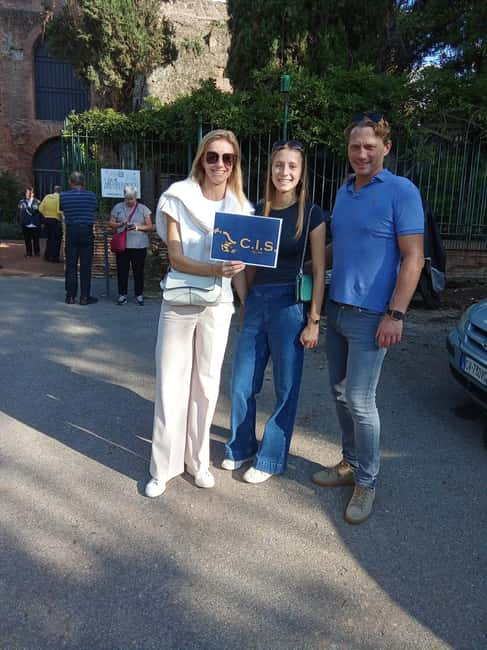
You begin in front of the Colosseo metro station, on the lower level at street level, near the green kiosk. Look for staff with the C.I.S Tours sign. It’s a practical setup, because you’re already in the heart of Rome’s classical zone and you can arrive early, reset your bearings, and then go.
Plan on arriving 20 minutes early. The tickets are nominative, meaning the names of participants matter for admission. When you arrive late, it can throw off the timing of getting the group together and into the site.
From there, the tour moves you into the Domus Aurea area, where you start to see why this place still feels like a secret even though it’s one of Rome’s most discussed archaeological complexes. This isn’t a museum stop where you just read labels and move on. The guide shapes the route so you experience the rooms in a way that matches the story being told.
If you’re pairing this with other big sights that day, give yourself buffer time. You’re spending about 1.5 hours total, including the guided portion and the VR segment, and the weather and walking time around the Colosseum zone can add up.
Introductions we still owe you around Rome



What you actually see: Octagonal Hall, Cryptoporticus, Hall of Birds
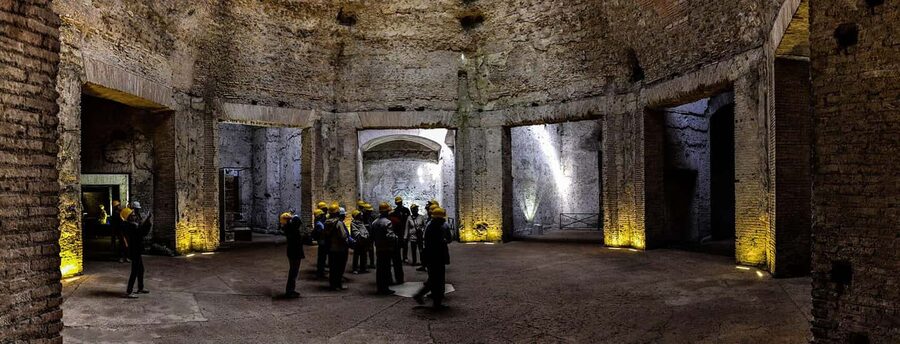
The Domus Aurea itinerary is built around a handful of rooms and passageways that are famous for a reason. You’ll walk with your live guide through highlight spaces, including the Octagonal Hall, the Cryptoporticus, and the Hall of Birds.
Here’s why these stops matter. The Domus Aurea is not just a pile of ruins. It’s a decorative system. That decorative apparatus includes some of the most compelling examples of Roman painting, and the tour route is designed to help you notice how the walls and ceilings would have worked visually in Nero’s time.
- Octagonal Hall: Think of this as a focal room, a place where scale and symmetry help you understand the palace’s ambition. When you learn how the spaces relate to each other, you stop seeing it as scattered remains.
- Cryptoporticus: Passageways like this make Roman residential complexes feel like lived-in infrastructure, not just grand showrooms. This is where the architecture starts to explain the function behind the spectacle.
- Hall of Birds: A decorative concept you can remember. When you picture the original painted surfaces, it’s easier to understand why scholars pay so much attention to the Domus Aurea’s decorative program.
You’re also learning about the bigger picture: Nero’s desire to unite palatine homes with the Esquiline gardens, creating a large dynastic residence. The goal wasn’t just comfort. It was power, court life, and an entire world attached to the emperor.
The guided tour portion: what the guide is doing for you
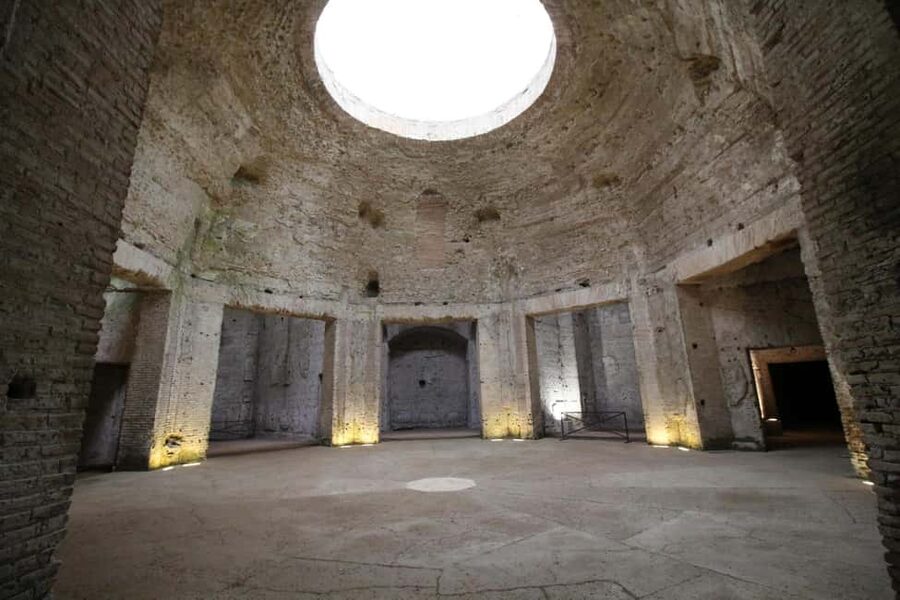
A big part of the value here is the live guide. In this kind of site, the difference between a good visit and a great one is context. A guide can connect what you’re looking at, the materials used, and the likely original appearance in a way that makes the ruins feel purposeful.
The tour runs for about 70 minutes with a guide, and your language options are Italian, English, French, and Spanish. That matters because the best explanations are the ones you can actually follow in your own language.
In at least one case, the guide is described as friendly and willing to answer questions, which is a real advantage at the Domus Aurea. There are enough interpretive uncertainties here that asking questions is not a distraction, it’s part of the experience.
One small note I’d keep in mind: acoustics inside the Domus can be imperfect. If you have trouble hearing in busy or echoing spaces, pay attention to where you stand and listen closely at the start of each explanation.
The Oculus VR experience: seeing Nero’s Golden Vault in your head
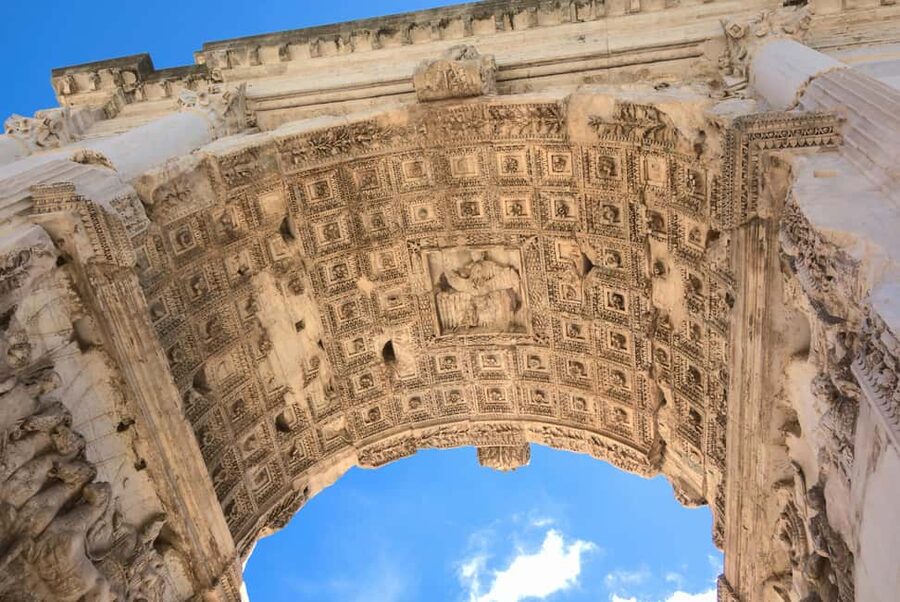
The VR component is short, but it’s central to what makes this tour feel different from a standard ruin walk. You get an Oculus virtual reality experience integrated into the guided program.
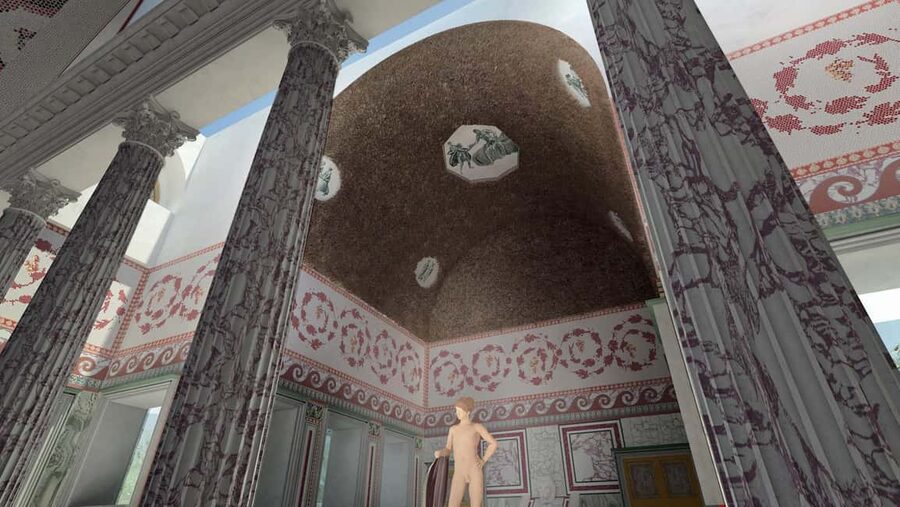
Your key moment is being shown what the palace area, including the Golden Vault, might have looked like in Nero’s era. The best way to think about it is not as a movie you passively watch. It’s a visual translation tool. You see how the architecture and decorative concept might have come together as a unified space, not separate fragments.
This is especially helpful because Domus Aurea is tricky. Even if you’re familiar with Roman ruins, the palace concept can be hard to picture when what remains is, well, not the whole thing. VR acts like scaffolding for your imagination.
When you come out of the VR, the real rooms hit differently. If you keep your brain switched on, you can compare: what seems logical in the reconstruction versus what you’re seeing in the excavation reality. That comparison is where the experience becomes more than entertainment, and turns into learning you can remember.
Also on the Rome guest list:
- Vatican Museums, Sistine Chapel & St Peter’s Basilica Guided Tour
★ 4.5 · 39,149 reviews - Rome: Colosseum, Palatine Hill and Roman Forum Guided Tour
★ 4.8 · 32,814 reviews - Rome: Guided Tour of Colosseum, Roman Forum & Palatine Hill
★ 4.7 · 27,897 reviews - Rome: Colosseum & Forum with Audio Guide App -Optional Arena
★ 4.2 · 24,770 reviews
Roman concrete and why engineering changes the story
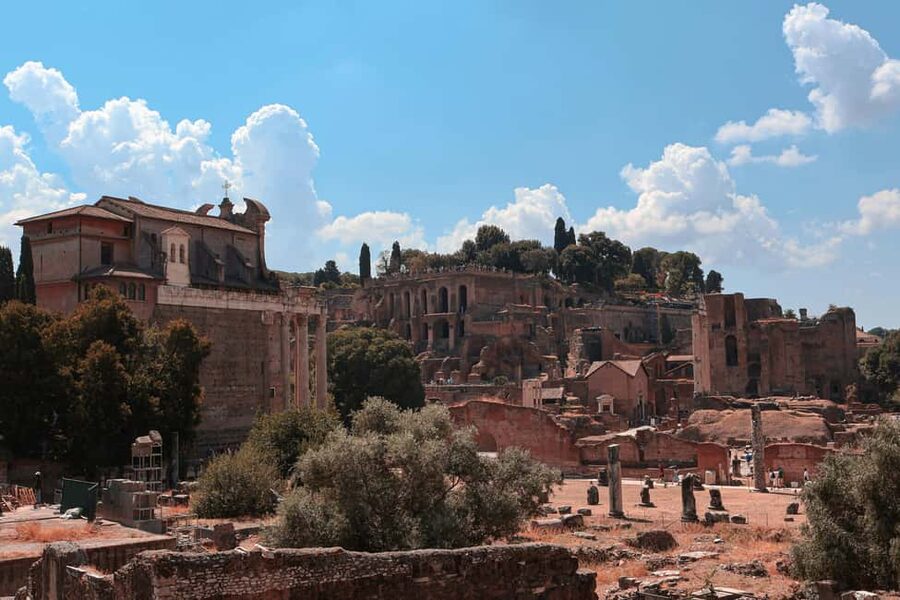
One of the most practical lessons you can take away is how Roman engineering allowed for this kind of palace. The tour includes discussion of the Domus Aurea’s use of concrete as a building material.
Why does that matter for you as a visitor? Because it changes how you interpret the remains. Concrete is not a footnote. It’s what made certain large-scale structures possible, and it helps explain how Rome could produce dramatic interior effects that people later tried to preserve or rebuild.
If you’ve only seen Roman stonework, concrete can feel like a mystery. Here, the guide helps you connect construction method to space. Once you understand how the Romans built, you can look at the architecture with less guesswork.
It’s also a reminder that Domus Aurea is not purely a decorative story. It’s the combination of design, engineering, and power. Nero’s court needed a residence that felt grand, and the materials mattered for creating that scale.
Decorative painting: why restoration and color affect what you feel
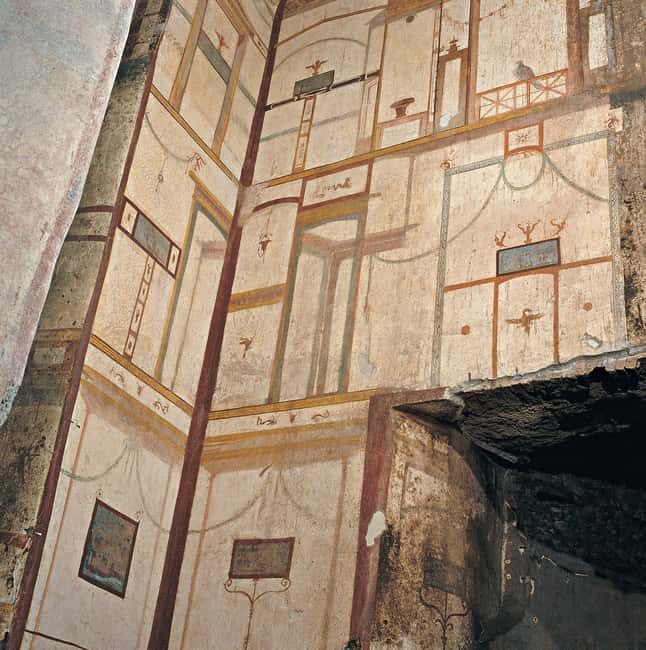
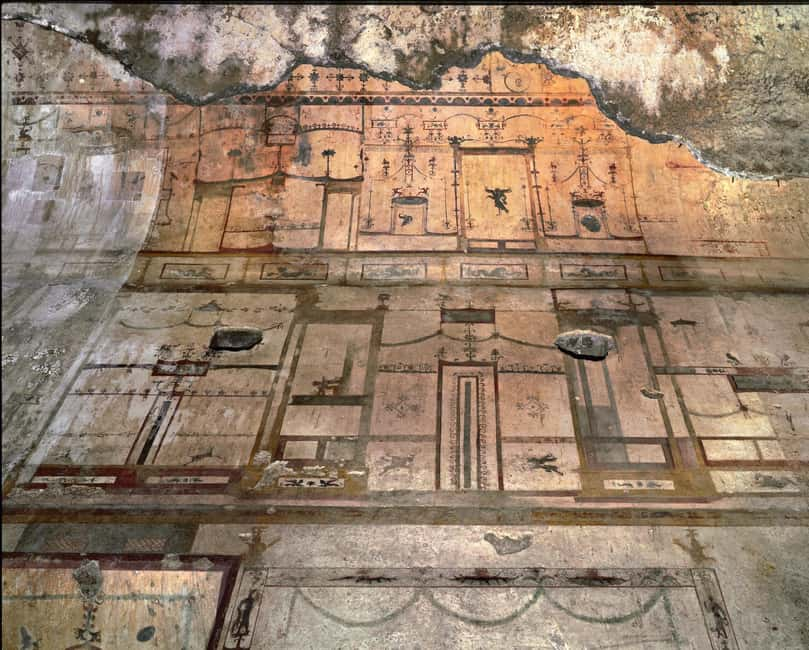
The Domus Aurea is especially known for its decorative apparatus, including important examples of Roman painting. Even when you’re looking at partial or restored surfaces, you get the sense that the original design relied on more than just shape.
This is where the restoration work mentioned in visitor feedback becomes relevant to your expectations. Preservation and restoration are how scholars and conservators try to recover what the palace would have looked like. But restoration is also a process, meaning it can shape how you interpret the space.
To make the most of it, I’d recommend you treat the paintings as clues. Look for how color and pattern would have guided the eye. Then, use the VR moment as a reality check for how those decorative choices might have appeared when the palace was fully finished.
Also, keep in mind that the temperature inside is about 10 degrees. That cold can make you want to rush. Don’t. Slow down for the decorative details. In a place like this, your attention is the difference between seeing ruins and understanding a residence.
Practicalities that make or break your comfort
This tour is one of those that punishes poor planning, mostly because conditions inside the Domus are cold and headsets or audio can be part of how you receive information.
Bring and wear:
- A jacket (seriously, the temperature is around 10 degrees inside)
- Comfortable shoes for uneven, historic terrain
- Your passport or ID card (and for children, bring their ID as well)
Leave behind:
- Food and drinks
- Luggage or large bags
- Any situation involving unaccompanied minors
What about audio? You get an audio guide included in Italian, English, French, and Spanish. If you’re the type who needs redundancy to fully catch the story, having both live guidance and audio can help. Just be aware that the acoustics inside can be a bit of a letdown, so being attentive at the guide’s key explanations is smart.
Finally, you should know that each visitor is required to arrive early, and tickets are nominative. If you’re traveling with friends, make sure you booked under the correct names so you’re not scrambling at the meeting point.
Who should book this Domus Aurea VR tour
This is a strong pick if you want your Roman ruins to include a narrative, not just photos. You get a live guide, a ticket to the site, and a VR reconstruction component, all wrapped into a tidy 1.5-hour experience.
You’ll probably love it if:
- You enjoy archaeology with clear explanations
- You like the idea of technology helping you visualize missing pieces
- You want to see specific rooms like the Octagonal Hall, Cryptoporticus, and Hall of Birds, not a vague overview
You should think twice or skip if:
- You have mobility impairments or use a wheelchair
- You have claustrophobia
- You hate cold interiors, because it’s about 10 degrees inside
If you’re traveling with kids, the tour data says you need to bring their ID cards, but it does not list a minimum age. Still, it’s sensible to consider how a 1.5-hour structured visit plus VR might land for your child.
Price and value: is $67 worth it in Rome?
At about $67 per person, this tour is not the cheapest way to see Domus Aurea. But the price isn’t just for entry. It includes the ticket, a guided tour, the virtual reality experience, and all taxes and fees.
The value equation is simple: you’re paying for three things working together.
- A guided route that helps you understand what you’re looking at
- Access to the site without the usual ticket-line friction, since it includes skip the ticket line
- VR that gives you an assist for visualizing what remains can’t fully show
If your goal is to get a meaningful Domus Aurea experience in limited time, this package makes sense. If you prefer to wander slowly on your own, spend time reading every placard, and don’t care about VR, you might get a different kind of value elsewhere. But for people who like guided learning with an added visual tool, this one is priced like a “do it once, do it well” experience.
Should you book the Domus Aurea guided tour with VR?
Book it if you want a short, focused visit that connects rooms, decoration, materials, and Nero’s ambitions into one story, plus a VR moment that helps you picture the Golden Vault as a complete space.
Skip or reconsider if you’re sensitive to cold, claustrophobic, or have mobility needs that the tour does not support. And if you struggle with hearing in echo-y environments, it’s worth being strategic about where you listen so you catch the key points.
If you’re game for VR plus a guided walk, this is one of the more memorable ways to experience Domus Aurea in a limited window, without turning your visit into a confusing puzzle.
FAQ
Where is the meeting point for this tour?
Meet in front of the Colosseo metro station (lower floor/ground level) near the green kiosk, and look for staff with the C.I.S Tours sign.
What time should I arrive?
You must arrive at the meeting point 20 minutes before the booked activity.
How long is the experience?
The tour lasts about 1.5 hours total, with the guided portion listed as 70 minutes.
What is included in the price?
It includes the Domus Aurea ticket, the guided tour, the virtual reality experience, and all taxes and fees.
Do I skip the ticket line?
Yes, this tour includes skip the ticket line.
What languages are available?
The live guide is available in Italian, English, French, and Spanish, and the audio guide is included in those same languages.
Do I need identification?
Yes. You should bring your passport or ID card, and children also require a passport or ID card.
Is the tour suitable for claustrophobia or mobility limitations?
No. It is not suitable for people with mobility impairments, claustrophobia, or wheelchair users.
Can I bring food, drinks, or large bags?
No. Food and drinks are not allowed, and luggage or large bags are not allowed.
Just introduced: the newest Rome write-ups
- Excavation Tour to the Tomb of St. Peter’s & St. Peter’s Basilica★ 4.0 · 183 reviews
- Imperial Rome and External Colosseum Tour★ 5.0 · 183 reviews
- Rome: Rooftop Cooking Class with Wine Tasting near Vatican★ 5.0 · 184 reviews
- Rome to Civitavecchia Cruise Port Transfer★ 5.0 · 184 reviews
- Ancient Rome and Colosseum Private Tour with Underground Chambers and Arena★ 4.5 · 184 reviews
- Rome: Vatican Museums & Sistine Chapel Skip-the-Line Ticket★ 4.1 · 185 reviews
- Borghese Gallery Max 6 People Tour: Baroque & Renaissance in Rome★ 5.0 · 185 reviews
Guided, compared.

Colosseum, Roman Forum & Palatine Guided Tour
Read our review →
Vatican Museums, Sistine Chapel & St Peter’s Basilica Guided Tour
Read our review →
Colosseum, Palatine Hill and Roman Forum Guided Tour
Read our review →
Guided Tour of Colosseum, Roman Forum & Palatine Hill
Read our review →
Colosseum & Forum with Audio Guide App -Optional Arena
Read our review →
Colosseum, Roman Forum and Palatine Hill Guided Tour
Read our review →
Naples Underground Entry Ticket and Guided Tour
Read our review →