
Reviewed · WALKING TOURS
Rome: Guided City Center Evening Sightseeing Walking Tour
Rome feels like a movie at dusk. This guided evening walk strings together Rome’s best-known sights in a way that makes the city easier to understand, starting with the wide-open views from Pincio Terrace and ending in the lively square of Campo de’ Fiori.
I love how the tour keeps you moving through the classics with a guide who can explain what you are looking at as you pass it. I also like that you get headsets when needed, so you can actually hear the stories without craning your neck.
One thing to plan for: it is a lot of walking in about 3 hours, and it can include a steep climb early on. If you do not love steps or long stretches on pavement, you may want a slower option.
In This Review
- Key things that make this evening tour worth it
- Where the tour starts: Piazza del Popolo and instant orientation
- Pincio Terrace sunset: the view that makes Rome click
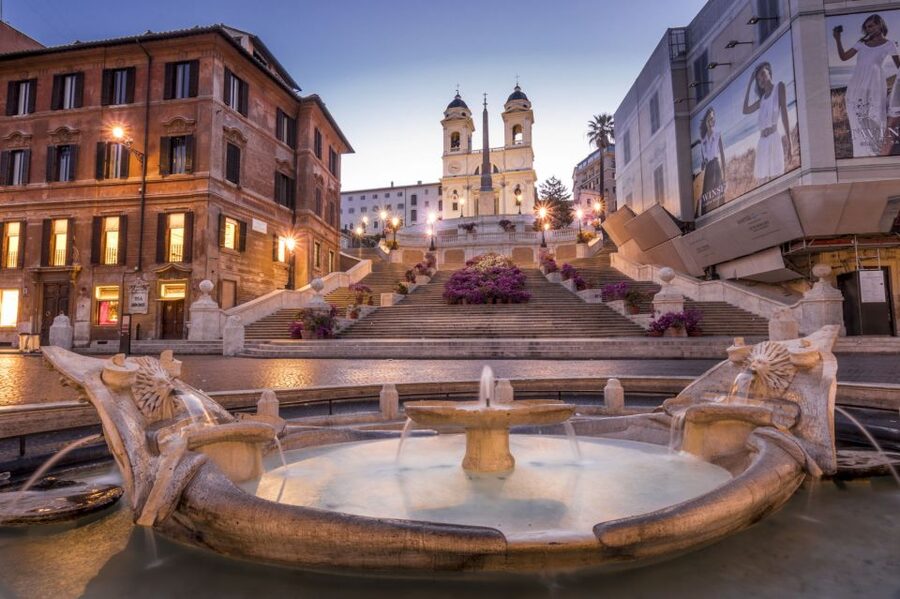
- Spanish Steps and Bernini’s Barcaccia Fountain after dark
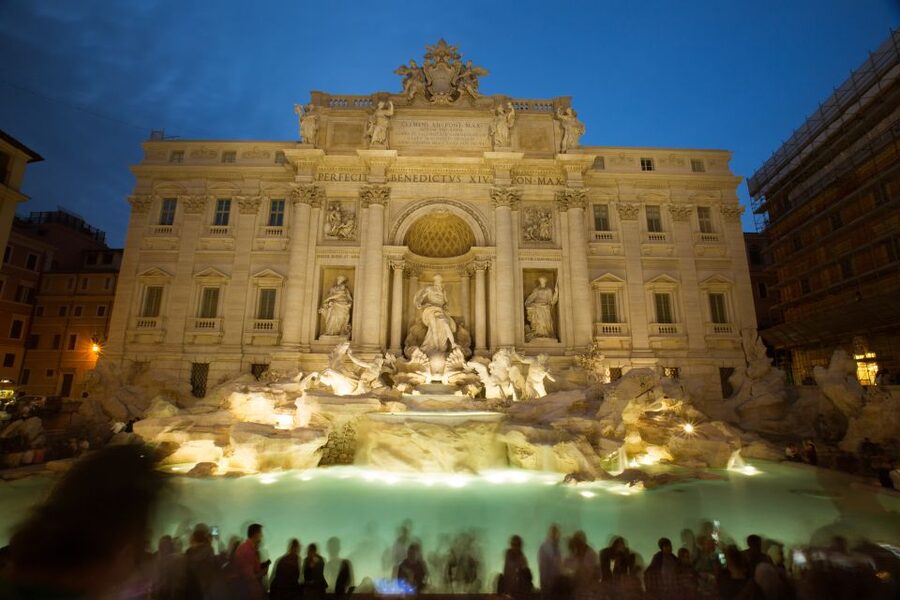
- Trevi Fountain: coin toss, but also real Baroque drama
- Piazza della Rotonda and the Pantheon exterior
- Piazza Navona and Bernini’s Four Rivers Fountain
- Finishing at Campo de’ Fiori: night plans start here
- Pace, comfort, and what to wear so you enjoy it
- Who should book this tour (and who should skip it)
- Price and value: is $46 for 3 hours a smart deal?
- Should you book the Rome City Center Evening Sightseeing Walking Tour?
- FAQ
- How long is the Rome city center evening walking tour?
- How much does the tour cost?
- Where do I meet the guide?
- What sights are included on the route?
- Is the tour wheelchair accessible?
- What is included in the price?
- Is it available for young children?
Key things that make this evening tour worth it
- Sunset views from Pincio Terrace that help you picture Rome as a whole city, not just postcards
- Spanish Steps and Bernini’s Barcaccia Fountain with the right lighting for photos and for understanding the art
- Trevi Fountain coin-toss moment built around the Baroque storytelling Rome does best
- Pantheon exterior context that turns the building into something you can place in time
- Piazza Navona with Bernini’s Four Rivers Fountain for sculpture and street-life energy at night
- A practical ending at Campo de’ Fiori so you can keep going to dinner afterward
Where the tour starts: Piazza del Popolo and instant orientation
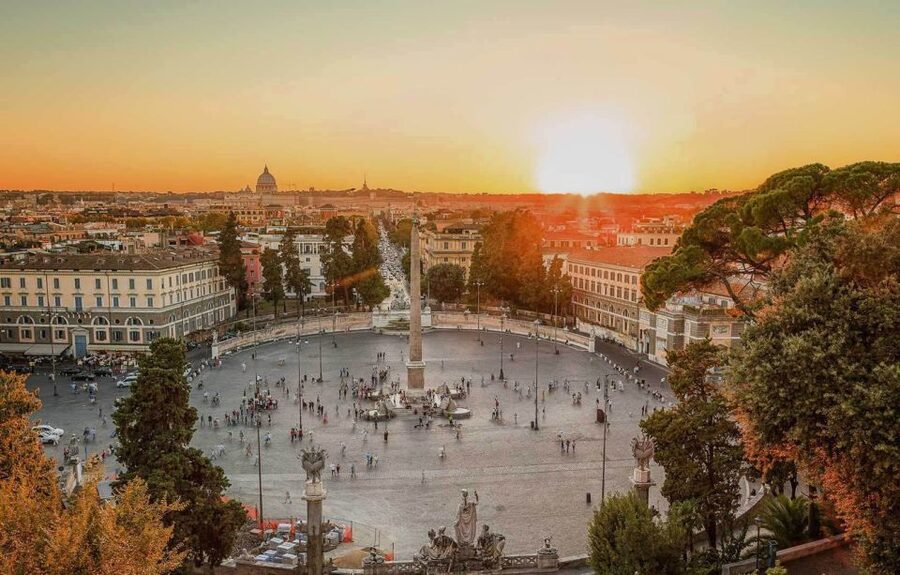
Most first-time Rome days feel like a blur. This one gives you an orientation boost fast, because it starts at Piazza del Popolo, a big square where you can see multiple churches, fountains, and monuments clustered in one place.
Meet at Piazza del Popolo square in front of Santa Maria del Popolo Church, next to the Leonardo da Vinci Museum, and look for a guide holding the Rome Your Way sign. I like this kind of meetup, because it is a clear landmark area, not a vague side street.
From there, you begin the walk through the center at a comfortable evening rhythm. And since you are moving in the cooler hours, you can actually focus on details instead of just fighting heat.
More Italy at street level:

Pincio Terrace sunset: the view that makes Rome click
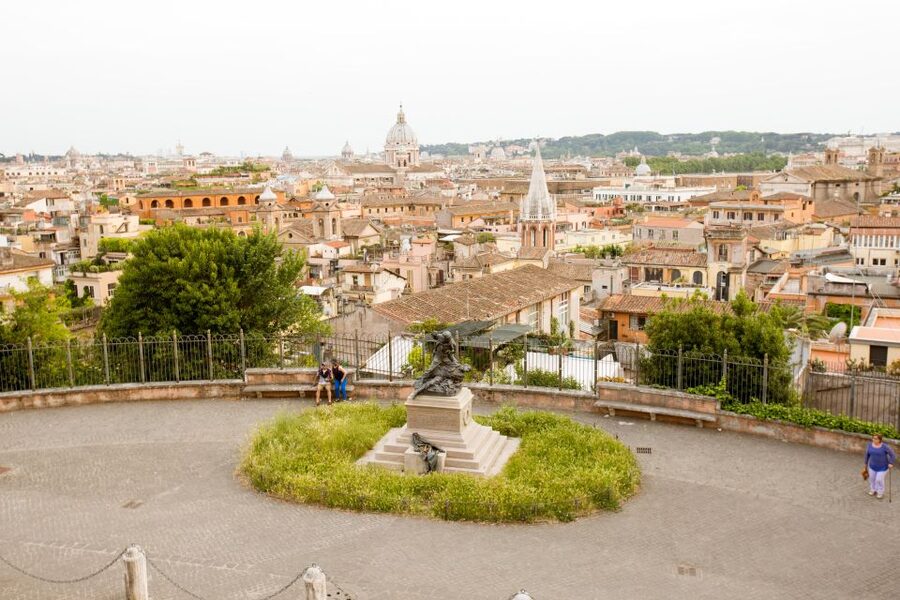
The walk includes time at Pincio Terrace, where you can watch the sun setting over Rome’s rooftops. This is not just a pretty stop. It helps your brain connect all the buildings you are about to see, especially the way Rome’s hills shape where things feel close, far, tall, or spread out.
You may feel a bit of a workout here, since the tour can involve a steep climb early on. If you pace yourself and take the view step by step, it is the kind of payoff that makes the walking feel worth it.
I also appreciate that the tour does not treat this as a quick photo only moment. It is a viewpoint that sets the mood, so when you reach major monuments later, you understand the city’s layout more easily.
Spanish Steps and Bernini’s Barcaccia Fountain after dark
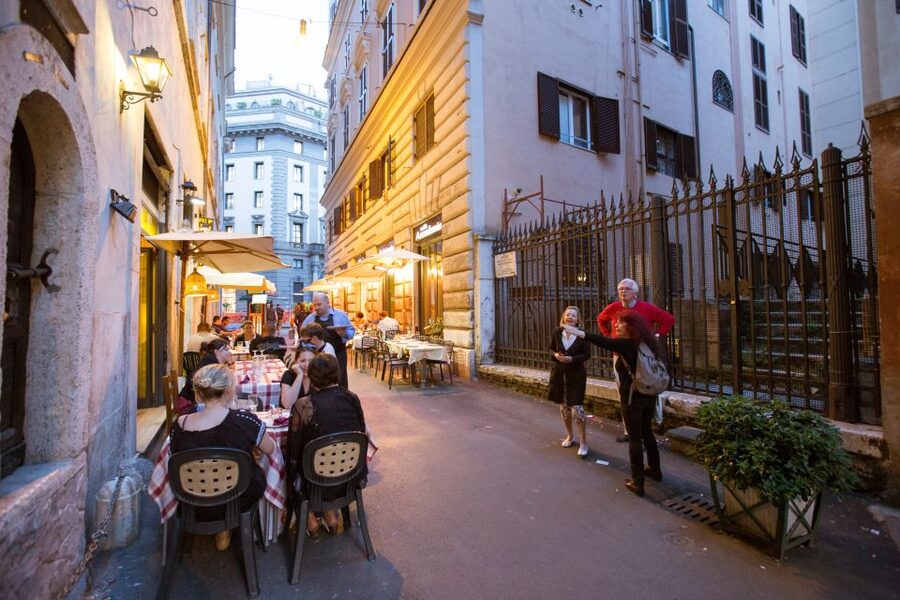
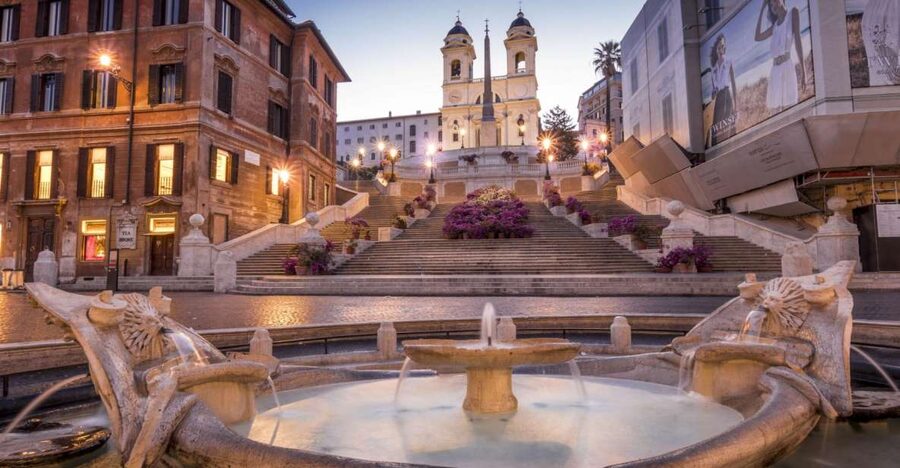
Next comes Piazza di Spagna and Bernini’s Barcaccia Fountain. In the evening, this area feels more manageable than mid-day crowds, and the light often makes the stone look warmer and more sculptural.
The Spanish Steps are famous, but what makes the stop worthwhile is what your guide points out as you move around the plaza. You are not just standing for a snapshot. You get a sense of why the steps matter and how Baroque fountains fit into the Roman way of staging public space.
Bernini’s Barcaccia Fountain, meanwhile, is a great example of the Baroque style in a place most people know only from photos. Expect your guide to connect the fountain’s dramatic shape and the surrounding architecture so you can look at it with sharper eyes.
Trevi Fountain: coin toss, but also real Baroque drama
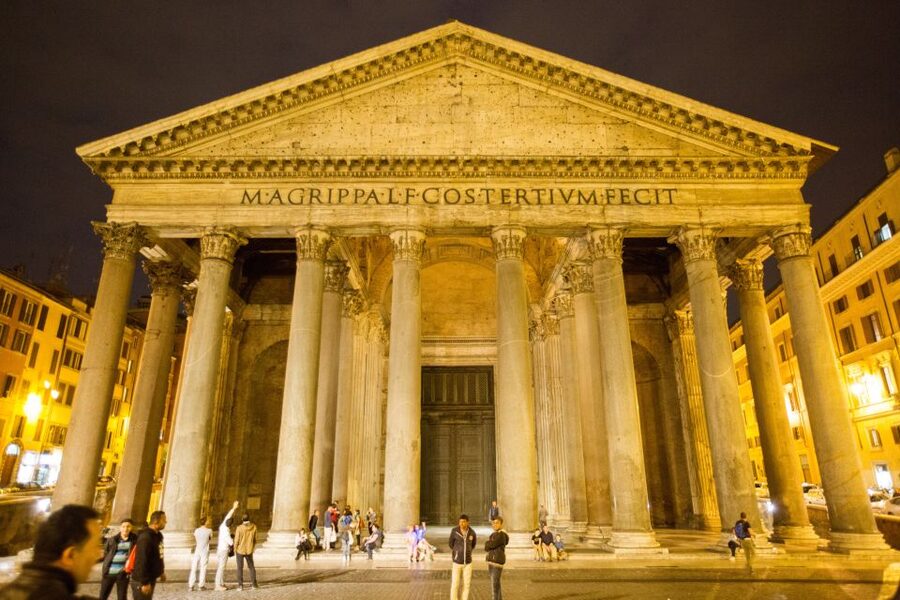
Trevi Fountain is the kind of stop where you might think you already know what it looks like. Then it hits you in person, and the scale and movement pull you in.
The big moment is tossing a coin into the fountain over your left shoulder, because the legend says you will return to Rome one day. That is fun, but the tour’s value is in what you see around the legend: how the fountain functions like a stage, not just a water feature.
The tour frames Trevi as the largest Baroque fountain in Rome, and it is easy to understand why once you are looking at the stone figures and the energy of the design. Even if you are not a Baroque specialist, the guide helps you read the scene like a story.
Practical note: this is a major attraction area, so it can get busy. Going in the evening helps, and the group’s movement keeps you from feeling stuck in one spot too long.
More Italian evenings spoken for:
- Rome: City Highlights Open-Top Bus Night Tour
★ 4.1 · 2,038 reviews - Vespa Sidecar Tour By Night with Pickup
★ 5.0 · 1,803 reviews - Rome by Night – Ebike Small Group Tour – Food and Wine (Option)
★ 5.0 · 1,275 reviews - Colosseum Sunset Tour with Entry
★ 4.5 · 1,230 reviews
Piazza della Rotonda and the Pantheon exterior
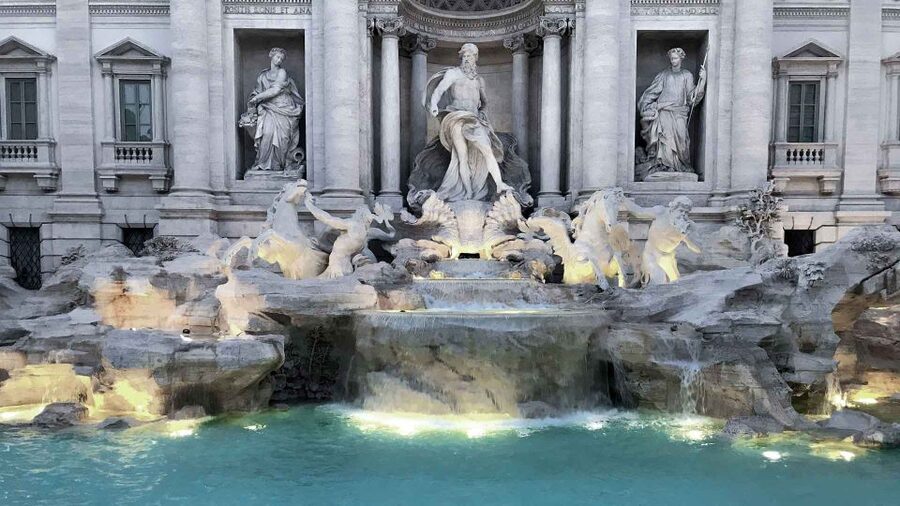
After the fountains, the walking brings you to Piazza della Rotonda, where you view the exterior of the Pantheon. This is a smart inclusion because it gives you a chance to place one of Rome’s most important buildings in time, even without going inside.
You will likely hear the key timeline points that make the Pantheon easier to remember:
- Built in 27 B.C., dedicated to all the Roman gods
- Converted in the 7th century into a church dedicated to Mary and the martyrs
- Known as a resting place of some major Renaissance artists, including Raffaello
Even just standing outside, those facts change your perspective. The building starts to feel less like a standalone monument and more like a long-running Roman tradition of reusing and reinventing sacred space.
If you have limited time in Rome, this kind of exterior context is a good way to get value without spending extra hours in lines.
Piazza Navona and Bernini’s Four Rivers Fountain
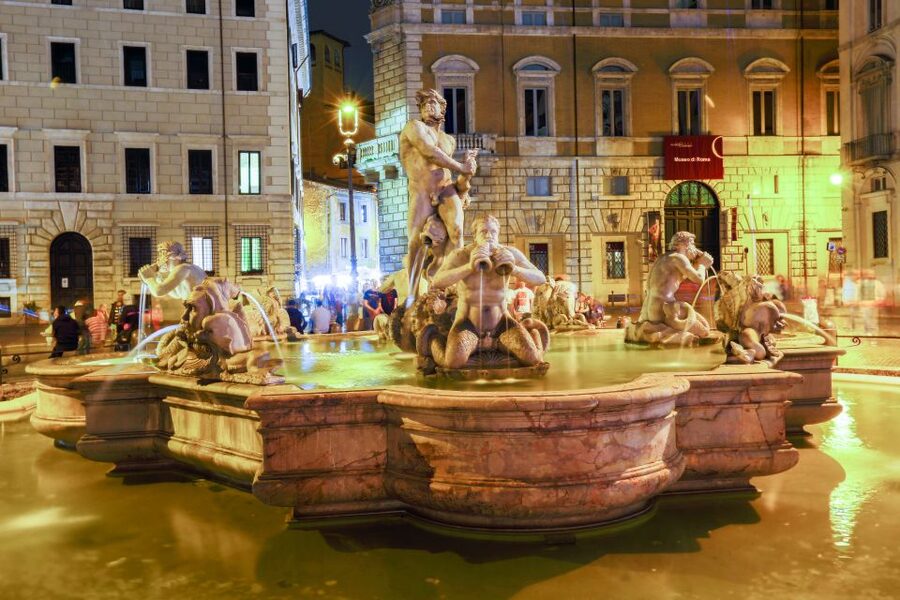
Piazza Navona is one of those squares that always feels alive, and at night it can be especially atmospheric. Here you admire Bernini’s Four Rivers Fountain in the center of the iconic square.
This stop is about sculpture and symbolism working together in open air. The guide points out how Bernini’s fountain fits into the grand visual plan of the piazza, and you are surrounded by other major creations too, including:
- Church of Sant’Agnese in Agone by Borromini
- Palazzo Pamphili
- Neptune Fountain at the northern end
- Moor Fountain at the southern end
I like that this is not treated as a single-photo stop. You end up doing a visual scan of the whole square, and that makes the place feel more rewarding once you leave it behind.
Piazza Navona is also a good moment to regroup mentally. The tour has covered many landmark styles in sequence, and this square helps you see how Renaissance and Baroque ideas shaped public space again and again.
Finishing at Campo de’ Fiori: night plans start here
The tour ends at Campo de’ Fiori, a square that shifts dramatically depending on the time of day. In the morning it is known as a marketplace, and after sunset it becomes a center for nightlife.
In the center you can see the statue of Giordano Bruno. The guide also frames the square’s deeper past, since it was once linked to races and executions. That added context matters here, because it stops you from treating the square like a generic party spot.
This ending point is practical. You get dropped off where it is easy to keep going, whether that means finding dinner, grabbing a drink, or just taking a second loop through streets you now recognize.
Pace, comfort, and what to wear so you enjoy it
This tour is designed as a fast-moving highlights walk. Reviews note that you are on your feet for the full 3 hours without much of a break, so you should plan accordingly.
If you do this, I strongly suggest:
- Wear comfortable shoes you trust on uneven pavement
- Bring a light layer for the evening cool
- Use the provided headsets when needed so you do not strain to hear
The walking is manageable for many people, but it is not a sit-down tour. If you are sensitive to steps, the early climb up toward Pincio is something to keep in mind.
Also, this tour is not suitable for wheelchair users, so if mobility is an issue, you will want a different format.
Who should book this tour (and who should skip it)
This is a great match if you want an efficient first taste of Rome’s center. It is especially useful on your first evening, because you come away with a stronger sense of where everything sits and what you want to revisit for longer later.
It is also a good fit if you care about art and architecture, since the stops come with interpretation, not just location names. Guides can make the history and symbolism land in a way that helps you enjoy the sights more on subsequent independent walks.
Skip it if you want a slow, relaxed stroll with lots of breaks, or if you strongly prefer to avoid stairs and steep climbs.
Price and value: is $46 for 3 hours a smart deal?
At $46 per person for a 3-hour guided walking tour, the value comes from three things you cannot easily recreate on your own quickly:
- A professional guide who connects what you see to what it means
- Multiple major landmarks packed into one coherent evening route
- Headsets when needed, which makes the information actually usable while you walk
If you are short on time, this price can be cheaper than spending multiple separate tours on the same zones, especially when you would otherwise have to read your way through confusing streets alone.
And the big hidden value is pacing. Doing Trevi, the Spanish Steps, the Pantheon area, and Piazza Navona all in one evening on your own is doable, but without a guide, you often just collect photos. With this kind of guided flow, you collect understanding too.
Should you book the Rome City Center Evening Sightseeing Walking Tour?
I think you should book it if you want a high-impact Rome overview without wasting a day on logistics or guesswork. The route makes sense for a first evening: you start at Piazza del Popolo, get the skyline moment at Pincio, hit the big icon stops like the Spanish Steps and Trevi, then finish where you can carry the momentum into dinner at Campo de’ Fiori.
Book it confidently if you are comfortable walking for 3 hours and you do not mind some stairs. If you are not in great shape, or you need a wheelchair-friendly route, look for another option.
FAQ
How long is the Rome city center evening walking tour?
It lasts 3 hours.
How much does the tour cost?
The price is $46 per person.
Where do I meet the guide?
Meet at Piazza del Popolo square in front of Santa Maria del Popolo Church, next to the Leonardo da Vinci Museum. Look for a tour guide with the Rome Your Way sign.
What sights are included on the route?
You visit the Spanish Steps and Bernini’s Barcaccia Fountain, Trevi Fountain, Piazza della Rotonda with the Pantheon exterior, Piazza Navona with Bernini’s Four Rivers Fountain, and you end at Campo de’ Fiori. The tour also includes sunset views from Pincio Terrace.
Is the tour wheelchair accessible?
No, it is not suitable for wheelchair users.
What is included in the price?
Included are a professional guide, a 3-hour guided walking tour, and headsets when needed.
Is it available for young children?
Yes, children 5 years old and younger go for free.
Just introduced: the newest Rome write-ups
- Rome Fiumicino Airport Transfer in Luxury Private Transportation★ 4.5 · 339 reviews
- Vatican: Pope Francis Tomb and Papal Basilicas Tour★ 4.7 · 340 reviews
- From Rome: Sorrento, Positano & Amalfi Coast Day Trip★ 4.5 · 340 reviews
- Rome: Guided Colosseum Underground Tour★ 4.8 · 342 reviews
- Colosseum Arena Floor, Roman Forum & Palatine Hill Guided Group Tour★ 5.0 · 343 reviews
- Rome: Small Group Rome’s Dark Side – Ghosts & Legends Tour★ 4.9 · 343 reviews
- Rome: City Highlights Electric Bike Tour★ 4.9 · 343 reviews
Walking Tours, compared.
Guided Walking Tour & Last Supper Visit with Ticket
Read our review →
Rialto Bridge & Offbeat Unusual Venice Walking Tour
Read our review →
Private 3 hrs Venice Tour: St Mark’s, Walking tour & Boat tour
Read our review →
Skip the line: Uffizi and Accademia Small Group Walking Tour
Read our review →Browse the lists this tour appears in