Reviewed · ROME TOURS
Rome: Jewish Ghetto and Trastevere Tour
Rome has layers, and this walk reads them. You start in the Jewish Ghetto and end in Trastevere, and the point is how one side of the city quietly echoes the other. I like that the guide keeps the story human, with details you can actually picture as you walk.
Two things I especially like: the storytelling guide approach, and the way the route links neighborhoods instead of just listing sights. You’ll hit big reference points like the Theatre of Marcellus and Portico d’Ottavia first, then the Ghetto streets around Piazza Mattei, then cross the river to the small but important Tiber Island before settling into Trastevere’s church-filled lanes.
One consideration: you see the synagogue from the outside only, since synagogue entrance is not included. If you’re hoping to go inside worship spaces, you should plan around that now.
In This Review
- Key points to know before you go
- Starting at Santa Rita da Cascia in Campitelli
- Theatre of Marcellus and Portico d’Ottavia: the Roman frame
- Entering the Jewish Ghetto streets, built on layers
- Why Piazza Mattei and the Tiber Islands break matter
- Trastevere on foot: narrow lanes and centuries-old landmarks
- How the guide storytelling style shapes what you remember
- Timing, pacing, and what 2.5 hours actually buys you
- Food and drink: what’s included, what’s optional
- Wheelchair accessibility and practical comfort
- Price and value: why $35 makes sense for this route
- Who should book this Jewish Ghetto and Trastevere stroll
- Should you book it?
- FAQ
- Where is the meeting point?
- What time should I arrive?
- How long is the tour?
- What languages are offered?
- Is the tour accessible for wheelchairs?
- Does the tour run in bad weather?
- Is synagogue entrance included?
- Is food included?
- What should I bring?
Key points to know before you go
- Small, on-foot pacing that fits a 2.5-hour window without rushing big moments
- Jewish Ghetto to Trastevere connection, explained as you move through Rome’s geography
- Tiber Island stop with a break, so your legs and your head both get a breather
- Comfort-first planning: cobblestones, weather changes, and solid walking shoes matter
- English live guide with strong storytelling skills (multiple guides mentioned for clear, fun delivery)
- Good value at $35, especially if you want context, not just photos
Starting at Santa Rita da Cascia in Campitelli
Your tour begins outside the church of Santa Rita da Cascia in Campitelli, on Via Montanara. Look for the area next to Antico Caffè del Teatro Marcello, and find your guide holding a sign that says Jewish Ghetto & Trastevere Stroll. Show up about 10 minutes early, because the meeting spot is on a busy street and late arrivals can miss the start.
This starting area matters. You’re in Campitelli, which puts you near some of central Rome’s older anchors. That means when you get to the Ghetto, it does not feel like a random detour. It feels like a chapter in the same city book.
You’ll do this as a guided walk in English for about 2.5 hours, and it runs rain or shine. Pack for weather, because Rome loves to change the plan mid-day.
Introductions we still owe you around Rome



Theatre of Marcellus and Portico d’Ottavia: the Roman frame
Before you reach the Jewish Ghetto, you warm up your brain with two nearby anchors.
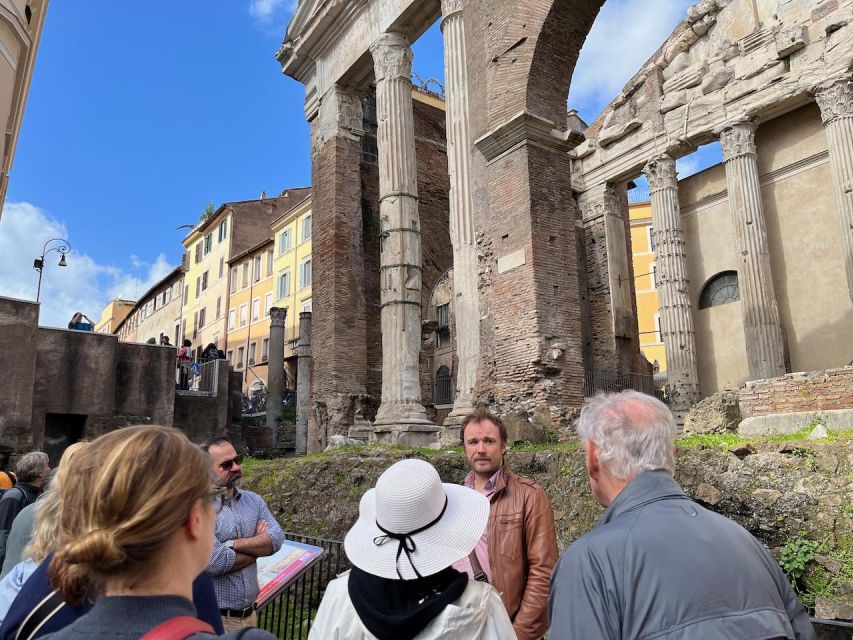
First comes the Theatre of Marcellus. Expect a short guided stop, around 10 minutes. Even if you have seen photos before, being on the ground is different. You start noticing how Roman monumental buildings still shape street lines and sightlines today, and that helps you later when you see how later communities carved out space around older walls.
Then you move to the Portico d’Ottavia for about 5 minutes. Porticoes are Roman life support, basically half architecture and half public space. When your guide explains what this area meant in its day, it gives you the right lens: Rome did not rebuild everything from scratch. It reused, adapted, and repurposed.
If you like history that explains how cities work, this early Roman frame is one of the best parts. It stops the Ghetto and Trastevere from feeling like separate theme parks.
Entering the Jewish Ghetto streets, built on layers
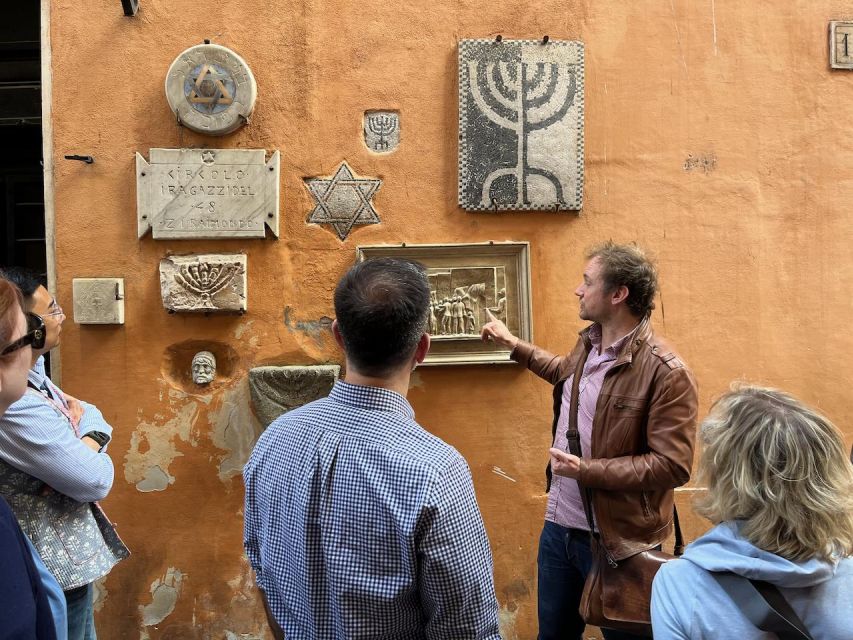
This is the heart of the tour. You spend a total of about 50 minutes in the Jewish Ghetto area, broken into two guided segments with a Piazza Mattei stop in the middle.
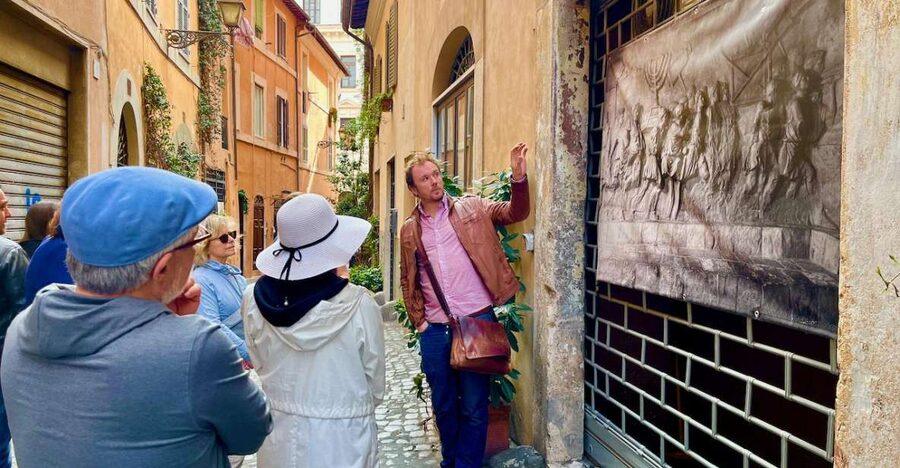
You’ll wander winding cobblestone streets, the kind where the city seems to squeeze you gently toward the next corner. Your guide’s job here is storytelling with context. Instead of just naming places, you’ll hear how the Jewish community’s experience in Rome changed over centuries, including both difficult moments and resilience.
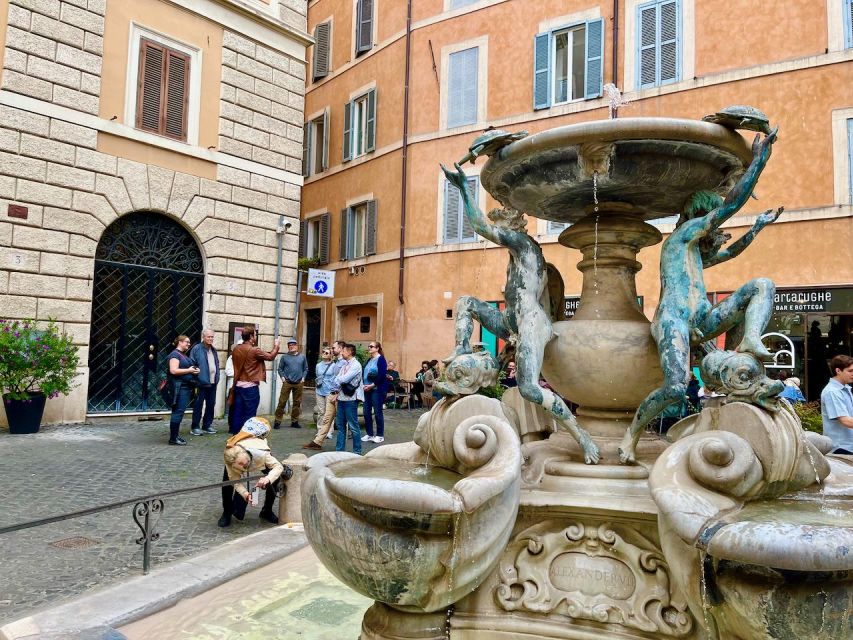
Piazza Mattei is a key mid-stop, around 10 minutes. It gives you a breather in an open space, and that matters because your brain needs a pause after the tight streets. From there, you go back into the Ghetto for the final guided block of about 20 minutes, which helps the story land as something connected, not a checklist.
Two practical takeaways you’ll feel while walking:
- You learn to “read” the street. Rome’s buildings and street angles are clues.
- You start noticing how memory lives in place, even when the physical look has changed.
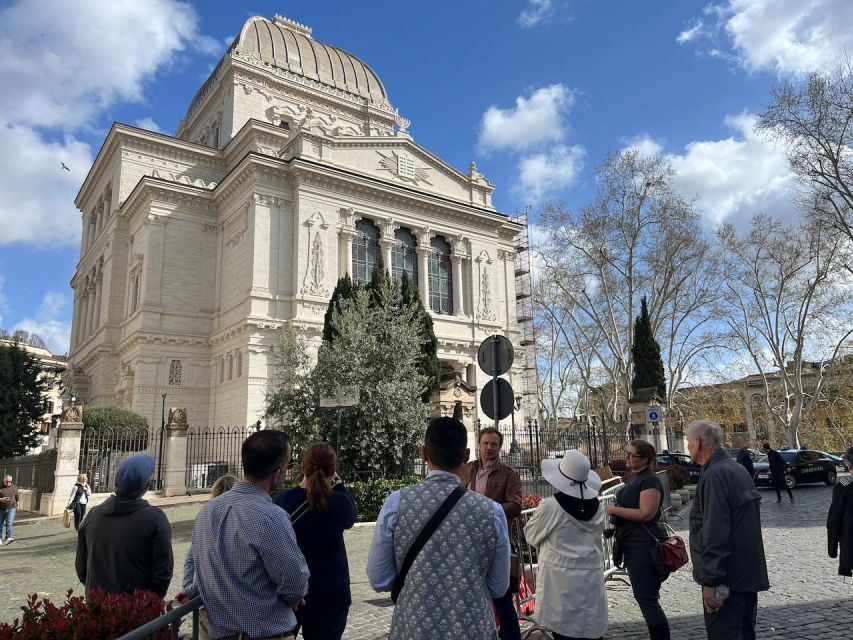
Just remember the synagogue piece: synagogue entrance is not part of this tour, and you’ll see the synagogue from the outside. That keeps the focus on the neighborhood and its streetscape rather than interior access.
Why Piazza Mattei and the Tiber Islands break matter
After the Ghetto section, you head toward the river. The route includes a Tiber Island visit, about 15 minutes of guided time plus a 10-minute break.
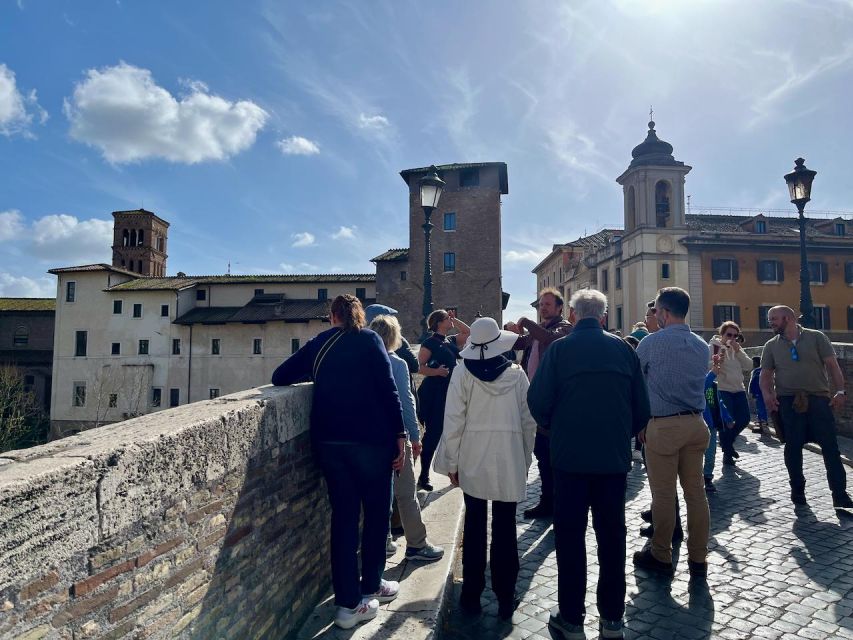
Tiber Island is tiny on a map, but it’s a real hinge point. Your guide explains why it mattered to Roman society and life, and standing there helps you understand the bigger “link” between neighborhoods. You are no longer just walking through one historic district at a time. You’re crossing from one side of Rome’s story to another.
That short break is not wasted time. You get a chance to grab water, check your bearings, and reset before Trastevere. In summer, it can get warm fast, and the tour notes that fountains are available for refills, which makes bringing a water bottle a smart move.
If you enjoy tours that include both walking and thinking time, the island stop plus break is a good design choice for a 2.5-hour window.
Also on the Rome guest list:
- Vatican Museums, Sistine Chapel & St Peter’s Basilica Guided Tour
★ 4.5 · 39,149 reviews - Rome: Colosseum, Palatine Hill and Roman Forum Guided Tour
★ 4.8 · 32,814 reviews - Rome: Guided Tour of Colosseum, Roman Forum & Palatine Hill
★ 4.7 · 27,897 reviews - Rome: Colosseum & Forum with Audio Guide App -Optional Arena
★ 4.2 · 24,770 reviews
Trastevere on foot: narrow lanes and centuries-old landmarks
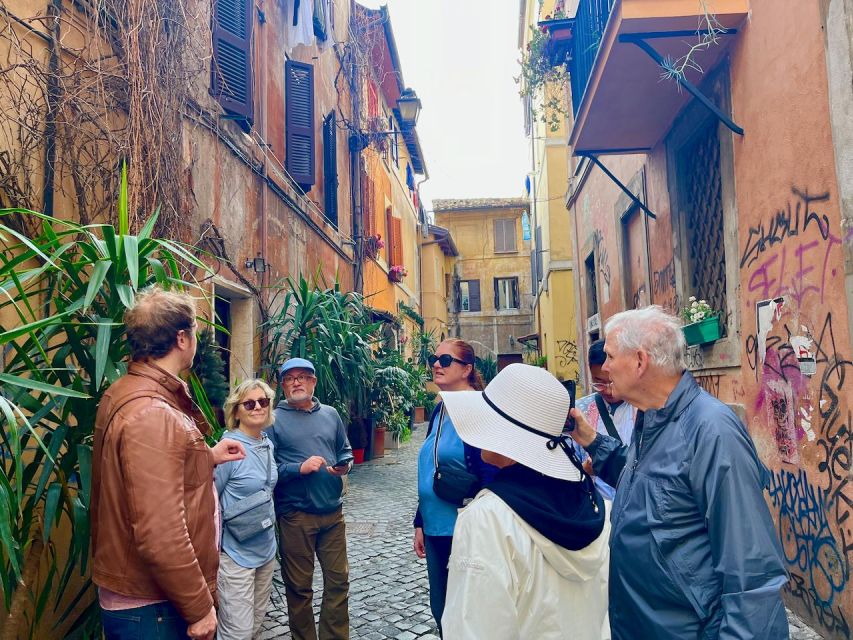
Then comes Trastevere, your final act. You get about 30 minutes of guided time here, followed by a few additional short stops that add up to another 35 minutes inside the neighborhood flow.
Trastevere is where the pace can feel different. The streets get narrower, and the buildings look more like they’ve been waiting for you. You’ll stroll through charming alleyways and pass churches that bring a long timeline into view. Your guide uses anecdotes to keep those stops from becoming just architecture notes.
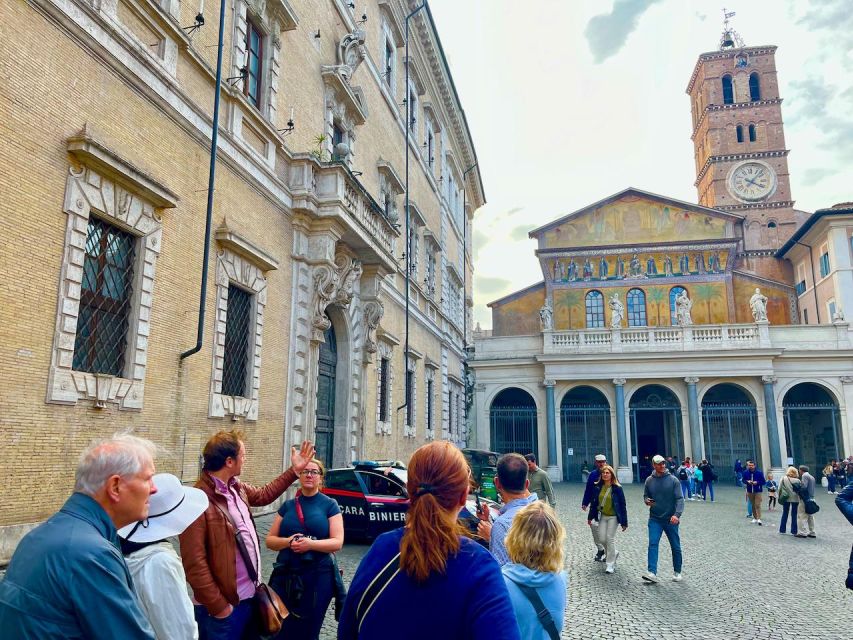
A standout stop is Santa Maria in Trastevere, about 10 minutes guided. Churches are good anchors in a neighborhood tour because they create a shared meeting point for the story. Your guide can connect religious art, community identity, and everyday street life without turning it into a lecture.
Finally, you end at Piazza Trilussa, with about 5 minutes of guided time at the end. That choice makes sense. It’s a public square where you can decompress and decide what comes next on your own, whether that means a quick snack, a longer wander, or just people-watching to let the stories settle.
How the guide storytelling style shapes what you remember
This tour is built around expert storytelling, and the guides seem to consistently land on the same sweet spot: clear English, lively delivery, and enough humor to keep you steady when the subject matter turns sad.
In multiple accounts of this experience, guides are described as funny, confident, and able to turn tough history into something understandable. One guide is noted for making English feel effortless, another for balancing tragedy with human moments, and others for answering questions without cutting people off.
That matters because the Jewish Ghetto is not just an aesthetic stop. It is history that deserves care. A good guide helps you hold complexity without getting lost in dates and names.
I also appreciate that the tour avoids trying to do too much. It’s long enough to feel complete, but short enough that you can walk away with clear mental images instead of a blur.
Timing, pacing, and what 2.5 hours actually buys you
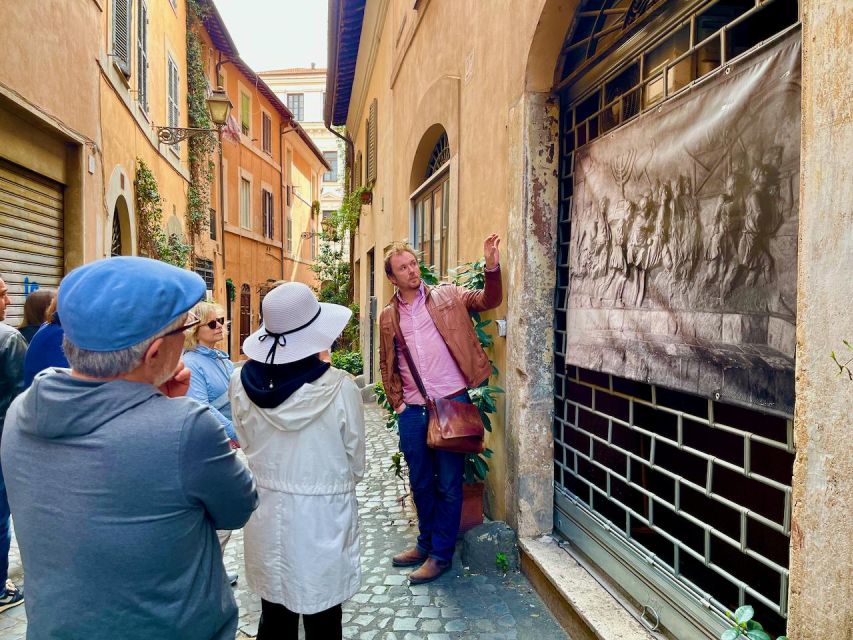
At 2.5 hours total, this is a half-day style tour with a tight, intentional route. The stop lengths are short at each anchor, which keeps the flow moving while still giving enough time to understand why each place matters.
The route is also structured so you do not get stuck in one type of environment all the way through:
- Ancient Roman anchors early (Theatre of Marcellus, Portico d’Ottavia)
- Dense neighborhood walking in the Ghetto
- River hinge moment with a break (Tiber Island)
- Residential and church-filled lanes in Trastevere
That mix is part of the value. You get different “Rome modes” in a compact time block.
You should plan for comfortable shoes. Cobblestones and narrow lanes add up. Also note that the tour runs rain or shine, so pack a light rain layer in shoulder seasons and consider a hat or sunglasses in summer.
Food and drink: what’s included, what’s optional
Food and drink are not included, but the tour includes an optional stop at a gelateria or cafe. That’s a nice touch for people who want a local pause without turning the whole tour into a meal.
If you want to eat afterward, the tour ending near Piazza Trilussa is a good setup. You’ll be in a neighborhood where you can keep the night simple with casual bars and restaurants.
Wheelchair accessibility and practical comfort
The tour is listed as wheelchair accessible. Since the route is mostly on foot through neighborhoods, you’ll still want to consider the street surfaces and turns, but the activity is set up with accessibility in mind.
No matter your mobility, the biggest practical factor is comfort. Bring water in warm months. Rome fountains are available for refills, and the tour guidance specifically encourages it.
Price and value: why $35 makes sense for this route
At $35 per person, this tour is priced for value, not for a high-end museum day. What you get is a live guide, structured storytelling, and a route that connects multiple historic zones without you doing map homework all day.
This price works best if you want:
- Context you can’t easily gather just by walking on your own
- A guided explanation of how the Ghetto and Trastevere relate
- A short, manageable time commitment with a clear finish point at Piazza Trilussa
If you’re the kind of traveler who loves reading plaques and figuring things out solo, you might spend less on a self-guided stroll. But if you want the “why” behind what you see, $35 for two plus hours with a real guide is a fair deal.
The fact that the tour holds a 4.9 rating across 208 reviews is also a good sign. High scores at this price point usually mean people feel they got their money’s worth, not just a walk around town.
Who should book this Jewish Ghetto and Trastevere stroll
This is a strong fit if you:
- Want history that’s explained through place, not just dates
- Enjoy neighborhoods you can actually walk through, not only monuments behind fences
- Like a guide who tells stories and keeps English clear and fun
It’s also a great choice for first-time Rome visitors who want a different side of the city than the usual highlights. Starting with Roman anchors and then shifting into the Jewish Ghetto and across to Trastevere gives you a Rome that feels more complete.
If you want deeper synagogue interior access, you may need to pair this tour with another activity that includes interior visits. But for a street-level understanding, it does the job well.
Should you book it?
If you want a meaningful Rome walk that connects Jewish Ghetto history with the textures of Trastevere, I think it’s an easy yes. The $35 price is reasonable for what you get, the storytelling format seems to consistently land, and the route is tight enough to finish feeling like you understood something, not just covered ground.
If synagogue interior access is your top priority, then treat this as a neighborhood history stroll that shows the Ghetto context from the streets, not a worship-space tour.
FAQ
Where is the meeting point?
You meet outside the church of Santa Rita da Cascia in Campitelli, in Via Montanara, next to Antico Caffè del Teatro Marcello.
What time should I arrive?
Arrive about 10 minutes before the start time, since late arrivals can miss the start.
How long is the tour?
The tour lasts about 2.5 hours.
What languages are offered?
The live tour guide speaks English.
Is the tour accessible for wheelchairs?
Yes, the tour is listed as wheelchair accessible.
Does the tour run in bad weather?
Yes, it runs rain or shine, so bring weather protection.
Is synagogue entrance included?
No. You will see the synagogue from the outside only.
Is food included?
Food and drink are not included, though there is an optional stop at a gelateria or cafe.
What should I bring?
Wear comfortable shoes, and in warm weather bring water. Fountains are available for refills.
Just introduced: the newest Rome write-ups
- Excavation Tour to the Tomb of St. Peter’s & St. Peter’s Basilica★ 4.0 · 183 reviews
- Imperial Rome and External Colosseum Tour★ 5.0 · 183 reviews
- Rome: Rooftop Cooking Class with Wine Tasting near Vatican★ 5.0 · 184 reviews
- Rome to Civitavecchia Cruise Port Transfer★ 5.0 · 184 reviews
- Ancient Rome and Colosseum Private Tour with Underground Chambers and Arena★ 4.5 · 184 reviews
- Rome: Vatican Museums & Sistine Chapel Skip-the-Line Ticket★ 4.1 · 185 reviews
- Borghese Gallery Max 6 People Tour: Baroque & Renaissance in Rome★ 5.0 · 185 reviews
Rome Tours, compared.
Vatican: Museums & Sistine Chapel Entrance Ticket
Read our review →
Vatican Museums & Sistine Chapel Tour with Optional Basilica
Read our review →
Colosseum, Roman Forum & Palatine Guided Tour
Read our review →
Vatican Museums, Sistine Chapel & St Peter’s Basilica Guided Tour
Read our review →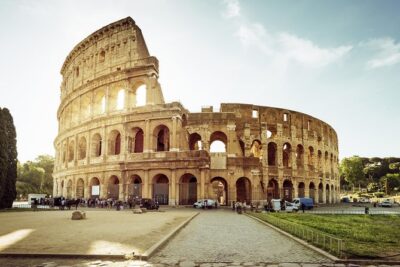
Colosseum, Palatine Hill and Roman Forum Guided Tour
Read our review →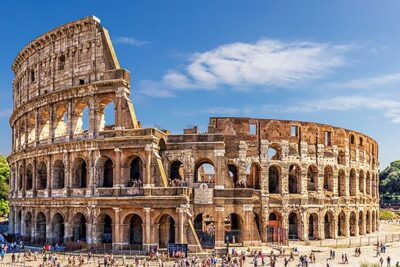
Guided Tour of Colosseum, Roman Forum & Palatine Hill
Read our review →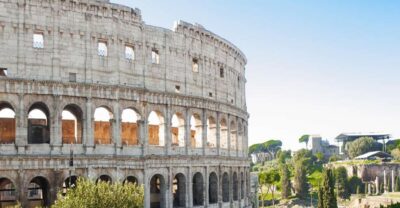
Colosseum & Forum with Audio Guide App -Optional Arena
Read our review →