
Reviewed · MUSEUMS
Rome: Leonardo da Vinci Exhibition Entrance Ticket
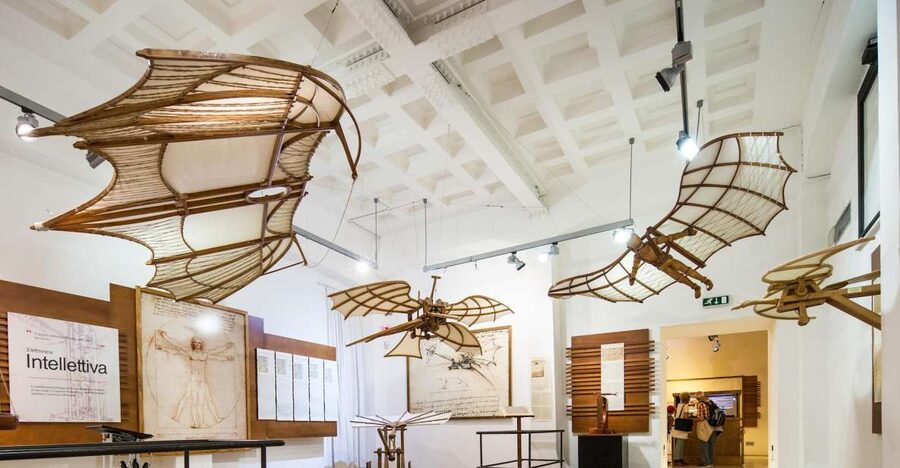
Leonardo’s inventions turn into real machines here. In the Palazzo della Cancelleria, you get a hands-on, multimedia look at 65 of Da Vinci’s ideas, from flying concepts to engineering principles. It is an easy pick when you want something smarter than another church stop, and a welcome break from Rome’s heat.
My favorite part is how much you can actually touch and test, not just watch behind glass. I also love the holograms and audio gadget, which make his drawings feel like they are moving with purpose. One heads-up: some interactive zones and raised areas mean very young kids need close attention.
In This Review
- Key highlights at a glance
- Entering Leonardo’s exhibition at Palazzo della Cancelleria
- Ticket price and value for money in Rome
- What you see: 4 sections of Da Vinci, plus a very Roman setting
- Touchable machines and that hands-on bridge moment
- Holograms, drawings, and how to use your gadget well
- Water, Air, Fire, Earth studies plus the surprise 43 BC tomb
- Pacing your visit: plan for 45 to 120 minutes underground
- Who should book this Leonardo da Vinci exhibition ticket
- Should you book Mostra di Leonardo da Vinci at Palazzo della Cancelleria?
- FAQ
- Where is the Leonardo da Vinci exhibition located?
- How long should I plan for this experience?
- What does my $10 ticket include?
- What are the main attractions inside the exhibit?
- Can I skip the ticket line?
- Until when can I enter?
- Is the exhibition wheelchair accessible?
Key highlights at a glance
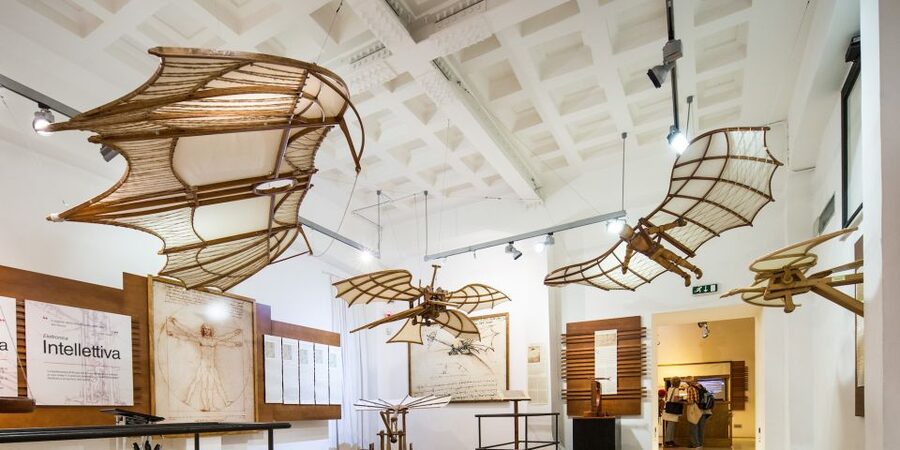
- 65 full-scale Da Vinci machines built from his designs, sized big enough to really feel mechanical
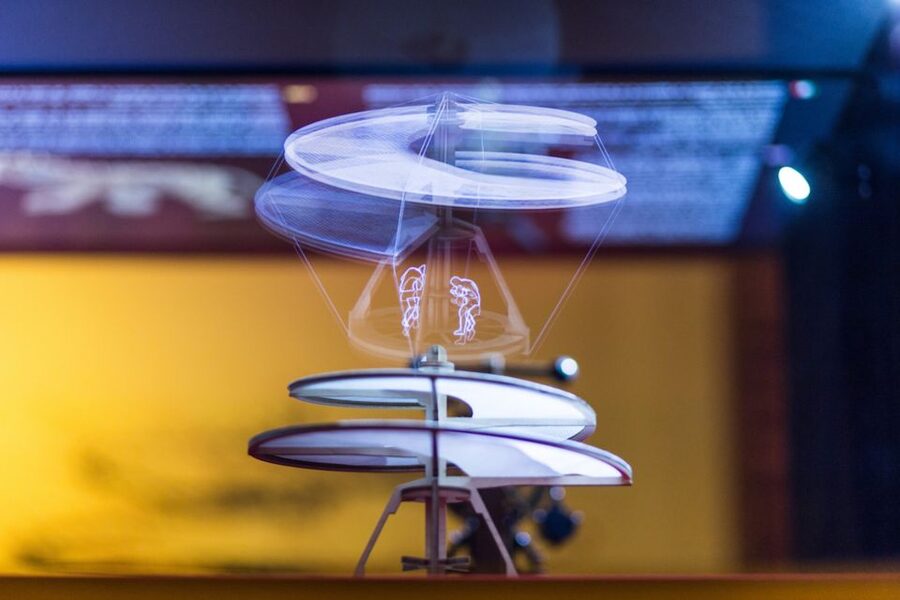
- 9 holograms that bring Da Vinci paintings and inventions into 3D
- Interactive installations tied to his drawings, built for hands-on learning
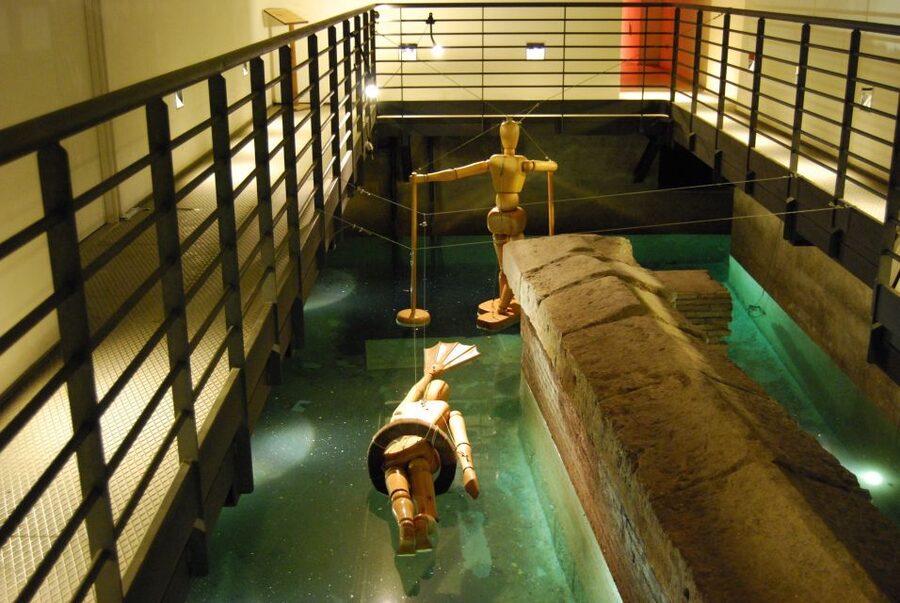
- A 43 BC tomb tucked into an underground pond, for a genuinely weird and memorable pause
- Engineering studies of Water, Air, Fire, Earth to see how he thought across disciplines
Entering Leonardo’s exhibition at Palazzo della Cancelleria
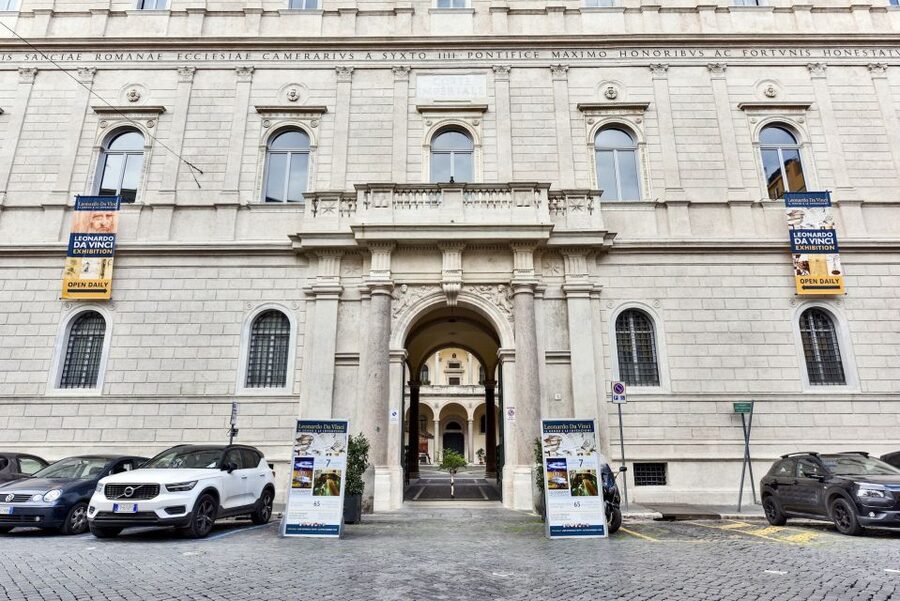
This ticket takes you to the Mostra di Leonardo da Vinci inside Palazzo della Cancelleria, at Piazza della Cancelleria 1. The building matters here, because it is owned by the Vatican and it has a reputation for its architecture. Even if you focus only on the exhibit, you are still stepping into a place with layers of Roman and religious significance, including the Sacra Rota upstairs (linked to annulment proceedings).
What makes this experience work is the contrast between setting and content. You are in a serious palace, then you walk into a staged path of machines, diagrams, and effects designed to make ideas feel practical. You can keep it simple: follow the exhibition flow, use the gadget when you want more detail, and spend time with the parts that catch your eye.
One practical thing: the ticket is for one day, and you can enter until 1 hour before closing. That flexibility helps if you are building a day around Campo de’ Fiori or Piazza Navona. Also, the attraction is set up so you can skip the ticket line, which matters in central Rome.
More museum halls from Turin to Palermo:



Ticket price and value for money in Rome
At $10 per person, this is one of the better-value Leonardo options in the city. The reason is not just the price. It is the mix: full-scale reproductions, holograms, and interactive stations where you can test concepts with your own hands.
You also get included basics with your ticket: exhibition entrance fees and a gadget. Many visitors recommend using the audio option with headphones when it is available, because it adds context and helps you understand what you are seeing. You are not relying on plaques alone.
The downside of value is that this is not a massive museum sprawling across hours and hours. A lot of people finish in about 45 to 60 minutes, though some linger longer after they get into the hands-on parts. So treat it as a focused stop in your Rome plan, not a full-day anchor unless you love engineering and interactive exhibits.
What you see: 4 sections of Da Vinci, plus a very Roman setting
The exhibit guides you through 4 sections. Each section is built around Da Vinci’s thinking, using large reproductions and staged explanations to keep his wide interests from feeling chaotic.
Expect to move from general principles toward more specific inventions. Along the way, you will see full-scale machines made according to his designs, and you will connect the dots between his sketches and what those sketches could become. The exhibit also highlights his studies of science and engineering, including topics tied to aviation and military-era thinking.
The staging is also part of the experience. Many people like that it is not overwhelming, with clear room organization and a calmer background atmosphere. It is also underground, which becomes a real plus in summer. Rome’s heat can flatten your energy fast, and this is one of those stops where you can cool down and keep moving at a comfortable pace.
One detail to plan for: the path may feel slightly confusing at first because room numbering and directions are not always intuitive. I suggest you treat the gadget audio as your companion, not as a perfect room-by-room GPS. If you realize you are out of sync, just reset and follow the physical flow. You will still catch the big ideas.
Touchable machines and that hands-on bridge moment
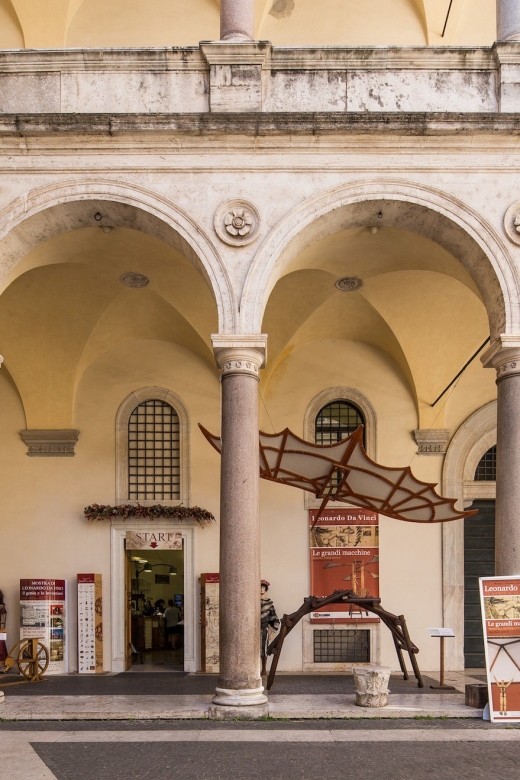
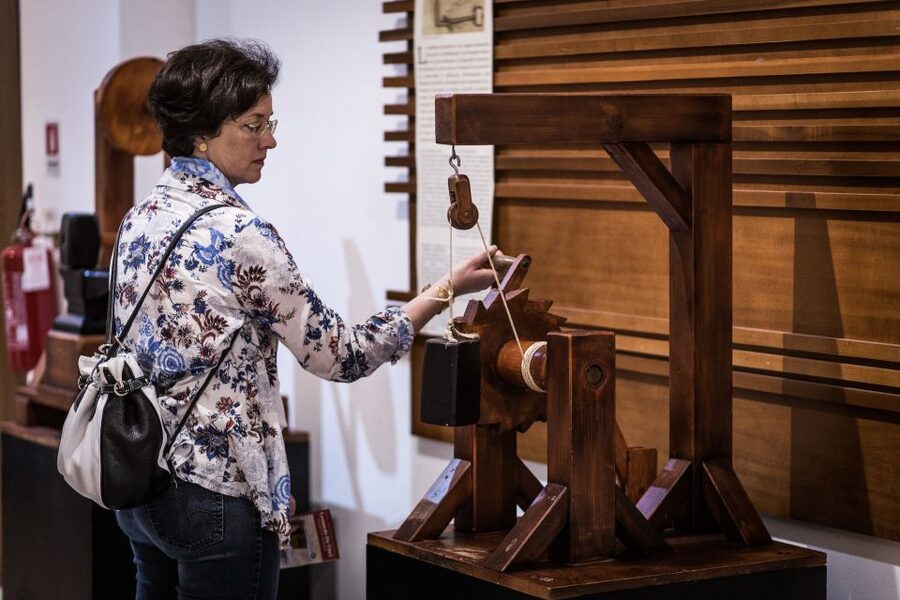
This is where the exhibit earns its keep. You are not only looking at models, you are encouraged to touch and play with almost all the machines. That sounds like a gimmick, but it changes how you learn. When you activate a mechanism with your hands, you start to understand how forces and movement were meant to work.
A standout activity is the chance to build something based on a bridge concept Da Vinci invented. It is the kind of station that rewards patience. You will likely spend a little extra time here because you can see how his design thinking translates into real structure and stability.
You will also find full-scale reproductions that help you appreciate the range of his curiosity. Some models are scientific instruments, some are engineering concepts, and some connect to flight and transportation ideas that still feel modern. Even people who came for Leonardo-as-artist often leave surprised by how much he acted like a practical engineer.
Set expectations about condition. A few visitors noted that some machines may show wear. That does not ruin the experience, but it is good to know you are seeing historical-inspired builds, not a perfect lab display.
Introductions we still owe you around Rome
- Colosseum, Roman Forum & Palatine Guided Tour
★ 4.7 · 63,148 reviews - Rome: Colosseum, Palatine Hill and Roman Forum Guided Tour
★ 4.8 · 32,814 reviews - Rome: Guided Tour of Colosseum, Roman Forum & Palatine Hill
★ 4.7 · 27,897 reviews - Rome: Colosseum & Forum with Audio Guide App -Optional Arena
★ 4.2 · 24,770 reviews
Holograms, drawings, and how to use your gadget well
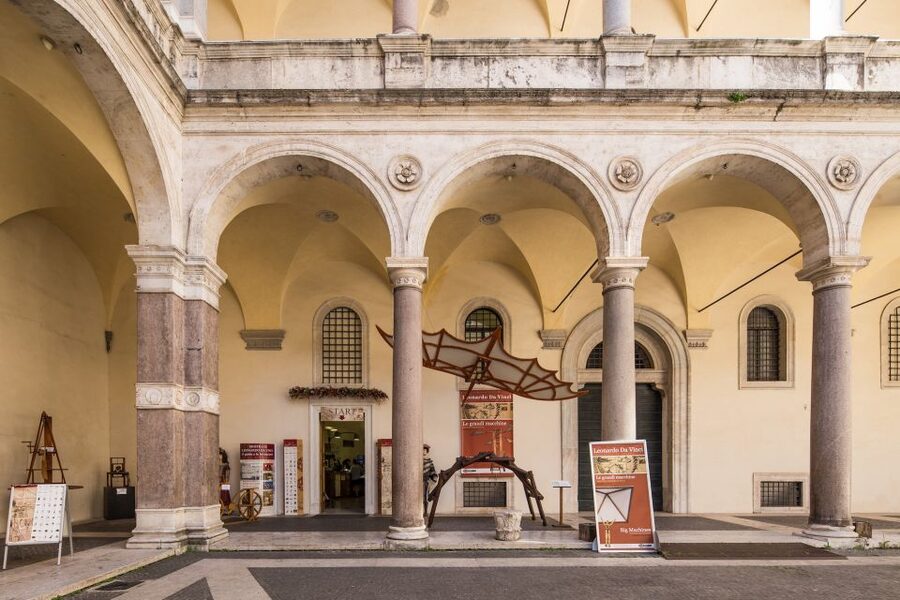
Da Vinci is hard to summarize because he was not one thing. This exhibit leans into that by mixing hands-on builds with visual effects.
The headline tech moment is the set of 9 holograms. These show Da Vinci’s paintings and inventions in 3D, and they are designed to help you visualize how his concepts might function. If you usually skip projection-heavy museum rooms, I still think you should not skip this part. It is timed and staged so the visuals support the engineering ideas rather than just trying to look cool.
Then there are the 7 interactive installations linked to his drawings. This is how you make sense of the sketches. You are able to connect marks on paper with movement, structure, and scientific reasoning.
To get the most from it, use your gadget in a simple pattern:
- Turn it on when you are standing directly in front of a machine or drawing.
- If the audio track feels out of order with the room layout, do not stress. Keep your place by following the physical exhibits first.
- Spend extra time where you can touch or test, then use the audio to explain what you just did.
Many visitors also say the audio is excellent. That matters because the exhibit is not just entertainment. It is built to teach you how Leonardo’s mindset worked across Water, Air, Fire, Earth.
Water, Air, Fire, Earth studies plus the surprise 43 BC tomb
One of the most memorable parts is how the exhibit keeps circling back to Leonardo’s studies. You see sections dedicated to his work on Water, Air, Fire, Earth, which helps explain why his inventions felt connected rather than random.
This is also where his engineering becomes more than gadgets. When you see how he reasoned about basic elements and forces, you start to understand why his inventions influenced ideas in transportation and architecture. Even if you do not care about the historical context, you will recognize the logic: observe a system, test assumptions, then build.
And then the exhibit does something you do not expect in a tech-and-machines show. You encounter a tomb from 43 BC, placed in an underground setting with a natural pond. It is a striking change of pace, like the museum reminds you that Rome is not a theme park. It is real place, real time, and real layers under your feet.
If you like atmosphere, you will probably enjoy lingering here. If you hate detours, treat it as a quick reset before you jump back into the machines.
Pacing your visit: plan for 45 to 120 minutes underground
A realistic time plan is key in Rome. This exhibition is not a 4-hour saga. Many people finish in about 45 to 60 minutes, especially if they move efficiently and focus on the most interactive machines. If you slow down for testing and reading explanations, you might stretch it to around two hours.
Because the site is underground, you can often enjoy it more comfortably than typical outdoor stops in midday heat. That makes it a smart choice for a half-day with mixed priorities: you can pair it with Campo de’ Fiori or Piazza Navona and still feel fresh.
A small practical tip: build in a couple of minutes for orientation. Some people get momentarily turned around by room numbering, so treat your first pass as a way to get your bearings. Once you understand the layout, the rest of the visit flows.
Who should book this Leonardo da Vinci exhibition ticket
This is a great fit if you like:
- Engineering concepts and how ideas become machines
- Hands-on museums where you are allowed to touch
- Interactive explanations that connect sketches to function
It is also good for families, including kids old enough to enjoy hands-on learning. The exhibit is described as educational and interactive for multiple ages, and many people mention it as a family-friendly choice.
I would be more cautious for very small children. The interactive areas include trip hazards and touch or do-not-touch zones, so supervision matters.
If you are only interested in Da Vinci the painter, you might still enjoy it, because the holograms include paintings too. But your payoff will be highest if you genuinely want the science and invention side.
Should you book Mostra di Leonardo da Vinci at Palazzo della Cancelleria?
Yes, I think you should book it if you want a low-cost, high-action Leonardo stop in Rome. For $10, you get full-scale reproductions, 3D holograms, and hands-on testing, plus a gadget that helps you understand what you are seeing.
I would only skip or swap it for something else if you need a huge museum with dozens of hours of content, or if you dislike interactive spaces where kids and adults move around more than usual. Otherwise, this is a smart, practical way to spend time with Leonardo that does not feel like homework.
FAQ
Where is the Leonardo da Vinci exhibition located?
The exhibition is at Palazzo della Cancelleria, Piazza della Cancelleria 1, near Campo de’ Fiori and Piazza Navona.
How long should I plan for this experience?
Plan for about 45 to 60 minutes for a solid visit, though it can stretch longer if you read details and spend extra time with interactive machines.
What does my $10 ticket include?
Your ticket includes the exhibition entrance fees and you receive a gadget.
What are the main attractions inside the exhibit?
You’ll see full-scale machines based on Leonardo’s designs, 9 holograms, interactive installations tied to his drawings, and a tomb from 43 BC in an underground pond.
Can I skip the ticket line?
Yes, the experience includes skip-the-ticket-line entry.
Until when can I enter?
Entrance is available until 1 hour before closing time.
Is the exhibition wheelchair accessible?
Yes, it is wheelchair accessible.
Just introduced: the newest Rome write-ups
- Rome Fiumicino Airport Transfer in Luxury Private Transportation★ 4.5 · 339 reviews
- Vatican: Pope Francis Tomb and Papal Basilicas Tour★ 4.7 · 340 reviews
- From Rome: Sorrento, Positano & Amalfi Coast Day Trip★ 4.5 · 340 reviews
- Rome: Guided Colosseum Underground Tour★ 4.8 · 342 reviews
- Colosseum Arena Floor, Roman Forum & Palatine Hill Guided Group Tour★ 5.0 · 343 reviews
- Rome: Small Group Rome’s Dark Side – Ghosts & Legends Tour★ 4.9 · 343 reviews
- Rome: City Highlights Electric Bike Tour★ 4.9 · 343 reviews
Museums, compared.

Vatican: Museums & Sistine Chapel Entrance Ticket
Read our review →
Vatican Museums & Sistine Chapel Tour with Optional Basilica
Read our review →
Vatican Museums, Sistine Chapel & St Peter’s Basilica Guided Tour
Read our review →
Skip-The-Line Uffizi Gallery Timed Entry Ticket
Read our review →
Vatican Museums, Sistine Chapel & Basilica Tour
Read our review →
Vatican Museums & Sistine Chapel Skip-the-Line Entry Ticket
Read our review →Vatican Museums, Sistine Chapel & Basilica Tour
Read our review →
Vatican Museums & Sistine Chapel Guided Tour
Read our review →Browse the lists this tour appears in