
Reviewed · WALKING TOURS
Rome: Moonlight Walking Tour – Free for Kids
Rome looks different when the sun goes down. This moonlight walking tour threads you through classic landmarks with great night atmosphere and a local guide who turns Ancient Rome into stories you can actually picture.
I like the balance here: you get major-photo stops, but the guide also points out why these places matter and how they worked in daily Roman life. One thing to keep in mind is that you cover a good amount of ground in a short time, so plan on standing, walking, and taking in a lot while your feet are doing the work.
You meet up in the central historic area, and the tour runs about 2 to 2.5 hours, with starting times that depend on what option you book. It is designed as a first-night kind of experience, and you will feel the city get quieter and cooler as you leave some crowds behind.
In This Review
- Key highlights you should care about
- Why Rome by moonlight feels easier on your senses
- Meeting in Rome, then launching from Piazza Navona
- Piazza Navona, Pantheon passing views, and the art of looking at Rome
- Galleria Sciarra and the Trevi Fountain coin-toss legend
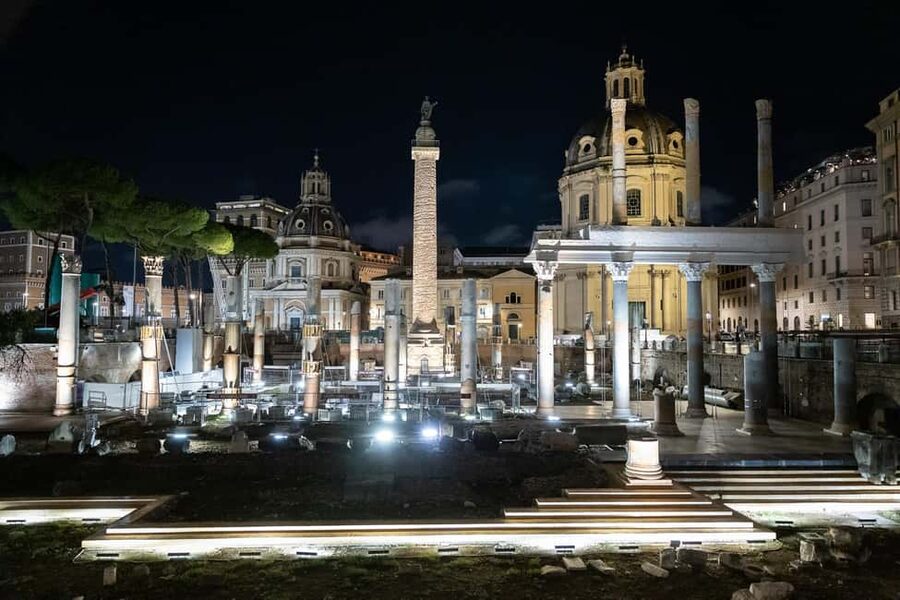
- Piazza Venezia, Trajan’s Column, and Imperial Rome lighting up
- Finishing with a picture-perfect Colosseum overlook
- Price and what $28 gets you in value
- Who this moonlight walk suits best
- Tips to make the most of the 2 to 2.5 hours
- Should you book this moonlight walking tour?
- FAQ
- How long is the Rome moonlight walking tour?
- Where do I meet the guide?
- What are the main stops on the route?
- Is the tour guided in English?
- Is food and drink included?
- Is the tour good for kids?
- What should I bring?
Key highlights you should care about
- Piazza Navona first, so you start with a big Rome scene right away, including the Four Rivers Fountain
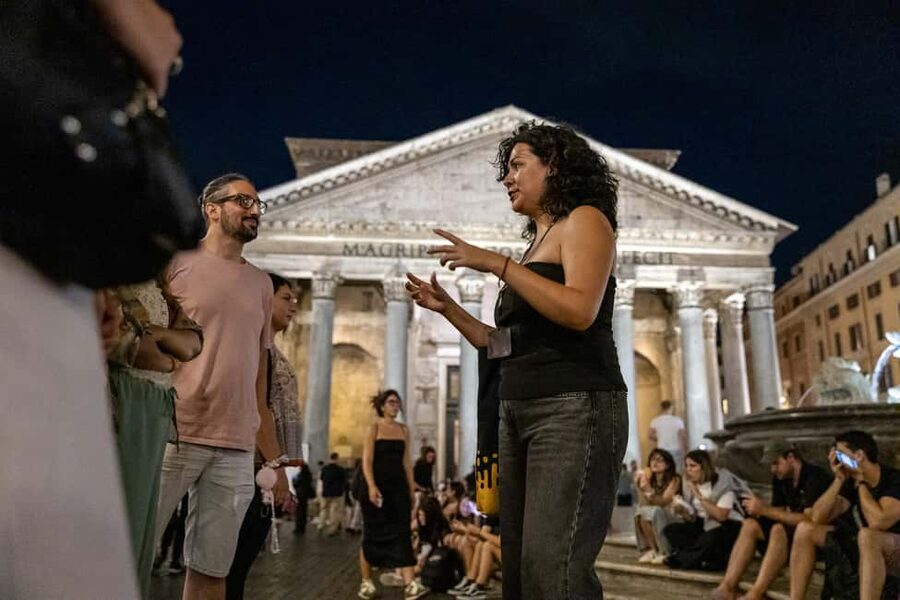
- Pantheon and Sant’Ignazio di Loyola, where night lighting and architecture make you look twice
- Trevi Fountain stops with the legend behind the coin toss and time for photos
- Imperial Rome sections, including Trajan’s Column and a walk along Via dei Fori Imperiali
- A final viewpoint over the illuminated Colosseum, timed to land as the tour’s high point
- Small-group feel, with guides praised for keeping the pace fun and engaging
Why Rome by moonlight feels easier on your senses
Rome at night has a different rhythm. The air often feels cooler, the streets feel calmer, and the monuments look dramatic because the lighting does half the storytelling for you.
That matters because this tour is packed into a tight 2 to 2.5 hours. Instead of spending hours bouncing between far-apart sites, you move through the most iconic areas in the dark, when foot traffic can be lighter and the vibe is more relaxed.
I also like that the route is built for photography. You get repeated moments to pause near key landmarks, not just a rush past them. If you plan your day around this tour, you can end the night with a set of strong images, without the stress of trying to navigate in crowds at peak hours.
More Italy at street level:

Meeting in Rome, then launching from Piazza Navona
The tour’s starting point can vary by the option you choose. You might begin near Piazza Navona, or from one of the other listed start spots (Piazza di Pasquino or Piazza d’Aracoeli), and the guide meets you in the central area so you are not wandering.
Once you are grouped up, you start at Piazza Navona, one of Rome’s most cinematic squares. The Four Rivers Fountain is the anchor, and it is a great place for your guide to set context: what you are seeing, why this spot became so important, and how Rome’s layers build on each other.
You get a guided introduction here for about 20 minutes. That first chunk is useful because it gives you a mental map for the evening, especially if you are arriving in Rome and trying to understand where everything fits.
If you are traveling with kids, this tour is marketed as free for them, which is a nice bonus when you want the highlights without shelling out for a separate kid ticket. And based on guide feedback, the best guides treat kids and teens like part of the group, not an afterthought.
Piazza Navona, Pantheon passing views, and the art of looking at Rome
After Piazza Navona, the tour moves toward the Pantheon. You will not have a long sit-down visit here, but you do get time to pass by and take it in (about 20 minutes).
That short window can be exactly right at night. The Pantheon is famous enough that you might feel you already know it, but in nighttime light you notice new details: the way the façade reads in shadow, the way the surrounding streets frame the monument, and how the crowd energy changes after dark.
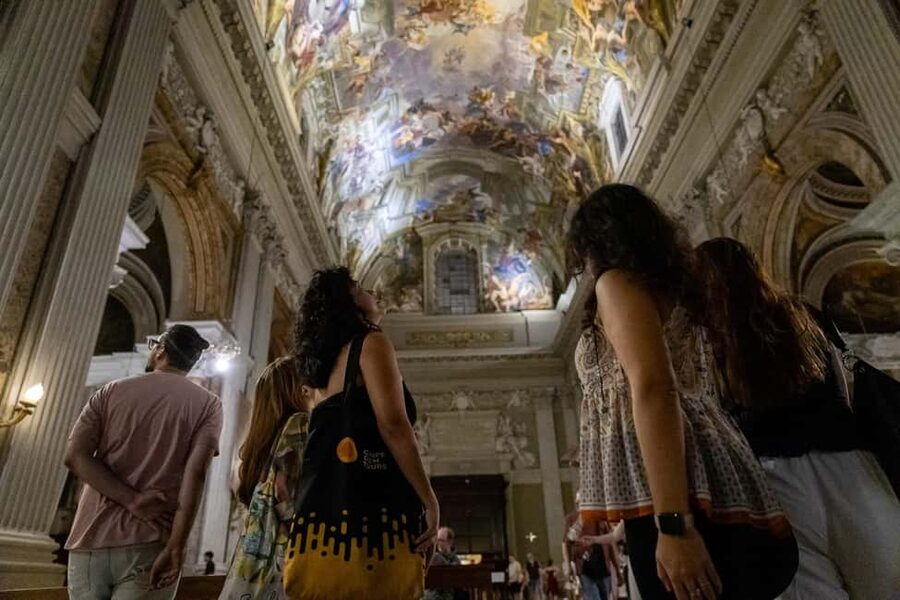
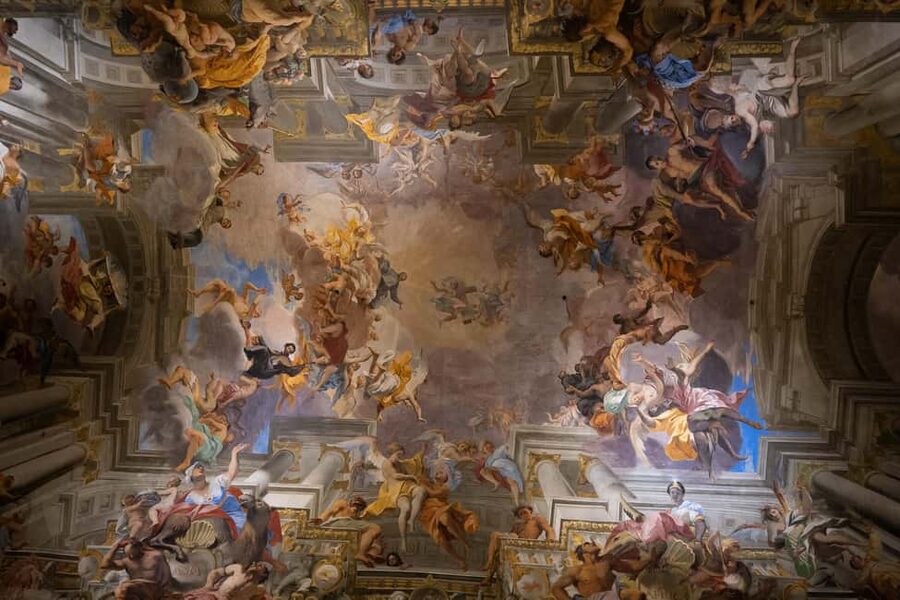
Next comes Church of Sant’Ignazio di Loyola, where the tour gives you more time, around 30 minutes. This is one of those places that people rate as a highlight because it rewards attention.
One review specifically called out the fake dome ceiling as a standout. That makes sense. It is the kind of visual trick that works even better at night, because your focus shifts from street bustle to what the guide is showing you. You will likely hear how this illusion fits into the broader story of Baroque design and Roman taste for dramatic effects.
If you care about architecture, this is a smart mid-tour stop. It breaks up the monument-hunting and gives you something to study instead of just photograph.
Galleria Sciarra and the Trevi Fountain coin-toss legend
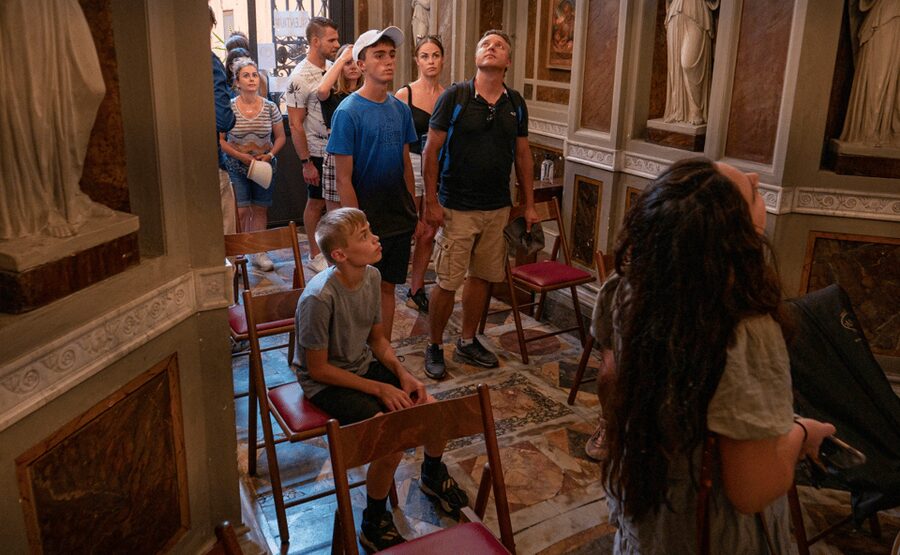
From the Sant’Ignazio area, the route continues through Galleria Sciarra for about 20 minutes. This is one of those quieter lanes and passageways that feels like a palate cleanser between bigger squares. It helps you experience Rome as more than just postcards.
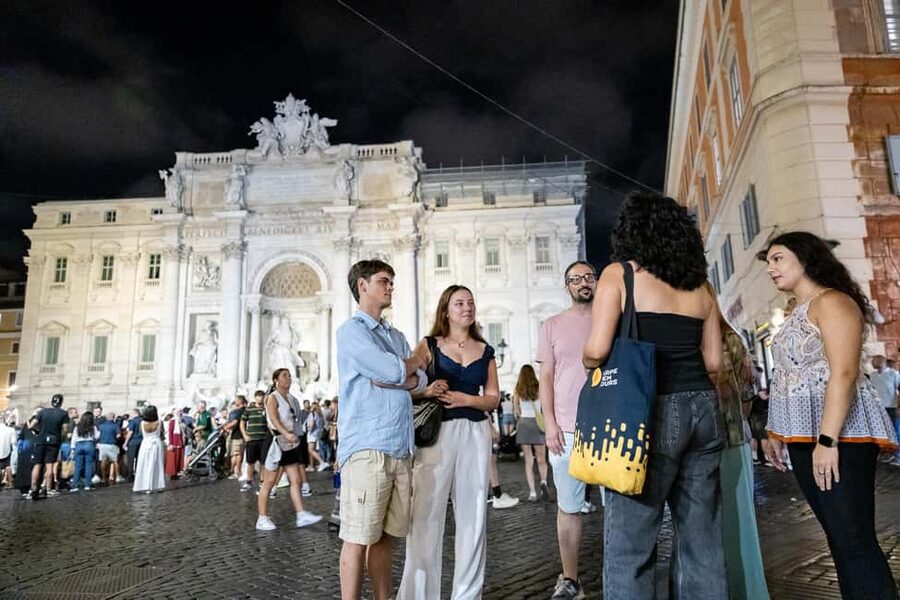
Then you hit Trevi Fountain, and you get around 30 minutes that includes guided time. Trevi is a must, but you will enjoy it more if you know what to look for. Your guide explains the fountain’s history and the coin-toss legend, so the moment becomes something more than a photo stop.
Trevi at night still draws people, but the energy can feel different than daytime. You get time for photos next to illuminated monuments, and your guide sets expectations so you are not standing in place wondering what comes next.
One practical thing: fountains and busy corners can make it harder to hear your guide at first. I would recommend you position yourself to one side a bit when the group stops, then turn toward your guide when they speak. As the tour continues, it tends to get easier to follow the explanation without competing noise.
You will also have a short break for photos or a refreshment. Food and drink are not included, but a mid-evening pause is a big deal when you have 6 to 9 more stops after this point. If you want gelato, you can plan for it around that refreshment window.
Introductions we still owe you around Rome
- Vatican: Museums & Sistine Chapel Entrance Ticket
★ 4.5 · 144,003 reviews - Vatican Museums & Sistine Chapel Tour with Optional Basilica
★ 4.3 · 67,413 reviews - Colosseum, Roman Forum & Palatine Guided Tour
★ 4.7 · 63,148 reviews - Vatican Museums, Sistine Chapel & St Peter’s Basilica Guided Tour
★ 4.5 · 39,149 reviews
Piazza Venezia, Trajan’s Column, and Imperial Rome lighting up
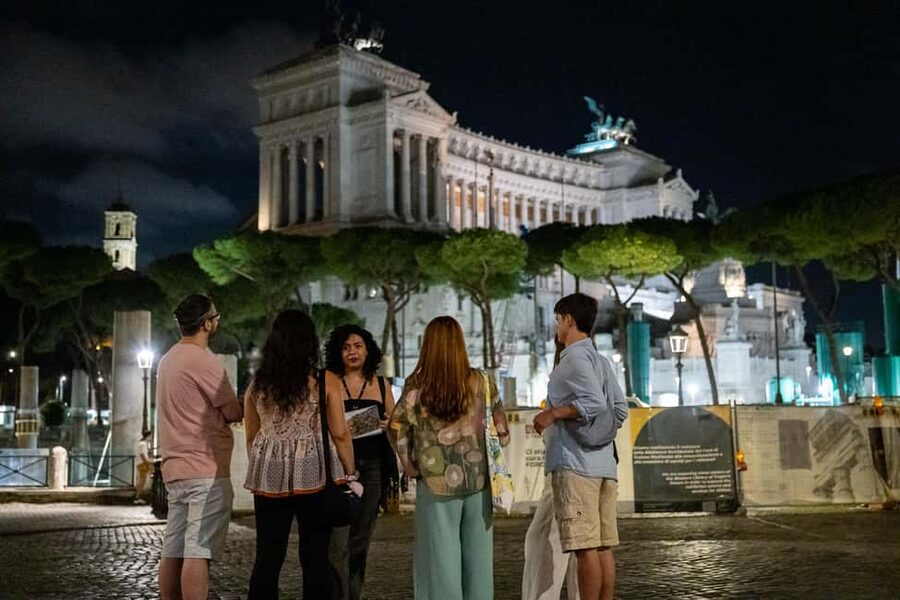
Piazza Venezia is next, with about 20 minutes guided. This stop gives you a strong sense of Rome’s political self-image. The square is dominated by the building commemorating Vittorio Emanuele II, and it is a useful staging area for what comes after.
Then you head into the Imperial Forums zone. You pass along Via dei Fori Imperiali for about 20 minutes, and you also get time specifically at Trajan’s Column, guided for about 20 minutes.
Night makes this kind of walking feel cinematic. The route is designed so you can see illuminated elements at a distance, like the statues, columns, temples, triumphal arches, and the long lines of imperial roads. You also get a chance to understand the scale. In daylight, the forums can feel like scattered ruins. At night, they read more like a connected complex.
Your guide’s job here is crucial. If you have ever seen the Imperial sites and felt lost, this is the area where a good storyteller saves you. They explain what you are looking at, how power was displayed, and why these forms mattered to Roman identity.
One more reason I like this portion: you are not just sightseeing in isolation. You get a sequence. Piazza Venezia sets the frame, Trajan’s Column anchors a specific story, and the Imperial road section shows you how the monuments relate to the spaces between them.
Finishing with a picture-perfect Colosseum overlook
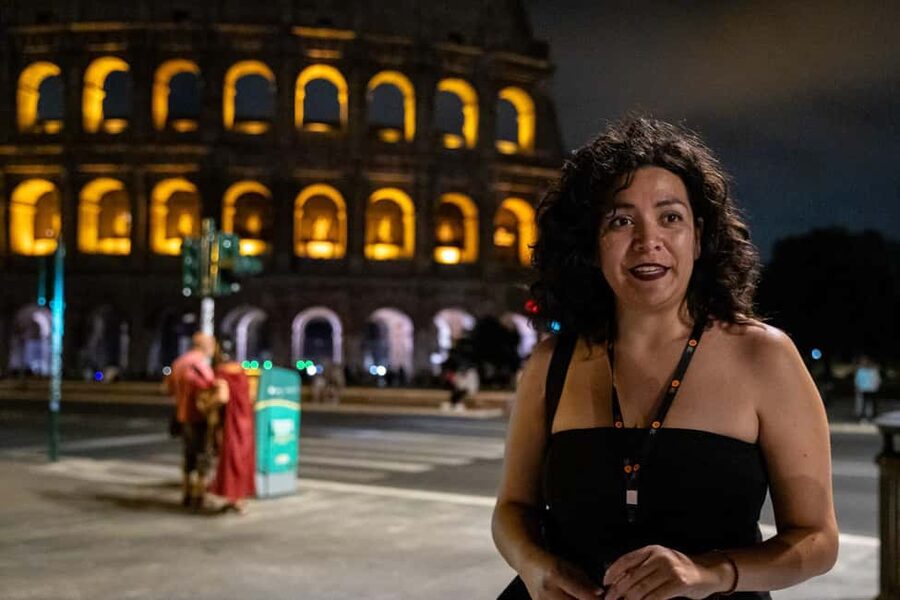
The tour saves the best for last, and it does that for a reason. You end with a secret picture-perfect viewpoint that overlooks the illuminated Colosseum.
This is a smart way to end because it flips the day’s effort into a payoff moment. By the time you reach the final viewpoint, you are probably seeing Rome with more understanding than when you started. The Colosseum feels less like a standalone bucket-list object and more like a centerpiece of a whole Roman world.
You also get to soak in the lights without the stress of trying to get the perfect angle while the crowd churns. The viewpoint finish is where the tour’s pacing shows off: you have covered a lot, you have learned a lot, and then you close on a strong visual win.
If you have energy for it, stay aware of where your group is gathering. The best night photo is the one you can take without losing your place.
Price and what $28 gets you in value
At $28 per person for a 2 to 2.5 hour guided walk, this is a pretty good value if your priority is concentrated sightseeing with context. You are paying for a guide, timed stops, and a route that strings together major Roman icons in the evening.
What helps the value is the structure. You are not just walking past landmarks. You stop at places like Piazza Navona, Sant’Ignazio di Loyola, Trevi Fountain, Piazza Venezia, and Trajan’s Column with guided time at key points. That is where your money goes: interpretation plus convenient routing.
Included elements also matter: you get a local moonlight tour, hidden-gems style stops, guided narration, and a list of recommendations. Food and drink are not included, so you should budget for a small purchase if you want a snack or a gelato during the refreshment break.
I would also add one more value angle. This is one of those tours that can help you plan the rest of your trip. If you come away with a clearer sense of where things are, your next visits can feel smoother and less random.
And if you want flexibility, the tour is listed with free cancellation up to 24 hours in advance, plus reserve now and pay later options. That kind of flexibility helps if your Rome schedule might shift.
Who this moonlight walk suits best
This tour is a strong fit if you want a first-night orientation, or if you have limited time and want to hit multiple must-sees without hopping on transport. It also makes sense if you like walking tours but you do not want a lecture that ignores the vibe.
Families can do well here because the tour is marketed as free for kids, and some guides are praised for keeping kids and teens engaged. If your child is old enough to handle a couple hours of walking, this is a good way to mix fun with history.
It is also a great choice if you care about stories from different eras. Ancient Rome is the anchor, but you still get the connective tissue to understand how later Rome visually built on older ideas.
If you have mobility limits, you might find the walking pace challenging because the tour covers a lot of ground in a short time. Comfortable shoes are not optional on this one.
Tips to make the most of the 2 to 2.5 hours
- Wear comfortable shoes and plan for uneven cobblestones and standing at stops. Your feet will notice the difference between a short stroll and a guided route.
- Bring comfortable clothes for evening air. Rome nights can feel pleasant, then cool quickly while you are stopped for photos.
- If you struggle to hear by fountains and busy corners, stand so you can face the guide. It gets easier as the tour moves away from the noisiest spots.
- Pace your photos. Your guide builds in photo time, but you still need to move with the group so you do not end up rushing later.
- If you are visiting in a hot stretch, this is one of the smartest times to do a history-heavy activity. Night often helps more than people expect.
On the guide side, names like Aline, Diletta, Sila, Dan, Anna, Paulina, Sharon, Mary, Anastasia, and Csenge show up in past experiences with standout praise for being engaging, friendly, and clear. You should not pick a tour only because of one guide, but it is reassuring when the guide style seems consistently strong.
Should you book this moonlight walking tour?
Yes, if you want a compact, high-impact way to see Rome’s biggest hits at night, with a guide who explains what you are actually looking at. This is not just sightseeing. It is sightseeing with a framework, so you leave with a better sense of how Ancient Rome shaped what you see today.
Book it if your goals are: get oriented fast, enjoy illuminated landmarks, and have an evening plan that does not depend on figuring everything out yourself. I would especially recommend it as one of your first nights in Rome, because the route helps you connect neighborhoods and monuments in your head.
Skip it only if you know you cannot handle a dense, walk-heavy evening. If you prefer a slower pace with fewer stops, you might get more comfort from a smaller, targeted tour. But for $28 and a 2 to 2.5 hour window, this one is built for maximum night value.
FAQ
How long is the Rome moonlight walking tour?
The tour runs about 2 to 2.5 hours. Starting times vary, so check availability for the schedule on your dates.
Where do I meet the guide?
The start location can vary depending on the option booked. The tour lists starting options near Piazza di Pasquino or Piazza d’Aracoeli, and your guide meets you in the central historic area.
What are the main stops on the route?
You will see or pass by major sites including Piazza Navona, the Pantheon, Sant’Ignazio di Loyola, Galleria Sciarra, Trevi Fountain, Piazza Venezia, Trajan’s Column, and Via dei Fori Imperiali. The tour also ends with a viewpoint overlooking the illuminated Colosseum.
Is the tour guided in English?
Yes. The live guide language includes English, and Spanish is also offered.
Is food and drink included?
No. Food and drink are not included. The tour includes a short break for photos or a refreshment, but you will need to purchase anything you want.
Is the tour good for kids?
The tour is marketed as free for kids. If your kids can manage a couple of hours of walking and standing at stops, it can work well as a fun introduction to Rome at night.
What should I bring?
Bring comfortable shoes and comfortable clothes. You will be walking and spending time standing in different parts of the city.
Just introduced: the newest Rome write-ups
- Excavation Tour to the Tomb of St. Peter’s & St. Peter’s Basilica★ 4.0 · 183 reviews
- Imperial Rome and External Colosseum Tour★ 5.0 · 183 reviews
- Rome: Rooftop Cooking Class with Wine Tasting near Vatican★ 5.0 · 184 reviews
- Rome to Civitavecchia Cruise Port Transfer★ 5.0 · 184 reviews
- Ancient Rome and Colosseum Private Tour with Underground Chambers and Arena★ 4.5 · 184 reviews
- Rome: Vatican Museums & Sistine Chapel Skip-the-Line Ticket★ 4.1 · 185 reviews
- Borghese Gallery Max 6 People Tour: Baroque & Renaissance in Rome★ 5.0 · 185 reviews
Walking Tours, compared.
Guided Walking Tour & Last Supper Visit with Ticket
Read our review →
Rialto Bridge & Offbeat Unusual Venice Walking Tour
Read our review →
Private 3 hrs Venice Tour: St Mark’s, Walking tour & Boat tour
Read our review →
Skip the line: Uffizi and Accademia Small Group Walking Tour
Read our review →Browse the lists this tour appears in