Reviewed · GUIDED
Rome: Small Group Guided Tour of Castel Sant’Angelo
Castel Sant’Angelo turns Rome into a timeline. This 2 hour small-group tour gives you swift access inside Emperor Hadrian’s Tomb and walks you through the castle’s big shifts in power, with help from guides such as Alex, Alec, Barbara, Silvia Rossetti, and Lorenzo. I like the clear, story-driven pacing and the fact that you get to the best parts, especially the Renaissance frescoes and the skyline from the terrace, without feeling rushed. The only real drawback to plan for is that this isn’t ideal for people with mobility impairments, since the route involves stairs and a spiral ramp up through multiple floors.
What I really appreciate is how the guide connects the dots, from fortified corridors to prison spaces, then to Papal rooms and later ceremonial uses. You’ll also wear headsets if needed, so you can actually hear your guide inside thicker stone passages. Since it runs rain or shine, bring a rain layer if you tend to get cold outside.
In This Review
- Key highlights you should care about
- Where Castel Sant’Angelo fits in Rome’s story
- Swift access inside the fortress, not a slow museum stroll
- Emperor Hadrian’s Tomb: the “why” behind the walls
- Five floors up a spiral ramp, with a clear payoff at each level
- Cells and the chamber of ashes: when the castle gets real
- Papal residence rooms: power, religion, and architecture
- Renaissance frescoes and the castle’s weaponry collection
- The terrace view: Rome at your eye level
- Price and value: what you get for about $75
- Who this tour suits best (and who should skip it)
- A realistic game plan for your visit
- Should you book this Castel Sant’Angelo tour?
- FAQ
- How long is the Castel Sant’Angelo small-group tour?
- Where do I meet the guide?
- Is the entrance ticket included in the tour price?
- What ID do I need to bring?
- Do I need to provide participant names and birthdates when booking?
- Does the tour run in bad weather?
- What languages is the tour available in?
- Is the tour suitable for people with mobility impairments?
- Are food and drinks included?
- What are the cancellation and payment options?
Key highlights you should care about
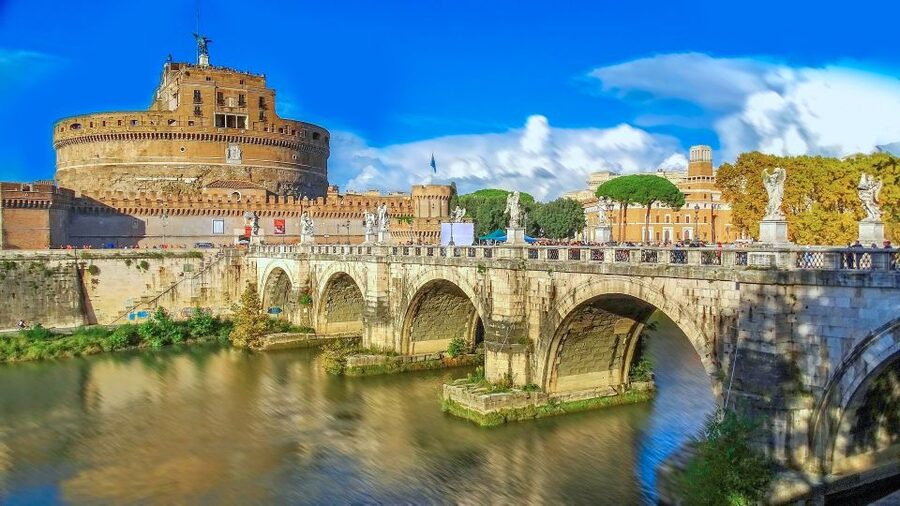
- Fast entry with a guide so you spend less time staring at lines and more time walking in the fortress
- Hadrian’s Tomb to prison cells, with a route that makes the building’s former uses easy to follow
- Five floors via a spiral ramp, which is physical, but also efficient for a 2 hour visit
- Renaissance frescoes plus an extensive weaponry collection that adds an unexpected layer of realism
- Terrace photo stop with major views over Rome once you’re near the top
Where Castel Sant’Angelo fits in Rome’s story
Castel Sant’Angelo is not just a pretty landmark on the Tiber. It is a former imperial tomb that kept getting repurposed, then rebranded by new authorities over time. That is why it works so well with a guide. You do not only look at rooms, you learn what they were used for, and that makes the stone feel less like a museum set and more like a lived-in machine.
In a short 2 hour window, the tour structure matters. You start at the entrance with your guide and move in quickly, rather than wandering at a pace that Rome often forces on you. Then the route climbs through multiple levels, so you end up with a payoff on top: the terrace views, which are the kind you want to pause for.
You also get headsets if needed, which is a small thing that makes a big difference in a place where echoes can swallow a normal voice. For a small group, it also means you can ask questions without repeating yourself.
Introductions we still owe you around Rome



Swift access inside the fortress, not a slow museum stroll
The meeting point is straightforward. Your guide is waiting in front of the entrance with a City Walkers sign. From there, you walk in with what the tour calls swift access, which includes the ticket cost.
That matters because Castel Sant’Angelo is one of those Rome stops where you can easily lose time. By bundling entry into the guided experience, you get a smoother start, and the tour time stays focused on the areas that tell the most interesting story. For you, that means you leave knowing what you actually saw, not just that you technically visited.
Two practical notes to take seriously:
- You need your passport or ID card.
- Ticket names are checked at the entrance, so the correct names and birthdates you provide during booking really do matter.
Emperor Hadrian’s Tomb: the “why” behind the walls

The first big moment is walking through Emperor Hadrian’s Tomb. You start in the fortified corridors, and the guide explains how the complex history is not one simple chapter. Rome’s power shifts show up in the building itself, and your route is built to highlight those changes.
I like this opening because it gives you a mental map fast. Instead of seeing a castle as random rooms, you understand that the corridors and defenses were part of a designed purpose. You also hear the stories behind why the site is considered a monument, museum, and archaeological site all at once.
If you enjoy history that feels like a chain reaction, you will appreciate how the guide keeps returning to causes and consequences. That is especially helpful in this building, where later uses can make earlier meaning easy to miss.
Five floors up a spiral ramp, with a clear payoff at each level
The core experience is a climb. You walk the spiral ramp to reach each of the five floors. Physically, it is more than a casual stroll, and it is a big reason the tour is not listed as suitable for mobility impairments.
But as a practical travel strategy, the spiral layout actually helps you. The building’s structure naturally guides you upward, and you keep moving rather than stopping and starting all the time. The guide uses that motion to keep the story chronological, so your brain stays engaged instead of turning into background noise mode.
Along the way, expect these key “stop moments”:
- The chamber of ashes
- Cells that once imprisoned many historical figures
- Upper rooms that served as a Papal residence
That set of stops is not random. It gives you the arc of the place: imperial origins, later incarceration, then religious authority shaping how the castle functioned.
Also on the Rome guest list:
- Vatican Museums, Sistine Chapel & St Peter’s Basilica Guided Tour
★ 4.5 · 39,149 reviews - Rome: Colosseum, Palatine Hill and Roman Forum Guided Tour
★ 4.8 · 32,814 reviews - Rome: Guided Tour of Colosseum, Roman Forum & Palatine Hill
★ 4.7 · 27,897 reviews - Rome: Colosseum & Forum with Audio Guide App -Optional Arena
★ 4.2 · 24,770 reviews
Cells and the chamber of ashes: when the castle gets real
This is the part that tends to stick with people. The tour takes you to the chamber of ashes and then through the cells that once imprisoned notable figures. It is an uncomfortable topic, but that is also what makes it memorable. You start to feel how architecture can be used for control.
What I like about getting this inside a guided route is context. The guide explains the multi-faceted past instead of treating imprisonment as a simple horror story. You come away understanding that the building’s purpose shifted with politics and power, not just with random events.
If you prefer your tours upbeat and light, you might find this section heavy. Still, it is also where the castle stops being abstract. You can look at the space and understand why it is historically significant.
Papal residence rooms: power, religion, and architecture
Once you reach the upper parts of the castle, the vibe changes. You move through rooms that served as Papal residence. This is where the castle stops feeling like a fortress only, and starts feeling like a stage for governance and ceremony.
In other words, you see Rome doing what it always does. Different institutions adopt the same walls and make the spaces mean something new. The guide helps you track what changed and why.
This part is also where your photo instinct kicks in, because upper rooms often open sightlines and give you visual breathing space inside the building. Even if photos are not your top priority, you will feel less like you are walking through a maze.
Renaissance frescoes and the castle’s weaponry collection
A major highlight is the preserved frescoes from the Renaissance period. You get to view them while the guide explains how the castle’s later chapters played out through art and design choices.
I really like this pairing: frescoes plus weaponry. It keeps the story grounded. Art can make a place feel timeless, but weaponry reminds you this was built for conflict and defense. Together, they make Castel Sant’Angelo feel like a working historical site, not just a pretty shell.
If you care about seeing “real objects” rather than only painted ceilings, you will probably enjoy the extensive weaponry collection. It adds texture to what you learn, and it helps you visualize what the castle needed to survive.
The terrace view: Rome at your eye level
The top terrace is the tour’s natural reward. After you climb up through multiple floors and key rooms, the guide brings you to the terrace where you can see the city and take photos.
This is the practical reason you should do a guided route rather than a DIY visit. The guide gets you to the best viewpoint portion without you having to guess which level is worth your time. And once you are up there, you can slow down, frame your shots, and enjoy the skyline.
Rome from the terrace also gives you a “big picture” feeling. Castel Sant’Angelo is tied to the river and the city’s geography, so the view helps you understand where the building sits in the larger urban story.
Price and value: what you get for about $75
The tour price is listed at $75 per person, and it includes the ticket cost. For adults, the ticket included is 16 euros, and kids under 18 enter for free. So you are not paying extra on top for entry the way you might with some guided tours.
Value is not only about the discount, it is about time and certainty. You get:
- A 2 hour guided route that covers the big layers of the site
- Headsets if needed
- Swift access that reduces wasted time at the entrance
- A guide who answers questions and keeps you moving between the most important stops
Many people look at price first and forget the real cost is time. Two hours here is a sweet spot. You get Hadrian’s Tomb, prison spaces, Papal rooms, frescoes, weaponry, and a terrace view without turning it into a half-day mission.
Who this tour suits best (and who should skip it)
This is a strong pick for you if you want a guided history experience that feels organized. It works well if you enjoy stories told through architecture, especially when the building changes roles over time.
It also fits you if you like guides who can handle questions and keep the group engaged. From the tour’s track record, guides including Alex, Alec, Barbara, Silvia Rossetti, Maria, Oleg, and Lorenzo have been praised for clear explanations and a sense of humor that helps the time pass quickly.
You might choose differently if:
- You need accommodations for mobility challenges, since the route involves stairs and a spiral ramp and is not recommended for mobility impairments
- You only want surface-level photos and do not want the deeper parts about prison cells and the chamber of ashes
A realistic game plan for your visit
Even though the tour runs rain or shine, your experience will feel smoother if you prep smart:
- Wear shoes you trust on stairs and ramps.
- Bring your passport or ID, since it is checked.
- Travel light, because luggage or large bags are not allowed.
- Expect a steady pace. It is designed to cover multiple floors in 2 hours.
Also, since Castel Sant’Angelo is a fortress space, indoor air can feel cooler than you expect. If you run cold easily, a light layer helps.
Should you book this Castel Sant’Angelo tour?
If you want the castle story in a short, focused visit, I think it is a good bet. The guide-led route is built around the places that matter, and you end with terrace views that make the climb feel worth it. The included ticket cost and swift access also help you keep the day on schedule.
I would pass if mobility issues are a concern. And if you are the type who hates guided pacing and prefers wandering at your own tempo, you might feel constrained by a structured 2 hour climb.
Overall, book it if you want a practical way to see Castel Sant’Angelo with context, not just a checklist stop.
FAQ
How long is the Castel Sant’Angelo small-group tour?
The tour lasts 2 hours.
Where do I meet the guide?
Meet your guide in front of the entrance, with a City Walkers sign.
Is the entrance ticket included in the tour price?
Yes. The tour price includes the cost of the tickets. Adults pay 16 euros for the ticket, and children under 18 are free.
What ID do I need to bring?
Bring your passport or ID card. The museum staff checks tickets nominally at the entrance.
Do I need to provide participant names and birthdates when booking?
Yes. Tickets are nominal and checked at the entrance, so provide the correct names and birthdates during booking and bring a valid ID.
Does the tour run in bad weather?
Yes, the tour takes place rain or shine.
What languages is the tour available in?
The live tour guide is available in English, French, Italian, and Spanish.
Is the tour suitable for people with mobility impairments?
No. The tour is not suitable for people with mobility impairments.
Are food and drinks included?
No. Food and drinks are not included.
What are the cancellation and payment options?
You can cancel up to 24 hours in advance for a full refund. You can also reserve now and pay later, which keeps your plans flexible.
Just introduced: the newest Rome write-ups
- Excavation Tour to the Tomb of St. Peter’s & St. Peter’s Basilica★ 4.0 · 183 reviews
- Imperial Rome and External Colosseum Tour★ 5.0 · 183 reviews
- Rome: Rooftop Cooking Class with Wine Tasting near Vatican★ 5.0 · 184 reviews
- Rome to Civitavecchia Cruise Port Transfer★ 5.0 · 184 reviews
- Ancient Rome and Colosseum Private Tour with Underground Chambers and Arena★ 4.5 · 184 reviews
- Rome: Vatican Museums & Sistine Chapel Skip-the-Line Ticket★ 4.1 · 185 reviews
- Borghese Gallery Max 6 People Tour: Baroque & Renaissance in Rome★ 5.0 · 185 reviews
Guided, compared.

Colosseum, Roman Forum & Palatine Guided Tour
Read our review →
Vatican Museums, Sistine Chapel & St Peter’s Basilica Guided Tour
Read our review →
Colosseum, Palatine Hill and Roman Forum Guided Tour
Read our review →
Guided Tour of Colosseum, Roman Forum & Palatine Hill
Read our review →
Colosseum & Forum with Audio Guide App -Optional Arena
Read our review →
Colosseum, Roman Forum and Palatine Hill Guided Tour
Read our review →
Naples Underground Entry Ticket and Guided Tour
Read our review →