Reviewed · TICKETS
Ticket to Piazza Navona Undergrounds Stadium of Domitian
The streets around Piazza Navona hold a whole layer of Rome. This visit takes you down into the excavations of the Stadium of Domitian and lets you explore the ruins beneath the square using an included English audio guide. I love that the experience is self-paced, and I also love that it is a quick escape from crowds and heat, since you are underground. The main thing to consider is that the attraction is small, so it is not the kind of stop where you can wander for hours.
What makes this such a good value is the focus: one site, well explained, and easy to fit into a busy day in central Rome. You will walk through the underground levels opened to the public in 2014, and you get to see remains of the first and only masonry stadium in Roman history. A drawback to plan around is that finding the entrance can be confusing if you are not looking for the doorway at the meeting point area, and the layout is not huge.
In This Review
- Key highlights to know before you go
- Piazza Navona Underground, Stadio di Domiziano: What You Really See
- Getting There at Via di Tor Sanguigna, 3 (and Finding the Door)
- The Descent: Going 5 Metres Below Street Level
- The Stadium of Domitian Ruins, and Why the Context Matters
- Exploring at Your Own Pace with the Included Audio Guide
- How Long It Takes, and When It Fits Best
- On-Site Library, Media, and Optional VR or AI
- What to Wear and How to Prepare
- Who This Tour Is Best For (and Who Might Want Something Else)
- Should You Book the Piazza Navona Undergrounds, Stadio di Domiziano?
Key highlights to know before you go
- Stadium of Domitian underground ruins: Descend about 5 metres below street level to the era when the stadium was in use.
- Included audio guide in English: Walk at your own pace with a handheld guide system, plus a children’s version for ages 6 and up.
- A focused stop: Short enough to do on a tight schedule, while still giving real context for Piazza Navona above.
- Not a crowd magnet: With a maximum of 150 people, it tends to feel calm rather than chaotic.
- Optional add-ons: There is mention of VR and an AI experience for an extra charge, if you want more visuals.
Piazza Navona Underground, Stadio di Domiziano: What You Really See
This is an underground museum stop under Piazza Navona, centered on the Stadium of Domitian. You are not just looking at a few bricks. You are walking through excavations that sit directly beneath the famous piazza you see above.
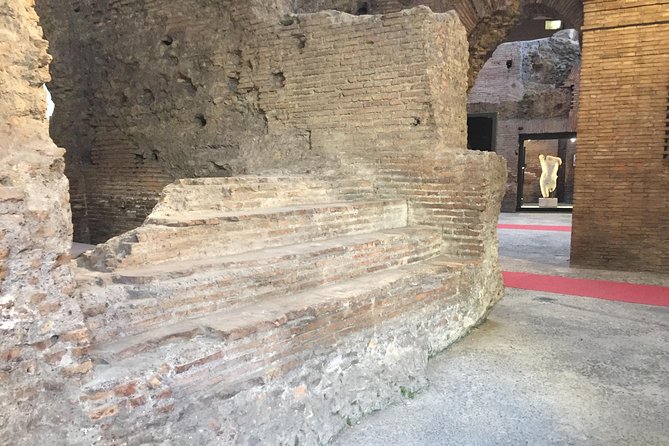
The ruins you come to understand are tied to Roman sports culture, because the stadium was built to host events. One standout detail is that what you are seeing includes ancient masonry stadium remains, described as the first and only masonry stadium of its kind in Roman history. That helps your brain connect the scale of the structure, even though the remains themselves are fragmentary.
Introductions we still owe you around Rome



Getting There at Via di Tor Sanguigna, 3 (and Finding the Door)
Meet at Via di Tor Sanguigna, 3, 00186 Roma RM. The site ends back at the same meeting point, so you are not dealing with a separate pickup or drop-off.
This location is in the dense center where streets and landmarks shift quickly. I recommend you arrive a few minutes early and use a map on your phone to orient yourself before you start hunting for the exact doorway. The visit is easy once you have the right entrance, but it is also the kind of place where being off by a block can make you wander.
If you are coming via public transportation, you are in luck because this area is well connected. That matters because you will still want to keep the rest of your day flexible, since the underground visit does not take long.
The Descent: Going 5 Metres Below Street Level
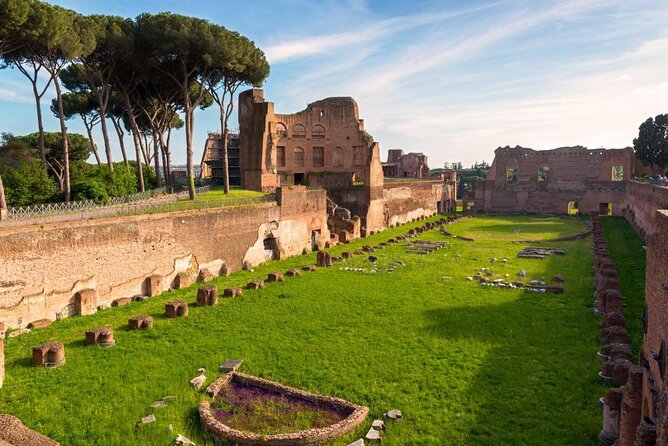
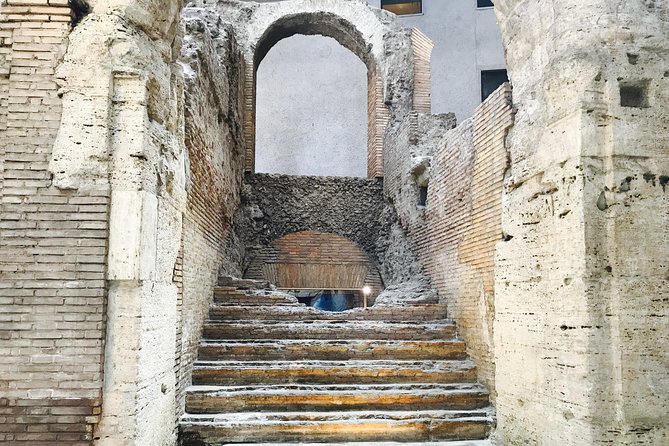
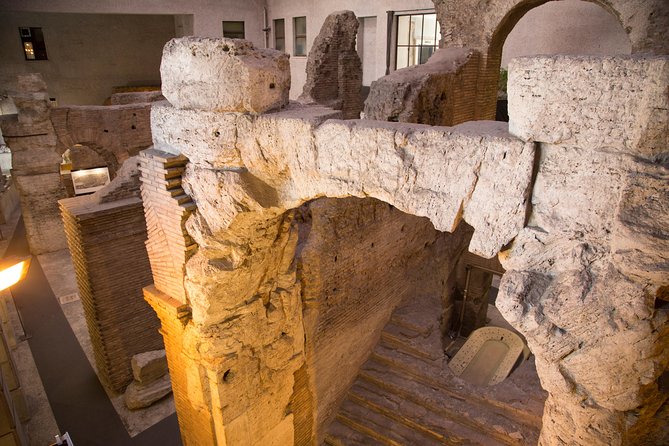
The experience begins with the feeling that you are stepping from modern Rome into an older layer. You descend about 5 metres beneath street level to reach the excavations tied to the Roman Empire.
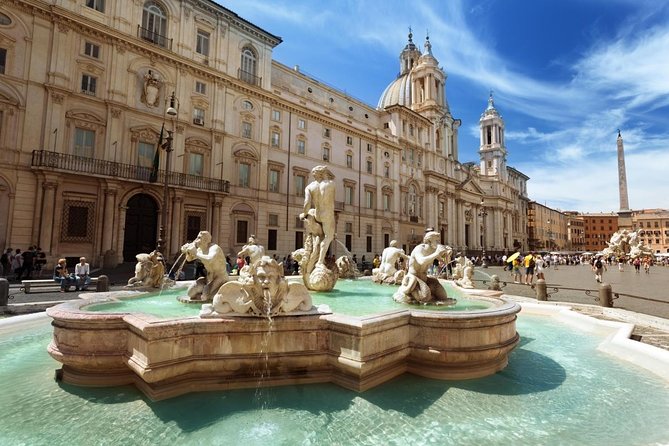
This depth is part of the point. Piazza Navona looks like a classic baroque showpiece from above, but underground you get the practical truth of how cities evolve. Over time, buildings, paving, and new construction covered older spaces, and the underground ruins preserve that history.
You will see the ancient masonry stadium remains along with areas that help you imagine how the complex functioned. You also get supporting displays and visuals that make the scale easier to understand, since you are not seeing a fully intact structure.
The Stadium of Domitian Ruins, and Why the Context Matters
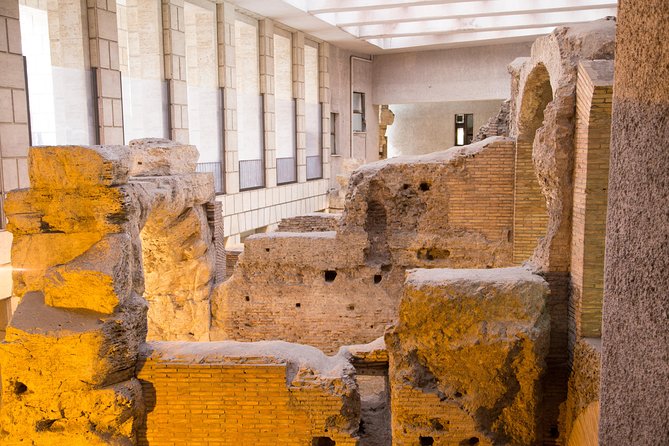
The Stadium of Domitian is fascinating because it is not just a random ruin. It is tied to how Romans organized public spectacle, including major sports and gatherings.
You will spend time looking at what is left, and the design of the visit helps you connect the dots. That is important, because the remains can look small until you understand what the original stadium layout would have been like. Once the story clicks, even limited fragments start to feel meaningful.
One detail I particularly like here is the way the tour frames the relationship between Stadium/Piazza Navona/ancient Roman sports. The above-ground piazza is famous, but the underground helps you see why the location mattered in the first place.
Also, the attraction notes that it was first opened to the public in 2014. That often translates into a museum setup that feels more current than some older sites, with a clear route and media support rather than relying only on plaques.
Also on the Rome guest list:
- Vatican Museums, Sistine Chapel & St Peter’s Basilica Guided Tour
★ 4.5 · 39,149 reviews - Rome: Colosseum, Palatine Hill and Roman Forum Guided Tour
★ 4.8 · 32,814 reviews - Rome: Guided Tour of Colosseum, Roman Forum & Palatine Hill
★ 4.7 · 27,897 reviews - Rome: Colosseum & Forum with Audio Guide App -Optional Arena
★ 4.2 · 24,770 reviews
Exploring at Your Own Pace with the Included Audio Guide
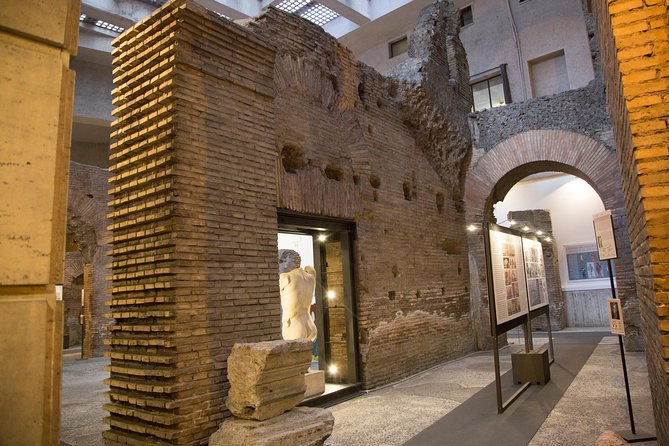
The included audio guide is the real engine of the experience. You receive a handheld audio guide device and you use it as you move through stops. The pacing is flexible, so you can linger over details that interest you and skip ahead when you already get the idea.
I like that the audio guide is clear and thorough, especially for a site that is shorter than the headline monuments. It also helps if you are not a Rome history specialist. You get enough explanation to make the ruins readable without turning the visit into a lecture.
There is an audio guide for children too, for ages 6 and above. That is a practical perk for families, because the story can be age-appropriate without you having to invent your own explanations on the fly.
One review note to keep in mind: handheld devices can occasionally have battery issues. If you show up with fresh energy and you notice a problem, ask staff right away rather than waiting and hoping it fixes itself.
How Long It Takes, and When It Fits Best
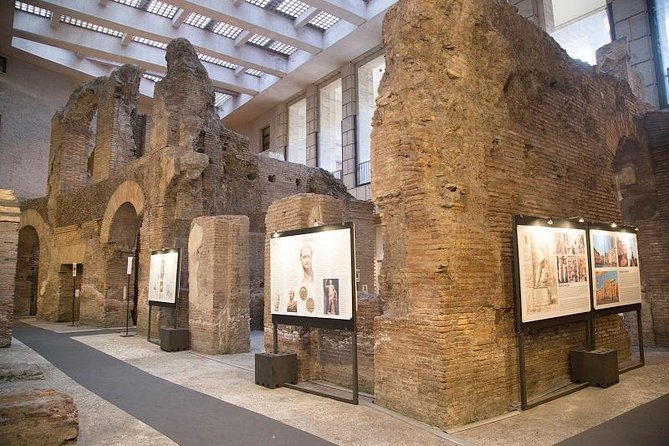
Plan on about 40 to 50 minutes. Many people experience it closer to the 30 to 60 minute range, depending on how closely you follow the audio guide and how much you stop for photos and media.
This is a great “in-between” activity because it is not a full half-day commitment. It also works as a break in the middle of the day when the streets above are crowded or hot. Since you are underground, it tends to feel cooler, which makes it easier to keep moving through Rome.
Opening hours are daily, roughly 10:00 AM to 6:00 PM within the posted seasonal range. I suggest you aim for a time that lines up with the rest of your itinerary, since you want to avoid rushing the underground portion.
On-Site Library, Media, and Optional VR or AI
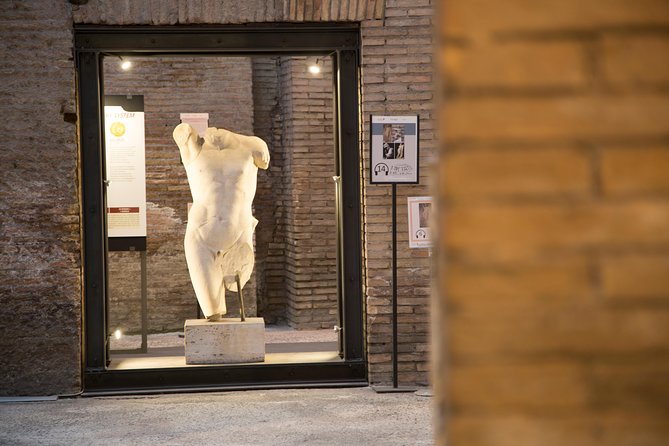
Beyond the main route, the site includes an on-site library area with art and history books, antique prints, postcards, and multimedia DVDs. There is also a section dedicated to children. If you like to browse, this is an extra bonus that adds texture without turning it into a separate tour.
You may also see optional media experiences. Some visitors mention a VR experience and an extra AI experience for a separate charge, with one note citing 4 euros. These extras are not described as part of the basic ticket, so if you want them, consider them add-ons you opt into based on your interest.
If you are the type who enjoys visuals that reconstruct how a site looked in its original glory, those add-ons can be worth the decision. If you prefer quiet, reading, and listening, the included audio guide alone should be enough to make the ruins click.
What to Wear and How to Prepare
Wear comfortable walking shoes. The visit is underground and involves moving along an exhibit route, so you want stable footing.
It is also a good idea to bring your patience for a short museum experience. This is not built like a huge archaeological park. It is built like a focused underground stop, where you learn fast and move on.
Service animals are allowed, and most visitors can participate. If you have any specific movement needs, you will want to check with the staff on site since you are going below street level.
Who This Tour Is Best For (and Who Might Want Something Else)
This works really well for:
- People doing a first or second Rome trip who want one more angle on the city beyond the big monuments
- Families with kids ages 6 and up who want a structured indoor experience
- Visitors who like ruins but prefer clear storytelling over guesswork
It may not be the best match for you if you are looking for a huge amount of physical space or a long, wandering museum day. The attraction is described as smaller, and it is designed to deliver meaning quickly rather than stretch into hours.
If you already plan to spend serious time at larger icons, you will probably find this adds a lot without stealing your whole afternoon.
Should You Book the Piazza Navona Undergrounds, Stadio di Domiziano?
Book it if you want a compact, well-explained underground look at Rome under one of the city’s most famous piazzas. For the $12.10 price, the value is in the included audio guide, the clear focus on Roman sports at this specific site, and the fact that it is easy to fit into almost any schedule.
Skip it or think twice if you hate short attractions or you expect giant-scale ruins. Also think carefully if you are the kind of visitor who needs heavy signage to find an entrance, because the doorway can take a moment to locate in the busy street maze.
If you like your Rome with fewer crowds and a strong sense of layers, this one is an easy yes.
Just introduced: the newest Rome write-ups
- Rome Fiumicino Airport Transfer in Luxury Private Transportation★ 4.5 · 339 reviews
- Vatican: Pope Francis Tomb and Papal Basilicas Tour★ 4.7 · 340 reviews
- From Rome: Sorrento, Positano & Amalfi Coast Day Trip★ 4.5 · 340 reviews
- Rome: Guided Colosseum Underground Tour★ 4.8 · 342 reviews
- Colosseum Arena Floor, Roman Forum & Palatine Hill Guided Group Tour★ 5.0 · 343 reviews
- Rome: Small Group Rome’s Dark Side – Ghosts & Legends Tour★ 4.9 · 343 reviews
- Rome: City Highlights Electric Bike Tour★ 4.9 · 343 reviews
Tickets, compared.

Vatican: Museums & Sistine Chapel Entrance Ticket
Read our review →
Cathedral and Duomo’s Terraces Entrance Ticket
Read our review →

Skip-The-Line Uffizi Gallery Timed Entry Ticket
Read our review →
Naples Underground Entry Ticket and Guided Tour
Read our review →
Pantheon Fast-Track Ticket and Official Audio Guide
Read our review →
Entry Ticket and Guided Tour with an Archaeologist
Read our review →