
Reviewed · WALKING TOURS
Walk the magic of Rome at night
Rome looks different after dark. This Rome by night walking tour strings together the big icons, with photo-friendly pauses, street-level stories, and a route that helps you orient fast. I like that it keeps you outside the monuments while still hitting the most recognizable sights, including the Trevi Fountain at night and the Colosseum area.
Two things I especially like: the pacing, with a real bathroom break and time to stop and take pictures, and the guides, like Joseph (Isuf), who are part history teacher and part photo coach. One possible drawback is simple, you do a lot of walking and you do not go inside any major sites, so bring the mindset of seeing the sights up close from the streets.
In This Review
- Key highlights at a glance
- Why Rome’s Night Sights Feel More Personal Than Daytime
- Price and What You Get for $42.34 Per Person
- Meeting Point, End Point, and the Walking Reality
- Vittoriano, Via dei Fori Imperiali, and Piazza Venezia After Dark
- Passing Pontifical Gregorian University and the Pantheon’s Night Presence
- Piazza Navona Energy, Without the Daytime Rush
- Trevi Fountain at Night: How the Photo Moments Get Made
- Colosseum Views From the Outside, Plus a Quick Night Orientation
- Ending at Piazza di Spagna and the Spanish Steps Glow
- Who This Tour Is Best For
- Should You Book This Rome Night Walk?
- FAQ
- How long is the walking tour?
- Is admission to the monuments included?
- Where do you start and where does the tour end?
- What language is the tour offered in?
- How big is the group?
- Are there age requirements or physical fitness expectations?
Key highlights at a glance
- Small groups, max 12, so you are not lost in a crowd
- Photo-focused stops, including Trevi Fountain and the Colosseum area
- Multiple iconic night views, Vittoriano, Pantheon, Trevi, Colosseum, Spanish Steps
- Real break time, including a bathroom stop
- Street-level storytelling, with guides sharing trivia, jokes, and orientation tips
Why Rome’s Night Sights Feel More Personal Than Daytime
If you only see Rome in daylight, you miss a layer. At night the monuments feel less like landmarks on a checklist and more like characters in the same story, lit from below, silhouetted against dark sky, and surrounded by calmer streets. This tour is built for that mood. You move from one famous stop to the next without waiting in long interior lines, so the night stays the focus.
I also like how the route works as a navigation tool. By the time you end near Piazza di Spagna, you understand how these neighborhoods connect. That matters because Rome is not laid out like a grid. A good night walk helps you come back later and explore on your own without second guessing.
One more thing, night tours often mean you get photos with less crowd pressure. In the best moments, you can frame the fountain, steps, and other sights with dramatic lighting, rather than constant midday tour-group motion. Even if you catch some crowds, the guides tend to time your photo moments well.
More Italy at street level:

Price and What You Get for $42.34 Per Person
At about $42.34 per person, this is a straightforward, budget-friendly way to cover several of Rome’s top sights in one evening. What you are paying for is the human value, an official guide in English, plus the structure that keeps you moving and explains what you are seeing.
The best value here is that the guide handles the “what am I looking at?” part. You do not just stand there. You get context that makes the stones mean something, like the importance of the Vittoriano area and why the Pantheon is such a standout surviving monument. When a guide can turn a quick photo stop into a short mini lesson, the cost feels justified.
Just match expectations. This is not an all-access tour. You won’t enter inside the monuments, and admission tickets are not included. If your goal is interior rooms, museums, and guided entry, you will need separate ticketed experiences. If your goal is a strong overview and night atmosphere, this is a good fit for the price.
Meeting Point, End Point, and the Walking Reality
You start at Via del Monte Oppio, 3 (near public transportation) and finish at Piazza di Spagna, 77, right at the Spanish Steps area. The tour is about 2.5 to 3 hours, and it is designed for moderate physical fitness. The age range is 11 and up, and babies under 2 are free.
Here is the practical part: you should wear comfortable shoes and plan on steady walking. A lot of the experience depends on moving quickly but not rushed. Guides also build in short pauses for photos and a bathroom break, and some people mention it feels like around 3 hours total with a break included.
The small-group size, up to 12 people, helps a lot. It is easier for the guide to keep everyone together, easier to find a photo spot, and less likely you will feel swallowed by the crowd. If you like the idea of asking questions and not hearing your own voice only, this group size supports that.
Vittoriano, Via dei Fori Imperiali, and Piazza Venezia After Dark
Early in the walk you hit the Vittoriano area, which connects with dramatic, historic layers of the city center. This is a great starting zone because it sets tone fast. The wide views, monumental scale, and strong lines make it easier for your brain to map Rome’s center.
You also walk through Via dei Fori Imperiali, a grand avenue with a heavier, more political vibe than many of Rome’s quieter streets. Your guide helps you read that space. Instead of it feeling like just another long street, you understand why it was built and what it represents. That context matters because Rome is not only about ancient glory, it is also about how later eras framed the ancient world.
Then you get to Piazza Venezia, where you learn the name and symbolism behind the location. The feel here is classic Rome, a big square, lots of visual references, and a sense that different stories overlap in the same few blocks. Even if you only spend a couple minutes in the open square, it gives you a landmark you can recognize later during the day.
If you care about photos, this area is useful because the lighting often makes the monument silhouettes pop. It is also a good moment to ask the guide, what photo angle works best right now. Many guides are sharp at this, including Joseph (Isuf), who is known for helping people get great shots without wasting time.
More Italian evenings spoken for:
- Rome: City Highlights Open-Top Bus Night Tour
★ 4.1 · 2,038 reviews - Vespa Sidecar Tour By Night with Pickup
★ 5.0 · 1,803 reviews - Rome by Night – Ebike Small Group Tour – Food and Wine (Option)
★ 5.0 · 1,275 reviews - Colosseum Sunset Tour with Entry
★ 4.5 · 1,230 reviews
Passing Pontifical Gregorian University and the Pantheon’s Night Presence
As the walk continues, you pass the Pontifical Gregorian University, described as the first Jesuit university. This stop is not about a long visit. It is more like a mental breadcrumb, connecting Rome’s street life to its educational and religious history. These passing-by moments sound small, but they add texture. Rome feels more real when you notice institutions and not only monuments.
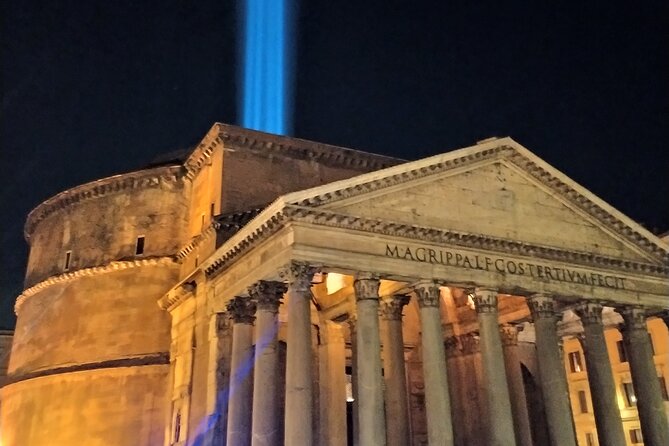
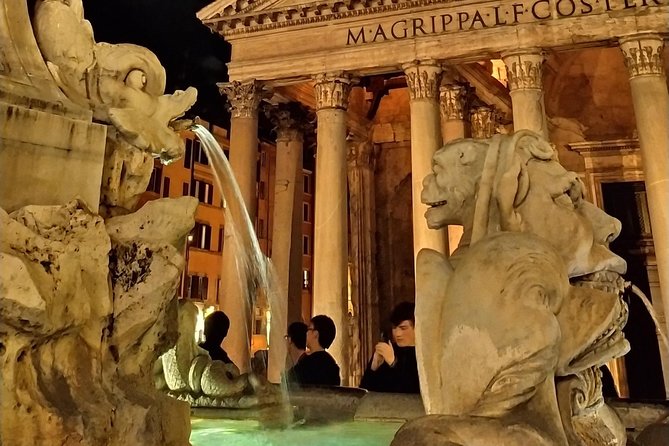
Next comes the Pantheon, and this is one of the best “wow” points on the route. The Pantheon is widely recognized as one of the best-preserved monuments from the Roman period, and at night it has a special advantage. The exterior stays visually strong even when the street is busy, and the lighting brings out the geometry.
Your guide explains what you are seeing from the outside. That might disappoint you if you were hoping for interior access, but it still works as an unforgettable stop. You get to connect the building’s lasting physical design to its reputation, and then you move on before the night loses momentum.
There is also a practical upside. The Pantheon area is a natural transition point. It is a good spot to re-center your bearings before you head toward fountains and squares where crowd density can rise. If you plan to do more sightseeing later, you will probably return to this area just because you now understand how it fits into your map.
Piazza Navona Energy, Without the Daytime Rush
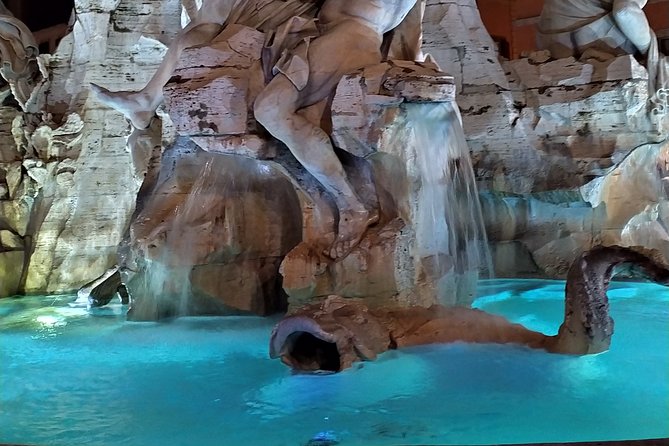
One highlight is time around Piazza Navona, a lively square that often feels like a stage at night. Even if you are not spending hours here, the square gives Rome a different texture than the monumental stops. You get more street scene, more people flow, and that feeling of being in the heart of everyday Rome after dark.
Why that matters: a night walking tour can easily become a series of photos in empty space. Piazza Navona helps prevent that. It adds atmosphere, chatter, and the sense that Rome is still living its life, not just performing for tourists.
Also, the timing is helpful. Walking tours at night are often designed to reduce the worst of peak crowds. You still need patience, of course, but the pace tends to feel more manageable than the mid-afternoon stampede.
If you want an ideal “before dinner” stop, Piazza Navona is a strong candidate. After your tour, this area can also become a natural place to grab a drink, snack, or dessert, since you will already feel oriented.
Trevi Fountain at Night: How the Photo Moments Get Made
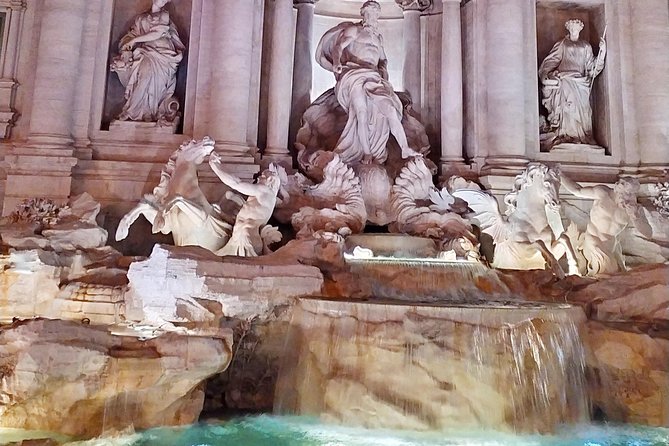
Then comes Trevi Fountain, where Rome’s night glow turns stone and water into pure drama. The fountain is a jewel of water and stone, and at night it looks like it belongs in a film scene. You get time to admire it and, crucially, to take photos.
The most valuable part here is not just the sight. It is how the guide manages the crowd. People mention that Joseph (Isuf) is an expert photographer and that he takes a strategic approach at Trevi, even helping create a barrier so you can photograph without constant interruptions. That is the difference between a rushed selfie and a real keepsake.
Trevi has one tricky reality. It is always popular. So plan to be flexible. If you have a strict expectation of photographing undisturbed, Rome will humble you. But with an organized group and a guide who knows where and when to stop, you can still get great results.
Your guide also adds context while you look. Even if you mostly came for the famous scene, you come away understanding what makes this spot more than just a famous icon. By the end, you are not only seeing the fountain, you are reading it.
Colosseum Views From the Outside, Plus a Quick Night Orientation
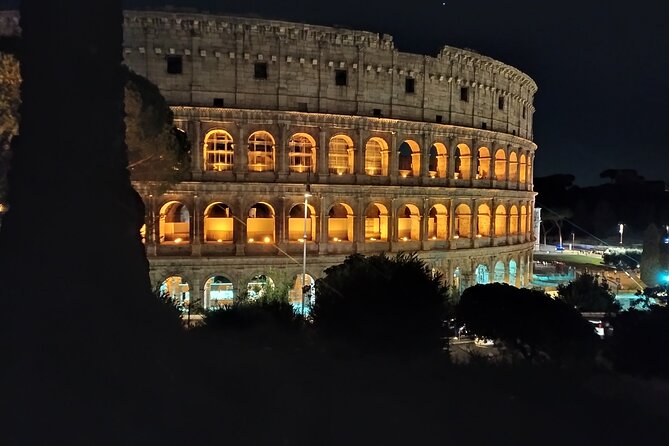
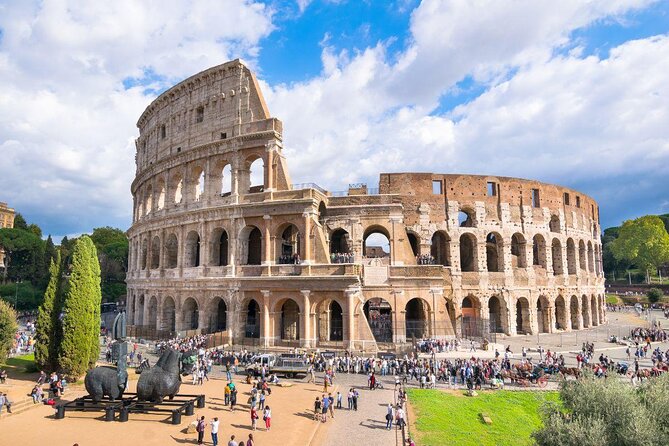
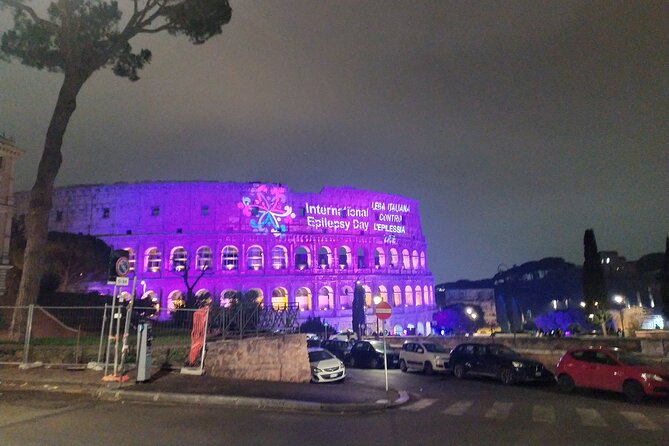
You do not enter, but you still get the Colosseum experience in a meaningful way. Seeing the Colosseum from the outside at night hits differently than day. The lighting makes the stone lines look sharper, and the night air often makes the walk feel cooler and more comfortable.
This stop is best understood as orientation. The guide discusses the details from the street level, helping you connect what you see to how the Colosseum worked. That is valuable because you likely plan to do more later. Even if you never go inside, you will still feel like you have a framework.
There is also a practical advantage. When you focus on outside viewing, you avoid the interior bottleneck and you keep the tour flow. You might still find crowds nearby, but the guided pacing helps you move through it without losing the moment.
If you love history but hate long lines, this is a sensible compromise. You get the “I am here” impact, plus enough explanation to make it stick. And because the tour is structured for night, the Colosseum stop feels like part of the same evening story, not a random detour.
Ending at Piazza di Spagna and the Spanish Steps Glow
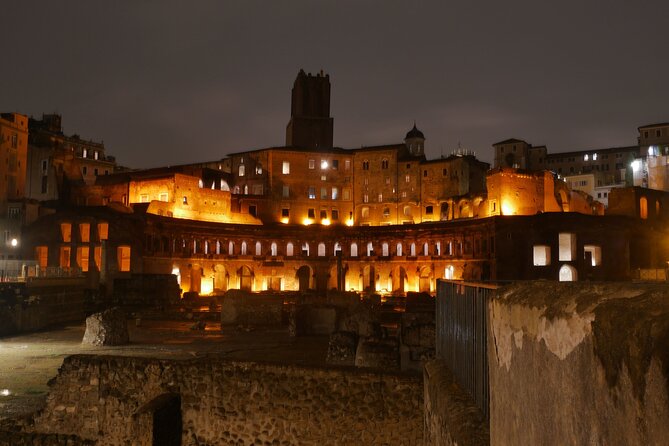
You finish near the Spanish Steps, in the Piazza di Spagna area. Ending here is smart. The steps are instantly recognizable, the views from the area feel theatrical, and the stone architecture looks especially elegant under night lighting.
This final stop is also psychologically important. After covering major icons like the Pantheon, Trevi, and Colosseum area, you want a place where you can slow down and absorb. The Spanish Steps give you a built-in “wrap up” point, a spot that feels like the romantic side of Rome.
There is one more practical bonus. Once you are done, you are in an area with plenty of onward options for food and taxis. People mention that guides also send recommendations after the tour, including places for coffee, food, and more. That helps if you do not want to spend your remaining night guessing.
If you are thinking about where to return later, this end point is useful. It is central, it is easy to reach, and it is a strong base for evening wandering. You will probably leave with a short list of where you want to go next, because the guide has already pointed out what is worth a second pass.
Who This Tour Is Best For
This night walk is ideal if you want a fast, fun overview of Rome’s biggest sights without entering any monuments. It is also a good choice if you like guides who keep energy up with jokes, trivia, and practical photo tips.
It suits:
- First-time visitors who need a map in their head by the end of the evening
- Couples and small groups who want a guided route but still want breathing room for photos
- Anyone who prefers seeing monuments from the street, rather than scheduling ticketed entry blocks
It is less ideal if:
- You strongly want to go inside major sites, like the Pantheon or the Colosseum
- You dislike walking for 2.5 to 3 hours, even with breaks
- You expect Trevi Fountain to be crowd-free at night
On a good note, some reviews mention that even with rain starting, guides keep things moving with umbrellas and rain jackets. Night plans in Rome can change fast, so that flexibility helps.
Should You Book This Rome Night Walk?
I think you should book this tour if you want a smart evening introduction and you care about night atmosphere, photos, and quick orientation. The small group, official English guide, and built-in break time make it feel smoother than trying to stitch these sights together on your own.
Skip it if you are mainly after interior access or if you are trying to minimize walking at all costs. In that case, pick ticketed tours that include monument entry, and use night hours separately for free strolling.
If you are deciding between doing a little of everything and choosing fewer places deeply, this one tilts toward the first goal. It gives you a packed but manageable route, and it ends in a great location for your next stop. Book it early in your trip if you can, so the tips you get during the walk help you plan the rest of your Rome days.
FAQ
How long is the walking tour?
It runs about 2 hours 30 minutes to 3 hours.
Is admission to the monuments included?
No. You do not enter inside the monuments, and admission tickets are not included.
Where do you start and where does the tour end?
The tour starts at Via del Monte Oppio, 3, and ends at Piazza di Spagna, 77, at the Spanish Steps area.
What language is the tour offered in?
The tour is offered in English.
How big is the group?
The tour has a maximum of 12 travelers.
Are there age requirements or physical fitness expectations?
Participants should have moderate physical fitness. The tour is for ages 11 and up, and babies under 2 are free. A bathroom break is included during the tour.
Just introduced: the newest Rome write-ups
- Excavation Tour to the Tomb of St. Peter’s & St. Peter’s Basilica★ 4.0 · 183 reviews
- Imperial Rome and External Colosseum Tour★ 5.0 · 183 reviews
- Rome: Rooftop Cooking Class with Wine Tasting near Vatican★ 5.0 · 184 reviews
- Rome to Civitavecchia Cruise Port Transfer★ 5.0 · 184 reviews
- Ancient Rome and Colosseum Private Tour with Underground Chambers and Arena★ 4.5 · 184 reviews
- Rome: Vatican Museums & Sistine Chapel Skip-the-Line Ticket★ 4.1 · 185 reviews
- Borghese Gallery Max 6 People Tour: Baroque & Renaissance in Rome★ 5.0 · 185 reviews
Walking Tours, compared.
Guided Walking Tour & Last Supper Visit with Ticket
Read our review →
Rialto Bridge & Offbeat Unusual Venice Walking Tour
Read our review →
Private 3 hrs Venice Tour: St Mark’s, Walking tour & Boat tour
Read our review →
Skip the line: Uffizi and Accademia Small Group Walking Tour
Read our review →Browse the lists this tour appears in