Reviewed · ROME TOURS
Welcome To Rome Experience
Rome makes more sense when you can see it evolve. This 1-hour Welcome To Rome show uses audio, video, and interactive 3D to map how the city changed over time. You walk through the story, then you sit for a film that ties it together.
I love the time-saving setup, especially if it is your first day and you want context before walking the streets. I also like the 3D reconstructions, since they help you visualize major sites and how ruined buildings used to look. The one caution: the experience is short, but it moves through multiple small areas first, so if you or your group gets tired of standing and switching rooms, plan for that.
In This Review
- Key things to know before you go
- A One-Hour Multimedia Start in the Heart of Rome
- Getting to Welcome To Rome on Corso Vittorio Emanuele II
- How the Show Moves, From Stations to the Main Theatre
- The 3D Rome Visuals That Pay Off Later on Foot
- Audio and Video: What You Hear, What You See, What You Miss
- Family Fit: Great for Kids, But Not Everyone’s Cup of Tea
- Price and Value: When $21.77 Makes Sense
- Practical Tips to Get the Best Hour
- Should You Book Welcome To Rome Experience?
- FAQ
- How long is the Welcome To Rome experience?
- What language is the experience offered in?
- Do I receive a mobile ticket?
- Where is the experience located?
- Is it near public transportation?
- How many showings are there each day?
- What is the last entry time?
- When will I get confirmation of my booking?
- Is free cancellation available?
Key things to know before you go
- Central location on Corso Vittorio Emanuele II (easy to fit into a first-day walk)
- English audio and multimedia for a fast, family-friendly history overview
- A short sequence of smaller stations before the main theatre
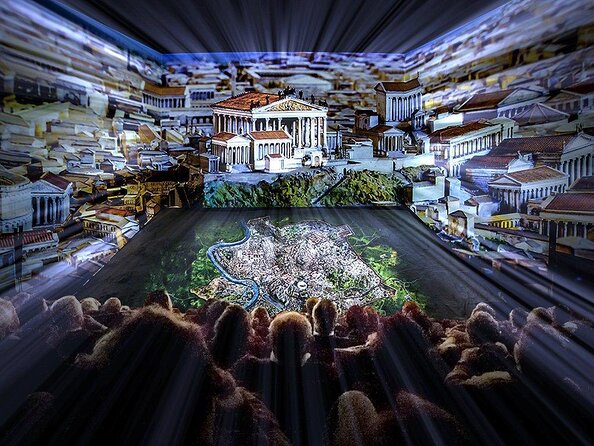
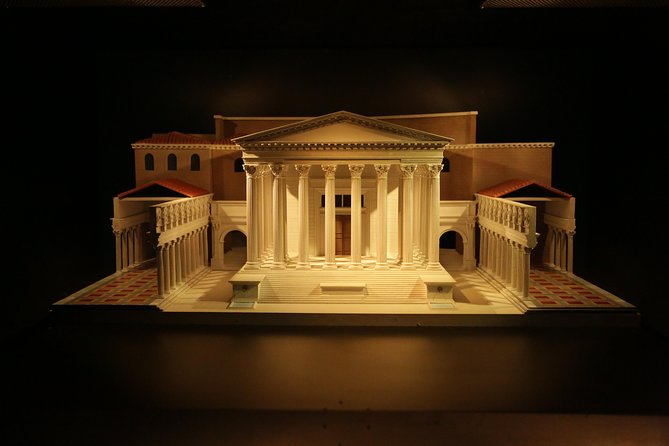
- 3D visuals of how structures looked then versus today, which pays off later at Roman ruins
- Multiple daily showings, so you can usually find a slot that works
A One-Hour Multimedia Start in the Heart of Rome
If Rome is overwhelming, this kind of intro helps. Welcome To Rome is designed as a compact story of the city’s history, with an emphasis on visuals you can immediately connect to what you’ll see outside. The format works well when you want a mental map before stepping into the Forum area or when you want to understand why certain landmarks look the way they do today.
The biggest advantage is the fast “big picture” framework. In about an hour, you get a sense of Rome’s evolution, starting with early formation and then moving through major architectural eras. It is not a slow museum lecture. It is a guided, media-heavy path through time, so you can keep momentum without committing to a half-day plan.
It is also a good fit for groups with mixed interests. History fans get structure and detail, and families get motion, screens, and 3D models. One review noted that it helped them imagine the city layout better when visiting places like the Palatine Hill and the Forum, which is exactly the kind of payoff you want from an opening activity.
Introductions we still owe you around Rome



Getting to Welcome To Rome on Corso Vittorio Emanuele II
You’ll find the show at Corso Vittorio Emanuele II, 203, 00186 Roma (RM). It is in a central area, and it is described as near public transportation. That matters because you are more likely to actually use it early in your trip if the location is easy to reach on foot or by bus or metro.
It also helps that it has multiple showings daily. That gives you flexibility if your morning plans run long, or if jet lag hits and you need something low-stress that still feels like Rome.
One timing detail to keep in mind: the last entry is one hour before closing. If you are traveling with kids or you want time to grab a snack beforehand, aim to arrive early enough that you are not rushing at the end of the day.
How the Show Moves, From Stations to the Main Theatre
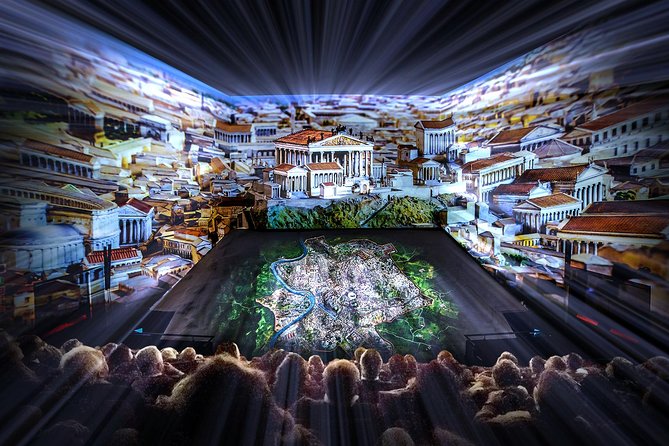
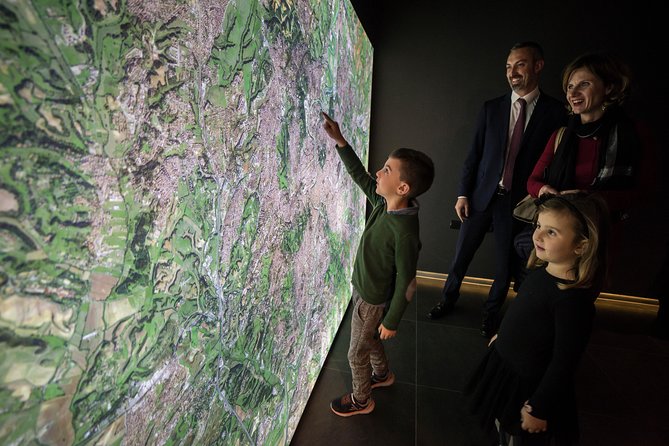
The experience is built around a progression of areas. You start in smaller spaces where you stand and follow along with audio support and visual displays. Several people described it as moving through four small rooms or stations, with a diorama-style demonstration and an audio guide in your preferred language, followed by a video in an auditorium.
This structure is part of the charm, and part of the only real trade-off. If you like hands-on visuals and you are okay standing for short bursts, the pacing keeps you engaged. But because seating is limited, you may feel like you are constantly transitioning if you prefer a more traditional, single-room exhibition.
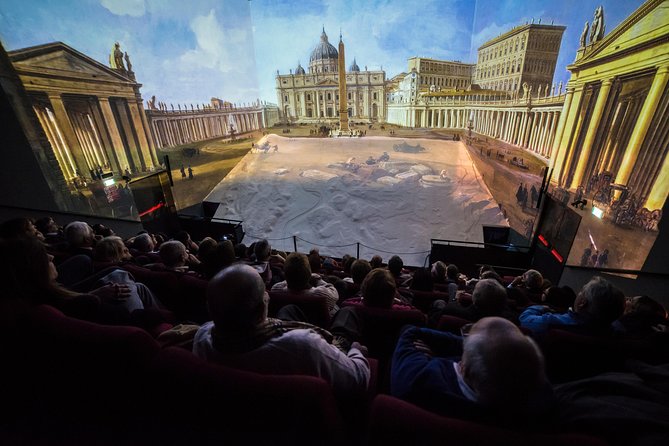
Once you reach the main theatre, you’ll get the film portion. The show includes a video that is described as around 30 minutes, and this is the part where you can finally sit. If you want a smoother experience, treat the first part as your “warm-up” and save your energy for the film.
The 3D Rome Visuals That Pay Off Later on Foot
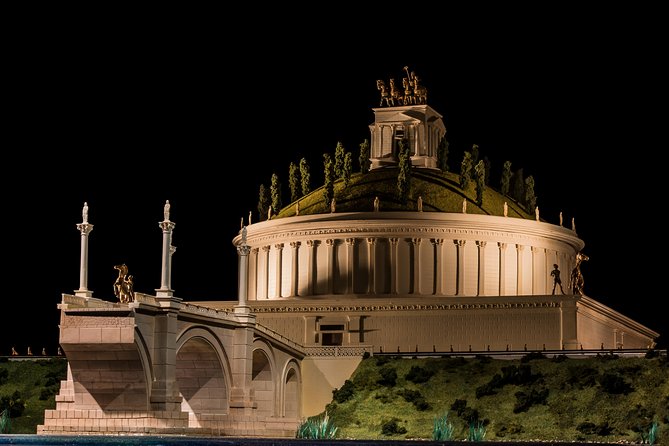
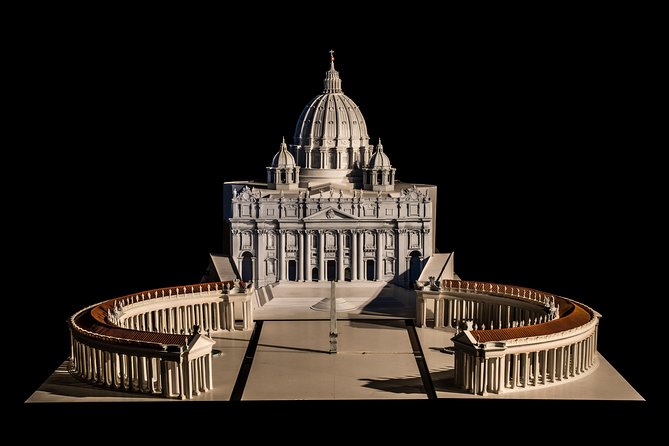
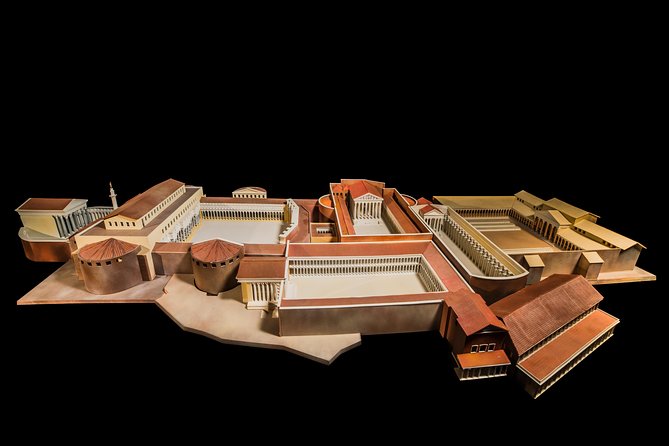
The heart of the show is visual reconstruction. Expect 3D models and projections that show buildings and city views in multiple time periods. A key theme is how Rome looked then compared with what you see now. Reviews specifically call out the cool factor of seeing reconstructions of monuments, plus the way the program recreates how spaces might have looked when they were intact.
One of the most useful details mentioned is the inclusion of a geological start. The story begins with Rome’s early landscape and includes an explanation of the volcanic setting. That might sound academic, but it helps in a very practical way: it gives you a reason for why the city developed where it did, and it makes the later architectural story feel grounded rather than random.
The show also stretches across major eras. One review described clear movement through Classical, Medieval, Renaissance, and Baroque periods. Even if you are not a timeline person, this helps you spot patterns when you later visit churches, palaces, and ruins and you start recognizing which layers belong to which age.
This is why I think it is such a smart first stop. When you later stand in front of the Colosseum, the Roman Forum, or Palatine Hill, you are not just looking at stones. You have a framework for what you are trying to picture.
Also on the Rome guest list:
- Vatican Museums, Sistine Chapel & St Peter’s Basilica Guided Tour
★ 4.5 · 39,149 reviews - Rome: Colosseum, Palatine Hill and Roman Forum Guided Tour
★ 4.8 · 32,814 reviews - Rome: Guided Tour of Colosseum, Roman Forum & Palatine Hill
★ 4.7 · 27,897 reviews - Rome: Colosseum & Forum with Audio Guide App -Optional Arena
★ 4.2 · 24,770 reviews
Audio and Video: What You Hear, What You See, What You Miss
The show is offered in English, and the experience uses audio alongside the visual elements. Multiple reviews praised the audio as interesting and easy to absorb, which matters because it is easy for museum audio to be either too dense or too faint. Here, the feedback suggests the audio gives enough detail to be meaningful without turning into homework.
The multimedia approach also means you can handle Rome without needing perfect concentration for every minute. You are constantly getting visuals that support the narration, so even when your attention slips, the story stays on track.
Still, there is one practical consideration. Some people reported radio or audio devices that did not work properly for a few participants, and staff helped replace them. That is good to know because it means you should speak up promptly if your audio cuts out. Do not just power through. Ask for a replacement right away so you do not miss key explanations.
Family Fit: Great for Kids, But Not Everyone’s Cup of Tea
This is one of those Rome activities that works especially well with children who like pictures. Reviews repeatedly highlight that kids enjoyed the interactive elements and that a young teen or elementary-age child found the visuals engaging. One parent even noted that their child’s age made the experience easy to follow, and another review said it was enough eye candy to keep kids interested.
Where it can be less ideal is attention span and depth level. A couple of comments mentioned that very young children under about eight may find it harder to stay engaged, and some teens wanted fewer details and felt it dragged. So if you have a wide age range, treat it as a shared “starter lesson,” not a full Rome replacement.
If your group leans younger, the best strategy is to frame it as a story about how Rome changed shape. Let the kids watch for the transformations, like how monuments look in different periods. If your group is older and history-driven, you might find yourself wanting more time focused specifically on ancient Rome. That does not make the show bad. It just means you should pair it with more targeted visits later.
Also note one practical physical detail: the main auditorium is the place to sit, and the earlier stations are standing areas. A review even suggested adding benches in the 3D areas for extra comfort, which tells you that comfort might not be perfect in the standing portions. If anyone in your group needs frequent breaks, that is your cue to plan for it.
Price and Value: When $21.77 Makes Sense
The price is listed at $21.77 per person, and that can feel either fair or a bit steep depending on what you want from the time you spend in Rome. The value here is not that you get a huge collection of artifacts. You are paying for a condensed, media-driven history lesson with 3D reconstructions that help you interpret what you will see next.
It is often worth it if:
- you are visiting for the first time and want fast context
- you are short on time and still want a structured overview
- you are bringing kids who respond well to visuals
- you want help visualizing ruins before stepping into the Forum and Colosseum areas
It may feel overpriced if:
- you mainly want deep ancient details and would rather read a book or visit a site with more physical context
- your group gets restless with standing, room changes, or a more scripted format
- you are highly sensitive to comfort issues like seating condition in the auditorium (some reviews mentioned broken seats and cleanliness concerns)
For me, the best way to decide is to ask: will this give you something you will use outdoors? The show seems built to do exactly that, since the reconstructions help you mentally reassemble ruined spaces.
Practical Tips to Get the Best Hour
Here are a few ways to make the hour feel like it was designed for your group, not just for the building schedule.
Arrive with a purpose. Treat it as your “Rome orientation hour,” then plan your walking visits afterward with that mental timeline in mind. Several reviews basically said this is a great foundation for later ruins and major viewpoints.
Use the audio actively. If you are using your own audio devices, listen for the parts explaining how buildings and eras connect. That is the information that helps you later when you are trying to place what you are seeing.
If you are traveling with kids, remind them that they do not need to learn every fact. They just need to notice the changes over time, like how structures were built and how the same areas look today.
If you are uncomfortable standing, pace yourself during the station sequence. You can also plan to use the film portion as your main rest time, since the auditorium is the sitting break.
And if anything about audio devices is not working, raise it immediately. Staff being able to replace radios is a helpful detail, and it keeps your experience from turning into guesswork.
Should You Book Welcome To Rome Experience?
If you want a low-effort, high-clarity way to understand Rome before you start hunting ruins, I think you should book it. The fast, visual history is especially useful for first-timers and for families who learn better through models, projections, and audio than through long explanations.
I would skip it or adjust expectations if you want deep specialization on ancient Rome only, or if your group strongly prefers lots of sitting and quiet. Also consider that some people flagged comfort and cleanliness in the auditorium areas, so if those are deal-breakers for you, you may want to read up on current conditions or plan a different indoor activity.
Bottom line: this is a solid “start here” experience. Do it early, let the 3D reconstructions do their job, then take that mental picture outside while Rome is still fresh in your mind.
FAQ
How long is the Welcome To Rome experience?
It runs for about 1 hour.
What language is the experience offered in?
English is offered.
Do I receive a mobile ticket?
Yes, the ticket is mobile.
Where is the experience located?
The address is Corso Vittorio Emanuele II, 203 – 00186 Roma (RM).
Is it near public transportation?
Yes, it is near public transportation.
How many showings are there each day?
It offers multiple showings daily.
What is the last entry time?
The last entry is one hour before closing.
When will I get confirmation of my booking?
Confirmation is received at the time of booking.
Is free cancellation available?
Yes. You can cancel up to 24 hours in advance for a full refund. If you cancel less than 24 hours before the start time, the amount paid is not refunded.
Just introduced: the newest Rome write-ups
- Rome Fiumicino Airport Transfer in Luxury Private Transportation★ 4.5 · 339 reviews
- Vatican: Pope Francis Tomb and Papal Basilicas Tour★ 4.7 · 340 reviews
- From Rome: Sorrento, Positano & Amalfi Coast Day Trip★ 4.5 · 340 reviews
- Rome: Guided Colosseum Underground Tour★ 4.8 · 342 reviews
- Colosseum Arena Floor, Roman Forum & Palatine Hill Guided Group Tour★ 5.0 · 343 reviews
- Rome: Small Group Rome’s Dark Side – Ghosts & Legends Tour★ 4.9 · 343 reviews
- Rome: City Highlights Electric Bike Tour★ 4.9 · 343 reviews
Rome Tours, compared.
Vatican: Museums & Sistine Chapel Entrance Ticket
Read our review →
Vatican Museums & Sistine Chapel Tour with Optional Basilica
Read our review →
Colosseum, Roman Forum & Palatine Guided Tour
Read our review →
Vatican Museums, Sistine Chapel & St Peter’s Basilica Guided Tour
Read our review →
Colosseum, Palatine Hill and Roman Forum Guided Tour
Read our review →
Guided Tour of Colosseum, Roman Forum & Palatine Hill
Read our review →
Colosseum & Forum with Audio Guide App -Optional Arena
Read our review →