
Reviewed · HISTORICAL TOURS
2 Hours Private Historical Tour in Genoa
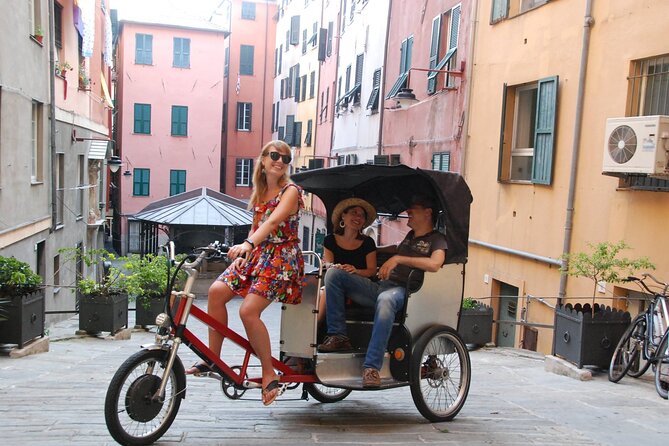
Genoa is tricky, this makes it simple. This private 2-hour tour threads through the old center with a local driver-guide so you can see major landmarks and side streets without fighting traffic. I especially liked the easy meeting point and the stop-and-photo pacing. It is also a smart fit if you want an efficient first look at Genoa.
What I like most is how the route saves your legs while still feeling local, not rushed. You get bright contrasts too, from medieval squares like Piazza Sarzano to the grand, money-making swagger of Via Garibaldi. I also love that the guide can tailor the pace in real time, and people mention names like Eleonora, Yusuf, Sophie, Gavino, Soufi, and Giulia for their friendly, detailed guiding style.
The main drawback is simple: it depends on smooth logistics and good weather. One or two reviews mention vehicle issues that cut into time, so if your schedule is tight, keep a little buffer.
In This Review
- Key Highlights You’ll Feel on the Ground
- Entering Genoa Fast: Meeting at Galata and Getting Out of Traffic
- Price and Value for a Private 2-Hour Tour
- How the Tour Works: Timing, Transport Comfort, and Photo Stops
- Stop-by-Stop: Piazza Sarzano to the Old Port Waterfront
- Stop 1: Piazza Sarzano, Sant’ Agostino and the “Original Nucleus”
- Stop 2: Chiesa Santi Cosma e Damiano, a Small Medieval Surprise
- Stop 3: Via Garibaldi, the Historic “Golden Street”
- Stop 4: La Casa di Colombo, Columbus Origins and a Rebuilt Story
- Stop 5: Piazza Banchi, Grain Market and Money-Changers
- Stop 6: Il Cittadino, San Lorenzo Area and Medieval Social Life
- Stop 7: Giardini Luzzati, a Quiet Pause in the Historic Center
- Stop 8: Piazza Raffaele De Ferrari, Grand Square and Art Nouveau Edges
- Stop 9: Palazzo di San Giorgio, Another Palace Moment
- Stop 10: Old Port, Renzo Piano Waterfront and Harbor Vibes
- Practical Tips That Actually Help
- Guides You’re Likely to Meet, and What to Ask
- Should You Book This Genoa Historical Tour?
- FAQ
- How long is the private historical tour?
- What is the group size for this tour?
- Where is the meeting point in Genoa?
- Is pickup available?
- Is the tour offered in English?
- Do I need to pay admission at the listed stops?
- Are service animals allowed?
- What if the tour is canceled due to poor weather?
Key Highlights You’ll Feel on the Ground
- Private for up to 2 people, so you can ask questions and move at your pace
- Two hours, many big names, from Piazza Sarzano to Piazza De Ferrari and the Old Port
- Small-vehicle routing through narrow lanes, so you spend less time walking
- Free-to-enter stops, since the listed sights have no admission tickets
- Guide-led navigation, meaning less wandering and fewer wrong turns
- Good meeting point in central Genoa, starting near the Galata Museo del Mare area
Entering Genoa Fast: Meeting at Galata and Getting Out of Traffic
The best thing about this tour format is that you start where visitors can actually find you, then you move into Genoa without wasting time on traffic or parking headaches. The meeting point is at the Galata Museo del Mare area, Calata Ansaldo De Mari 1 (16126 Genova). The tour ends back at the same meeting point, which helps when you need to get on with lunch plans or getting back to your next stop.
From the start, the idea is clear: you are not just sightseeing, you are learning how Genoa connects. The guide does the driving and navigation, which matters in a city known for tight historic lanes. I also like that pickup is offered, with the driver meeting you in the square in front of the terminal exit, if you are arriving by cruise or public transit.
If you are the type who hates walking circles just to see one church, this is built for you. You get the feel of moving through the city as locals do, rather than treating it like a checklist where you keep tracing the same streets back.
More ruins and republics, guided:

Price and Value for a Private 2-Hour Tour
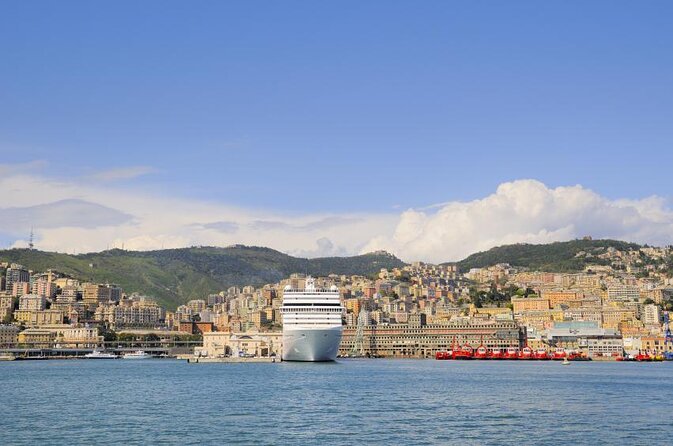
This costs $114.93 per group, up to 2 people, and it runs for about 2 hours. That price is easier to think about if you compare it to the cost of a taxi plus the cost of a guided route, especially if you are in Genoa for a short window.
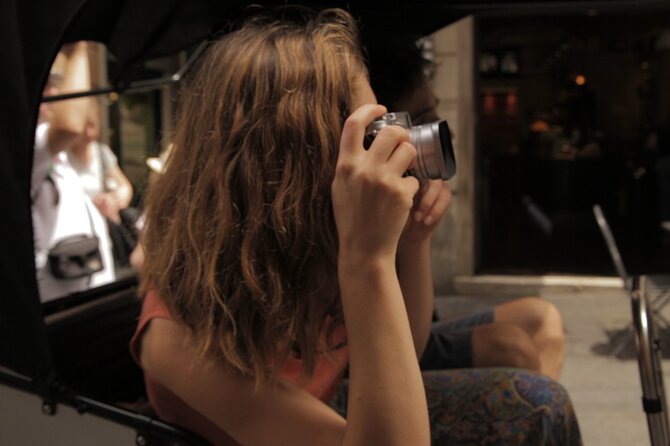
Also, the “private” part is real value here. You are not competing for the guide’s attention, and the guide can slow down when you see something you want to look at. In reviews, many people mention guides who make frequent stops and allow time for photos, which is exactly what you want in Genoa’s old center.
One more practical detail: the tour is offered in English. Confirmation is received at booking time unless you book within 1 day of travel. And the ticket is mobile, which saves you from hunting for paper.
If you are traveling solo, the per-person cost can be higher than a group tour. But if you are two people who want comfort and a guided route through narrow streets, this is a solid value.
How the Tour Works: Timing, Transport Comfort, and Photo Stops
You are looking at about 2 hours total, and the itinerary is built as a sequence of short visits. Many stops are around 10 to 15 minutes, and one is only 5 minutes. In other words, you are not standing in long queues or losing time in transit between far-apart locations.
The tone from reviews is consistent: this is relaxing and effortless for seeing more than you could handle on foot in a limited time window. People also mention that rickshaw-style transport helps you skip the heavy walking part of old Genoa. One review even frames it as save your legs, jump on a rickshaw, which is basically the entire selling point.
Do note one caution. A couple of lower ratings mention mechanical trouble like flat tires or issues with vehicle power, which led to delays or shortened time. The good news is the guides in those stories still tried to keep things moving, but it is still wise to build a little slack into your day.
If you get rain, some tours still run, and one review notes enjoying the experience despite rain. That said, the experience requires good weather, and if it is canceled due to poor weather, you should be offered a different date or a full refund.
Stop-by-Stop: Piazza Sarzano to the Old Port Waterfront
This route moves like a guided walk, just with less legwork. Here is what each stop contributes to your mental map of Genoa.
Introductions we still owe you around Genoa
- Genoa: Aquarium of Genoa Entry Ticket
★ 4.5 · 10,075 reviews - Genoa: Hop-on Hop-off Tour Ticket
★ 4.0 · 1,524 reviews - Genoa: Aquarium of Genoa with Lunch
★ 4.3 · 1,449 reviews - Genoa: Half-Day Tour to Portofino
★ 4.2 · 1,123 reviews
Stop 1: Piazza Sarzano, Sant’ Agostino and the “Original Nucleus”
You begin in Piazza Sarzano, in the area said to be Genoa’s original nucleus, also described as Ianua. The sights here are compact but meaningful: you can look at the bell tower of the Sant’ Agostino church, the small temple nearby, and in the background, the color of Ravecca street.
This is a good first stop because it sets the city’s medieval rhythm. You start seeing how Genoa’s streets and religious landmarks sit close together, with narrow lanes radiating outward.
Stop 2: Chiesa Santi Cosma e Damiano, a Small Medieval Surprise
Next is the Church of Santi Cosma e Damiano. The tour keeps this one short, about 5 minutes, and the approach is intentionally a bit of a surprise. You are basically getting a quick taste of the medieval historic center’s character, then moving on before your attention fades.
If you love churches but hate spending too long inside, this format is a win. You get the highlights without turning your afternoon into a museum day.
Stop 3: Via Garibaldi, the Historic “Golden Street”
Then you hit Via Garibaldi, one of Genoa’s signature historic streets. The tour notes the street’s changing names, including Strada Maggiore and Strada Nuova, and the older title Via Aurea, the Golden Street. It was later renamed in 1882 for Giuseppe Garibaldi.
This stop is where Genoa starts to feel like money and power. You get majestic palaces and the sense of wealthy merchant families shaping the city’s look. In plain terms, this is the street you will want to remember when you start noticing the grand facades around town.
Stop 4: La Casa di Colombo, Columbus Origins and a Rebuilt Story
Near the gate of Porta Soprana, just outside the medieval walls, the tour visits the so-called Columbus’ House. You are told it is probably an 18th century reconstruction of an older medieval building.
The story ties into war and survival, with the note that the building was likely destroyed by French bombing in 1684. The house is described as having two floors, with the ground floor used as a workshop by Columbus’s father, Domenico Columbus, tied to wool weaving and trade, while the family lived upstairs. Written sources suggest the navigator lived here between 1455 and 1470.
Even if you already know the Columbus connection, this stop helps you understand Genoa’s role in the larger story of exploration and trade. You also get a clear example of how historic buildings can be layered, rebuilt, and reinterpreted over time.
Stop 5: Piazza Banchi, Grain Market and Money-Changers
Piazza Banchi is just off one of Genoa’s important docks. Long ago, this area served as the old grain market. It was known in the 12th century as piazza dei banchi because of money-changers’ stalls under porticoes.
This stop is useful because it explains why Genoa looks the way it does. When you connect the city’s wealth to specific places like markets and finance areas, the architecture becomes more than pretty stone. It becomes evidence of how the city functioned.
Stop 6: Il Cittadino, San Lorenzo Area and Medieval Social Life
The tour brings you into the area tied to Genoa’s most important church, the Cattedrale di San Lorenzo. The focus here is how the cathedral and wall relocation changed the heart of the city. The tour also points out that in a city without squares, the parvis of San Lorenzo became a key social and political stage during the Middle Ages.
So even though this stop is not framed as a long sit-down church visit, you get the idea of the cathedral area as a civic stage. That helps you connect the modern feel of Genoa’s layout to what it once did for everyday community life.
Stop 7: Giardini Luzzati, a Quiet Pause in the Historic Center
Giardini Luzzati is another short stop, about 10 minutes. The message is simple: this is one of the beautiful places in the medieval historic center, and the tour keeps it from being over-explained so you can just enjoy the moment.
I like stops like this because your brain needs a break from heavy sight-load. A small garden or courtyard moment lets the rest of the architecture sink in.
Stop 8: Piazza Raffaele De Ferrari, Grand Square and Art Nouveau Edges
Then you reach the biggest “big square” moment: Piazza Raffaele De Ferrari, dedicated to the Duke of Galliera. The tour mentions his charitable donation in 1875 toward projects to expand the port. At the center is a monumental bronze fountain crafted by Cesare Crosa of Vergagni in 1936.
This square also frames other major buildings, including Teatro Carlo Felice and the Accademia Ligustica di Belle Arti. You also get an Art Nouveau highlight with Palazzo della Nuova Borsa, built in 1912, described as one of the finest examples of Genoese Art Nouveau.
This is a great stop for photos, and it gives you contrast after the tighter medieval lanes.
Stop 9: Palazzo di San Giorgio, Another Palace Moment
Palazzo San Giorgio is next, a palace in the medieval historic center. At about 10 minutes, it is not a deep dive, but you get the immediate sense of scale and the way palaces line up with Genoa’s street network.
When your time is limited, these “palace spot” stops matter. They help you notice patterns so your future self can explore independently later.
Stop 10: Old Port, Renzo Piano Waterfront and Harbor Vibes
Finally, the tour ends at Genoa’s Old Port. You get a waterfront plaza designed by Renzo Piano, with options for events, panoramic city and harbor views, and access to well-known attractions.
Even as a wrap-up, this stop works as a reset. You come out of medieval streets and palaces into open air by the water, which makes the tour feel complete rather than abruptly cut off.
Practical Tips That Actually Help
Here are a few things to plan around based on what you will realistically face in Genoa.
- Bring sunscreen and a hat, and expect a breeze. One review explicitly calls out hat or sunscreen and notes there can be a breeze.
- Dress for outdoor time. Another review mentions getting looked at by other people, so wear something comfortable but appropriate.
- Expect a tight route. Genoa’s historic center is narrow, which is exactly why this tour uses small vehicles and a driver-guide, rather than forcing you into long walks.
- Have a little flexibility. If there is a vehicle problem, time can shift. One review mentions waiting for a replacement and arriving back later than planned. That is rare, but it is worth knowing.
- Weather matters. The experience requires good weather. If it gets canceled for poor conditions, you get a different date or a full refund.
Guides You’re Likely to Meet, and What to Ask
A big part of this tour’s appeal is the human factor. Reviews mention guides by name, including Eleonora, Sophie, Yusuf (spelled Youssef in one review), Gavino, Soufi, Lucia, Beatrice, Giulia, and others.
To get the most out of your 2 hours, ask questions that help you navigate later. For example:
- Where should I return on foot after this?
- Which streets in the old center are easiest to get lost in, and how do I avoid that?
- What is the one building I should prioritize if I only have another hour?
Guides in these stories tend to make frequent stops, allow photo time, and give a narrative that connects place to place. That is the difference between seeing buildings and understanding why Genoa is laid out this way.
Should You Book This Genoa Historical Tour?
Yes, you should book it if you fit any of these situations:
- You have limited time in Genoa, especially if you are in port for only a few hours.
- You want an easy introduction to the historic center, from medieval squares to the Old Port waterfront.
- You prefer guided route planning and less walking, with time for photos.
- You are traveling with someone else and want a private experience for up to 2.
You might think twice if:
- Your day is tight with no buffer for delays. There are a few reports of mechanical issues affecting timing.
- You are traveling when weather is unpredictable. The experience needs good weather, and cancellation due to poor conditions is possible.
If you want my simple take, this is one of the best ways to get your bearings quickly in Genoa, then use that foundation to explore deeper on your own.
FAQ
How long is the private historical tour?
The tour lasts about 2 hours.
What is the group size for this tour?
It is a private tour, with only your group participating. The price is per group for up to 2.
Where is the meeting point in Genoa?
The meeting point is at Galata Museo del Mare, Calata Ansaldo De Mari 1, 16126 Genova GE, Italy.
Is pickup available?
Pickup is offered. The driver will meet you in the square in front of the terminal exit.
Is the tour offered in English?
Yes, the tour is offered in English.
Do I need to pay admission at the listed stops?
No. The itinerary lists admission ticket free for each of the stops.
Are service animals allowed?
Yes, service animals are allowed.
What if the tour is canceled due to poor weather?
If it is canceled due to poor weather, you will be offered a different date or a full refund.
Just introduced: the newest Genoa write-ups
- Genoa: Historic Guided Tour of Christopher Columbus’ House★ 4.4 · 186 reviews
- Genoese cooking lesson in the with lunch in the terrace★ 5.0 · 189 reviews
- Genoa: Aquarium, Galata Museum and Submarine Entry Tickets★ 4.6 · 190 reviews
- Genoa Food, Wine Tasting & History Walking Tour★ 5.0 · 212 reviews
- Genoa: Food and Wine Tasting Walking Tour★ 4.9 · 215 reviews
- Genova: Homemade Pasta & Pesto Local Chef Class with Wine★ 5.0 · 217 reviews
- Genoa: Impossible Museum Entry Ticket★ 4.2 · 226 reviews
Historical Tours, compared.
St. Mark Basilica Ticket, Audioguide+History Gallery
Read our review →
Venice’s Best: Basilica, Doge’s Palace, Gondola & History Gallery
Read our review →
Historic Milan Tour with Skip-the-Line Last Supper Ticket
Read our review →
Rome in a Day Tour with Vatican, Colosseum and Historic Center
Read our review →
Rome Food Tour in the Historic Centre with 8+ Food Tastings
Read our review →Browse the lists this tour appears in