
Reviewed · HISTORICAL TOURS
Genoa: Historic Guided Tour of Christopher Columbus’ House
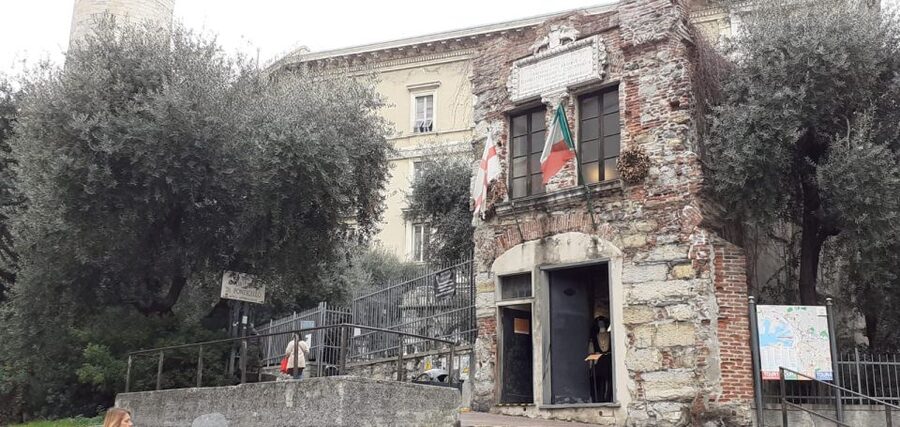
Columbus starts in a modest Genoese house. This quick, guided walk pairs Casa di Colombo with the Chiostro di Sant’Andrea, plus the Porta Soprana area, so you see how Columbus’s early life connects to the medieval city around him. I love the small group format, limited to 6, because you can actually hear the guide and pick up details without craning your neck. I also like the way the tour explains the house itself, including how the ground floor functioned as a workshop and how the upper rooms were laid out.
The catch is simple: the tour is short, about 20 minutes, and it is not suitable for wheelchair users or people with mobility impairments. If you want a slow, unhurried museum-style experience, this is not that. But if you want a smart snapshot that makes Genoa feel real fast, it is a strong pick.
In This Review
- Quick Hits Before You Go
- Casa di Colombo: what you learn about Columbus before the voyages
- Where to meet near Porta Soprana and how the 20-minute timing works
- Inside the house: workshop ground floor and private rooms above
- Chiostro di Sant’Andrea: the cloister that completes the medieval picture
- Porta Soprana area: why stepping out is part of the value
- Price and value: $12 for a guided mini-tour that actually saves time
- Who should book this Genoa stop, and who should skip it
- Should you book this Casa di Colombo guided tour?
- FAQ
- How long is the Genoa Casa di Colombo guided tour?
- What languages are the guided tours offered in?
- Where do I meet the guide for the Casa di Colombo tour?
- What is included besides Christopher Columbus’ house?
- Is this tour wheelchair accessible?
- Do I need to use the ticket on the exact booked date?
Quick Hits Before You Go
- Casa di Colombo in 15 to 20 minutes inside, with a focused guided story before you step back out into the streets
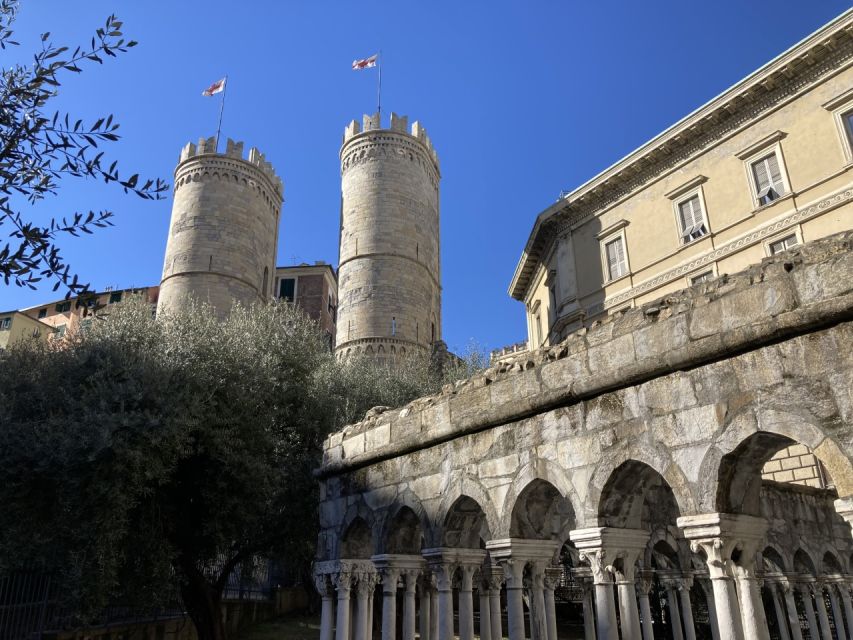
- Chiostro di Sant’Andrea included, rebuilt behind the house to give you the bigger medieval picture near Porta Soprana
- Small group capped at 6, which keeps the guide focused and lets questions actually land
- Skip the ticket line, so you do not burn time standing around
- Italian and English tours, helpful if you want the narration in your comfort language
- Workshop ground floor and upper private rooms, explained in a way that matches what you can see
Casa di Colombo: what you learn about Columbus before the voyages
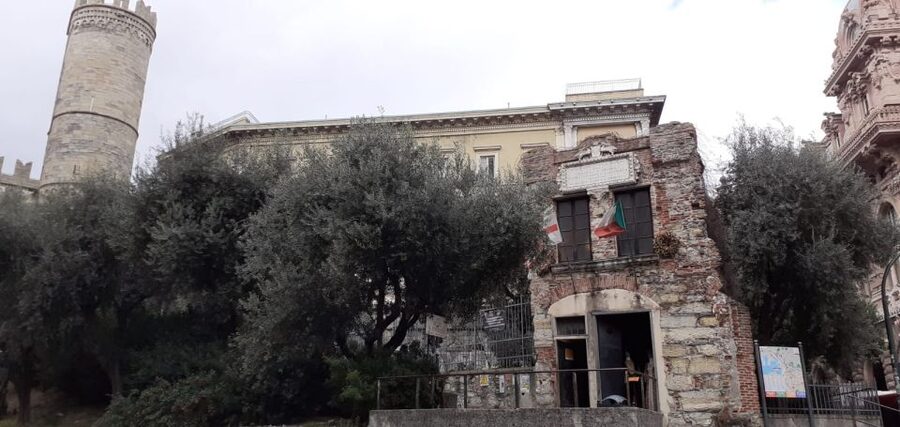
Casa di Colombo, or the Christopher Columbus house in Genoa, is the kind of stop that makes your mental picture of Columbus less like a statue and more like a person. Archival documents place Columbus’s family living here when he was very young, after his father Domenico Colombo moved the household to this area in 1455. That timeline matters because it anchors the explorer to Genoa, not just to ships and faraway ports.
Inside, the tour focuses on the home’s structure and how it worked day to day. You are not just hearing a biography. You get the sense of what a house like this would have been for an ordinary working family, including the fact that the ground floor served as a workshop. Then you see how an attic with wooden beams separates that lower working space from the upper floor, where private rooms were located.
What I like most about this approach is that it makes history physical. When you walk through the space and the guide points out the layout logic, it is easier to picture life there. Instead of memorizing names, you start noticing details like how rooms connect, how floors are organized, and why the house had a mixed private-and-working rhythm.
More ruins and republics, guided:



Where to meet near Porta Soprana and how the 20-minute timing works
This tour runs on a tight schedule, about 20 minutes total, so planning your arrival is part of making it enjoyable. You meet the guide inside the venue, not outside. That small instruction matters more than it sounds, because if you wait in the wrong spot, you end up stressed at the start.
The location is near Porta Soprana, just outside the ancient medieval walls. That is useful because you can connect the tour to what you see walking around Genoa afterward. In other words, the guided portion gives you context, then the surrounding streets help you keep it.
The tour is also a small group, limited to 6 participants. In practice, that usually means you get a clearer, louder explanation without the guide having to talk over a crowd. It also means the guide can adjust based on questions, which is ideal for short tours when you do not have time for a slow digression.
Language options are Italian and English, so you can pick the narration that helps the details land. If you are traveling with a mixed group, choosing the language that matches the most people tends to keep the tour experience smooth.
Inside the house: workshop ground floor and private rooms above
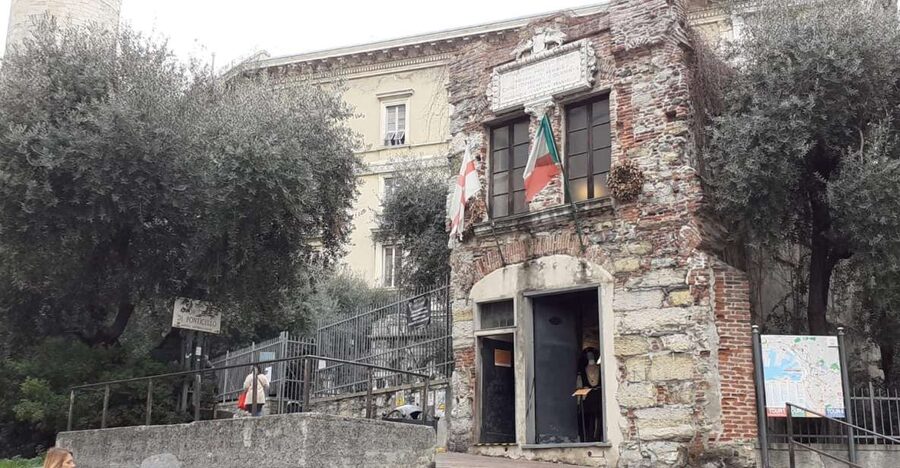
You start at Casa di Cristoforo Colombo and then go right into the heart of the experience. The guided portion inside Casa Colombo typically runs about 15 to 20 minutes, long enough to give you the layout and the story, but short enough that you do not feel trapped indoors.
The big architectural idea you hear is the split between function and privacy. The ground floor was used as a workshop, which means it was not just living space. It was tied to work and daily routines, and that changes how you interpret what you are looking at. Then the upper floor, divided by an attic with wooden beams, contains the private rooms.
One standout theme from guide performance is structure. Guides often explain the house’s rebuilding and what the space can tell you, and in at least one case the guide brought an archaeologist-like lens to the explanation. I like this because the tour does not float on generic facts. It treats the building like evidence.
You can also expect the guide to point out items you might miss on your own. In one longer tour example, the guide spent extra time answering questions and even expanded the route beyond the typical pacing. So if you are the type who likes to ask, bring that energy. The tour can flex a bit, as long as you stay mindful of the overall schedule.
Chiostro di Sant’Andrea: the cloister that completes the medieval picture
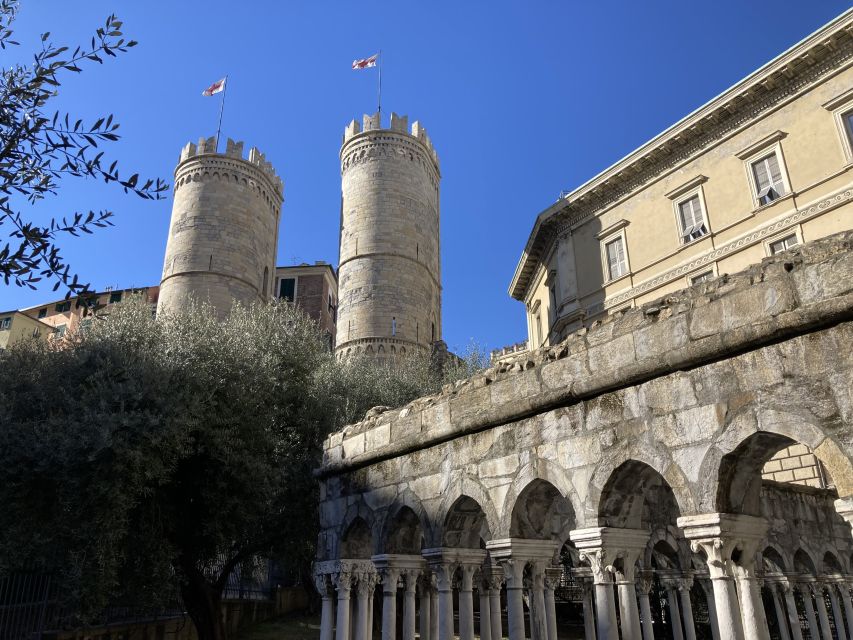
After the house, you move to the Chiostro di Sant’Andrea, included as part of the guided experience. The cloister is behind the house and near Porta Soprana, and it was rebuilt to help visitors see this area as a coherent medieval whole. That matters because Genoa’s old core can feel like fragments of stone unless someone connects the dots for you.
The guide’s job here is to connect place to story. You are not just stepping into a pretty courtyard. You are seeing how the house sits within a wider neighborhood and how the medieval heart of Genoa shaped daily life around it. In the best moments, the guide points out features in the cloister that give you a clearer sense of time layers, so you stop thinking of it as one fixed moment in the past.
Practically, this stop is where the experience shifts from “inside a house” to “inside a neighborhood.” That change is why this tour works well for many people. You get the intimate scale of home life, then you get the broader setting that makes the home feel real.
Introductions we still owe you around Genoa
- Genoa: Aquarium of Genoa Entry Ticket
★ 4.5 · 10,075 reviews - Genoa: Hop-on Hop-off Tour Ticket
★ 4.0 · 1,524 reviews - Genoa: Aquarium of Genoa with Lunch
★ 4.3 · 1,449 reviews - Genoa: Half-Day Tour to Portofino
★ 4.2 · 1,123 reviews
Porta Soprana area: why stepping out is part of the value
One reason this tour feels like good value is what happens after you leave Casa Colombo. You do not just get a ticket for one building. The inclusion of Porta Soprana and the surrounding medieval area turns the tour into a mini orientation for Genoa’s old quarter.
Porta Soprana is a named reference point, and the tour places you just outside the ancient medieval walls. Even if you are not a history fanatic, that helps you get bearings fast. You can look at the streets you walk later and understand that you are moving through an older urban map than it looks from street level.
The other benefit is pace. Since the total time is about 20 minutes, you are not stuck on a long guided route. You get enough structure to make your next hour of wandering more meaningful, and you can decide what to explore afterward without feeling like you missed your chance.
Price and value: $12 for a guided mini-tour that actually saves time
At $12 per person, this tour lands in the “worth it for the explanation” category. You are paying for a guided narrative and for entry that includes the house and the related stops, not just for a self-guided walkthrough. Plus, the ticket lets you skip the ticket line, which is often where short activities lose money in the real world.
The small group size, capped at 6, also adds value. In short tours, group size is not a luxury, it is part of the experience quality. When you can hear the guide without strain, you absorb more of the story. That is the whole point here, since you do not have hours to wander.
Is $12 cheap in a big-picture way? Yes. But it is even cheaper when you consider the alternative: reading about Columbus and Genoa’s medieval layout on your own often takes more time than you have between meals, ferry trips, and the rest of your day. This tour is a tidy investment if you want context without turning your sightseeing day into homework.
The only tradeoff is the same one mentioned earlier: it is short. If you want slow looking, or you love spending time in quiet indoor spaces, you may wish you had more. But for an efficient Genoa hit, it is priced like a smart stop, not a big production.
Who should book this Genoa stop, and who should skip it
This tour fits best if you like compact experiences with clear direction. The 20-minute length and the small group format make it ideal for people who are also doing other Genoa sights that day and do not want one attraction to swallow the schedule.
It is also a good fit if you enjoy the building details. The tour highlights the house’s layout and function, like the workshop on the ground floor and the upper private rooms, so you leave with a mental image you can hold onto as you wander.
Skip it if you have mobility concerns. The tour is listed as not suitable for people with mobility impairments and not for wheelchair users. Also, since it is conducted inside historic spaces, being comfortable moving through the venue matters.
Language-wise, choose Italian or English depending on your comfort. And if you like guides who explain structures and rebuilding choices, you are likely to enjoy how the narration connects physical features to the broader story of Genoa.
Should you book this Casa di Colombo guided tour?
If you want a practical, low-cost way to make Genoa’s medieval center feel connected, I would book this. You get the Columbus house context, the cloister viewpoint, and a quick introduction to Porta Soprana’s zone, all while staying in a small group that makes the guide easier to follow.
Book it especially if you care about details like how a workshop-home setup would have worked, and if you want a guided route that saves you time figuring out what to look for. The only reason not to is if you need a longer, slower experience or if accessibility is an issue for you.
In short, this is the kind of stop that works as a foundation. Do it early, get your bearings around Porta Soprana, then use what you learned as you explore Genoa on your own.
FAQ
How long is the Genoa Casa di Colombo guided tour?
The escorted tour is about 20 minutes. You can check availability to see starting times.
What languages are the guided tours offered in?
The tour is available in Italian and English.
Where do I meet the guide for the Casa di Colombo tour?
Meet the guide inside the venue. Do not wait for the guide outside or in the venue’s nearby area.
What is included besides Christopher Columbus’ house?
The guided visit includes Casa Colombo, the Cloister of Sant’Andrea, and the Porta Soprana area.
Is this tour wheelchair accessible?
No. It is not suitable for people with mobility impairments and wheelchair users.
Do I need to use the ticket on the exact booked date?
Yes. The ticket is valid only on the date booked. You can cancel up to 24 hours in advance for a full refund, and you can reserve now and pay later (pay nothing today).
Just introduced: the newest Genoa write-ups
- Genoese cooking lesson in the with lunch in the terrace★ 5.0 · 189 reviews
- Genoa: Aquarium, Galata Museum and Submarine Entry Tickets★ 4.6 · 190 reviews
- Genoa Food, Wine Tasting & History Walking Tour★ 5.0 · 212 reviews
- Genoa: Food and Wine Tasting Walking Tour★ 4.9 · 215 reviews
- Genova: Homemade Pasta & Pesto Local Chef Class with Wine★ 5.0 · 217 reviews
- Genoa: Impossible Museum Entry Ticket★ 4.2 · 226 reviews
- 2 Hours Private Historical Tour in Genoa★ 5.0 · 248 reviews
Historical Tours, compared.
St. Mark Basilica Ticket, Audioguide+History Gallery
Read our review →
Venice’s Best: Basilica, Doge’s Palace, Gondola & History Gallery
Read our review →
Historic Milan Tour with Skip-the-Line Last Supper Ticket
Read our review →
Rome in a Day Tour with Vatican, Colosseum and Historic Center
Read our review →
Rome Food Tour in the Historic Centre with 8+ Food Tastings
Read our review →Browse the lists this tour appears in