
Reviewed · TRAIN EXPERIENCES
Ancient Ostia Antica Semi-Private Day Trip from Rome by Train with Guide
Ostia Antica is Rome’s port city in plain sight. I love the easy train that keeps you out of complicated transport. I also love the small-group feel, where your guide can point out what matters without turning the day into a sprint.
The one thing to plan for is the physical side. You’ll do a solid walk over uneven ground, and there can be stairs and train transfers, so bring good shoes and expect to move.
In This Review
- Key Things I’d Prioritize on This Day Trip
- Why Ostia Antica Beats the Typical Rome Ruins Day
- Getting Out of Rome by Train, Round Trip, with No Headaches
- The Semi-Private Group That Makes the Ruins Make Sense
- Decumanus Maximus: The Main Street You’ll Understand Fast
- Baths of Neptune Mosaic and the Amphitheater: The Big-Deal Stops
- Forum of the Corporations, Temples, Taverns, and the Port-City Economy
- Comfort, Heat, Shoes, and What to Bring for a Smooth Half Day
- Price and Value: Is This $59.26 Half Day a Smart Buy?
- Should You Book This Ostia Antica Train Tour from Rome?
- FAQ
- Where do I meet the guide for this tour?
- How long will I spend walking through Ostia Antica?
- What’s included in the price?
- How big is the group?
- Is the tour okay if I have moderate mobility or stamina?
- What if the weather is bad?
Key Things I’d Prioritize on This Day Trip
- Train time that’s actually worth it, with round-trip tickets included
- Semi-private group size (max 12), so you can ask questions and stay together
- A guided route through the “must-see” ruins, not a random wandering game
- Decumanus Maximus plus big set-piece sights, like the amphitheater and Neptune complex
- Practical value with entrance and train covered up front, no add-on surprises
- Shaded pacing tips from guides, especially on hot days
Why Ostia Antica Beats the Typical Rome Ruins Day
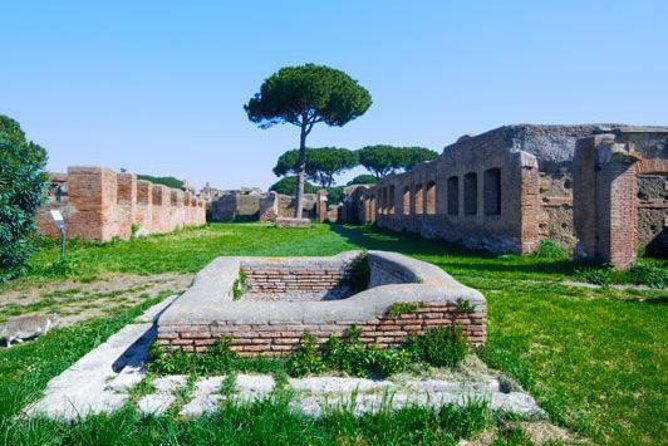
Ostia Antica is what happens when you want ancient Rome without the giant theme-park energy. This was the port city that helped feed and move goods for Rome. On paper, that can sound dry. On the ground, it feels human. You’re not just looking at monuments, you’re walking through a working town: main street storefronts, bath buildings, public spaces, and the layout of neighborhoods.
The biggest reason to pick this tour is that it’s built around understanding, not just seeing. Your guide keeps you oriented from the start, so when you reach places like the amphitheater or Baths of Neptune, you know what role they played in everyday life. This is where Ostia earns the nickname people give it, because it has that still-standing feel. But it doesn’t pretend to be small. The ruins are extensive and remarkably preserved.
Also, you’re not spending your limited time wrestling with transit. You’re going by train directly to the site area and returning the same way. That makes the whole day feel lighter, even though you’re still getting a real chunk of ancient city on foot.
Introductions we still owe you around Rome

Getting Out of Rome by Train, Round Trip, with No Headaches
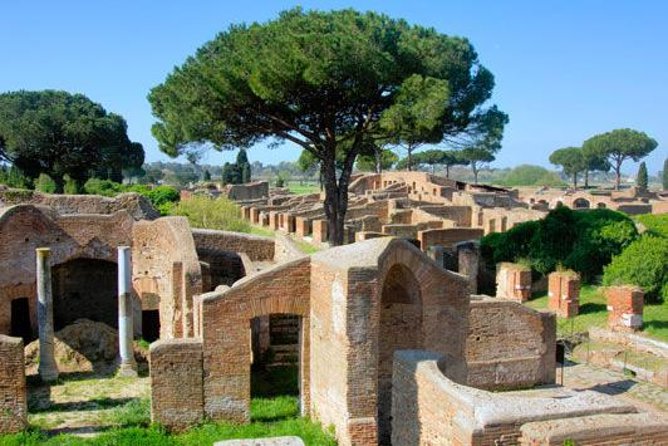
You meet your guide near P.za Ostiense, 11, 00154 Roma RM. Then you board the train together. The format is simple on purpose: you show up, your guide handles the route, and you head southwest toward Ostia Antica, near the coast.
Why this matters for you: train days are usually the easiest way to beat stress. Instead of coordinating local buses, hailing rides, or trying to interpret station-to-station transfers on your own, you can focus on the day. The tour includes your round-trip train ticket, so you’re not calculating extra fares mid-trip.
You should also like the “together” part. The group stays a unit from Rome to the site, which helps if your time is tight. When you’re done with the ruins, you walk back to the station area and return to Rome by train with the guide.
One small note from the real-world side: some guides are very good at keeping the day moving at a pace that works for mixed groups. Others are more rigid. In practice, the guides you might be assigned include people like Alberto, Laura Luongo, Barbara, Cat, Rob, Liv, Eduardo, Martina, and Caterina, and many past groups have praised how their guides kept things organized and on tempo.
The Semi-Private Group That Makes the Ruins Make Sense
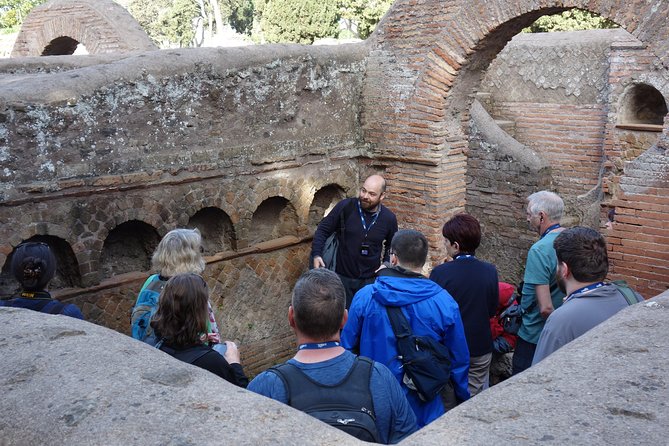
This is a semi-private tour with a maximum of 12 travelers. That group size is the sweet spot. Big enough that you can meet other people, small enough that your guide can actually adjust to questions and attention spans.
You’re not just strolling for the sake of walking. The guide leads you along a planned route through the key parts of the archaeological park. The tour timing is also realistic: you get about 2.5 hours at the ruins on a leisurely walking tour, then you return to the train.
English is the working language, and the tour uses a mobile ticket, which cuts down on paper chaos.
If you’re wondering about the “how intense is it” factor, read the room and the terrain. Some of the ruins cover uneven ground, and you’ll be moving on and off trains. Your best bet is to be honest with your own comfort level. If you like to linger and read details, you may feel the route is structured but not rushed. If you need a slower pace, you’ll want to plan extra buffer time for each stop.
Decumanus Maximus: The Main Street You’ll Understand Fast
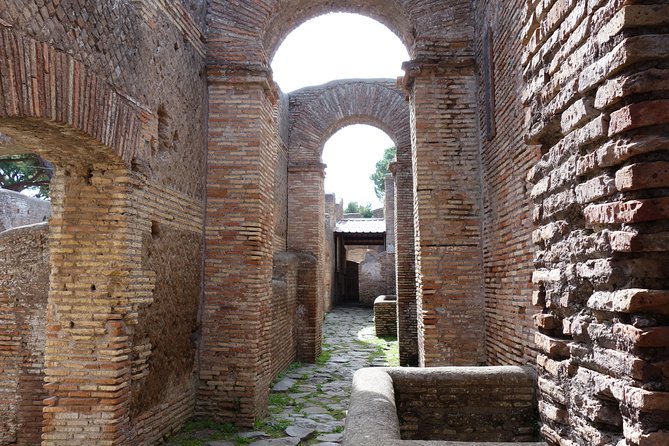
Once you arrive at the archaeological park, you start with orientation. Your guide takes you through Decumanus Maximus, the main street of Ostia. This is a great starting point because it’s the backbone for how you understand everything else. When you’re standing on the street line, the rest of the city layout starts making sense.
As you walk, you’ll see how a Roman port city functioned at street level. Your guide points out elements like the way the town was built around commerce and daily routine, not just big civic monuments. You’ll also spot Roman statues set along walkways. That detail matters because it helps you read the site as a lived environment, not an abandoned set.
The route doesn’t stop at interpretation. It includes real set pieces that help you visualize the city’s rhythm. Past stops can include places tied to entertainment and social life, plus building complexes that show the technology and taste of the Romans.
If you love photos, this street is a gift. It’s long, readable, and it gives you the kind of perspective that makes ruins look like a real place rather than scattered stones.
Also on the Rome guest list:
- Vatican: Museums & Sistine Chapel Entrance Ticket
★ 4.5 · 144,003 reviews - Vatican Museums & Sistine Chapel Tour with Optional Basilica
★ 4.3 · 67,413 reviews - Colosseum, Roman Forum & Palatine Guided Tour
★ 4.7 · 63,148 reviews - Vatican Museums, Sistine Chapel & St Peter’s Basilica Guided Tour
★ 4.5 · 39,149 reviews
Baths of Neptune Mosaic and the Amphitheater: The Big-Deal Stops
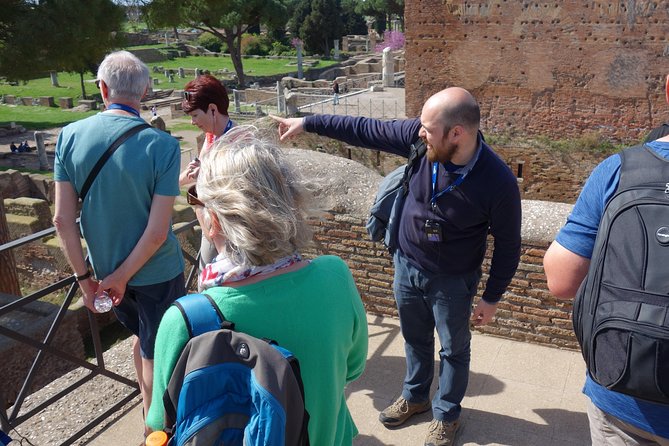
Two highlights tend to anchor the whole experience: the Baths of Neptune and the amphitheater.
At the Baths of Neptune, the star is the mosaic. The complex is crowned with a mosaic showing the Roman god of the sea behind a four-horse chariot. Your guide’s job here is to translate what you’re seeing into context. Instead of treating it like a decoration, you learn what bathing complexes represented socially, and why this kind of art showed up in public-facing spaces.
Then you move to the amphitheater. This one is not a small side attraction. It dates to 12 BC and was built to hold about 3,500 spectators. When you sit down and look around, you can start to imagine crowds and noise, even though the structure is now quiet.
What makes these stops work on a guided tour: they act like landmarks. Even if the rest of the ruins feel like a lot at first, these anchor points give your brain a reference frame. That means when you step from the amphitheater to shops and living quarters, you can better connect daily life with public events.
Forum of the Corporations, Temples, Taverns, and the Port-City Economy
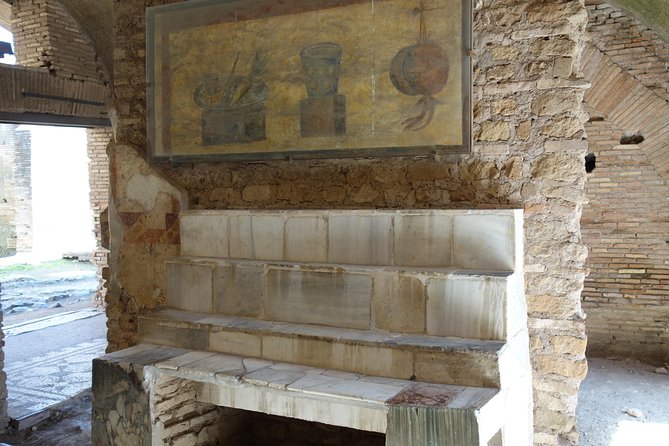
Ostia was built around the movement of goods, people, and money. That shows in the kinds of places you’ll walk past. The ruins include structures like the Forum of the Corporations, the Collegiate Temple, taverns, and public baths.
This is where you start seeing the city as an organized machine. The Forum of the Corporations helps you understand how different groups could gather and operate as a community tied to trade. Even without being a history buff, the idea is intuitive: port cities need systems. Ostia shows you what those systems looked like in physical form.
Then there are the smaller buildings: ruined shops and living quarters. These are easy to overlook if you come expecting only temples and stadiums. On the guided route, your guide brings attention back to them, so you don’t miss the everyday scale of life.
A quick real-world note from the way tours are described in practice: many people appreciate that this day trip doesn’t feel as crowded as some bigger name sites. One guide in particular, Alberto, has been praised for managing time and using shade-friendly spots, which matters a lot on warm days. If your route includes thoughtful standing spots and breaks, you’ll feel more comfortable without losing momentum.
Comfort, Heat, Shoes, and What to Bring for a Smooth Half Day
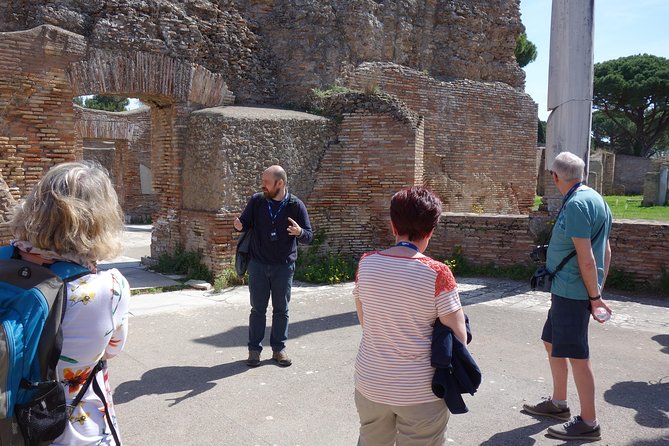
This is a half day with a serious walking component. The ruins tour itself is about 2.5 hours, and there’s also transit time, plus the walk back toward the station area after the ruins portion.
You’ll want to plan for:
- Stairs and uneven ground as you move through the site
- Some train transfers that require you to step in and out
- Heat exposure, especially if the day is sunny
If you tend to get hot easily, prioritize shade breaks and hydration. Several guides have been praised for actively helping their groups stay comfortable, including finding good standing spots away from full sun and pointing out where you can fill water bottles.
For footwear, go with shoes that handle uneven stone. If you’re traveling with kids, or you’re with teens who might get bored with ruins, this tour can work because it’s paced and focused on recognizable “big moments” like the amphitheater.
What to bring:
- Comfortable walking shoes
- Water
- Sun protection (hat and sunscreen)
- ID if you’re traveling with anyone under 18, since entrance may require it
Price and Value: Is This $59.26 Half Day a Smart Buy?
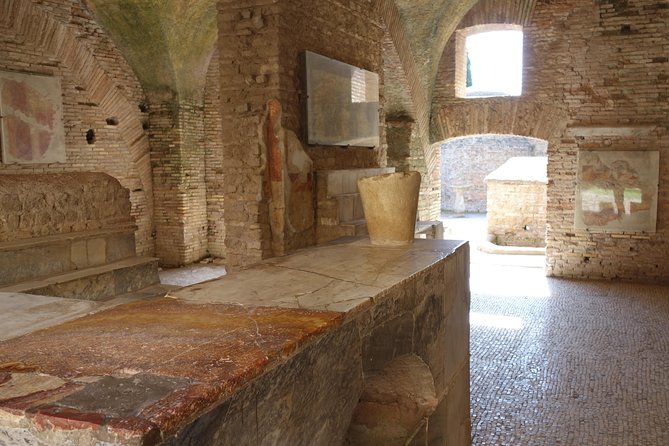
At $59.26 per person, this tour lands in the “not cheap, but fair” category. The value comes from what’s included up front: an English-speaking guide, round-trip train tickets, and entry to Ostia Antica.
That matters because Ostia days can get fiddly if you go DIY. You’d have to figure out how to time the train, handle tickets, and still get a route through a large site. Here, your guide does the heavy lifting in two ways:
- You follow a planned route that hits key places without wasting time.
- You get explanations that turn a maze of ruins into a coherent city.
The semi-private limit of 12 travelers also helps the value. It reduces the feeling of being herded and increases the chance you can ask questions.
Is it perfect? Not always. The biggest drawback you should expect is physical effort, plus the fact that some days run on a set schedule. If you need extreme slow pacing, you may find the group format harder to adapt. And as with any guided tour, a guide’s style can affect your enjoyment.
Should You Book This Ostia Antica Train Tour from Rome?
Book it if you want an easy train day, a small-group guided walk, and you’d rather spend your energy learning the city than organizing transport. This is also a strong choice if you’re skipping Pompeii or don’t have time for a full-day ruins plan.
Skip or reconsider if you have limited mobility needs, because you should be ready for walking over uneven ground, stairs, and train transfers. Otherwise, for most people who can handle a half day of walking, this is one of the cleaner, more focused ways to experience ancient Rome beyond the city center.
FAQ
Where do I meet the guide for this tour?
You meet at P.za Ostiense, 11, 00154 Roma RM, Italy. The tour ends back at this same meeting point.
How long will I spend walking through Ostia Antica?
You’ll have about 2.5 hours for a leisurely walking tour through the ruins.
What’s included in the price?
The price includes an English-speaking guide, train ticket to and from Rome, Ostia Antica entrance ticket, and a semi-private group size (max 12).
How big is the group?
It’s a semi-private tour with a maximum of 12 travelers.
Is the tour okay if I have moderate mobility or stamina?
The tour is listed for travelers with moderate physical fitness. The day involves walking, and you should expect stairs, uneven ground, and transferring on and off a train.
What if the weather is bad?
This experience requires good weather. If it’s canceled due to poor weather, you’ll be offered a different date or a full refund.
Just introduced: the newest Rome write-ups
- Rome Fiumicino Airport Transfer in Luxury Private Transportation★ 4.5 · 339 reviews
- Vatican: Pope Francis Tomb and Papal Basilicas Tour★ 4.7 · 340 reviews
- From Rome: Sorrento, Positano & Amalfi Coast Day Trip★ 4.5 · 340 reviews
- Rome: Guided Colosseum Underground Tour★ 4.8 · 342 reviews
- Colosseum Arena Floor, Roman Forum & Palatine Hill Guided Group Tour★ 5.0 · 343 reviews
- Rome: Small Group Rome’s Dark Side – Ghosts & Legends Tour★ 4.9 · 343 reviews
- Rome: City Highlights Electric Bike Tour★ 4.9 · 343 reviews
Train Experiences, compared.
Bernina Red Train, Swiss Alps & St Moritz From Milan
Read our review →
Swiss Alps Bernina Red Train and St.Moritz Tour from Milan
Read our review →
Rome to Pompeii Guided Tour with Wine & Lunch by High Speed Train
Read our review →
Small-Group Lake Como & Lugano by Swiss Train + Boat Cruise
Read our review →
Guided tour of Pompeii skip-the-line and round-trip train
Read our review →
Pompeii Express Guided Tour by Train from Sorrento
Read our review →Browse the lists this tour appears in