
Reviewed · WALKING TOURS
Discover the Charm of Palermo: A 3-Hour UNESCO Sites Walking Tour
Palermo’s corners have big stories. This 3-hour UNESCO sites walking tour strings together the city’s baroque and Norman-Arabic architecture with real street-life stops, guided in English. It is a smart way to understand what makes Palermo feel like a crossroads, not just a stop on a map.
I especially love how the tour pairs major monuments with context, like why certain buildings were built, what cultures layered on top of each other, and how to spot the details that most people miss. I also like that you get an included Cathedral visit plus a classic Sicilian treat at the end, cannolo or granita, so the day has a payoff besides photos.
One drawback to plan around: the Palatine Chapel’s mosaics are covered from the outside in this experience, since the Palazzo dei Normanni area entry is not included. If mosaics inside are your top priority, you may want to budget time for that separately.
In This Review
- Key highlights to watch for
- Why this 3-hour Palermo walk is a great first-morning plan
- From Teatro Massimo to Galleria delle Vittorie and Via Bandiera markets
- Chiesa di San Domenico, Piazza Caracciolo, and La Martorana’s Greek-Byzantine story
- Piazza Pretoria and Quattro Canti, the squares that anchor your mental map
- Inside Cattedrale di Palermo: Norman power, Arabic details, layered styles
- Villa Bonanno and the Palazzo dei Normanni area, including what you see about the Palatine Chapel
- Price, pace, and group size: does $31.88 feel fair?
- What you get for your money: the included food and the guide’s storytelling
- Who this tour suits best, and who might want a different plan
- Should you book this UNESCO walking tour of Palermo?
- FAQ
- How long is the Palermo UNESCO walking tour?
- How much does the tour cost?
- Is the tour offered in English?
- What attractions are included with admission?
- Is entry to Palazzo dei Normanni or the Palatine Chapel included?
- Where does the tour start and end?
- Do I need to bring a printed ticket?
- What is the maximum group size?
- Is there free cancellation, and are pets allowed?
Key highlights to watch for
- Guides who make the city click: Names like Valeria, Peter, Renata, Fabio, Laura, Debbie, and Simone show up in the guide praise, and that matters because Palermo history is layered.
- Short stops that add up: You do a tight circuit of squares, churches, and façades without the “one site all day” feeling.
- Cathedral entrance included: You do not just stand outside the Cattedrale di Palermo.
- Street markets, not museum-only vibes: The walk includes open-air market crossings and food-stall areas.
- Piazza Pretoria and Quattro Canti pace the whole route: These are the landmarks that help you orient fast in the historic center.
- End with a Sicilian sweet: Cannolo or granita is included, so you finish on a delicious note.
Why this 3-hour Palermo walk is a great first-morning plan
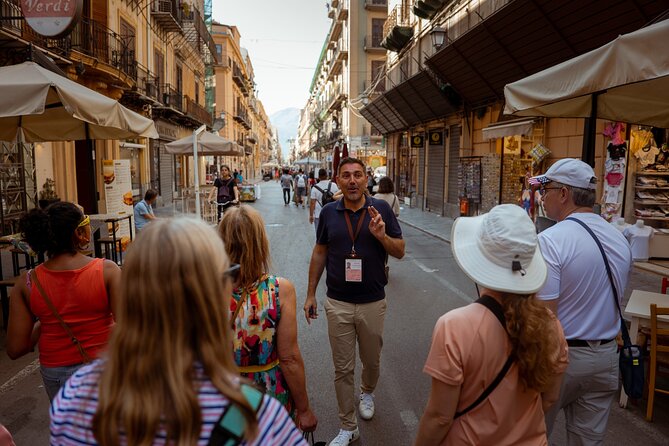
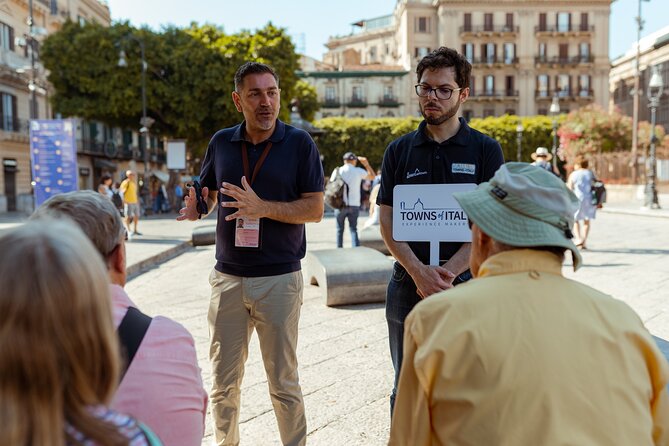
If you only have a short window in Palermo, this tour is built for that reality. In about 3 hours, you cover the kind of places you would otherwise chase one by one, with a guide who helps you connect the architectural dots instead of just collecting stamps in your travel app.
Palermo can feel chaotic in a good way. This walk turns that chaos into an ordered route through the historic core, from Teatro Massimo to the Cathedral to the Norman Palace area. You also get practical orientation, like which streets tend to funnel foot traffic and where the major squares sit.
The price, at $31.88 per person, also makes sense because it is not only a narration tour. It includes a licensed English-speaking guide, Cathedral admission, and a typical Sicilian cannolo or granita. For the amount of ground covered, that is solid value, especially if you want a guided introduction before you start wandering on your own.
More Walking Tours in Sicily
From Teatro Massimo to Galleria delle Vittorie and Via Bandiera markets
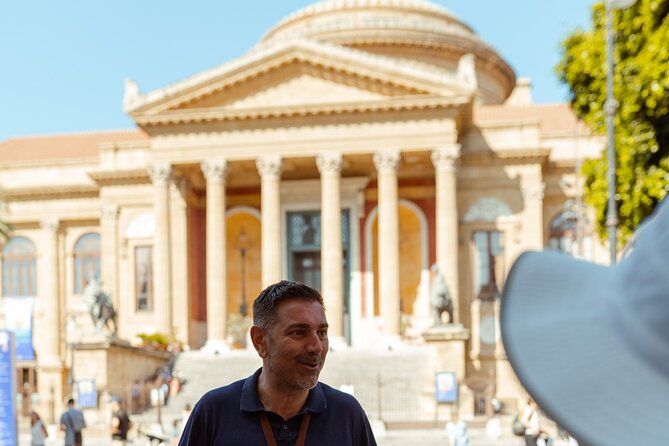
You start in the center area near Via Volturno 44, then head to one of Palermo’s big showpieces: Teatro Massimo Vittorio Emanuele. It is famous for its perfect acoustics, and it is also the largest opera house in Italy, with a huge footprint for Europe at the time of its opening. Even from outside, you can appreciate the scale, and your guide helps you place why a city like Palermo invested so much in opera.
Right after that, the route shifts to something more everyday and urban: the Galleria delle Vittorie on Via Maqueda. It was built like a commercial mall, but over decades it deteriorated, and restoration attempts have been made. This stop is useful because it reminds you Palermo is not frozen in time. It changes, it ages, and it tries to recover.
Then you cross Via Bandiera, where you hit a typical open-air market. This is one of those moments that makes the tour feel alive. You are not just looking at stone and mosaics, you are watching how people actually move, snack, and shop. If you are the type who gets overwhelmed by too many facts, these market crossings are a good mental reset.
Practical note: Palermo is active. Even when areas are supposed to be pedestrian-first, cars and motorcycles can still push through tight spaces. Stay aware, especially if you are stopping for photos.
Chiesa di San Domenico, Piazza Caracciolo, and La Martorana’s Greek-Byzantine story
The tour continues to Chiesa di San Domenico, a church that dominates its square like a reigning figure. It is tied to serious cultural weight in Palermo and is described as a kind of Pantheon of the illustrious men of Sicily. It is also known as a symbol in the fight against the mafia, which gives the stop an emotional depth beyond architecture.
From there, you move through market areas like Piazza Caracciolo, which winds through alleys and adjacent streets. A neat detail your guide may share: it was formerly called la Bucceria, from the French boucherie, because it was originally intended for butchers. That small linguistic clue tells you how the city’s economy and neighborhoods evolved over time.
Next comes the Garraffo Fountain in Piazza Marina, down the historic Cassaro street (now known as Via Vittorio Emanuele). It is Baroque in spirit, and it works as a visual waypoint. Your guide helps you notice how Baroque design is not only about decoration, it is also about drama and movement in public space.
Then you get a civic history stop: the Palermo Stock Exchange. It was one of ten active Italian stock exchanges until the late 1990s, with trading that began in 1845. It was housed for about a century in the Palazzo delle Finanze. This is an unexpected but valuable pause, because it shows Palermo wasn’t only cathedrals and kings, it also ran financial systems and institutions.
As you walk, you will also encounter the idea behind the descent of the Judges. The street once carried the name calata dei giudici, tied to the Judges of the Praetorian Court, and your guide can explain how those judges were appointed by the king and served for a year. It is the kind of detail that makes street names start to mean something.
Finally, you reach Santa Maria dell’Ammiraglio, also called La Martorana. This is a standout if you care about cross-cultural layers. The church was built between 1143 and 1185 by the Greek admiral George of Antioch, and it is associated with Greek-Byzantine clergy using ancient Greek or Albanian language in ceremonies. That connection is the big takeaway: Palermo’s religious architecture is not just “styles,” it is people and traditions overlapping.
Piazza Pretoria and Quattro Canti, the squares that anchor your mental map
Two of Palermo’s most photogenic stops also do the most practical work. Piazza Pretoria is near the edge of the Kalsa district, close to the Quattro Canti area where major quarters intersect. Even if you never memorize a street grid, squares like this help you feel where you are.
Here is the interesting angle your guide will likely bring up: Piazza Pretoria’s fountain was created for a garden in Florence for don Luigi de Toledo. In Palermo, the plot was originally a garden belonging to nuns of San Domenico al Maglio, and after pressure it was obtained in 1551. The fountain was commissioned to Florentine sculptor Francesco Camilliani, and your guide may connect the Palermo and Florence link to how Renaissance ideas traveled.
Then you reach Quattro Canti, also known as Piazza Vigliena, and it makes the city’s layout feel structured. The four buildings were built between 1608 and 1620, and sculptures and decorative elements were completed by 1663. Your guide also frames it as an ideal starting point for navigating Palermo’s historic center.
If you like having “landmark anchors,” this portion is worth it. Even if you decide to wander after the tour, these squares will bring you back to a known reference point.
More Italy at street level:
- Palermo No Mafia walking tour: discover the Anti-mafia culture in Sicily
★ 5.0 · 1,011 reviews - Palermo: Private Custom Walking Tour with Local Guide
★ 4.7 · 661 reviews - Palermo: Street Food Walking Tour with Local Guide & Tasting
★ 4.9 · 632 reviews - Palermo Walking Tour and Street Food
★ 5.0 · 617 reviews
Inside Cattedrale di Palermo: Norman power, Arabic details, layered styles
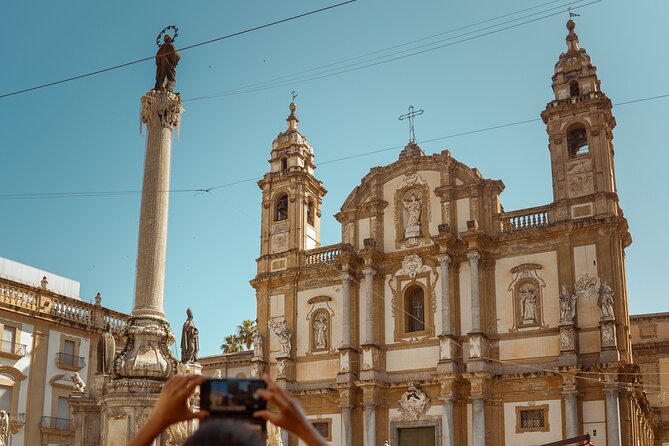
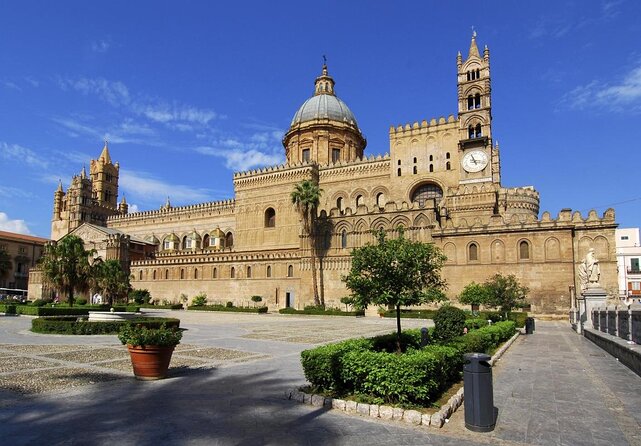
The centerpiece visit is Cattedrale di Palermo, and the fact that entry is included changes the experience. Outside, the cathedral already signals importance. Inside, it becomes a lesson in how Palermo repeatedly rebuilt and rebranded sacred spaces over centuries.
Your guide sets the timeline: built in 1184 by the Normans, it was constructed as a reconverted Christian church on the site of a Muslim mosque, which itself sat over an earlier Christian basilica. That sequence matters because it explains why the building feels like more than one era.
You can also expect a mix of styles. Your route through the church is described as a stratification from Gothic and Medieval periods to Arabic influences, plus Neoclassical elements later on. One of the details people love is that an actual passage connected to the Koran is engraved on a column. It is a small thing, physically, but it is a huge signal of the city’s layered cultural record.
This stop is also why you should book this tour early in your trip. A guided interior visit gives you a vocabulary for what you see later, including in nearby churches and palaces. You finish the stop with a better sense of what to look for when you do your own walking.
Villa Bonanno and the Palazzo dei Normanni area, including what you see about the Palatine Chapel
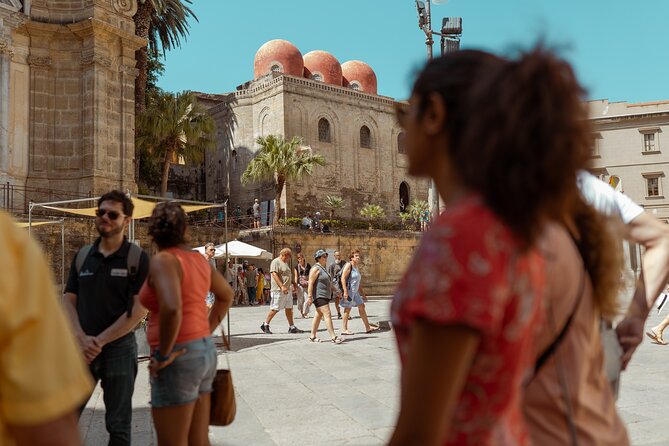
After the Cathedral, the tour shifts to a calmer, more garden-like pace with Villa Bonanno. The garden was built in 1905 and sits in Victory Square behind the Palace of the Normans. The setting is always open, and you may notice statues and busts of famous people of Palermo.
There is also an archaeology angle. The villa is connected to finds of Roman patrician houses with mosaics. Specific mosaic themes like the seasons and Orpheus are mentioned, and the mosaics are kept at the National Archaeological Museum. Even if you are not seeing those exact mosaics here, the guide helps you understand why the site is worth pausing at.
Next, you reach the area tied to the Norman rulers: Palazzo dei Normanni. This Royal Palace is described as chronicling Palermo from early Punic settlement days through later periods. One highlight inside is the Cappella Palatina, with Arab-Norman art and World Heritage status since 2015.
In this experience, the key point is what you do not necessarily get: Palazzo entry is not included. The tour does, however, focus on learning about the Palatine Chapel mosaics from the outside. For many people, that is a great compromise, especially if your time is short. If you want to walk inside the chapel and study mosaics up close, you will likely need a separate plan.
Price, pace, and group size: does $31.88 feel fair?
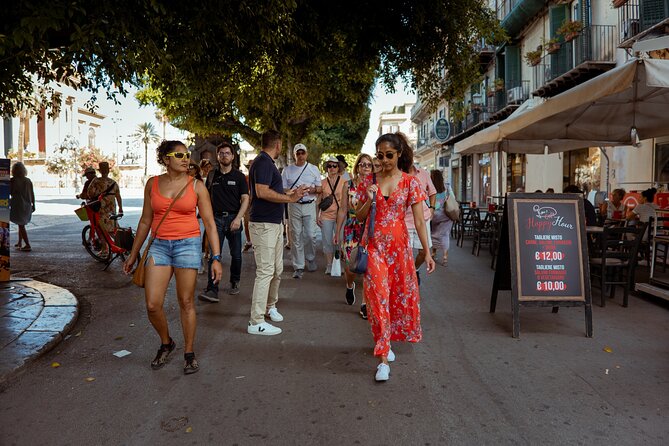
For $31.88 per person over roughly three hours, this tour offers good value when you factor in the included items: the licensed English guide, Cathedral admission, and a sweet finish of cannolo or granita. You are also not stuck with one long stop. You get a route through squares and churches that helps you orient quickly.
Pace-wise, the walk is active, but it is not an endurance test. The stop durations range from brief exterior looks to longer pauses like the Cathedral visit. If you prefer a quick pace with frequent “reset moments,” this fits.
Group size matters in a tour like this, because you are walking through tight historic streets. The tour caps at 20 travelers, which is large enough to feel social but small enough to keep movement manageable. Also, several guides have been praised for using sound systems like headsets or amplification, which is a big deal in noisy Palermo streets.
One more practical reality: restrooms can be hard to find in this part of the city. My advice is simple, plan to use facilities before the tour when you can, and do not count on a restroom stop being built into the route.
What you get for your money: the included food and the guide’s storytelling
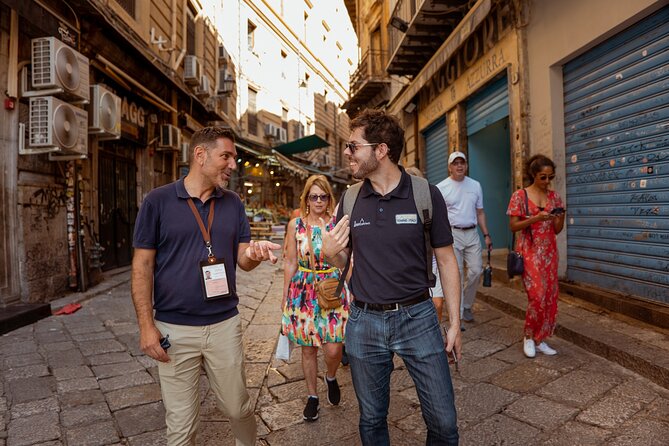
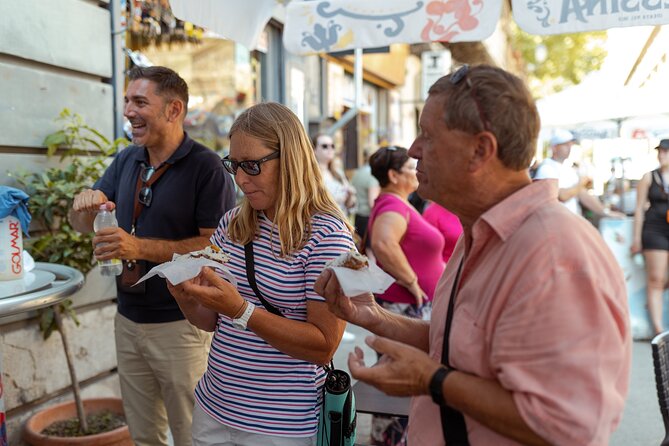
This tour includes a typical Sicilian cannolo or granita. That sounds small until you realize how it changes your energy. After walking through architecture and markets, the treat becomes a marker that the tour is not only about facts. It is also about Palermo as a place where people eat outside, linger at corners, and treat dessert like part of daily life.
Guides in this experience have been singled out for English ability and for answering questions without shutting people down. Names like Valeria, Peter, Renata, Fabio, Laura, Debbie, and Simone come up in the guide praise, and that tells you the tour tends to hire people who actually connect history to modern streets.
That connection is important in Palermo. The city’s style shifts can look random if you only read plaques. A good guide explains why a Norman decision might sit on top of earlier Muslim space, or why a street name like the Judges matters. It turns a scatter of monuments into a coherent story you can carry into the rest of your trip.
Who this tour suits best, and who might want a different plan
This is ideal for you if:
- You want a first-day orientation in Palermo’s historic core.
- You care about UNESCO-level architecture, especially Norman and Arabic influences.
- You want to mix monuments with real market streets.
- You prefer a guided route over solo wandering when you are short on time.
You might want a different plan if:
- Your top goal is to see the Palatine Chapel mosaics inside. This tour emphasizes learning about them from the outside, since entry is not listed as included.
- You dislike walking on uneven historic-street surfaces and tight corners, even with rest stops.
Still, even if you later book separate palace or chapel time, this walking circuit gives you the context that makes those visits more meaningful.
Should you book this UNESCO walking tour of Palermo?
If you are deciding whether to spend half a day with a guide, I think this one is a strong choice. You get a tight route to major highlights, Cathedral entry, and a included Sicilian snack, all for a price that stays reasonable for what you actually do and see.
Book it if you want to get your bearings fast and understand why Palermo looks the way it does. If your dream is maximum access inside every UNESCO space, treat this as your orientation tour, then add specific entries later based on what you care about most, like the Palatine Chapel.
If you want, tell me your travel dates and whether you prefer slower or faster walking. I can suggest a smart follow-up plan for the rest of your Palermo day using what you will already have learned on this route.
FAQ
How long is the Palermo UNESCO walking tour?
It lasts about 3 hours.
How much does the tour cost?
The price is $31.88 per person.
Is the tour offered in English?
Yes, the tour is offered in English, with a licensed English-speaking guide.
What attractions are included with admission?
The Cathedral of Palermo has admission included.
Is entry to Palazzo dei Normanni or the Palatine Chapel included?
No. The tour lists admission for the Cathedral only, and the Palazzo dei Normanni stop is marked as not included. The Palatine Chapel mosaics are covered from the outside.
Where does the tour start and end?
It starts at Via Volturno 44, 90138 Palermo PA, Italy and ends back at the meeting point.
Do I need to bring a printed ticket?
No, it uses a mobile ticket.
What is the maximum group size?
The tour has a maximum of 20 travelers.
Is there free cancellation, and are pets allowed?
Cancellation is free up to 24 hours in advance for a full refund. Pets are not permitted on the tours, but service animals are allowed.
Just introduced: the newest Palermo write-ups
- Palermo: Full-Day Snorkeling Boat Tour with Lunch and Wine★ 5.0 · 196 reviews
- Wanna be Sicilian: Palermo Cooking Class and Market Tour★ 5.0 · 197 reviews
- Sicily: Etna Volcano & Taormina Tour★ 4.4 · 199 reviews
- From Palermo: Erice and Marsala Day Trip with Lunch★ 4.8 · 199 reviews
- Palermo: Cappella Palatina and Palazzo dei Normanni Tour★ 4.8 · 214 reviews
- Palermo Half Day Boat Tour with Palermo Experiences★ 5.0 · 224 reviews
- Palermo : Private Custom Walking Tour with a Local Guide★ 4.5 · 237 reviews
Walking Tours, compared.
Guided Walking Tour & Last Supper Visit with Ticket
Read our review →
Rialto Bridge & Offbeat Unusual Venice Walking Tour
Read our review →
Private 3 hrs Venice Tour: St Mark’s, Walking tour & Boat tour
Read our review →
Skip the line: Uffizi and Accademia Small Group Walking Tour
Read our review →Browse the lists this tour appears in