
Reviewed · PASTA COOKING CLASSES
Fettuccine, Ravioli and Tiramisu Pasta Making in Rome
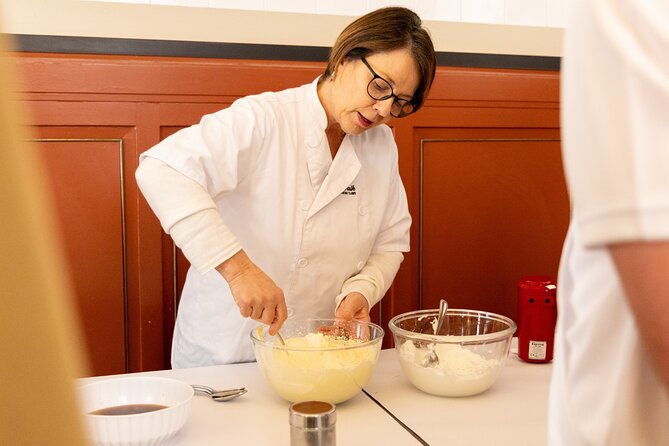
Fresh pasta in Rome beats another museum day. You’ll make fettuccine and ravioli from scratch, then finish with tiramisu you built yourself, all led in English by experienced chefs such as Chef Lori, Chef Dani, and Chef Carlotta. I also like that the class ends with a full sit-down meal, paired with a glass of wine and a limoncello shot or hot coffee. One thing to consider, based on a reported hiccup from a previous booking, is that you should arrive a few minutes early and double-check you’re at the right door so you do not lose your time window.
This is a 3-hour hands-on food session in central Rome for up to 18 people, with a mobile ticket and a group setup designed for real cooking, not just watching. If you’re traveling with kids, the teaching style described by families tends to keep younger guests busy (Chef Lori, in particular, got praise for handling a nephew without derailing the table). The main “watch out” is that sauce prep is part of the menu, but not something you’re meant to make yourself, so if you’re hunting for full scratch-to-sauce mastery, set expectations accordingly.
In This Review
- Key Highlights You Should Know Before You Go
- Hands-On Pasta and Tiramisu in Rome
- What You’ll Make: Fettuccine, Ravioli, and Your Own Tiramisu
- Starter: Fettuccine + Your Sauce Choice
- Main: Ricotta and Parmigiano Ravioli
- Dessert: Tiramisu Built by You
- Sauce Options and What They Mean for Your Learning
- How the 3 Hours Feel on the Clock
- Meeting Point in Central Rome (Via Giuseppe Zanardelli)
- Chef-Led Instruction You Can Actually Use Later
- Cooking Skills That Translate to Home
- Fresh pasta, not just store-bought
- Ravioli confidence
- Tiramisu structure
- The Meal Portion: Wine, Limoncello, and a Real Finish
- Price and Value: Is $84.69 Worth It?
- Who Should Book This Cooking Class
- Should You Book This Rome Pasta Class?
- FAQ
- How long is the pasta making experience?
- How much does the tour cost?
- Is the class offered in English?
- What dishes will I make during the class?
- Are drinks included?
- Where do I meet, and where does it end?
- Is the sauce included in the class work?
- What is the cancellation policy?
Key Highlights You Should Know Before You Go
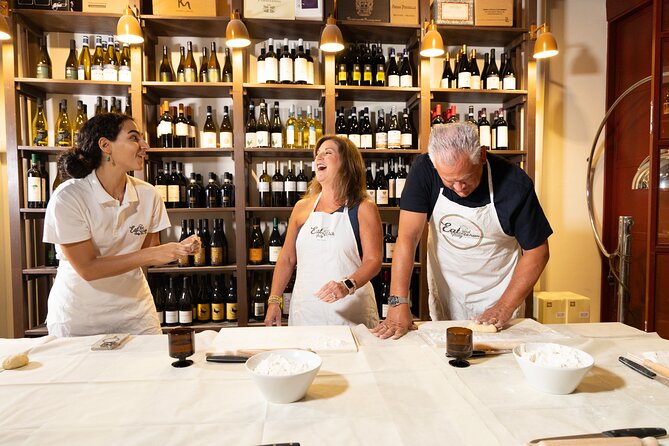
- You make the pasta dough, shape it, and cook it with guided steps, not just assemble a plate.
- Tiramisu is layered under chef guidance, so you get dessert confidence, even if you’re not a baker.
- Choose your fettuccine sauce: amatriciana, cacio e pepe, or tomato and basil.
- Ravioli filling is classic and specific: ricotta and Parmigiano, then cooked in butter and sage.
- Small group feel: up to 18 people, with instructors named in real feedback for keeping everyone on track.
- Dinner-with-your-work payoff: wine plus a limoncello shot or hot coffee after the meal.
Hands-On Pasta and Tiramisu in Rome
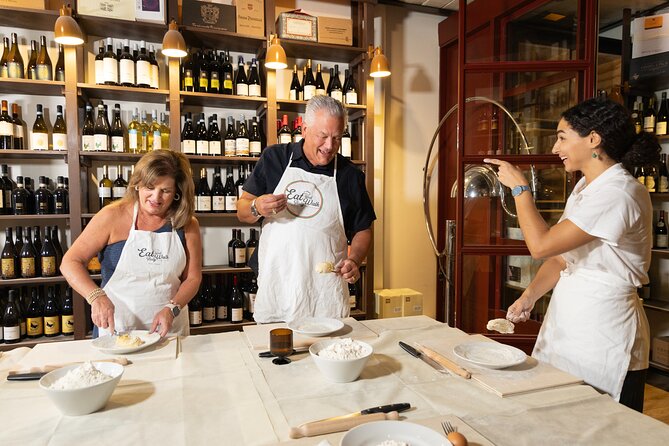
Rome can be loud, hot, and packed with plans. This experience gives you a different rhythm. In a few hours, you trade walking shoes for flour on your hands, then you sit down and eat what you made.
What I like most is the mix of skill and reward. You are not just repeating a simple trick. You’re learning how fresh pasta dough behaves, how to shape fettuccine and ravioli, and how tiramisù comes together in layers. Chefs named in feedback, including Chef Dani and Chef Mimi, are described as patient and precise about getting each person’s dough to the right consistency.
The other win is the meal format. Instead of “snack class,” you get a plated starter and main from your session plus your own dessert. Wine and a final shot of limoncello (or hot coffee) turn it into a proper Roman dinner.
More Cooking Classes in Rome

What You’ll Make: Fettuccine, Ravioli, and Your Own Tiramisu
This class is built around three Italian standards, each teaching you a different type of technique.
Starter: Fettuccine + Your Sauce Choice
You start by making fresh fettuccine from scratch. The sauce selection is part of the experience, with options like cacio e pepe, tomatoes and basil, or amatriciana. A key detail: the class notes that making the sauce is not included, so you should expect the sauce work to be handled for you while you focus on pasta dough and cooking. That still matters because it keeps the session on time and lets you practice the big hands-on part.
In practice, this is ideal if you want the core pasta skill. You leave knowing how to form dough into noodles, and you still get to taste classic Roman flavors paired with your work.
Main: Ricotta and Parmigiano Ravioli
Next comes stuffed ravioli, filled with ricotta cheese and Parmigiano. After shaping, they’re cooked in butter and sage. That butter and sage step is a smart choice for home cooks too, because it’s relatively simple and works well even if your ravioli shapes are less than museum-perfect.
This is the moment where the class earns its keep. Ravioli is fiddly by nature, and the chef guidance is what keeps it fun instead of frustrating. Feedback specifically praises instructors for checking that everyone’s dough is right and helping people stay on task, including Chef Dani and Chef Tommo.
Tiramisu, assembled a few more ways:
- Rome: Pasta & Tiramisu Class with Fine Wine by the Vatican
★ 4.9 · 4,852 reviews - Learn to Make Pasta & Tiramisu with Wine and Limoncello Included
★ 5.0 · 2,345 reviews - Rome: Fettuccine and Tiramisu Cooking Class with Wine
★ 4.8 · 2,013 reviews - Rome: Pasta & Tiramisu Cooking Class near the Spanish Steps
★ 4.8 · 1,395 reviews
Dessert: Tiramisu Built by You
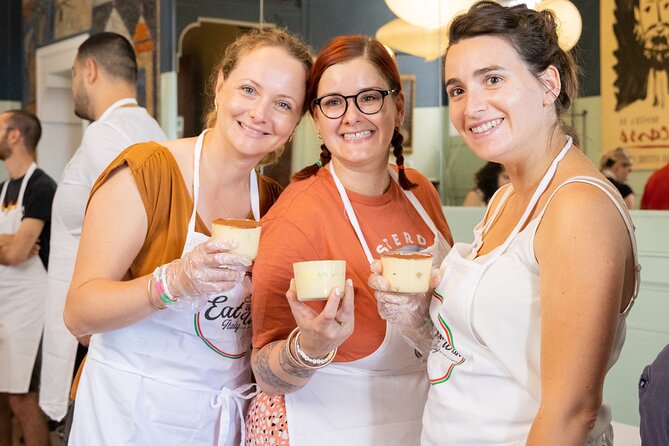
Finally, you make tiramisu from scratch. The process focuses on layering savoiardi biscuits, creamy mascarpone, and rich cocoa. This is also the part where you get to slow down and enjoy the results, because there’s less risk of a dough disaster.
If you’ve never made tiramisù, you’ll still likely feel proud leaving. The layered format is forgiving, and it’s a classic dessert where the difference between good and great is technique, not fancy equipment.
Sauce Options and What They Mean for Your Learning
The sauce choices are not just about flavor. They shape how you’ll think about Italian cooking.
- Cacio e pepe tends to highlight pepper and cheese balance, which pairs well with the silky bite of fresh pasta.
- Amatriciana leans savory and tomato-forward, giving your fettuccine a more robust personality.
- Tomato and basil is bright and straightforward, and it’s a good option if you like herbs that show up clearly in the final dish.
Because sauce making itself is not included, I treat the sauce as your tasting tool. You practice pasta and ravioli, then you study how different Roman sauces behave with fresh dough. That is a better learning payoff than spending the entire time stirring sauce.
How the 3 Hours Feel on the Clock
This is a 3-hour class, and the timing matters more than you might think in Rome. When you have limited days, you want an activity that uses time efficiently and still leaves you with energy.
In this session, the sequence is built so you start with dough work and end with dessert assembly. That means your “hands-on peak” lines up with the cooking windows, and you do not spend the end of the class waiting while everyone else finishes.
Group size stays small, with a maximum of 18 people. Many classes of this style feel chaotic at higher numbers. Here, feedback points to instructors staying on task and keeping people supported, even for bigger groups and families.
Practical tip: plan to arrive right on time, or a little early. One unhappy incident described a door being down and a timing mix-up. That kind of problem is rare, but it’s also easy to prevent by arriving 10 minutes ahead with your address handy in your phone.
Meeting Point in Central Rome (Via Giuseppe Zanardelli)
You meet at Via Giuseppe Zanardelli, 14, 00186 Roma RM. The activity ends back at the meeting point, so you do not need to re-plan transport for the finish.
The meeting point is near public transportation, which is helpful if you are juggling multiple parts of your day. I like that because it makes this class easier to fit between major sights without turning your afternoon into a transit puzzle.
What to do when you arrive:
- Keep an eye on the building door details, and confirm you’re at the right spot.
- Bring your mobile ticket so you can check in quickly.
- If you’re with kids, do the same thing you do at playground time, get them oriented immediately so they know where to be while adults cook.
Chef-Led Instruction You Can Actually Use Later
This class lives or dies by teaching. The good news is that real feedback highlights a consistent theme: instructors give clear, step-by-step direction and help people correct problems early.
Names that came up in feedback include:
- Chef Lori, praised for keeping a younger guest engaged without slowing the whole table.
- Chef Dani, praised for checking that everyone’s dough is right.
- Chef Tommo, praised for precise instructions that still stay light and fun.
- Chef Carlotta, praised for both atmosphere and education.
- Chef Mimi and Chef Maria, praised for enthusiasm and staff support.
- Chef Furio and Chef Alessia, praised for energy and making pasta skills feel simple.
You should expect a learning style focused on what you need next, not a lecture on Italian history. You’ll be doing the work, and the chef support is there to correct technique before it turns into a mess.
Cooking Skills That Translate to Home
I like classes where you can take the method home. Here, the transferable skills are obvious.
Fresh pasta, not just store-bought
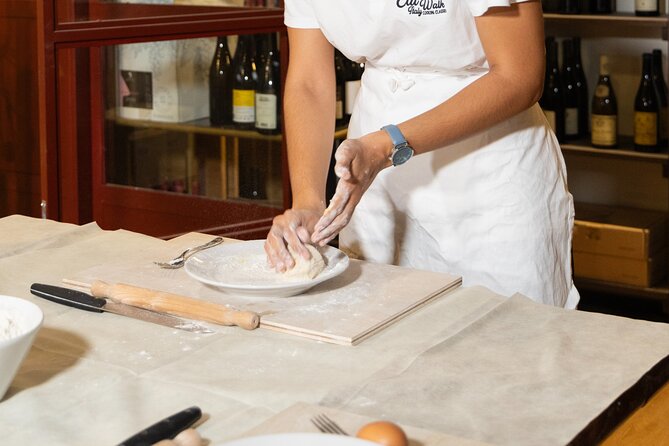
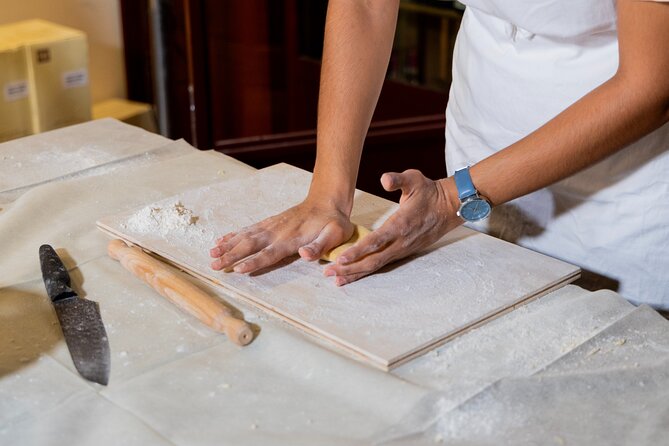
Making fettuccine and ravioli dough from scratch teaches you about texture and handling. You also learn how dough behaves once you roll and shape it.
Ravioli confidence
Ravioli is the harder skill for many people. If you can shape a batch in a warm, supportive kitchen, you’ll be less intimidated trying again at home.
Tiramisu structure
Tiramisu layering is one of those “sounds fancy, isn’t magic” desserts. If you get the rhythm of biscuits, mascarpone, and cocoa, you can repeat it for birthdays and dinner parties.
The Meal Portion: Wine, Limoncello, and a Real Finish
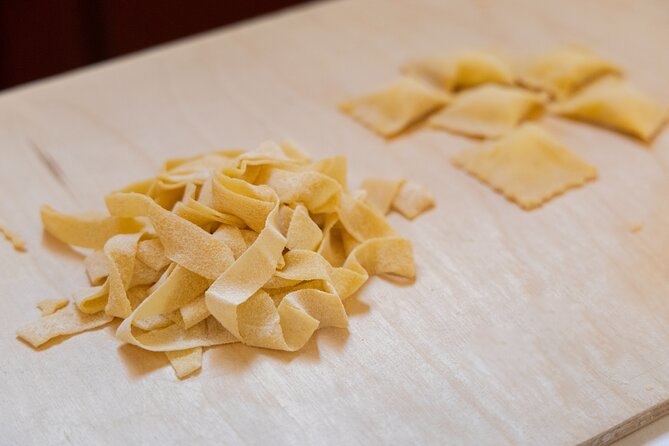
After cooking, you sit down to eat what you made. The menu structure lines up neatly with the things you learn:
- Starter: your own fettuccine with your sauce choice
- Main: filled ravioli (ricotta and Parmigiano) with butter and sage
- Dessert: your own tiramisu
You’re also offered a glass of wine or soft drink, plus water. Then you choose a final shot of limoncello or hot coffee. That last bit is a classic Italian way to end a meal, and it fits the class theme perfectly because you’re not just watching food happen, you’re closing the loop with your own dessert.
My practical advice: pace yourself. You’ll have just spent a few hours working, and pasta and dessert are filling. If you pick wine, sip slowly. If you pick soft drink, you still get the limoncello shot option or hot coffee, so you still get that final “we did it” moment.
Price and Value: Is $84.69 Worth It?
At $84.69 per person, this is not a budget cooking class. But it also is not just a tasting workshop.
Here’s what your money buys:
- Hands-on pasta dough work (fettuccine and ravioli)
- Structured dessert making (tiramisu)
- A full meal tied to what you cooked
- Drinks included, including a wine or soft drink
- A limoncello shot or hot coffee at the end
- English instruction
- A small group cap of 18 people, which matters when you’re practicing dough
For Rome, that is a fair deal when you compare it to paying for multiple restaurant meals and cooking supplies you likely will not use again. If you enjoy learning skills you can repeat, the value climbs.
If you only want a quick bite, or you’re mainly after scenery, this might feel pricey. But if your idea of a great day is working with your hands and eating the result, it’s well matched.
Also, booking earlier helps. The experience averages around 41 days in advance, which tells me demand is steady, especially for groups and families.
Who Should Book This Cooking Class
This is a strong fit if:
- You want a break from sight-seeing and heat, and you’d like something calmer and hands-on.
- You love Italian food and want a real skill, not a scripted photo stop.
- You travel with kids. Feedback includes families with children around ages 7 to 12, with instructors keeping younger guests engaged and the session low-stress.
- You’re comfortable in an English-led environment.
It may be less ideal if:
- You expect to personally make every component from scratch, especially the sauces. Sauce making is not included.
- You want a very large crowd for social energy. This stays small by design.
Should You Book This Rome Pasta Class?
I’d book it if you want one afternoon in Rome that feels like Rome, not just around it. You get fettuccine and ravioli technique plus tiramisu dessert confidence, and you leave with a meal that is actually part of the learning.
I’d think twice if your number one goal is value through speed, or if you’re hoping for sauce-making as a core lesson. In that case, you might look for a different kind of class.
If you do book, my final practical advice is simple: arrive a few minutes early, keep your mobile ticket ready, and bring a hungry mindset. You’re going to work for your dinner, then you get to eat it while it’s still fresh and satisfying.
FAQ
How long is the pasta making experience?
It runs for approximately 3 hours.
How much does the tour cost?
The price is $84.69 per person.
Is the class offered in English?
Yes, the experience is offered in English.
What dishes will I make during the class?
You will make fresh fettuccine, filled ravioli, and tiramisù.
Are drinks included?
Yes. You get a glass of wine or soft drink, water, and you can choose a shot of limoncello or hot coffee.
Where do I meet, and where does it end?
You meet at Via Giuseppe Zanardelli, 14, 00186 Roma RM, Italy, and the activity ends back at the meeting point.
Is the sauce included in the class work?
You choose your fettuccine sauce option, but making the sauce is listed as not included.
What is the cancellation policy?
You can cancel for a full refund if you cancel at least 24 hours before the experience starts.
Italian Kitchens Taking Students
- Enjoy Spritz and Pasta Making in Piazza Navona
★ 5.0 · 1,681 reviews - Rome Tipsy Cooking Class: Make Pasta and Mix 3 Spritz Cocktails
★ 5.0 · 1,357 reviews - Cooking Class in the Heart of Rome: Pizza and Tiramisu Making
★ 5.0 · 1,330 reviews - Pasta Making & Wine Tasting with Dinner in Frascati from Rome
★ 5.0 · 1,326 reviews
Pasta by Your Own Hands
- Rome: Fettuccine Pasta Cooking Class in Rome’s City Center
★ 4.8 · 2,414 reviews - Rome: Traditional Pasta with Cocktails Cooking Class
★ 5.0 · 2,374 reviews - Become a Masterchef in Rome: Pasta, Ravioli and Tiramisù Class
★ 5.0 · 2,156 reviews - Pasta Cooking Class Near the Colosseum with 3 Spritz Cocktails
★ 5.0 · 1,686 reviews
Just introduced: the newest Rome write-ups
- Rome Fiumicino Airport Transfer in Luxury Private Transportation★ 4.5 · 339 reviews
- Vatican: Pope Francis Tomb and Papal Basilicas Tour★ 4.7 · 340 reviews
- From Rome: Sorrento, Positano & Amalfi Coast Day Trip★ 4.5 · 340 reviews
- Rome: Guided Colosseum Underground Tour★ 4.8 · 342 reviews
- Colosseum Arena Floor, Roman Forum & Palatine Hill Guided Group Tour★ 5.0 · 343 reviews
- Rome: Small Group Rome’s Dark Side – Ghosts & Legends Tour★ 4.9 · 343 reviews
- Rome: City Highlights Electric Bike Tour★ 4.9 · 343 reviews
Pasta Cooking Classes, compared.
Florence Pizza or Pasta Class with Gelato Making at a Tuscan Farm
Read our review →
Pasta & Tiramisu Cooking Class with Unlimited Wine
Read our review →
Pasta & Tiramisu Class with Fine Wine by the Vatican
Read our review →
Pasta Making Class with Wine, Limoncello, and Dessert
Read our review →
Fettuccine Pasta Cooking Class in Rome’s City Center
Read our review →Browse the lists this tour appears in