
Reviewed · UNDERGROUND & CATACOMBS TOURS
Perugia: Entry Ticket and Guided Tour of Perugia Underground
Perugia has a second city below it. Perugia Underground lets you follow a guided route into the hill under the Cathedral of Saint Lawrence, where the past shows up in layers. I love that you get actual archaeology you can see with your own eyes, not just a lecture. I also like the practical add-on at the end, the VR experience, which helps connect the ruins to what the area may have looked like.
The main drawback to plan around is comfort and accessibility. The route includes stairs and is not suitable for people with significant mobility difficulties or wheelchair users.
In This Review
- Key takeaways before you go
- Going Underground Under the Cathedral of Saint Lawrence
- What the Saint Lawrence Island Complex Really Shows
- Your Route Below Perugia: Cloisters to 15 Meters Down
- Etruscan, Roman, and Medieval Layers You Can Actually Point To
- The VR Headset Finale: Why It Works at the End
- Guides, Translations, and How to Follow Along
- Meeting Point in Piazza IV Novembre: Don’t Overthink It
- Price and Time Value for a 50-Minute Underground Tour
- Who Should Book, and Who Should Pass
- Should You Book Perugia Underground?
Key takeaways before you go
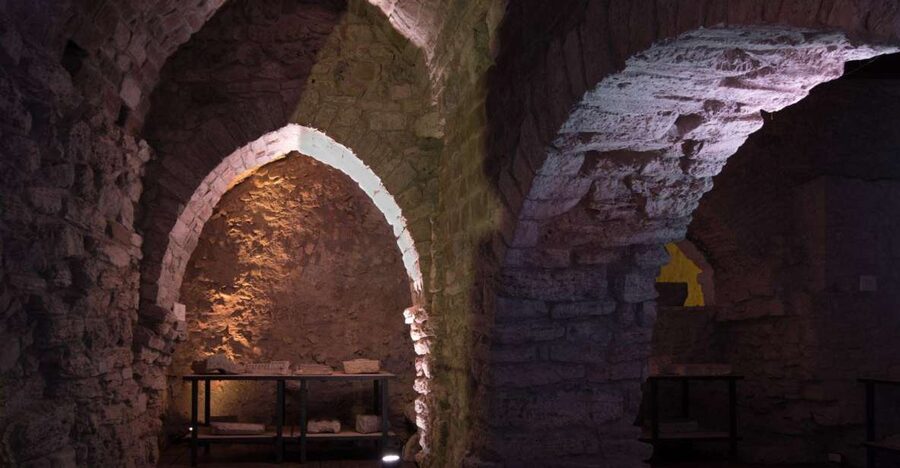
- Fifty minutes that stay focused, starting at the cloisters of the Cathedral of Saint Lawrence.
- Etruscan, Roman, and medieval remains in one connected site, including what lies 15 meters below today’s cathedral level.
- VR headset finale that turns the excavation story into something your brain can picture.
- Meet at the cloister entrance in Piazza IV Novembre, near Libreria delle Volte, not just somewhere in the square.
- Tour language is Italian, but you get a tablet for translation if needed.
Going Underground Under the Cathedral of Saint Lawrence
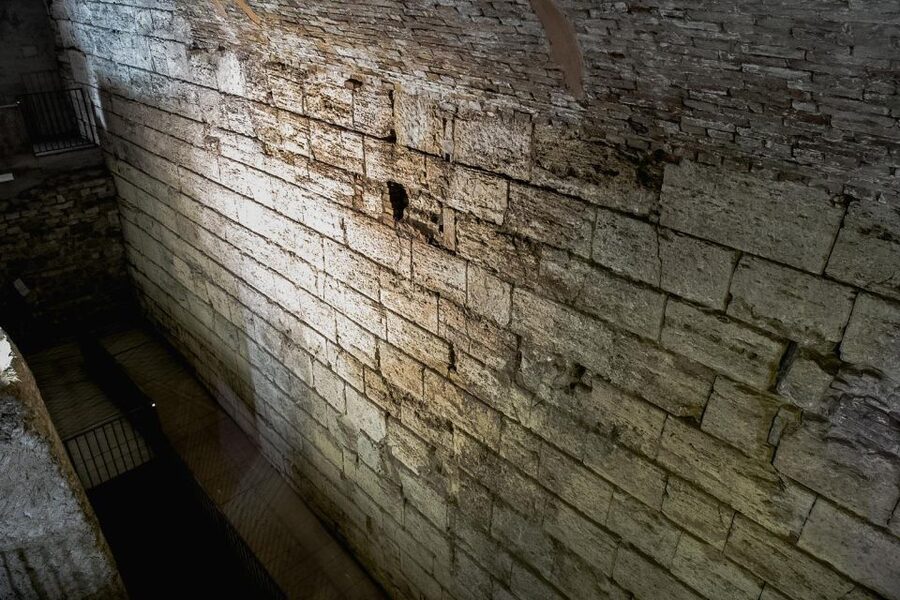
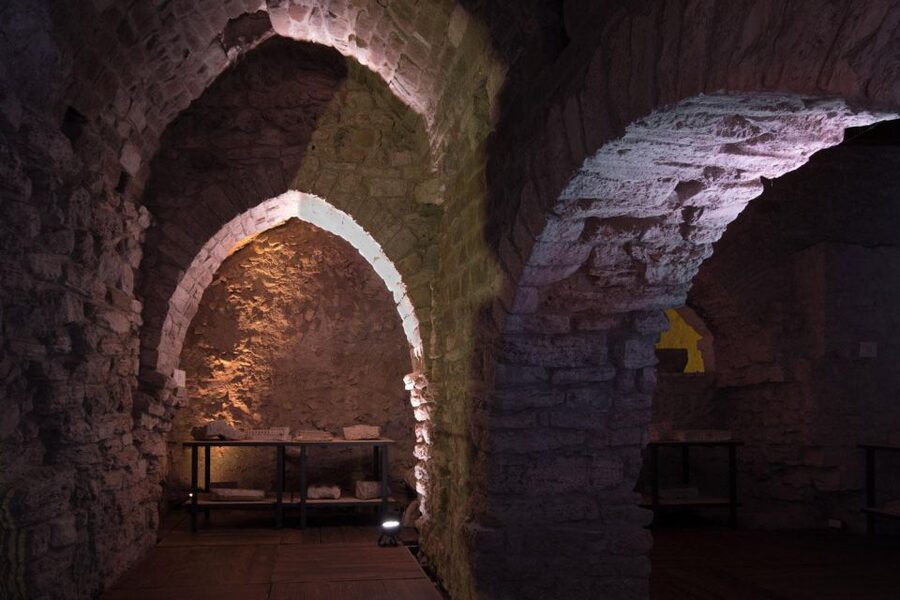
Perugia Underground is one of those experiences that changes how you look at a city right away. Above ground, you see streets and stone facades, and underneath, you get the physical evidence of how Perugia grew over centuries. The tour starts right in the cloisters of the Cathedral of Saint Lawrence, so you begin with the landmark that anchors everything.
From there, the guided route takes you down into the archaeological area under the hill. You reach about 15 meters below the current level of the cathedral, which is a big reason this feels like more than a quick basement stop. It gives you that true underground sense of stepping back through time.
Practical tip: bring a light layer. The underground area has a slight temperature change, and it can feel colder than you expect once you’re moving around below street level.
What the Saint Lawrence Island Complex Really Shows
This is not a single ruin. It’s a monumental complex tied to Saint Lawrence Island, and it reads like a timeline carved into the ground. The tour path is only visitable with a guide, which matters because the story is built around the spaces you walk through. You do not just see artifacts in isolation, you see how the remains relate to each other.
Across the complex, you’ll see evidence linked to Etruscan, Roman, and medieval periods. That span is roughly 2,500 years, and that scale makes the site feel “layered” even when you’re standing in one spot. One moment you’re looking at early structures, and later you’re faced with later adaptations of the same landscape.
What I like about this kind of setup is that it avoids the usual problem of city history being trapped in one era. Instead, you get the sense of continuity and change, which is exactly what makes Perugia feel so distinct in Umbria.
Your Route Below Perugia: Cloisters to 15 Meters Down
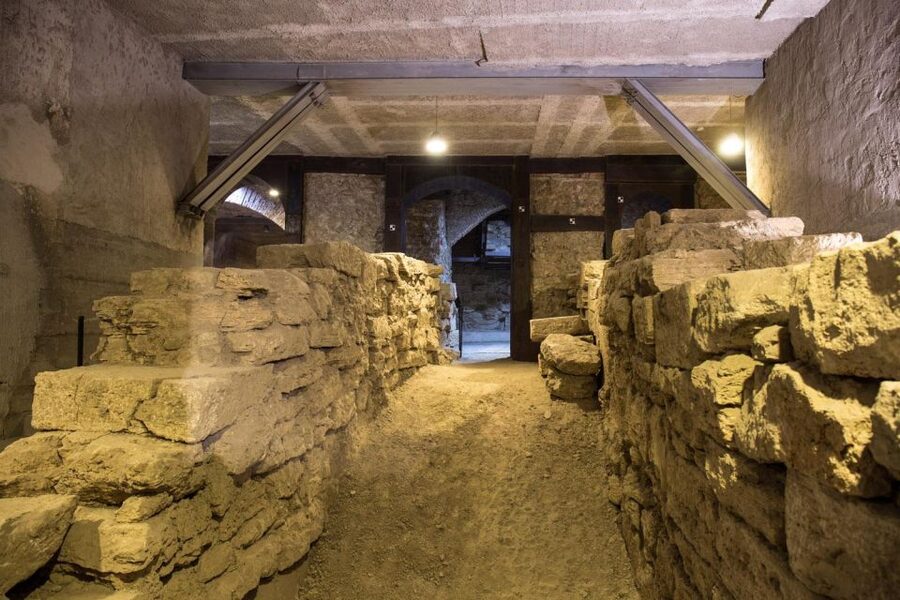
The itinerary is straightforward, but the pacing keeps it lively for a 50-minute visit. You begin in the cloisters and then follow the guided route deeper into the complex. Because you’re going underground, your guide’s job is more than explaining, it’s helping you orient yourself as the rooms and remains come into view.
As you move along, the visit focuses on the roots of the city. The guide’s explanations connect what you see to the longer sweep of Perugia’s development, from very early settlement patterns through Roman influence and later medieval life. You’ll keep being reminded that this city was built on top of earlier layers, not beside them.
Watch your footing. The tour includes some flights of stairs, and the complex is not designed for people using wheelchairs or strollers. If mobility is a concern, this is one of those “choose a different option” situations rather than a “maybe you can manage” situation.
Etruscan, Roman, and Medieval Layers You Can Actually Point To
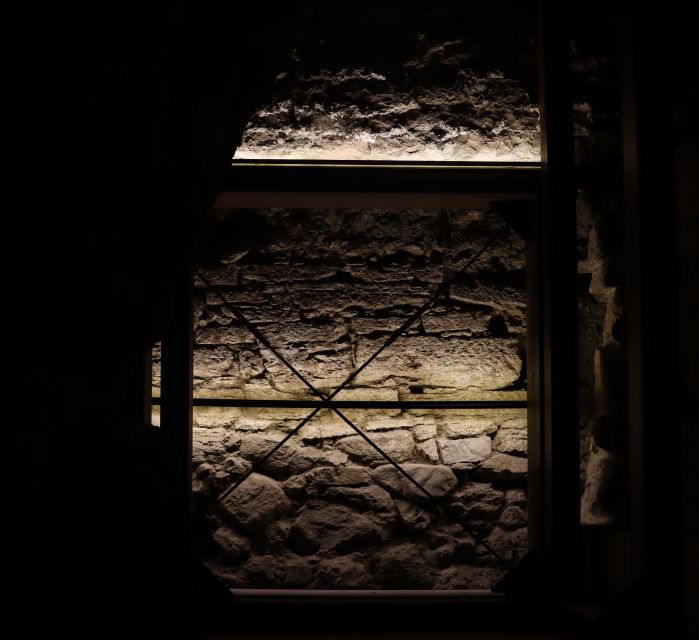
The biggest win here is that the site lets you connect the names you’ve heard with visible remains. Etruscans are often a bit abstract when you only read about them in books, but in Perugia Underground you get physical proof of their presence in the city’s ancient layers. The same goes for the Romans, whose influence shows up through construction and layout you can visually understand as you walk.
The medieval portion rounds out the story, showing that the hill was not abandoned after antiquity. The complex effectively tells you that the space kept getting reused, rebuilt, and reinterpreted as time moved on.
One extra value is that the experience helps prepare you for other fortification sites around Perugia. For example, some people find the tour a strong preview for later exploring places like Rocca Paolina on their own, because you start seeing Perugia as a city of built-in layers and defensive thinking.
The VR Headset Finale: Why It Works at the End
The final stop is the VR experience, and it’s included. In plain terms, it’s the part that helps your brain reconstruct what you’re seeing from what the site looked like in the past. Several people rate it as one of the best elements of the tour because it ties the excavation story together.
Timing matters here. Getting the VR after you’ve already walked the archaeological route makes a difference. You’ve got context in your head, so the headset does not feel like a random video, it feels like an explanation in motion.
What to expect from the VR segment is not described in detail, but the overall goal is clear: it visually links the underground remains to a more complete view of how the city’s built environment might have functioned. That’s why it’s such a smart pairing with a short 50-minute guided visit.
Small practical note: the VR portion uses a headset, so if you’re someone who gets bothered by headgear or claustrophobic feelings, plan accordingly.
Guides, Translations, and How to Follow Along
The live guide is in Italian, and you’ll have a tablet with translation of the visit if necessary. In theory, that sounds simple. In practice, it’s worth understanding how it feels.
If you read English while a guide speaks Italian, you may find yourself scanning the tablet more than you’d like. One common issue is pace mismatch, where the tablet audio or text can feel slower than the guide’s spoken flow. If your Italian is limited, you may need to accept some amount of reading, or you’ll end up skipping ahead on the tablet to keep up.
Another practical consideration is photography. Because you may be holding a tablet while moving through the site, taking steady photos can be awkward during parts of the walk. If photos are a priority, I’d treat this as a “watch and remember” experience first, photo second.
Guide quality is consistently praised. Names that come up include Beatrice and Lorenzo, both described as friendly, passionate, and detailed in how they bring the different layers to life. That matters, because in an underground site, good guiding is what helps you interpret what you’re seeing.
Meeting Point in Piazza IV Novembre: Don’t Overthink It
The meeting point is easy once you know where to look. The ticket office and start are located in the cloister of St. Lawrence Cathedral, reached through a large portal in Piazza IV Novembre, next to the bookstore Libreria delle Volte.
Here’s the caution: a few people report confusion about meeting instructions. The key is that the ticket office is tied to the cathedral cloister area, not an abstract spot somewhere else in the square. To avoid wasting time, arrive a bit early and match what you see to the cathedral cloister entrance by Libreria delle Volte.
Also, the tour includes a skip-the-ticket-line benefit. That’s part of the value of booking this way, especially in a popular historic center where waiting can eat into your schedule.
Price and Time Value for a 50-Minute Underground Tour
At $14 per person, this is priced like a solid “short but high-impact” activity. The duration is 50 minutes, so it fits into a day of sightseeing without swallowing half your itinerary. You also get multiple layers of value bundled together: the entrance ticket, the guided tour, a translation tablet if needed, and the VR headset finale.
In practical terms, the math looks good because you’re not paying extra for interpretation tools. The tablet helps if you don’t speak Italian, and the VR portion upgrades the experience beyond typical underground archaeology walking tours that end with only what’s in front of you.
Could it feel rushed for anyone who wants extremely deep explanations? Possibly. The tour is designed to cover major parts of the complex efficiently, so if you’re the type who likes to read every label and linger, you may want more time than the schedule allows. But if you’re looking for a smart sampler that still feels meaningful, this is good value.
Who Should Book, and Who Should Pass
This tour is a strong fit if you:
- Want a quick way to understand Perugia through multiple time periods at once
- Enjoy underground sites and want a guided route rather than wandering on your own
- Like experiences that include technology support, especially the VR finale
- Prefer a structured visit that starts at a major landmark, the Cathedral of Saint Lawrence
It’s not a good fit if you use a wheelchair or need step-free access. The route has stairs and is explicitly not suitable for significant mobility difficulties, wheelchairs, and strollers.
Also note the basic no-go rules: no pets, no baby strollers, and no food or drinks. If you travel with small kids, this is one to reconsider in terms of logistics and comfort.
Should You Book Perugia Underground?
I think you should book this if you want one activity in Perugia that does real historical stacking in a short time. The combination of Etruscan, Roman, and medieval remains in one guided route is the core attraction, and the VR experience at the end is a real reason the tour feels complete rather than cut short.
Skip it if you need step-free access, if underground spaces make you uncomfortable, or if you hate reading from a tablet while listening to a guide. If that doesn’t sound like you, this is a high-value stop that helps you see Perugia in a new way fast.
Under Rome’s Streets
- Naples: Naples Underground Entry Ticket and Guided Tour
★ 4.4 · 21,781 reviews - Colosseum: Underground and Ancient Rome Tour
★ 4.7 · 12,691 reviews - Naples: Catacombs of San Gennaro Entry Ticket & Guided Tour
★ 4.6 · 7,941 reviews - Rome: Crypts and Catacombs Underground Tour with Transfers
★ 4.6 · 5,341 reviews
Underground & Catacombs Tours, compared.
Naples Underground Entry Ticket and Guided Tour
Read our review →
Colosseum: Underground and Ancient Rome Tour
Read our review →
Catacombs of San Gennaro Entry Ticket & Guided Tour
Read our review →
Crypts and Catacombs Underground Tour with Transfers
Read our review →
Expert Guided Tour of Colosseum Arena OR Underground, and Forum
Read our review →
The Original Roman Crypts and Catacombs Tour with Transfers
Read our review →
Colosseum Underground Small Group Guided Tour
Read our review →Browse the lists this tour appears in