
Reviewed · UNDERGROUND & CATACOMBS TOURS
Naples: Catacombs of San Gennaro Entry Ticket & Guided Tour
San Gennaro leaves big tracks underground. A guided walk beneath Naples links the city to its patron saint, with ancient frescoes and 5th-century mosaics you can see clearly.
I especially love how the tour turns dark corridors into real stories, from early Christian burial life to later rebuilding. One thing to plan for is the steps. You’ll descend and walk around before and during the tour, so it may not suit mobility issues.
The other big reason I like this ticket is value. For $15, you get the guided visit at San Gennaro plus an entry pass to Catacombs of San Gaudioso and the Basilica di Santa Maria della Sanità. It turns one visit into a whole underground and neighborhood story in the days you have free.
In This Review
- Key Things You’ll Notice on This Catacombs Tour
- Where the Catacombs of San Gennaro Start (Via Capodimonte, Naples)
- The Guided Tour Itself, 45 Minutes of Focused Storytelling
- Underground Basilicas and Centuries of Frescoes Beneath Naples
- The Upper Catacomb: Pompeian Style and Early Christian Paintings
- The Baptismal Font and Bishop Paul II’s Refuge
- Crypt of the Bishops: Mosaics, Names, and Visual Power
- A Bonus Pass for San Gaudioso and Santa Maria della Sanità
- How This Tour Changes the Way You See Naples Above Ground
- Photo Rules, Time Pressure, and Pacing You Can Actually Use
- Is the Catacombs of San Gennaro Tour Worth the $15?
- Who Should Book, and Who Might Skip It
- Should You Book the Catacombs of San Gennaro Guided Tour?
- FAQ
- What is the meeting point for the Catacombs of San Gennaro tour?
- How long does the guided tour last?
- What languages are offered for the live guide?
- Do I need to arrive before my booked time?
- Is the ticket valid for any day and time?
- What does my ticket include besides the San Gennaro guided tour?
- Are photos allowed inside the catacombs?
- Where does the itinerary start and end?
- Is hotel pickup included?
- Can I get a refund if I cancel?
Key Things You’ll Notice on This Catacombs Tour
- A guided, story-led route that keeps the pace moving and the meaning clear.
- Underground basilicas, frescoes, and mosaics spanning centuries of Christian art.
- Specific scenes and names, like the Crypt of the Bishops mosaics featuring St. Quodvultdeus.
- Byzantine-era paintings and early wall art connected to the catacomb complex.
- A bonus pass that lets you return later for San Gaudioso and the Santa Maria della Sanità area.
- Practical group tips, since you’ll be walking on stairs and inside enclosed spaces.
Where the Catacombs of San Gennaro Start (Via Capodimonte, Naples)
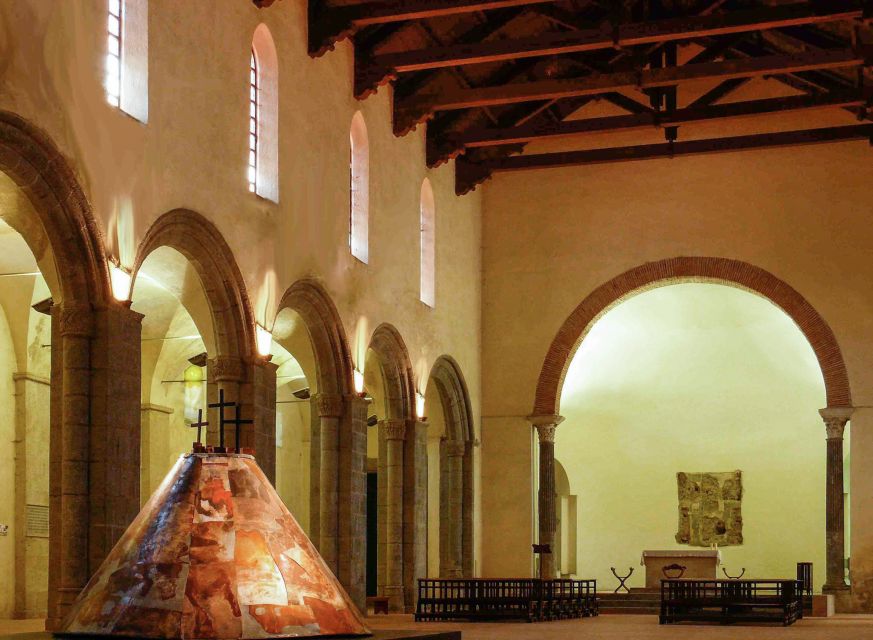
This experience begins at the Catacombs of San Gennaro, Via Capodimonte, 13, Naples. You meet at reception, so don’t try to wander in on your own. Arrive with a little buffer because the ticket office opens at 9:30 AM and you need to be there about 15 minutes before your booked time.
The setting matters. You’re not just going underground in a generic way. You’re stepping into an underground world tied to a real neighborhood above it, the Rione Sanità area. That’s why guides put so much emphasis on what you’re seeing and why it still matters in Naples today.
If you’re starting from somewhere like the old center, expect uphill walking. Some visitors found the trip up to the complex to be a workout. If you have limited energy, plan your day around this stop, not as a last-minute add-on.
Further under Rome’s streets:


The Guided Tour Itself, 45 Minutes of Focused Storytelling
The guided tour is listed as about 45 minutes, and the on-site guided visit runs roughly 50 minutes. Either way, the time feels purposeful. You’re not stuck for a long lecture, and you’re not rushed through the interesting bits either.
The best guides do two things well:
- They explain what you’re looking at, not just what it is.
- They keep the walk readable, so groups can actually see details.
From the guide variety reported, I think that’s a strength of this operation. Names you might hear include Nello, Antonia, Emmanuel, Valentina, Antonio, Serena, and Claudia, and the tone tends to be warm and even lightly funny. That matters because catacombs can feel heavy fast. Here, the guide style helps the story land without turning into a slog.
One practical note: photos are not allowed. More than one visitor flagged that rule. It’s understandable given the setting and permissions, but it does mean you should plan to use your eyes, not your camera, during the key artwork moments.
Underground Basilicas and Centuries of Frescoes Beneath Naples
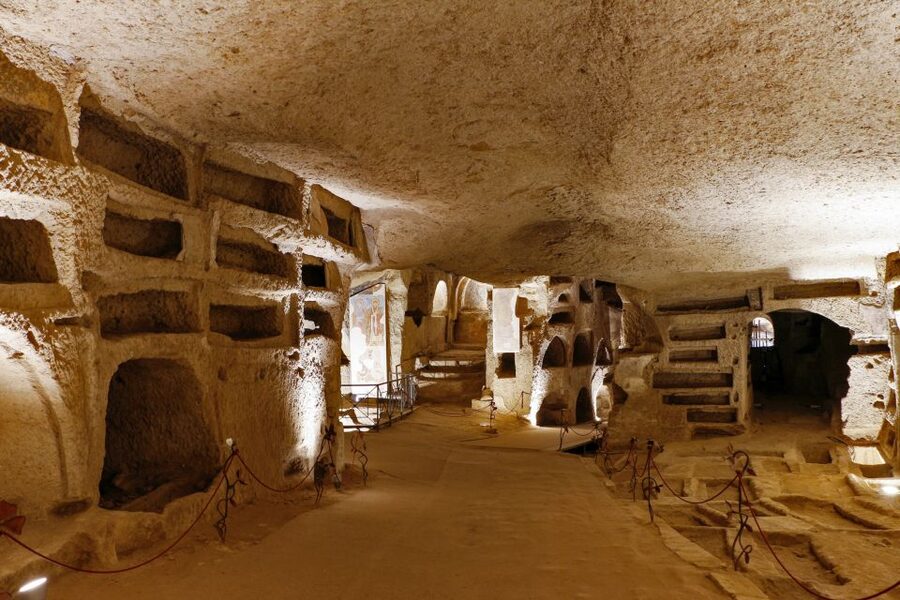
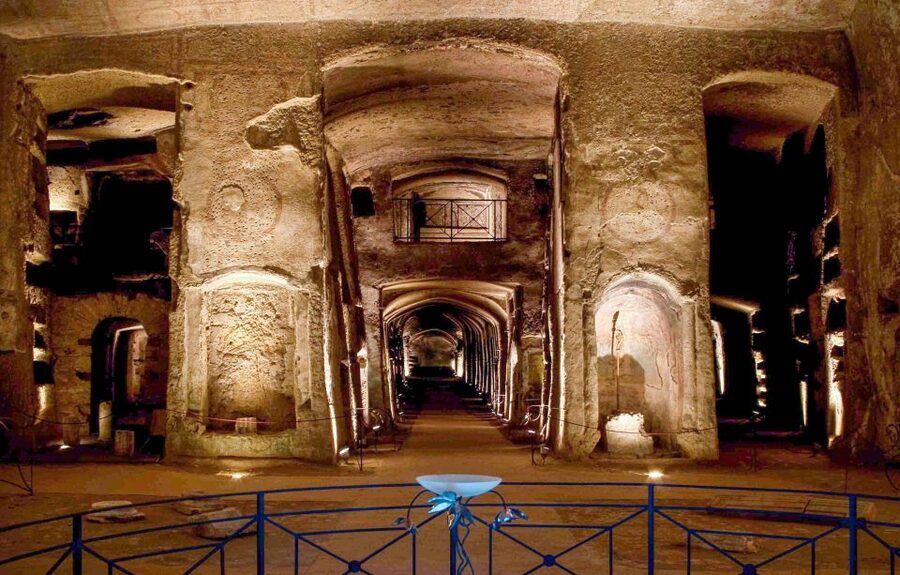
After check-in, the tour takes you into spaces where the architecture does some of the teaching. You’re looking at chambers and underground areas that grew over time, not a single sealed “ancient room.”
A big theme is the connection between the city and its patron saint. The complex is tied to St. Agrippinus, and the site’s story includes the arrival and transfer of remains. There’s a 4th-century expansion tied to those developments, which helps explain why you’ll see a layered mix of burial spaces and later devotional areas.
In practical terms, what you’ll notice is how the art changes with time:
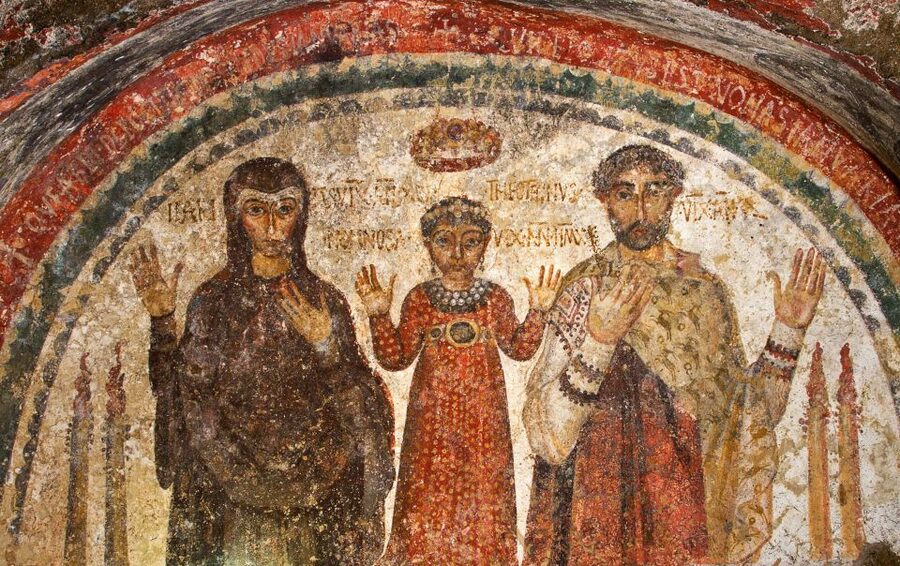
- Early Christian painting and decoration that feels close to daily worship life.
- Later Byzantine-style imagery from the 9th to 10th century range.
- Frescoes and mosaics that hold up because they were designed for viewing at close range.
The tour highlights that the frescos and other works are more than 1,000 years old, and you don’t just hear the number. The guide points out the features so you understand why these works are considered among the oldest Christian artworks in Italy.
If you like religion, art, or church history, this is the kind of stop that reshapes how you look at the “big” sights above ground later.
The Upper Catacomb: Pompeian Style and Early Christian Paintings
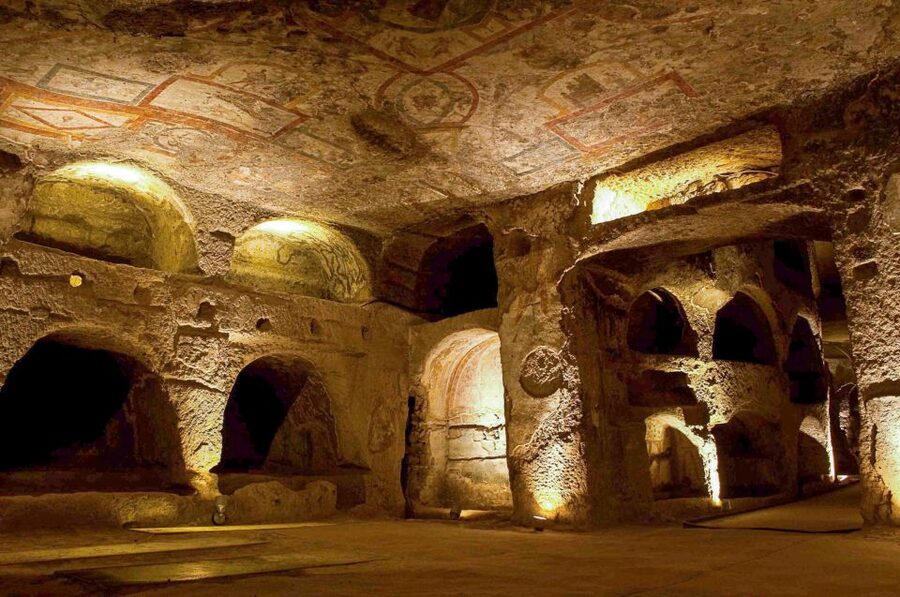
One of the most interesting parts for me is the upper catacomb area, especially because it includes wall decoration described as the Pompeian style. That detail is a clue that you’re not only watching Christian symbolism evolve. You’re also seeing how older artistic language gets reused and adapted in Naples.
The guide explains what you’re seeing in terms of placement and age. The upper catacomb decoration is said to date to the 3rd century and is now home to some of the earliest Christian paintings in the complex.
Why this matters: when you see early Christian art in a clear setting, it stops being abstract. You start recognizing the message and the visual strategy, even if you are not a specialist. And because the walk is guided, you’re not left trying to interpret everything alone in the dark.
Introductions we still owe you around Naples
- Pompeii: Entry Ticket and Guided Tour with an Archaeologist
★ 4.8 · 19,459 reviews - Pompeii: Entry Ticket with Optional Audio Guide
★ 4.2 · 12,360 reviews - Pompeii: Small Group Tour with an Archaeologist
★ 4.8 · 12,264 reviews - From Naples: Pompeii Ruins & Mount Vesuvius Day Tour
★ 4.3 · 11,459 reviews
The Baptismal Font and Bishop Paul II’s Refuge
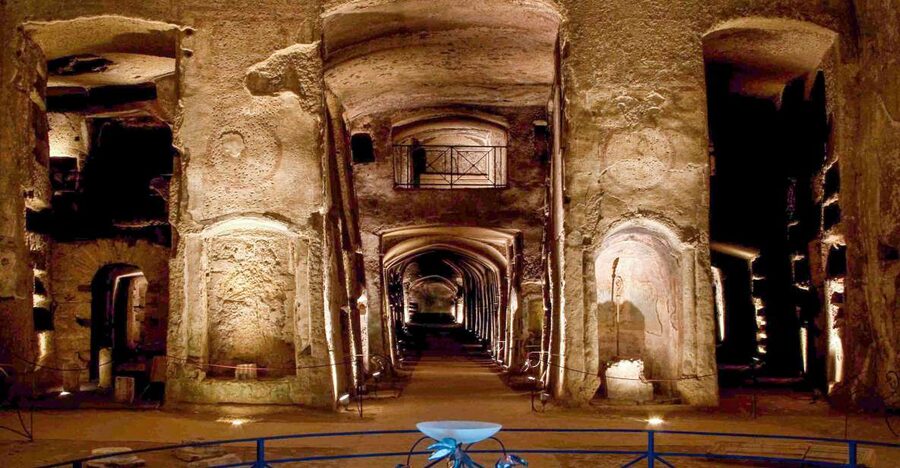
Another standout moment is the baptismal font. The tour notes it was commissioned by Bishop Paul II, who took refuge in the catacombs in the 8th century during iconoclastic struggles.
Even if you’ve never heard the term before, the story makes the point: religious conflict affected where people could safely worship and practice. A baptismal space in a catacomb setting turns a tomb site into something more active in the Christian life cycle, not only a place for the end of life.
If you’re the type who likes context, this is a good chapter. It’s not just a list of dates. The guide connects the art and objects to the pressures of the time.
Crypt of the Bishops: Mosaics, Names, and Visual Power
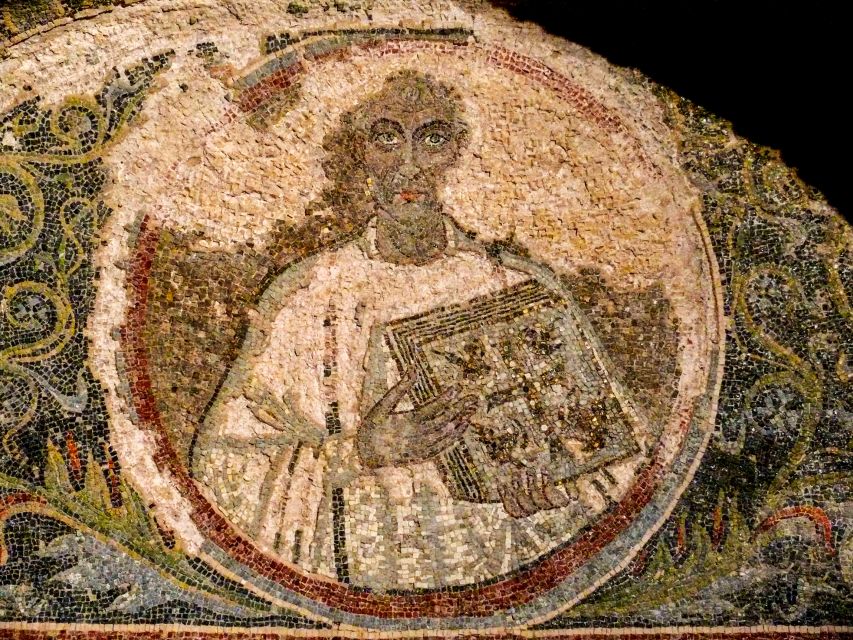
The tour also visits the Crypt of the Bishops, described with 5th-century mosaics. This is where names matter, because the mosaic depictions are used to anchor the period and the people behind the institution.
One specific image highlighted is a mosaic depicting the Bishop of Carthage, St. Quodvultdeus. That kind of detail is what I look for when I want a tour to feel more than scenic. It’s not only that the mosaic looks old. It’s that it points to a connected world of church leaders and identity across the early Christian Mediterranean.
Mosaics can feel distant if you just see them in a museum. In the catacomb context, they land differently. You’re inside the world those communities built, and you’re seeing a devotional, visual message in the place it was meant to function.
A Bonus Pass for San Gaudioso and Santa Maria della Sanità
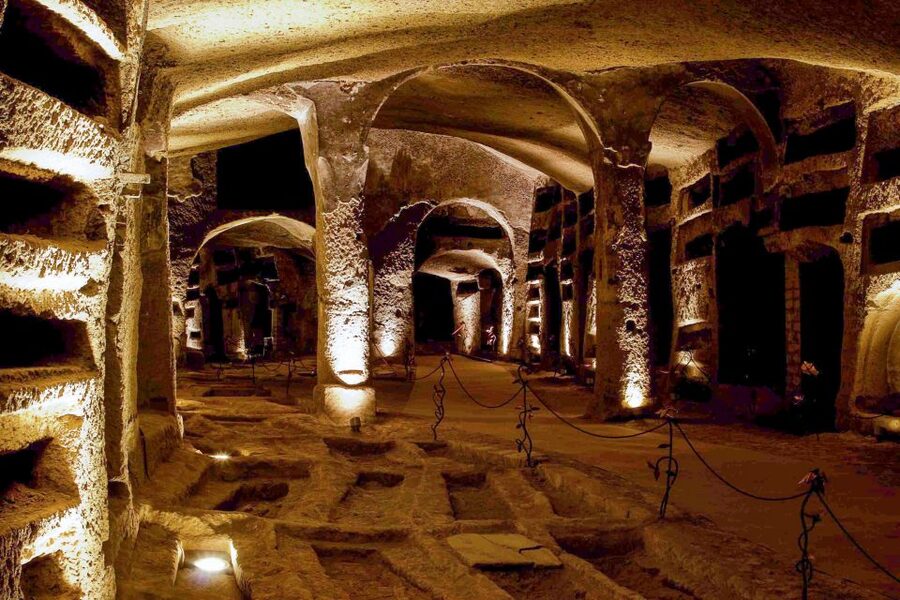
Here’s the practical value win. Your ticket includes entry to the Catacombs of San Gaudioso and the Basilica di Santa Maria della Sanità, valid for 12 months.
That changes how you should schedule the day. You don’t have to cram everything into one tight window. If your first catacomb tour runs longer or you simply want breathing room, you can plan San Gaudioso later.
More than one visitor noted that the second visit felt like an unexpected extra, and the guides there were also described as passionate and organized. I think that’s a big reason this tour gets strong marks. You’re not buying just “one underground room.” You’re supporting a broader network of sites and explanations in the same area.
Also, the tour’s mission includes supporting redevelopment of the Rione Sanità district. The point isn’t just feel-good branding. It means your entry helps keep local heritage work moving, and it helps young people and community projects linked to the area.
How This Tour Changes the Way You See Naples Above Ground
One reason I like art-and-history tours in Naples is simple: the city above ground is so intense that the past can feel disconnected. This stop repairs the connection.
After a catacombs visit with a guide who ties the art to real conflicts, real communities, and real local identity, you’ll start noticing themes in major churches above ground with new eyes. Visitors specifically called out that they could view Naples’ big churches differently after understanding the underground story first.
You also get a sense of scale. The complex is described as bigger than expected. That matters because people often assume catacombs are small and quick. The guided pacing helps you move through without feeling like you’re wandering.
Photo Rules, Time Pressure, and Pacing You Can Actually Use
A few practical realities to know:
- Photos are not allowed inside the catacombs during the tour.
- The ticket is valid only for the day and time you purchase.
- Arrival after the tour departure time doesn’t allow you to join the subsequent tours included with the ticket.
That last point is more important than it sounds. Because your ticket includes extra access beyond the first guided part, you want to treat the booked slot as the anchor. If you’re running late, you’re not just missing one portion.
As for pacing, the guides are described as giving everyone time to see what matters. In at least one case, a group was very small, which tends to make the experience feel more personal. Even when groups are larger, the tour is structured so the guide can keep visual focus on key art areas.
Is the Catacombs of San Gennaro Tour Worth the $15?
At $15 per person, you’re paying for three things at once:
- A guided visit that explains specific artworks and religious history.
- A ticket that includes more visits later, not just the guided hour.
- Direct support for local redevelopment connected to the Sanità area.
If you’re only doing one “at most” activity in Naples, this might still be worth it because catacomb history can be hard to understand without a guide. If you plan to see the Duomo and other major sites, this ticket becomes even better value because it gives you a foundation.
The time investment is modest, and you gain access for up to a year to the connected San Gaudioso and Santa Maria della Sanità sites. That long validity is practical if your Naples schedule is flexible or you want a calmer second visit.
Who Should Book, and Who Might Skip It
This tour is a strong match if you:
- Want early Christian art and history tied to actual objects and spaces.
- Like guided storytelling that stays organized and not overly heavy.
- Appreciate local projects and the idea of cultural tourism with a purpose.
It might be a poor fit if you:
- Have mobility concerns. The visit includes descending and lots of steps before the tour starts, and the underground terrain is not set up for easy moving.
- Need lots of “free time” with zero guidance. This is a guided tour first, with extra access later.
If you’re traveling with small kids, note that the catacombs are an intense environment. The tour data includes concerns about young children being disruptive, so I’d treat this as an adult-friendly or older-kid-friendly activity.
Should You Book the Catacombs of San Gennaro Guided Tour?
I’d book it if you want one Naples ticket that connects faith, art, and local history, and then gives you more to see without paying again. The guided portion seems to do the heavy lifting, and the bonus pass makes the whole experience feel like a mini-journey through the underground and the Sanità neighborhood.
I’d pass or plan a different option if stairs are a deal-breaker for you. Otherwise, this is one of those Naples experiences that gives you more meaning per minute than a lot of checklist attractions.
If you want, tell me your travel month and whether you have mobility constraints. I can suggest a good order for San Gennaro versus San Gaudioso so your day feels smoother.
FAQ
What is the meeting point for the Catacombs of San Gennaro tour?
Meet at reception at the Catacombs of San Gennaro, Via Capodimonte, 13, 80136 Naples.
How long does the guided tour last?
The guided tour is listed as about 45 minutes, with the on-site guided visit running around 50 minutes.
What languages are offered for the live guide?
The live tour guide is available in English and Italian.
Do I need to arrive before my booked time?
Yes. You need to arrive at the ticket office about 15 minutes before your booked time.
Is the ticket valid for any day and time?
No. The ticket is valid only for the day and time you purchased.
What does my ticket include besides the San Gennaro guided tour?
Your ticket includes entry to the Catacombs of San Gaudioso and the Basilica di Santa Maria della Sanità, valid for 12 months.
Are photos allowed inside the catacombs?
Photos are reported as not allowed during the visit.
Where does the itinerary start and end?
It starts at the Catacombs of San Gennaro, with the guided tour inside the catacombs, and you return back to the Catacombs of San Gennaro.
Is hotel pickup included?
No. Hotel pickup and drop-off are not included.
Can I get a refund if I cancel?
Free cancellation is available up to 24 hours in advance for a full refund, and tickets are not refundable.
Just introduced: the newest Naples write-ups
- Capri Boat Tour from Naples – Small Group, Swim & Relax★ 5.0 · 341 reviews
- Pompeii Guided Tour from Naples with Skip-the-Line Entry★ 5.0 · 343 reviews
- Procida Island Tour by Boat 2h 15m with Swimming and Underwater Photos★ 5.0 · 344 reviews
- From Naples: Caserta Palace Ticket and Train with Audioguide★ 4.3 · 348 reviews
- Naples Shore Excursion: Private Tour to Sorrento, Positano, and Amalfi★ 4.5 · 352 reviews
- From Naples: Capri Boat Day Trip with Drinks★ 4.7 · 354 reviews
- From Naples: Sorrento, Positano and Amalfi Tour★ 4.6 · 361 reviews
Underground & Catacombs Tours, compared.
Naples Underground Entry Ticket and Guided Tour
Read our review →
Colosseum: Underground and Ancient Rome Tour
Read our review →
Crypts and Catacombs Underground Tour with Transfers
Read our review →
Expert Guided Tour of Colosseum Arena OR Underground, and Forum
Read our review →
The Original Roman Crypts and Catacombs Tour with Transfers
Read our review →
Colosseum Underground Small Group Guided Tour
Read our review →
St. Peter’s Basilica, Dome Climb, and Underground Tour
Read our review →Browse the lists this tour appears in