
Reviewed · UNDERGROUND & CATACOMBS TOURS
Rome: Catacombs of Priscilla Entry Ticket & Guided Tour
Underground Rome, with stories you can walk through. The Catacombs of Priscilla take you beneath Via Salaria, across two floors of burial corridors, to see early Christian frescos that still feel shockingly close to the people who made them.
I love the small group setup, capped at 10, because the walkways are tight and you actually hear the guide without everyone getting swallowed by the crowd. I also love the focus on names and meaning, where the tour connects underground rooms to real figures tied to early Christianity, including martyrs Felice and Filippo.
The main drawback is practical, it is not suitable for mobility impairments, and you should plan for no photography once you’re underground.
In This Review
- What I’d pin to your map first
- Via Salaria Meeting Point, Timing, and the Pace of a 45-Minute Tour
- Why the Catacombs of Priscilla Feel Different From the Usual Rome Hits
- Two Floors and a Site That Changed Jobs Over Time
- The Cryptoporticus, Greek Chapel, and Why Architecture Matters Down There
- Martyrs, Popes, and the Names Behind the Niche Tombs
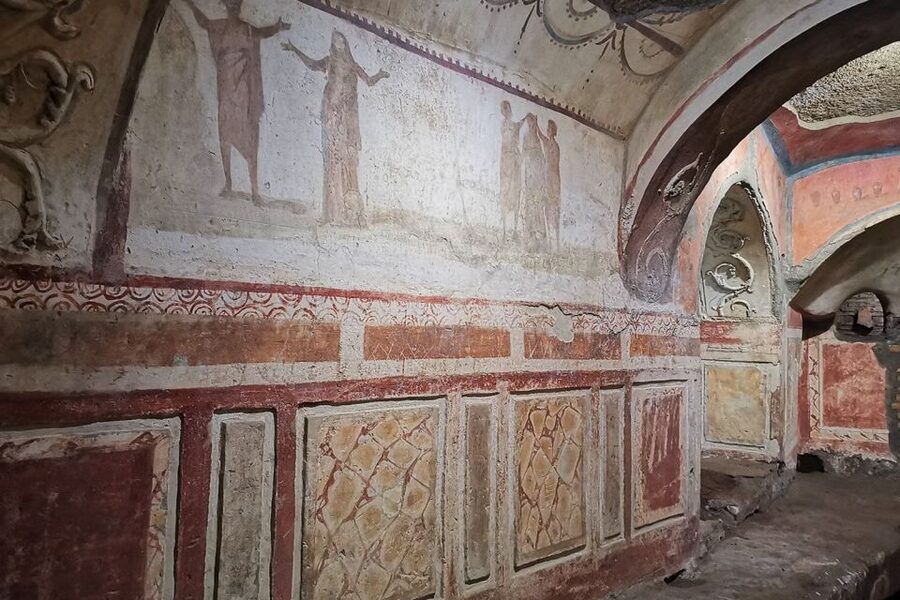
- Frescos Underground, Including Early Mary Depictions
- Villa Ada, the Basilica of St. Silvestro, and Nearby Museum Fragments
- Group Size, No Photos, and How to Prepare Mentally
- Price and Value: What $16 Buys You in Real Terms
- Who This Tour Is Best For, and Who Might Want to Choose Another Option
- Final Call: Should You Book Catacombs of Priscilla?
- FAQ
- How long is the guided tour of the Catacombs of Priscilla?
- Where is the meeting point for the tour?
- How early should I arrive before the scheduled tour?
- What languages are available for the live guided tour?
- What group size should I expect?
- What is included in the ticket price?
- Is hotel pick-up or drop-off included?
- Can I take photos inside the catacombs?
- Are baby strollers allowed in the catacombs?
- Is the tour suitable for people with mobility impairments?
What I’d pin to your map first
- Via Salaria entry, not a detour: you head to the Catacombs of Priscilla area directly and meet at the ticket office to start on time.
- Arenarium origins, then Christian use: the site began as an arenarium and later became burial space in the early third century.
- Two levels plus adjoining spaces: you move through galleries on two floors, with an adjacent cryptoporticus area that includes the Greek Chapel.
- Names that repeat through the walls: martyrs Felice and Filippo, their mother St. Felicita, and several popes buried at Priscilla.
- Art you can still read: some stops highlight very early Christian frescoes, including depictions that guests often single out as among the oldest known examples.
- Short and focused: 45 minutes keeps it intense and doable, even if you’re trying to beat the Rome heat.
Via Salaria Meeting Point, Timing, and the Pace of a 45-Minute Tour
This tour is built for a specific start time. Go straight to the catacomb ticket office and show your reservation at least 10 minutes before the tour begins. That early arrival matters because the group setup happens fast, and once you’re underground, you cannot drift or backtrack.
The tour runs about 45 minutes. That sounds short, but in catacombs it works. You spend time in the meaningful stops without turning the experience into a long slog through hallways that all start to look similar.
One practical note: this is not one of Rome’s closest major sights. You’ll want to plan your transport so you arrive relaxed, not sprinting from a bus or metro connection. People do mention it’s a bit of a trip from the city center, but it’s still very doable.
Further under Rome’s streets:
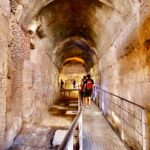
Why the Catacombs of Priscilla Feel Different From the Usual Rome Hits
Rome has a lot of loud, above-ground history. The Catacombs of Priscilla are the opposite. Instead of marble facades, you get underground rooms shaped by burial needs, funeral memory, and prayerful gatherings.
What makes this place especially interesting is how it combines archaeology and storytelling. It is an active site where preservation and study continue, and that energy comes through in the tour structure. Guides like Sister Lydia are often described as funny and friendly, with a way of making the tight spaces feel navigable rather than confusing.
You also get a rare angle on early Christianity. The tour is not only about death, it’s about community. You see how people marked faith in underground spaces when being open about it could be risky.
Two Floors and a Site That Changed Jobs Over Time
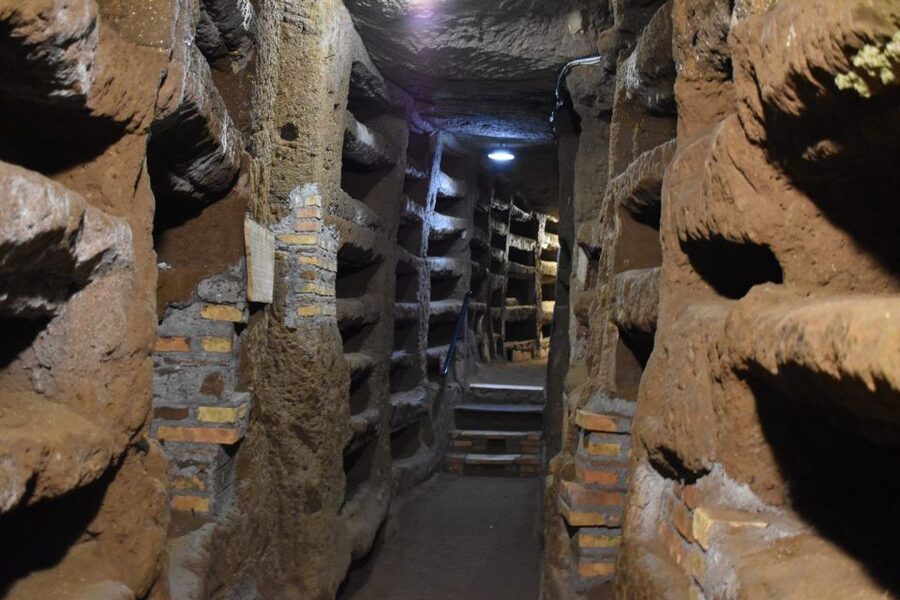
Priscilla’s catacombs were not born as a catacomb. The area initially functioned as an arenarium, essentially a place connected with quarrying or sand extraction, then it was abandoned. Later, Christians began using the large and irregular galleries on the first floor around the beginning of the third century.
From there, the space evolved in a very practical way. The first floor gets built around niche tombs, with roughly twenty niche tombs created and then hundreds of additional niches dug into the walls. That detail matters because it shows the catacombs were not just one-off burials. They were used repeatedly, generation after generation, as a functioning burial system.
The tour also gives you a sense of the two-floor layout. You’ll move between levels in a guided sequence that helps you understand what you’re looking at, instead of just following a line down a corridor. It’s one of those experiences where structure is everything.
The Cryptoporticus, Greek Chapel, and Why Architecture Matters Down There
One of the best parts of visiting Priscilla is realizing you are not just in a single tunnel. Adjacent to the catacomb area is a cryptoporticus, which includes the Greek Chapel and a larger underground environment.
This matters because it changes how you picture the site. Burial space can sound plain until you see that parts of the complex were originally connected to a noble family burial ground. Then, over time, the complex got connected into the Christian catacomb network.
So when you hear about the Greek Chapel, don’t treat it like a random side stop. It’s a clue about layers of use. Different groups shaped the space, and the catacombs reflect those shifts rather than freezing one moment in time.
You also learn about inscriptions and earlier uses of underground spaces. One area, the hypogeum of the Acili, was originally a cistern of water. Later, inscriptions of the Acili name turned up there and are exhibited. That kind of detail turns the walls into historical documents.
Introductions we still owe you around Rome
- Vatican: Museums & Sistine Chapel Entrance Ticket
★ 4.5 · 144,003 reviews - Vatican Museums & Sistine Chapel Tour with Optional Basilica
★ 4.3 · 67,413 reviews - Colosseum, Roman Forum & Palatine Guided Tour
★ 4.7 · 63,148 reviews - Vatican Museums, Sistine Chapel & St Peter’s Basilica Guided Tour
★ 4.5 · 39,149 reviews
Martyrs, Popes, and the Names Behind the Niche Tombs
Catacombs can feel anonymous until the guide connects faces to the names. At Priscilla, the tour does exactly that.
You’ll hear about martyrs buried here, especially the brothers Felice and Filippo, who were martyred, likely under Diocletian. Their mother, St. Felicita, is also remembered in connection with the same burial setting. The story expands beyond them to other brothers named Alessandro, Marziale, Vitale, Silano, and Gennaro.
Then the tour brings in a second layer, the papal connection. Numerous popes were buried at Priscilla, including Marcellino (296 to 304), Marcello (308 to 309), Silvestro (314 to 335), Liberius (352 to 366), Siricius (384 to 399), Celestino (422 to 432), and Vigilius (537 to 555). That list isn’t just trivia. It explains why this site mattered for centuries and why early Christians kept returning to mark memory underground.
In a cramped setting, it’s easy for names to blur. The good guides slow down at the right moments so you can actually register who is who and why they’re tied to Priscilla.
Frescos Underground, Including Early Mary Depictions
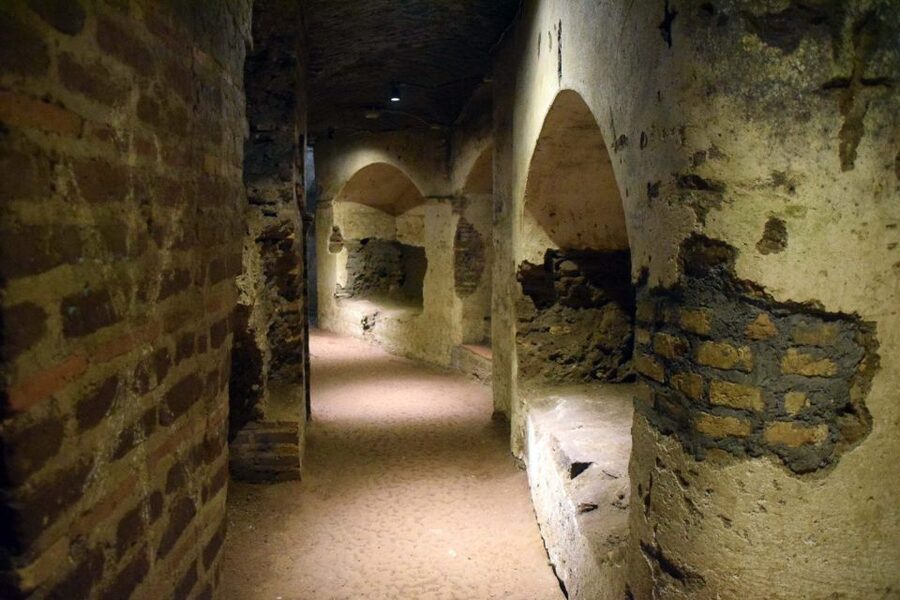
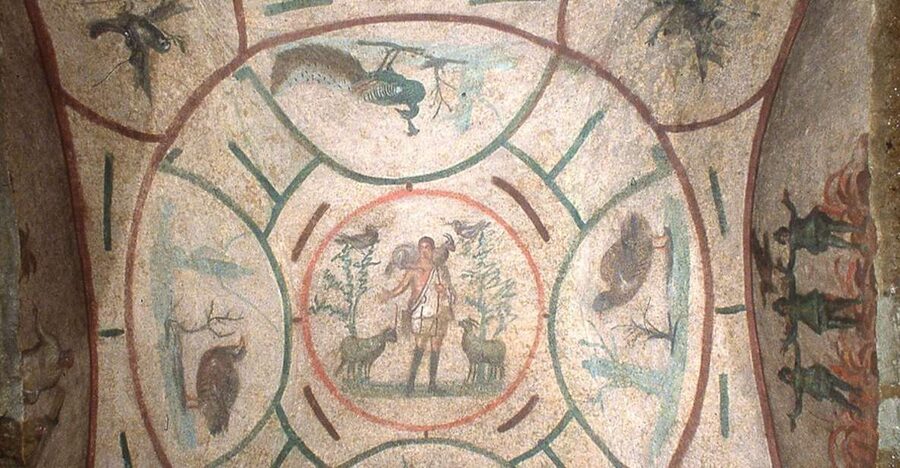
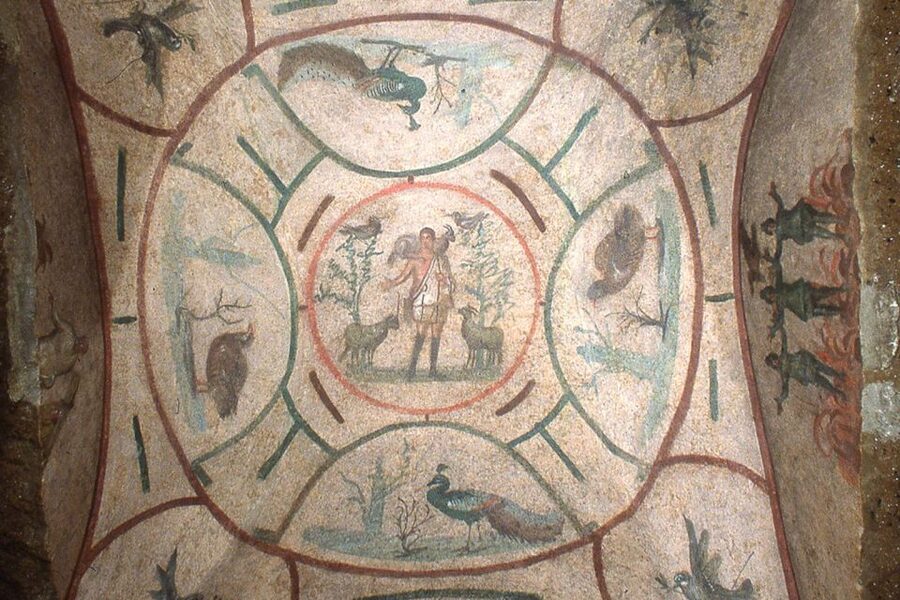
The highlight for many people is the chance to see early Christian frescoes still intact. When you’re underground, the air stays cooler, and the walls can look almost staged in their survival. Several guests specifically call out seeing frescoes from the third-century range, and the feeling is not about celebrity art. It’s about human-scale religious imagery that was made to serve real believers.
One reason the tour lands well is that it explains symbolism while you’re looking at it. Guides often connect images to the period, and some visitors single out a very early depiction of the Virgin Mary as a major emotional moment.
Even if you know the basics of Christian art, you’ll likely appreciate the context here. The underground setting changes the impact. Images that might seem ordinary in a museum become part of a lived environment where faith, mourning, and community overlapped.
Also remember: photography inside is not allowed. If you want to keep something from the visit, ask about postcard options sold on-site. People have mentioned postcard prints of the art as a small, practical souvenir.
Villa Ada, the Basilica of St. Silvestro, and Nearby Museum Fragments
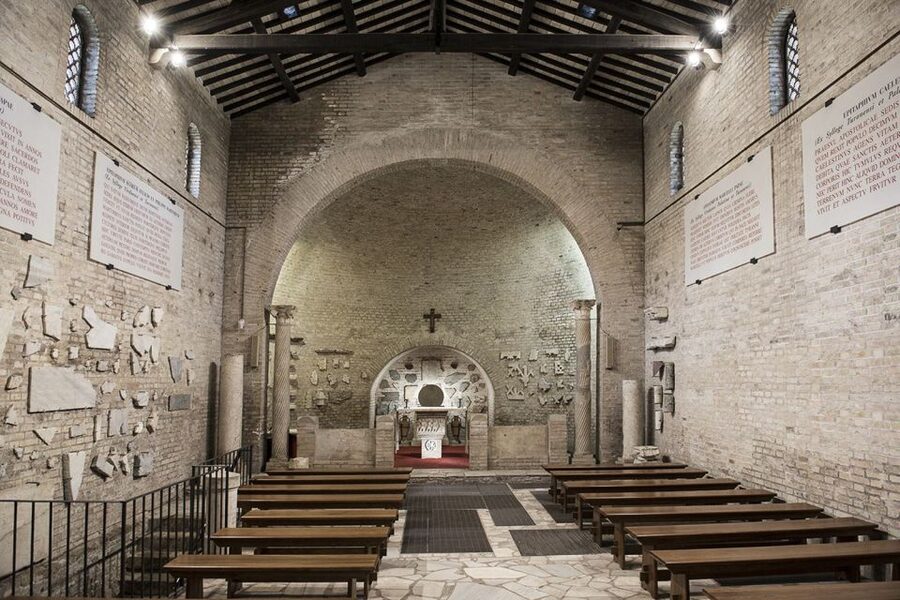
Priscilla isn’t isolated in a vacuum. The information you get on the tour connects the catacombs to what’s above and around them.
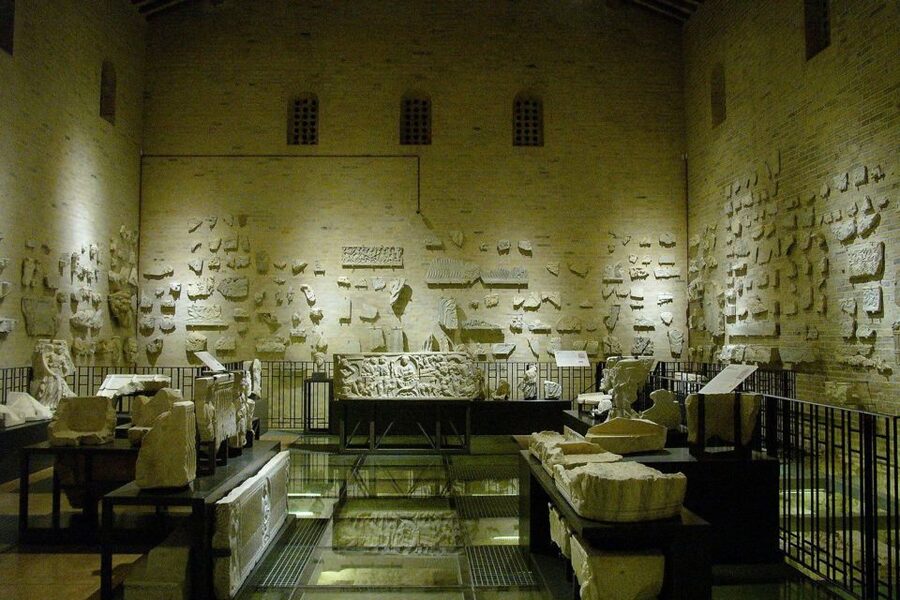
Inside Villa Ada, there is a basilica built by Pope St. Silvestro corresponding with the tomb of Felice and Filippo. Near that basilica, there is a museum set up that collects hundreds of fragments of sarcophagi found during excavations in the area of the catacomb.
This is a smart add-on for two reasons. First, it gives you a reality check on what has been preserved versus what has disappeared. Second, it helps you visualize how the dead were represented in materials beyond the niche walls.
If you like your history with evidence, the sarcophagus fragments are the payoff. They make it clear that what you see underground today is part of a larger, studied site.
Group Size, No Photos, and How to Prepare Mentally
Small group tours work best in catacombs. Here, the group limit is 10 participants, and that keeps the flow steady through narrow areas. It also lets the guide turn questions into mini-lessons rather than shouting over everyone.
The pace can feel tight in certain passages. That is normal for catacombs. I’d treat it like a guided walk with frequent stops, not like a slow museum stroll where you get to linger anywhere you want.
You’ll also want to mentally prepare for two rules. Baby strollers are not allowed, and photography inside is not allowed. Bring your curiosity, not your camera. If you’re the type who loves to take lots of photos, you might feel constrained at first. The upside is that you’ll probably look more carefully instead.
Finally, this tour is listed as not suitable for people with mobility impairments. If that could apply to you, it’s worth considering alternatives that are easier to access.
Price and Value: What $16 Buys You in Real Terms
At about $16 per person for a guided entry, this tour is strong value, mainly because you’re paying for interpretation, not just access. Underground sites can be hard to self-navigate, and the guide’s job is to point out what matters, explain why it matters, and keep the experience coherent.
You also get something you cannot easily recreate on your own. The tour ties together the site’s timeline, the two-floor arrangement, the cryptoporticus area, the named figures like Felice and Filippo, and the papal burials across multiple centuries. That combination is what makes the price feel fair rather than cheap.
And because the tour is only 45 minutes, you get a high concentration of meaning without feeling stuck underground all day. If you’re trying to balance major Rome sights with something genuinely different, this fits neatly between other plans.
Who This Tour Is Best For, and Who Might Want to Choose Another Option
You’ll probably love this if you enjoy early Christian art, burial history, or archaeology that focuses on daily human practices. It’s also a good choice if you want something calmer than the top-ticket crowds.
It’s especially worth it if you like guided explanations and clear context. Many guides here are praised for making the tour readable in small spaces, and for mixing humor with solid historical framing. If you’re sensitive to lots of walking, the short 45-minute format helps, but the site still remains underground and not suitable for all mobility needs.
If you want a massive, iconic spectacle like the Colosseum, this may feel more intimate than dramatic. It’s not trying to be a grand monument. It’s trying to show you a functioning underground world where people gathered around faith, grief, and remembrance.
Final Call: Should You Book Catacombs of Priscilla?
Book it if you want a unique Rome experience that’s quieter, cooler, and more personal than the big headline sites. With early Christian frescoes, a guided walk through a site with real archaeological layers, and a focus on named martyrs and popes, it’s the kind of tour that leaves you thinking about faith and community in a very physical way.
Skip it or rethink if you need an accessible route, you rely on strollers, or you strongly prefer places where photography is allowed. Also consider your timing. Since it’s not in the center of Rome, you’ll enjoy it more if you treat it as a planned stop, not a last-minute scramble.
If you like your history with atmosphere and good guidance, this one is an easy yes.
FAQ
How long is the guided tour of the Catacombs of Priscilla?
The tour lasts about 45 minutes.
Where is the meeting point for the tour?
You should go directly to the ticket office of the catacomb and show your reservation.
How early should I arrive before the scheduled tour?
Arrive at least 10 minutes before the scheduled tour time.
What languages are available for the live guided tour?
The guide offers Italian, English, and Spanish.
What group size should I expect?
It is a small group, limited to 10 participants.
What is included in the ticket price?
The price includes the entrance ticket to the Catacombs of Priscilla and a guided tour.
Is hotel pick-up or drop-off included?
No. Hotel pick-up and drop-off are not included.
Can I take photos inside the catacombs?
Photography inside is not allowed.
Are baby strollers allowed in the catacombs?
No, baby strollers are not allowed.
Is the tour suitable for people with mobility impairments?
No, it is not suitable for people with mobility impairments.
Just introduced: the newest Rome write-ups
- Rome Fiumicino Airport Transfer in Luxury Private Transportation★ 4.5 · 339 reviews
- Vatican: Pope Francis Tomb and Papal Basilicas Tour★ 4.7 · 340 reviews
- From Rome: Sorrento, Positano & Amalfi Coast Day Trip★ 4.5 · 340 reviews
- Rome: Guided Colosseum Underground Tour★ 4.8 · 342 reviews
- Colosseum Arena Floor, Roman Forum & Palatine Hill Guided Group Tour★ 5.0 · 343 reviews
- Rome: Small Group Rome’s Dark Side – Ghosts & Legends Tour★ 4.9 · 343 reviews
- Rome: City Highlights Electric Bike Tour★ 4.9 · 343 reviews
Underground & Catacombs Tours, compared.
Naples Underground Entry Ticket and Guided Tour
Read our review →
Colosseum: Underground and Ancient Rome Tour
Read our review →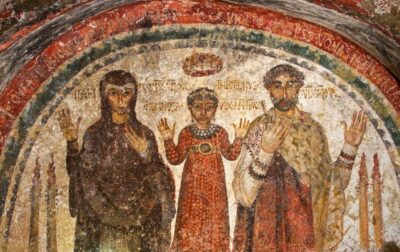
Catacombs of San Gennaro Entry Ticket & Guided Tour
Read our review →
Crypts and Catacombs Underground Tour with Transfers
Read our review →
Expert Guided Tour of Colosseum Arena OR Underground, and Forum
Read our review →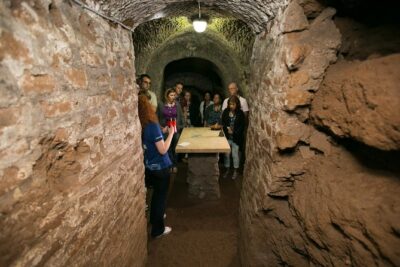
The Original Roman Crypts and Catacombs Tour with Transfers
Read our review →
Colosseum Underground Small Group Guided Tour
Read our review →Browse the lists this tour appears in