
Reviewed · GOLF CART CITY TOURS
Rome Golf Cart Tour : Half-Day Private or Small Group Sightseeing
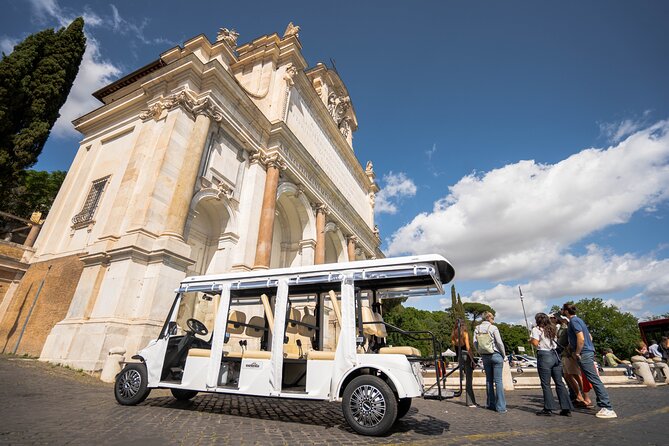
Hot Rome sidewalks can drain your day. This half-day Rome golf cart tour lets you hit the big highlights fast, with a local driver guide and plenty of time to stop for photos. I like that the route is built for short exterior visits, so you get context without the long slog in the heat.
Two things I really appreciate: the pacing is flexible (you can ask for the order and emphasis you want), and the small-group cap keeps the experience from feeling like cattle. One thing to consider up front: it is not a monument-entry tour. You will see the classics from outside, so if you want to go in, plan those tickets separately.
In This Review
- Key takeaways at a glance
- Why a Rome golf cart half-day tour works better than hauling on foot
- The 3-hour route: what you will actually see (and what you will skip)
- Pantheon: a dome you can still appreciate without entering
- Colosseum: getting the postcard shot with less stress
- Circo Massimo to Piazza Navona: where the ancient world meets baroque drama
- Trevi Fountain and Campo de’ Fiori: Rome’s icons, managed in small bites
- Teatro di Marcello and the Orange Garden viewpoint: Rome without the biggest crowds
- Guides and pacing: why the driver can make or break this tour
- Comfort on cobblestones: electric cart, real-world bounce
- Price and value: what $107-ish buys you in Rome time
- Who should book this Rome golf cart tour, and who should skip it
- Should you book this Rome golf cart tour?
Key takeaways at a glance
- Skip the long walks, but still see Rome’s headline monuments and squares
- Photo-friendly stops, with quick pull-offs so you are not stuck at the back
- Private or small-group pacing, so you can slow down where you care
- Driver-guide storytelling, often with smart detours and local context
- External-only sightseeing, so tickets for inside visits are on you
- Comfort varies on cobblestones, expect some bounce even in an electric cart
Why a Rome golf cart half-day tour works better than hauling on foot

Rome is built for wandering, but not every day is built for it. This tour is designed for the reality of heat, crowds, and that feeling that you are always one gelato stop away from quitting. Instead of dropping you on a fixed walking route, you ride between sites in a small electric golf cart and get short, focused viewing stops.
What makes it feel especially good is the way it trades “time spent moving” for “time spent looking.” You get to frame the Pantheon’s dome from the right angle, grab an uncluttered Colosseum photo, and then slide to squares like Piazza Navona and Trevi Fountain without turning your sightseeing day into a leg workout.
The big idea here is simple: you still get the story of ancient and baroque Rome, but you are not forced to do everything at walking speed.
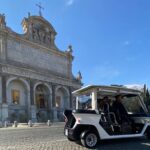
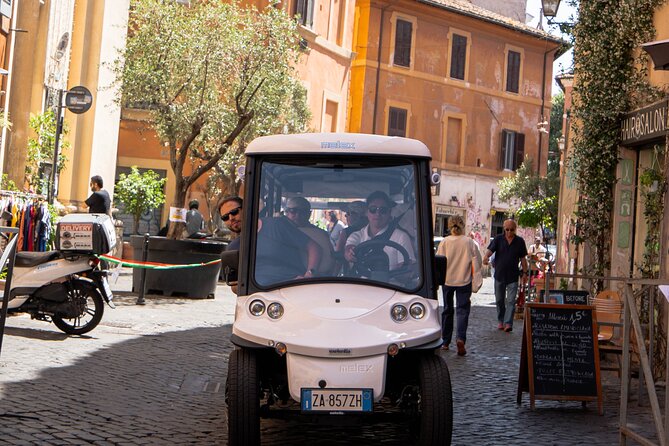
More old streets covered by golf cart:

The 3-hour route: what you will actually see (and what you will skip)
This is an about 3-hour ride with a set lineup of major Rome stops, plus panoramic viewpoints and some extra breathing room in between. Your stops are fast enough to keep energy up, but long enough for photos and quick orientation.
The tour is built around these exterior sights:
- Pantheon
- Colosseum
- Circo Massimo
- Piazza Navona
- Trevi Fountain
- Campo de’ Fiori
- Teatro di Marcello
- Giardino degli Aranci
- A final city view moment, plus general scenic stops along the drive
You will notice a theme: iconic names, but short dwell times. That is great if you are on a first or second day and want to get your bearings. It is less ideal if you want one monument to become your “main event” and you are willing to spend lots of time inside.
Pantheon: a dome you can still appreciate without entering
The Pantheon is one of those places that does not need a long visit to land its point. You start your tour here, which I love because it gets your brain switched on early. From the outside, you can take in how huge the dome feels, and you can spot the famous oculus concept. You also hear how the building’s purpose changed over time, including its transformation into a church.
One practical detail: there is no monument entry included on this tour. Plan on a quick exterior look and photos rather than expecting to go inside.
If you are sensitive to crowds, this opening stop is a smart move because you are seeing the Pantheon in a structured moment, not fighting your way through the whole square with everyone else at once. Bring your phone camera ready, because the classic angles work well from close pull-offs.
Colosseum: getting the postcard shot with less stress
Next up is the Colosseum, Rome’s most recognizable amphitheater and still one of the best places to understand how Roman engineering was built to entertain. You get the story of the grand spectacles it hosted, plus the gladiator-era context that makes the place feel alive instead of just “big and old.”
Just like the Pantheon, this is an exterior visit, so you are not getting inside the site. Still, it is a valuable stop because you can:
- see the scale without committing an entire morning
- take photos without losing an hour to long walking lines
- connect what you see to the guide’s explanation as you look
One more thing I like about this setup is how it helps your memory. You see the Colosseum, then later you can decide whether you want a ticketed visit for deeper exploration.
Introductions we still owe you around Rome
- Vatican: Museums & Sistine Chapel Entrance Ticket
★ 4.5 · 144,003 reviews - Vatican Museums & Sistine Chapel Tour with Optional Basilica
★ 4.3 · 67,413 reviews - Colosseum, Roman Forum & Palatine Guided Tour
★ 4.7 · 63,148 reviews - Vatican Museums, Sistine Chapel & St Peter’s Basilica Guided Tour
★ 4.5 · 39,149 reviews
Circo Massimo to Piazza Navona: where the ancient world meets baroque drama
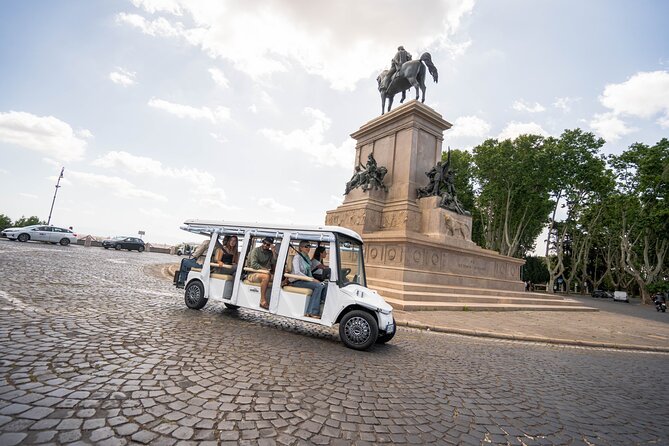
Circo Massimo is a different kind of wow. Today it reads as a wide green space, but your guide frames what it was: the massive stadium for chariot races. This is the kind of stop that makes you slow down for a second, because your brain starts filling in crowds and speed where there is now grass.
Then you transition to Piazza Navona, one of Rome’s most photogenic squares. It sits on an ancient footprint, and the baroque makeover is all about fountains and movement. Bernini’s Four Rivers Fountain is the star, and the surrounding buildings and café life make it feel like a real public stage, not a dead museum corner.
Both stops are exterior and short. The upside: you see variety quickly. The tradeoff: if you want to sit and linger, you will have to do it on your own before or after the tour.
Trevi Fountain and Campo de’ Fiori: Rome’s icons, managed in small bites
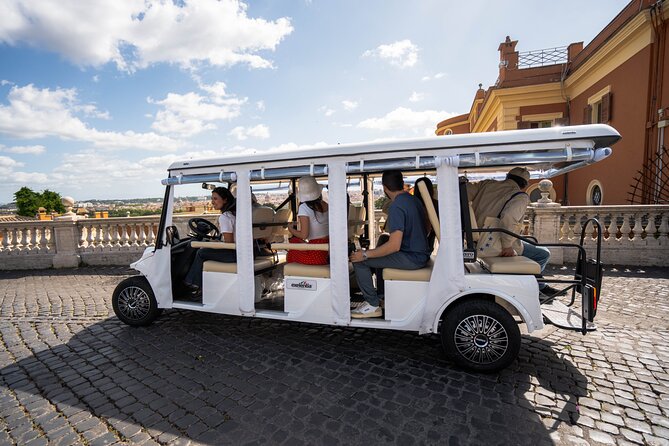
Trevi Fountain needs no introduction, but getting a short, timed view is useful. You learn the baroque storytelling and the aqueduct connection behind how the fountain became possible. This is also a moment where the photo line factor matters, and a golf cart tour helps you avoid spending your entire time waiting.
Do not assume you will get a perfect, empty background. What you can aim for is a clear framing and a fast coin moment, ideally when you are not stuck in the slowest-moving clump of people.
Campo de’ Fiori adds a completely different feel. It is a historic square and market area, and your guide can point you toward how it has functioned through time, from earlier eras to the lively day-and-night rhythm it has today. The stop is short, so treat it as a taste. If you want to browse stalls or linger at a café, you can build on it after you finish.
Teatro di Marcello and the Orange Garden viewpoint: Rome without the biggest crowds
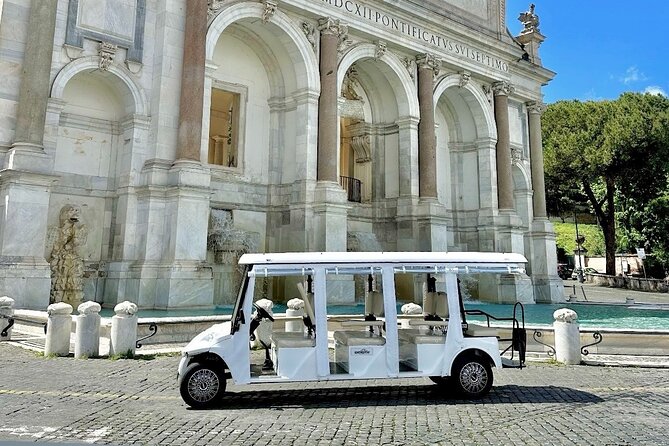
Teatro di Marcello is like an appetizer for the Roman theater obsession. It looks like a smaller cousin of the Colosseum, and it is older, tied to Julius Caesar and later completion under Augustus. What makes this stop special is that it is not as overrun as the headline monuments, so you get better chances for photos and a calmer chat with your guide.
Then the tour heads to Giardino degli Aranci, the Orange Garden. Even if you have seen Rome photos before, this viewpoint can still surprise you. It is one of those “catch your breath and look” moments where Rome suddenly feels huge and layered again.
Guides often use this kind of stop to slow things down. You are not sprinting anymore. You can take your time with the panorama and end with the feeling that you are actually seeing the city, not just checking boxes.
Guides and pacing: why the driver can make or break this tour

The real strength of this kind of experience is not the cart. It is the person steering the story and adjusting on the fly.
In particular, many guides were praised for two things: staying flexible and making the ride fun. Names that show up often include Ludo, Massimo, Nicola, Matteo, Daniela, Manu, Max, Ginevra, Eva, Mario, Meri, Mariana, Tommy, and Taiger. Across those guides, the pattern is consistent: they aim to match what you care about and they keep it lively without turning it into a scripted lecture.
What I like as a practical traveler is that you are not locked into a rigid clock where your guide just reads the same lines to everyone. Instead, you get room to ask for priorities. If you care more about churches and architecture, you can steer that direction. If you care more about quick landmark hits and photos, you can do that too.
Just know the tour is designed for everyone to fit in around 3 hours. That means your guide will likely keep the stops focused, even if you have extra interests.
Comfort on cobblestones: electric cart, real-world bounce
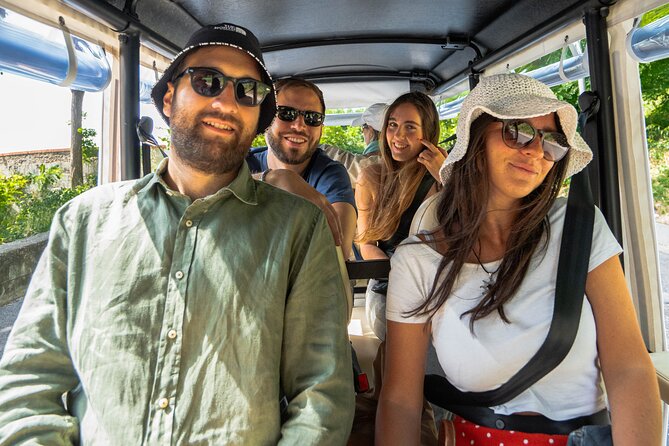
Let’s be honest. Rome streets can be bumpy, and cobblestones are part of the deal. Even in an electric golf cart, you should expect some bounce, especially on older street surfaces. Most people find it manageable, but it is not the smoothest ride in Europe.
You will also sometimes do a bit of walking around the edge of a stop to get a photo angle or to move between pull-off points. One review even flagged that the experience included more walking than expected than some people assume. So if you are counting on almost zero foot time, plan for a little.
My suggestion: wear comfortable shoes and keep your phone secure. A quick grab-and-go bag helps too, so you are not rummaging while you roll into a photo stop.
Price and value: what $107-ish buys you in Rome time
At about $107.63 per person for an about 3-hour tour, the price lands in the “worth it if it saves energy” category. You are paying for:
- private transportation
- snacks and bottled water
- a guide who drives and shares context in English (and also in Spanish or French)
- short, efficient stops that let you see a lot without burning hours walking
If you only have a day or two, this is the value logic. It helps you cover multiple major sites and squares in one stretch, then you can return later on foot to the places you loved most.
If you are staying for a longer trip and you already like walking, you might decide to spend your money on a ticketed monument tour instead, and do the rest on your own. But for many people, the cart is the difference between seeing Rome and feeling like your day got eaten by fatigue.
Who should book this Rome golf cart tour, and who should skip it
This is a strong fit if you:
- want to see major sights fast on a first trip
- hate long walks in hot weather or want to pace yourself
- want a guide to explain what you are looking at, while you relax in transit
- like the idea of stopping often for photos
It might not be the best match if you:
- want extensive time inside major monuments like the Pantheon or Colosseum
- prefer a slow, deep walking experience with long museum-style stops
- have expectations of a totally hands-off ride with zero walking around stops
Also, if you are the type who loves getting completely lost on foot, consider using this as your orientation day, then switch to wandering afterward.
Should you book this Rome golf cart tour?
I would book it if you want a smart introduction to Rome that prioritizes comfort and efficient sightseeing. The route hits the names you expect, but it does it in a way that keeps your time and energy from disappearing. Add to that the consistent praise for friendly, adaptable guidance, and it becomes a great “get oriented fast” option.
I would think twice if monument entry is the core of your plan. This tour is built for exterior views and quick context, not full indoor exploration. If you want to go inside the Pantheon or spend a long time inside the Colosseum, you will want separate tickets or a different tour style.
If you land in the middle, looking for a half-day highlight reel you can actually enjoy, this Rome golf cart tour makes a lot of sense.
Just introduced: the newest Rome write-ups
- Rome Fiumicino Airport Transfer in Luxury Private Transportation★ 4.5 · 339 reviews
- Vatican: Pope Francis Tomb and Papal Basilicas Tour★ 4.7 · 340 reviews
- From Rome: Sorrento, Positano & Amalfi Coast Day Trip★ 4.5 · 340 reviews
- Rome: Guided Colosseum Underground Tour★ 4.8 · 342 reviews
- Colosseum Arena Floor, Roman Forum & Palatine Hill Guided Group Tour★ 5.0 · 343 reviews
- Rome: Small Group Rome’s Dark Side – Ghosts & Legends Tour★ 4.9 · 343 reviews
- Rome: City Highlights Electric Bike Tour★ 4.9 · 343 reviews
Golf Cart City Tours, compared.
Rome by Golf Cart Private Tour: Beyond the Landmarks
Read our review →
Rome on a Golf Cart Semi-Private Tour Max 6 with Private Option
Read our review →
Rome Highlights by Golf Cart Private Tour
Read our review →
Golf Cart Tour to Fiesole Roman Theatre and Museum
Read our review →
Eco-Friendly Golf Cart City Tour with Audio Guide
Read our review →
Rome Highlights City Tour by Golf Cart with Gelato
Read our review →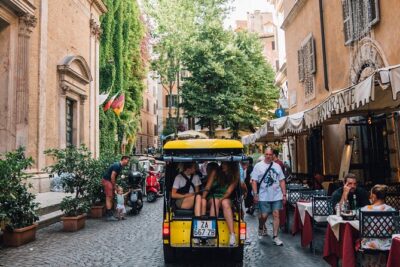
Golf Cart Small-Group Guided Tour: Rome City Highlights
Read our review →
Browse the lists this tour appears in