
Reviewed · UNDERGROUND & CATACOMBS TOURS
Rome: Guided Roman Catacombs Tour with Transfers
Underground Rome tells a different story. This Domitilla catacombs tour takes you about 16 meters down into the world of early Christianity, with an expert guide explaining what you’re seeing in the dark. You also end at the subterranean Basilica of Nereus and Achilleus, where the atmosphere changes from burial corridors to something closer to a place of worship.
I like two things a lot here. First, you get pickup by minivan from a central meeting point, plus a luggage deposit so you can travel light. Second, the guide doesn’t just point out tombs, they connect the frescoes and burial levels to the shift from paganism to Christianity and the real fear and hope behind persecutions.
One consideration: this is not a good fit if you’re claustrophobic or if you need step-free access. The tour goes into tight, enclosed underground spaces and involves moderate walking, so you should weigh that before booking.
In This Review
- Key things I’d plan around
- Getting there from central Rome, without turning it into a scavenger hunt
- Entering the Catacombs of San Domitilla, 16 meters down into early Christian Rome
- How the frescoes and religious symbols make the underground corridors feel personal
- Basilica of Nereus and Achilleus, the 4th-century stop that changes the mood
- Transfers, timing, and group size, what they mean for your day
- Practical checklist: what to bring and what will get you turned away
- Price and value: is $65 worth it for an underground hour?
- Should you book the Roman Catacombs with transfers?
- FAQ
- Where is the meeting point for the tour?
- How long is the tour, including transfers?
- How deep do you go in the catacombs?
- What languages are available for the live guide?
- What should I wear or bring?
- Is the tour suitable for wheelchair users or claustrophobia?
Key things I’d plan around
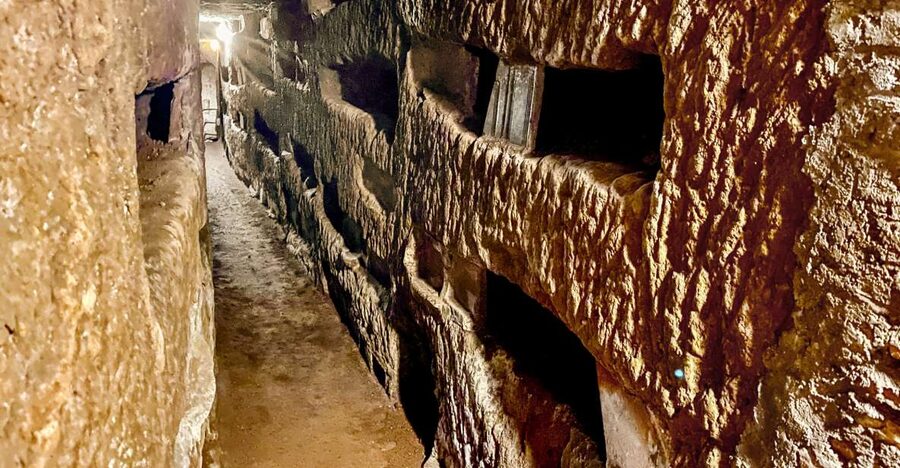
- 16 meters underground at San Domitilla, including lots of time to follow the story of the site
- Four levels of tunnels and chambers, so you don’t just peek, you trace how the catacombs evolved
- Wall paintings of mythological and biblical figures, with explanations of symbolism beyond the surface
- Basilica of Nereus and Achilleus, a distinct 4th-century stop that adds meaning to the visit
- Small-group options (up to 10 or 16, depending on what you choose), which helps in narrow corridors
- Practical transfers from central Rome, plus luggage storage during your underground hour
Getting there from central Rome, without turning it into a scavenger hunt
The tour starts at Via Francesco Giambullari 4, in the square just in front of the stairs. Arrive about 5 minutes early and look for staff holding a yellow label. If you’re used to Rome meet-and-greet chaos, this part is refreshingly direct. You gather, you check in, and you’re off.
From there, you ride by comfortable minivan toward the Appian Way area. The transfer is short, around 15 minutes each way, so you spend your time on the important bit: the Roman underground. That matters, because catacombs tours can get long fast when you factor in waiting and ticket queues. Here, the round-trip timing keeps the whole experience tight and focused, and the logistics are handled for you.
Also note the small-group reality. The catacombs are narrow. A minivan load plus a small group size makes a difference for how smoothly you move. You’re not stuck shoulder-to-shoulder with a giant bus crowd, and that helps you actually listen to the guide when the explanations are most useful.
One more small win: you have a luggage deposit while you’re underground. That’s not just convenience. In places with tight passages and rules about what you can carry, less bulk is less stress.
Further under Rome’s streets:


Entering the Catacombs of San Domitilla, 16 meters down into early Christian Rome
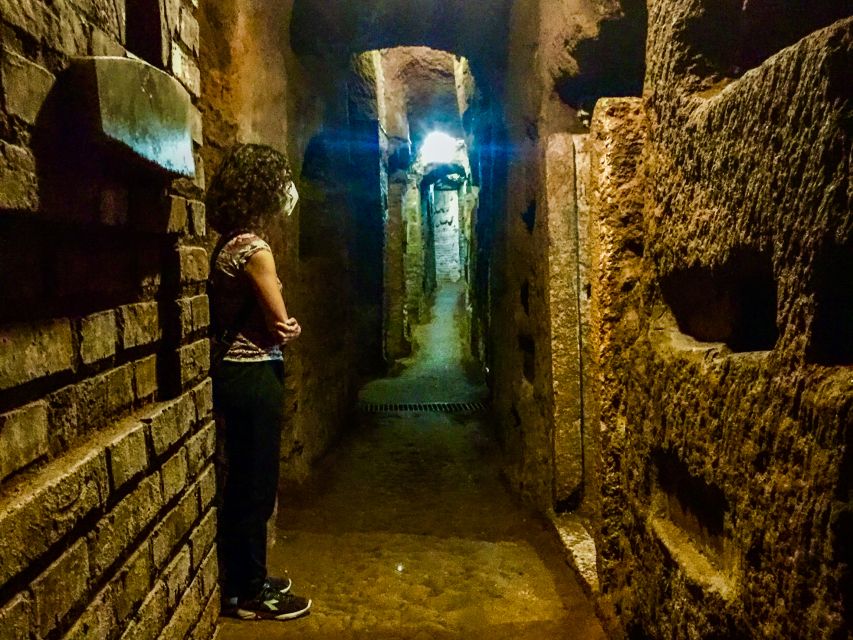
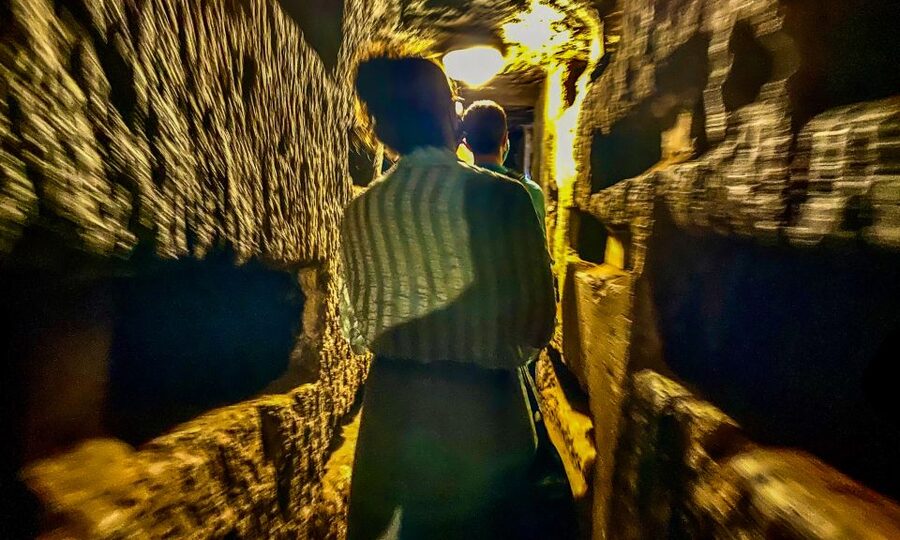
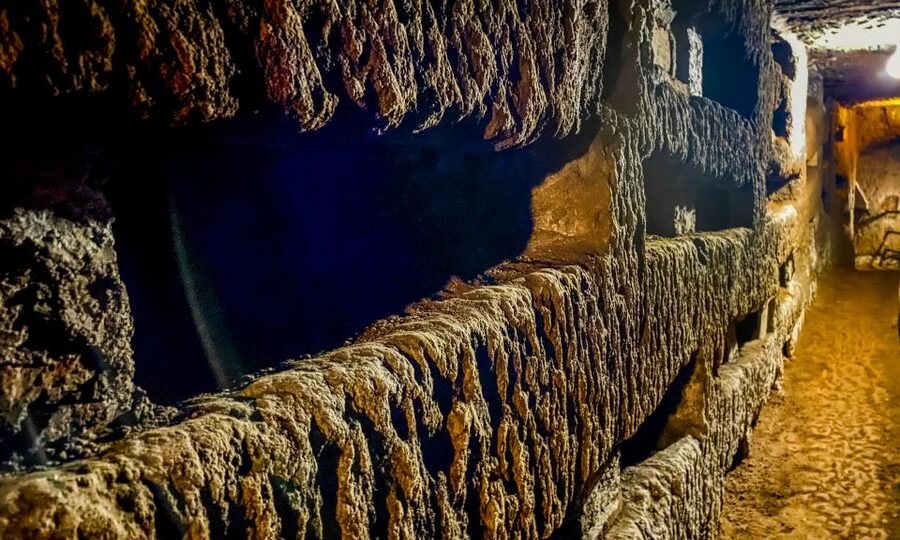
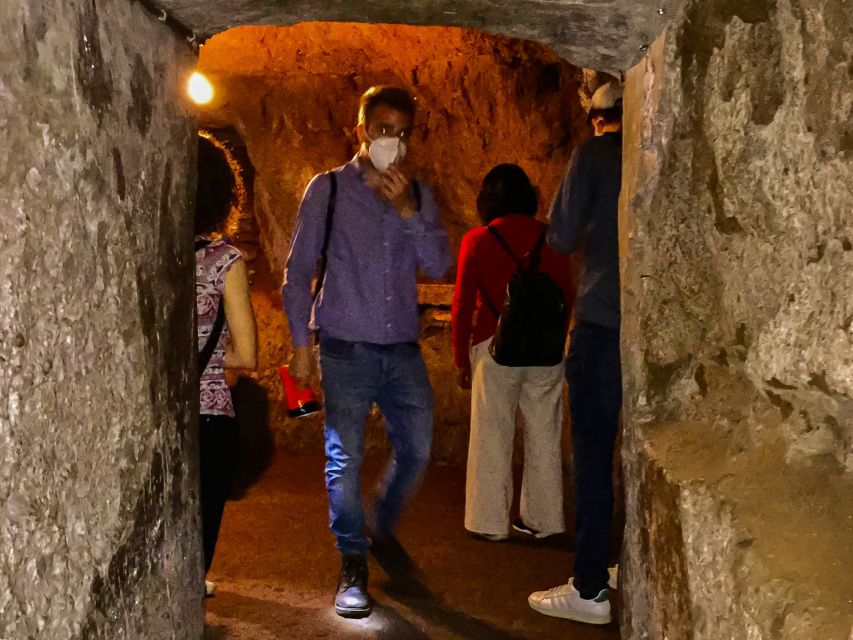
Once you arrive, you start the main guided portion at the Catacombs of San Domitilla, one of the largest and oldest catacomb sites in Rome. You go down roughly 52 feet, or 16 meters, below the surface. That descent alone changes the whole feel of the day. Above ground, Rome is all sun and stone. Underground, it becomes cool, dim, and quiet, with corridors that keep going and going.
The guided time inside is about an hour, but it doesn’t feel like you’re rushing. The guide leads you through multiple underground areas on four different levels. That is key. If you only see one short section, it’s easy to miss how the catacombs worked over time. Here, you get the sense of layering, how burial practices and Christian identity shifted as centuries passed.
You’ll also hear the framing that makes the whole site click. The guide talks about the shift from paganism to Christianity, then brings in the context of early martyrs and persecutions. It’s not delivered as scary horror-story drama. It’s presented as history with consequences. In other words, you understand why people chose these places, and why being part of the community mattered.
A practical reality: this is an underground experience with moderate walking in enclosed spaces. Bring comfortable shoes you can trust on uneven ground.
How the frescoes and religious symbols make the underground corridors feel personal
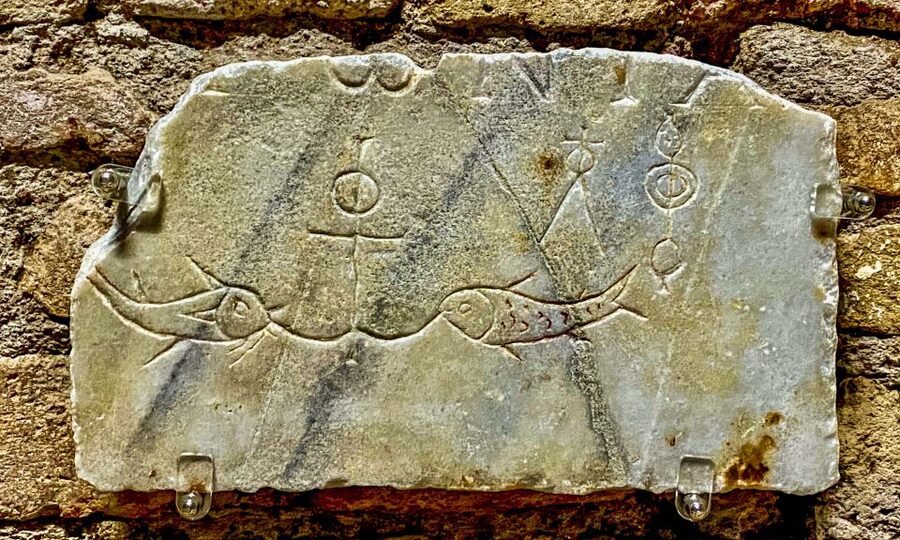
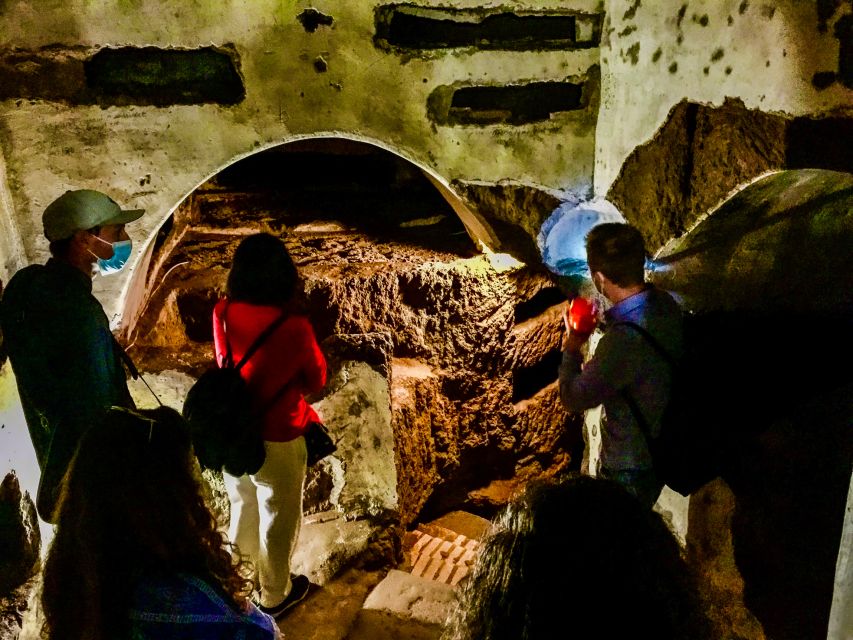
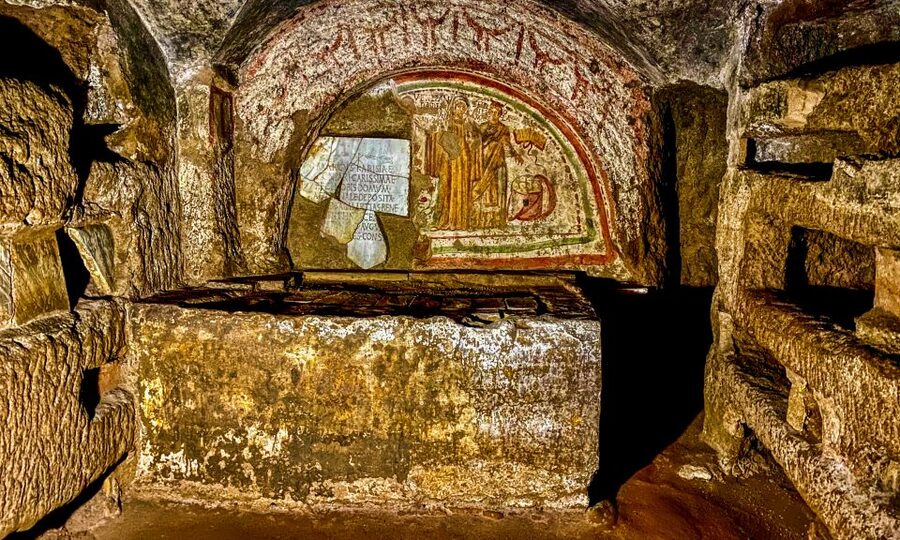
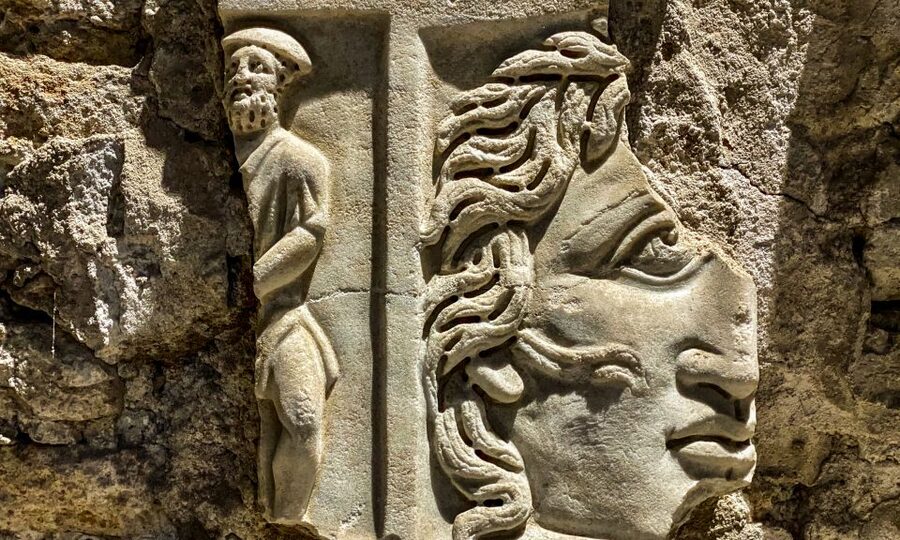
What makes this tour more than just an underground walk is the focus on what’s on the walls. You’ll see ancient paintings featuring both mythological and biblical figures. You’re not meant to treat them like random decoration. The guide connects the frescoes to religious symbolism and the changing beliefs of early Christians.
I like this approach because it answers the question you’ll naturally have while staring at paintings in the dark: what am I looking at, and why does it matter? The guide’s job is to translate the visuals into meaning you can carry out with you.
The paintings also do something subtle. They turn the catacombs from a set of graves into a cultural record. Even when you can’t see everything clearly in the low light, the explanations help you build a mental map. You start noticing patterns and recurring symbols instead of only looking at locations.
One more practical note from on-the-ground advice: photos are typically not allowed inside the catacombs. If you want to use your phone, plan on using the light only if it’s helpful for seeing, not for shooting pictures.
Basilica of Nereus and Achilleus, the 4th-century stop that changes the mood
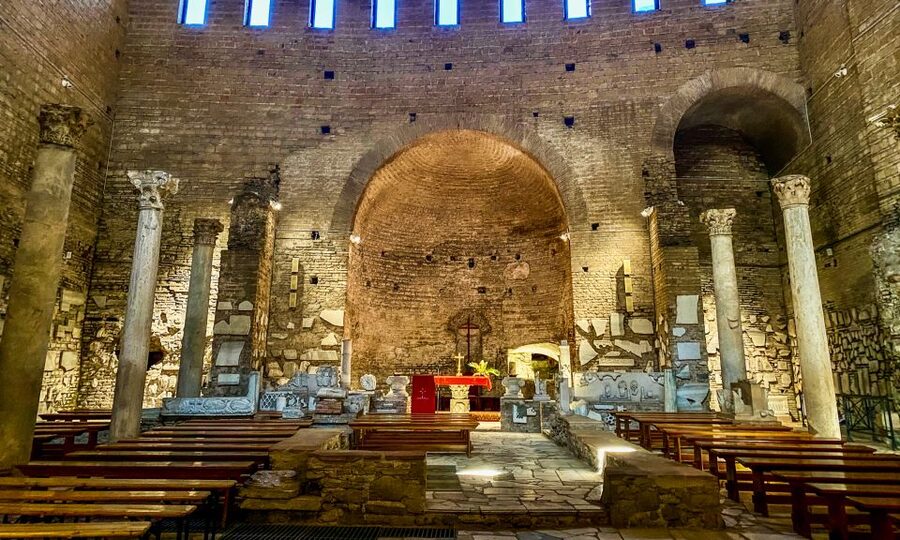
After the corridors and burial chambers, you reach a different kind of space: the 4th-century subterranean Basilica of Nereus and Achilleus. This is the part that shifts the feeling from strictly memorial space to something closer to a sacred interior tied to worship.
It’s an important stop for understanding the site as more than a burial maze. When you’re underground and surrounded by generations of remembrance, it’s easy to reduce everything to death. Ending at a basilica reframes what the catacombs could represent to early Christians: community, continuity, and a belief system that organized life even when persecution was real.
If you’re the type who likes meaningful endings, this works. You finish with a room that gives the visit a shape. You’re not just leaving with a list of sights. You’re leaving with a clearer story arc.
Introductions we still owe you around Rome
- The Original Roman Crypts and Catacombs Tour with Transfers
★ 4.5 · 4,896 reviews - Rome Private Arrival Transfer: Fiumicino Airport to Hotel in Rome
★ 4.5 · 2,492 reviews - Rome: Catacombs Guided Tour with Transfer
★ 4.2 · 1,808 reviews - Rome: Catacombs and Capuchin Crypt Guided Tour with Transfer
★ 4.6 · 1,606 reviews
Transfers, timing, and group size, what they mean for your day
The tour total is about 1.5 hours, with around 15 minutes traveling each way and roughly 1 hour inside the catacombs. That schedule is one of the best parts for a Rome itinerary. You can fit it between other plans without feeling like your whole day is swallowed by transport and waiting.
Group size is capped at 10 or 16 depending on the option you pick. Small is good here. Underground spaces get tighter as you move, and too many people means you lose the guide’s ability to tell stories clearly. With a smaller group, you’ll be able to listen and look without constantly reshuffling.
Also pay attention to languages. You’ll have live guiding in Italian, German, English, Spanish, Portuguese, and French. If you care about nuance, choose the language that lets you catch every detail, especially when the guide is interpreting frescoes and symbolic meaning.
One small tip if you’re sensitive to comfort: the van rides are part of the experience, and a hot day can make the return feel fast. Having water on you helps.
Practical checklist: what to bring and what will get you turned away
This tour is run with clear site rules, mostly for safety and preservation. Here’s how I’d prepare.
Bring:
- Comfortable shoes (you’ll walk moderately on uneven underground surfaces)
- Headphones (useful in the guided environment)
- A reusable water bottle
Dress:
- When you enter churches, you need knees and shoulders covered. Plan on a layer if you’re in shorts and a tank top.
Don’t bring or don’t expect:
- Pets
- Baby strollers
- Luggage or large bags inside
- Short skirts or sleeveless shirts
- Drones or knives of any kind
If you’re coming from a sightseeing spree, the luggage deposit helps a lot. You can store bulk and keep your hands free. But you still need to show up ready to go without trying to squeeze too much stuff into a pocket.
Also, the tour is not suitable for wheelchair users. If you use a mobility device, check alternatives before you commit.
Price and value: is $65 worth it for an underground hour?
At $65 per person for about 1.5 hours total, the price isn’t the rock-bottom option. But for Rome, it’s also not just paying for a ticket. You’re paying for three things that add up:
1) Round-trip transportation from a central meeting point
2) A professional live guide leading the experience inside the catacombs
3) A luggage deposit so you don’t feel stuck managing gear in a restricted site
If you tried to DIY this, you’d likely spend time figuring out transit and timing on your own. The guided route gives you context for what you’re seeing, especially around frescoes and symbolism. The hour underground is also short enough to stay manageable, while still long enough to cover multiple levels and end at the basilica.
That said, there are valid reasons some people feel the price is a touch high: it is only about an hour inside. If you’re the kind of visitor who wants to wander slowly and linger in every corner, this compact format may feel brisk.
Still, if you want an efficient, guided Roman catacombs experience with logistics handled, the value can make sense quickly.
Should you book the Roman Catacombs with transfers?
I’d book this tour if you want a structured, story-driven Rome underground visit with minimal hassle. It’s a strong choice for first-timers to catacombs, families who want clear explanations without a full-day commitment, and anyone who cares about how early Christian identity shows up in art and burial practices.
Skip it if claustrophobia is a concern or if you need step-free accessibility. The experience is underground, enclosed, and requires moderate walking.
If you go, plan to dress for the church-style coverage requirement, wear comfortable shoes, and bring headphones. And when you’re down there, let the guide do their job. The biggest payoff is understanding what the frescoes and the different burial levels are telling you about a changing faith in real, human terms.
FAQ
Where is the meeting point for the tour?
The meeting point is at Via Francesco Giambullari 4, 00184 Rome. Meet in the square in front of the stairs and look for a staff member holding a yellow label.
How long is the tour, including transfers?
The total duration is about 1.5 hours, including transport time. The guided time inside the catacombs is about 1 hour.
How deep do you go in the catacombs?
You descend about 16 meters underground (about 52 feet).
What languages are available for the live guide?
The tour offers live guiding in Italian, German, English, Spanish, Portuguese, and French.
What should I wear or bring?
Wear comfortable shoes. For churches, knees and shoulders should be covered. Bring headphones and a reusable water bottle.
Is the tour suitable for wheelchair users or claustrophobia?
No. The tour is not suitable for wheelchair users, and it is not suitable for people with claustrophobia.
Just introduced: the newest Rome write-ups
- Rome Fiumicino Airport Transfer in Luxury Private Transportation★ 4.5 · 339 reviews
- Vatican: Pope Francis Tomb and Papal Basilicas Tour★ 4.7 · 340 reviews
- From Rome: Sorrento, Positano & Amalfi Coast Day Trip★ 4.5 · 340 reviews
- Rome: Guided Colosseum Underground Tour★ 4.8 · 342 reviews
- Colosseum Arena Floor, Roman Forum & Palatine Hill Guided Group Tour★ 5.0 · 343 reviews
- Rome: Small Group Rome’s Dark Side – Ghosts & Legends Tour★ 4.9 · 343 reviews
- Rome: City Highlights Electric Bike Tour★ 4.9 · 343 reviews
Underground & Catacombs Tours, compared.
Naples Underground Entry Ticket and Guided Tour
Read our review →
Colosseum: Underground and Ancient Rome Tour
Read our review →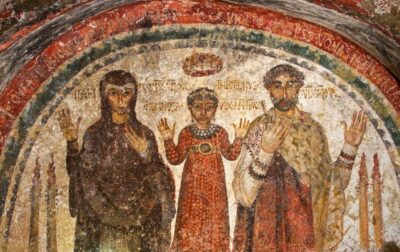
Catacombs of San Gennaro Entry Ticket & Guided Tour
Read our review →
Crypts and Catacombs Underground Tour with Transfers
Read our review →
Expert Guided Tour of Colosseum Arena OR Underground, and Forum
Read our review →
The Original Roman Crypts and Catacombs Tour with Transfers
Read our review →
Colosseum Underground Small Group Guided Tour
Read our review →Browse the lists this tour appears in