
Reviewed · UNDERGROUND & CATACOMBS TOURS
Rome: Trevi Fountain District and Underground Domus Guided Tour
One place in Rome feels like a backstage pass. You step just off the Trevi Fountain area and go underground to a real Roman water site, the Vicus Caprarius, called the City of Water. I love that the tour is small-group and paced so you can actually hear the story, not just stand in a crowd.
I also like that the focus is practical and specific: a discovered water tank connected to the Vergine aqueduct, plus artifacts like polychrome marble and an Alessandro Helios head. The one drawback to keep in mind is that the underground visit is short and compact, so if you expect huge underground tunnels, you may feel a bit underwhelmed.
In This Review
- Key Things to Know Before You Go
- Stepping From Trevi Into the Real Roman Water Story
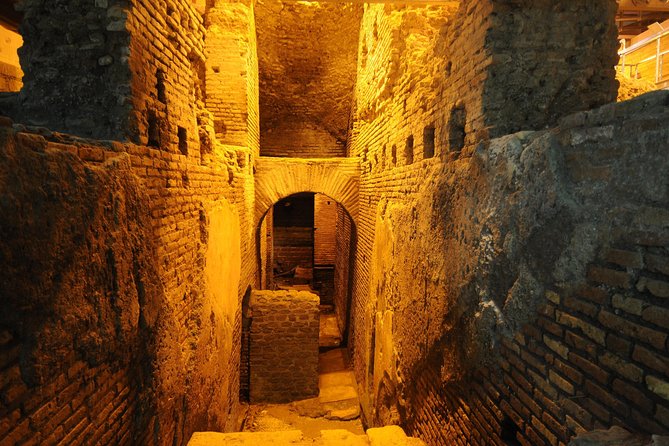
- Vicus Caprarius: The City of Water Beneath Your Feet
- What you’ll actually do down there
- The Roman Finds You Won’t See From the Street
- Trevi Fountain Finale: Coin Toss, Then Back Out
- How to get the best Trevi moment in just 10 minutes
- Why the Small Group Size Matters So Much Here
- Price and Value: $53 for Underground Access and a Guided Water Story
- Logistics That Affect Your Day (Not Just the Tour)
- Who This Tour Is Best For
- Should You Book This Trevi Underground Tour?
- FAQ
- Where do you meet for the Vicus Caprarius underground tour?
- Is the tour offered in English?
- How long is the tour?
- Is this tour suitable for people with mobility impairments?
- What size group is this tour?
- What is included besides the underground guided tour?
Key Things to Know Before You Go

- Small-group size (max 15) makes the guide’s attention feel personal.
- Underground depth and escape from heat: you go about 30 feet below street level, away from the loud, hot tourist crush.
- Vicus Caprarius is tied to the Vergine aqueduct, so the story has a clear water-system thread.
- You see standout finds including polychrome marble coverings, an Alessandro Helios head, coins, and African oil amphorae (spatheia).
- Trevi Fountain is the easy finale, with a coin-toss moment if you want it.
- Gelato is included, because Rome does sweet better than most cities.
Stepping From Trevi Into the Real Roman Water Story
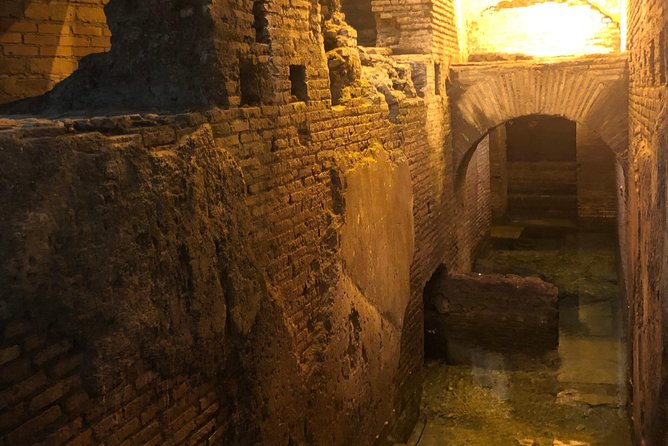
Rome is full of big monuments. This is different. You begin near Trevi Fountain, but the main event is what feeds places like Trevi: water engineering, buried in layers under modern streets.
The best part is how the tour frames the site. You do not just get a list of ruins. You get a cause-and-effect explanation, how Romans moved water, where it likely collected, and why this area earned the nickname tied to water. If you like the nuts and bolts of how cities worked, you’ll feel right at home.
Another reason this tour works well is the format. With a max group size of 15, you’re not squeezed into a slow-moving bottleneck. You can hear the guide’s points about the excavation and the meaning of what you’re looking at.
One more good thing: it’s short. Roughly 55 minutes total. That makes it a smart add-on when your Trevi schedule is already tight and you do not want to commit to a half-day detour.
Further under Rome’s streets:


Vicus Caprarius: The City of Water Beneath Your Feet
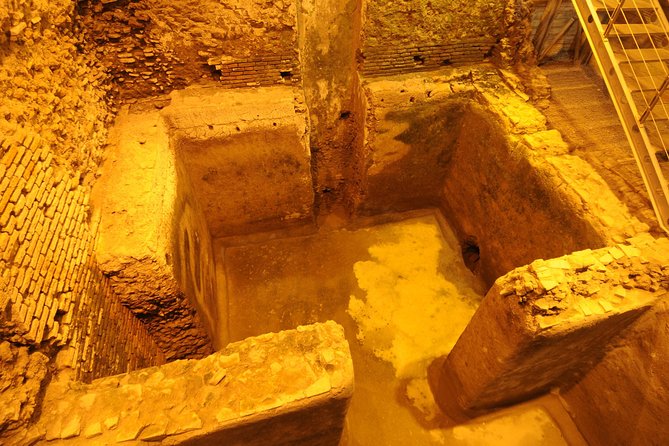
The tour meets at Vicolo del Puttarello, 25, at the Vicus Caprarius reserved entry point, and you start right at the site. From there, you enter with your guide and go about 30 feet (nine meters) down.
This is where the experience really clicks. At street level, Trevi is busy. Underground, the mood changes fast. You’re in a space that helps you understand the word hidden in a literal way.
Here’s what you’re set up to see:
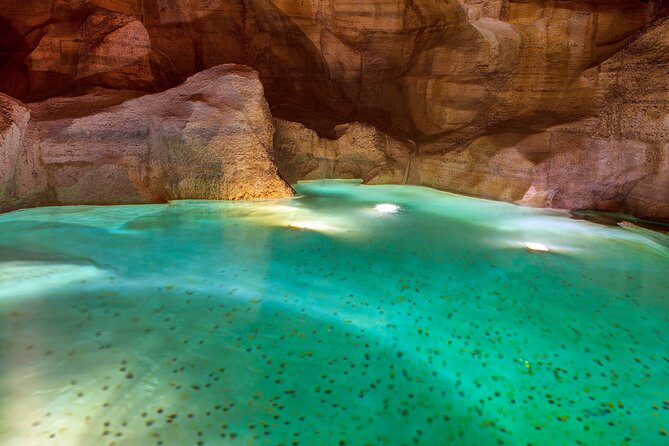
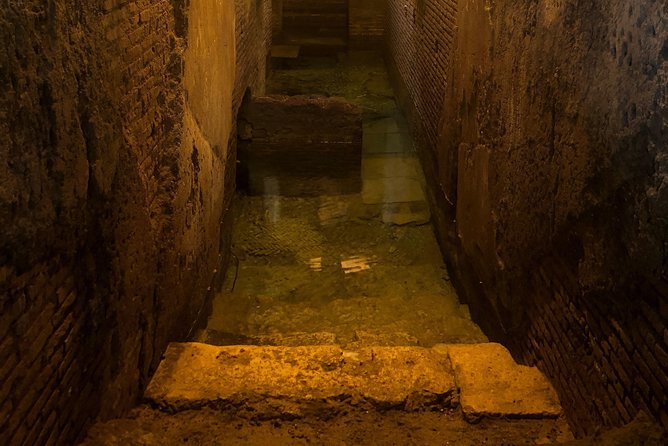
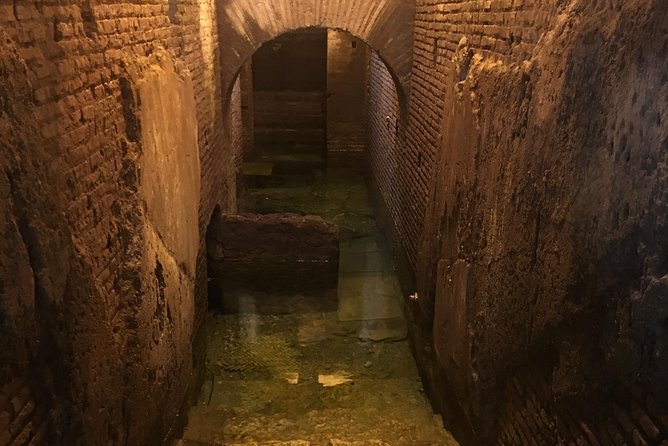
- A water tank that’s visible once you’re inside
- A connection to the Vergine aqueduct
- Remains linked to a Roman villa and an ancient cistern
One detail I like from the way the tour is structured is that it connects discovery to meaning. The site was uncovered in the modern era, and you learn how the finds ended up being protected and interpreted after excavation. That makes the underground feel less like a random hole and more like an actual window into how Romans managed water.
What you’ll actually do down there
You’ll move through the site with your guide, usually for about 45 minutes, and you’ll spend time looking closely rather than rushing past things. The underground portion is the heart of the tour, and you can expect the guide to keep pointing out what you’re seeing and why it matters.
Practical note: this is not designed for people with mobility impairments. You’re going underground, and the physical environment is a factor.
The Roman Finds You Won’t See From the Street
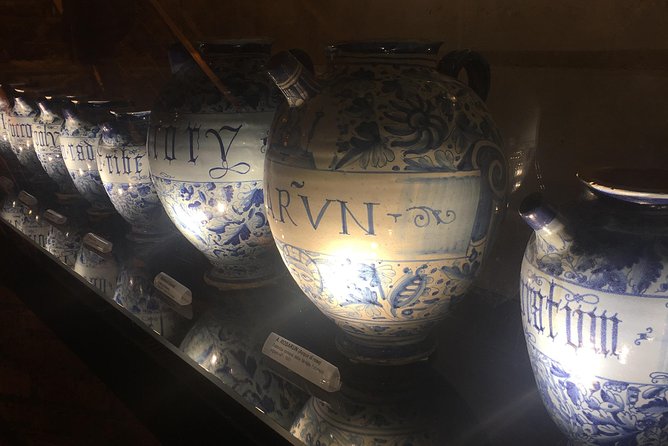
If Trevi is about spectacle, Vicus Caprarius is about evidence. The tour highlights a set of artifacts and features that make the water story feel real, not just theoretical.
The standout items you learn about include:
- Precious polychrome marble coverings
- The famous head of Alessandro Helios
- A trove of 800 coins
- Spathaeia, special African amphorae used for transporting oil
That list matters because it shows how water sites were never only about plumbing. They were part of everyday wealth, storage, and movement. Marble finishes, coin hoards, and imported containers all point to a Roman world that was trading goods and managing resources with serious planning.
The guide also connects the site to the idea of the area being called the City of Water. It’s not just a nickname. It’s a clue to how this neighborhood fit into the larger water system and why fountain-fed Rome exists at all.
And yes, for many people, the most satisfying part is simply seeing the scale and the materials up close. One review-style theme I keep coming back to is how the underground feels like an intimate stop, not a big show. That works especially well if you’re the kind of traveler who wants one or two truly meaningful things rather than ten quick photo stops.
Introductions we still owe you around Rome
- Vatican: Museums & Sistine Chapel Entrance Ticket
★ 4.5 · 144,003 reviews - Vatican Museums & Sistine Chapel Tour with Optional Basilica
★ 4.3 · 67,413 reviews - Colosseum, Roman Forum & Palatine Guided Tour
★ 4.7 · 63,148 reviews - Vatican Museums, Sistine Chapel & St Peter’s Basilica Guided Tour
★ 4.5 · 39,149 reviews
Trevi Fountain Finale: Coin Toss, Then Back Out
After you finish underground, the flow continues to Trevi Fountain. It’s short, about 10 minutes of fountain time, and it’s where most people snap photos and do the classic coin toss if they want.
A quick reality check: Trevi is famous for a reason. It is also famous for crowds. Even with the included access, you may find the fountain area packed enough that you are doing more looking and less listening.
Still, it’s a great payoff moment. You spend nearly an hour learning how water systems worked underground, then you surface into one of the city’s most iconic displays of flowing water. The contrast makes the story stick.
How to get the best Trevi moment in just 10 minutes
- Treat it like a photo sprint, not a lingering sit-down.
- If you care about hearing the guide at the fountain, plan for the fact that the crowd can drown that out.
- Focus on the fountain visuals and your coin-toss moment, then move on to keep your timing smooth.
If you already know Trevi inside and out, you may be thinking this tour is really about the underground, and that’s fair. The Trevi portion is the wrap-up, not the main act.
Why the Small Group Size Matters So Much Here
Max 15 travelers might sound like a marketing detail, but it’s the difference between a good underground tour and a forgettable one.
Underground spaces have practical limits. There’s less room to spread out, and there are more moments where the guide needs everyone’s attention at once. A larger group turns those moments into a shuffle. A smaller group keeps things understandable.
In the best cases, the guides bring a lively style. Names that come up in praise include Erika, Erica, Michelle, Noemi/Neomi, and you can see a pattern in what people liked: energetic delivery, clear English, and answering questions instead of just rushing on.
If you want your Rome experience to include humor and quick context, this format tends to deliver it.
Price and Value: $53 for Underground Access and a Guided Water Story
At $53.10 per person for about 55 minutes, this is not a budget throwaway tour. So the value question is simple: what are you buying?
You’re paying for:
- Reserved entry to Vicus Caprarius
- A guided tour underground (where the real learning happens)
- Included Trevi Fountain access
- An Italian gelato
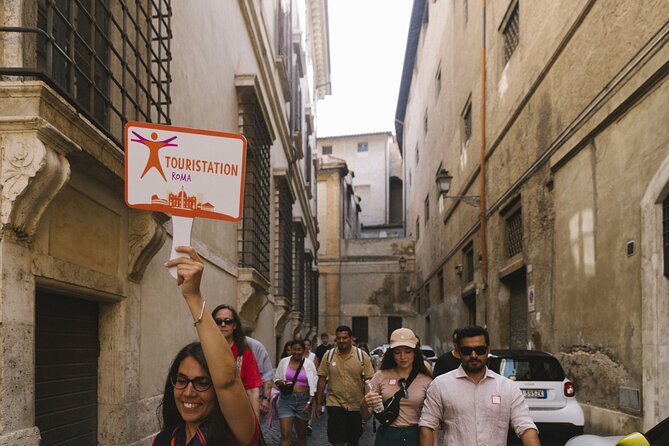
- Help from the Touristation staff
The pricing makes sense if you care about interpretation. Underground sites can look like a room with old stones unless someone connects the dots for you. Here, the guide does that, including the water-system connections and the meaning of the artifacts.
There is, however, a legitimate consideration. Some people feel the underground space is small and that the tour is expensive compared with doing the underground area on your own. If you’re the type who can read signs, take your own photos, and only wants the highlights, you might decide DIY is cheaper.
Here’s the balanced way I’d decide:
- Book it if you want the story and the “how did water work here” explanation.
- Skip or consider DIY if your goal is mostly photos and you hate paying extra for narration.
Logistics That Affect Your Day (Not Just the Tour)
This tour is built for convenience around central Rome.
- Where you meet: Vicolo del Puttarello, 25
- Location proximity: it’s right by the Trevi Fountain area
- Language: English
- Transportation: it’s near public transportation
- Group limit: max 15 travelers
- How long: about 55 minutes
Because the experience is short, it’s easiest to fit on a day when you already plan to spend time around Trevi, the surrounding streets, and nearby landmarks. It can also be a nice “cool down” option. Rome heat hits hard at street level, and going underground is a welcome reset.
If you’re prone to feeling rushed, arrive a few minutes early so you’re not stressing at the entrance. Short tours punish late arrivals.
Who This Tour Is Best For
This is the kind of tour that matches certain travel personalities.
You’ll likely love it if:
- You want a break from the Trevi crowd and heat
- You enjoy Roman engineering and water systems
- You like artifact details, like coins, marble fragments, and imported oil amphorae
- You prefer a small group with Q and A time
It may not be for you if:
- You want a large, sprawling underground network
- You mainly came for a long Trevi Fountain viewing session
- You strongly prefer self-guided options to cut cost
And if you’ve already hit the major Rome icons and you’re hungry for something different, this fits that “one special thing” category well.
Should You Book This Trevi Underground Tour?
I’d recommend booking this tour if you want Trevi to mean more than a photo. The underground piece gives you a real water-system context, and that makes the fountain finale feel earned.
I would not book it if your main goal is to spend lots of time at Trevi itself, or if you expect a huge maze of underground tunnels. The best version of this tour is the guided, compact one, focused on the City of Water and how it ties into Rome’s fountains.
If you’re trying to decide between this and DIY, choose based on what you’ll actually do:
- If you want the explanation of how Romans managed water and what the artifacts represent, this guided format is the point.
- If you’re mostly there for the look and you don’t care about interpretation, you might feel the price more strongly.
FAQ
Where do you meet for the Vicus Caprarius underground tour?
You meet at Vicolo del Puttarello, 25, 00187 Roma RM, Italy, at the Vicus Caprarius – The Water City ticket redemption point.
Is the tour offered in English?
Yes, the tour is offered in English.
How long is the tour?
It runs for about 55 minutes total, with roughly 45 minutes underground and about 10 minutes at Trevi Fountain.
Is this tour suitable for people with mobility impairments?
No. The tour is not suitable for people with mobility impairments.
What size group is this tour?
The maximum group size is 15 travelers.
What is included besides the underground guided tour?
Included are the Vicus Caprarius reserved entry and guided tour, Trevi Fountain access, Touristation staff assistance, and Italian gelato.
Just introduced: the newest Rome write-ups
- Excavation Tour to the Tomb of St. Peter’s & St. Peter’s Basilica★ 4.0 · 183 reviews
- Imperial Rome and External Colosseum Tour★ 5.0 · 183 reviews
- Rome: Rooftop Cooking Class with Wine Tasting near Vatican★ 5.0 · 184 reviews
- Rome to Civitavecchia Cruise Port Transfer★ 5.0 · 184 reviews
- Ancient Rome and Colosseum Private Tour with Underground Chambers and Arena★ 4.5 · 184 reviews
- Rome: Vatican Museums & Sistine Chapel Skip-the-Line Ticket★ 4.1 · 185 reviews
- Borghese Gallery Max 6 People Tour: Baroque & Renaissance in Rome★ 5.0 · 185 reviews
Underground & Catacombs Tours, compared.

Naples Underground Entry Ticket and Guided Tour
Read our review →
Colosseum: Underground and Ancient Rome Tour
Read our review →
Catacombs of San Gennaro Entry Ticket & Guided Tour
Read our review →
Crypts and Catacombs Underground Tour with Transfers
Read our review →
Expert Guided Tour of Colosseum Arena OR Underground, and Forum
Read our review →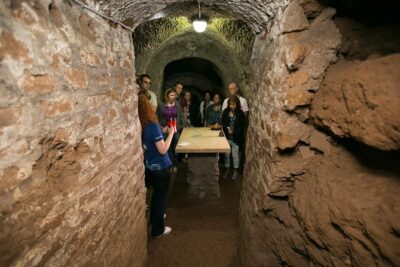
The Original Roman Crypts and Catacombs Tour with Transfers
Read our review →
Colosseum Underground Small Group Guided Tour
Read our review →Browse the lists this tour appears in