Reviewed · ROME TOURS
Rome: Welcome To Rome Immersive Multimedia Show
Rome has a way of confusing your brain at first. This show turns the chaos into a timeline. I love the big projection work and how it makes Rome’s layers feel logical fast, especially if you’ve already walked past ruins and wondered what you were looking at. I also like the four interactive models, because they give you concrete places to anchor the story. One drawback to consider is that this is a sit-and-watch format, so if you want mostly hands-on archaeology or guided wandering outdoors, you may find it too theater-like.
If you’re short on time, this is one of the simplest ways to get oriented. You can enter during opening hours while the show runs continuously, and you’ll have an included audio guide in 9 languages to match the narration and visuals. The ticket is about $21 per person, and it’s worth it when you treat it as an overview for your walking days outside.
In This Review
- Key things to know before you go
- Rome’s “orientation problem” solved with a theater timeline
- Where to find the show near Piazza Navona (Corso Vittorio Emanuele II, 203)
- Inside ex-Cinema Augustus: how the multi-projection works
- The 27-minute Rome timeline, and how to watch it
- The four interactive models: where to focus your attention
- Best timing in your Rome day: start early, then walk with context
- Who should book this Rome multimedia show, and who may not
- Price and value: is about $21 per person fair?
- Should you book Welcome To Rome?
- FAQ
- Where is Welcome To Rome located?
- How long is the multimedia show?
- What interactive models can I see?
- Do I get an audio guide?
- Can I start at any time during opening hours?
- Is it wheelchair accessible?
- How much does it cost?
Key things to know before you go
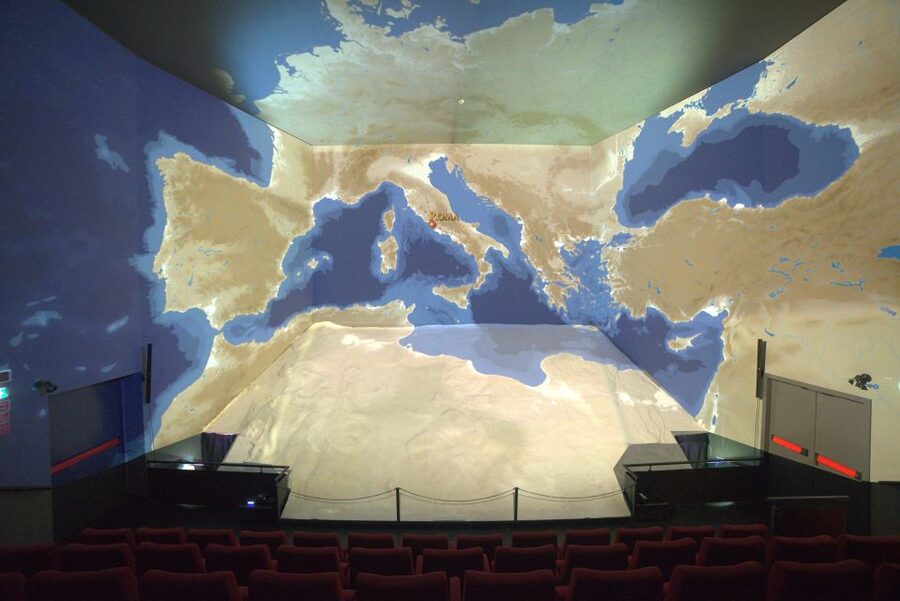
- 2700 years in 27 minutes: the main show uses multi-projection on walls and ceilings to trace Rome’s evolution
- Illusion of flying and moving through monuments: the visuals show how places connect across centuries
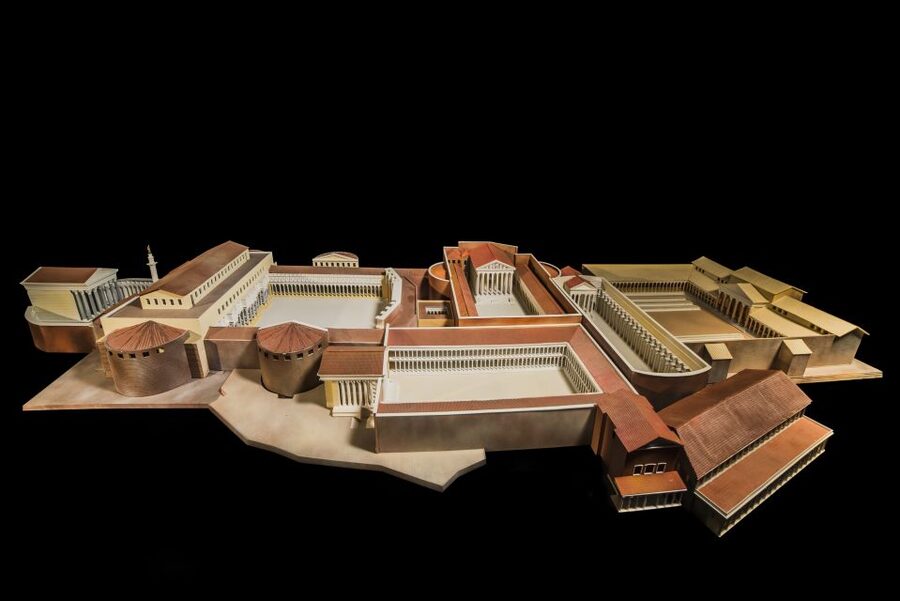
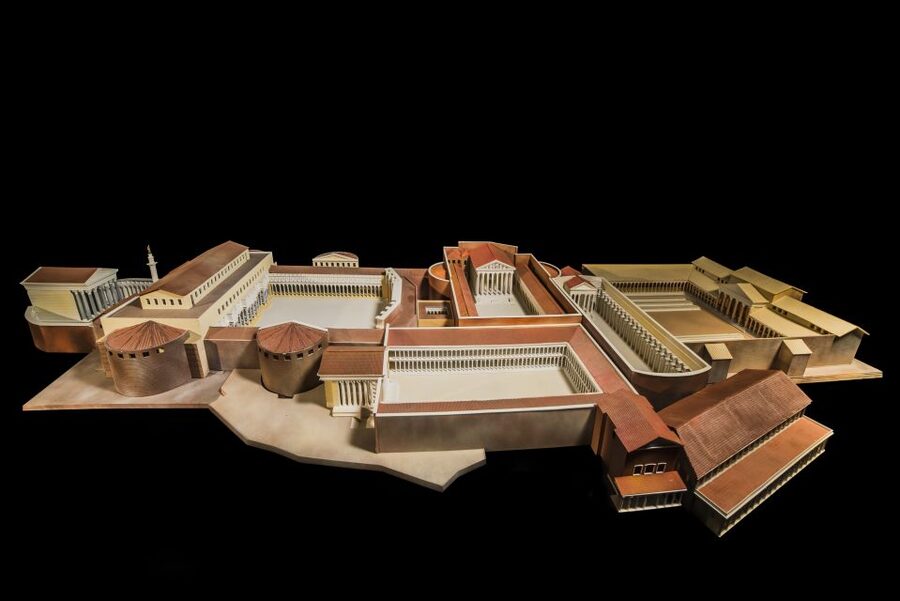
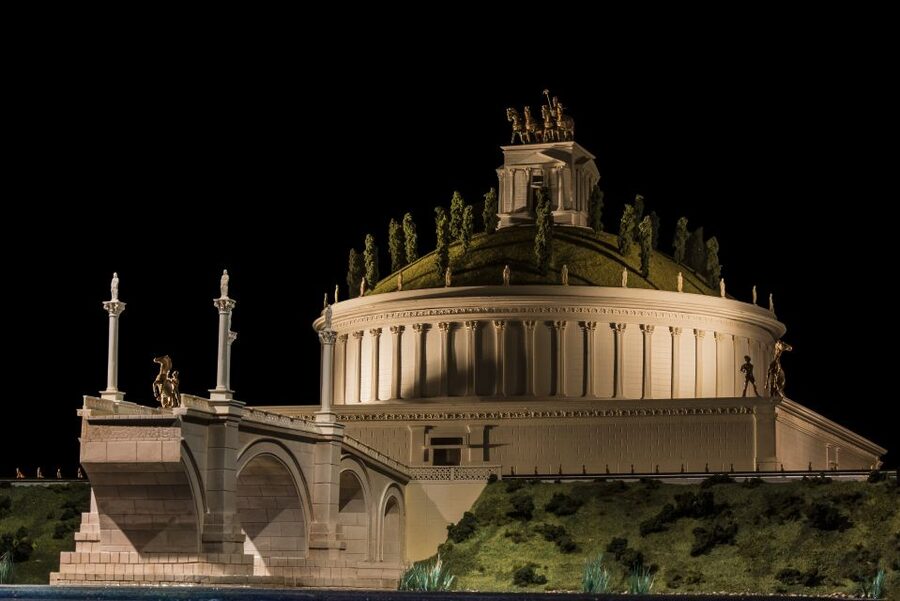
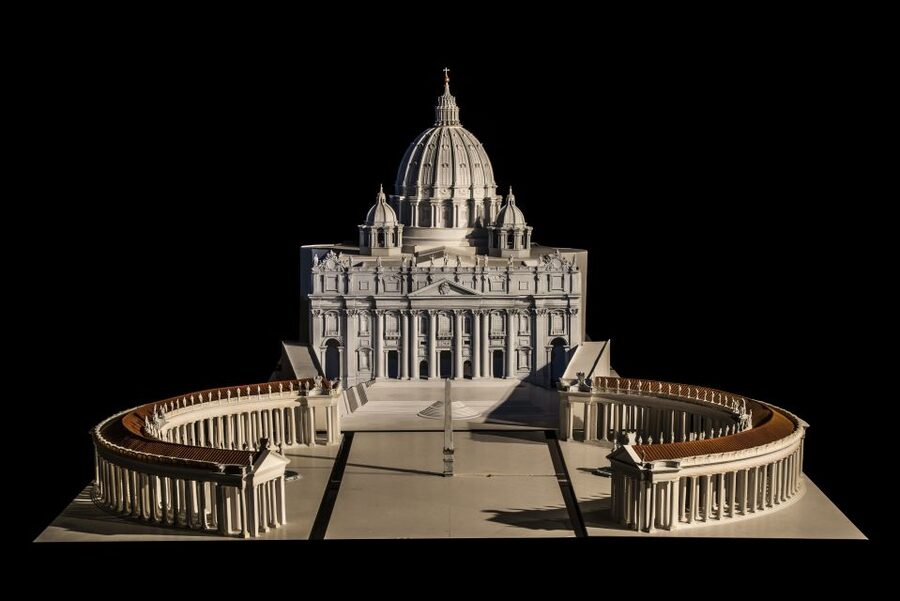
- Four interactive models: Imperial Forum, Augustus Forum, Mausoleum of Adrian, and San Peter Basilica
- Near Piazza Navona: the entrance is on Corso Vittorio Emanuele II, 203, just a few hundred meters away
- Audio guide in 9 languages: Spanish, Chinese, English, French, German, Italian, Japanese, Russian, Croatian
- Continuous entry with a last showing cutoff: you can start any time during opening hours, but the last show begins 1 hour before closing
Rome’s “orientation problem” solved with a theater timeline
Welcome To Rome, the multimedia show in the former Cinema Augustus, is basically a Rome primer you can finish in about an hour. It’s built around one goal: helping you see how the city changed over time, so the ruins, churches, and streets you’ll walk later start to make sense as one layered story.
I like this approach because Rome can feel like separate souvenirs stitched together. You see a forum here, a basilica there, a chunk of wall that looks random until you understand who built it and why it mattered. This show gives you the connective tissue. Even if you already visited a few sights, the visuals can help you place what you saw into a broader sequence.
The setting also matters. Being indoors gives you a break from heat and crowds, and you don’t have to negotiate opening hours or wait for a guide at a specific meeting time. You can start during opening hours because the show runs continuously.
Introductions we still owe you around Rome

Where to find the show near Piazza Navona (Corso Vittorio Emanuele II, 203)
The entrance is on Corso Vittorio Emanuele II, 203, Rome. It’s a short walk from Piazza Navona, just a few hundred meters away. That location is genuinely convenient because it sits in the same central orbit as a lot of classic sightseeing.
Practical tip: if you’re planning to do major outdoor sights later in the day, treat this as an easy “bridge” stop in the middle of your day. The show is a controlled environment, and it’s much easier to take in a big-picture story when you’re not bouncing between ticket lines and street detours.
Also worth noting: the experience includes a skip-the-ticket-line option. That matters in Rome, because saving minutes on entry can be the difference between a smooth day and a rushed one.
Inside ex-Cinema Augustus: how the multi-projection works
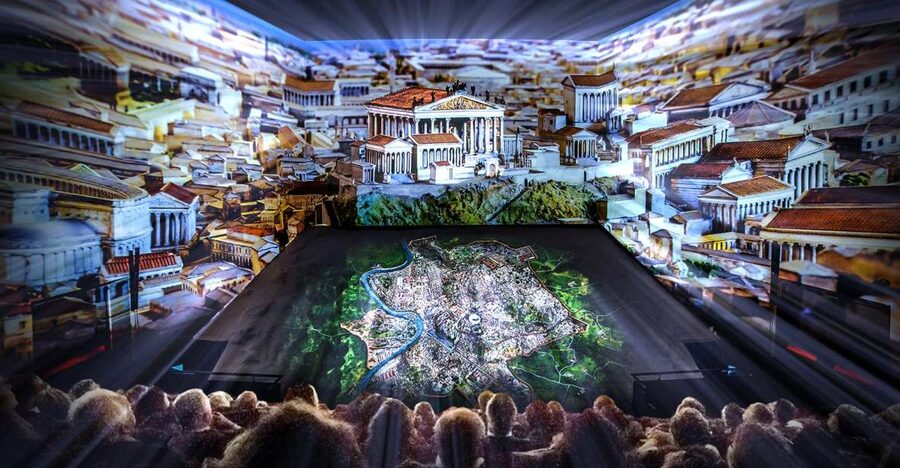
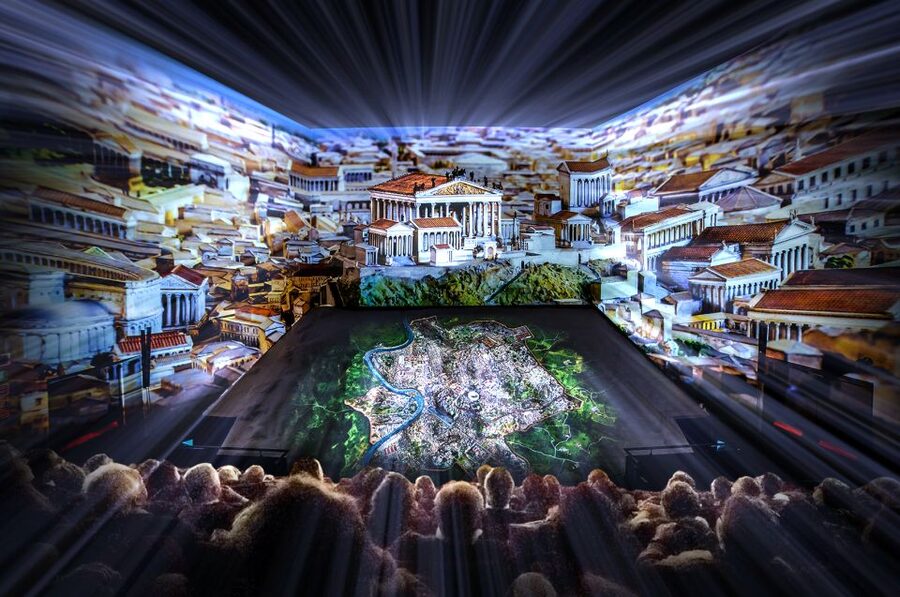
When you enter, you’re stepping into a purpose-built theater experience. The show uses multi-projection across the walls and ceilings, so the visuals don’t just sit on a screen. Instead, the whole space feels like it’s participating.
On the floor, there’s a large scale model of the city that lights up to show how Rome evolved. That combo is important. Pure animation can feel abstract. A model gives you spatial grounding, so you can later connect the dots when you’re standing among ruins or looking at a church that sits over older foundations.
The narrative also aims to keep you moving through time and space. The visuals create an illusion of flying over the city through the centuries, and they also place you within monuments, palaces, churches, and squares. That’s the key to why this works as orientation: you’re not just memorizing dates. You’re watching how the city’s layout and identity are shaped.
From a comfort standpoint, this is also a good plan if you want something structured. You sit, you follow the story, and then you can go outside with a mental map that’s already labeled.
The 27-minute Rome timeline, and how to watch it
The main multimedia story covers Rome’s 2700-year history in 27 minutes. That pacing is fast, but that’s the point. The show is designed to be digestible, not a slow lecture.
Here’s how I’d watch it to get the most value:
- Treat it like a checklist, not a movie. You’re trying to catch themes: what changes, what stays, and what layers on top of what.
- Pay attention to the places you’ll likely see outside. If your itinerary includes the Colosseum area, forums, or Vatican-area churches, the show helps you connect “what it was” to “what it is now.”
- Use the audio guide actively. You have an included audio guide in 9 languages, so match the narration to the visuals. When the story names places or eras, it’s your cue to mentally bookmark them.
The show’s biggest strength is how it explains overlap. Rome isn’t one city frozen in time. It’s many cities stacked together, with later generations building on earlier ones. When you see that sequence visually, ruins start to read like architecture with a backstory, not just scattered stone.
If you’re with kids, this kind of structured visual storytelling is often a win. One family-style note from the experience is that it can be enjoyable for a wide age range, though it may not be the best fit for the smallest kids who struggle to sit through a theater-style format.
Also on the Rome guest list:
- Vatican: Museums & Sistine Chapel Entrance Ticket
★ 4.5 · 144,003 reviews - Vatican Museums & Sistine Chapel Tour with Optional Basilica
★ 4.3 · 67,413 reviews - Colosseum, Roman Forum & Palatine Guided Tour
★ 4.7 · 63,148 reviews - Vatican Museums, Sistine Chapel & St Peter’s Basilica Guided Tour
★ 4.5 · 39,149 reviews
The four interactive models: where to focus your attention
After the main projection sequence, you can explore four large interactive models. This is where the show becomes more practical, because you’re linking the story to specific, named masterpieces.
The models cover:
- the Imperial Forum
- the Augustus Forum
- the Mausoleum of Adrian
- San Peter Basilica
Each model is designed to help you understand what you’re seeing in the real city. Even if you don’t have a deep background in Roman history, the models give you a reference point you can carry outside. It’s also a nice change of pace after sitting for the main show.
How to get value here: don’t rush. Spend a few extra minutes on the places that match your outdoor plans. For example, if you’re heading toward the Forum area or the Vatican later, these models can make your walking route feel more meaningful.
One small practical suggestion: if you find yourself wandering around without a clear path, follow the order the space implies. It’s easy to lose a few minutes when you’re moving between multiple models, and time adds up when you’re sightseeing all day.
Best timing in your Rome day: start early, then walk with context
If you’re wondering when to fit Welcome To Rome, my advice is simple: do it early in your visit. This show is at its best when it becomes your reference point for the rest of your trip.
A lot of people use it as a first-day reset, especially if they plan to visit major attractions like the Colosseum area and the forums soon after. The show gives you a timeline so the monuments you see later feel less like separate stops and more like the same story continuing.
That said, it still works later. If you already walked around for a day and felt a bit lost, this show can help you connect what you saw. You’ll often leave with clearer mental links between ruins, churches, and the modern street grid.
Another timing advantage is comfort. Rome weather can push sightseeing into the early morning or late afternoon. A theater-based show gives you an indoor option at midday, when the sun is doing its best work to make everyone tired.
Who should book this Rome multimedia show, and who may not
This is a strong pick for:
- first-timers who want a fast overview of Roman history and city development
- people who prefer structured storytelling over freeform museum wandering
- families looking for a seated activity that can still feel engaging
- anyone who has limited time and wants their money to buy context, not just another photo stop
It may not be the best fit if:
- you want mostly outdoor walking, hands-on archaeology, or guided exploration of multiple sites
- you dislike theater-style storytelling and prefer to learn through reading or signage only
- you’re traveling with very young children who may struggle with sitting for the length of the projection
The good news is that the show is accessible and built to include visitors who need accessibility accommodations, and the projections and interactive models are described as accessible to people with disabilities. It’s also wheelchair accessible.
Price and value: is about $21 per person fair?
At about $21 per person, Welcome To Rome isn’t a bargain ticket, especially if you’re comparing it to free street-level sightseeing. But value in Rome isn’t only about price. It’s about what that money saves you in confusion and wasted time.
Here’s why it can feel like good value:
- You get a city-wide timeline that helps you understand what you’ll see outside.
- The main show is only about 27 minutes, and you can pair it with the interactive models for a compact visit.
- It’s a weather-friendly break with clear start times inside your day.
- You can use audio in 9 languages, so the experience stays informative without needing a live guide.
There is one fair caution: some people think the ticket price is a bit high for the length. If you’re the type who hates paying for any indoor show, you may feel that tension. But if you treat it as an orientation tool for the rest of your sightseeing, the cost can feel more like an investment.
Also, the ability to start during opening hours and the show running continuously helps you avoid schedule stress. When logistics go smoothly, you tend to feel better about what you paid.
Should you book Welcome To Rome?
Book Welcome To Rome if you want Rome to start making sense quickly. It’s especially useful on your first trip or right after you’ve seen a few major monuments and realize you need the bigger timeline to connect them.
Skip it only if your travel style is strongly outdoors-focused, or if you know you’ll resent a theater-style presentation no matter what the visuals look like. Otherwise, this is a smart way to spend an hour in Rome: you sit down, you get the city’s “how it became what you see today” story, and then you walk outside with a clearer map in your head.
FAQ
Where is Welcome To Rome located?
The entrance is on Corso Vittorio Emanuele II, 203, Rome. It is a few hundred meters from Piazza Navona.
How long is the multimedia show?
The history timeline is presented in 27 minutes.
What interactive models can I see?
You can view interactive models of the Imperial Forum, the Augustus Forum, the Mausoleum of Adrian, and San Peter Basilica.
Do I get an audio guide?
Yes. An audio guide is included and it is available in 9 languages: Spanish, Chinese, English, French, German, Italian, Japanese, Russian, and Croatian.
Can I start at any time during opening hours?
Yes. You can start at any time during opening hours since the show runs continuously. The last show starts 1 hour before closing time.
Is it wheelchair accessible?
Yes. The venue is wheelchair accessible, and the projections and interactive exhibits are described as accessible to people with disabilities.
How much does it cost?
The price is listed as $21 per person.
Just introduced: the newest Rome write-ups
- Rome Fiumicino Airport Transfer in Luxury Private Transportation★ 4.5 · 339 reviews
- Vatican: Pope Francis Tomb and Papal Basilicas Tour★ 4.7 · 340 reviews
- From Rome: Sorrento, Positano & Amalfi Coast Day Trip★ 4.5 · 340 reviews
- Rome: Guided Colosseum Underground Tour★ 4.8 · 342 reviews
- Colosseum Arena Floor, Roman Forum & Palatine Hill Guided Group Tour★ 5.0 · 343 reviews
- Rome: Small Group Rome’s Dark Side – Ghosts & Legends Tour★ 4.9 · 343 reviews
- Rome: City Highlights Electric Bike Tour★ 4.9 · 343 reviews
Rome Tours, compared.
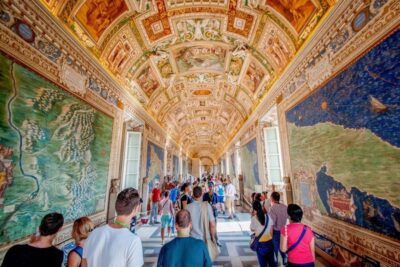
Vatican: Museums & Sistine Chapel Entrance Ticket
Read our review →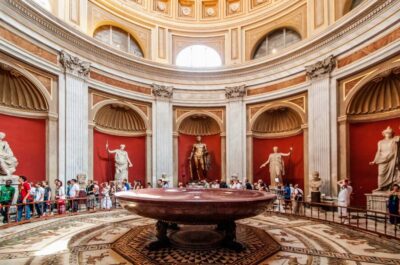
Vatican Museums & Sistine Chapel Tour with Optional Basilica
Read our review →
Colosseum, Roman Forum & Palatine Guided Tour
Read our review →
Vatican Museums, Sistine Chapel & St Peter’s Basilica Guided Tour
Read our review →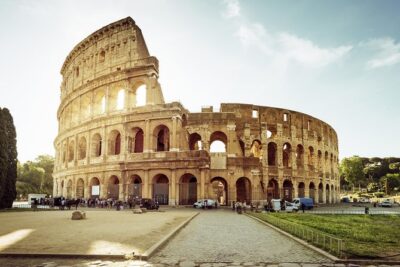
Colosseum, Palatine Hill and Roman Forum Guided Tour
Read our review →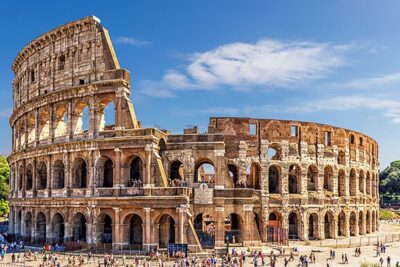
Guided Tour of Colosseum, Roman Forum & Palatine Hill
Read our review →
Colosseum & Forum with Audio Guide App -Optional Arena
Read our review →