
Reviewed · PASTA COOKING CLASSES
The Secrets to Learn Fresh Pasta and Tiramisù in a Glam Home
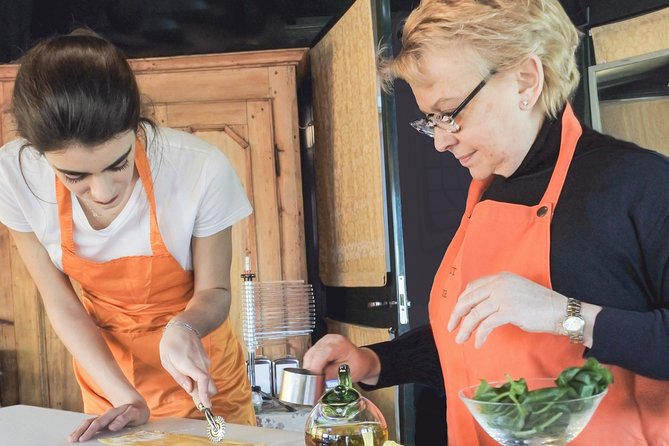
Fresh pasta is more fun than you expect. In this Milan class you learn the process hands-on, then eat what you make in a real home setting inside an elegant palace. I love the family recipe focus and the chance to work with pasta-making techniques you can repeat at home. One possible drawback: the class is hands-on and communal, so the format is not for everyone who prefers very individual portions the entire time.
Your group stays small, up to 21 people, and the lesson is in English (with other languages possible depending on the teacher). If you get lucky, you might end up with a familiar face like Laura, Marco, or Katerina, and the schedule can even involve Grandma Bruna, a hands-on tradition passed down through her family. Either way, it is set in a central spot near the Coni Zugna, Via Foppa stop, so you can fit it into a day of sightseeing without stress.
In This Review
- Key things to know before you go
- A palace-home kitchen in Milan: what makes it different
- Getting there fast: locating V. Giuseppe Dezza 47
- The 3-hour flow: from dough to tiramisu
- Step 1: Fresh tagliatelle with traditional tomato sauce
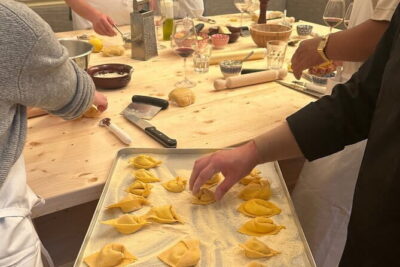
- Step 2: Ravioli with a 1 star Michelin filling
- Step 3: Traditional tiramisù, classic and creamy
- What you actually learn, not just what you eat
- Limoncello and wine: the part you remember later
- Teachers and group vibe: English instruction that still feels personal
- Price and value: is $90.70 worth it?
- Who should book this class (and who might skip)
- Should you book it?
- FAQ
- Is this cooking class taught in English?
- What dishes will I make during the class?
- How long is the experience?
- Where do I meet for the class?
- How big is the group?
- Do I need to bring anything?
- Can I cancel and get a refund?
Key things to know before you go
- A palace-home kitchen, not a classroom: You cook in a dedicated space inside an elegant Palladian palace setting.
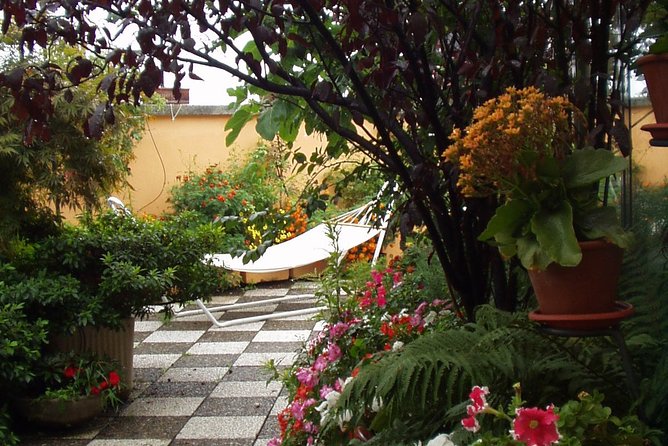
- Real lemon limoncello: You sample homemade limoncello made from fresh lemons grown in the garden.
- A menu with serious ingredients: Fresh tagliatelle with tomato sauce and Parmigiano Reggiano, plus ravioli with a 1 star Michelin filling.
- Tiramisu the traditional way: You learn the classic method behind the creamy texture everyone wants.
- English instruction with options: The class is taught in English, and other languages may be available depending on the teacher.
- Wine fits the meal timing: Wine is served during the tasting at the end, when you sit down with what you made.
A palace-home kitchen in Milan: what makes it different
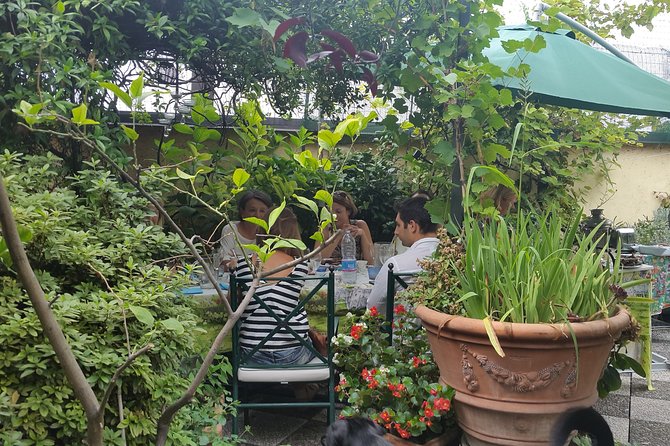
This is not a cookie-cutter “pasta for tourists” workshop. You are stepping into a home kitchen inside a historic palace-like setting, with antique furniture and art that make the whole thing feel special without turning it into a show. It helps that the host treats cooking like a family practice, not a performance.
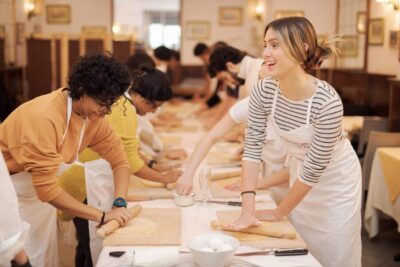
The core payoff is simple: you make fresh tagliatelle, ravioli, and tiramisu from scratch, guided step by step. The class frames pasta making as a skill you can actually own. You learn the feel of the dough, how to shape, how to portion, and how to keep your dough workable during the process. That hands-on approach is why so many people leave with the confidence to cook the dishes again later, instead of just snapping photos and moving on.
The family angle matters too. The experience is designed around recipes passed down through the generations, and if Grandma Bruna is not available, she is replaced by her daughter or grandchildren. If you care about that specific “nonnas” style of teaching, keep that in mind when you plan.
More pasta made by your own hands:

Getting there fast: locating V. Giuseppe Dezza 47
You meet at V. Giuseppe Dezza 47, 20144 Milano. The instructions also reference Intercome 47, so if you are arriving on foot or by taxi, follow the address exactly as provided.
The good news is that this is close to public transit. The blue line is about 20 meters from Coni Zugna – Via Foppa, which makes it easy to combine with a museum afternoon or a walk through central Milan. That distance matters, because after a day of sightseeing, you do not want to fight with confusing directions or long transfers.
Also, plan to arrive a few minutes early. You are welcomed personally at the entrance, and a quick, calm arrival helps everyone get moving.
The 3-hour flow: from dough to tiramisu
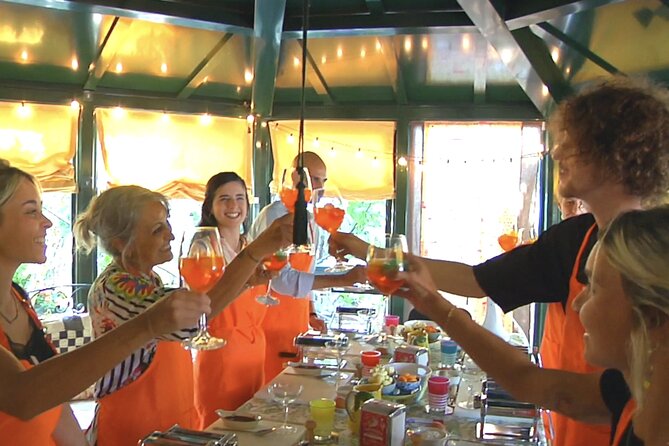
This runs about 3 hours, and the experience ends back at the meeting point. Even though you are in one location, the time feels structured because the class cycles through a few big “wins,” each one building on the last.
Step 1: Fresh tagliatelle with traditional tomato sauce
You start with the dough and shape for fresh tagliatelle, then you pair it with a traditional tomato sauce and Parmigiano Reggiano. This is a great first dish choice because it teaches fundamentals without overwhelming you.
Here is the practical value: tagliatelle is forgiving enough to learn, but specific enough to teach you accuracy. You see how thickness affects texture, and you get a sense of how to time the cooking so the pasta tastes like fresh pasta, not just “pasta that happened today.”
Introductions we still owe you around Milan
- Milan: Cathedral and Duomo’s Terraces Entrance Ticket
★ 4.6 · 61,054 reviews - Milan: Da Vinci’s Last Supper Guided Tour
★ 4.7 · 10,143 reviews - Milan: Science and Technology Leonardo da Vinci Museum Entry
★ 4.5 · 7,169 reviews - Milan: City Sightseeing Hop-On Hop-Off Bus with Audio Guide
★ 4.0 · 6,256 reviews
Step 2: Ravioli with a 1 star Michelin filling
Next comes ravioli, filled with a special mixture described as coming from a 1 star Michelin chef. Then you top with more Parmigiano Reggiano.
Why this part is worth the money: ravioli is where most people’s home pasta dreams break. You might have eaten amazing ravioli in Italy, but doing it yourself forces you to learn the shaping and sealing details. When it goes well, it is instant satisfaction. When it does not, you get corrections in real time, which is exactly how you learn.
Step 3: Traditional tiramisù, classic and creamy
Finally, you do traditional tiramisù. The class focuses on the secrets that make the dessert taste like the tiramisù you have been chasing all trip.
Tiramisu can be finicky, mostly because people overthink it or rush it. A guided class helps you get the balance right, so the final dessert lands creamy and cohesive instead of sloppy or stiff.
What you actually learn, not just what you eat
The best parts of the class are the techniques, the small corrections, and the “do this, not that” moments. In the strongest sessions, hosts use humor and keep things moving, so you feel like you are learning with a family member, not sitting in a lecture.
You also get to work at your own comfort level. If you have never made fresh pasta before, you can still keep up, especially when the instructor breaks the process into clear steps. Several people specifically mention that the teachers were patient and organized, even for first-timers. That matters, because pasta dough punishes impatience. You need calm hands and accurate timing.
If you are traveling with kids or teens, this is one of those activities that can work well because it is active. People have described teens jumping in and enjoying the process, which is not common for every Milan activity.
One more practical benefit: you learn how the ingredients behave together. Tomato, Parmigiano Reggiano, and pasta dough each have their own “logic.” Once you see the logic in action, you can recreate it later without guessing.
Limoncello and wine: the part you remember later
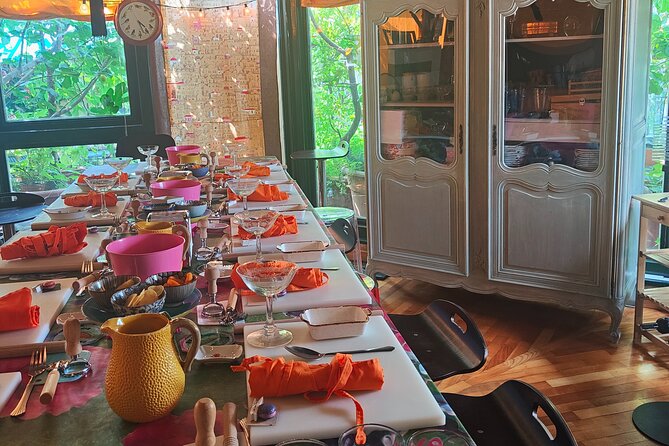
A standout detail is the homemade limoncello. You sample it made from fresh lemons in the garden. Even if you think you already know limoncello, tasting it in this setting makes it feel like a real ritual, not a tourist sip.
Then comes the meal. The class ends with a communal tasting where you eat the pasta and tiramisù you made. Wine is served during the tasting moment at the end, so you typically do not start the class with it. That timing keeps the focus on cooking, and it gives you that final reward once you sit down.
There is also a bit of a party feeling built in. People describe laughter and a friendly group vibe, and the meal style helps you connect with other people in the class.
Teachers and group vibe: English instruction that still feels personal
Instruction is in English. The experience also states that other languages may be available on request, and it lists several possibilities depending on the teacher, including French, German, Spanish, Ukrainian, Russian, Hebrew, and Persian.
Teacher assignment usually comes by email about 12 hours in advance with the name of the instructor. If you strongly want Grandma Bruna specifically, the experience notes that they cannot guarantee that detail 12 hours ahead.
In practice, the class quality comes down to your host. Some sessions feature instructors like Marco or Laura, and others highlight teachers such as Katerina, Paulo, and Fred. The consistent theme across the best-run classes is clear guidance, lots of step-by-step help, and a relaxed approach that keeps strangers from feeling like strangers by the end.
Group size also plays a role. With a max of 21 travelers, it is large enough to feel social, but small enough that you are not lost.
Price and value: is $90.70 worth it?
At $90.70 per person for about 3 hours, this is not the cheapest thing you can do in Milan. But it stacks value in ways that add up.
Here is what you are paying for, in plain terms:
- Hands-on instruction in making pasta and ravioli from scratch, plus tiramisù.
- Premium ingredients, including Parmigiano Reggiano and a ravioli filling linked to a 1 star Michelin source.
- A complete end-of-class meal that includes what you made.
- The special touch of garden lemons turned into homemade limoncello.
- A small-group feel, max 21, plus instruction in English.
If you compare it to doing a fancy dinner only, this feels like better “memory value.” You leave with edible souvenirs and a skill set. If you compare it to generic cooking classes that focus mostly on watching, the hands-on format is the difference.
One consideration on value: the class is designed around communal cooking and sharing at the end. That means the exact hands-on approach is part of the experience design. If you are very sensitive about hygiene style, you may want to ask questions in advance about how portions are handled.
Who should book this class (and who might skip)
This class fits best if you want more than a meal. You should book it if you:
- want to learn fresh pasta and tiramisù techniques you can repeat at home
- like active, hands-on classes with guided steps
- are excited by Italian food traditions taught in an actual home setting
It may be less ideal if you:
- prefer strictly individual food handling and portioning
- get anxious in kitchens where multiple people cook alongside each other
If you are traveling solo, you still get a lot out of it because the group format naturally fills the gaps. If you are traveling with friends or family, it can become a shared win, especially because everyone ends up eating the same dishes together.
Should you book it?
Yes, I think you should book this if your goal is to learn the real craft behind fresh pasta and classic tiramisù, not just check an activity off your list. The combination of family-recipe teaching, a menu that includes ravioli with a 1 star Michelin filling, and the ending with homemade limoncello and a shared meal makes it feel like a full experience for the time.
Just go in with the right expectations: this is a hands-on home-kitchen class, and the communal style is part of the charm. If that fits your comfort level, you are likely to leave with a new skill and a strong Milan memory.
FAQ
Is this cooking class taught in English?
Yes. The class is held in English. The experience also notes that other languages may be available depending on the teacher and that multiple languages are possible upon request.
What dishes will I make during the class?
You will prepare fresh tagliatelle with tomato sauce and Parmigiano Reggiano, ravioli with a special 1 star Michelin chef filling, and traditional tiramisù.
How long is the experience?
It lasts about 3 hours.
Where do I meet for the class?
You meet at V. Giuseppe Dezza, 47, 20144 Milano MI, Italy. The activity ends back at the same meeting point.
How big is the group?
The class has a maximum of 21 travelers.
Do I need to bring anything?
The information provided does not list what to bring, so you will want to rely on the instructions you receive at booking. The class provides a mobile ticket.
Can I cancel and get a refund?
Yes. You can cancel for a full refund up to 24 hours in advance. If you cancel less than 24 hours before the start time, the amount paid is not refunded.
Just introduced: the newest Milan write-ups
- Milan Super Saver: Skip-the-line Duomo and Rooftop Tour★ 4.5 · 347 reviews
- Milan: Best of City Walking Tour with Last Supper Tickets★ 4.7 · 359 reviews
- Milan: San Siro Stadium and Museum Self-Guided Tour★ 4.3 · 362 reviews
- Milan: Cathedral and Terraces Guided Tour with Tickets★ 4.8 · 362 reviews
- Express Tour of the Last Supper in Milan I Small Group of Max 6★ 5.0 · 371 reviews
- Venice Day Trip from Milan with Guided City Tour★ 4.0 · 383 reviews
- La Scala Theatre and Museum Tour in Milan With Private Guide★ 3.5 · 384 reviews
Pasta Cooking Classes, compared.

Florence Pizza or Pasta Class with Gelato Making at a Tuscan Farm
Read our review →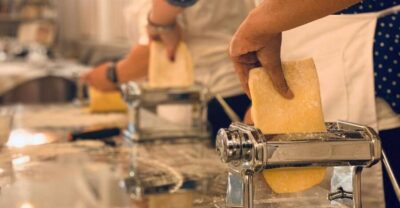
Pasta & Tiramisu Cooking Class with Unlimited Wine
Read our review →
Pasta & Tiramisu Class with Fine Wine by the Vatican
Read our review →
Pasta Making Class with Wine, Limoncello, and Dessert
Read our review →
Fettuccine Pasta Cooking Class in Rome’s City Center
Read our review →Browse the lists this tour appears in