
Reviewed · VENICE TOURS
Tour of The Real Hidden Venice
Venice gets quieter when you walk. This two-hour small-group stroll strings together local neighborhoods, art stops, and major sights like Rialto Bridge, with stories about how the city actually works. I love the max 15-person group size, which makes it easier to ask questions without shouting over canals. I also like that it pairs famous Venice with lesser-known places like Campo San Geremia and the old gondola factory areas. One consideration: it is still a lot of walking, so comfy shoes matter, and you will want to plan extra time if you are coming in on foot from farther away.
Starting in the neighborhood rather than the postcard core is the whole point. You begin at Campo San Geremia in Cannaregio, then move toward the Jewish Quarter, including a church stop known for Tintoretto paintings and an architectural nickname people remember. From there, you work your way toward Rialto Bridge for the big finale.
If you want the quiet parts plus the well-known monuments, this tour has a good balance. Just note the tour includes a church and church surroundings, but the Madonna dell’Orto ticket is not included, so you may need to budget for that stop.
In This Review
- Key highlights worth your time
- A Venice walking tour that skips the usual crowd math
- Campo San Geremia to the Jewish Quarter, where the city slows down
- Madonna dell’Orto and the Camel House facade you will not forget
- Squero dei Muti and Ponte Chiodo, the Republic-era bones of Venice
- Rialto Bridge and the trade heart of La Serenissima
- How the small-group format changes what you notice
- Timing, effort level, and what to wear
- Price, inclusions, and real value for 47 dollars
- Should you book The Real Hidden Venice Tour?
- FAQ
- How long is the Real Hidden Venice tour?
- Where does the tour start and where does it end?
- What is included in the tour price?
- Is there an admission fee during the tour?
- What group size should I expect?
- What language is the tour offered in?
- Do I need to pay any Venice access fee?
- Is pickup available from my hotel?
- FAQ
- What if the weather is bad?
- Can I cancel for a full refund?
Key highlights worth your time
- Campo San Geremia start: a calm square in Cannaregio with an unusual, comic story.
- Ghetto Ebraico focus: cross the foot bridges into the Jewish Quarter, and learn how the word ghetto came to be used.
- Madonna dell’Orto stop: see what is described as the original floor of Venice in front of the church, plus Tintoretto paintings inside.
- Camel House at Palazzo Mastelli: a millenary palace with a facade nickname, tied to a legend.
- Squero dei Muti gondola factory: watch for the old gondolas factory stop as you wind toward Rialto.
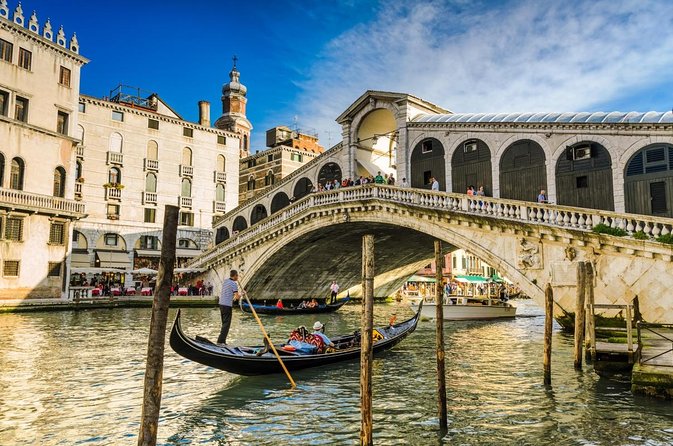
- Rialto Bridge finale with context: hear why the first bridge on the Grand Canal matters, then connect it to trade at Mercato di Rialto.
A Venice walking tour that skips the usual crowd math
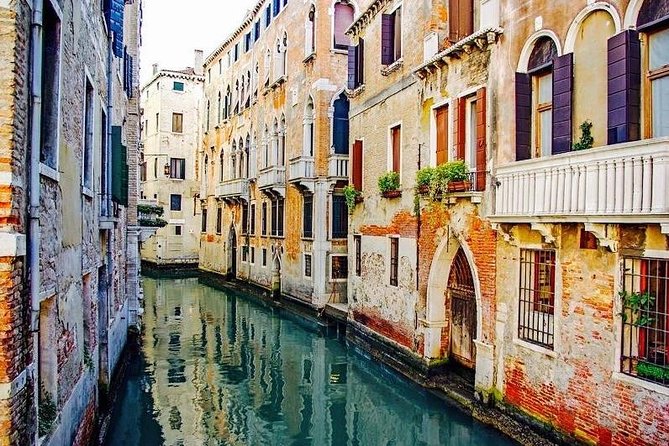
Venice is easy to do wrong. You can rush from landmark to landmark, take photos, and still miss how the city feels on an ordinary day. This tour leans the other way. You start in Cannaregio, a quieter pocket, and you move through the city like locals do, at walking speed, over small bridges, through the kind of streets where you notice water access, storefronts, and everyday routines.
The other smart choice is how it uses a small group. With a maximum of 15 people, the guide can actually point, pause, and explain without the tour turning into a human conga line. That matters because Venice is made of tiny details. A facade nickname like Palazzo Mastelli del Cammello, or a bridge like Ponte Chiodo, only lands if you understand why people cared back then and why it still matters now.
You also get a clean loop. It ends near Rialto Bridge, so you finish where you will likely want to keep exploring. You do not end on the far side of the city where you need to cross half of Venice again just to get back to your evening plans.
Introductions we still owe you around Venice


Campo San Geremia to the Jewish Quarter, where the city slows down
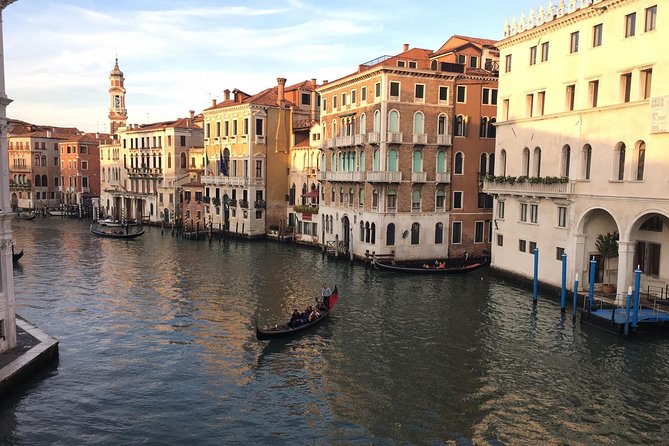
You begin at Campo San Geremia, in Cannaregio. This square is described as picturesque and tucked away, which is exactly what you want in a city where the main routes can feel like a timed ticket line. The guide tells the funny history of this campo, and that alone is a nice reminder that Venice did not always run on official plaques and museum scripts. A square in a residential district can have personality, politics, and odd stories, just like a lively neighborhood at home.
Then you cross tranquil foot bridges into the Ghetto Ebraico, the Jewish Quarter. This is not just a geography stop. You get context for how the word ghetto originated, tied to what happened here historically. The key is that you hear it while moving through the area, not as a lecture you absorb and forget.
The tour also makes time to explore the Jewish Quarter for about 15 minutes. That is enough to notice street scale, building fronts, and the way people use the space without rushing you through every corner. If you like to take photos, this is one of the better parts of the tour for a calmer shot, away from the thick crowds you see nearer the big canals.
Madonna dell’Orto and the Camel House facade you will not forget
The next shift is art and architecture, with two stops that are easy to miss if you travel alone.
First, you reach Chiesa della Madonna dell’Orto. The tour notes that the church is known for Tintoretto paintings, and it also mentions the original floor of Venice in front of the church. Even if you only spend a few minutes there, the contrast helps. Venice is famous for surface beauty, but the city is also a layers-and-history place. Seeing something described as an original floor element gives you a concrete sense that the ground is not just decoration.
One practical detail: this church admission is not included. So if you plan to go inside, you will want to know you may pay an additional ticket at the stop. The good news is that the tour structure gives you time to decide and still keep moving.
After that, you get Palazzo Mastelli del Cammello, which is nicknamed Camel House. You learn the legend tied to the palace and its facade. The value here is not only the story itself, it is what it teaches you about Venice. A nickname like this usually means locals had a reason to remember a detail, and the detail often connects to daily life, superstition, or old power games. When you hear a legend attached to a building like this, you start reading Venice differently.
Squero dei Muti and Ponte Chiodo, the Republic-era bones of Venice
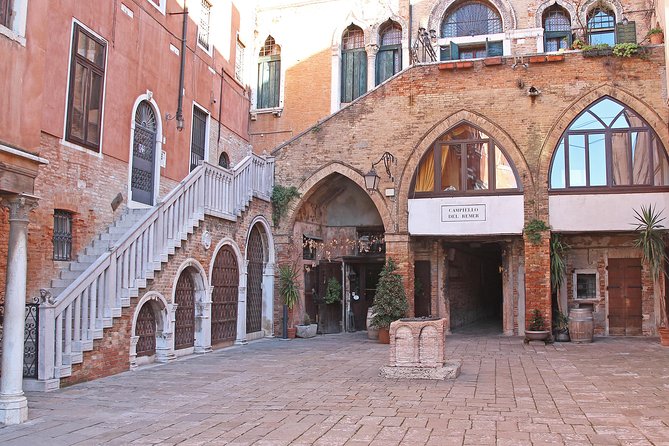
Now the tour starts to feel like a guided walk through working Venice, not just sightseeing.
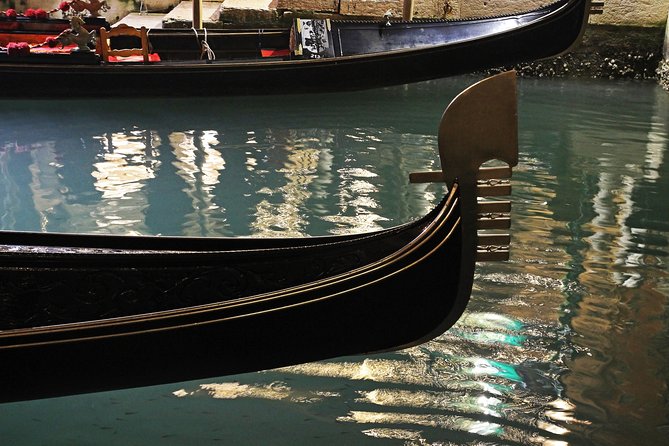
You stop at Squero dei Muti, described as an old gondolas factory. Venice still runs on water, and gondolas are not just a tourist image. This is where you start understanding the crafts and the infrastructure behind the famous scenes. Even if you only get a brief look, it helps you connect the Grand Canal spectacle to the quieter systems around it.
Then you hit Ponte Chiodo. This is described as the original bridge of the Venetian Republic. That is a big claim, and you do not need to get lost in dates to appreciate the meaning. When a bridge is described as original, it tells you the city was built and rebuilt in the real world, over time, in response to trade and traffic. Standing on a historic crossing, even briefly, is a fast way to understand why Venice is so bridge-driven compared with other cities.
Both of these stops are short, about five minutes each. That can be perfect for the right kind of traveler. If you like a walking tour that keeps momentum, you will appreciate the structure. If you want a lot of time inside each site, you might wish for longer breaks, especially in bad weather.
Also on the Venice guest list:
- Venice: Grand Canal by Gondola with Live Commentary
★ 4.1 · 13,681 reviews - Venice: La Fenice Opera House Entry Ticket with Audio Guide
★ 4.6 · 11,742 reviews - Doge’s Palace & St. Mark’s Basilica with Terrace Access Tour
★ 4.7 · 10,697 reviews - Venice: Burano, Torcello & Murano Boat Tour w/Glassblowing
★ 4.4 · 10,245 reviews
Rialto Bridge and the trade heart of La Serenissima
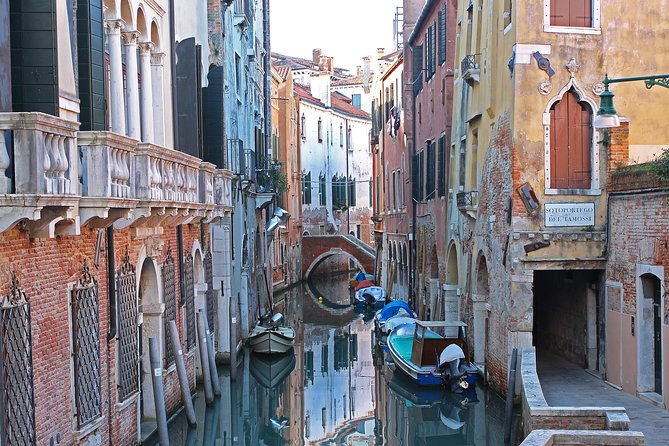
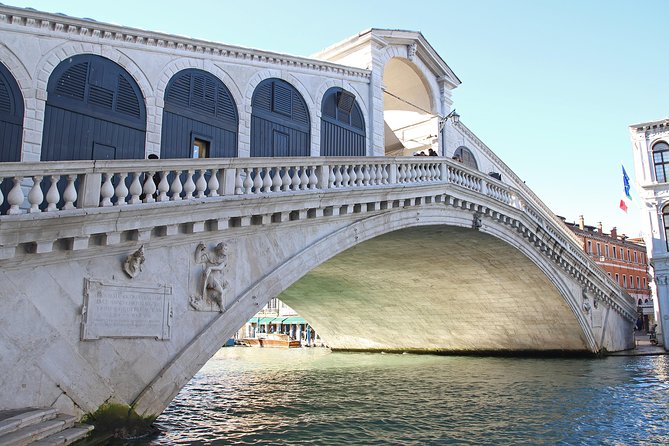
The final stretch is where many tours end, but here you reach it with better context.
You arrive at Ponte di Rialto, and you learn stories around the 16th-century landmark. The tour also highlights the first bridge built on the Grand Canal and explains why it became a magnet for legends and traditions. This matters because Rialto can feel like a photo wall if you do not understand what it replaced and why it mattered.
From there, you move to Campo San Giacomo di Rialto, described as the first lived island of Venice. That is a fascinating pivot. Venice often gets talked about as if it appeared fully formed, but this is a reminder that the city grew by adding islands and landings, tied to where people could live and work near water.
Next is Mercato di Rialto, the old trade center of the Venetian Republic, known as La Serenissima. This stop is about more than shopping vibes. It is about power and movement. Venice was a trading machine, and the market areas are where you can feel the city’s old purpose even if the stalls change over time.
You end near Rialto Bridge in the heart of Venice. That is a smart finish because it gives you options. You can keep walking along the canal edges, switch to a vaporetto plan, or aim for a restaurant nearby without having to travel back across neighborhoods you just learned.
How the small-group format changes what you notice
With a maximum of 15 travelers, the tour has room for small moments. You can ask a question without waiting for a pause that might never come in a larger group. Guides on this kind of tour tend to focus on how Venice works day to day, not just what it used to be.
The names you might see connected to excellent guiding include Nico, Sebastiano, Sebastian, Giovanni, Mateo, Thomas, and Georgia. The common thread in the guidance style is practical storytelling. You get answers to the questions you naturally have when you are walking, like how the city functions with water, what daily life looks like away from the main squares, and why certain places became important.
If you are traveling with family, this format also tends to be a good fit. Kids and teens often do better when the guide can slow down and interact. One more plus: the tour is offered in English, so you can follow the details without needing to guess based on gestures.
Timing, effort level, and what to wear
This is a two-hour walking tour, and you should treat it like a real walk, not a light stroll. The stops include bridges, short transfers on foot, and multiple brief pauses. You will also stand outside more than you sit inside.
The tour asks for a moderate physical fitness level. If you already know you handle long walking days fine, you should be comfortable. If you get tired quickly, bring a plan. You can pace yourself and ask the guide to repeat a detail if you missed it, but you should still prepare for steady movement.
My practical checklist:
- Wear shoes that handle uneven stone and slick spots near canal edges.
- Bring a light layer, Venice weather changes fast.
- If you sunburn easily, bring sunscreen even on cooler days.
- If you are sensitive to crowds, this is still central Venice at the end, so keep expectations realistic.
Also remember: it runs in good weather. If it is canceled due to weather, you will be offered another date or a full refund.
Price, inclusions, and real value for 47 dollars
The price listed is 47.16 USD per person for about two hours. For Venice, that is a fair value when you look at what is included.
You get:
- A local guide
- 2 hours walking tour
- Local taxes
- 1 city map per person
- A mobile ticket
- Pickup in front of Hotel Antiche Figure, with instructions to meet at that spot
You do not get:
- Hotel pickup and drop-off
- Admission for the Madonna dell’Orto church stop
So the money mostly buys your time with a guide who can connect multiple neighborhoods and explain what you are seeing as you go. That is where value shows up. A two-hour route that mixes quiet Cannaregio, the Jewish Quarter context, art stop cues, gondola craft hints, and a Rialto finale is not something most people naturally stitch together on their own during a short stay.
If you are tight on time, this is a good buy. If you already have a private driver plus you enjoy self-guided walking, you might question whether a guide is necessary. But even then, the guide is the key to understanding why specific places earn nicknames and why certain bridges and market areas matter.
Should you book The Real Hidden Venice Tour?
If you want a smarter first Venice walking day, I think this is a strong pick. It starts away from the densest tourist grid, then builds toward Rialto Bridge with context so you are not just ticking off sights. The maximum of 15 people makes the experience feel more personal, and the mix of Cannaregio, Ghetto Ebraico, Madonna dell’Orto, Camel House at Palazzo Mastelli del Cammello, Squero dei Muti, Ponte Chiodo, and Rialto helps you see Venice as a living city, not a theme park.
Book it if:
- You like history told through streets, not only through walls
- You want quieter Venice before the big crowds
- You plan to keep exploring after Rialto, so the ending location works for you
- You want a guide you can ask questions to
Skip or adjust if:
- You want lots of museum time, because the stops are brief
- You have mobility limits that make long approaches difficult, since the start point is in the Santa Lucia train station area and the tour includes steady walking
- You strongly prefer fully inclusive attractions, since the Madonna dell’Orto admission is not included
FAQ
How long is the Real Hidden Venice tour?
It is about 2 hours.
Where does the tour start and where does it end?
The tour starts in front of Hotel Antiche Figure in Santa Croce, near the Santa Lucia train station area. It ends near Rialto Bridge at Ponte de Rialto.
What is included in the tour price?
Included are a local guide, local taxes, a city map per person, and a 2-hour walking tour. You also receive a mobile ticket.
Is there an admission fee during the tour?
Admission ticket for the Chiesa della Madonna dell’Orto is not included. Other listed stops do not require admission.
What group size should I expect?
The group tour has a maximum of 15 travelers.
What language is the tour offered in?
The tour is offered in English.
Do I need to pay any Venice access fee?
On certain dates, some visitors staying outside Venice who are visiting for the day may be required to pay a €5 access fee. Details and exemptions are listed at https://cda.ve.it.
Is pickup available from my hotel?
Hotel pickup and drop-off are not included. The meeting point and pickup are in front of Hotel Antiche Figure, so you need to get yourself there.
FAQ
What if the weather is bad?
This experience requires good weather. If it is canceled due to poor weather, you will be offered a different date or a full refund.
Can I cancel for a full refund?
Yes, you can cancel up to 24 hours in advance for a full refund. If you cancel less than 24 hours before the start time, the amount you paid will not be refunded.
Just introduced: the newest Venice write-ups
- From Venice: Dolomites and Lake Braies Day Trip by Minivan★ 4.9 · 341 reviews
- Venice: Doge’s Palace, Bridge of Sighs, Prisons, Correr & Audioguides★ 4.1 · 345 reviews
- Venice: Opera Concert at Casanova Prisons in St. Mark Square★ 4.5 · 347 reviews
- Venice: St. Mark’s Basilica and Gondola Morning Tour★ 4.5 · 351 reviews
- From Venice: Prosecco Hills and Wine Tasting Tour★ 4.9 · 357 reviews
- Morning Venice Lagoon Cruise: Murano and Burano Islands★ 3.5 · 357 reviews
- Venice: Doge’s Palace Guided Tour with Optional Gondola Ride★ 4.6 · 362 reviews
Venice Tours, compared.
Grand Canal Gondola Ride with App Commentary
Read our review →
Boat Trip: Glimpse of Murano, Torcello & Burano Islands
Read our review →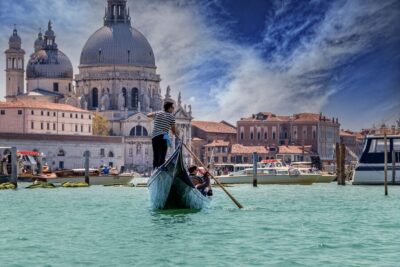
Grand Canal by Gondola with Live Commentary
Read our review →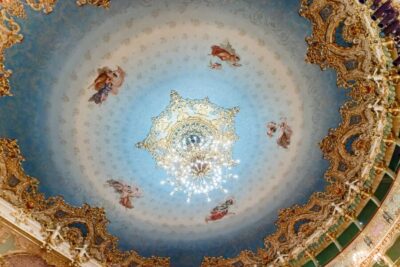
La Fenice Opera House Entry Ticket with Audio Guide
Read our review →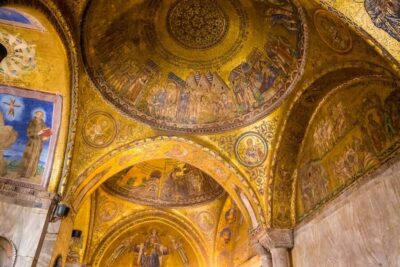
Doge’s Palace & St. Mark’s Basilica with Terrace Access Tour
Read our review →
Burano, Torcello & Murano Boat Tour w/Glassblowing
Read our review →
Murano and Burano Boat Tour with Glass Factory Visit
Read our review →Browse the lists this tour appears in