
Reviewed · MUSEUMS
Venice: Leonardo Da Vinci Museum Entrance Ticket
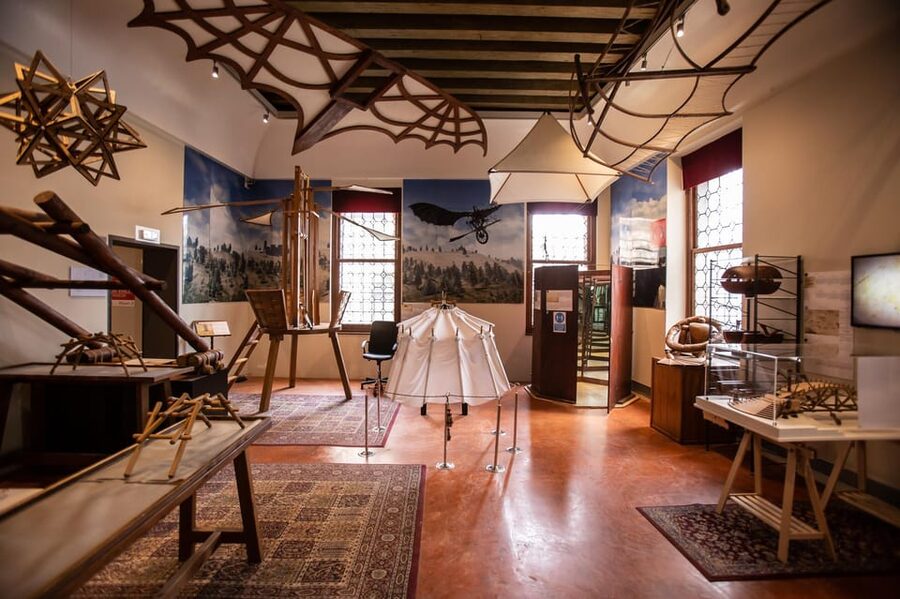
Da Vinci in Venice, hands-on and surprisingly fast. I love the working machines you can operate, and the museum’s four elements route gives the genius a clear structure. The only catch is it is small, so if you expect a huge, art-gallery sized collection, you will finish quicker than you thought.
You get entry at the Leonardo da Vinci Interactive Museum on Campo San Rocco, and you walk through inventions, backlit replicas, and anatomy studies at your own pace. It is a self-guided ticket, not a guided tour, so you’ll depend on the labels and multimedia screens to connect the dots.
In This Review
- Key highlights at a glance
- Before You Go: what your $10 ticket covers in Venice
- Finding the museum: Campo San Rocco, near Frari
- Four elements in four rooms: Earth, Water, Air, Fire
- Hands-on machines: the point is to make them work
- Anatomy and paintings: where Leonardo goes beyond engineering
- The mirror box and 360-degree room: a visual reset
- How long to plan, and when to go for a calmer visit
- Languages and how to get the most without a guide
- Ticket value: why $10 feels fair here
- Bookshop and souvenirs: spend with the 10% discount
- Who this museum suits best in Venice
- Good to know: photos, kids rules, and exhibit etiquette
- Should you book the Leonardo da Vinci Museum entrance ticket?
- FAQ
- Where is the entrance meeting point?
- How long should I plan to spend inside?
- Is this a guided tour?
- What languages are available inside the museum?
- Can I take photos inside?
- Are kids allowed, and is there a free age?
- When is the last time I can enter?
Key highlights at a glance
- Four-element layout that keeps the visit organized (Earth, Water, Air, Fire)
- Working models rebuilt from Leonardo’s designs, meant to be tried and tested
- Mirror box and 360-degree mirror room for a visual, fun pause
- Art meets science with backlit painting replicas and anatomy learning
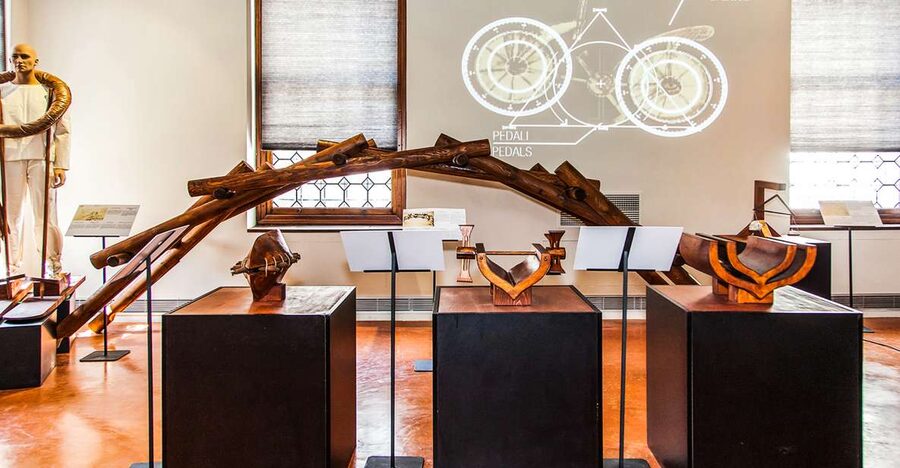
- Hands-on puzzles, including a wood bridge style challenge upstairs
- Shop value add with a 10 percent discount on Leonardo themed purchases
Before You Go: what your $10 ticket covers in Venice
This ticket is simple, which is good. You get admission to the Leonardo da Vinci Interactive Museum and the chance to take photos inside, but there is no guided tour included. That means you are free to move at your own speed, which is great when Venice is hot, crowded, or both.
Price-wise, think of the $10 ticket as paying for interaction, not for a blockbuster collection. The museum is compact, but the exhibits are hands-on and designed to make you figure things out with your hands and eyes, not just read about them.
Plan around 1 to 1.5 hours. Some visitors manage closer to 30 to 60 minutes, but if you want to try the puzzle stations and spend time in the mirror room, 90 minutes feels comfortable.
More museum halls from Turin to Palermo:



Finding the museum: Campo San Rocco, near Frari
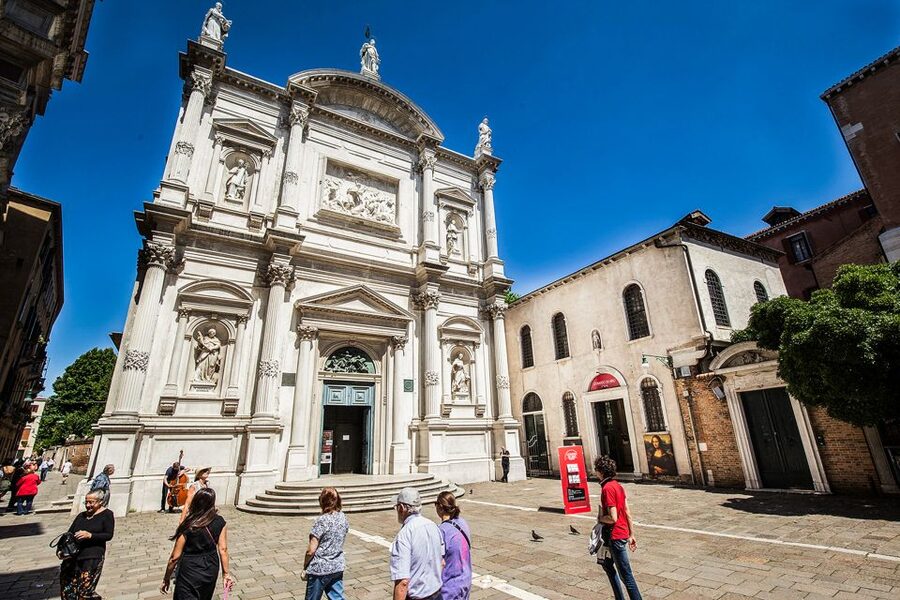
Your meeting point is the Leonardo da Vinci Interactive Museum at CAMPO SAN ROCCO, 3052 VENEZIA. Look for the building called Edificio Scolet ta di San Rocco, right in front of the Scuola Grande di San Rocco, behind the Church of the Frari.
This is one of the practical perks of the ticket. You are not meeting a person in a plaza somewhere. You go to the museum building, show your ticket to the reception staff, and then you enter.
If you are walking from the Frari area, go slow on turns and keep an eye out for the Scuola Grande di San Rocco landmark. Small streets can feel like a maze, so give yourself extra minutes the first time you do it.
Four elements in four rooms: Earth, Water, Air, Fire
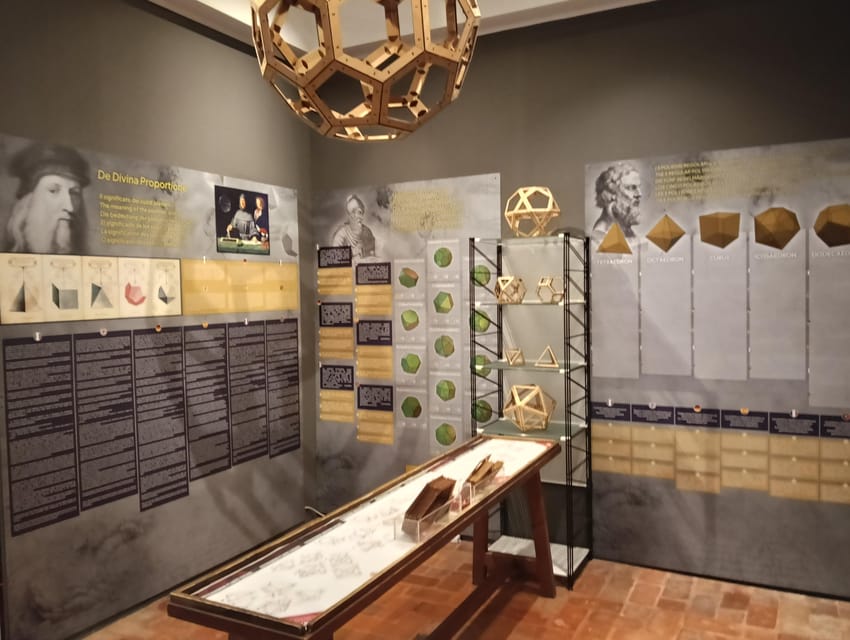
The museum organizes Leonardo through his big themes, with sections devoted to Earth, Water, Air, and Fire. Instead of one long hallway of random machines, you get a clear path that makes the inventions feel connected.
I like this layout because it helps your brain sort what you are seeing. You start to recognize patterns in Leonardo’s thinking, like systems, motion, and problem-solving, rather than treating each device as a one-off display.
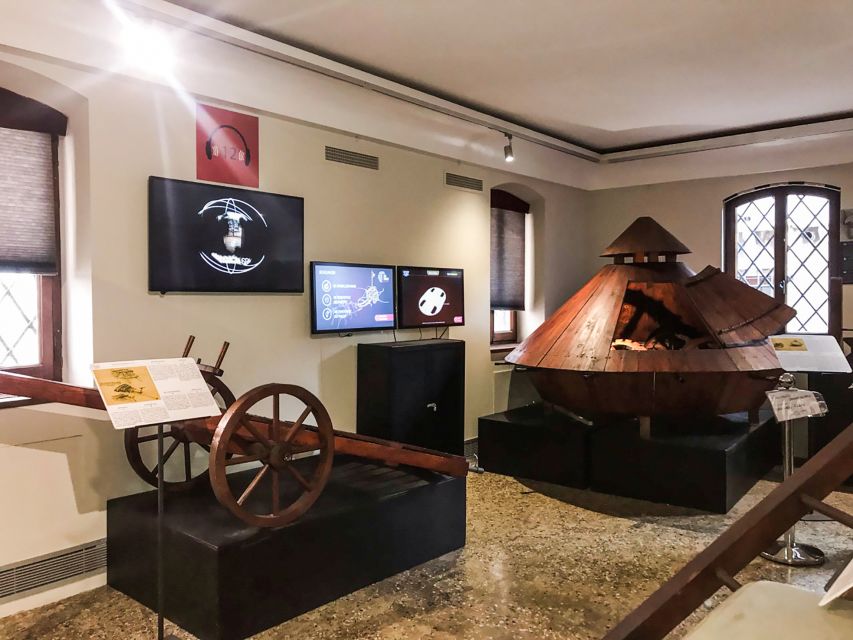
Expect faithful reproductions and built models. The museum recreates machines according to Leonardo’s original designs, with changes only when original proportions would require it. In other words, you are not seeing “inspired by” crafts, you are seeing the design logic and engineering ideas as closely as possible.
Hands-on machines: the point is to make them work
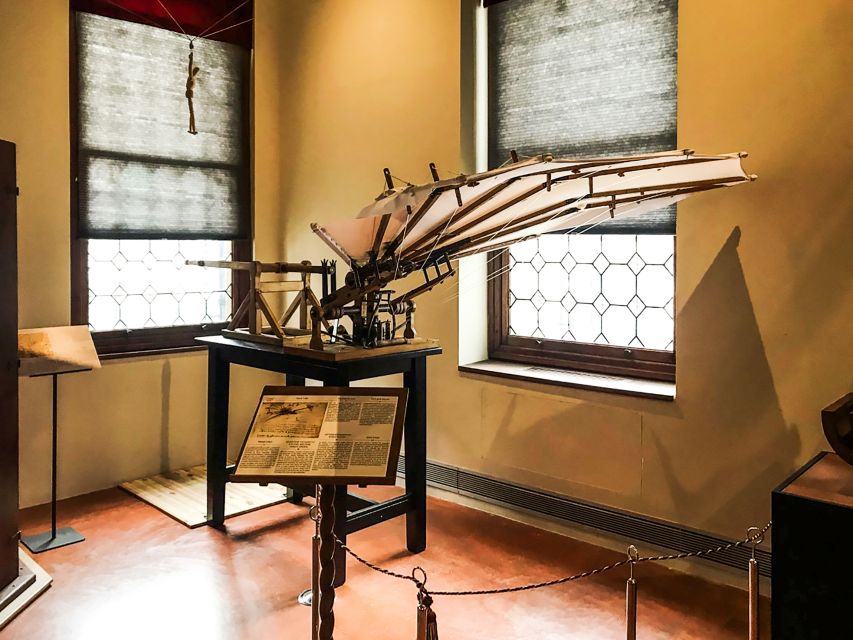
This museum is at its best when you treat it like a workshop. Many exhibits are set up so you can operate mechanisms and see cause-and-effect.
You will notice a lot of devices presented in a way that invites trial, including stations where you test how parts move together. A recurring highlight is how working models make Leonardo’s ideas feel modern, even though they come from centuries ago.
One specific favorite is the wood bridge puzzle upstairs. It is the kind of interactive challenge that works even if you are not a “museum person,” because it’s practical and visual. If you are there with kids or a second adult, bring them in, because two sets of hands solve it faster and with more fun.
Introductions we still owe you around Venice
- Venice: Doge’s Palace Reserved Entry Ticket
★ 4.6 · 42,716 reviews - Venice: Grand Canal Gondola Ride with App Commentary
★ 4.1 · 18,908 reviews - Boat Trip: Glimpse of Murano, Torcello & Burano Islands
★ 4.3 · 15,699 reviews - Venice: Grand Canal by Gondola with Live Commentary
★ 4.1 · 13,681 reviews
Anatomy and paintings: where Leonardo goes beyond engineering
Leonardo was not only an inventor. He also studied human anatomy and created art, and the museum reflects that split in a way that is easy to follow.
In addition to the inventions, you will find descriptions of his major medical studies. You’ll also see high-resolution, backlit replicas of his major paintings. This matters because it shows his curiosity was whole-body, not just mechanical.
The museum uses multimedia displays and labels in multiple languages, so you are not stuck decoding everything in one language only. If you like learning through both image and text, this section gives you two entry points.
The mirror box and 360-degree room: a visual reset
Not all the excitement here is mechanical. A standout moment for many visitors is the mirror box on the ground floor and the related 360-degree mirror room experience.
This is one of those exhibits that feels playful, but it also changes how you look at the space around you. You see reflections from different angles, and it is a nice break from the close-up “try this lever, turn this wheel” rhythm.
If you want a photo moment without crowds fighting over angles, this is a strong choice. Just give yourself a little time so you can move slowly through the different views rather than snapping and rushing.
How long to plan, and when to go for a calmer visit
Because the museum is small, timing matters. If you arrive late, you may miss a portion of the exhibits before you are ready to wrap up.
The last entrance is 1 hour before closing time, so plan to be inside with enough buffer to finish your favorite rooms. If you are the type who wants to try every interactive station, aim for the earlier side of the day.
Many visitors report it feels manageable at off-peak times, including times when the museum is not crowded. If you are sensitive to noise, heat, or standing in lines, picking a quieter entry time is a smart move.
Languages and how to get the most without a guide
You do not get a guide, so you need to read the exhibits the way the museum intends. The good news is the information is presented in Italian, English, French, German, Spanish, and Russian, supported by multimedia screens.
I suggest you start by scanning the signs for each section so you know what you are looking for. Once you do that, the machines stop feeling random and start feeling like Leonardo’s train of thought.
One practical tip that can save you time: keep an eye out for QR instructions early on, especially near the shop area. A visitor found the audio guide QR there and said it was not where they expected, so if you want the audio, check right away instead of later.
Ticket value: why $10 feels fair here
At about $10 per person, this museum is priced for access, not for luxury. In Venice, that can mean a lot, because many experiences cost far more and deliver far less.
Here’s why the value works. The exhibits are interactive, the building is compact, and the museum has enough variety that different ages can enjoy it. Adults can focus on the design, kids can focus on trying things, and teens often enjoy the puzzle and mechanism stations.
You also get photo access inside, plus a built-in “cool down” factor. A review specifically called out that it has air-conditioning, which is not always a given in older Venice buildings. If you are visiting in warm months, this is not a minor detail, it can be the difference between “nice” and “great.”
Bookshop and souvenirs: spend with the 10% discount
You’ll find a shop on site with Leonardo themed gifts and souvenirs. The ticket includes a 10 percent discount on bookshop purchases, which is a nice add-on if you want something to remember the day.
If you are deciding between a postcard and a real souvenir, put the shop into your plan. Give yourself a few minutes at the end, after you’ve done the machines, so you are not distracted while trying to learn.
Who this museum suits best in Venice
This is one of the easiest “yes” tickets for mixed groups. Visitors consistently describe it as engaging for both children and adults, including people from ages 5 up through older adults.
If you have kids, the museum is made for participation. Many exhibits are hands-on, and there are puzzle style activities that give children a sense of agency.
If you are a solo adult, you can still have a satisfying visit. You can focus on the machine logic and the connections between his art and anatomy studies, then step into the mirror room for a fun reset.
For adults who want deep academic detail, it may feel more like a smart hands-on stop than a university lecture. But if you want to see Leonardo’s ideas made tangible, it is a strong match.
Good to know: photos, kids rules, and exhibit etiquette
Photos are allowed inside, so bring your phone and feel free to capture the moments you care about. That said, interactive areas can get busy, so move carefully and give others space to try.
Children under 3 years old can enter for free. Children under 15 years old can only enter if accompanied by an adult, so plan on staying close if you are traveling with younger kids.
One small etiquette note based on common sense: interactive exhibits work best when kids are focused. If you are traveling with little ones, set expectations early so you do not end up with a tense moment at a machine station.
Should you book the Leonardo da Vinci Museum entrance ticket?
I think you should book this ticket if you want a change of pace from walking canals and churches. It is a self-guided stop that mixes inventions, art replicas, and anatomy learning, and it is built around interaction, not just looking.
Skip it if you are expecting a massive museum complex or a long guided experience. With a smaller footprint and a typical visit around 1 to 1.5 hours, it is best as a focused activity, not an all-day destination.
If your group includes kids, teens, or anyone who likes puzzles and hands-on learning, this ticket is an easy win in Venice.
FAQ
Where is the entrance meeting point?
The meeting point is Leonardo da Vinci Interactive Museum, CAMPO SAN ROCCO, 3052 VENEZIA. It is in the Edificio Scolet ta di San Rocco, in front of the Scuola Grande di San Rocco behind the Church of Frari.
How long should I plan to spend inside?
The ticket is valid for 1 day, but you should plan for about 1 to 1.5 hours based on how long people tend to explore the exhibits.
Is this a guided tour?
No. A guided tour is not included. You enter and explore the exhibits on your own.
What languages are available inside the museum?
Descriptions and information are available in Italian, English, French, German, Spanish, and Russian, supported by multimedia displays.
Can I take photos inside?
Yes. The ticket includes the opportunity to take photos inside.
Are kids allowed, and is there a free age?
Children under 3 years old get free admission. Children under 15 years old can only enter if accompanied by an adult.
When is the last time I can enter?
Last entrance is 1 hour before closing time.
Just introduced: the newest Venice write-ups
- From Venice: Dolomites and Lake Braies Day Trip by Minivan★ 4.9 · 341 reviews
- Venice: Doge’s Palace, Bridge of Sighs, Prisons, Correr & Audioguides★ 4.1 · 345 reviews
- Venice: Opera Concert at Casanova Prisons in St. Mark Square★ 4.5 · 347 reviews
- Venice: St. Mark’s Basilica and Gondola Morning Tour★ 4.5 · 351 reviews
- From Venice: Prosecco Hills and Wine Tasting Tour★ 4.9 · 357 reviews
- Morning Venice Lagoon Cruise: Murano and Burano Islands★ 3.5 · 357 reviews
- Venice: Doge’s Palace Guided Tour with Optional Gondola Ride★ 4.6 · 362 reviews
Museums, compared.

Vatican: Museums & Sistine Chapel Entrance Ticket
Read our review →
Vatican Museums & Sistine Chapel Tour with Optional Basilica
Read our review →
Vatican Museums, Sistine Chapel & St Peter’s Basilica Guided Tour
Read our review →
Skip-The-Line Uffizi Gallery Timed Entry Ticket
Read our review →
Vatican Museums, Sistine Chapel & Basilica Tour
Read our review →
Vatican Museums & Sistine Chapel Skip-the-Line Entry Ticket
Read our review →Vatican Museums, Sistine Chapel & Basilica Tour
Read our review →
Vatican Museums & Sistine Chapel Guided Tour
Read our review →Browse the lists this tour appears in